
Online Firefighter Training: Complete Guide to Courses, Certification & Career Prep
Master online firefighter training with our complete guide. Salary data, how to become a firefighter, certification paths & free practice tests. 🎯
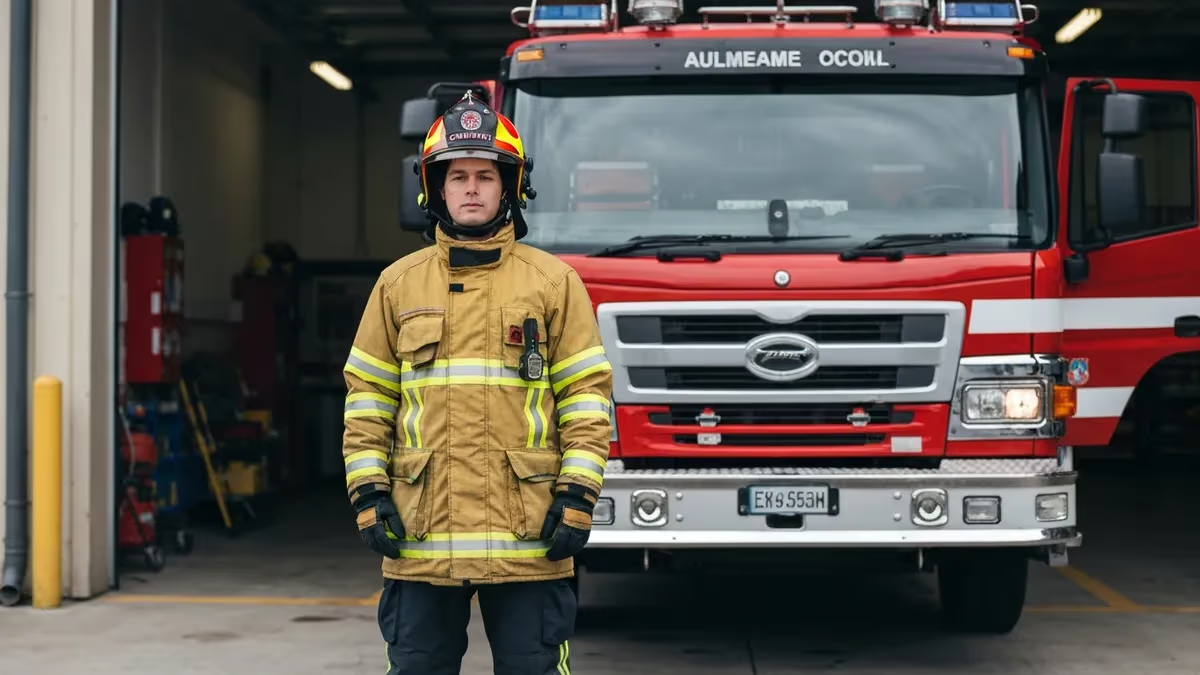
Online firefighter training has transformed how aspiring firefighters prepare for one of America's most demanding and rewarding careers. Whether you're exploring how to become a firefighter for the first time or you're a seasoned volunteer looking to upgrade your certifications, digital learning platforms now offer structured, accredited coursework that fits around shift work, family commitments, and geographic limitations. This guide walks you through every dimension of online training — from foundational coursework to advanced tactical modules — so you can enter the hiring process fully prepared.
The firefighting profession has seen enormous evolution over the past decade, driven in part by tragic incidents like the Idaho firefighters shot events that reminded communities nationwide how critical proper training and situational awareness truly are. Modern online programs respond to these realities by incorporating threat-recognition modules, active-shooter protocols alongside traditional fire suppression theory, and emergency medical care curriculum that meets or exceeds NFPA 1001 standards. Understanding the full scope of what employers expect gives you a decisive edge when competing against hundreds of applicants for a single open position.
Before diving into specific platforms and course structures, it helps to understand the employment landscape. The U.S. Bureau of Labor Statistics reports that firefighter employment is projected to grow 4 percent through 2032, adding roughly 9,000 new positions. Competition remains fierce in major metro departments, where physical ability tests like the CPAT screen out a significant percentage of candidates before written exams even begin. Online training lets you build the theoretical knowledge base that written and oral boards demand, so your study hours deliver maximum return on investment.
One of the most common questions candidates ask is about firefighter salary expectations before committing to the career path. Entry-level firefighters in the United States earn a median annual wage of approximately $52,000, while experienced career firefighters in high-cost metro areas regularly exceed $90,000 when overtime and specialty pay are factored in. Online certification programs can accelerate your path to higher pay grades by helping you earn Firefighter I and Firefighter II credentials faster than traditional once-a-week classroom formats allow, sometimes cutting certification timelines by three to six months.
Volunteer firefighter programs have particularly benefited from the online learning revolution. Rural departments that once struggled to offer consistent in-person training now use platforms like the National Fire Academy's distance learning portal, state fire training systems, and private providers to keep their members current on hazardous materials, wildland interface suppression, and incident command system (ICS) protocols. If you're serving a volunteer department, completing FEMA's free IS-700 and IS-100 courses online is often the fastest way to demonstrate initiative and qualify for leadership roles within your station.
Green firefighter candidates — those brand new to the field — frequently underestimate how much written examination preparation matters relative to physical training. Departments use written exams to measure mechanical aptitude, reading comprehension, spatial reasoning, and situational judgment in high-stress scenarios. Online practice test platforms give green candidates the ability to simulate real exam conditions repeatedly, identify knowledge gaps in areas like building construction or emergency medical care, and build the mental stamina needed to perform under time pressure on test day.
This guide is organized to take you from initial research all the way through your first day at the academy. You'll find detailed breakdowns of online course formats, a realistic look at costs and timelines, honest pros and cons of digital versus in-person training, a preparation checklist covering everything from application documents to physical readiness, and a comprehensive FAQ drawn from questions real candidates submit to fire department hiring offices every year. Read it in order for the full picture, or jump to the section most relevant to where you are in the hiring process right now.
Online Firefighter Training by the Numbers
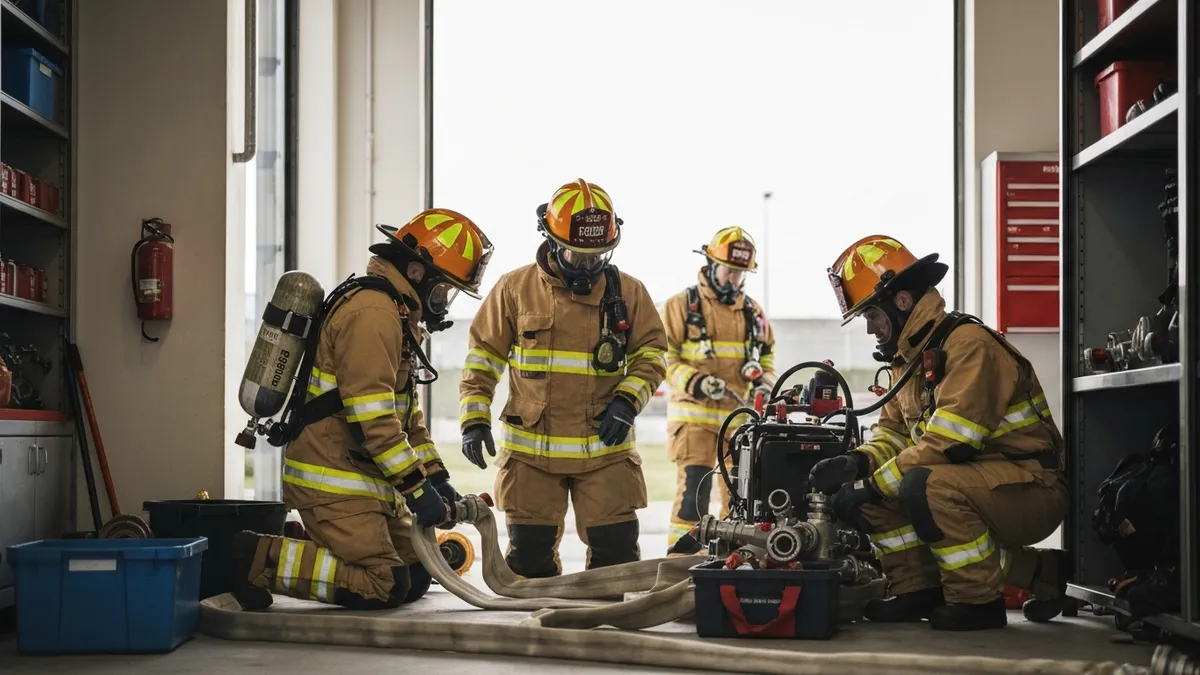
Your Online Firefighter Training Pathway
Step 1: Complete FEMA Free Foundational Courses
Step 2: Enroll in a State-Accredited Firefighter I Program
Step 3: Earn Firefighter II Certification
Step 4: Add EMS Certification Online
Step 5: Take Full-Length Online Practice Exams
Step 6: Apply, Pass the CPAT, and Attend the Academy
Understanding firefighter salary structures is essential before you invest months of preparation into the career path. Compensation varies dramatically by region, department type, and rank. A newly hired firefighter in a small rural municipality might start at $38,000–$44,000 per year, while departments in cities like San Jose, California or Bellevue, Washington regularly advertise starting salaries above $80,000. The national median lands around $64,000 annually according to the most recent Bureau of Labor Statistics data, but that figure masks enormous geographic and organizational variation that you should research before targeting specific departments.
Career progression dramatically affects long-term earnings for firefighters who stay in the profession. Most departments operate on structured step-pay systems where salaries increase automatically with each completed year of service, typically for the first five to ten years. Beyond base pay, firefighters frequently earn shift differentials, hazardous duty pay, paramedic incentives, and overtime compensation that can add 20–40 percent on top of base wages. A firefighter who starts at $52,000 and achieves paramedic certification within three years might realistically earn $75,000–$85,000 annually by their fifth year on the job.
The question of how much do firefighters make is most accurately answered by breaking it down into total compensation rather than base salary alone. Most career departments provide pension plans, health insurance, paid time off, and shift-work schedules that give firefighters an average of 10 days off per month.
When economists calculate the full value of these benefits packages, total compensation for a mid-career firefighter frequently exceeds $100,000 per year in major metropolitan markets. This context helps explain why firefighter positions in desirable departments attract hundreds of applicants per opening and why thorough preparation — including structured online training — matters so much.
Volunteer firefighter service offers a different economic equation but equally compelling rewards. While most volunteer departments do not pay a salary, many offer stipends per call responded, gear allowances, life insurance benefits, and property tax credits in jurisdictions that have enacted such incentive programs. Perhaps more importantly, volunteer experience provides the certifications, skills, and professional references that make you a competitive applicant when you later pursue career department positions. Many career firefighters began as volunteers in high school or college, using that time to complete Firefighter I and II certifications that would otherwise cost $2,000–$5,000 at a private training institution.
The green firefighter — someone starting the career from absolute zero — should budget realistically for the preparation phase. Between application fees, physical ability test prep courses, online certification programs, and potential EMT training costs, candidates often invest $1,500–$4,000 before receiving a job offer. This figure does not include physical gear purchases, which departments typically provide upon academy enrollment. Mapping out these costs in advance helps you prioritize which certifications deliver the highest return and which optional courses can wait until after you're hired and your department covers the cost.
Geographic considerations play a major role in salary planning. The western United States — particularly California, Washington, and Oregon — offers the highest firefighter salaries in the nation, driven by strong unions, high cost of living adjustments, and strong state funding for public safety. Southern states generally offer lower base salaries but often have lower costs of living that offset the difference. Researching the specific departments you plan to target, including their current collective bargaining agreements and step-pay schedules, gives you a realistic income projection rather than relying solely on national median figures that don't reflect local realities.
Firefighters who specialize further dramatically increase their earning potential. Hazmat technicians, technical rescue specialists, fire investigators, and training officers all command pay premiums ranging from 5 to 15 percent above base firefighter wages. Many of these specializations offer online didactic training that satisfies prerequisite requirements before in-person skills evaluations. Building this advanced knowledge base during your initial preparation phase — or early in your career before your department budgets for sponsored training — positions you to qualify for specialty assignments and the associated pay bumps much earlier than colleagues who wait for department-directed opportunities.
Firefighter Certification Tracks: Online Options Explained
Firefighter I certification establishes your foundational competency in fire suppression, self-contained breathing apparatus operation, rescue techniques, and hazardous materials awareness. Most state fire training systems have moved their didactic curriculum online, allowing candidates to complete 80–120 hours of video lectures, readings, and knowledge assessments before attending practical skills evaluations at a certified training facility. This hybrid model dramatically reduces schedule conflicts for candidates who work full-time while preparing for a firefighter career.
Firefighter II builds directly on Firefighter I, adding modules on pre-incident planning, fire investigation basics, and company-level leadership. Online platforms typically deliver Firefighter II theory in 60–90 additional hours of coursework. Together, Firefighter I and II represent the baseline credential accepted by career fire departments in all 50 states. Some states issue a combined certificate; others require separate testing for each level. Confirm your target state's requirements before enrolling to ensure the program you choose aligns with local certification standards.
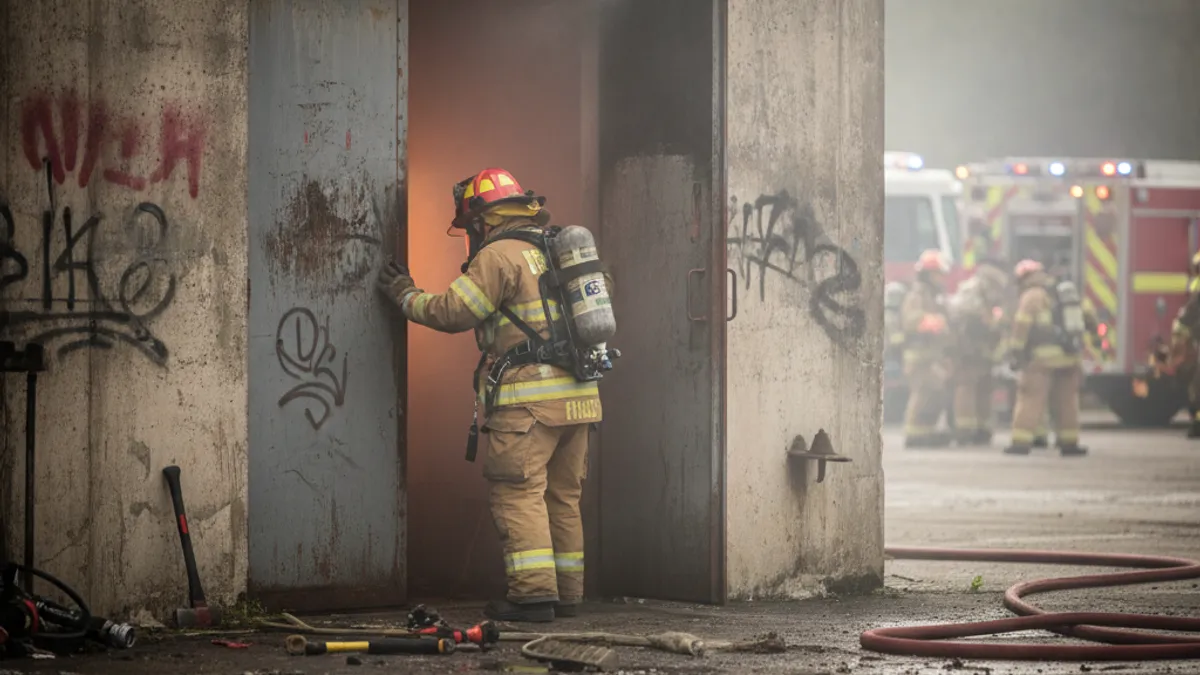
Online vs. In-Person Firefighter Training: Is Online Right for You?
- +Flexible scheduling allows study around existing work shifts and family responsibilities
- +Access to nationally accredited curricula regardless of your geographic location
- +Self-paced learning lets you spend more time on difficult topics like building construction or fire behavior chemistry
- +Lower direct costs compared to traditional classroom programs, especially for out-of-state candidates
- +Immediate access to practice tests and performance analytics that identify knowledge gaps quickly
- +Ability to complete foundational certifications like FEMA ICS courses entirely free of charge
- −Cannot replace hands-on skills training for hose advancement, ladders, SCBA, and rescue techniques
- −Requires strong self-discipline and time management — no instructor accountability for attendance
- −Some hiring departments prioritize candidates from local fire academy programs they know and trust
- −Internet connectivity issues or computer hardware limitations can disrupt coursework in rural areas
- −Laboratory and clinical components for EMS certifications still require in-person attendance
- −Less opportunity for networking with instructors and peers who may provide career references later
Pros and Cons at a Glance
| Pros | Cons |
|---|---|
| Flexible scheduling allows study around existing work shifts and family responsibilities | Cannot replace hands-on skills training for hose advancement, ladders, SCBA, and rescue techniques |
| Access to nationally accredited curricula regardless of your geographic location | Requires strong self-discipline and time management — no instructor accountability for attendance |
| Self-paced learning lets you spend more time on difficult topics like building construction or fire behavior chemistry | Some hiring departments prioritize candidates from local fire academy programs they know and trust |
| Lower direct costs compared to traditional classroom programs, especially for out-of-state candidates | Internet connectivity issues or computer hardware limitations can disrupt coursework in rural areas |
| Immediate access to practice tests and performance analytics that identify knowledge gaps quickly | Laboratory and clinical components for EMS certifications still require in-person attendance |
| Ability to complete foundational certifications like FEMA ICS courses entirely free of charge | Less opportunity for networking with instructors and peers who may provide career references later |
Online Firefighter Training Preparation Checklist
- ✓Create a free FEMA Emergency Management Institute account and enroll in IS-100, IS-200, and IS-700.
- ✓Research your target state's Firefighter I and II certification requirements through the State Fire Marshal's website.
- ✓Identify at least two accredited hybrid programs offering online didactic training with local skills sessions.
- ✓Enroll in or complete an EMT-Basic program if your target department lists EMS certification as a requirement.
- ✓Set up a dedicated weekly study schedule blocking at least 10–15 hours per week for online coursework.
- ✓Register on a firefighter exam prep platform and complete a full diagnostic practice test to establish your baseline score.
- ✓Download and review the NFPA 1001 Standard for Fire Fighter Professional Qualifications to understand what certifiers assess.
- ✓Begin the CPAT physical preparation program at least 12 weeks before your planned application date.
- ✓Gather all required application documents: birth certificate, high school diploma or GED, driver's license, and any prior certifications.
- ✓Connect with a local volunteer fire department to gain practical experience while completing online theory coursework.
Online Theory + In-Person Practice = Maximum Exam Performance
Candidates who combine 10–15 hours per week of structured online study with at least one in-person skills session per month consistently outperform peers who rely exclusively on either format. Departments evaluate both your written score and your practical skills during probationary periods — online training builds the knowledge foundation while hands-on practice builds the muscle memory that keeps you and your crew safe on the fireground.
The landscape of modern firefighter training has been permanently altered by several high-profile incidents that underscored the need for expanded situational awareness training beyond traditional fire suppression tactics. The idaho firefighter shooting incidents — in which firefighters responding to calls were ambushed — prompted departments nationwide to integrate violence awareness, scene safety assessment, and coordinated response protocols with law enforcement into both in-person and online training curricula. Understanding how these events reshaped training priorities helps you approach your preparation with a complete picture of what modern fire service demands.
SWAT firefight scenarios, active-shooter response protocols, and tactical emergency casualty care (TECC) have all moved from specialized SWAT team annexes into mainstream firefighter training programs. The Hartford Consensus, a policy framework developed in response to mass casualty events, now forms the basis for THREAT protocol training — Threat suppression, Hemorrhage control, Rapid Extrication to safety, Assessment by medical providers, and Transport to definitive care. Several online platforms offer THREAT protocol courses certified by the American College of Surgeons that firefighters can complete before attending hands-on tourniquet and wound-packing skills sessions.
Idaho firefighter shooting events and similar tragedies at Binghamton, New York and Webster, New York forced the fire service to confront an uncomfortable reality: firefighters are increasingly responding to scenes where active threats may not have been neutralized. Modern training addresses this through zone concepts borrowed from military trauma care — warm zone operations where firefighters provide life-saving interventions under indirect threat, coordinated with law enforcement covering the hot zone. Online courses covering these protocols are now available through the NAEMSP, ACEP, and several state fire training systems.
Firefighters shot in Idaho and across the country have also accelerated adoption of body armor programs in progressive departments. While firefighters do not traditionally wear ballistic protection, the evolving threat landscape has prompted departments in Oregon, Texas, and several northeastern states to equip apparatus with plate carriers that can be rapidly donned during ambush-style calls. Online training modules addressing body armor selection, donning procedures, and integrated communications while wearing ballistic gear are now available through law enforcement–fire service collaboration programs hosted by DHS and FEMA.
Beyond active threat scenarios, the swat firefight concept in modern emergency training refers more broadly to the overlap between law enforcement tactical operations and fire/EMS service delivery. Joint training exercises are increasingly common, with fire departments participating in tabletop simulations and live exercises alongside police tactical units. Online tabletop simulation tools — including several hosted by FEMA's National Training and Education Division — allow participants from different disciplines to work through complex multi-agency scenarios before committing to expensive live exercises. These virtual tabletops count toward continuing education hours in many states.
The evolution of threat-aware firefighting has practical implications for how you approach your written examination preparation. Modern firefighter entrance exams increasingly include situational judgment questions that assess your ability to prioritize scene safety, communicate threat information through the incident command chain, and make rapid decisions under incomplete information. Practice test platforms that include realistic scenario-based questions — not just multiple-choice fact recall — better prepare you for the judgment-heavy portions of modern firefighter exams. Look for platforms that explain the reasoning behind correct answers rather than simply marking answers right or wrong.
Documentation and reporting represent another area where online training has delivered significant value. Incident report writing, exposure documentation for carcinogen tracking, and post-incident analysis reports all require clear written communication skills that online courses can develop effectively. Several state fire training systems now offer dedicated online modules covering National Fire Incident Reporting System (NFIRS) data entry, workers' compensation documentation procedures, and after-action report formats. Developing these administrative competencies before your academy enrollment demonstrates professional maturity that separates serious candidates from those who view firefighting purely as a physical challenge.
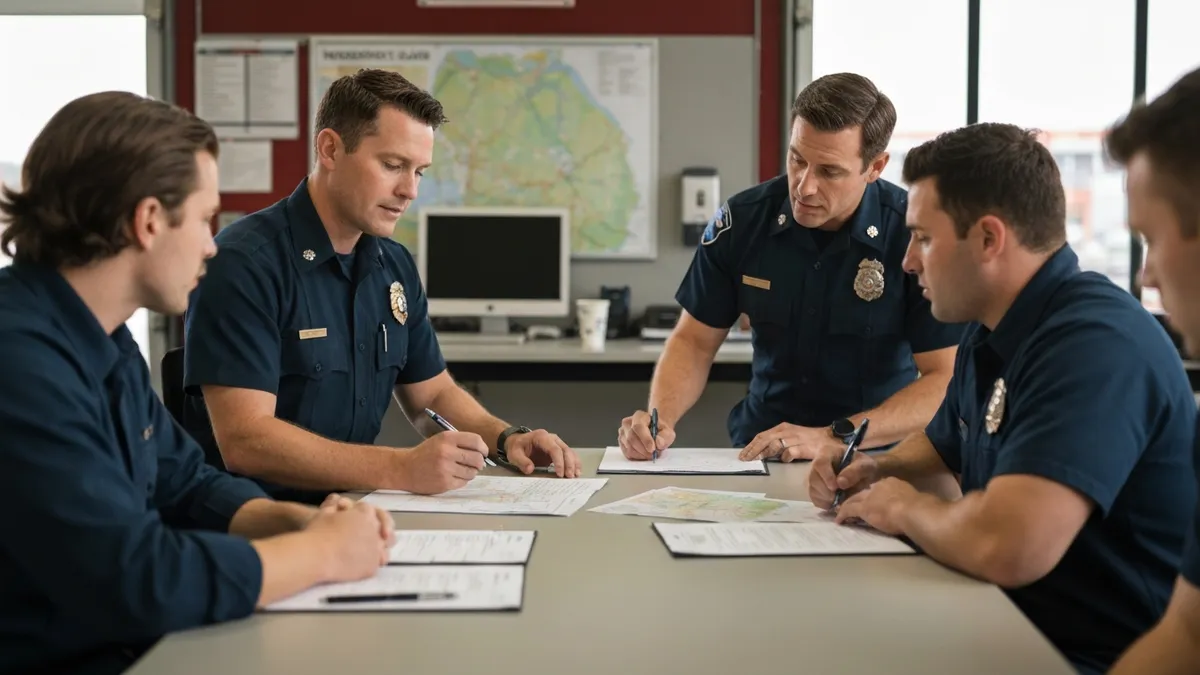
Unlike most private-sector jobs, career fire departments typically open hiring lists only once every one to three years — and close applications within 30–60 days of announcement. Missing a hiring cycle means waiting years for the next opportunity. Subscribe to Civil Service Commission notification lists in your target cities now, and use that lead time to complete every certification and practice exam so you're fully ready the moment applications open.
Preparing a compelling firefighter application goes far beyond passing written and physical tests. Departments evaluate candidates holistically through background investigations, polygraph examinations, psychological assessments, and structured oral board interviews where panels of fire officers assess your judgment, communication skills, and knowledge of department values. Online resources can help with each of these components. Reviewing the firefighter costume of professionalism — from how you dress for your oral board to how you structure your answers using the STAR method — is something you can study thoroughly through online video courses and mock interview platforms before your actual interview date.
The oral board interview is widely considered the most decisive factor in final ranking for fire department hiring lists. Unlike written exams where scores are objective, oral boards give department evaluators a direct window into your communication style, composure under pressure, and alignment with fire service values.
Common oral board question categories include ethical dilemmas involving fellow firefighters, emergency scene management scenarios, customer service situations involving difficult citizens, and questions about your motivation for pursuing the career. Online interview prep courses specifically tailored to fire service oral boards are available through several platforms and typically include sample questions, video responses from hiring officers explaining what they look for, and structured feedback on recorded practice answers.
Background investigations represent a critical screening hurdle that online preparation can help you navigate successfully. Departments routinely investigate employment history, financial records, driving record, criminal history, and social media activity going back seven to ten years. Many candidates with otherwise excellent credentials have been disqualified due to undisclosed prior incidents, inconsistencies in their applications, or social media posts that contradict the professional image they projected during the hiring process.
Before submitting your first application, audit your own social media presence, pull your driving record and credit report, and document any prior incidents — minor traffic violations, civil judgments, or employment terminations — that you'll need to disclose accurately on background investigation forms.
Physical fitness preparation remains non-negotiable regardless of how strong your online academic preparation becomes. The Candidate Physical Ability Test (CPAT) requires candidates to complete eight work stations simulating firefighting tasks while wearing a 50-pound vest within 10 minutes and 20 seconds.
These stations — stair climb, hose drag, equipment carry, ladder raise, forcible entry, search, rescue, and ceiling breach — demand cardiovascular fitness, grip strength, and functional mobility that only consistent physical training develops. Online training programs can supplement your physical preparation by providing access to periodized training plans, nutrition guidance, and video demonstrations of CPAT-specific movements, but there is no substitute for actually performing these tasks under load.
The firefighter costume — meaning the complete set of professional credentials, physical readiness, and personal presentation — that a hiring department wants to see has become increasingly sophisticated. Candidates who walk into the process with Firefighter I and II certifications, EMT-Basic or higher, FEMA ICS certificates, strong written exam scores, documented volunteer experience, and a clean background investigation are almost always ranked at or near the top of competitive hiring lists.
Building this complete profile takes 12–24 months of deliberate preparation for most candidates starting from zero, but online training compresses that timeline by allowing you to advance theoretical knowledge rapidly while scheduling in-person skills components around your existing life commitments.
Community involvement strengthens firefighter applications in ways that go beyond formal certifications. Hiring panels consistently favor candidates who demonstrate service orientation through volunteer work, community emergency response team (CERT) participation, or other civic engagement.
The CERT program, managed by FEMA, offers free online training covering disaster preparedness, fire suppression basics, medical operations, and light search and rescue — providing you with both practical knowledge and documented community service hours that strengthen your application narrative. Many candidates complete CERT training online while waiting for a formal Firefighter I hybrid program to begin, making productive use of time that might otherwise go to unstructured preparation.
Finally, maintaining a study journal throughout your online training builds the self-awareness and articulation skills that oral board panels value. Documenting what you learned, how it changed your understanding of fire service operations, and how you applied knowledge to practice scenarios gives you concrete, specific examples to reference when interviewers ask about your preparation process.
Oral board panels have heard thousands of vague answers about being passionate about helping people — specific, detailed accounts of what you studied, why it matters operationally, and how it connects to the department's values are what differentiate top-ranked candidates from the pool of otherwise qualified applicants.
Maximizing your online firefighter training investment requires a strategic approach to time management across the months of preparation before your first application. Career counselors who work specifically with fire service candidates consistently recommend treating your preparation like a part-time job — scheduling specific study blocks on your calendar, tracking completion metrics for each certification module, and holding yourself accountable to weekly milestones rather than vague long-term goals. Candidates who drift through preparation without structure typically take 50–70 percent longer to achieve the same credential outcomes compared to those with defined weekly plans.
Building construction knowledge deserves special attention in your online study plan because it appears prominently on virtually every firefighter written entrance exam and forms the foundation of fireground safety decision-making. Understanding the difference between Type I fire-resistive construction, Type II non-combustible, Type III ordinary, Type IV heavy timber, and Type V wood-frame construction is not just an exam requirement — it is a survival skill.
Online building construction courses walk you through each construction type's fire behavior characteristics, expected collapse timelines, and tactical implications for attack and search operations. Candidates who truly understand this material, rather than memorizing surface-level facts, perform better on both the written exam and oral board scenarios that present structural firefighting dilemmas.
Emergency medical care represents the other dominant written exam topic alongside building construction. Modern firefighter entrance exams devote significant question real estate to patient assessment sequences, shock recognition and management, airway management priorities, and EMS communication protocols. Online EMS courses offered through platforms aligned with NREMT standards deliver this content with the depth and clinical accuracy that exam writers expect candidates to demonstrate. Even if you are not yet pursuing formal EMT certification, reviewing EMS fundamentals online strengthens your performance on the medical care sections of firefighter entrance exams administered before the academy application stage.
Test-taking strategy is a skill distinct from subject matter knowledge, and online practice test platforms develop both simultaneously. Time management during multiple-choice exams is a learned skill — knowing when to commit to an answer, when to skip and return, and how to use process of elimination efficiently under time pressure requires repeated practice under simulated conditions.
Candidates who take 20 or more full-length timed practice exams before their actual written test consistently report significantly higher confidence and significantly lower test anxiety on exam day. The cumulative exposure to thousands of questions across repeated attempts also dramatically reduces the likelihood of encountering a topic area where you have zero prior knowledge.
Study groups, even when formed and conducted entirely online through video conferencing platforms, dramatically improve retention and accountability for most candidates. Finding two to four other firefighter candidates in your state who are targeting similar department hiring lists creates a support system that makes the preparation process both more effective and more sustainable over the 12–24 month timeline required to build a complete hiring profile. Online study group members can quiz each other on terminology, debate the correct approach to situational judgment scenarios, and share departmental research that helps everyone prepare more efficiently than any individual could working alone.
Rest and recovery are often overlooked dimensions of firefighter exam preparation that online training resources can address through dedicated wellness modules. Firefighting is a profession that demands not just peak performance during training and testing, but sustained performance over a 20–30 year career punctuated by extreme physical and emotional demands.
Building sleep hygiene, stress management, and emotional resilience practices into your preparation phase — not just after hire — gives you advantages on psychological evaluation components of the hiring process and establishes habits that will protect your long-term career health. FEMA's Firefighter Life Safety Initiatives program includes online resources addressing behavioral health, peer support programs, and substance abuse prevention that demonstrate professional self-awareness to hiring panels.
The final weeks before your written exam should shift toward review and consolidation rather than new learning. Use your practice test performance analytics to identify your three weakest topic areas and dedicate focused review sessions to those domains specifically. Attempting new material in the days immediately before an exam increases anxiety without meaningfully improving scores for most candidates.
Instead, review your strongest areas briefly to maintain confidence, perform a full-length timed practice exam under realistic conditions four to five days before the real test, analyze your results, and then spend the final two to three days doing light review while prioritizing sleep, nutrition, and physical readiness. Walking into the exam room well-rested and confident is as important as any content knowledge you've accumulated over months of dedicated online training.
Sample Firefighter Practice Questions
Try these questions from our free Firefighter practice tests. The correct answer and an explanation follow each question.
If you notice someone being electrocuted. What should be your first course of action?
- A. Any of the following
- B. Turn off the electricity.
- C. Make a request for help
- D. Remove the person from the danger zone.
Answer: B. Turn off the electricity.
The immediate priority when someone is being electrocuted is to stop the flow of electricity to prevent further harm to the victim and ensure the safety of anyone attempting to help. Turning off the power source removes the danger, allowing for safe intervention. Attempting to remove the person directly without cutting power could result in the rescuer also being electrocuted.
What should firefighters do if there is no designated rehab area at an incident?
- A. Continue working without breaks
- B. Ignore the need for rehab
- C. Develop an improvised rehab area on site
- D. Take manual breaks in designated rest areas
Answer: D. Take manual breaks in designated rest areas
Even without a formally designated rehab area, firefighters must prioritize their safety and recovery. Taking manual breaks in designated rest areas ensures they receive essential rest, hydration, and monitoring, preventing fatigue and heat stress. This practice is crucial for maintaining their physical well-being and operational effectiveness during an incident.
Flashover is best described as:
- A. A slow smoldering fire
- B. The near-simultaneous ignition of all combustibles in a compartment
- C. A water supply failure
- D. A type of ventilation
Answer: B. The near-simultaneous ignition of all combustibles in a compartment
Flashover occurs when radiant heat ignites all exposed combustible surfaces in a room almost at once.
Why is proper hydration emphasized for firefighters even in cold weather?
- A. Heavy PPE causes significant fluid loss regardless of outside temperature
- B. Cold air contains more oxygen requiring more water
- C. Water prevents SCBA regulators from freezing internally
- D. Hydration is only needed in summer months
Answer: A. Heavy PPE causes significant fluid loss regardless of outside temperature
Encapsulating turnout gear traps heat and causes sweating and dehydration even in cold conditions.
Firefighter Questions and Answers



About the Author
Emergency Manager & FEMA Certification Specialist
Naval Postgraduate SchoolCommander Lisa Foster holds a Master of Science in Emergency Management from the Naval Postgraduate School and is a FEMA-certified emergency manager and Certified Emergency Manager (CEM). With 18 years of emergency response coordination experience across federal and state agencies, she coaches emergency management professionals through ICS, NIMS, and FEMA Independent Study certification programs.
Join the Discussion
Connect with other students preparing for this exam. Share tips, ask questions, and get advice from people who have been there.
View discussion (6 replies)