
Firefighter Training Ideas: Complete Guide to Skills, Drills & Career Prep
Top firefighter training ideas for 2026 October 🎯 Drills, salary facts, how to become a firefighter & free practice tests. US guide.
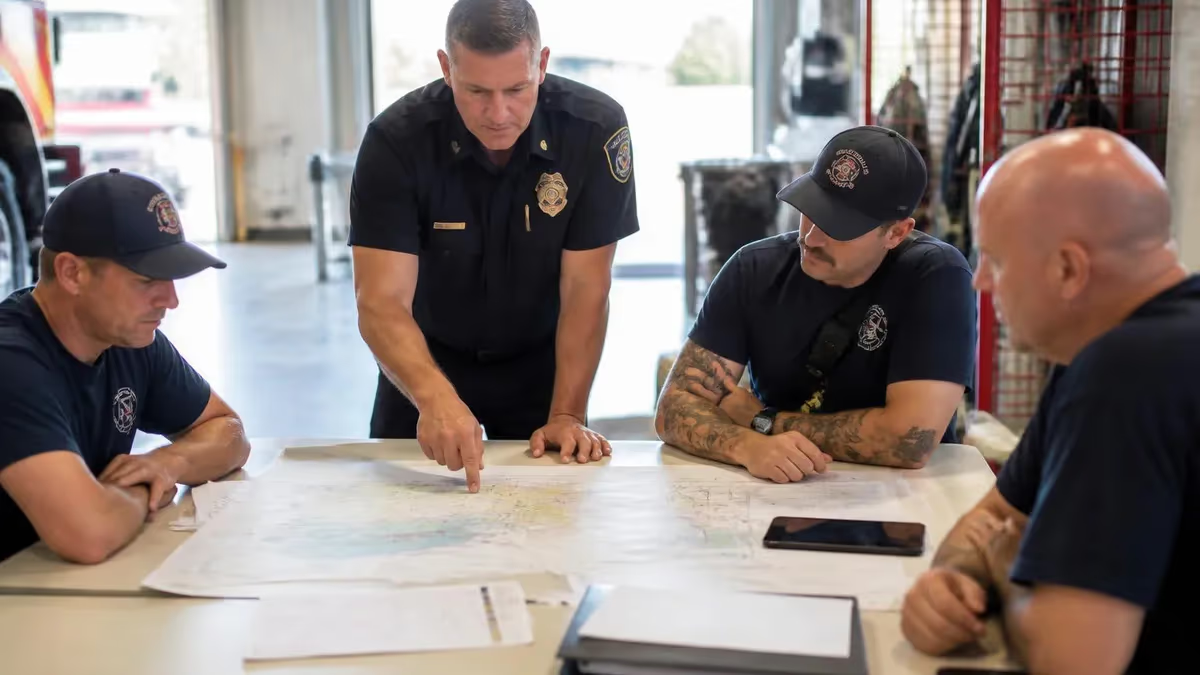
Firefighter training ideas are the foundation of every successful fire service career, whether you are a recruit sweating through your first academy week or a seasoned lieutenant looking to sharpen your crew. Effective training blends physical conditioning, technical skills, and mental resilience into a program that mirrors the chaos of real emergencies. From ladder evolutions and hose-handling drills to incident command simulations, the best firefighter training ideas are those that challenge every member of a department to perform under pressure. Understanding what makes training effective is the first step toward building a career in one of America's most respected professions.
The fire service in the United States employs approximately 1.1 million firefighters, roughly 345,000 of whom are career professionals and more than 745,000 of whom serve as volunteers. Both groups rely on continuous, structured training to stay sharp. Career departments typically mandate hundreds of training hours per year, while volunteer companies must be creative about squeezing quality drills into limited weekly meeting schedules. Regardless of department size or funding, the goal is the same: build muscle memory and decision-making skills that function reliably during the worst moments of someone's life.
If you are exploring how to become a firefighter, understanding the training pipeline early gives you a critical edge over other candidates. Most municipal departments require completion of a state-certified firefighter I and II program, a valid Emergency Medical Technician (EMT) certification, and a passing score on the written civil service examination before a conditional job offer is extended. Each of those milestones demands intentional, consistent preparation — not just physical workouts, but cognitive drills and scenario-based practice that mirror what hiring panels actually test.
Recent news events have also underscored why firefighter training must extend beyond fire suppression. The tragic Idaho firefighter shooting incident, in which several firefighters were shot while responding to an emergency call, shocked the nation and prompted departments across the country to revisit their emergency-response protocols. Violence against first responders is a growing concern, and many progressive fire departments now incorporate active-threat awareness and coordinated swat firefight liaison training into their standard curricula so that crews know exactly how to stage safely and communicate with law enforcement when gunfire is reported near an incident.
Physical readiness remains the cornerstone of any training program. The Candidate Physical Ability Test (CPAT) is used by departments across the country to screen applicants, and its eight events — stair climb, hose drag, equipment carry, ladder raise, forcible entry, search, rescue, and ceiling breach — each demand specific muscle groups and cardiovascular endurance. Smart recruits do not simply run long distances and hope for the best; they train those exact movements months in advance, timing themselves and logging improvements week over week. Building that kind of structured, data-driven preparation habit will serve you throughout your entire fire service career.
Mental and cognitive training deserves equal billing alongside physical conditioning. Size-up drills, where trainees are presented with photographs or video footage of a structure fire and must verbally communicate a full incident action plan within 60 seconds, develop the rapid-assessment mindset that saves lives. Tabletop exercises — low-cost, high-value scenarios that can be run in any conference room — expose crews to mass-casualty events, hazmat releases, and wildland-urban interface fires without leaving the station. When real calls come in, those rehearsed mental frameworks activate automatically, reducing cognitive load at the moment it matters most.
This guide compiles the most effective, research-backed firefighter training ideas across every stage of a fire service career. Whether you need drills you can run tonight, a structured six-week study plan for your written exam, or salary benchmarks to help you negotiate your first contract, the information below is organized to help you move forward with confidence and purpose.
Firefighter Training & Career by the Numbers
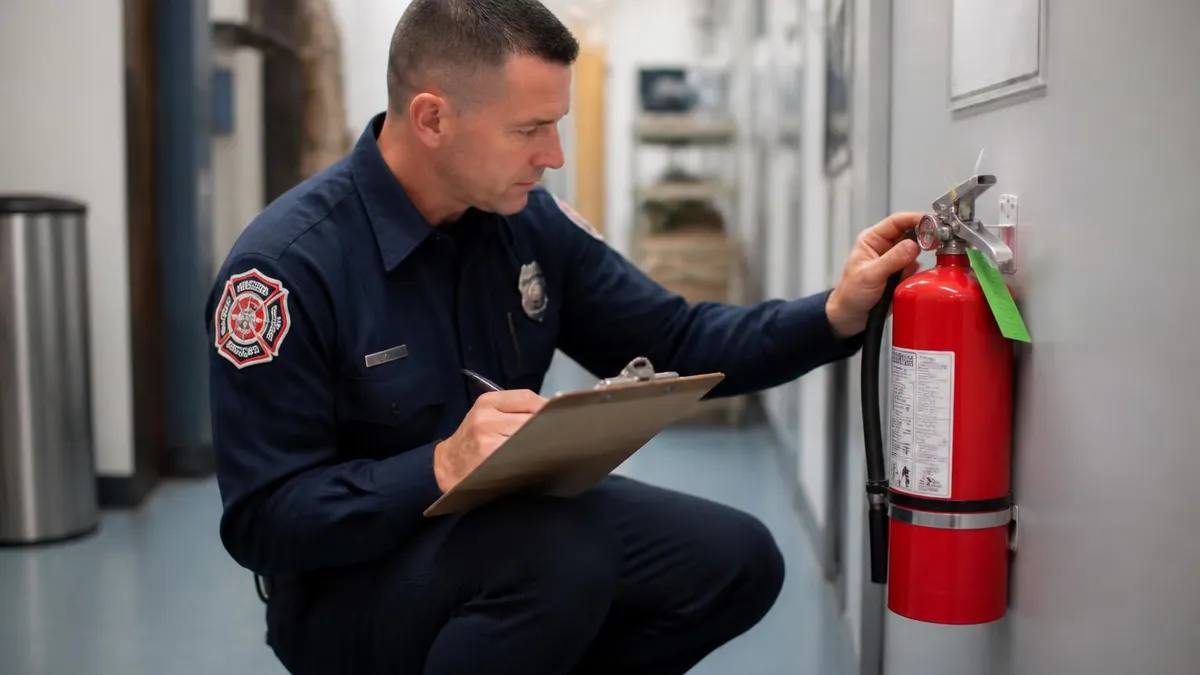
Core Categories of Firefighter Training
Covers attack line deployment, nozzle technique, water supply management, and interior attack strategy. Recruits practice advancing charged lines through obstacle courses simulating confined hallways, stairwells, and smoke-filled rooms under timed conditions.
Teaches oriented search, thermal imaging camera use, victim packaging, and rapid intervention team (RIT) deployment. Drills are run in zero-visibility environments using SCBA to build muscle memory for safe, systematic rescue operations.
Most career departments require EMT-Basic certification at minimum. Training covers patient assessment, airway management, CPR, bleeding control, and trauma care so firefighters can bridge the gap before EMS arrival at any incident.
Introduces recognition, isolation, and notification procedures for hazardous material incidents. Operations-level training adds defensive actions such as diking, damming, and diversion without direct contact with the released substance.
NIMS-compliant ICS courses (ICS-100 through ICS-300) develop the command-post thinking needed to manage large-scale emergencies. Tabletop exercises and full-scale simulations turn classroom theory into practical, deployable leadership skills.
Physical and tactical drills form the heartbeat of any quality firefighter training program, and the best ones are repeatable, measurable, and directly tied to real-world scenarios your crew will actually face. One of the highest-value drills any company can run is the hose-pull evolution, where teams race against the clock to advance a charged 1¾-inch attack line from a parked engine to a simulated fire room approximately 150 feet away.
Timing each attempt and posting results publicly creates healthy competition that drives continuous improvement across all shifts. Debrief every evolution so firefighters understand not just what they did wrong but why a particular technique costs seconds and energy on a real fire.
Ladder operations are another category where repetition pays enormous dividends. Firefighters should practice raising and climbing ground ladders weekly until the movements are completely automatic. The standard complement for a residential fire includes a 24-foot extension ladder for second-floor rescue windows and a 14-foot roof ladder for peak access, and crews should be able to position and climb either in under 60 seconds per NFPA benchmarks. Incorporating night drills and reduced-visibility scenarios into ladder practice ensures that the skill transfers to actual incident conditions rather than existing only in the comfortable daylight of a training ground.
Forcible entry is one of the most physically demanding and mechanically complex skills in the fire service. Training on both outward-swinging and inward-swinging doors, as well as sliding steel security gates and reinforced jambs, prepares firefighters for the enormous variety of building stock in any urban response area.
The Halligan bar and flathead axe — the classic irons combination — must be wielded with precision to gap, set, and force a door without destroying the structural integrity needed to support a charged attack line behind the crew. Departments that invest in dedicated forcible-entry prop doors dramatically increase the quality and safety of these high-risk training repetitions.
Vertical ventilation training teaches firefighters how to open a roof safely and effectively to channel heat and toxic smoke away from trapped occupants and advancing interior crews. This skill requires chainsaw proficiency, an understanding of roof construction types (flat, peaked, lightweight truss), and the ability to read fire behavior from above.
Because working on a roof during a structure fire carries extreme risk, departments typically train on acquired structures — condemned buildings donated for controlled burn exercises — or on dedicated training towers with replaceable roof panels. Identifying the differences between legacy balloon-frame and modern engineered lumber construction is critical, since lightweight trusses can fail within four minutes of flame impingement.
The firefighter salary you can command as a career professional is directly tied to your certification portfolio and demonstrated skill competency, which is one more reason to take every training opportunity seriously. Departments in high-cost cities like San Francisco, New York, and Honolulu pay top-of-scale salaries exceeding $100,000 annually, but those positions attract hundreds of applicants for every opening. Candidates who can document completion of advanced rescue technician certifications, hazmat operations, and technical specialty courses consistently outperform peers during oral board and assessment-center evaluations. Your training log is, in effect, your professional resume inside the fire service.
Live-fire training conducted under NFPA 1403 guidelines represents the gold standard for suppression skill development. During a live-fire evolution, trainees advance into a structure where a controlled fuel load has been ignited, experiencing realistic heat, limited visibility, and authentic fire behavior for the first time.
This experience — often called a "real burn" — is deliberately intimidating because the stress inoculation it provides is irreplaceable. Departments that cannot access a live-fire facility can supplement with gas-fired training simulators, which allow repeated drills with adjustable heat output and programmable fire behavior patterns, though they do not fully replicate the unpredictability of actual combustion.
Cross-training with law enforcement and EMS agencies has become increasingly important following high-profile incidents involving active shooters, mass casualty events, and the shooting of first responders while on scene. Warm-zone medical care protocols, developed after the 2016 Dallas police officer ambush, teach firefighter-paramedics to move into partially secured areas alongside law enforcement to provide hemorrhage control to victims who would otherwise bleed out before the scene is fully cleared. These joint training exercises build the interagency trust and communication channels that are absolutely essential when seconds determine survival outcomes.
Volunteer Firefighter vs. Career Firefighter Training
Volunteer firefighters face a unique challenge: they must meet the same NFPA competency standards as career professionals while training almost entirely outside of regular work hours. Most volunteer companies hold weekly drill nights of two to three hours, meaning a department must carefully prioritize which skills to reinforce each session to maximize value. Rotating a monthly calendar that cycles through suppression, EMS, extrication, and command scenarios ensures that no critical skill atrophies between live responses. Online training platforms and FEMA's Emergency Management Institute distance-learning library provide supplemental coursework volunteers can complete at home between drills.
State fire training offices often offer weekend certification academies specifically designed for volunteer schedules, compressing the standard firefighter I curriculum into a series of intensive Saturday and Sunday sessions spread across several months. Many states also reimburse volunteer members for certification fees and travel, removing a significant financial barrier. Mutual-aid agreements between neighboring departments create opportunities for joint drills that simulate the multi-company responses volunteers frequently work alongside, building the interoperability needed when a working structure fire draws apparatus from three or four different companies simultaneously.
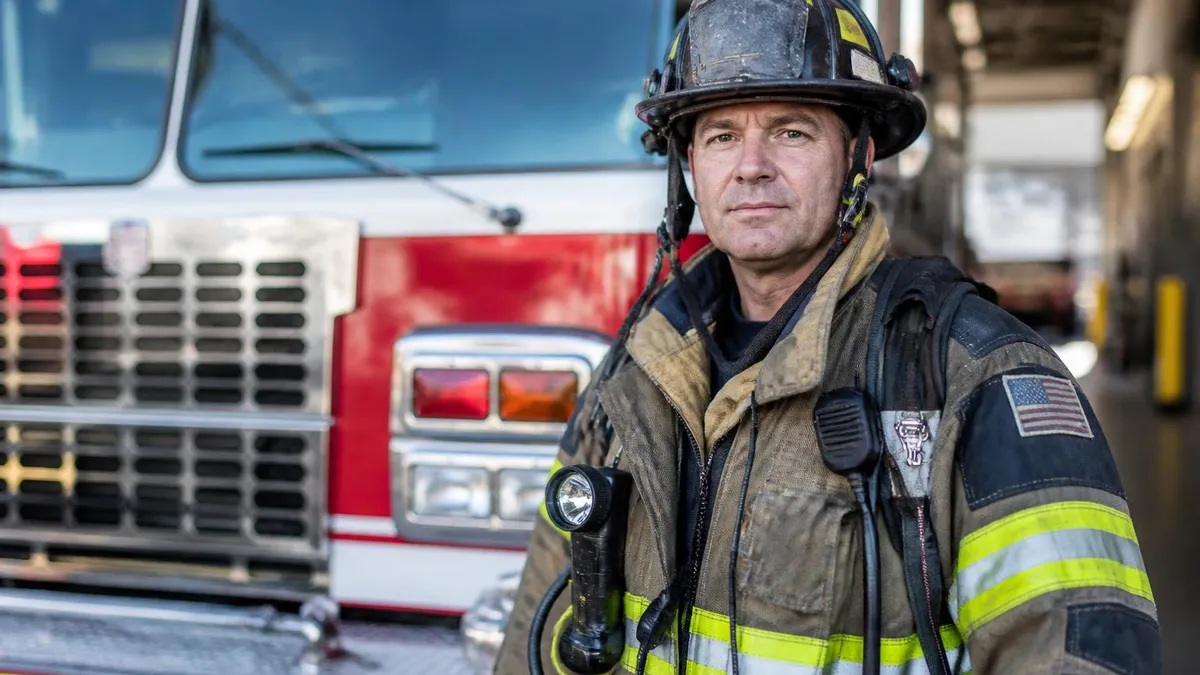
Pros and Cons of Intensive Firefighter Training Programs
- +Builds real-world competency through repeated, high-fidelity scenario practice
- +Stress-inoculation exercises improve decision-making under life-safety pressure
- +Documented training hours strengthen promotional examination applications
- +Cross-training with EMS and law enforcement broadens response capability
- +Live-fire evolutions create authentic fire-behavior intuition no simulator can replicate
- +Structured programs reduce on-scene errors and lower line-of-duty injury rates
- −High-intensity drills carry inherent injury risk if warm-up and safety protocols are skipped
- −Quality live-fire facilities are expensive to build and maintain for smaller departments
- −Scheduling training across 24/7 shift rotations creates staffing and overtime cost challenges
- −Volunteer departments often lack the funding to compensate members for training time
- −Rapidly changing tactics and technology require constant curriculum updates that strain training officers
- −Mental health impacts of realistic trauma scenarios are underaddressed in many academy programs
Pros and Cons at a Glance
| Pros | Cons |
|---|---|
| Builds real-world competency through repeated, high-fidelity scenario practice | High-intensity drills carry inherent injury risk if warm-up and safety protocols are skipped |
| Stress-inoculation exercises improve decision-making under life-safety pressure | Quality live-fire facilities are expensive to build and maintain for smaller departments |
| Documented training hours strengthen promotional examination applications | Volunteer departments often lack the funding to compensate members for training time |
| Cross-training with EMS and law enforcement broadens response capability | Rapidly changing tactics and technology require constant curriculum updates that strain training officers |
| Live-fire evolutions create authentic fire-behavior intuition no simulator can replicate | Mental health impacts of realistic trauma scenarios are underaddressed in many academy programs |
Firefighter Exam Prep Checklist: 10 Steps to Pass
- ✓Download your target department's written exam content outline and map it to your study schedule.
- ✓Complete at least three full-length timed practice exams under realistic test conditions.
- ✓Study reading comprehension passages drawn from fire service SOPs and IFSTA manuals.
- ✓Review basic math concepts: unit conversion, water flow calculations, and pump pressure formulas.
- ✓Memorize the CPAT's eight events and their exact physical requirements before your test date.
- ✓Enroll in an EMT-Basic course if your target department requires EMS certification at hire.
- ✓Run timed CPAT simulation workouts at least three times per week for eight weeks before the test.
- ✓Practice oral board answers using the STAR method (Situation, Task, Action, Result).
- ✓Research your target department's history, staffing levels, apparatus, and recent incidents.
- ✓Join a study group or find a mentor who has already passed the exam in your region.
The 10,000-Rep Rule in Fire Training
Motor-skill research consistently shows that complex physical tasks — like coupling hose fittings in the dark or raising a 24-foot ladder solo — require approximately 10,000 quality repetitions before they become fully automatic. Fire service training officers use this principle to justify relentless drill repetition. Build your training calendar around weekly repetition targets, not just annual certification checkboxes, and your performance on emergency scenes will reflect that investment.
Understanding firefighter salary benchmarks is an essential part of evaluating whether a career in the fire service aligns with your financial goals — and knowing the numbers also helps you identify which departments and regions offer the most competitive compensation packages. According to the Bureau of Labor Statistics, the median annual wage for firefighters in the United States was $54,650 as of May 2024, but that figure masks enormous geographic variation.
Firefighters in California, New York, New Jersey, and Washington state regularly earn $80,000 to $130,000 in base salary, while those in rural Southeastern states may start below $35,000. When comparing offers, always factor in pension benefits, health insurance, overtime opportunities, and longevity pay steps, which can add 30 to 50 percent to your effective total compensation.
The question of how much do firefighters make is one of the most frequently searched topics among career-change candidates, and the honest answer is: it depends enormously on where you work, how many years of service you accumulate, and what additional certifications you carry. A firefighter-paramedic with 15 years of service in Los Angeles can expect base pay north of $110,000, topped by overtime that frequently pushes total annual earnings above $150,000.
By contrast, a starting firefighter in a mid-size Midwestern city might earn $42,000 in year one, rising incrementally through a seven-step salary scale over a decade. Geographic mobility, therefore, is one of the highest-use decisions a firefighter can make early in their career.
Promotional opportunities represent the most reliable path to increasing your firefighter salary over time. The rank of engineer or apparatus operator typically brings a 10 to 15 percent pay increase and requires demonstrated competency in driving and pumping all department apparatus.
Lieutenant and captain positions carry supervisory responsibilities and often require passage of competitive written and oral promotional examinations, as well as completion of ICS-300 and ICS-400 coursework. Departments that promote from within reward the firefighters who invest in training, mentorship, and educational achievement throughout their careers, making continuous professional development a genuinely financial decision — not just a professional one.
Pension and retirement benefits are a defining feature of fire service compensation that candidates frequently underestimate when comparing fire careers to private-sector alternatives. Most municipal defined-benefit pension plans allow firefighters to retire at 50 to 55 years of age with 20 to 25 years of service, collecting 50 to 90 percent of their highest-earning year as a monthly benefit for life.
These pensions are extraordinarily valuable in an era when private-sector 401(k) plans have largely replaced traditional pensions. The actuarial value of a full firefighter pension, when calculated over a 30-year retirement, routinely exceeds $1.5 million — making it a core component of total career compensation that dwarfs base salary comparisons alone.
Specialty pay and overtime are the two levers firefighters most commonly use to maximize annual earnings in the near term. Hazmat technician pay, paramedic differential, technical rescue pay, and dive rescue pay typically add $3,000 to $12,000 per year in many departments.
Overtime — driven by mandatory minimum staffing requirements when colleagues call in sick or take vacation — is widely available in most urban departments and frequently adds 20 to 40 percent to a firefighter's W-2 income in a given year. Firefighters who willingly work overtime shifts build relationships across multiple stations and shifts, which often translates into promotional advantages and broader institutional knowledge that serves them throughout their career.
The question of how much do firefighters make also intersects with the growing debate about volunteer firefighter compensation. In some states, including Pennsylvania and New York, a handful of formerly all-volunteer departments have converted to paid or combination status as call volumes rose and volunteer availability declined. These newly career or combination departments often start new hires at competitive wages, creating entry-level opportunities in communities that had not previously offered paid positions. Monitoring department conversion trends in your target region can reveal job openings before they are widely advertised.
Finally, benefits beyond base salary — including tuition reimbursement, shift differentials for nights and weekends, uniform allowances, and access to department fitness facilities — contribute meaningfully to the total value of a fire service career. Many departments now offer educational incentive pay of $50 to $200 per month for associate, bachelor, or fire science degrees, recognizing that higher education correlates with better promotional examination performance and more effective leadership.
Candidates who enter the process armed with a detailed understanding of total compensation packages across multiple target departments are positioned to negotiate from strength rather than desperation when conditional job offers arrive.
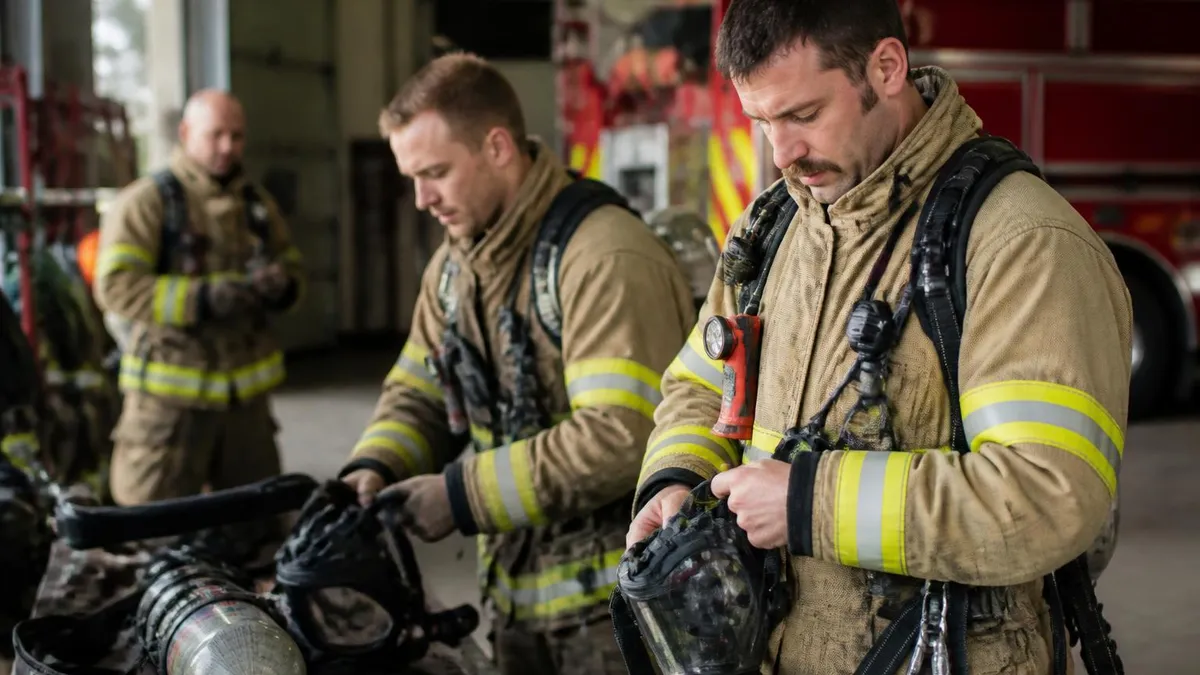
Most municipal fire department civil service examinations open for only 30 to 90 days before the application window closes — sometimes for years. Missing a filing deadline means waiting for the next examination cycle, which can be two to four years away in some jurisdictions. Set calendar alerts for every department on your target list and check their civil service commission websites monthly so you never miss an opening.
Safety and emerging training topics have taken on new urgency in the fire service following a series of high-profile incidents that exposed gaps in traditional curricula. The idaho firefighter shooting case — in which responders were ambushed while working a medical call — became a national inflection point that prompted NFPA, IAFF, and state fire training agencies to accelerate the integration of tactical emergency casualty care (TECC) and active-threat protocols into standard firefighter training programs.
TECC teaches firefighters to apply tourniquets, pack wounds, and manage tension pneumothorax on both civilian victims and injured colleagues in the field, blending combat medicine principles with fire service realities.
Mental health and peer support training has finally begun receiving the institutional attention it deserves after years of advocacy by firefighter unions and behavioral health researchers. Studies consistently show that firefighters experience post-traumatic stress disorder, depression, and substance abuse at rates significantly higher than the general public, driven by repeated exposure to traumatic scenes and a workplace culture that historically stigmatized help-seeking.
Progressive departments now certify peer support team members through programs like the International Critical Incident Stress Foundation curriculum, giving firefighters trained colleagues to talk to after difficult calls. Some departments have also embedded licensed mental health clinicians into their wellness programs, offering confidential counseling available around the clock.
Cancer prevention has become one of the most urgent safety priorities in the modern fire service, following epidemiological research demonstrating that firefighters face improved rates of malignant mesothelioma, non-Hodgkin lymphoma, bladder cancer, and several other cancers tied to carcinogen exposure during firefighting.
Training now emphasizes gross decontamination — rinsing gear and exposed skin immediately after suppression activities — as well as proper use of particulate-blocking hoods during overhaul operations. Many departments have also transitioned to cleaner-burning diesel apparatus, installed exhaust capture systems in bays, and provided two sets of structural gear so firefighters are never forced to don contaminated PPE on consecutive shifts.
Wildland-urban interface (WUI) training has become essential for departments in Western states as climate-driven fire behavior grows increasingly unpredictable and destructive. The Camp Fire in 2018, which destroyed the town of Paradise, California, and killed 85 people, demonstrated that residential departments must be capable of conducting structure-protection operations in active wildland fire conditions — a very different tactical problem from interior residential firefighting.
S-130 and S-190 certification courses, developed by the National Wildfire Coordinating Group, provide the foundational wildland training that urban firefighters need to safely operate in these hybrid environments, and many states now mandate these certifications for all career personnel in high-risk zones.
Technology integration is rapidly transforming what effective firefighter training looks like in the 2020s. Virtual reality (VR) training simulators produced by companies like FLAIM Systems and Pixo VR allow firefighters to practice size-up, suppression, and rescue operations in photorealistic digital environments without consuming water, generating pollution, or risking injury.
Drone integration training teaches firefighters to deploy unmanned aerial systems for aerial reconnaissance of large incidents, giving incident commanders a real-time aerial perspective that was previously unavailable without requesting a helicopter. Body-worn camera programs, already common in law enforcement, are being piloted by several large fire departments as a quality-assurance and after-action review tool.
Thermal imaging camera (TIC) proficiency has shifted from a specialty skill to a core competency that every interior firefighter must demonstrate. Modern cameras can display victim heat signatures through walls and floors, identify hidden fire travel paths in void spaces, and alert firefighters to rapidly deteriorating structural conditions before a catastrophic collapse occurs.
Training programs must now include TIC reading exercises — teaching firefighters to interpret the nuanced grayscale gradients that differentiate a smoldering void fire from a fully involved floor assembly. Equally important is training on TIC limitations: the devices cannot see through metal, are unreliable in steam environments, and should never replace sensory awareness of fire behavior cues like door temperature, smoke volume, and floor integrity.
Ultimately, the strongest departments are those that build a culture of continuous learning rather than treating training as a compliance checkbox. Company officers who debrief every call — routine or major — extract lessons that cannot be replicated in any classroom.
When a crew struggles to connect to a hydrant in time or misses a victim during a primary search, the debriefing conversation converts that failure into institutional knowledge that protects everyone on the next call. Documenting those lessons in a shared platform accessible to all shifts creates an organizational memory that transcends individual experience and accelerates the development of every member, from the newest recruit to the most seasoned captain.
Practical preparation for the firefighter written examination requires a strategic, multi-week study plan that mirrors the structure of the actual test rather than generic test-prep advice. Most firefighter written exams administered by civil service commissions are composed of sections measuring reading comprehension, mechanical reasoning, mathematical calculation, spatial orientation, and situational judgment.
Each section rewards a different cognitive skill set, which means candidates who focus only on their strengths and ignore their weak areas are likely to fail the aggregate score cutoff even if they ace certain portions. A balanced study calendar that dedicates focused time to every content area is far more effective than cramming the week before the examination date.
Reading comprehension passages on firefighter exams are typically drawn from fire service manuals, department SOPs, and emergency management documents. Practicing with authentic source material — specifically IFSTA's Essentials of Fire Fighting textbook and your target department's publicly available general orders — serves two purposes simultaneously: it builds the reading speed and inference skills tested on the exam while simultaneously familiarizing you with the terminology and doctrine you will need on the job.
Many candidates underestimate how much the vocabulary of the fire service differs from everyday language, and early exposure to that specialized lexicon pays dividends on both the written test and the subsequent oral board interview.
Mathematical reasoning sections on firefighter exams typically test basic arithmetic, percentage calculations, unit conversions, and simple algebraic reasoning applied to fire service contexts. Common problem formats include calculating the total flow rate of multiple handlines, determining pump discharge pressure, converting feet of head pressure to pounds per square inch, and computing staffing ratios for mutual-aid requests.
These problems are not advanced mathematics — but they must be solved quickly and accurately under test conditions, which means timed practice is essential. Using a digital timer and completing ten to fifteen math problems every morning for six weeks before the exam builds the speed and accuracy the test rewards.
Spatial orientation and map-reading questions evaluate a candidate's ability to navigate a street grid, identify the fastest route between two points, and mentally rotate a floor plan to determine a room's compass orientation. These questions can feel disorienting at first because most people are accustomed to relying on GPS navigation rather than developing genuine spatial reasoning.
Practice with printed grid maps, hand-drawn building floor plans, and compass-direction exercises three times per week starting eight weeks before your exam date. Many candidates who initially struggle with spatial sections improve dramatically with consistent, deliberate practice because these skills are genuinely trainable rather than fixed cognitive traits.
Situational judgment questions present candidates with realistic on-duty scenarios and ask them to choose the best response from four options. Correct answers are grounded in fire service core values — public safety, crew safety, following the chain of command, and honest communication — rather than personal preference or common sense alone.
Reading the IAFF and NFPA codes of ethics, as well as your target department's core values statement, helps calibrate your situational judgment responses to match what the evaluators are specifically looking for. Fire departments use these questions to screen for candidates who will follow orders under stress, report problems honestly to supervisors, and prioritize civilian safety above personal comfort or departmental convenience.
The oral board interview is the final gate between a strong written examination score and a conditional job offer, and it consistently separates well-prepared candidates from those who relied on technical knowledge alone. Oral boards typically consist of three to five assessors — often a deputy chief, a human resources officer, and a community representative — who ask structured behavioral questions and score each response on a standardized rubric.
Questions like "Describe a time you disagreed with a supervisor and how you handled it" or "Tell us about a situation where you had to perform under extreme pressure" are designed to reveal real behavior patterns, not hypothetical ideals. Answering these questions well requires genuine reflection on your personal history and deliberate practice articulating specific, concrete examples.
Physical conditioning in the weeks leading up to your CPAT or department-specific physical ability test should be periodized to ensure you peak on test day rather than arriving fatigued from overtraining. A standard eight-week taper protocol reduces training volume by 20 to 30 percent in the final two weeks while maintaining intensity, allowing your body to recover and super-compensate.
On the day before your physical test, rest completely and prioritize sleep, hydration, and a high-carbohydrate meal. Showing up rested and fueled — rather than trying to sneak in one final workout — consistently produces better performance outcomes and is the single most common advice given by firefighters who have successfully navigated the hiring process multiple times.
Sample Firefighter Practice Questions
Try these questions from our free Firefighter practice tests. The correct answer and an explanation follow each question.
A firefighter uses a longer pry bar to lift a heavy beam. What does the longer handle primarily increase?
- A. The weight of the beam
- B. The mechanical advantage
- C. The friction on the floor
- D. The beam's density
Answer: B. The mechanical advantage
A longer lever arm increases mechanical advantage, making the load easier to move.
What standard governs the design and performance of firefighter protective ensembles?
- A. NFPA 1971
- B. OSHA 1910
- C. NFPA 1500
- D. ANSI Z87
Answer: A. NFPA 1971
NFPA 1971 sets the standard for structural firefighting protective clothing and equipment.
Before climbing a ground ladder, what safety check should a firefighter perform on its placement?
- A. Confirm proper climbing angle, footing stability, and that it is heeled or secured
- B. Verify the ladder is painted the correct color
- C. Ensure it extends at least three stories
- D. Check that it is made of wood
Answer: A. Confirm proper climbing angle, footing stability, and that it is heeled or secured
A stable footing, correct angle, and securing/heeling the ladder prevent slips and tip-overs during climbing.
What does 'reading smoke' help a firefighter predict?
- A. The exact age of the building
- B. Fire location, intensity, and potential for flashover or backdraft
- C. The water main pressure
- D. The owner's insurance status
Answer: B. Fire location, intensity, and potential for flashover or backdraft
Smoke volume, velocity, density, and color give clues about fire behavior and impending dangerous events.
Firefighter Questions and Answers

Firefighter CPAT Test: Complete Guide to Passing the Candidate Physical Ability Test
What is the Firefighter Exam?

Online Firefighter Training: Complete Guide to Courses, Certification & Career Prep

Firefighters Exam: Complete Guide to Becoming a Firefighter in the US
Firefighter Video Questions and Answers
About the Author
Emergency Manager & FEMA Certification Specialist
Naval Postgraduate SchoolCommander Lisa Foster holds a Master of Science in Emergency Management from the Naval Postgraduate School and is a FEMA-certified emergency manager and Certified Emergency Manager (CEM). With 18 years of emergency response coordination experience across federal and state agencies, she coaches emergency management professionals through ICS, NIMS, and FEMA Independent Study certification programs.
Join the Discussion
Connect with other students preparing for this exam. Share tips, ask questions, and get advice from people who have been there.
View discussion (6 replies)