
Firefighting Physical Test: Complete Guide to Passing Every Requirement 2026
Master the firefighting physical test with our 2026 guide. Salary data, training tips, CPAT prep & more. ✅ Everything you need to pass.
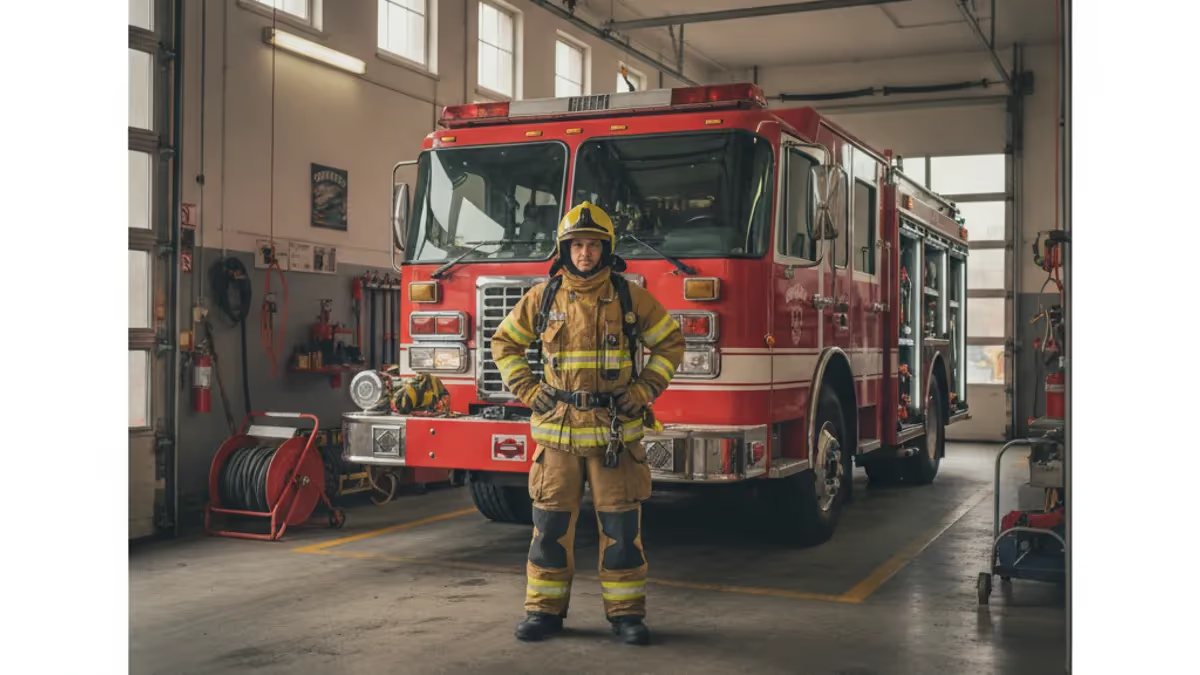
The firefighting physical test is one of the most demanding assessments in any public-safety hiring process, and understanding exactly what it demands is the first step toward passing it. Practice with the free Firefighter practice test on PracticeTestGeeks (350+ questions with answer explanations).
Whether you are applying to a municipal fire department in a major city, exploring a career as a wildland firefighter with the U.S. Forest Service, or signing up as a volunteer firefighter in your community, every pathway leads through some version of a rigorous physical evaluation designed to confirm that you can perform the life-or-death tasks the job requires. Candidates who underestimate the test often find themselves scrambling — or failing — on exam day.
Recent news events have underscored just how dangerous firefighting can be. The tragic incidents involving Idaho firefighters shot while responding to a wildfire scene, and broader discussions of firefighters shot in Idaho during tense emergency deployments, remind the nation that firefighters operate in unpredictable, high-risk environments. That context makes the physical screening process even more meaningful: departments are not simply checking boxes — they are verifying that every member of the crew can handle extreme physical and psychological stress simultaneously.
Beyond the physical demands, many aspiring firefighters want to know: how much do firefighters make, and is the compensation worth the sacrifice? The short answer is yes. Firefighter salary figures vary widely depending on location, seniority, and department type, but the career offers strong benefits, job stability, and a sense of purpose that few professions can match. Understanding the full picture — pay, physical standards, and training pathways — helps you make an informed decision before committing to months of preparation.
This guide covers the full spectrum of what you need to know about the firefighting physical test in the United States. We explain the most commonly used standardized tests, break down each event, provide training strategies backed by exercise science, and give you the context you need to understand how the physical test fits into the broader process of how to become a firefighter. You will also find salary benchmarks, a preparation checklist, and answers to the questions candidates ask most often.
One important distinction to draw early: some departments use the nationally standardized Candidate Physical Ability Test (CPAT), while others design their own department-specific physical agility tests (PAT). The CPAT is administered by FireTeam and used by hundreds of departments across the country. Department-specific tests vary widely in format, but almost all share common events: hose drag, ladder raise, dummy drag, and stair climb with weighted gear. Knowing which test your target department uses is essential before you begin training.
Green firefighter candidates — those with no prior fire service experience — often feel overwhelmed by the combination of written exams, physical testing, psychological evaluations, and background checks that make up a modern firefighter hiring process. The physical test is typically one of the earliest hurdles, which means it functions as a gatekeeper for everything that follows. Pass it, and you move on to the next stage. Fail it, and you may need to wait months before you can reapply. The stakes are high, but with structured preparation and the right information, passing is absolutely achievable.
Throughout this article, we will reference real performance data, provide concrete training timelines, and give you a clear mental model of the full hiring journey. Whether your goal is a career in a SWAT firefight scenario with an urban heavy rescue team, a seasonal role as a wildland firefighter fighting forest fires out West, or a long-term career with a suburban department close to home, the physical test is your gateway — and this guide will help you walk through it with confidence.
Free Firefighter Study Tools
Interactive Firefighter resources on PracticeTestGeeks, free to start:
- Firefighter practice test — 350+ questions with instant scoring and answer explanations
- Firefighter flashcards — review key terms and concepts card by card
- Firefighter study guide — topic-by-topic overview of what the exam covers
- Firefighter cheat sheet — one-page printable summary for last-minute review
Firefighting Physical Test by the Numbers
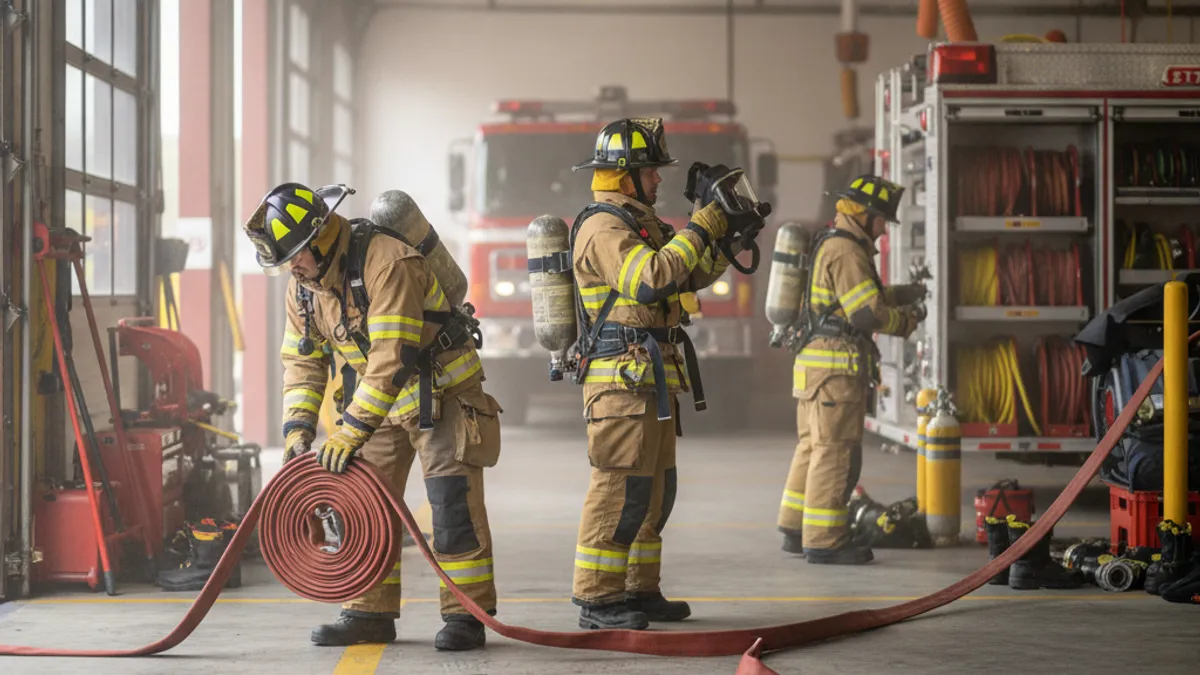
The 8 CPAT Events: What Happens on Test Day
Stair Climb
Hose Drag
Equipment Carry
Ladder Raise & Extension
Forcible Entry
Search, Rescue & Ceiling Breach
Understanding firefighter salary data helps candidates assess whether the career investment — years of preparation, rigorous testing, and ongoing physical demands — delivers a return that matches their personal and financial goals. According to the U.S. Bureau of Labor Statistics, the median annual wage for firefighters was approximately $64,030 in 2024. However, that national median masks enormous geographic variation. Firefighters in California, New York, New Jersey, and Washington State frequently earn well above $90,000 per year, while those in rural Southern states may start closer to $35,000.
How much do firefighters make once they add overtime, hazard pay, and benefits to their base salary? The total compensation picture looks considerably more attractive than base wages alone suggest. Many departments offer defined-benefit pension plans, fully subsidized health insurance for the firefighter and their family, paid shift-based scheduling that effectively gives firefighters more calendar days off than a standard 9-to-5 job, and substantial overtime opportunities during busy fire seasons or when departments are understaffed. In high-cost-of-living metros, total compensation packages routinely exceed $120,000 annually for experienced firefighters.
Career advancement also drives earnings higher over time. Entry-level firefighters typically spend two to four years building experience before becoming eligible for promotion to Fire Engineer or Driver/Operator, roles that involve operating the apparatus and carry a salary bump of roughly 10 to 15 percent. Further advancement to Fire Lieutenant, Captain, Battalion Chief, and beyond brings progressively higher compensation and management responsibilities. Some experienced firefighters also supplement their income with teaching roles, consulting work, or part-time employment in the off days built into their shift schedules.
The question of how much do firefighters make is inseparable from the question of what type of firefighting you pursue. Career (paid) firefighters at municipal departments represent one end of the spectrum. Wildland firefighters working for federal agencies like the Forest Service or Bureau of Land Management operate on a different pay scale, often working seasonal positions at GS-3 to GS-7 federal pay grades, which translates to roughly $30,000 to $55,000 for a full season with significant overtime during active fire seasons. Many wildland firefighters supplement this with offseason jobs or transition to full-time career positions.
Volunteer firefighters, by definition, receive little or no direct pay in most jurisdictions, though some departments offer stipends per call response, annual service pay, or tax credits. The volunteer firefighter path is often the entry point for individuals in rural and suburban communities where paid positions are limited, and many career firefighters begin their journey as volunteers. The experience gained volunteering — real emergency response, team dynamics, equipment familiarity — is genuinely valuable and can give candidates a meaningful edge in competitive paid hiring processes.
The firefighter job market is expected to remain stable through the late 2020s, with the BLS projecting roughly 4 percent growth in employment — about average across all occupations. However, competition for individual positions at desirable urban departments can be fierce. A department in Los Angeles or Chicago might receive thousands of applications for a small number of openings. This competitive reality is exactly why thorough preparation for every element of the hiring process — including the firefighting physical test — is so essential for candidates who want to stand out.
Pay equity has become an increasingly important conversation within the fire service as departments work to recruit and retain a more diverse workforce. Historically, firefighting has been one of the least diverse professions in the United States, and many departments are actively changing hiring practices to broaden the applicant pool. Physical standards are being scrutinized to ensure they measure job-relevant fitness rather than arbitrary strength metrics, and some departments have updated their tests accordingly. Candidates who understand this context are better prepared to advocate for themselves and to represent their communities effectively once on the job.
CPAT vs. Department PAT vs. Wildland Firefighter Standards
The Candidate Physical Ability Test is the most widely recognized standardized firefighting physical test in the United States. Developed by the International Association of Fire Chiefs and the International Association of Fire Fighters, it consists of eight sequential events completed in 10 minutes and 20 seconds while wearing a 50-lb vest. The test is pass/fail — there is no partial credit — and candidates must maintain forward momentum throughout without stopping, sitting, or being physically supported.
Candidates must pass a medical clearance before taking the CPAT and are encouraged to attend an orientation session where they can walk through each event at a slower pace. Many departments require CPAT results from within the past 12 months, so timing your test strategically relative to department application windows is important. Practice sessions, offered at FireTeam testing centers and some community colleges, allow candidates to experience the equipment before the official evaluation.
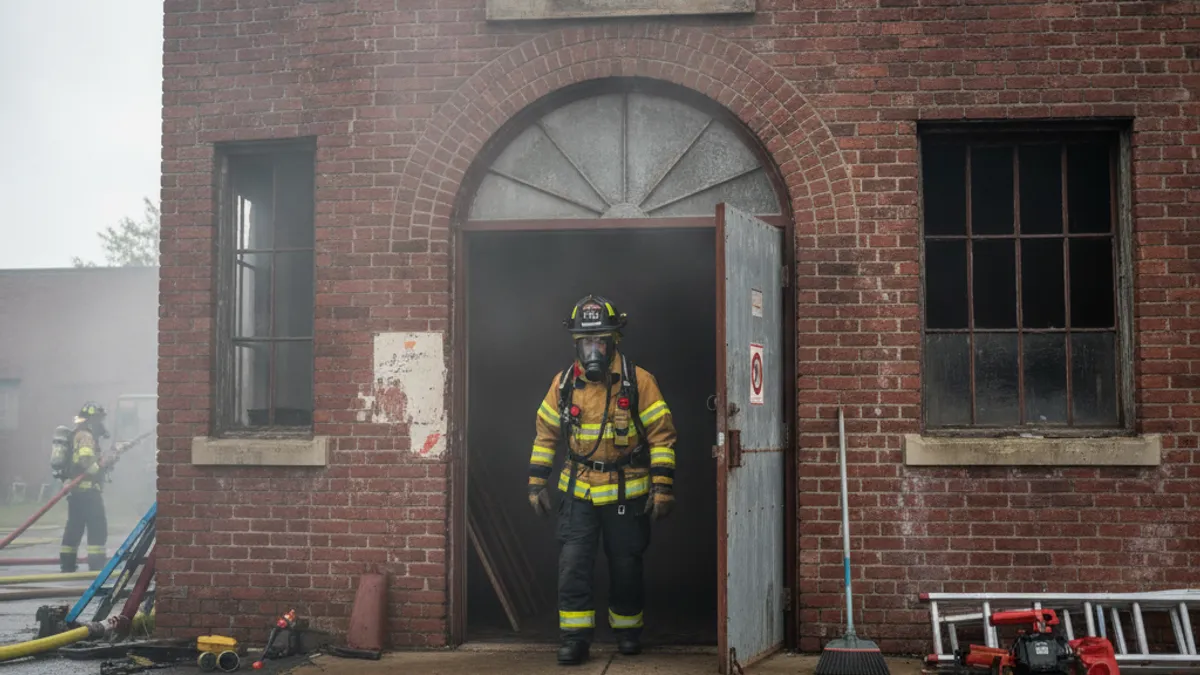
Is Pursuing a Firefighting Career Worth the Physical Demands?
- +Stable, recession-resistant government employment with strong job security
- +Median salary of $64K with overtime and benefits pushing total compensation well above $100K in many areas
- +Generous defined-benefit pension plans that provide retirement income after 20-25 years of service
- +Shift scheduling (typically 24 on / 48 off) provides more total days off than most 9-to-5 careers
- +Deep sense of purpose and community impact that surveys rank as a top driver of job satisfaction
- +Clear career advancement pathway from Firefighter I through Captain and Chief Officer ranks
- −Extremely competitive hiring process in major cities with acceptance rates as low as 1 in 20 applicants
- −Physical toll accumulates over a career — back injuries, knee problems, and hearing loss are common
- −Exposure to carcinogens in smoke and fire debris elevates cancer risk significantly above general population
- −Shift work disrupts sleep patterns and can strain family relationships and personal health
- −Entry-level salaries in rural departments can be quite low, often below $40,000 annually
- −Traumatic exposure to accidents, fatalities, and disasters contributes to elevated rates of PTSD among firefighters
Pros and Cons at a Glance
| Pros | Cons |
|---|---|
| Stable, recession-resistant government employment with strong job security | Physical toll accumulates over a career — back injuries, knee problems, and hearing loss are common |
| Deep sense of purpose and community impact that surveys rank as a top driver of job satisfaction | Exposure to carcinogens in smoke and fire debris elevates cancer risk significantly above general population |
| Clear career advancement pathway from Firefighter I through Captain and Chief Officer ranks | Shift work disrupts sleep patterns and can strain family relationships and personal health |
Firefighting Physical Test Preparation Checklist
- ✓Confirm which physical test your target department uses — CPAT, department PAT, or Pack Test.
- ✓Schedule a medical clearance exam at least 8 weeks before your test date.
- ✓Complete a baseline fitness assessment: time your 1.5-mile run, max push-ups, and stair-climb endurance.
- ✓Purchase or borrow a 50-lb weighted vest and begin wearing it during training walks within the first two weeks.
- ✓Train on an actual StepMill or stair stepper at 60 steps per minute for at least 15 minutes per session.
- ✓Practice hose drag mechanics using a garden hose or rope drag substitute to build grip strength and hip drive technique.
- ✓Develop a 12-week progressive training plan that increases intensity by no more than 10 percent per week.
- ✓Attend at least one CPAT orientation or department practice session before your official test date.
- ✓Simulate full test conditions — all events back-to-back — at least twice in the final four weeks of training.
- ✓Prepare physically and mentally for the tunnel search event by practicing crawling in confined or low-visibility spaces.
The Stair Climb Makes or Breaks CPAT Candidates
Data from FireTeam testing centers consistently shows that the stair climb event — the very first CPAT event — accounts for a disproportionate share of failures and early withdrawals. Candidates who are not specifically trained for three minutes at 60 steps per minute with 50 lbs of gear often find that their heart rate spikes so severely during this event that they cannot complete subsequent events effectively. Build your stair-climb capacity first, then layer in the other events.
Understanding how to become a firefighter in the United States requires mapping a process that varies considerably by state, department type, and whether you are pursuing a career or volunteer role. That said, most pathways share a common sequence of steps: meet minimum eligibility requirements, pass a written exam, pass the firefighting physical test, complete background and psychological screening, and then enter a fire academy. Each step has its own preparation demands, and understanding the full pipeline helps you allocate your time and energy effectively.
The minimum requirements for most career firefighter positions include being at least 18 years old (some departments require 21), holding a high school diploma or GED, possessing a valid driver's license, and having no felony convictions. Many departments also require candidates to hold an Emergency Medical Technician (EMT) certification before applying, or to obtain one during the academy. EMT certification typically requires a 120- to 150-hour course, so if you do not already have it, factor that into your timeline.
The written firefighter exam covers reading comprehension, mathematics, mechanical reasoning, spatial orientation, memory and recall, and sometimes job-specific knowledge areas such as basic fire science and emergency medical terminology. Written exam scores often determine your position on the hiring register, which in turn influences when — or whether — you receive a conditional job offer. A strong written score can compensate for a physical test that squeaks by at the minimum; a weak written score may mean that only the highest physical performers move forward even if you technically pass both.
Background investigations in firefighter hiring are thorough and can take weeks or months to complete. Investigators typically examine criminal history, driving record, employment history, financial records, and references. Honesty throughout the process is essential — misrepresentations discovered during a background check are treated as more disqualifying than the underlying information would have been if disclosed truthfully. Candidates with past issues such as minor drug use, traffic violations, or employment gaps should be prepared to discuss them openly and demonstrate the maturity and growth that has occurred since.
Psychological evaluations are a standard part of hiring at most career departments. These typically include a written personality assessment such as the Minnesota Multiphasic Personality Inventory (MMPI) and a follow-up interview with a licensed psychologist. Evaluators are looking for emotional stability, stress tolerance, sound judgment, and absence of conditions that would impair performance in emergency situations. There is no specific way to prepare for a psychological evaluation beyond being honest and getting adequate sleep in the days before — attempts to game personality assessments are usually counterproductive.
Fire academy training, once you receive a conditional offer, typically runs 16 to 24 weeks for career departments. Academy curricula include fire behavior and suppression techniques, emergency medical response, hazardous materials awareness, rescue operations, and physical conditioning that is even more demanding than the hiring test. Recruits who enter the academy already in excellent physical condition find the transition significantly easier. Think of the firefighting physical test not as a finish line but as an entrance exam to a much more challenging training period.
Networking within the fire service community accelerates every part of this process. Many successful firefighter candidates begin by volunteering with a local department, riding along with career crews, joining Explorer or Cadet programs as teens, or taking fire science courses at a community college. These experiences provide authentic context for interviews, build familiarity with department culture, and often establish mentorship relationships with firefighters who can provide guidance and advocacy during the hiring process. The fire service, like many public-safety professions, rewards those who demonstrate sustained commitment before they receive any compensation for it.
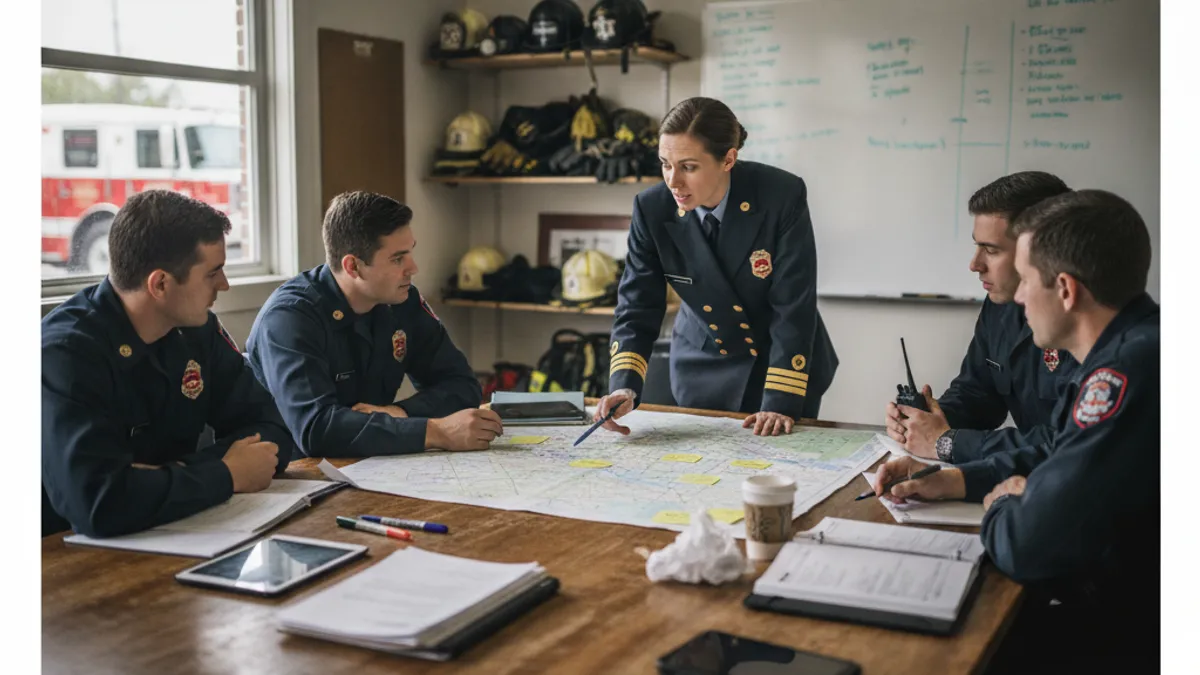
Most departments that accept CPAT scores require results from within the past 12 months. If you passed the CPAT but your results have expired by the time the department is ready to process your application, you will need to retake the test. Monitor your target department's hiring timeline carefully and schedule your CPAT so that results remain valid through the anticipated conditional offer date — this is a common and avoidable mistake.
The volunteer firefighter pathway is the entry point for a significant portion of the American fire service workforce. Across the United States, there are approximately 675,000 volunteer firefighters serving in roughly 19,600 all-volunteer or mostly volunteer departments, according to the National Fire Protection Association. These individuals respond to structure fires, vehicle accidents, medical emergencies, and natural disasters — often without pay and frequently at personal risk. For many rural communities, volunteer firefighters are the only fire protection available.
Becoming a volunteer firefighter typically requires meeting the same minimum eligibility standards as a career candidate — age, background check, physical fitness — though the specific requirements vary by department. Many volunteer departments have their own physical agility tests that mirror the career hiring process, and recruits must complete Firefighter I and Firefighter II certification courses, which are governed by NFPA 1001 standards. These courses are often offered through community colleges or regional fire training centers and can be completed while holding other employment.
Volunteer service provides genuine operational experience that makes candidates more competitive in career hiring processes. A candidate who has responded to 200 calls as a volunteer arrives at a career application with situational awareness, team communication habits, and equipment familiarity that no amount of study can fully replicate. Many career firefighters explicitly credit their volunteer years as the foundation of their professional competence. Departments, in turn, tend to view volunteer experience favorably — it signals both commitment to the mission and realistic understanding of what the job demands.
The wildland firefighter career track deserves extended discussion because it is frequently overlooked in mainstream firefighter career guides, yet it attracts thousands of applicants each year — particularly young people interested in conservation, outdoor work, and high-intensity team environments. Federal wildland firefighting positions with the Forest Service and BLM are posted on USAJOBS and follow federal hiring rules. State positions vary but often follow similar processes. Most seasonal positions begin in the spring and run through the fall fire season, with the most demanding assignments in the mountain West, Pacific Northwest, and Southern states.
Hotshot crews — formally called Interagency Hotshot Crews — are the elite infantry of the wildland fire world. Twenty-person crews that deploy to the most dangerous and complex wildfires in the country, hotshot assignments require exceptional physical fitness, prior wildland fire experience, and the ability to work in remote terrain for extended periods with minimal support. Competition for hotshot positions is intense, and candidates typically spend two to three seasons on engine crews or hand crews before becoming competitive for hotshot assignments. The work is physically brutal, psychologically challenging, and deeply rewarding for those drawn to it.
Safety incidents involving firefighters — including the high-profile cases of Idaho firefighters shot while responding to calls in 2024 and 2025 — have sparked broader conversations within the fire service about responder safety protocols, the relationship between fire departments and law enforcement, and the adequacy of scene-staging practices.
The incidents involving firefighters shot in Idaho prompted many departments nationwide to review their protocols for responding to scenes where violence may be present or ongoing. Some jurisdictions have formalized requirements for law enforcement to secure scenes before fire crews can enter, a practice known as the Rescue Task Force model that pairs firefighters and medics with police escorts in active threat environments.
For candidates preparing specifically for career departments in regions affected by these evolving safety concerns, understanding the interplay between fire, EMS, and law enforcement response — sometimes called a swat firefight scenario — adds important context to your preparation. Academy training now frequently includes awareness modules on active shooter and hostile event response (ASHER). Candidates who demonstrate awareness of these protocols during interviews signal that they have done their homework and are entering the profession with open eyes about its full range of demands and dangers.
Many readers pair this guide with the ten standard firefighting orders to check their readiness before exam day.
Practical training advice for the firefighting physical test begins with an honest assessment of where you are starting from. Many candidates make the mistake of beginning a generic fitness program — running, lifting weights, doing CrossFit — without ever specifically training for the events on the actual test. Generic fitness is a foundation, not a substitute. Once you have established a baseline of cardiovascular endurance and functional strength, you need to shift into test-specific preparation that mimics the actual demands of each event.
For the stair climb, the single most important event on the CPAT, find a gym with a StepMill — not a stairmaster, not an elliptical, but an actual rotating stair machine. Set it to 60 steps per minute and work up to sustained bouts of five, then eight, then twelve minutes. Add a weighted vest as soon as you can maintain proper form.
If a StepMill is not available, find a multi-story building and climb actual stairs, ideally with a 45- to 50-lb backpack. This is the most direct transfer training available and should be done at least three times per week in the final eight weeks before your test.
Grip strength is an underrated determinant of CPAT performance. The hose drag, equipment carry, and ladder extension all demand sustained grip under fatigue. Add dead hangs, farmer carries, and towel pull-ups to your routine. Grip strength responds quickly to targeted training — most candidates see meaningful improvement within four to six weeks of consistent work. Avoid using wrist straps during training, since the test does not allow them and you want your grip to be conditioned to full load without support.
Cardiovascular base is the engine that powers everything else on the CPAT. Candidates should aim for a VO2 max — a measure of aerobic capacity — that puts them in at least the good category for their age and sex, as measured by a 1.5-mile run time. Most adults training from a moderate baseline can improve their 1.5-mile run time by two to three minutes over a 12-week period with structured interval training.
A commonly effective approach is three days of training per week: one long steady-state run (30-40 minutes), one interval session (8 x 400 meters at 5K pace), and one stair-climb session. Supplement with two to three strength sessions focused on lower body, core, and pushing movements.
Recovery is as important as training volume. Candidates in their 30s and 40s often need more recovery time between sessions than their 20-something competitors, and ignoring this reality leads to injury rather than fitness gains. Prioritize sleep — seven to nine hours per night — during your preparation period. Sleep deprivation impairs strength, reaction time, and decision-making, all of which matter on test day. Nutrition should support the training demands: adequate protein (0.7 to 1.0 grams per pound of bodyweight), complex carbohydrates for energy, and sufficient calories to prevent muscle loss during high-volume training weeks.
Mental preparation is a real component of CPAT success that is rarely discussed in training guides. The test is designed to produce cumulative fatigue — each event is more difficult because of what came before it. Candidates who have not trained under fatigue will find that the events toward the end of the test feel dramatically harder than they did in isolation.
Train the last events — the victim rescue and ceiling breach — specifically in a fatigued state. Run through the first four events, then immediately attempt the fifth and sixth. Your body will adapt to performing complex motor tasks while depleted, which is exactly what the test — and the job — demands.
On the day of the test itself, arrive early, complete your warm-up fully (the CPAT provides a mandatory warm-up period before the stair climb, and you should use every moment of it), and stay mentally present between events. Walk at a steady pace between stations — there is no benefit to rushing since the clock stops between events.
Stay hydrated the day before and consume a moderate meal two to three hours before your test time. Wear the same footwear you trained in, since the last thing you want on test day is breaking in new boots while performing a ladder raise in full gear weight.
Sample Firefighter Practice Questions
Try these questions from our free Firefighter practice tests. The correct answer and an explanation follow each question.
What is the primary objective of firefighting strategies and tactics?
- A. To control the spread of fire
- B. To rescue trapped individuals
- C. To save lives and protect property
- D. To extinguish all fires
Answer: C. To save lives and protect property
The primary objective of firefighting strategies and tactics is to minimize harm and loss. While controlling fire spread and rescuing individuals are critical actions, they are ultimately means to achieve the overarching goal of saving lives and protecting property from destruction. This encompasses both human safety and material preservation as the ultimate aim.
What does the term 'strategies' refer to in firefighting?
- A. The overall plan to achieve the objectives
- B. The communication methods employed
- C. The equipment used during firefighting
- D. The specific actions taken to fight a fire
Answer: A. The overall plan to achieve the objectives
In firefighting, 'strategies' refer to the broad, overarching plans or approaches developed to achieve the primary objectives, such as saving lives and protecting property. They define the 'what' and 'why' of the operation, guiding the overall deployment of resources and personnel. Tactics, in contrast, are the specific actions taken to implement these strategies.
What should incident commanders base their actions on in determining firefighting strategies?
- A. Intuition and personal experience
- B. Available resources, risk factors, and building conditions
- C. Weather conditions and terrain layout
- D. Hierarchy and department guidelines
Answer: B. Available resources, risk factors, and building conditions
Incident commanders must make informed decisions based on a comprehensive assessment of the situation. This includes evaluating the available personnel and equipment (resources), identifying potential dangers to firefighters and occupants (risk factors), and understanding the structural integrity and layout of the building (building conditions). These factors collectively guide the most appropriate and safest strategic approach.
Which of the following is NOT a primary function of the outer shell of a structural firefighting turnout coat?
- A. Providing the majority of the thermal insulation
- B. Resisting flames and high temperatures
- C. Protecting against abrasions, cuts, and punctures
- D. Shielding the inner layers from damage
Answer: A. Providing the majority of the thermal insulation
The outer shell is the first line of defense, providing flame resistance and protection from physical hazards like cuts and abrasions. [9, 18] However, the bulk of the thermal insulation (up to 75%) is provided by the thermal liner and moisture barrier, not the outer shell. [18]
Firefighter Questions and Answers


About the Author

Emergency Manager & FEMA Certification Specialist
Naval Postgraduate SchoolCommander Lisa Foster holds a Master of Science in Emergency Management from the Naval Postgraduate School and is a FEMA-certified emergency manager and Certified Emergency Manager (CEM). With 18 years of emergency response coordination experience across federal and state agencies, she coaches emergency management professionals through ICS, NIMS, and FEMA Independent Study certification programs.
Join the Discussion
Connect with other students preparing for this exam. Share tips, ask questions, and get advice from people who have been there.
View discussion (6 replies)