
Firefighter Agility Test: Complete Guide to the CPAT and Physical Fitness Standards
Master the firefighter agility test with our complete CPAT guide. Learn events, passing standards, salary, and how to train. 🏆 Real data inside.
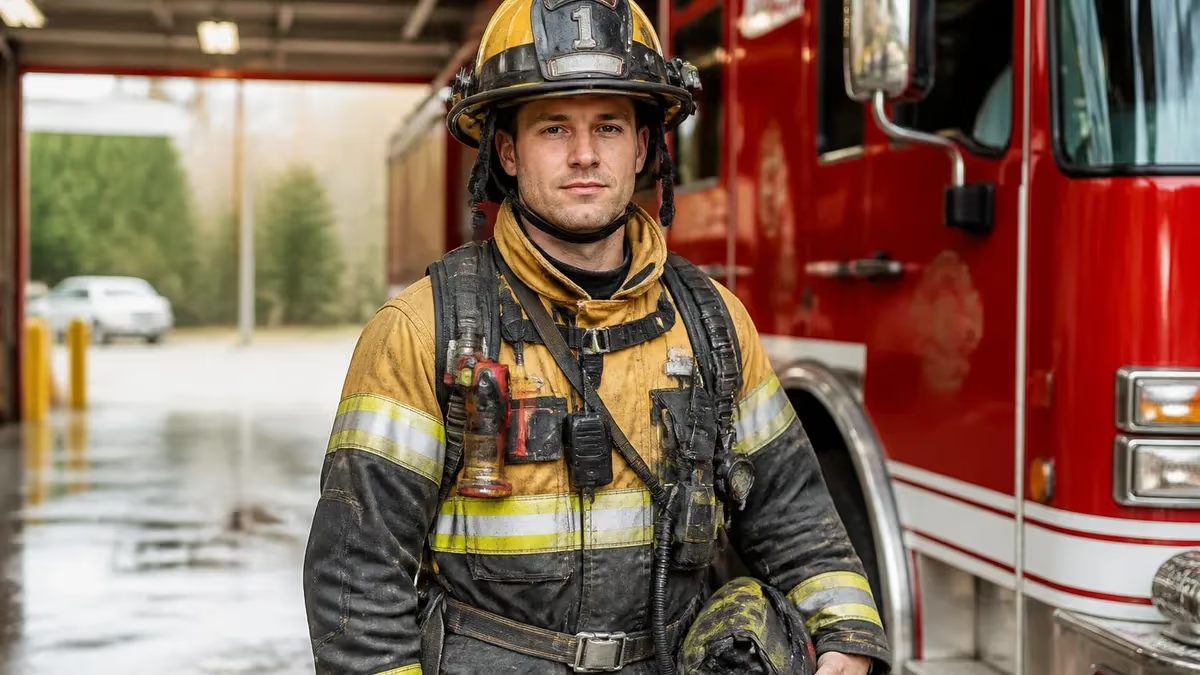
The firefighter agility test is one of the most demanding physical screenings in any public-safety career, and passing it is a non-negotiable gateway for candidates across the United States.
Whether you are eyeing a position with a metropolitan department, pursuing a role as a wildland firefighter in the western states, or exploring a path as a volunteer firefighter in a rural community, departments universally require proof that you can carry the physical demands of the job before you ever set foot on a fire scene. This guide breaks down every station, standard, and strategy you need to cross the finish line with confidence.
Most departments in the US rely on the Candidate Physical Ability Test, or CPAT, developed by the International Association of Fire Fighters and the International Association of Fire Chiefs. The test consists of eight consecutive events completed while wearing a 50-pound weighted vest that simulates the weight of full turnout gear and a self-contained breathing apparatus. The clock runs from the moment you step onto the stair-climb machine until you drop the last dummy at the rescue drag station. Candidates must complete all eight events in under 10 minutes and 20 seconds — no exceptions.
Understanding how to become a firefighter means recognizing that the agility test is just one hurdle in a layered hiring process. After passing the written exam, most departments schedule the CPAT, followed by a background investigation, psychological evaluation, and medical clearance. Failing the physical test eliminates you from the current cycle, so preparation is not optional — it is the foundation of your entire application strategy. Visit our dedicated CPAT guide at how to become a firefighter for a deeper look at the full process.
News coverage of incidents like the idaho firefighter shooting has amplified public awareness of the genuine dangers firefighters face every day. Those dangers make the agility test even more important: departments need to know that every person on the crew can perform rescues, drag hose, and climb stairs loaded with gear — without hesitation and without injury. The physical standard is not bureaucratic gatekeeping; it is a direct reflection of what the job demands in the worst moments.
Salary is another major motivator driving interest in the career. Data from the Bureau of Labor Statistics shows the median firefighter salary in the United States sits around $52,500 per year for entry-level positions, but that figure climbs significantly with rank, overtime, and metropolitan cost-of-living adjustments. Some departments in large cities like Los Angeles, San Francisco, and New York pay experienced firefighters well above $100,000 annually when overtime is included. Understanding how much do firefighters make in your target region helps you calibrate how much effort to invest in preparation.
The CPAT is also used as a benchmark for specialized roles. Green firefighter candidates — those who are new to the field with no prior fire service experience — are often required to complete additional orientation programs before or alongside the CPAT.
Wildland firefighter positions managed by federal agencies such as the US Forest Service and the Bureau of Land Management use their own Work Capacity Test (WCT), also called the Pack Test, which involves carrying a 45-pound pack over three miles in under 45 minutes. Both tests share the same underlying philosophy: prove you can do the job before the job asks you to do it.
This article walks you through every aspect of the firefighter agility test landscape — from the eight CPAT events and their scoring criteria, to training timelines, nutrition strategies, and mental preparation tips that help candidates perform under pressure. We also cover salary benchmarks, career pathways for volunteer and wildland roles, and the training props departments use to simulate real emergency conditions. Read every section carefully, take the practice quizzes, and arrive on test day ready to succeed.
Firefighter Agility Test by the Numbers
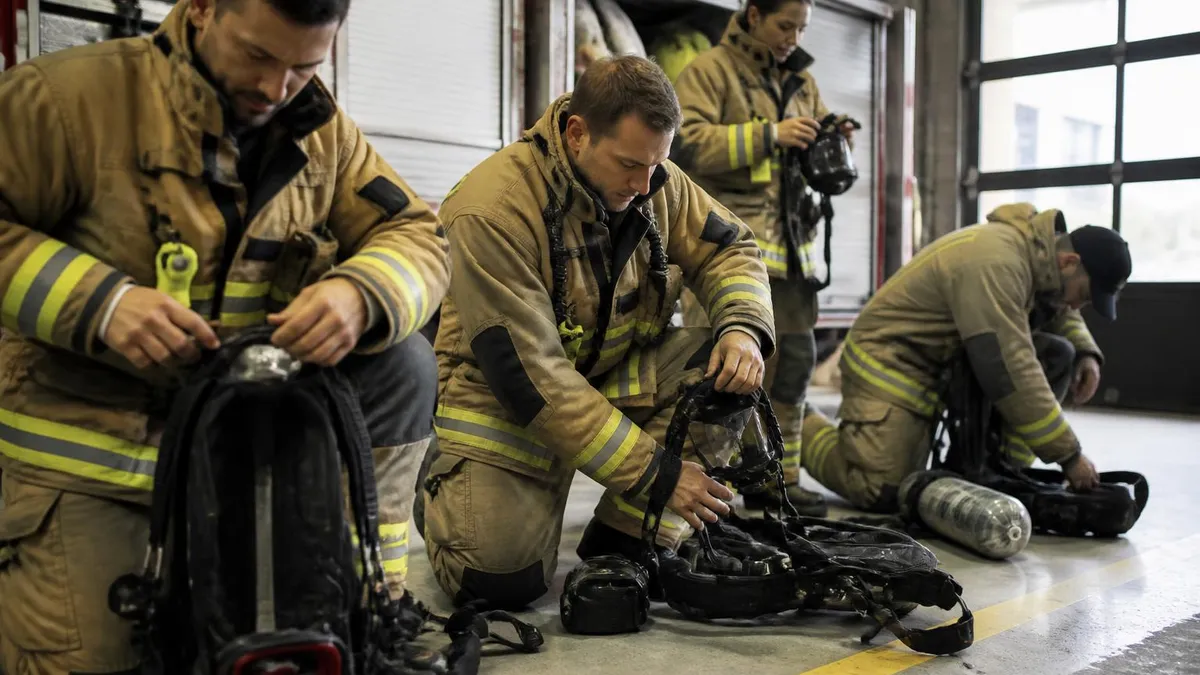
CPAT Event-by-Event Breakdown
Stair Climb (3 min)
Hose Drag
Equipment Carry
Ladder Raise & Extension
Forcible Entry
Search, Rescue Drag & Ceiling Breach
Building a training plan for the firefighter agility test requires a structured, progressive approach that balances cardiovascular conditioning, functional strength, and recovery. Most coaches recommend a 12-week preparation cycle, divided into three four-week phases: base fitness, event-specific simulation, and peak performance. During the base phase, focus on improving your aerobic capacity with runs, rowing, and StepMill sessions at moderate intensity. Your goal is to develop the aerobic base that will sustain you through the 10-minute-plus test without going anaerobic early and blowing up on the stair climb.
Weeks five through eight shift to event-specific simulation. This is where you replicate the actual CPAT movements using real or substitute equipment. If you have access to a fire station or testing facility, schedule timed run-throughs wearing a weighted vest. If not, substitute with 50-pound pack carries, tire drags, sledgehammer swings on a heavy bag, and tunnel crawls through obstacle courses. The critical insight is that CPAT fitness is not just cardiovascular — it is positional and grip-specific. Your hands and forearms will fatigue in ways that general training does not anticipate unless you practice the exact movement patterns.
Weeks nine through twelve focus on peaking. Reduce overall volume by about 20 percent while maintaining intensity. This tapering approach, well-documented in athletic performance research, allows your muscles to fully recover and super-compensate before test day. During this phase, run at least two full mock CPAT tests under timed conditions. Time each event individually on day one, then do a full-sequence simulation on day two. Review your splits and identify which events cost you the most time — those are your final weeks' priority.
Nutrition plays a surprisingly large role in agility test performance. Many candidates train hard but neglect fueling strategies. Aim for 0.7 to 1 gram of protein per pound of bodyweight daily to support muscle repair. Carbohydrates are your primary fuel during high-intensity training; do not restrict them in the weeks leading up to the test. On the morning of the CPAT, eat a moderate meal two to three hours before your start time — something like oatmeal, a banana, and eggs. Avoid heavy fats and excessive fiber, which slow digestion and can cause discomfort during physical exertion.
Hydration is equally critical. Dehydration of just 2 percent of body weight can measurably impair performance. In the 48 hours before your test, focus on consistent fluid intake rather than last-minute water loading. During the test itself you cannot stop to drink, so arriving fully hydrated is your only option. Some candidates also find that caffeine, consumed 45 to 60 minutes before the test, improves alertness and reduces perceived exertion — but only use this strategy if you have practiced it during training. Never try a new supplement on test day.
Strength training should complement, not compete with, cardio conditioning. Two to three days per week of resistance work targeting the posterior chain — deadlifts, Romanian deadlifts, rows, and pull-ups — translates directly to the hose drag, rescue drag, and ladder events. Do not neglect your pressing muscles either; the forcible entry and ceiling breach events demand significant shoulder and tricep output. Compound movements are always preferable to isolation exercises for CPAT prep because they train your body to move as an integrated unit, which is exactly what the test demands.
Mental preparation is the variable most candidates underestimate. The CPAT is physically demanding, but it is also psychologically intense. The stair climb feels interminable; the search tunnel is disorienting in darkness; the rescue drag comes when you are already deeply fatigued. Practice deliberate breathing and pacing cues.
Coaches who train first responders consistently report that candidates who have a pre-planned mental script for each event — a simple self-talk phrase like "drive through" on the stair climb or "hip pivot" on forcible entry — perform measurably better under the stress of real testing conditions. Also review the idaho firefighter shooting incident context in our written exam overview to understand how situational awareness fits into the broader hiring picture.
Wildland Firefighter, Volunteer & Green Firefighter Pathways
Wildland firefighters working for federal agencies like the US Forest Service or Bureau of Land Management must pass the Work Capacity Test rather than the CPAT. The arduous-level Pack Test requires carrying a 45-pound pack over three miles of varied terrain in 45 minutes or less. Candidates who train specifically for this test report that uphill hiking with a loaded pack two to three times per week is the single most effective preparation strategy available.
Wildland firefighter salaries typically start between $15 and $22 per hour for seasonal GS-3 through GS-5 positions, with opportunities to advance to hotshot crew and smokejumper roles that pay significantly more. Many candidates use wildland seasons to build their physical fitness baseline and incident command experience before transitioning to career municipal positions. The skills overlap considerably, and the physical culture in wildland firefighting is arguably the most demanding in the entire fire service ecosystem.
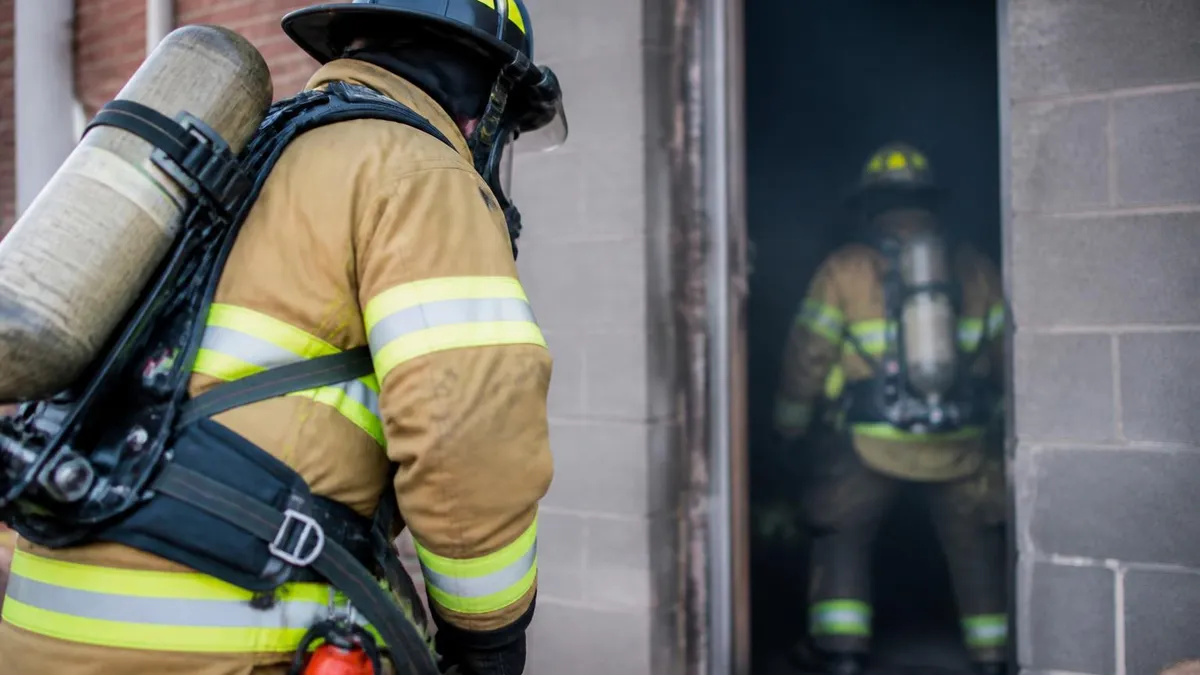
Pros and Cons of the CPAT as a Hiring Standard
- +Standardized scoring eliminates subjective judgment from physical hiring decisions
- +Eight consecutive events realistically simulate actual fireground workload demands
- +Weighted vest ensures all candidates are tested under equivalent gear-load conditions
- +Widely accepted across hundreds of US departments, making certification transferable
- +Orientation program provides candidates a formal practice opportunity before the scored test
- +Clear pass/fail threshold gives candidates a specific performance target to train toward
- −Test fee and orientation fee can total $100-$200, creating a financial barrier for some candidates
- −CPAT facilities are not available in all geographic areas, requiring travel for rural candidates
- −Ten-minute time limit may disadvantage candidates with longer limbs or different biomechanics
- −The stair climb machine is rarely found in standard gyms, limiting accessible practice options
- −Test does not assess cognitive or decision-making performance under physical stress
- −Different departments may still supplement CPAT with local agility tests, adding preparation burden
Firefighter Agility Test Preparation Checklist
- ✓Register for the official CPAT orientation session at a certified testing facility at least 60 days before your target test date.
- ✓Acquire or borrow a 50-pound weighted vest and begin wearing it during training walks within the first week of prep.
- ✓Log a minimum of three StepMill or stair-climber sessions per week to build the specific cardiorespiratory endurance the CPAT demands.
- ✓Practice hose drag simulations using a tire or sled on grass or turf to build hip-drive and grip endurance simultaneously.
- ✓Perform at least two full-sequence mock CPAT tests under timed conditions during weeks 10 and 11 of your training cycle.
- ✓Record your split time for each event to identify your two slowest stations and focus extra practice sessions there.
- ✓Include deadlifts, farmer carries, and pull-ups in your weekly strength program to build posterior chain and grip capacity.
- ✓Sleep at least seven to nine hours per night during your final three weeks of prep — recovery is where fitness gains are made.
- ✓Confirm all required documents (government ID, registration confirmation) the day before your test to eliminate morning stress.
- ✓Arrive at the testing facility at least 30 minutes early to complete paperwork, warm up, and acclimate to the equipment.
The Stair Climb Makes or Breaks Most Candidates
Approximately 70 percent of CPAT failures occur during or immediately after the stair-climb event. If you are not logging at least three dedicated StepMill sessions per week at 60+ steps per minute with a loaded vest, you are under-prepared for the single highest-risk station on the test. Build your stair-climb capacity first, and everything else becomes easier.
The firefighter salary landscape in the United States is more varied and more lucrative than many candidates realize when they first enter the hiring process. The Bureau of Labor Statistics reports a national median wage of approximately $52,500 per year for firefighters at the entry level, but this number masks enormous regional variation. In high-cost metropolitan areas, departments in California, New York, New Jersey, and Washington routinely offer base salaries of $70,000 to $85,000 for newly hired firefighters, with total compensation packages — including overtime, hazard pay, and benefits — frequently exceeding $100,000 in the first few years of service.
Overtime is a structural reality in fire service compensation, not an occasional windfall. Most departments operate on a 24-hours-on, 48-hours-off schedule, which means mandatory overtime when colleagues call in sick or when major incidents require extended staffing. Many firefighters working in large urban departments earn 20 to 40 percent of their total annual income through overtime alone. This makes the question of "how much do firefighters make" highly dependent on local department size, staffing levels, and union agreements — factors that candidates should research carefully for their specific target department.
Benefits packages represent substantial additional compensation that base salary figures do not capture. Firefighter pension plans are among the most generous in the public sector, with many departments offering defined-benefit retirement at 50 percent to 80 percent of final salary after 20 to 25 years of service. Health insurance, dental, vision, and life insurance are typically provided at low or no cost to the employee. Taken together, the total compensation value of a firefighter career — base pay, overtime, benefits, and pension — often exceeds that of many private-sector jobs requiring similar or greater educational credentials.
Career advancement significantly accelerates earning potential. The rank of engineer or driver/operator typically comes with a 10 to 15 percent pay increase over firefighter base. Promotion to lieutenant — which usually requires passing a separate promotional exam and accumulating three to five years of experience — can add another $10,000 to $20,000 annually. Captain, battalion chief, and deputy chief positions push total compensation well into six-figure territory in large departments. Each promotional rank has its own written and practical examination process, making lifelong learning a financial imperative in this career.
Specialty assignments offer both increased compensation and career satisfaction. Hazardous materials technicians, technical rescue specialists, wildland firefighting team members, and fire investigators typically receive assignment pay or supplemental stipends on top of their base salary. Some departments pay premium rates for paramedic certification, recognizing that fire departments in the US handle a disproportionate share of emergency medical calls relative to structure fires. Earning and maintaining paramedic licensure can add $5,000 to $15,000 per year to a firefighter's compensation depending on the department and the local EMS system structure.
The job outlook for firefighters is moderately positive through 2030. The BLS projects approximately 4 percent growth in firefighter employment, driven primarily by population growth in suburban and exurban areas that require new station staffing. Retirements among baby-boom-era career firefighters are also creating significant openings in departments that have been historically difficult to enter. News coverage of high-profile incidents, including the swat firefight in response to ambush-style attacks on first responders, has also prompted some departments to accelerate hiring to ensure adequate crew coverage for dangerous calls. The green firefighter market is particularly active right now.
Geographic mobility is a significant career advantage for firefighters willing to relocate. Candidates who pass the CPAT and earn Firefighter I and II certifications in one state often find their credentials recognized — through reciprocity agreements or equivalency evaluations — in neighboring states. This portability makes it feasible to apply in multiple jurisdictions simultaneously, dramatically increasing the odds of landing a hire in a competitive job market. Candidates in rural areas with limited local openings should strongly consider applying to larger regional departments, where hiring cycles are more frequent and the physical testing infrastructure is more strong.
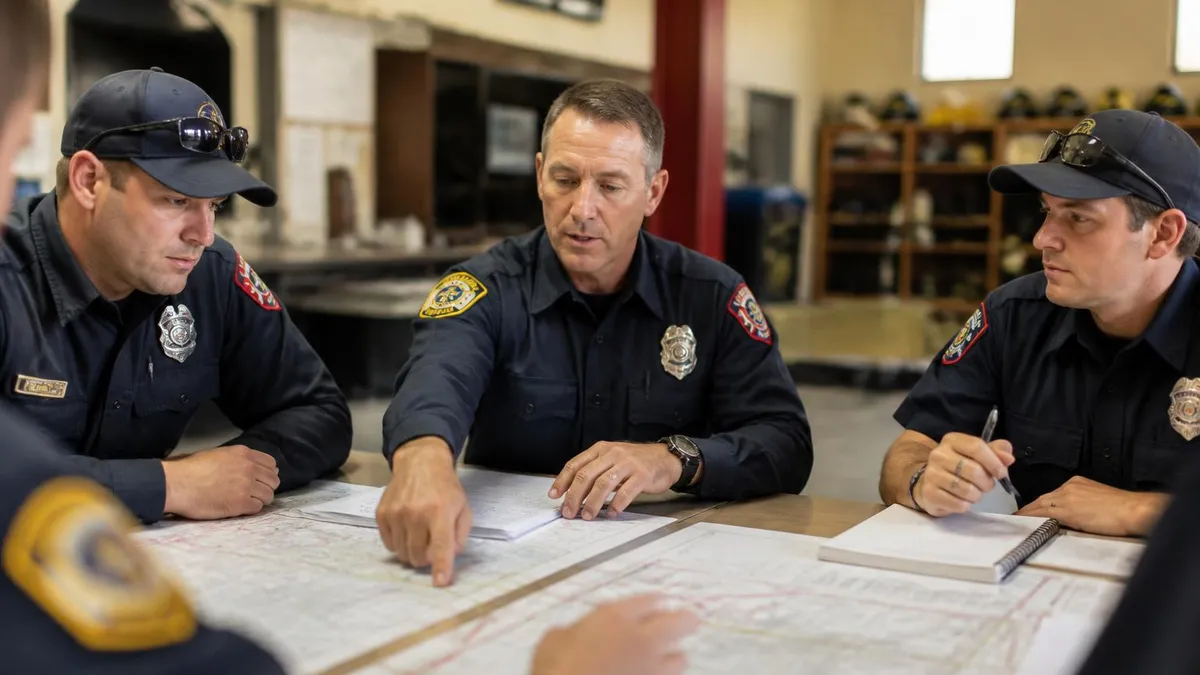
CPAT certification is valid for only 12 months from the date of your scored test. If you pass but a department's hiring cycle extends beyond that window, you may need to retest before you can receive a conditional offer. Always check the certification expiration date against the department's expected hire date before scheduling your CPAT.
Common mistakes on the firefighter agility test are well-documented among testing center coordinators and department recruiters, and the good news is that every one of them is preventable with proper preparation. The most frequent error is arriving undertrained for the stair-climb station. Candidates who run regularly but never train on an actual StepMill are consistently surprised by how different stair climbing feels compared to flat-ground cardio.
The constant stepping motion engages your quadriceps, glutes, and calves in a way that running does not replicate, and the added vest weight compounds the cardiovascular demand significantly. If you cannot access a StepMill, climbing actual stairs in a high-rise building or stadium with a loaded pack is the best available substitute.
A second common error is using poor technique on the forcible entry station. Candidates who try to overpower the measuring device with arm strength alone exhaust themselves quickly and often fail to move the device the required five feet before fatigue sets in.
The correct technique involves planting your feet in a wide stance, loading your hips, and driving through the strike with a full hip rotation — the same mechanics a baseball batter uses. This approach transfers significantly more force per swing while consuming far less muscular energy. Practice this movement pattern until it becomes automatic, ideally using a tire and sledgehammer during training.
Equipment carry errors often involve improper grip or carrying position. Some candidates grab both saws with a thumbless grip under stress, increasing the risk of dropping an item or straining the wrist. Practice carrying awkward, heavy objects at your sides with a firm, full grip. The key is to keep the weight close to your body — the further an object is from your center of gravity, the more muscular effort it requires to stabilize. Train with farmer carry variations in the gym to develop the specific grip endurance this station demands.
The rescue drag station catches many candidates off guard because it comes after five physically demanding events. By the time you reach the 165-pound dummy, your legs and back are already under significant cumulative fatigue. The most efficient technique is to grab the dummy under the armpits, lean back into a slight hip-hinge, and walk backward using short, powerful steps rather than trying to drag with your arms alone. Your hips and legs generate far more force than your arms in this position. Practice this movement with a heavy sandbag or training dummy during your simulation sessions.
Hydration and pre-test nutrition errors are subtler but equally consequential. Some candidates show up to the CPAT after a heavy meal eaten too close to test time, leading to gastrointestinal distress during the physical events. Others eat too little and find their energy flagging during the final three stations.
The optimal approach is a moderate, easily digestible meal two to three hours before the test — enough calories to sustain effort but not so heavy that your body is still processing food when you hit the stair climb. Experiment with different pre-workout meal options during your training mock tests to find what works for your body specifically.
Gear and equipment oversights on test day are entirely preventable but surprisingly common. Wear the same shoes you have trained in — this is not the day to debut new footwear. Lace-up athletic shoes with firm ankle support are required; slip-ons and open-toed shoes are prohibited. Wear close-fitting, comfortable athletic clothing without drawstrings or loose fabric that could snag on equipment.
Leave jewelry at home or tape over rings if you cannot remove them. Bring your registration confirmation, a government-issued photo ID, and any medical clearance documentation your testing center requires. Review our volunteer firefighter training props guide for information on equipment you can use to practice at home or in a field setting.
Finally, do not underestimate the value of the official CPAT orientation session. This is a required, non-scored run-through that gives you access to all eight stations with a proctor present to explain the rules and demonstrate correct technique. Many candidates treat the orientation as a formality, but it is actually your most valuable practice opportunity because you use the exact equipment and layout you will encounter on test day.
Take it seriously, ask the proctor every question you have, and walk every event at full pace to get a feel for the transitions and timing. Candidates who arrive at their scored CPAT having completed a thorough orientation consistently outperform those who did not.
Practical preparation for the firefighter agility test is not just about physical fitness — it is about building systems and habits that translate from the gym to the testing floor and, eventually, to the fireground. The candidates who succeed on their first attempt are almost never the ones who simply worked out hard for a few months. They are the ones who trained specifically, recovered intentionally, studied the test format thoroughly, and showed up on test day with a clear plan for every station. Here are the most actionable strategies you can implement starting today.
Begin your preparation by conducting an honest self-assessment. Run a time trial of each CPAT station individually — stair climb duration, weight carry distance, drag speed — and compare your results against the target benchmarks. This baseline assessment tells you where to focus your training energy. Candidates who are already aerobically fit but lack upper body strength should emphasize pulling and carrying movements. Those with good strength but limited cardiovascular capacity should front-load their plan with longer, lower-intensity cardio sessions before adding vest weight and CPAT-specific drills.
Create a structured weekly training template and stick to it for at least eight weeks before making adjustments. A proven structure looks like this: two days of stair-climb or step-carry intervals, two days of strength training focused on compound movements, one day of full CPAT simulation, and two days of active recovery. Active recovery on non-training days — light walking, mobility work, stretching — accelerates muscle repair and reduces injury risk. Skipping recovery days is one of the most common overtraining mistakes among motivated candidates.
Invest in your equipment setup early. A quality 50-pound weighted vest is the single most important training tool you can purchase. Resistance bands, a pull-up bar, a sledgehammer and tire, and a heavy sandbag for drag simulation round out an effective home training setup for under $300. If you have access to a CrossFit gym or a fire academy with simulation equipment, use it regularly — the social environment and structured programming can be powerful motivators during a months-long preparation cycle.
Track your progress carefully. Keep a training log that records every session: what you did, how long it took, how it felt on a 1-to-10 effort scale, and what you noticed about your technique. Review this log weekly. Progress in CPAT preparation is rarely linear — you will have setbacks, plateaus, and breakthroughs. The log gives you objective data to distinguish between a true plateau that requires a programming change and a temporary dip caused by accumulated fatigue or poor sleep.
Practice the mental component as deliberately as the physical. Experienced CPAT coaches teach candidates to develop a "race plan" — a specific mental script for each event that includes a pacing cue, a technique reminder, and a motivational anchor. Write your race plan down and rehearse it during your mock CPAT tests. When you hit the stair climb on test day and your lungs start to burn, having a pre-wired mental response — "keep the pace, drive the knees, breathe out on the step" — prevents panic and keeps your mechanics from falling apart under oxygen debt.
Connect with the firefighting community before your test date. Most departments host open houses, and many career firefighters are genuinely enthusiastic about sharing advice with serious candidates. Joining a CPAT prep class, a fire-career Facebook group, or a local department's ride-along program gives you access to practical knowledge that no guidebook fully captures.
The more context you have about what actual firefighters do every day — including the physical demands of responding to swat firefight scenarios, building collapses, and wildland evacuations — the more motivated and focused you will be during your preparation. Use every resource available, take every practice test you can find, and remember that the agility test is not the finish line — it is the starting line of a career that will challenge and reward you for decades.
Firefighter Questions and Answers

Firefighter CPAT Test: Complete Guide to Passing the Candidate Physical Ability Test
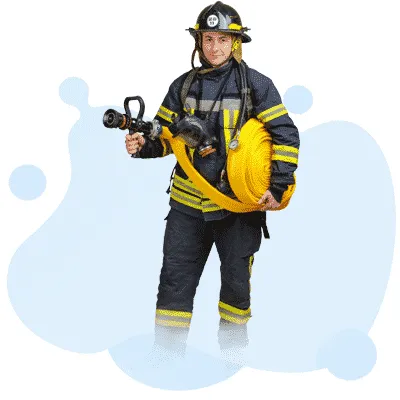
What is the Firefighter Exam?
Firefighter Video Questions and Answers

Training Props for Firefighters: Complete Guide to Simulation Equipment & Career Prep

Firefighters Training: Complete Guide to Becoming a Firefighter in the US
About the Author

Emergency Manager & FEMA Certification Specialist
Naval Postgraduate SchoolCommander Lisa Foster holds a Master of Science in Emergency Management from the Naval Postgraduate School and is a FEMA-certified emergency manager and Certified Emergency Manager (CEM). With 18 years of emergency response coordination experience across federal and state agencies, she coaches emergency management professionals through ICS, NIMS, and FEMA Independent Study certification programs.
Join the Discussion
Connect with other students preparing for this exam. Share tips, ask questions, and get advice from people who have been there.
View discussion (6 replies)