
Firefighter Written Exam: Complete Study Guide & Practice Test Prep
Master the firefighter written exam with expert tips, real salary data & practice tests. Learn how to become a firefighter in 2026 September. 🎓
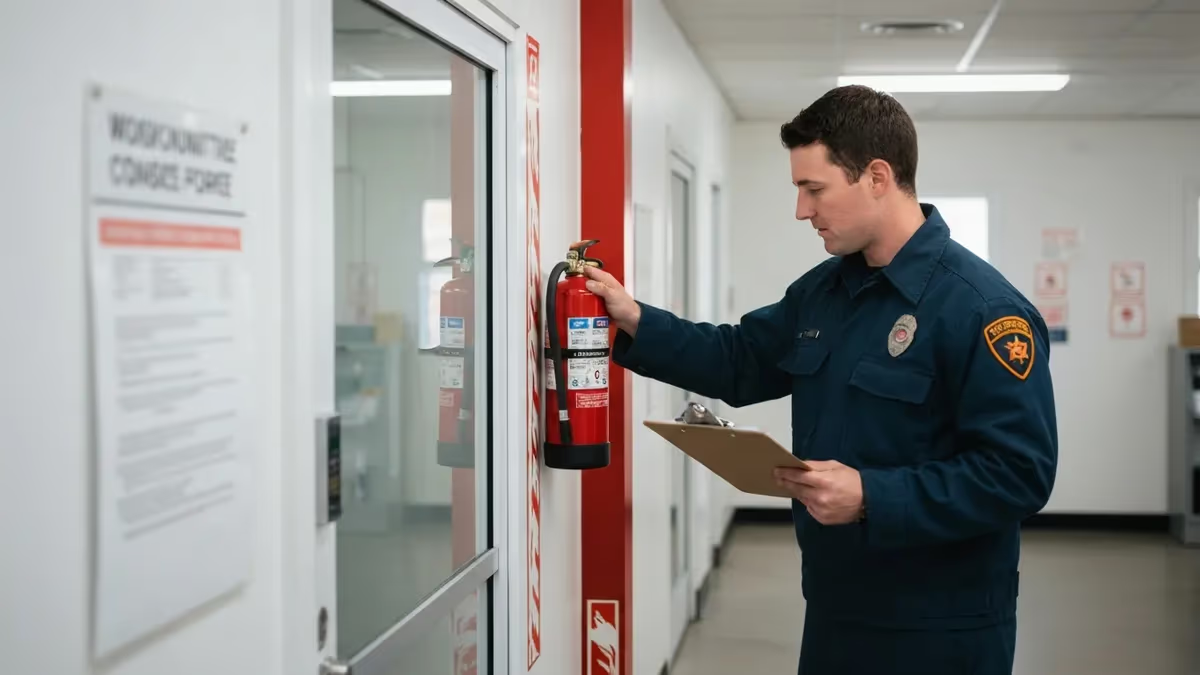
The firefighter written exam is the first major hurdle every aspiring firefighter must clear on the path to the firehouse. This standardized test evaluates your reading comprehension, mechanical reasoning, mathematics, map reading, and situational judgment — skills that directly reflect the demands of real emergency response work.
Whether you are applying to a major metropolitan department or a smaller municipality, understanding the structure and content of the firefighter written exam is essential to moving forward in the hiring process. Candidates who walk into test day without deliberate preparation consistently score lower than those who dedicate even three to four weeks of focused study.
Interest in fire service careers has surged in recent years, driven by competitive firefighter salary packages, strong job security, and the deeply meaningful nature of the work. Departments nationwide receive hundreds of applications for each open position, meaning your written exam score can be the deciding factor between landing an interview and being passed over entirely. In many departments, scores are ranked from highest to lowest, and only candidates in the top tier advance to the next stage of the process. A strong performance on the written test is therefore not just a requirement — it is a competitive advantage.
Recent high-profile events involving firefighters in the line of duty, including incidents like the idaho firefighter shooting that shocked the nation, have brought renewed public attention to the sacrifices first responders make every day. These events also underscore why fire departments hold candidates to rigorous standards: the men and women who earn a badge must demonstrate sound judgment, strong communication skills, and the ability to process complex information quickly and accurately. The written exam is specifically designed to measure these exact qualities before you ever set foot inside a burning building.
This guide covers everything you need to know about the firefighter written exam, from the topics most commonly tested to proven study strategies, expected difficulty, and what happens after you pass. We break down each section of the exam, offer concrete preparation tips, and provide access to free practice questions so you can benchmark your readiness before test day. Whether you are a first-time applicant or retaking the exam to improve your score, the information here will help you walk into that testing room with confidence and a clear plan.
Understanding how to become a firefighter requires recognizing that the written exam is just one piece of a multi-stage process that typically includes a physical ability test, background investigation, medical evaluation, polygraph, and oral interview. However, the written exam comes first for most departments, and failing it means you never get the chance to demonstrate your physical fitness or your character in person. Treating the written test with the seriousness it deserves is the single best investment you can make early in your firefighting career journey.
Throughout this guide, you will also find context about related career topics — from salary expectations and volunteer opportunities to what a green firefighter experiences in their first year on the job. The firefighting profession rewards those who come prepared, and preparation begins the moment you decide to pursue this career. Let this guide serve as your roadmap from applicant to candidate, and eventually, from candidate to firefighter.
Firefighter Written Exam by the Numbers
Key Facts at a Glance
| Item | Value | Details |
|---|---|---|
| Typical Passing Score | 70% | Many departments require 70–80% minimum |
| Exam Duration | 2–3 hrs | Varies by department and test vendor |
| Typical Question Count | 100–150 | Multiple-choice format, timed sections |
| Recommended Prep Time | 12 weeks | For candidates starting from scratch |
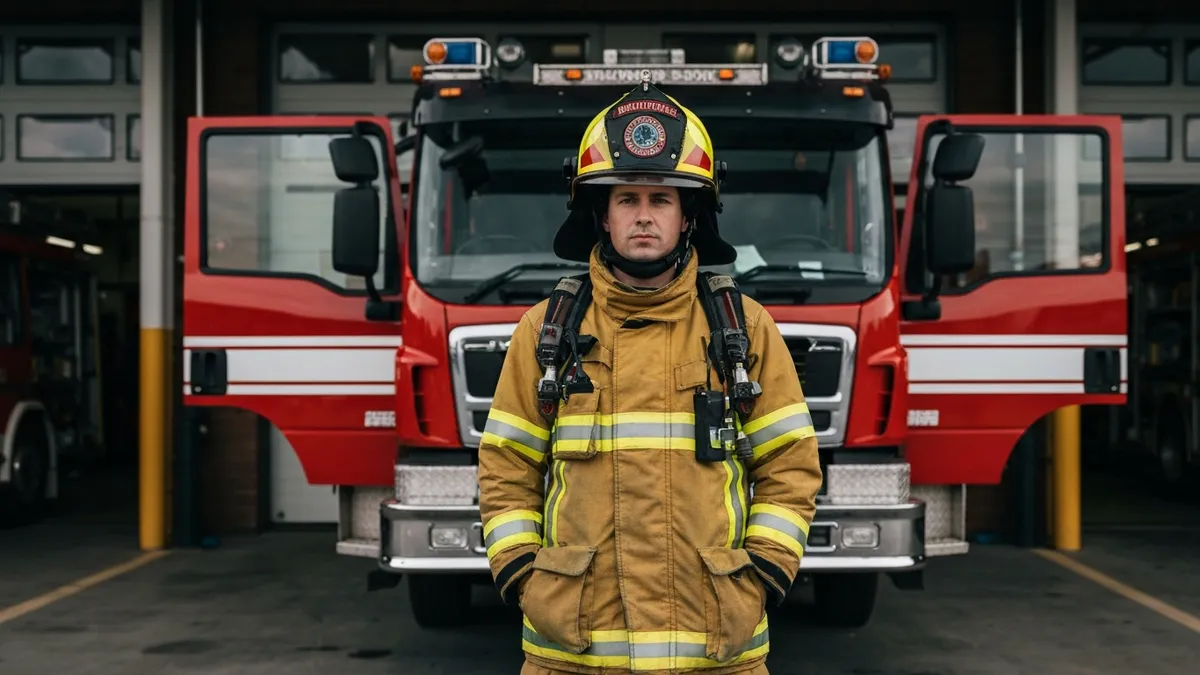
Firefighter Written Exam Format
| Section | Questions | Time | Weight | Notes |
|---|---|---|---|---|
| Reading Comprehension | 30 | 35 min | 25% | Passages from fire codes, policies, and reports |
| Mechanical Aptitude | 25 | 30 min | 21% | Pulleys, levers, basic physics concepts |
| Mathematics & Reasoning | 25 | 30 min | 21% | Arithmetic, ratios, basic algebra |
| Map Reading & Spatial | 20 | 25 min | 17% | Street grids, compass directions, floor plans |
| Situational Judgment | 20 | 30 min | 16% | Ethical scenarios, crew dynamics, priority decisions |
| Total | 120 | 2.5 hours | 100% |
The reading comprehension section of the firefighter written exam is consistently cited by test-takers as one of the most demanding portions, not because the vocabulary is unusually advanced, but because the passages are dense with procedural information that must be absorbed quickly and accurately.
Candidates read excerpts from fire codes, departmental policies, emergency procedures, and safety regulations, then answer questions that test both literal recall and inferential understanding. The key to succeeding here is developing the habit of active reading — identifying the main point of each paragraph, noting specific numbers and named procedures, and mentally flagging any conditional language like "unless" or "except."
Mechanical aptitude questions assess your understanding of basic physics as it applies to firefighting equipment and everyday machinery. You may be asked how a pulley system changes the force required to lift a load, how water pressure changes with elevation, or how a simple lever functions. These questions do not require advanced engineering knowledge, but they do reward candidates who have spent time with hands-on tools or who study diagrams carefully. Many test vendors use visual question formats where you examine a diagram and select the correct answer about how the depicted mechanism operates.
The mathematics section typically covers arithmetic, percentages, ratios, unit conversions, and basic geometry. Real-world applications include calculating the volume of water needed to suppress a fire, determining hose pressure, or figuring out how many personnel are needed given a staffing ratio. Candidates who have not used math regularly may find this section challenging on timing — working quickly and accurately under pressure is a skill that improves dramatically with timed practice sets. Do not rely on the written exam to be lenient; departments want firefighters who can do rapid mental calculations on scene.
Map reading and spatial reasoning sections simulate the navigation demands of emergency response. A firefighter arriving at an unfamiliar address in the middle of the night must be able to interpret a street grid, identify the fastest legal route, and communicate directions clearly to incoming units. Exam questions in this section often present a simple map with labeled streets and ask you to identify the best route given specific constraints, such as one-way streets or road closures. Practicing with physical maps and online navigation tools in unfamiliar neighborhoods is a surprisingly effective preparation strategy.
Situational judgment questions place you inside realistic firefighting scenarios and ask what the most appropriate response would be. These questions assess whether you understand fire service values: safety above all, respect for the chain of command, teamwork, and ethical conduct. A correct answer typically reflects the response that prioritizes life safety, follows established procedures, and supports your crew — even if another option might seem faster or more independent. Reviewing the core values published by your target department can give you a framework for approaching these questions consistently and correctly.
To learn more about the full scope of the selection process, including what a green firefighter experiences during probationary training, visit our dedicated resource on video-based exam questions. Understanding what is expected of you beyond the written test will also help you answer situational judgment questions more authentically, because you will have a clearer picture of the real-world context those questions reflect.
The difficulty of the written exam varies somewhat by department size and the test vendor used. Large metropolitan departments like FDNY, LAFD, and Chicago FD typically use custom exams developed in-house or by specialized public safety testing companies like National Testing Network (NTN), Ergometrics, or I/O Solutions. Smaller departments may use off-the-shelf civil service exams. Regardless of format, the subject areas remain remarkably consistent across the country, which means the preparation strategies described in this guide apply broadly to virtually any firefighter written exam you are likely to encounter.
How to Become a Firefighter: Written Exam Study Strategies
To sharpen reading comprehension for the firefighter written exam, begin by reading fire-related materials daily — NFPA guidelines, FEMA publications, and local department standard operating procedures are all publicly available and closely mirror the passage types used on actual exams. Practice answering questions immediately after reading each passage, without re-reading, to simulate the time pressure of test day. Focus especially on passages that use conditional language, numbered lists of steps, and procedural instructions, as these formats appear most frequently.
Timed reading drills are especially powerful in the final two to three weeks before your exam date. Set a timer for the same number of minutes allotted per question in your target exam, then force yourself to commit to an answer before moving on. Common errors include spending too long on a single passage and running out of time for later questions, or second-guessing correct answers after initially choosing them. Both of these habits can be broken with disciplined, timed practice over two to three weeks of consistent effort.
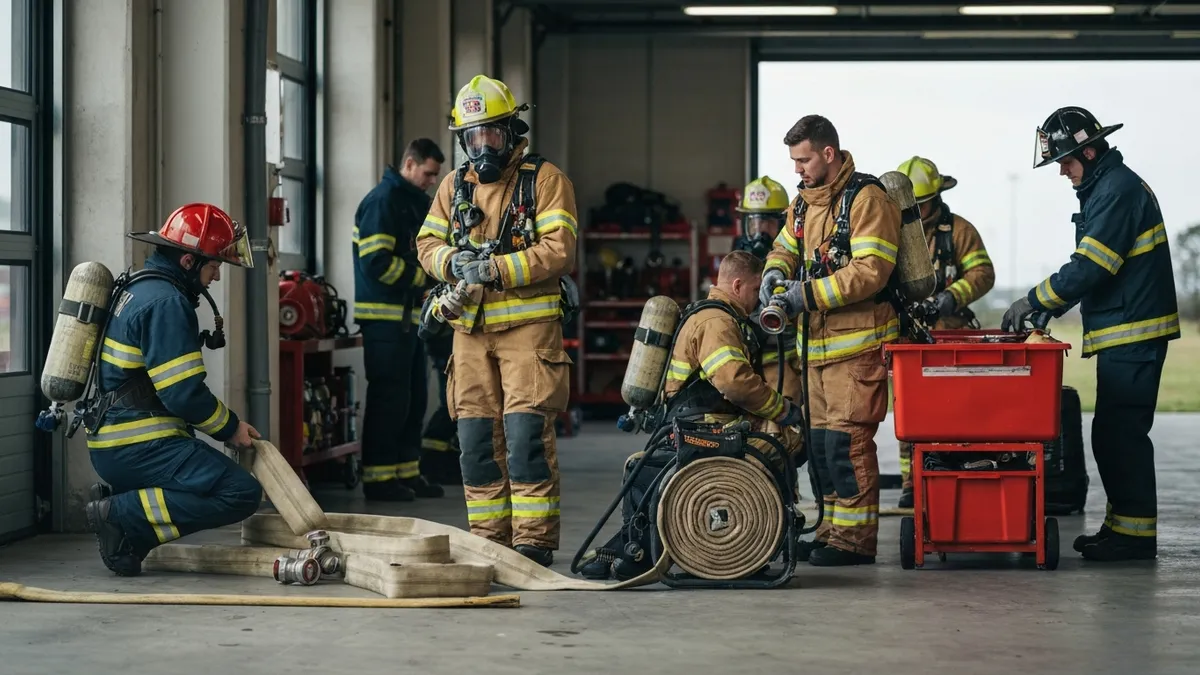
Firefighter Career: Pros and Cons to Consider Before You Apply
- +Competitive salary with strong benefits including pension, health insurance, and overtime pay
- +Exceptional job security — fire departments are public employers with stable long-term funding
- +Meaningful work that directly serves and protects your community every shift
- +Structured career advancement from probationary firefighter to lieutenant, captain, and beyond
- +Strong team culture and camaraderie unique to the fire service environment
- +Shift schedules (typically 24 on / 48 off) provide significant off-duty time for family and second careers
- −Physical and psychological demands are intense — exposure to traumatic incidents is unavoidable
- −The hiring process is extremely competitive, lengthy, and may span one to two years from application to hire date
- −Career-ending injuries are a real risk, and firefighters face elevated rates of certain cancers from smoke exposure
- −Night shifts, holidays, and mandatory overtime can strain personal relationships and family life
- −Starting salaries in smaller or rural departments may be lower than metropolitan counterparts
- −Volunteer firefighter roles offer service without pay, which is challenging for those needing full-time income
Firefighter Written Exam Preparation Checklist
- ✓Obtain the official exam notice for your target department and confirm which test vendor administers the exam.
- ✓Take a full-length diagnostic practice test to establish a baseline score and identify weak subject areas.
- ✓Create a 10–12 week study schedule allocating more time to your lowest-scoring sections.
- ✓Study reading comprehension daily using NFPA guides, FEMA publications, and department SOPs.
- ✓Complete at least 50 timed math problems per week drawn from firefighting word-problem scenarios.
- ✓Practice map reading with printed street grids under timed conditions at least three times per week.
- ✓Review mechanical aptitude diagrams covering pulleys, gears, levers, and hydraulic systems.
- ✓Study situational judgment questions using your target department's published core values as a guide.
- ✓Take at least three full-length practice exams in the two weeks before your test date.
- ✓Confirm your test location, required identification, and arrival time at least 48 hours before exam day.
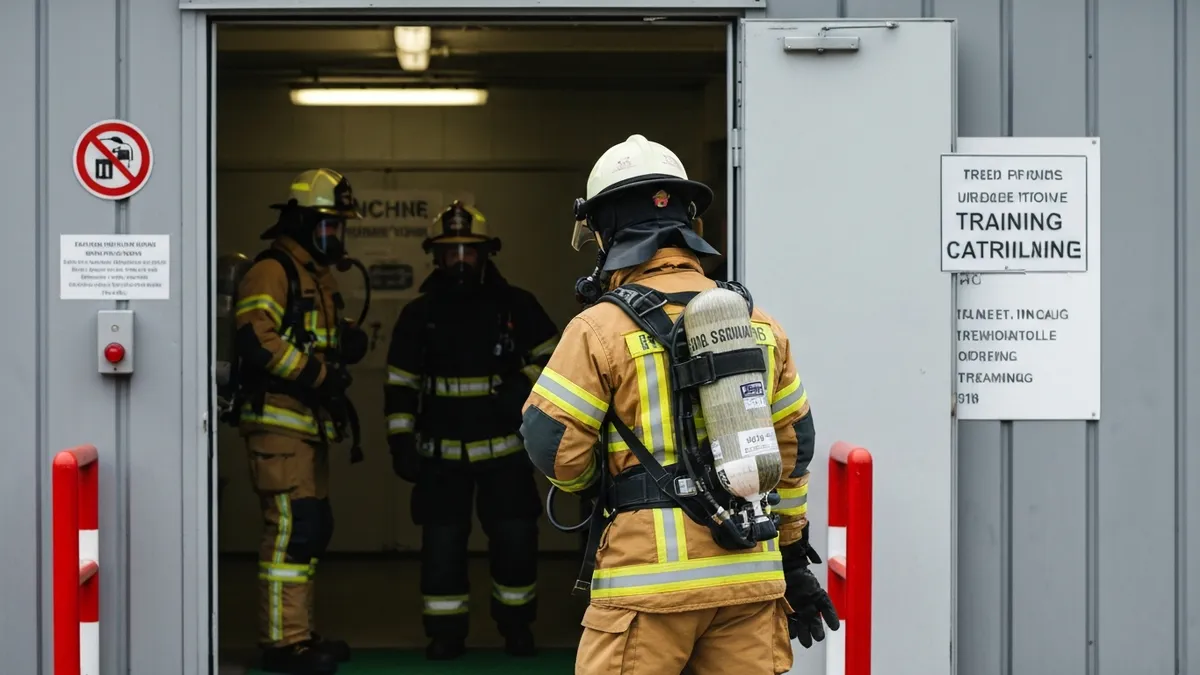
Your Score Rank Matters as Much as Your Raw Score
In most civil service firefighter hiring processes, candidates are ranked by exam score from highest to lowest, and departments hire down the list until all openings are filled. Passing with a 70% may keep you eligible, but a score in the 90th percentile dramatically increases your chance of receiving a conditional job offer — especially in cities where hundreds of candidates apply for fewer than twenty open positions.
Understanding how to become a firefighter in the United States involves navigating a process that varies meaningfully by department size, location, and union agreements, but follows a recognizable general pattern. Most applicants begin by submitting an online application during an open recruitment window, which may only occur every two to four years for a given department.
After meeting minimum eligibility requirements — typically a high school diploma or GED, a valid driver's license, and U.S. citizenship or legal residency — qualified candidates are invited to take the written exam. Your performance on that test determines whether you proceed to the next phase.
Firefighter salary varies considerably across the United States, and understanding the compensation landscape can help you make informed decisions about which departments to target. According to the U.S. Bureau of Labor Statistics, the median annual wage for firefighters was approximately $64,000 as of the most recent data cycle, but this figure masks enormous variation.
Entry-level firefighters in rural or volunteer-dependent areas may earn $35,000 to $45,000, while experienced firefighters in major cities like San Francisco, New York, or Los Angeles can earn well over $100,000 annually when overtime and specialty pay are included. Benefits packages, including defined-benefit pensions, health insurance, and paid leave, add substantial value beyond the base salary figure.
The question of how much do firefighters make is best answered by looking at the complete compensation package rather than base salary alone. Many departments offer significant overtime opportunities, particularly when staffing is short — and in many urban departments, overtime is not merely available but practically expected. Hazard pay, paramedic certification pay, and longevity bonuses can add tens of thousands of dollars annually to a firefighter's total compensation. Some senior firefighters who have captured available overtime earnings report total annual compensation exceeding $150,000, though this requires significant sacrifice of personal time and comes with corresponding physical and mental demands.
Volunteer firefighters represent a critical segment of the American fire service. Roughly 65 percent of all firefighters in the United States serve in a volunteer capacity, according to the National Fire Protection Association. These individuals receive no salary but often receive stipends, gear allowances, and retirement benefits. For many rural and suburban communities, volunteer departments are the only fire protection available. Volunteering is also an excellent way to build real firefighting experience, demonstrate commitment to the profession, and strengthen your application when you eventually pursue a full-time paid position. Many career firefighters began their journeys as volunteers.
The events surrounding the idaho firefighters shot incident drew national attention to the very real dangers facing first responders in an era of increased social tension and mental health crises. While violence against firefighters remains statistically uncommon compared to other occupational hazards, the psychological toll of serving as a first responder — witnessing trauma, facing structural fire dangers, and supporting colleagues through loss — is profound and well-documented. Departments increasingly recognize the importance of peer support programs, mental health resources, and critical incident stress management protocols to sustain the wellbeing of their personnel across long careers.
The idaho firefighter shooting and similar high-profile incidents have also prompted renewed discussions about situational awareness training for fire personnel, coordination with law enforcement during tactical situations like a swat firefight, and the protocols firefighters follow when responding to scenes where active threats may be present. These discussions have found their way into some written exam situational judgment sections, where candidates may be asked how to respond when arriving at a scene that presents unexpected security risks. The correct answer always prioritizes personnel safety and immediate communication with incident command before any other action.
For candidates exploring the full spectrum of the hiring process, from the written exam through the physical ability test and oral board, it helps to understand how each stage connects to the others. The written exam score influences your ranking on the eligibility list. The CPAT or equivalent physical ability test confirms your fitness for duty.
The oral interview assesses your communication skills, values, and cultural fit with the department. Each stage builds on the last, which is why candidates who invest heavily in written exam preparation often find that the mental discipline they develop transfers directly into better performance on later stages of the process as well.
Most firefighter eligibility lists remain active for only 12 to 24 months after the exam. If a department does not reach your rank on the list before it expires, you must reapply and retest from the beginning. Confirm your list expiration date with the department's human resources office and monitor communications carefully so you never miss a conditional job offer due to an outdated contact address or email.
Once you have passed the firefighter written exam and advanced through the remainder of the hiring process, the journey of becoming a firefighter enters an intensely demanding new phase: the fire academy. Academy programs typically run between 12 and 20 weeks depending on the department, and they require recruits to master an enormous volume of technical knowledge — building construction, fire behavior, hazardous materials awareness, emergency medical care, search and rescue techniques, and ladder operations among them.
The written exam you worked so hard to pass was specifically designed to assess whether you have the cognitive foundation to absorb and apply all of this information quickly and under pressure.
Building construction knowledge is one of the most critical areas covered both on the written exam and throughout a firefighter's career. Understanding how different building types — wood-frame, ordinary, heavy timber, non-combustible, and fire-resistive — behave under fire conditions is not academic trivia. It is life-safety information that every firefighter must internalize so thoroughly that it becomes instinctive.
A firefighter who knows that a lightweight wood-frame residential structure under fire conditions may experience roof collapse within minutes of ignition will make fundamentally different tactical decisions than one who does not have that knowledge. This is precisely why building construction features so prominently in written exam curricula.
Emergency medical care is the second major technical domain tested on most firefighter written exams, reflecting the reality that the majority of calls fire departments respond to are medical emergencies rather than fires. Firefighters certified as Emergency Medical Technicians (EMTs) or paramedics provide vital pre-hospital care for cardiac arrests, strokes, traumatic injuries, overdoses, and hundreds of other emergencies every year. Written exam questions in this domain assess basic life support knowledge, patient assessment sequences, and the appropriate response to common medical emergencies. Candidates pursuing departments that emphasize EMS should invest additional study time in medical terminology and emergency care protocols.
The idaho firefighter shooting underscored a broader truth about modern fire service: firefighters operate in environments that are increasingly unpredictable and that demand cross-disciplinary competence. Today's firefighters must understand basic law enforcement coordination protocols, have awareness of behavioral health crisis response, and be prepared to adapt to scenes that do not fit the classic fire or medical response model. Written exam situational judgment questions increasingly reflect this expanded operational landscape, presenting candidates with multi-faceted scenarios that test their ability to prioritize competing safety considerations simultaneously.
One of the most effective things you can do in the weeks leading up to your firefighter written exam is to visit your target department's fire stations during community open house events or scheduled ride-along programs. Talking with working firefighters about what they do on shift, what knowledge they use most often, and what they wish they had studied harder before joining the department will give you invaluable context for interpreting exam questions. It will also demonstrate your genuine commitment to the profession — a quality that departments notice and value when candidates later appear for oral interviews.
Candidates sometimes ask whether there is value in pursuing a firefighter costume or uniform piece before being hired, as a way of building identity or motivation. While the sentiment behind this impulse is understandable, your time is far better spent on preparation.
The real uniform will come when you earn it, and the best way to accelerate that day is focused study, physical conditioning, and strategic networking within the fire service community. Many successful firefighters credit their written exam preparation period as the moment they truly committed to the career — not because of what they wore, but because of the discipline they built.
Finally, do not underestimate the motivational value of connecting with others who are preparing for the same exam. Online communities on Reddit, Facebook groups dedicated to firefighter applicants, and local study groups organized through community colleges or fire science programs all provide peer accountability, shared resources, and the kind of moral support that makes a twelve-week preparation grind sustainable. The fire service is fundamentally a team profession, and the collegial spirit that defines great fire companies often begins to form during the preparation phase, long before anyone has received a badge.
Effective preparation for the firefighter written exam is not just about logging study hours — it is about practicing the right way. The most common mistake candidates make is reading through study materials passively without testing themselves. Research in educational psychology consistently shows that active recall — the practice of attempting to retrieve information from memory before checking the answer — produces far stronger long-term retention than re-reading or highlighting. Every study session should include more practice questions than passive review, even if answering those questions feels harder and more uncomfortable than reading over notes.
Spaced repetition is the second principle that separates high-scoring candidates from the rest. Rather than cramming all of your building construction review into one weekend, distribute that review across multiple sessions spread over days and weeks. Return to material you have already studied at increasing intervals — once after two days, again after five days, again after twelve days. Each time you successfully recall the information, the memory trace strengthens. Free flashcard tools like Anki are purpose-built for spaced repetition and can be loaded with firefighter exam content in an afternoon using community-shared decks.
Test anxiety is a real performance obstacle for many candidates, particularly those who have been out of a formal testing environment for years. The antidote is familiarity: take as many full-length practice exams as possible in conditions that closely simulate the real test. Sit at a desk, use only a pencil and scratch paper, set a timer for the exact duration of your real exam, and do not allow yourself to check answers mid-test.
After each practice exam, conduct a thorough review of every question you got wrong, identifying not just the correct answer but the reasoning process that leads to it. This habit of systematic error analysis accelerates improvement more than any other single study behavior.
Physical fitness and mental sharpness are closely linked, and your physical conditioning during the exam preparation period will influence your cognitive performance on test day. Regular aerobic exercise — even thirty minutes of brisk walking three to four times per week — has been shown in peer-reviewed research to improve working memory, processing speed, and sustained attention. Candidates preparing for the firefighter written exam are often simultaneously training for the CPAT physical ability test, which makes it especially important to balance study blocks with physical activity rather than allowing either to crowd out the other.
In the final week before your exam, shift your strategy from intensive new learning to consolidation and confidence-building. Complete one full-length practice test early in the week to identify any remaining gaps, then spend the remaining days reviewing only the areas that practice test revealed as weak.
Avoid the temptation to cram entirely new material in the final 48 hours — your brain needs time to consolidate what it has already learned, and exhausting yourself with last-minute reading will impair rather than enhance your performance on exam day. Go to bed at your normal time the night before the test and eat a full breakfast on exam morning.
Bring all required identification and materials to the testing center well in advance of your scheduled start time. Many testing centers will turn away candidates who arrive late, and arriving early gives you time to find the correct room, use the restroom, and mentally settle before the exam begins.
Read every question completely before selecting an answer, and flag any question you find genuinely difficult so you can return to it if time permits rather than fixating on it and losing time on questions you could answer quickly. These test-taking mechanics may seem trivial, but they consistently separate candidates who maximize their preparation from those who leave points on the table through avoidable errors.
Remember that the firefighter written exam is a snapshot of your preparation, not a permanent judgment of your intelligence or your worthiness to serve. Candidates who do not score high enough on their first attempt have succeeded on subsequent tries after targeted remediation. The departments that rank candidates by score are making a practical administrative decision, not an absolute statement about your potential as a firefighter. Use any disappointment as fuel to prepare more strategically for the next opportunity, and continue building your qualifications through volunteer work, EMS certification, or community college fire science coursework in the interim.
Firefighter Questions and Answers



About the Author

Emergency Manager & FEMA Certification Specialist
Naval Postgraduate SchoolCommander Lisa Foster holds a Master of Science in Emergency Management from the Naval Postgraduate School and is a FEMA-certified emergency manager and Certified Emergency Manager (CEM). With 18 years of emergency response coordination experience across federal and state agencies, she coaches emergency management professionals through ICS, NIMS, and FEMA Independent Study certification programs.
Join the Discussion
Connect with other students preparing for this exam. Share tips, ask questions, and get advice from people who have been there.
View discussion (6 replies)