
Firefighter Entrance Exam: Complete Guide to Scoring High and Launching Your Career
Master the firefighter entrance exam with our complete guide. Learn what's tested, how to prepare, salary expectations & career steps. 🏆 Start practicing free.
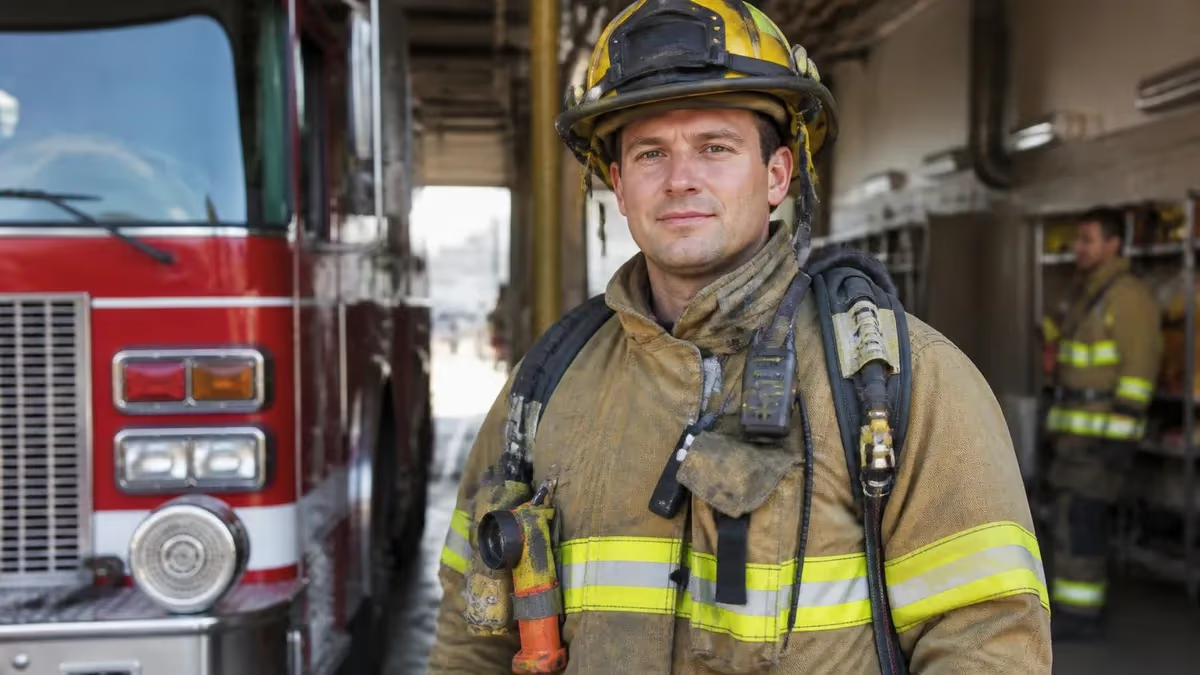
The firefighter entrance exam is the critical first gateway to one of the most respected careers in public service. Every year, tens of thousands of candidates across the United States sit for this rigorous written assessment, and only a fraction move forward to the next phase of hiring.
Whether you are pursuing a position with a major urban department or a smaller municipal agency, understanding exactly what the exam tests — and how to prepare systematically — can be the single biggest factor separating a successful application from one that falls short. Learn how to become a firefighter with the right preparation strategy.
Most firefighter entrance exams cover a wide range of cognitive and job-relevant skill areas including reading comprehension, mathematical reasoning, mechanical aptitude, spatial orientation, map reading, and situational judgment. The specific sections and their weights vary by department and testing vendor, but the underlying logic is consistent: fire departments need candidates who can process complex information quickly, follow written and verbal instructions accurately, and make sound decisions under pressure. A strong score on the written exam opens the door to the physical ability test, oral interview, background investigation, and medical screening that follow.
Understanding firefighter salary expectations is often one of the first motivations candidates have for pursuing this path. Entry-level firefighters in the United States earn a median salary around $54,000 per year, though compensation varies dramatically based on geography, department size, and specialization. Large metropolitan fire departments in states like California, New York, and Washington routinely offer starting salaries well above $70,000, while rural volunteer and combination departments may offer more modest compensation packages. After five to ten years of service, many career firefighters surpass the $80,000 to $90,000 range when overtime and special assignments are included.
There are several distinct pathways into firefighting, and the entrance exam requirements differ depending on which track you pursue. Career firefighters employed full-time by municipal, county, or state departments generally face the most competitive and rigorous written exams.
Volunteer firefighters, who make up roughly 65 percent of the national firefighting workforce, may face a lighter formal testing process but still need to complete certification training and demonstrate core competencies. Wildland firefighters, who battle forest fires and work for agencies such as the U.S. Forest Service or Bureau of Land Management, face their own specialized assessments including the arduous physical work capacity test.
Preparing effectively for the firefighter entrance exam requires more than casual reading. Candidates who score in the top percentiles consistently report spending eight to sixteen weeks in structured preparation, working through practice questions daily, identifying their weak subject areas, and simulating timed exam conditions. The exam is highly coachable — that is, the skills it measures respond directly to deliberate practice. Mechanical aptitude, which trips up many first-time test takers, improves substantially with targeted study. Similarly, candidates who practice reading passages under time pressure consistently outperform those who only study content in a relaxed setting.
One aspect of firefighter hiring that receives less attention than the written exam is the depth of competition involved. Major departments in cities like Los Angeles, Chicago, and Houston frequently receive ten to twenty applicants for every single open position.
In recent years, events like the tragic idaho firefighter shooting and coverage of firefighters placed in harm's way during swat firefight situations have actually increased public awareness of the profession and driven application numbers higher. This means that even a passing score may not be sufficient — candidates often need to score in the 80th percentile or above to remain competitive through later hiring phases.
This guide will walk you through every component of the firefighter entrance exam process: what sections appear on most exams, how the scoring works, what preparation timeline to follow, the costs involved, the pros and cons of the career, and the practical strategies that top scorers use. Whether you are a first-time applicant or returning after a previous attempt, the information ahead will give you a clear, concrete roadmap for reaching your goal of joining the fire service.
Firefighter Entrance Exam by the Numbers
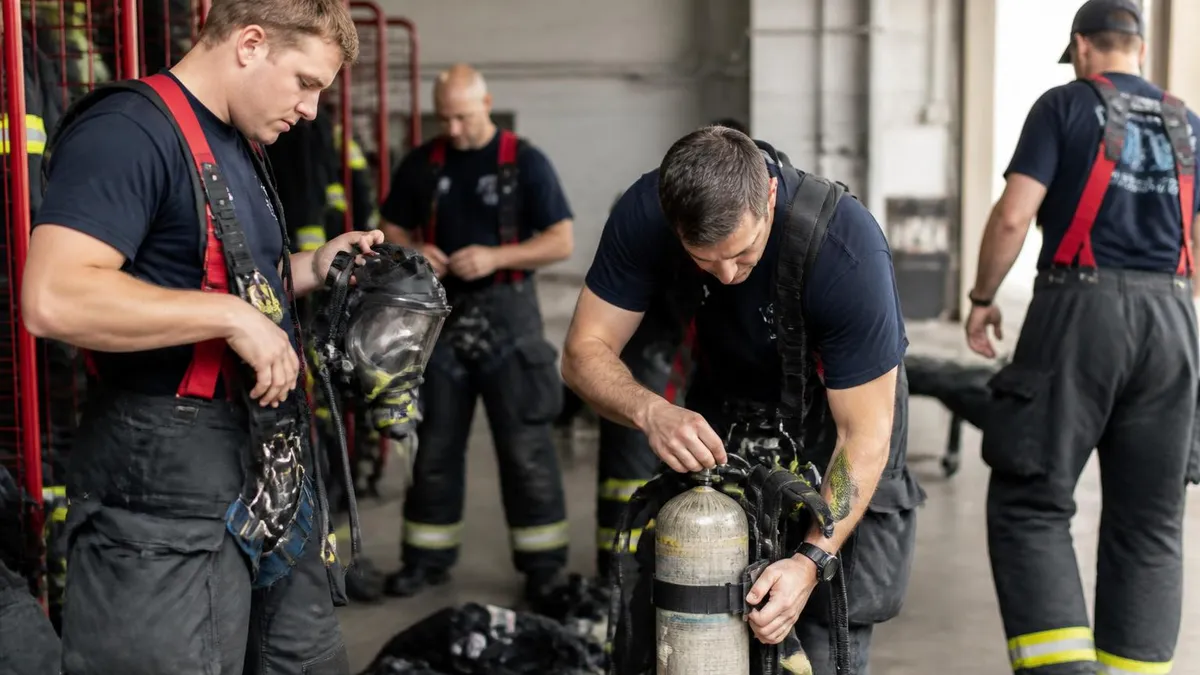
Firefighter Entrance Exam Format
| Section | Questions | Time | Weight | Notes |
|---|---|---|---|---|
| Reading Comprehension | 30 | 35 min | 20% | Fire codes, incident reports, policy passages |
| Mathematical Reasoning | 25 | 30 min | 17% | Arithmetic, ratios, basic algebra, unit conversions |
| Mechanical Aptitude | 25 | 25 min | 17% | Pulleys, levers, gears, fluid dynamics |
| Spatial Orientation & Maps | 20 | 20 min | 13% | Navigation, building layouts, directional reasoning |
| Situational Judgment | 25 | 30 min | 17% | Workplace ethics, team scenarios, priority decisions |
| Memory & Observation | 25 | 20 min | 16% | Recall details from written passages or images |
| Total | 150 | 2.5–3 hours | 100% |
Before you can sit for the firefighter entrance exam, you must first meet a set of baseline eligibility requirements that vary by department but follow a broadly consistent national pattern. Most fire departments require applicants to be at least 18 years old, though some set the minimum at 21. A valid driver's license is almost universally required, as firefighters routinely operate apparatus and emergency vehicles. A high school diploma or GED is the minimum educational threshold, though departments in competitive markets increasingly prefer or require some college coursework or an associate degree in fire science or a related field.
Criminal history is a significant eligibility factor. Most departments conduct thorough background investigations that include fingerprinting, credit checks, and interviews with former employers and personal references. Felony convictions are typically disqualifying, and many departments also disqualify candidates for certain misdemeanor offenses, particularly those involving dishonesty, violence, or driving under the influence. Drug use history is also scrutinized carefully — departments that test for drug use at the application stage often ask about prior use on polygraph examinations, so candidates should be honest and understand each department's specific policies before applying.
The application process typically begins with an online or paper application during an open recruitment window. Many departments open recruitment only once every one to three years, making it essential that candidates monitor announcements closely and apply as soon as a window opens. Missing a recruitment cycle can mean waiting years for the next opportunity. Once the application is accepted, candidates are notified of their exam date and location. Some larger departments administer their own proprietary exams, while others use standardized tests from vendors such as National Testing Network (NTN), Ergometrics, or Biddle Consulting Group.
Understanding firefighter salary structures early in your planning helps set realistic career expectations. Entry pay at career departments typically ranges from $42,000 in smaller Midwestern cities to over $80,000 in high-cost-of-living metros. Most departments also offer pension plans, health insurance, shift differentials, and overtime pay that can add 20 to 40 percent to base compensation. Some jurisdictions offer educational incentive pay for firefighters who hold associate or bachelor's degrees in fire science, emergency medical services, or related fields, making continued education financially worthwhile even after hire.
Physical fitness requirements parallel the written exam in importance. Candidates who meet the written exam cutoff are typically invited to the Candidate Physical Ability Test (CPAT), a standardized eight-event timed assessment that simulates the physical demands of firefighting. Events include stair climbing with a weighted vest, hose dragging, equipment carrying, ladder raising, forcible entry simulation, and rescue dummy drag. Departments that do not use the CPAT may have their own physical ability standards, but the underlying fitness demands are comparable. Beginning a structured fitness regimen six months before your application date is strongly recommended.
Medical and psychological screening rounds out the pre-hire process. Candidates who advance through the written exam, physical test, and oral interview typically face a comprehensive medical examination that checks vision, hearing, cardiovascular fitness, and the absence of conditions that could impair performance in a physically demanding, hazardous environment. Psychological evaluation — typically administered by a licensed psychologist — assesses emotional stability, stress tolerance, and behavioral patterns that predict success in a first-responder role. Candidates are evaluated on honesty during the background check process, which makes transparency throughout the application a strategic as well as ethical imperative.
Timing your preparation relative to the application window is critical. The best candidates begin studying for the written exam at least three months before their scheduled test date, allowing time to identify weak areas, complete multiple full-length practice tests, and refine their pacing strategy. Candidates who begin studying only a few weeks before the exam consistently score lower than those who follow a structured multi-week program. Use official department study guides when available, supplement with quality practice question banks, and simulate real testing conditions — timed, without distractions — at least twice per week in the final month of preparation.
How to Study for the Firefighter Entrance Exam
Reading comprehension questions on the firefighter entrance exam present passages drawn from fire codes, department policies, emergency procedure manuals, and incident report formats. The key skill tested is not general vocabulary but the ability to locate, interpret, and apply specific information under time pressure. Practice by reading official NFPA codes and FEMA publications, then answering questions about what you read without looking back at the source text.
Effective technique involves reading the questions before you read the passage, which directs your attention to the relevant details. Eliminate answer choices that are too absolute — words like "always" and "never" are red flags in fire service contexts, where situational judgment almost always applies. Aim to spend no more than 60 to 75 seconds per question in this section to preserve time for the full exam.
Is a Firefighting Career Right for You?
- +Strong job stability — firefighting positions are government-funded and recession-resistant
- +Excellent benefits including pension, health insurance, and paid time off
- +Deep sense of purpose and community service that few careers provide
- +Shift schedule (24 hours on, 48 hours off) allows significant personal time between shifts
- +Clear promotional pathway from firefighter to engineer, lieutenant, captain, and chief
- +Opportunities to specialize in hazmat, technical rescue, wildland, or EMS roles
- −High physical and psychological demands that accumulate over a long career
- −Exposure to traumatic incidents including fatalities and mass casualty events
- −Elevated health risks including cancer from smoke and chemical exposure
- −Extremely competitive hiring process with low acceptance rates at top departments
- −Shift work disrupts family schedules, holidays, and social commitments
- −Entry-level salaries are modest relative to the training and risk involved
Firefighter Entrance Exam Preparation Checklist
- ✓Confirm your department's specific exam format, vendor, and scoring cutoff before you begin studying
- ✓Obtain the official study guide or candidate information bulletin from the department's human resources page
- ✓Complete a diagnostic practice test to identify your weakest subject areas and prioritize them
- ✓Build a weekly study schedule with at least 10 hours of focused preparation per week for 8–12 weeks
- ✓Practice mechanical aptitude problems daily — this section shows the biggest score gains with targeted effort
- ✓Complete at least three full-length timed practice exams under realistic testing conditions
- ✓Review NFPA firefighter terminology, building construction classifications, and fire behavior principles
- ✓Memorize common math formulas used in fire service: GPM, pump pressure, ladder reach calculations
- ✓Practice reading and summarizing fire department policy documents, SOGs, and incident reports
- ✓Confirm exam location, required identification documents, and permitted materials at least one week before test day
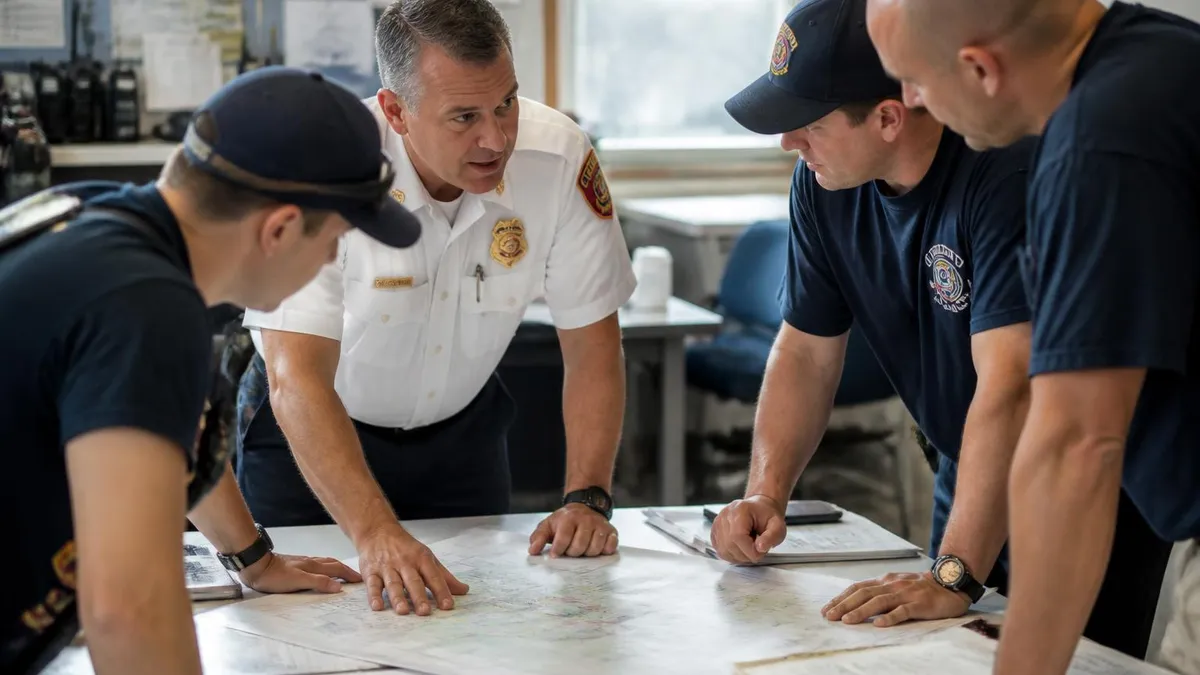
Many departments rank candidates by percentile, not just pass/fail.
Passing the firefighter entrance exam is not enough at competitive departments — you need to rank near the top of your candidate pool. At large urban fire departments, candidates who score in the 85th percentile or above are significantly more likely to receive a conditional job offer than those who merely pass. Every additional point you earn translates directly into a higher position on the hiring list, which is why thorough preparation is the highest-return investment you can make before applying.
Understanding firefighter compensation in detail helps candidates evaluate departments strategically and plan their financial future. The question of how much do firefighters make does not have a single national answer — it depends heavily on geography, department type, rank, and years of service. According to the U.S. Bureau of Labor Statistics, the median annual wage for firefighters nationally is approximately $54,650, but this figure masks enormous variation. Firefighters in California average over $90,000 per year, while those in southern and rural states may earn closer to $38,000 to $45,000 at the entry level.
Beyond base salary, career firefighters typically receive a comprehensive benefits package that significantly increases total compensation. Health insurance, dental, and vision coverage for the firefighter and their family is standard at most career departments. Pension plans — often defined benefit plans that pay a percentage of final salary upon retirement — represent enormous long-term value. Many departments also offer life insurance, disability coverage, and access to supplemental retirement accounts. When total compensation including benefits is calculated, career firefighters at mid-tier departments often receive packages equivalent to $75,000 to $85,000 annually even if the listed salary is lower.
Overtime is a major compensation driver at many departments, particularly those that are understaffed relative to their call volume. Mandatory overtime, known as forced holdover in fire service jargon, can add $10,000 to $30,000 to a firefighter's annual income. While this increases earnings substantially, it also extends working hours and can contribute to fatigue-related safety concerns. Understanding a department's overtime culture during the application and interview process is worthwhile — some departments rely heavily on overtime to maintain staffing while others operate closer to authorized strength with fewer mandatory extensions.
Rank advancement offers the most significant salary increases over a firefighting career. The promotional pathway typically runs from firefighter to driver-engineer or apparatus operator, then lieutenant, captain, battalion chief, division chief, and ultimately fire chief at the top of the organizational hierarchy. Each promotion comes with a salary step increase, typically ranging from 8 to 15 percent per rank. Promotional exams are separate, more advanced assessments that test leadership competency, incident command principles, and administrative knowledge. The written entrance exam you take today is the first step in a series of assessments that will shape your career trajectory for decades.
Special assignments and certifications also influence earning potential. Hazardous materials technicians, technical rescue specialists, and fire investigators often receive additional pay on top of their base firefighter salary. Departments that operate advanced life support (ALS) programs pay paramedic-certified firefighters a differential that can range from $3,000 to $10,000 per year above base. EMT certification at the basic level is frequently required for hire at modern fire departments, and paramedic certification significantly enhances both hiring competitiveness and long-term earning potential at departments with ALS-level services.
Geographic mobility is a strategy some candidates use to access both higher salaries and less competitive application processes. Smaller departments in suburban or rural areas often have lower applicant volumes and more accessible hiring timelines, allowing a new firefighter to gain experience and tenure before eventually applying to a larger, higher-paying department as a lateral transfer. Lateral transfer policies vary significantly — some departments give credit for previous experience in salary placement, while others require all new hires to start at the bottom of the pay scale regardless of background. Researching a department's lateral transfer policy before relocating is essential.
Pension vesting schedules deserve particular attention during department evaluation. Most public safety pension plans vest after five years of service, meaning a firefighter who leaves before that threshold receives no retirement benefit from the pension. After vesting, benefits typically accrue at a rate of two to three percent of final average salary per year of service. A firefighter who retires after 25 years with a three-percent accrual factor and a final salary of $75,000 would receive a pension of $56,250 per year — a substantial income in retirement, particularly when combined with Social Security or a deferred compensation plan.
Most fire departments open recruitment for only a few weeks, sometimes only once every two to three years. Missing the application deadline means waiting for the next cycle — potentially years away. Set calendar alerts for departments you are targeting, follow their official social media accounts, and sign up for email notifications through their HR portals. Preparation done before the window opens is never wasted; starting to study after the window closes almost always is.
The wildland firefighter pathway offers a distinct and increasingly vital career track that differs substantially from structural firefighting in its testing requirements, work environment, and compensation structure. Wildland firefighters work primarily for federal agencies including the U.S. Forest Service, National Park Service, Bureau of Land Management, and Bureau of Indian Affairs, though state forestry agencies also maintain wildland firefighting crews.
Rather than sitting for a written cognitive exam administered by a city or county, wildland firefighter applicants typically go through federal USAJOBS application processes and must pass the work capacity test — commonly called the Pack Test — as their primary physical screening. Learn more about the idaho firefighter shooting context and the risks wildland crews face in the field.
The Pack Test has three levels: arduous, moderate, and light. The arduous level, required for most front-line suppression positions, requires candidates to complete a three-mile hike carrying a 45-pound pack in 45 minutes or less on flat terrain.
This is a genuine physical challenge that requires months of progressive training to pass reliably, particularly for candidates who are not starting from a strong fitness base. The moderate test covers two miles with a 25-pound pack in 30 minutes, and the light test covers one mile with no pack in 16 minutes. Which level you need depends on the specific position and its hazard classification.
Seasonal wildland firefighting is one of the most accessible entry points into fire service for candidates who lack prior experience or who are still working toward meeting age or certification requirements for career structural positions. Many wildland agencies hire seasonal employees as early as age 18, and the experience gained during fire seasons provides invaluable practical knowledge about fire behavior, incident command, and team operations. Candidates who work multiple seasons as a hotshot crew member, engine crew member, or smoke jumper develop a resume that stands out significantly in structural firefighting applications.
The tragic events surrounding idaho firefighters shot in recent years have drawn national attention to the dangers that firefighters — both structural and wildland — face beyond the fires themselves. In several high-profile incidents, responding firefighters were ambushed or caught in the crossfire of law enforcement situations, highlighting the overlap between swat firefight scenarios and fire service response. Modern firefighter training increasingly incorporates hostile event awareness, active threat protocols, and coordination with law enforcement tactical units to protect crews operating in potentially dangerous environments.
The green firefighter concept — referring to entry-level candidates with no prior fire service experience — is the starting point for the vast majority of people who pursue this career. Green candidates often feel intimidated by the depth of knowledge tested on the entrance exam, but it is important to recognize that departments hire green firefighters regularly and design their academy training programs accordingly.
The entrance exam does not test specific firefighting knowledge; it tests cognitive aptitude, learning potential, and the foundational skills that predict success in a training environment. You do not need to know how to fight fire to pass the written exam — you need to demonstrate that you can learn how to do it.
Volunteer firefighting represents another critical entry pathway, particularly for candidates in rural or suburban communities where career departments have limited openings. As an volunteer firefighter, you can gain real emergency response experience, complete NFPA 1001 Firefighter I and II certification, and build relationships within the fire service community — all while working a separate primary job.
Many career firefighters began their journeys as volunteers, and volunteer experience is viewed favorably during background investigations and oral interviews at career departments. Some states operate cadet or junior firefighter programs that allow motivated candidates to begin their training as early as 14 or 16 years old.
Regardless of which pathway you choose — career structural, wildland seasonal, volunteer, or a combination — consistent preparation is the common denominator of success. The firefighter entrance exam rewards candidates who approach it like a professional undertaking rather than a casual assessment. Structured study, timed practice, honest self-assessment of weak areas, and peer accountability through study groups all contribute to score improvement. The candidates who perform best on exam day are rarely the smartest — they are the most consistently prepared.
In the final weeks before your firefighter entrance exam, the quality and specificity of your preparation matters more than the quantity of hours you log. Many candidates make the mistake of re-reading their notes passively rather than actively testing themselves under conditions that simulate the actual exam.
Active recall — closing your notes and trying to answer questions from memory — has been shown by cognitive science research to dramatically outperform passive review for long-term retention and test performance. If you have been studying for months, the last two weeks should shift almost entirely to practice testing rather than new content acquisition.
Pacing strategy is a technical skill that deserves dedicated practice. Most firefighter entrance exams allocate approximately one to two minutes per question, but the distribution across sections is not uniform. Reading comprehension questions with long passages demand more time per question than mechanical aptitude items, which experienced candidates can often answer in 20 to 30 seconds. Develop section-by-section time targets during practice and use a stopwatch to hold yourself accountable. If you consistently run over time on math questions, practice faster estimation techniques rather than attempting to increase your calculation speed alone.
Sleep, nutrition, and physical condition in the 72 hours before your exam date have a measurable impact on cognitive performance. Research on test performance consistently shows that candidates who sleep fewer than seven hours in the two nights before a high-stakes exam score lower on average than well-rested peers, even controlling for preparation quality. Avoid alcohol, heavy meals, and significant new physical exertion in the days immediately before the exam. Arrive at the test site at least 30 minutes early to reduce stress and allow time to address any logistical issues with parking, identification, or seating.
On exam day, manage your anxiety by using a consistent pre-exam routine that you have rehearsed during practice sessions. Eat a moderate meal two to three hours before the exam to maintain stable blood sugar without the discomfort of overeating. Bring all required identification documents and any permitted materials such as pencils or a calculator if allowed.
Read each question fully before evaluating the answer choices — a common error is selecting an answer based on the first few words of a question rather than its complete meaning. Flag questions you are unsure about and return to them after completing the ones you can answer confidently.
After the exam, resist the urge to immediately dissect every question with other candidates. Post-exam rumination rarely changes the outcome and often increases anxiety unnecessarily. Most departments take four to eight weeks to return written exam scores and notify candidates of their ranking on the eligibility list. Use this waiting period productively by continuing your physical fitness training for the CPAT, reviewing oral interview techniques, and updating your resume and references. Candidates who stay in active preparation mode during the waiting period are significantly better positioned for the phases that follow the written exam.
If your score does not meet the competitive threshold for your target department, treat it as diagnostic information rather than a final verdict. Request score feedback if the department offers it — many testing vendors provide section-by-section breakdowns that identify exactly where you lost points. Use this data to refocus your preparation before the next recruitment cycle. Many successful firefighters applied two, three, or even four times before receiving a conditional job offer. Persistence, combined with honest self-assessment and targeted improvement, is a defining characteristic of candidates who ultimately succeed in this competitive process.
The green firefighter who invests in rigorous preparation today is building the foundation of a career that can span 25 to 30 years of meaningful public service. The firefighter entrance exam is not designed to weed out the passionate — it is designed to identify the candidates who are most ready to learn, grow, and perform under the demanding conditions of the fire service. Approach it with that mindset, prepare with the seriousness it deserves, and you will give yourself the best possible chance of walking into a fire academy as the newest member of your department.
Firefighter Questions and Answers

Firefighter CPAT Test: Complete Guide to Passing the Candidate Physical Ability Test
What is the Firefighter Exam?

Pack Test for Wildland Firefighters: Complete Guide to Passing the Work Capacity Test

Online Firefighter Training: Complete Guide to Courses, Certification & Career Prep
Firefighter Video Questions and Answers
About the Author

Emergency Manager & FEMA Certification Specialist
Naval Postgraduate SchoolCommander Lisa Foster holds a Master of Science in Emergency Management from the Naval Postgraduate School and is a FEMA-certified emergency manager and Certified Emergency Manager (CEM). With 18 years of emergency response coordination experience across federal and state agencies, she coaches emergency management professionals through ICS, NIMS, and FEMA Independent Study certification programs.
Join the Discussion
Connect with other students preparing for this exam. Share tips, ask questions, and get advice from people who have been there.
View discussion (6 replies)