
Neonatal CPR: Complete Guide to Resuscitating Newborns in 2026 October
🏆 Master neonatal CPR with step-by-step techniques, compression ratios, ventilation rates, and NRP guidelines for newborns and infants in 2026 October.
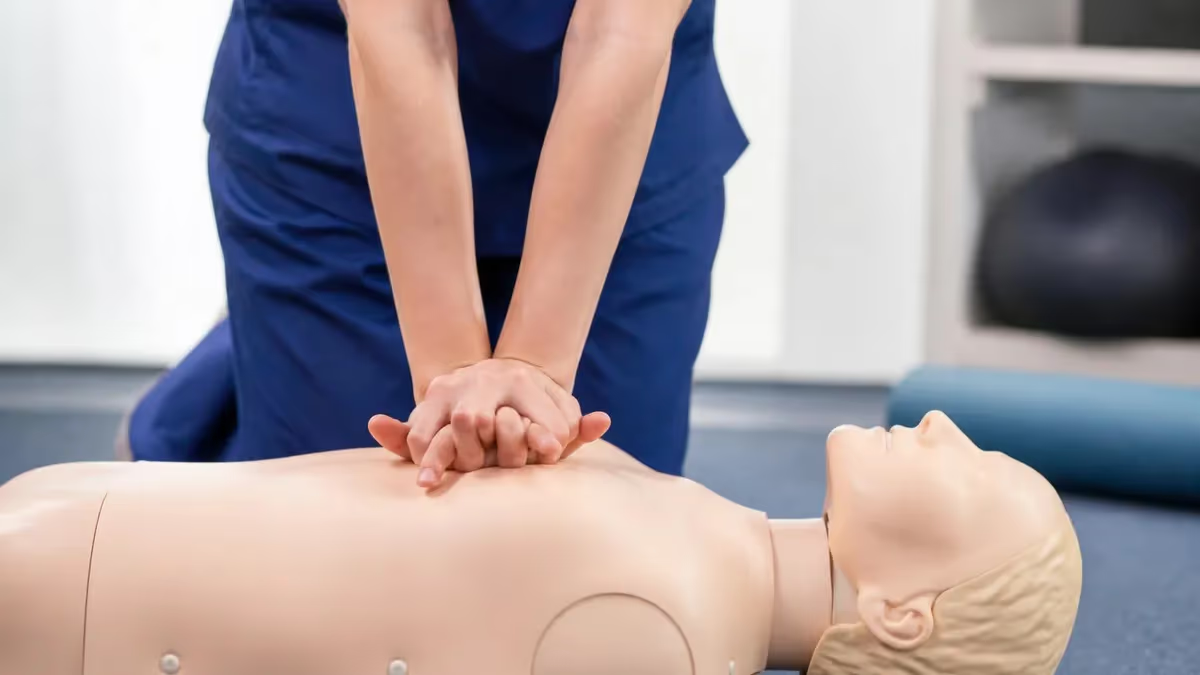
Neonatal CPR is a specialized form of cardiopulmonary resuscitation designed for newborns within the first 28 days of life, and it differs significantly from infant cpr, child CPR, or adult CPR in both technique and physiology. While the acls algorithm guides advanced cardiac care for adults, neonatal resuscitation follows the Neonatal Resuscitation Program (NRP) algorithm developed by the American Academy of Pediatrics and the American Heart Association. Understanding these distinctions can mean the difference between a successful resuscitation and a tragic outcome in the delivery room or emergency setting.
Approximately 10% of newborns require some assistance to begin breathing at birth, and about 1% need extensive resuscitation measures including chest compressions and medications. Neonatal CPR is not simply scaled-down adult CPR — it accounts for the unique transitional physiology of a newborn moving from fetal to neonatal circulation. The lungs must inflate with air for the first time, the ductus arteriosus must close, and pulmonary vascular resistance must drop dramatically. These physiological changes inform every step of the neonatal resuscitation protocol.
The primary cause of cardiac arrest in newborns is almost always respiratory in origin, unlike adults where ventricular fibrillation dominates. This is why neonatal CPR emphasizes effective ventilation above all else — establishing adequate airway and breathing typically restores adequate heart rate without the need for compressions. The 3:1 compression-to-ventilation ratio used in neonatal CPR reflects this respiratory etiology, delivering 90 compressions and 30 breaths per minute when both are needed simultaneously.
Healthcare providers working in obstetrics, neonatology, pediatrics, and emergency medicine must maintain current NRP certification to deliver care to newborns. Many hospitals require renewal every two years, and the curriculum incorporates simulation-based training to build muscle memory for these high-stakes, low-frequency events. Parents, caregivers, and childcare workers benefit from learning basic newborn and infant cpr techniques even without formal certification, particularly during the first weeks at home when respiratory emergencies can occur.
This comprehensive guide walks through every component of neonatal CPR, from initial assessment through advanced interventions. We cover the golden minute concept, the importance of thermoregulation, proper hand placement for chest compressions, ventilation techniques with positive pressure ventilation devices, target oxygen saturations by minute of life, medication administration including epinephrine dosing, and post-resuscitation care. Whether you are preparing for NRP recertification or seeking to understand neonatal emergencies, the information here aligns with the 2025-2026 ILCOR consensus guidelines.
Beyond technique, we explore the team dynamics, communication protocols, and equipment checks that distinguish high-functioning resuscitation teams. Effective neonatal resuscitation requires choreographed teamwork between an airway provider, a compressor, a medication administrator, and a recorder. Even outside the hospital, recognizing when a newborn needs help and initiating basic life support before EMS arrives can dramatically improve outcomes. Knowledge of these principles saves lives every day in delivery rooms, NICUs, and homes around the country.
By the end of this guide, you will understand the evidence-based foundations of neonatal CPR, the precise sequence of actions required, the warning signs that escalate care, and the resources available for ongoing education. We also link to free practice questions designed to reinforce your retention and prepare you for certification exams. Bookmark this page as a reference and revisit it before any shift where you may care for newborns.
Neonatal CPR by the Numbers

NRP Algorithm: Step-by-Step Resuscitation Sequence
Initial Assessment
Stabilization Steps
Positive Pressure Ventilation
Chest Compressions
Medications and IV Access
Post-Resuscitation Care
Assessment is the foundation of effective neonatal CPR, and the initial evaluation begins the moment the baby is delivered. Three rapid questions determine the next steps: Is the baby term gestation? Does the baby have good muscle tone? Is the baby breathing or crying? If the answer to all three is yes, the newborn stays with the mother for routine care under the radiant warmer or skin-to-skin contact. If any answer is no, the baby moves to the warmer for further evaluation and potential resuscitation.
Heart rate is the single most important indicator during neonatal resuscitation, even more critical than respiratory rate or oxygen saturation. A heart rate above 100 beats per minute generally indicates adequate cardiac output, while a rate between 60-100 signals the need for continued ventilation support. Below 60 beats per minute, chest compressions must begin alongside positive pressure ventilation. Auscultation at the precordium with a stethoscope and ECG monitoring provide the most accurate heart rate assessment — palpation of the umbilical cord is less reliable.
Pulse oximetry should be applied to the right hand or wrist (preductal) within the first minute when resuscitation is anticipated or supplemental oxygen is being used. Target oxygen saturations rise gradually after birth: 60-65% at 1 minute, 65-70% at 2 minutes, 70-75% at 3 minutes, 75-80% at 4 minutes, 80-85% at 5 minutes, and 85-95% by 10 minutes of life. Excessive oxygen exposure can cause oxidative injury, particularly in preterm infants, so titration to these targets is essential.
Color assessment, once a primary indicator in the Apgar score, has been deprioritized in NRP because acrocyanosis (blue hands and feet) is normal in healthy newborns and central cyanosis correlates poorly with oxygenation. Instead, pulse oximetry provides objective data. The Apgar score is still calculated at 1 and 5 minutes (and every 5 minutes thereafter if below 7) but should never delay resuscitation decisions. Apgars are documented for prognosis and quality assurance, not as triggers for intervention.
Muscle tone reflects neurological status and gestational maturity. A vigorous newborn flexes extremities and resists passive movement, while a depressed infant lies flaccid with extended limbs. Term infants with poor tone after stimulation likely have significant compromise and warrant immediate transfer to the warmer for assessment. Preterm infants naturally have less tone, so the threshold for intervention is lower, and assessment focuses more heavily on respiratory effort and heart rate trends.
Respiratory effort ranges from vigorous crying through irregular gasping to apnea. Gasping respirations indicate severe compromise and require immediate positive pressure ventilation — they should never be mistaken for adequate breathing. Even regular respirations may be insufficient if they are shallow, labored, or accompanied by grunting, nasal flaring, or significant retractions. Effective respirations produce visible chest rise, audible breath sounds bilaterally, and improving heart rate within seconds of being established.
Documentation during a resuscitation is the responsibility of a dedicated recorder whose only job is timing events and noting interventions. The recorder calls out elapsed time at 30-second intervals, prompts the team for reassessment, and creates a contemporaneous record of every action taken. This timeline becomes vital for both clinical decision-making during the event and for retrospective quality review afterward. Without dedicated recording, time perception during a crisis becomes distorted and interventions may be missed or duplicated.

CPR Practice Test Questions
Prepare for the CPR Cardiopulmonary Resuscitation Practice exam with our free practice test modules. Each quiz covers key topics to help you pass on your first try.
CPR Basic CPR
CPR Exam Questions covering Basic CPR. Master CPR Test concepts for certification prep.
CPR and First Aid
Free CPR Practice Test featuring and First Aid. Improve your CPR Exam score with mock test prep.
CPR (Cardiopulmonary Resuscitation) Adult ...
CPR Mock Exam on (Cardiopulmonary Resuscitation) Adult CPR and AED Usage. CPR Study Guide questions to pass on your first try.
CPR (Cardiopulmonary Resuscitation) Airway...
CPR Test Prep for (Cardiopulmonary Resuscitation) Airway Obstruction and Choking. Practice CPR Quiz questions and boost your score.
CPR (Cardiopulmonary Resuscitation) Cardio...
CPR Questions and Answers on (Cardiopulmonary Resuscitation) Cardiopulmonary Emergency Recognition. Free CPR practice for exam readiness.
CPR (Cardiopulmonary Resuscitation) Child ...
CPR Mock Test covering (Cardiopulmonary Resuscitation) Child and Infant CPR. Online CPR Test practice with instant feedback.
CPR (Cardiopulmonary Resuscitation) High-P...
Free CPR Quiz on (Cardiopulmonary Resuscitation) High-Performance Team Dynamics. CPR Exam prep questions with detailed explanations.
CPR (Cardiopulmonary Resuscitation) Legal ...
CPR Practice Questions for (Cardiopulmonary Resuscitation) Legal and Ethical Considerations. Build confidence for your CPR certification exam.
CPR for Specific Populations
CPR Test Online for for Specific Populations. Free practice with instant results and feedback.
CPR Airway & Breathing Management
CPR Exam Questions covering Airway & Breathing Management. Master CPR Test concepts for certification prep.
CPR Assessment & Recognition of Cardiac Ar...
Free CPR Practice Test featuring Assessment & Recognition of Cardiac Arrest. Improve your CPR Exam score with mock test prep.
CPR Chest Compressions & Defibrillation
CPR Mock Exam on Chest Compressions & Defibrillation. CPR Study Guide questions to pass on your first try.
CPR Post-Resuscitation Care & Recovery
CPR Test Prep for Post-Resuscitation Care & Recovery. Practice CPR Quiz questions and boost your score.
Ventilation Techniques and Respiratory Rate Management
Bag-mask ventilation is the cornerstone skill of neonatal resuscitation, and most newborns who need help respond to effective PPV alone without requiring compressions or medications. Use a properly sized mask covering the mouth and nose but not the eyes, with the chin resting in the cup. A self-inflating bag, flow-inflating bag, or T-piece resuscitator can all deliver effective breaths when used correctly with attention to pressure and rate.
Deliver breaths at a respiratory rate of 40-60 per minute, counting aloud as breathe-two-three to maintain pacing. Initial pressures of 20-25 cm H2O are usually sufficient, though stiff lungs in preterm infants may require higher pressures. The first few breaths may need slightly longer inspiratory times to overcome initial atelectasis. Watch for visible chest rise and listen for bilateral breath sounds to confirm effectiveness.
Hospital Delivery vs Home Birth: Neonatal Emergency Preparedness
- +Immediate access to NRP-certified providers and full resuscitation equipment in hospital settings
- +Continuous fetal monitoring detects distress before delivery and prepares the team
- +Pediatric and neonatology consultants available within minutes for unexpected complications
- +Blood products, surfactant, and emergency medications stocked and ready for immediate use
- +Therapeutic hypothermia available within the 6-hour window if needed for HIE
- +Documentation systems and recording personnel built into the workflow
- +Direct transfer to NICU without ambulance delays for ongoing intensive care
- −Higher rates of medical interventions that may not be necessary for low-risk pregnancies
- −Less privacy and personalized birth environment compared to home settings
- −Hospital-acquired infections pose small but real risks to vulnerable newborns
- −Staffing shortages in some facilities reduce the resuscitation team size available
- −Geographic barriers in rural areas may negate hospital advantages for some families
- −Cost of hospital delivery substantially exceeds home birth in most insurance scenarios
- −Separation of mother and baby for resuscitation can disrupt early bonding
Pros and Cons at a Glance
| Pros | Cons |
|---|---|
| Immediate access to NRP-certified providers and full resuscitation equipment in hospital settings | Higher rates of medical interventions that may not be necessary for low-risk pregnancies |
| Continuous fetal monitoring detects distress before delivery and prepares the team | Less privacy and personalized birth environment compared to home settings |
| Pediatric and neonatology consultants available within minutes for unexpected complications | Hospital-acquired infections pose small but real risks to vulnerable newborns |
| Blood products, surfactant, and emergency medications stocked and ready for immediate use | Staffing shortages in some facilities reduce the resuscitation team size available |
| Documentation systems and recording personnel built into the workflow | Geographic barriers in rural areas may negate hospital advantages for some families |
| Direct transfer to NICU without ambulance delays for ongoing intensive care | Cost of hospital delivery substantially exceeds home birth in most insurance scenarios |

Neonatal Resuscitation Equipment Checklist
- ✓Radiant warmer pre-heated to 100% power before delivery anticipated
- ✓Pulse oximeter with neonatal probe ready on the right hand or wrist
- ✓ECG leads and cardiac monitor with appropriate neonatal electrodes available
- ✓Self-inflating bag with reservoir, flow-inflating bag, or T-piece resuscitator tested
- ✓Neonatal masks in size 0 and size 1 to fit term and preterm faces
- ✓Suction equipment set to 80-100 mm Hg with 8F and 10F suction catheters
- ✓Laryngoscope with size 0 and size 1 Miller blades and spare batteries
- ✓Endotracheal tubes in sizes 2.5, 3.0, 3.5, and 4.0 mm with stylets and tape
- ✓Epinephrine 1:10,000 prepared in 1 mL syringe and umbilical vein catheter kit
- ✓Pre-warmed blankets, plastic wrap for preterm infants under 32 weeks, and stocking cap
Establish Effective Ventilation Within 60 Seconds of Birth
The Golden Minute is the most important concept in neonatal resuscitation — every newborn who needs help should be receiving effective ventilation within 60 seconds of birth. Delays in initiating PPV correlate strongly with poor outcomes, including hypoxic-ischemic encephalopathy. Practice your equipment checks and team briefings before every delivery so the Golden Minute is never wasted on preventable problems.
Medications play a relatively small but critical role in neonatal resuscitation, as effective ventilation resolves the vast majority of newborn bradycardia and apnea. When the heart rate remains below 60 beats per minute despite at least 60 seconds of coordinated chest compressions and PPV with 100% oxygen through a secured airway, epinephrine is indicated. The drug must be given intravenously through an umbilical venous catheter or intraosseously, as endotracheal administration is less reliable and reserved only as a temporizing measure while IV access is being obtained.
Epinephrine dosing for newborns uses the 1:10,000 concentration (0.1 mg/mL), which is ten times more dilute than the 1:1,000 concentration used for adult anaphylaxis. The IV/IO dose is 0.02 mg/kg, equivalent to 0.2 mL/kg of the 1:10,000 solution. If endotracheal administration is unavoidable, the dose increases to 0.1 mg/kg (1 mL/kg of 1:10,000). The dose may be repeated every 3-5 minutes if the heart rate remains below 60 despite adequate ventilation and compressions, with reassessment between doses.
Volume expansion is considered when there is evidence or suspicion of hypovolemia, such as pale appearance, weak pulses despite adequate heart rate, persistent bradycardia unresponsive to other interventions, or known blood loss from placental abruption or fetal-maternal hemorrhage. Normal saline or O-negative packed red blood cells are administered at 10 mL/kg over 5-10 minutes through the umbilical venous catheter. Rapid bolus administration in preterm infants increases the risk of intraventricular hemorrhage.
Naloxone, once routinely used in newborns of opioid-exposed mothers, is no longer recommended during initial resuscitation. Establishing effective ventilation takes priority, and naloxone can precipitate severe withdrawal in chronically exposed infants. Sodium bicarbonate is also not recommended during brief resuscitation due to lack of evidence and concerns about hyperosmolarity contributing to intraventricular hemorrhage. Both medications may have limited roles in prolonged resuscitations or specific clinical scenarios under neonatologist guidance.
Glucose monitoring becomes important during and after resuscitation because hypoglycemia is common in stressed newborns and can cause additional neurological injury. Blood glucose should be checked within 30 minutes of resuscitation and treated with 10% dextrose at 2 mL/kg IV bolus followed by maintenance infusion if levels are below 40 mg/dL in the first 4 hours of life. Hyperglycemia from stress response also requires monitoring but rarely needs immediate intervention.
Surfactant therapy is administered to preterm infants with respiratory distress syndrome, typically after stabilization rather than during initial resuscitation. The decision to give prophylactic versus rescue surfactant depends on gestational age, antenatal steroid exposure, and clinical course. Many neonatal units now use the INSURE technique (intubate-surfactant-extubate) or LISA (less invasive surfactant administration) to deliver surfactant while minimizing mechanical ventilation exposure.
Therapeutic hypothermia, started within 6 hours of birth, is the only proven neuroprotective therapy for term and late preterm infants with moderate to severe hypoxic-ischemic encephalopathy. Eligible infants are cooled to a core temperature of 33.5°C for 72 hours, followed by gradual rewarming. The intervention reduces death and major disability and should be considered during initial resuscitation by avoiding hyperthermia and contacting a referral center early when HIE is suspected based on clinical or laboratory findings.
Two of the most preventable causes of injury during neonatal resuscitation are hyperoxia and hyperthermia. Use the lowest oxygen concentration that achieves target preductal saturations, starting with room air for term infants. Avoid temperatures above 37.5°C as hyperthermia worsens outcomes in infants with hypoxic-ischemic injury and can mask the diagnosis of HIE that would otherwise qualify for cooling.
Post-resuscitation care begins the moment the newborn stabilizes and continues through the first hours and days of life. After return of spontaneous circulation, infants who required significant resuscitation should be transferred to a neonatal intensive care unit for ongoing monitoring, even if they appear well immediately afterward. Delayed deterioration is common, and subtle signs of organ dysfunction may not manifest for hours. Continuous cardiorespiratory monitoring, pulse oximetry, and frequent blood pressure measurements form the baseline of post-resuscitation surveillance.
Thermoregulation remains a priority after the immediate resuscitation. Skin-to-skin contact with the mother is ideal for stable term infants, but unstable babies need a radiant warmer or isolette with servo-controlled temperature monitoring. Preterm infants under 32 weeks benefit from polyethylene wrap or bag immediately after birth without drying first, along with thermal mattresses and warmed gases for any respiratory support. The target axillary temperature is 36.5-37.5°C, and active management is needed if the baby falls outside this range.
Glucose homeostasis disrupts easily after birth stress, particularly in preterm infants, infants of diabetic mothers, large or small for gestational age babies, and those who required resuscitation. Check blood glucose at 30 minutes of life and serially thereafter, treating hypoglycemia below 40 mg/dL with feeding if tolerated or IV dextrose if not. Untreated hypoglycemia contributes to neurological injury that may compound the original insult that led to resuscitation. Glucose-containing fluids should never be used for volume expansion bolus due to osmotic shifts.
Acid-base status guides assessment of resuscitation success and ongoing care. An umbilical cord blood gas obtained at delivery establishes baseline acidosis severity, and follow-up arterial or venous blood gases at 30 minutes and again at 1-2 hours track recovery. Persistent metabolic acidosis with elevated lactate suggests ongoing hypoperfusion, multiorgan dysfunction, or inadequate ventilation. Base deficit and pH at 1 hour of life are important predictors of HIE severity and help determine eligibility for therapeutic hypothermia.
Neurological assessment in the post-resuscitation period uses the modified Sarnat staging to grade encephalopathy severity. Stage 1 (mild) features hyperalertness, normal tone, and minimal autonomic changes. Stage 2 (moderate) shows lethargy, hypotonia, weak suck and Moro reflexes, and possible seizures. Stage 3 (severe) presents as stupor or coma, flaccidity, absent reflexes, and frequent seizures. Moderate to severe encephalopathy meeting age and gestational criteria qualifies for therapeutic hypothermia if initiated within 6 hours of birth.
Family communication and support cannot be overlooked during the chaos of resuscitation and the anxious hours afterward. A designated team member should update the family in real time about the baby's condition, the interventions being performed, and the expected next steps. After stabilization, allow parents to see and touch their baby as soon as possible, even if the infant remains on respiratory support. Photos, footprints, and skin-to-skin contact when appropriate help families bond despite the medicalized environment.
Quality improvement reviews after every significant resuscitation strengthen team performance over time. Hot debriefs immediately after the event capture fresh impressions about what went well and what could improve. Formal cold debriefs days or weeks later allow more reflective analysis with the benefit of clinical follow-up data. Reviewing video recordings of resuscitations, when consent allows, provides objective insight into timing, technique, and communication that participants often misremember. These structured reviews translate experience into institutional learning.
Building competence in neonatal CPR requires deliberate practice well beyond the classroom and certification card. Hospitals with strong neonatal outcomes invest in regular simulation training using high-fidelity mannequins that respond to interventions with realistic heart rate, color, and breath sound changes. Monthly or quarterly mock codes keep skills sharp between actual emergencies and expose latent system failures like missing equipment, communication gaps, or workflow inefficiencies. Individual providers benefit from rehearsing their specific role in the resuscitation team rather than just observing.
Stay current with NRP recertification, which most hospitals require every two years for providers in obstetrics, anesthesia, pediatrics, and emergency care. The 8th edition NRP curriculum, aligned with 2020 ILCOR guidelines, has been updated for 2025-2026 to incorporate new evidence on cord management, oxygen targeting, and post-resuscitation care. Online learning modules combined with in-person simulation provide a balanced approach that respects adult learning principles while ensuring hands-on competency assessment by certified instructors.
Equipment readiness is non-negotiable. Every delivery area, NICU, and emergency department should perform a daily equipment check using a standardized checklist that includes verifying gas supplies, testing suction, confirming the warmer is functional, and counting all supplies in the resuscitation cart. Pre-delivery briefings before every birth identify which equipment will likely be needed based on risk factors. A 5-minute briefing can save the 30 seconds during a crisis that determines whether the Golden Minute is met or missed.
Team dynamics matter as much as individual skills. Effective neonatal resuscitation teams use closed-loop communication, where instructions are repeated back to confirm understanding. The team leader stands at the foot of the warmer with a global view, directing without performing tasks, while specific role assignments prevent gaps and duplication. Knowing each other before the crisis — through cross-training, drills, and even informal interaction — reduces hesitation and enables seamless coordination when stakes are highest.
Parents and family caregivers should learn basic newborn CPR before bringing a baby home from the hospital, particularly first-time parents and those caring for preterm or medically complex infants. Community CPR classes through the American Heart Association, American Red Cross, and the National CPR Foundation cover infant and child CPR techniques appropriate for non-professional rescuers. Many hospitals offer free or low-cost classes for expecting parents as part of childbirth education programs.
Resources for ongoing education extend beyond formal certification. The American Academy of Pediatrics NRP website publishes regular updates, case studies, and instructor materials. Journal articles in Resuscitation, Pediatrics, and the Journal of Perinatology track evolving evidence. Podcast series like NeoReviews and PedsCases offer audio learning during commutes. Social media communities of neonatal nurses, respiratory therapists, and neonatologists share clinical pearls, equipment recommendations, and case-based discussions in real time.
Finally, remember that neonatal CPR sits within a larger continuum of perinatal care. Antenatal corticosteroids for threatened preterm delivery, magnesium sulfate for neuroprotection, delayed cord clamping for transitional support, and antenatal counseling all influence outcomes before resuscitation begins. Optimizing care across this continuum — from prenatal visits through NICU discharge — produces better outcomes than focusing solely on the dramatic minutes after birth. Every member of the maternity care team contributes to neonatal outcomes, and excellence requires attention to every link in the chain.
CPR Questions and Answers

CPR Card Lookup: How to Verify, Replace, and Access Your CPR Certification in 2026
AHA CPR: What It Is, Which Course You Need, and How to Get Certified
BLS CPR Course: Complete Guide to Basic Life Support Certification in 2026

Adult CPR: Complete Step-by-Step Guide to Hands-Only and Standard CPR in 2026

CPR - Cardiopulmonary Resuscitation: Complete Study Guide 2026
About the Author

Registered Nurse & Healthcare Educator
Johns Hopkins University School of NursingDr. Sarah Mitchell is a board-certified registered nurse with over 15 years of clinical and academic experience. She completed her PhD in Nursing Science at Johns Hopkins University and has taught NCLEX preparation and clinical skills courses for nursing students across the United States. Her research focuses on evidence-based exam preparation strategies for healthcare certification candidates.
Join the Discussion
Connect with other students preparing for this exam. Share tips, ask questions, and get advice from people who have been there.
View discussion (5 replies)