
Cardiopulmonary Resuscitation Articles: A Complete Knowledge Hub for CPR Skills, ACLS, PALS, and Life Support in 2026 October
🏆 Master cardiopulmonary resuscitation articles covering ACLS algorithm, PALS certification, infant CPR, AED use, and life support skills for 2026 October.
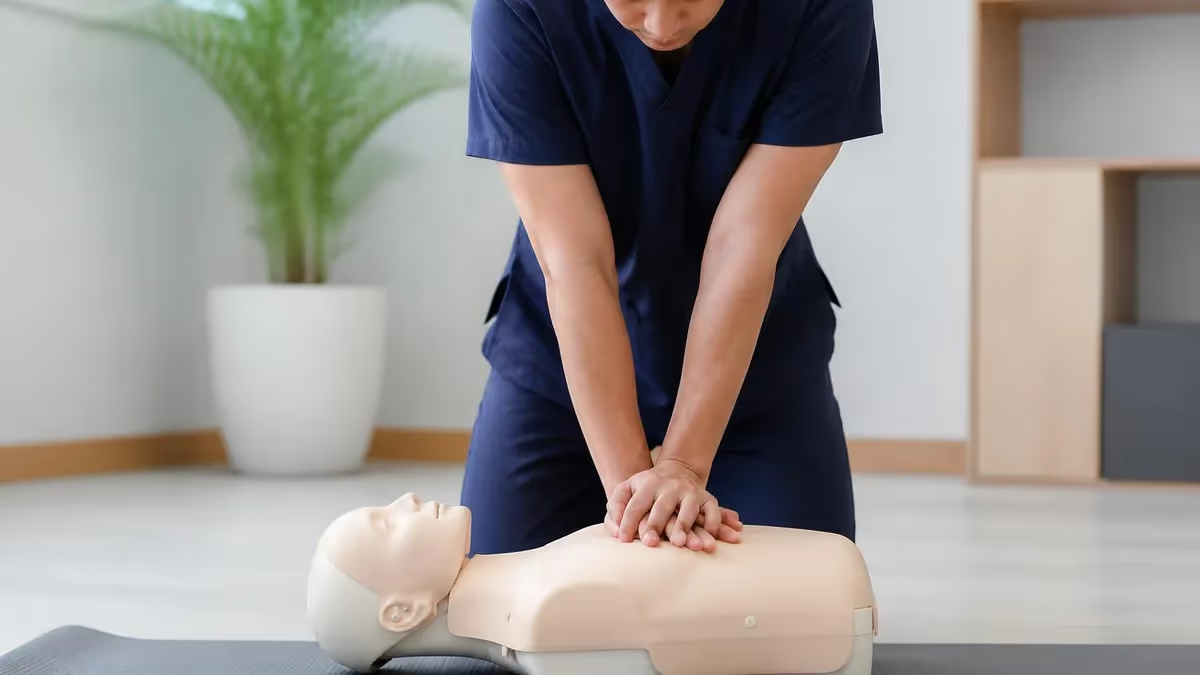
Welcome to one of the most comprehensive cardiopulmonary resuscitation articles available online, designed to consolidate years of evidence-based guidance into a single readable resource. Whether you are a nursing student preparing for boards, a first responder refreshing your skills, or a parent who wants to know how to react if a child stops breathing, this guide walks you through every important topic. We cover the acls algorithm, basic life support sequencing, pediatric considerations, AED operation, and the science behind effective chest compressions in plain language.
The acls algorithm has become the global backbone for treating cardiac arrest in hospital and prehospital settings, but understanding it requires more than memorizing flowcharts. You also need to understand why each step exists, how rhythm recognition guides drug therapy, and how high-quality CPR underpins every successful resuscitation. This article ties those threads together so you can move from rote memorization toward genuine clinical confidence, which is the difference between passing a test and saving a real human life.
According to the American Heart Association, more than 350,000 out-of-hospital cardiac arrests happen in the United States each year, and survival rates triple when bystanders perform immediate CPR. That single statistic is why training matters, why refresher courses matter, and why everyone—not just clinicians—benefits from knowing the basics. We will explore how respiratory rate, pulse checks, and compression depth interact, and we will demystify common acronyms like AED, BLS, ACLS, and PALS so you can navigate the field with ease.
You will also find a careful breakdown of infant cpr techniques, which differ significantly from adult resuscitation in compression depth, hand placement, and ventilation ratios. Pediatric arrest is most often respiratory in origin rather than cardiac, so airway management and rescue breathing carry even more weight. Understanding these differences is not optional for childcare workers, teachers, lifeguards, or parents, and we devote an entire section to making the pediatric sequence intuitive rather than intimidating, with practical mnemonics and realistic scenarios drawn from emergency medicine literature.
Beyond technique, this knowledge hub explores the certification ecosystem itself, including pals certification pathways, the role of the national cpr foundation, and how to choose a course that genuinely meets workplace requirements. We will also untangle naming confusion you may have encountered online, because searches for CPR sometimes surface unrelated businesses like cpr cell phone repair. Knowing how to navigate certification credibility saves time, prevents wasted money, and ensures your card actually counts when an employer or licensing board verifies it.
If you want to put theory into practice as you read, you can use our complete study guide alongside this article to test recall after each section. Active recall consistently beats passive rereading in retention studies, and CPR skills decay measurably within three to six months without rehearsal. Bookmark this page, work through it in two or three sittings, and revisit the quizzes embedded throughout. By the end you should feel comfortable describing the full chain of survival from recognition to advanced care.
Cardiopulmonary Resuscitation by the Numbers

Core Knowledge Areas Every Rescuer Should Master
Understand the five-link chain: early recognition, early CPR, early defibrillation, advanced care, and post-arrest recovery. Each link strengthens survival probability when performed within the recommended time window.
Push hard, push fast, allow full chest recoil, and minimize interruptions. Compressions should be 2 to 2.4 inches deep at 100 to 120 per minute with under ten seconds between cycles for ventilation or rhythm checks.
Head-tilt chin-lift opens the airway in non-trauma patients while jaw-thrust is reserved for suspected spinal injury. Deliver each breath over one second, enough to see visible chest rise without overinflation.
Apply the AED as soon as it arrives, follow voice prompts, and resume compressions immediately after a shock or no-shock advisory. Every minute without defibrillation drops survival by roughly seven to ten percent.
Closed-loop communication, clear role assignment, and constructive intervention turn chaotic codes into coordinated efforts. Rotating compressors every two minutes preserves compression quality and reduces rescuer fatigue.
The acls algorithm builds on basic life support by adding pharmacology, advanced airway management, and rhythm-specific interventions. Once you have established that compressions are continuous and effective, the algorithm branches based on whether the rhythm is shockable—ventricular fibrillation or pulseless ventricular tachycardia—or non-shockable, including asystole and pulseless electrical activity. Each branch has its own drug sequence, defibrillation cadence, and reversible-cause checklist often summarized as the Hs and Ts that every advanced provider memorizes.
Epinephrine remains the cornerstone medication in the modern algorithm, administered one milligram every three to five minutes intravenously or intraosseously. For shockable rhythms, amiodarone or lidocaine are added after the third defibrillation attempt. The algorithm intentionally keeps interventions simple because complexity slows down decision-making during a code. A rescuer who hesitates loses precious seconds, and seconds determine neurologic outcome more than any single drug choice.
Life support is best understood as a continuum rather than a discrete level. Basic life support keeps blood circulating; advanced life support restores spontaneous rhythm; post-cardiac-arrest care preserves the brain. Targeted temperature management, hemodynamic optimization, and early coronary angiography for suspected acute coronary syndromes all extend the work that began with the first compression. Outcomes improve when teams treat the entire continuum as one mission rather than as separate phases handed off between providers.
Respiratory rate plays a pivotal role both during arrest and afterward. During CPR with an advanced airway, providers deliver one breath every six seconds without pausing compressions. After return of spontaneous circulation, normal ventilation targets a respiratory rate of ten to twelve breaths per minute with end-tidal CO2 monitoring. Hyperventilation reduces venous return, lowers cardiac output, and can paradoxically harm a patient whose heart you just restarted, so disciplined breath delivery matters as much as compression discipline.
For pediatric resuscitation, pals certification extends ACLS principles into smaller bodies with proportionally different physiology. Pediatric cardiac arrest is overwhelmingly secondary to respiratory failure or shock rather than primary arrhythmia, so the algorithm emphasizes rapid airway assessment, fluid resuscitation, and recognition of compensated versus decompensated shock. Weight-based dosing using the Broselow tape or digital length-based tools prevents the medication errors that historically plagued pediatric codes in non-pediatric facilities.
If you want a deeper dive into the adult sequence, our step-by-step guide to adult CPR walks through each motion with visual cues and timing benchmarks. Reading about an algorithm helps; rehearsing it on a manikin engraves it. The most successful learners alternate between conceptual study and hands-on practice every few days, mirroring how athletes alternate film study with on-field drills. That cadence builds the automaticity that keeps your hands moving while your mind manages the bigger picture.
Finally, remember that algorithms evolve. The American Heart Association revises its guidelines roughly every five years, and interim focused updates appear more frequently. Following authoritative outlets such as the AHA, ILCOR, and peer-reviewed journals like Circulation and Resuscitation keeps your practice current. Certification cards last two years for a reason: skills decay, evidence advances, and the difference between yesterday's standard and today's standard can be the difference between a survivor and a statistic in your next emergency.

CPR Practice Test Questions
Prepare for the CPR Cardiopulmonary Resuscitation Practice exam with our free practice test modules. Each quiz covers key topics to help you pass on your first try.
CPR Basic CPR
CPR Exam Questions covering Basic CPR. Master CPR Test concepts for certification prep.
CPR and First Aid
Free CPR Practice Test featuring and First Aid. Improve your CPR Exam score with mock test prep.
CPR (Cardiopulmonary Resuscitation) Adult ...
CPR Mock Exam on (Cardiopulmonary Resuscitation) Adult CPR and AED Usage. CPR Study Guide questions to pass on your first try.
CPR (Cardiopulmonary Resuscitation) Airway...
CPR Test Prep for (Cardiopulmonary Resuscitation) Airway Obstruction and Choking. Practice CPR Quiz questions and boost your score.
CPR (Cardiopulmonary Resuscitation) Cardio...
CPR Questions and Answers on (Cardiopulmonary Resuscitation) Cardiopulmonary Emergency Recognition. Free CPR practice for exam readiness.
CPR (Cardiopulmonary Resuscitation) Child ...
CPR Mock Test covering (Cardiopulmonary Resuscitation) Child and Infant CPR. Online CPR Test practice with instant feedback.
CPR (Cardiopulmonary Resuscitation) High-P...
Free CPR Quiz on (Cardiopulmonary Resuscitation) High-Performance Team Dynamics. CPR Exam prep questions with detailed explanations.
CPR (Cardiopulmonary Resuscitation) Legal ...
CPR Practice Questions for (Cardiopulmonary Resuscitation) Legal and Ethical Considerations. Build confidence for your CPR certification exam.
CPR for Specific Populations
CPR Test Online for for Specific Populations. Free practice with instant results and feedback.
CPR Airway & Breathing Management
CPR Exam Questions covering Airway & Breathing Management. Master CPR Test concepts for certification prep.
CPR Assessment & Recognition of Cardiac Ar...
Free CPR Practice Test featuring Assessment & Recognition of Cardiac Arrest. Improve your CPR Exam score with mock test prep.
CPR Chest Compressions & Defibrillation
CPR Mock Exam on Chest Compressions & Defibrillation. CPR Study Guide questions to pass on your first try.
CPR Post-Resuscitation Care & Recovery
CPR Test Prep for Post-Resuscitation Care & Recovery. Practice CPR Quiz questions and boost your score.
Infant CPR, Child CPR, and Adult CPR Differences
Infant cpr targets babies under one year of age and uses two fingers or two thumbs encircling the chest for compressions. Compress about 1.5 inches deep, or roughly one-third the chest depth, at the same 100 to 120 per minute rate used for older patients. Because infant arrest is usually respiratory, prioritize effective ventilation and check brachial pulses rather than carotid because the infant neck is too short for reliable carotid palpation.
Single rescuers use a 30-to-2 compression-to-ventilation ratio, while two rescuers switch to 15-to-2 to maintain better oxygenation. Cover both the mouth and nose with your mouth or a pediatric pocket mask, delivering just enough volume to see a gentle chest rise. Over-ventilation is dangerous in infants, so resist the instinct to blow forcefully. Reassess every two minutes and attach an AED with pediatric pads if available within the first minute.
Hands-Only CPR vs. Conventional CPR: Which Should Bystanders Use?
- +Easier for untrained bystanders to perform without hesitation
- +Eliminates fear of disease transmission via rescue breaths
- +Maintains continuous chest compressions with fewer pauses
- +Proven equivalent outcomes for witnessed adult cardiac arrest
- +Simpler dispatcher-assisted instructions over the phone
- +Reduces rescuer fatigue from coordinating breaths and compressions
- −Not appropriate for drowning, drug overdose, or pediatric arrest
- −Misses ventilation benefit for hypoxic causes of arrest
- −Less effective beyond the first several minutes of arrest
- −Cannot replace conventional CPR in infants and small children
- −Provides no oxygenation support after onboard reserves deplete
- −May lead to under-training if rescuers skip full courses entirely
Pros and Cons at a Glance
| Pros | Cons |
|---|---|
| Easier for untrained bystanders to perform without hesitation | Not appropriate for drowning, drug overdose, or pediatric arrest |
| Eliminates fear of disease transmission via rescue breaths | Misses ventilation benefit for hypoxic causes of arrest |
| Maintains continuous chest compressions with fewer pauses | Less effective beyond the first several minutes of arrest |
| Proven equivalent outcomes for witnessed adult cardiac arrest | Cannot replace conventional CPR in infants and small children |
| Simpler dispatcher-assisted instructions over the phone | Provides no oxygenation support after onboard reserves deplete |
| Reduces rescuer fatigue from coordinating breaths and compressions | May lead to under-training if rescuers skip full courses entirely |

Cardiopulmonary Resuscitation Skill Mastery Checklist
- ✓Recognize unresponsiveness and absence of normal breathing within ten seconds
- ✓Activate emergency response and request an AED before starting compressions
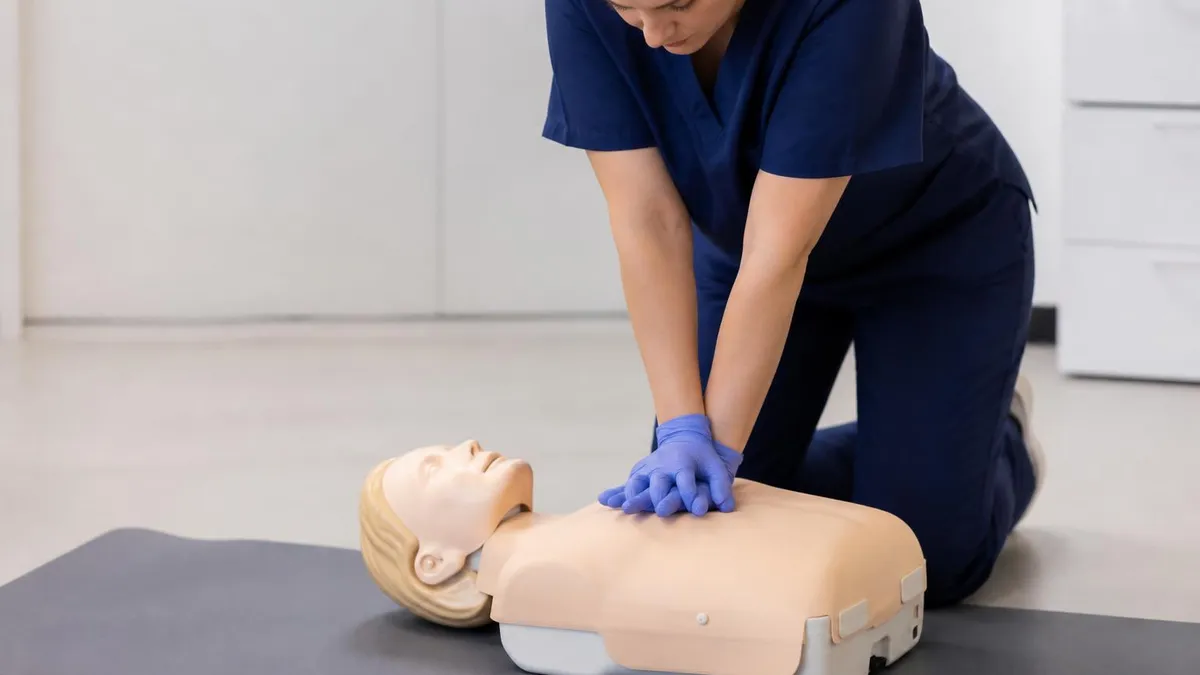
- ✓Place the heel of one hand on the lower sternum and interlock fingers
- ✓Maintain compression depth of 2 to 2.4 inches for adult patients
- ✓Keep compression rate between 100 and 120 per minute consistently
- ✓Allow full chest recoil between every single compression
- ✓Deliver two breaths over one second each after every 30 compressions
- ✓Switch compressors every two minutes to prevent quality decline
- ✓Attach AED pads as soon as the device arrives on scene
- ✓Resume compressions immediately after any shock or no-shock advisory
- ✓Identify and treat reversible causes using the Hs and Ts framework
- ✓Continue resuscitation until ROSC, EMS takeover, or rescuer exhaustion
Compression quality predicts survival better than any drug
Multiple registry analyses show that compression depth, rate, and chest recoil are independent predictors of return of spontaneous circulation and neurologically intact survival. No medication in the acls algorithm—not epinephrine, not amiodarone—matches the impact of consistently excellent compressions. If you remember only one principle from this entire article, remember that pushing hard, pushing fast, and allowing full recoil for every compression is the single most important determinant of whether your patient walks out of the hospital.
The question what does aed stand for is one of the most-searched CPR questions online, and the answer is automated external defibrillator. These devices analyze cardiac rhythm and deliver a measured electrical shock when they detect ventricular fibrillation or pulseless ventricular tachycardia. Modern AEDs guide the user through each step with voice prompts, so even an untrained bystander can operate one safely. Public access defibrillation programs have placed them in airports, schools, gyms, and offices, and survival data consistently favors locations where AEDs are visible and accessible.
Pad placement follows a simple anterior-lateral pattern for most adults: one pad below the right collarbone and the other on the left side of the chest below the armpit. For small children and infants, anterior-posterior placement avoids pad-to-pad contact. Shave excessive chest hair, dry wet skin, and remove medication patches before applying pads. Avoid placing pads directly over implanted pacemakers or defibrillators by shifting an inch or two to ensure adequate skin contact and electrical conduction.
Position recovery refers to placing an unresponsive but breathing patient on their side to keep the airway clear and reduce aspiration risk. The recovery position is appropriate after return of spontaneous circulation if the patient is breathing adequately and a definitive airway is not yet placed. It is also used for unresponsive patients with normal breathing who are not in cardiac arrest, such as those with seizures, intoxication, or syncope. Continuous reassessment of breathing and pulse every two minutes remains essential while waiting for EMS.
Respiratory rate monitoring deserves special attention in the post-arrest period. Normal adult rates fall between twelve and twenty breaths per minute, while pediatric ranges shift with age—from forty to sixty in newborns down to twelve to twenty in adolescents. Bradypnea may signal central nervous system injury or opioid toxicity, while tachypnea suggests hypoxia, acidosis, or shock. Capnography provides real-time feedback on ventilation quality, perfusion adequacy, and even early signs of return of spontaneous circulation during ongoing resuscitation efforts.
Airway management progresses through a logical hierarchy. Begin with basic maneuvers like head-tilt chin-lift, advance to oropharyngeal or nasopharyngeal airways, then bag-mask ventilation, supraglottic airways, and finally endotracheal intubation when indicated and feasible. Each step balances oxygenation benefit against time away from compressions. Studies suggest that bag-mask ventilation is often sufficient during the first several minutes of arrest, with definitive airway placement deferred until after initial defibrillation attempts in most cases.
Reversible causes warrant their own mental checklist during every code. The five Hs—hypoxia, hypovolemia, hydrogen ion (acidosis), hypo/hyperkalemia, and hypothermia—pair with the five Ts—toxins, tamponade, tension pneumothorax, thrombosis (coronary), and thrombosis (pulmonary). Bedside ultrasound, point-of-care labs, and a focused history from family or witnesses help narrow possibilities quickly. Treating the underlying cause often unlocks rhythms that drugs and defibrillation alone cannot fix, particularly in pulseless electrical activity scenarios.
Finally, remember that resuscitation does not end when the heart restarts. Post-cardiac-arrest syndrome involves brain injury, myocardial dysfunction, systemic ischemia-reperfusion response, and persistent precipitating pathology. Coordinated post-arrest care—including targeted temperature management between 32 and 36 degrees Celsius, hemodynamic optimization, glucose control, and early neurologic prognostication—doubles meaningful survival in many studies. The work that began with your first compression continues for hours and days in an intensive care setting where every detail matters.
Always verify that a training provider issues credentials recognized by the American Heart Association, Red Cross, or another accredited body before enrolling. Workplace and licensing boards generally do not accept cards from unverified providers, even if the price looks attractive.
Certification credibility shapes career mobility in healthcare, public safety, and education. The national cpr foundation, American Heart Association, and American Red Cross are the most widely recognized issuers, with the AHA dominating hospital credentialing. Pals certification is required for pediatric ICU, emergency department, and neonatal staff in most US hospitals, while ACLS certification covers adult emergency care. Workplace requirements vary by state, employer, and specialty, so confirm acceptance before paying for any course, especially online-only offerings.
Recertification cycles typically run two years, with skill stations conducted in person or via remote-skills validation in approved hybrid programs. Many providers now offer blended learning where didactic content is completed online and hands-on skills are checked at a local testing center. This format saves time without sacrificing the manikin practice that builds muscle memory. Look for courses that include feedback-enabled manikins, since real-time compression depth and rate feedback measurably improve performance during testing and clinical use.
Career-wise, holding current BLS, ACLS, and PALS cards opens doors in emergency medicine, critical care, anesthesia, paramedicine, and many nursing specialties. Instructors—often called BLS, ACLS, or PALS instructors—earn additional income teaching at hospitals, fire departments, and community programs. The instructor pathway requires current provider status, attendance at an instructor course, and monitored teaching during an initial probationary period. It is one of the most accessible secondary income streams in healthcare for clinicians who enjoy teaching.
If you let your certification lapse, you can recertify CPR online through AHA-aligned providers who blend modules with practical skill checks. Lapsed cards may require a full provider course rather than a renewal class, depending on how recently they expired and which organization issued them. Plan ahead: many employers suspend clinical privileges the day a card expires, and renewal under that pressure rarely fits well into a clinical schedule. Set a calendar reminder ninety days before expiration to stay ahead.
Cost varies significantly by region and provider. Basic life support courses range from $40 to $90, ACLS courses from $180 to $300, and PALS courses from $180 to $300. Renewals cost roughly twenty to thirty percent less than initial certification courses. Group rates and employer reimbursement programs further reduce out-of-pocket expense. Beware of suspiciously cheap online-only programs that promise instant certification, because they frequently fail employer verification checks and force learners to pay twice when their original card is rejected.
Choosing the right course also depends on your role. Healthcare provider BLS differs from layperson Heartsaver CPR in that it includes two-rescuer techniques, bag-mask ventilation, and infant CPR. Heartsaver suffices for daycare workers, coaches, fitness instructors, and most non-clinical employees. Heartsaver First Aid adds bandaging, splinting, and emergency action principles. Reading the course description before enrolling prevents the frustration of completing the wrong course and being unable to use the resulting card at work.
Finally, treat certification as a starting point, not an endpoint. Skills decay measurably within three to six months, and high-pressure scenarios test more than recall—they test pattern recognition, communication, and stamina. Hospitals run mock codes, fire departments run drills, and community programs offer refresher events. Participate whenever possible. The clinicians and first responders who consistently perform well in real emergencies are the ones who rehearsed often enough that the algorithm became reflex rather than recall.
To consolidate everything we have covered, this final section offers practical tips that improve book knowledge into real-world readiness. Start with scenario rehearsal. Once a week, pick a setting—home kitchen, gym treadmill, supermarket aisle—and mentally walk through what you would do if someone collapsed there. Visualize calling 911, sending a bystander for an AED, and beginning compressions. This kind of mental practice has been validated in surgical and aviation training, and it transfers directly to resuscitation performance under stress.
Second, build muscle memory deliberately. Many fire departments and hospitals offer open manikin sessions to community members, and several CPR apps provide rate and depth feedback through your phone's accelerometer. Practicing two minutes of compressions at full intensity reveals just how physically demanding real CPR is. Most untrained rescuers underestimate the effort by half. Knowing in advance that two minutes will leave you winded prepares you to call for a rotation rather than slowing down out of fatigue.
Third, learn the local EMS landscape. Memorize the address of your home, workplace, and gym so you can relay it instantly. Know whether your community uses 911, 988, or a different number for mental health crises. Identify the nearest publicly accessible AED using apps like PulsePoint AED. Familiarity reduces decision time during the first minute of an emergency, and the first minute is when the largest survival benefit is gained or lost.
Fourth, talk to your family. Make sure spouses, older children, and frequent visitors know basic CPR steps and where any medical equipment is stored. Households with a member who has a known cardiac history should consider purchasing a home AED. Insurance occasionally reimburses part of the cost when prescribed by a cardiologist. The presence of a trained family member doubles the likelihood that bystander CPR begins within the first crucial sixty seconds of arrest at home.
Fifth, manage emotional aftermath. Performing CPR—successful or not—is psychologically intense. First responders routinely experience moral injury, intrusive thoughts, and sleep disturbance after critical incidents, and laypeople are not immune. Critical incident stress debriefing, peer support, and professional counseling all help. Knowing in advance that you may feel shaken afterward normalizes the response and encourages you to seek support rather than suppress symptoms that can escalate into post-traumatic stress.
Sixth, stay current with guidelines. Subscribe to the American Heart Association update newsletter, follow ILCOR consensus statements, and read the annual highlights document the AHA publishes in plain language. Reading takes thirty minutes and keeps your practice within current evidence. Outdated practices—like routine cricoid pressure during intubation or pre-cordial thump for monitored arrest—linger surprisingly long among clinicians who do not actively refresh their knowledge. Be the colleague who knows the new evidence first.
Finally, share what you know. Teaching reinforces retention better than any other study technique. Volunteer to lead a CPR demo at your child's school, your faith community, or your workplace wellness program. The American Heart Association sponsors Heart Walks, Sidewalk CPR events, and February's American Heart Month campaigns that make community teaching easy to organize. Every additional trained bystander increases the survival odds for someone, somewhere, on a day none of us can predict. That ripple effect is the real reward of mastering cardiopulmonary resuscitation.
CPR Questions and Answers
CPR Card Lookup: How to Verify, Replace, and Access Your CPR Certification in 2026
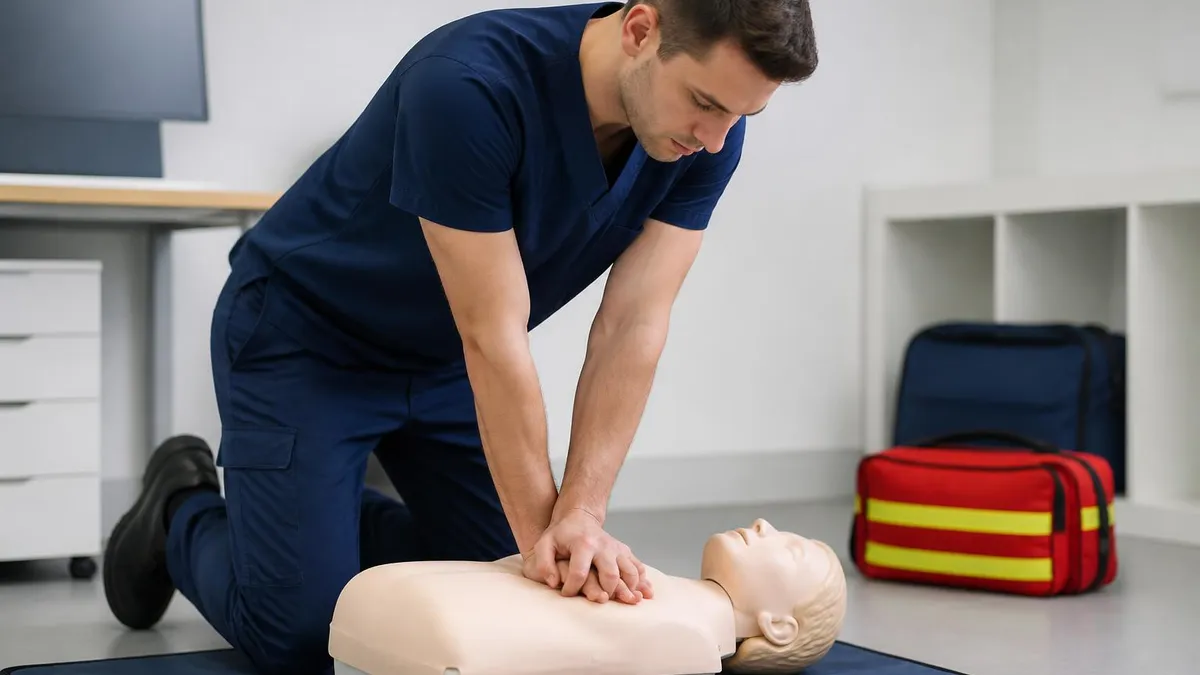
Adult CPR: Complete Step-by-Step Guide to Hands-Only and Standard CPR in 2026

CPR - Cardiopulmonary Resuscitation: Complete Study Guide 2026
Inappropriate CPR Songs: What Not to Play, Why It Matters, and Better Beat-Per-Minute Alternatives
AHA CPR Recertification: How to Recertify CPR Online with the American Heart Association in 2026
About the Author

Registered Nurse & Healthcare Educator
Johns Hopkins University School of NursingDr. Sarah Mitchell is a board-certified registered nurse with over 15 years of clinical and academic experience. She completed her PhD in Nursing Science at Johns Hopkins University and has taught NCLEX preparation and clinical skills courses for nursing students across the United States. Her research focuses on evidence-based exam preparation strategies for healthcare certification candidates.
Join the Discussion
Connect with other students preparing for this exam. Share tips, ask questions, and get advice from people who have been there.
View discussion (5 replies)