
CPR on Special Populations: How to Adapt Resuscitation for Trach Patients, Pregnant Women, Infants, and More
CPR on a trach patient, pregnant women, infants, and obese patients. Master the ACLS algorithm and adapt life support for special populations. 🧠
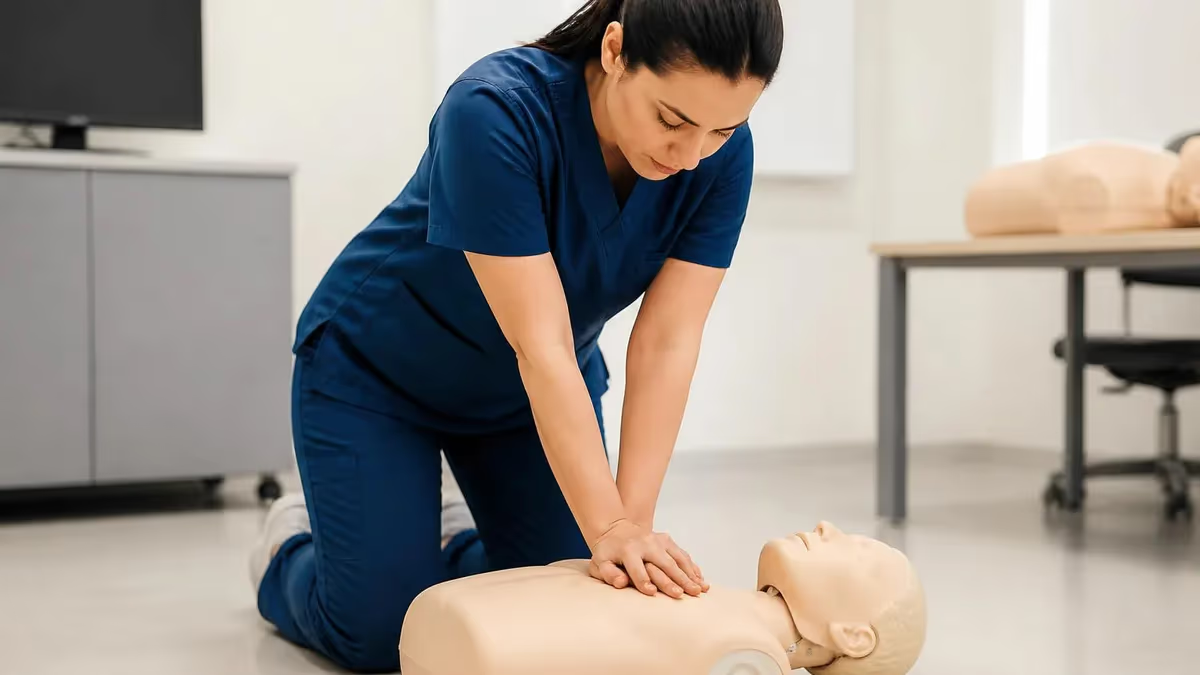
Performing CPR on a trach patient is one of the most misunderstood scenarios in resuscitation, and it sits at the heart of why every responder needs training that goes beyond the standard adult protocol. A tracheostomy bypasses the upper airway entirely, which means the mouth-to-mouth or bag-mask technique you learned in a basic class will not deliver air where it needs to go. Instead, rescue breaths must be delivered directly through the stoma using a pediatric mask or a bag-valve device sealed against the neck opening.
This guide walks through every special population you may encounter: pregnant patients in cardiac arrest, infants under one year old, obese patients where compression depth is challenging, hypothermic victims pulled from cold water, drowning casualties, opioid overdose cases, and patients with implanted devices like pacemakers or AEDs. Each scenario demands subtle but critical modifications to the standard chest compression and ventilation sequence that the American Heart Association teaches.
Knowing the standard acls algorithm is not enough when the patient in front of you has a permanent tracheostomy tube, is 36 weeks pregnant, or weighs 400 pounds. Each of these situations changes hand placement, compression depth, ventilation strategy, and even the position you place the patient in before you start. Understanding these adaptations is what separates a responder who delivers textbook CPR from one who delivers effective CPR that actually restores circulation.
Research from the national cpr foundation and AHA registries shows that survival rates for in-hospital cardiac arrest among special populations lag behind the general adult population by 8 to 15 percentage points. The gap is largely driven by responder hesitation and improper technique adaptation. Trained rescuers freeze when they see a stoma, a pregnant abdomen, or a tiny infant chest because they default to muscle memory built around a healthy 70-kg adult.
This article is built to close that gap. We cover infant cpr depth and rate, two-thumb encircling technique for newborns, left lateral tilt for pregnant patients, stoma ventilation, and how to deliver effective compressions to obese patients without losing recoil. We also discuss when to switch from rescue breathing to advanced life support, how the AED responds to special patient anatomy, and what to do when standard protocols simply do not apply.
Whether you are a nurse on a med-surg floor, a paramedic responding to a home, a daycare worker watching infants, or a family member caring for a loved one with a trach, this material will give you confidence to act in the first 60 seconds. Those seconds are where survival is won or lost, and special populations require a responder who has thought through the differences before the crisis begins.
By the end of this guide, you will understand the modifications required for at least eight distinct patient categories, the equipment that helps in each scenario, and the cognitive checklist to run through before placing your hands on the chest. Treat this as the bridge between your initial certification and the real-world variability you will encounter in the field, the ICU, the playground, or at home.
Special Population CPR by the Numbers

How to Perform CPR on a Trach Patient: Step by Step
Look at the neck opening for visible secretions or a dislodged tube. Suction or wipe clean. Confirm the tube is patent by passing a suction catheter if you have one, or remove a blocked inner cannula immediately.
Use an infant or pediatric-sized bag-valve mask inverted to seal directly over the tracheostomy opening. Pinch the patient's mouth and nose closed to prevent air escape upward through the upper airway.
Give 1 breath every 6 seconds (10 per minute) with a pulse, or 30:2 compression-to-ventilation if no pulse. Watch for chest rise. Each breath should last about 1 second with visible chest expansion.
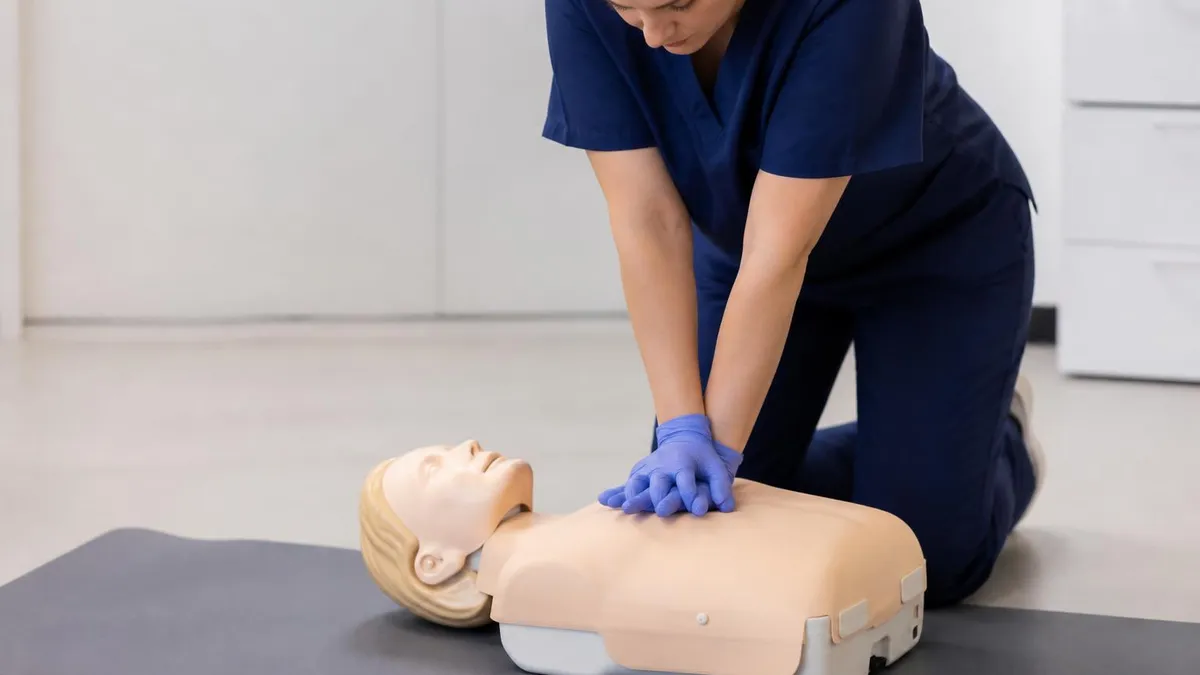
Hand placement is identical to standard adult CPR: lower half of the sternum, 2 to 2.4 inches deep, 100-120 per minute. The trach does not change compression technique, only ventilation pathway.
Place AED pads in standard anterior-lateral position. The tracheostomy does not interfere with defibrillation. Continue compressions through the analysis pause only when the device commands clear.
Pregnant patients in cardiac arrest require immediate manual left uterine displacement, a maneuver every responder should know before a code blue is called on a labor and delivery unit. Beginning at approximately 20 weeks gestation, the gravid uterus compresses the inferior vena cava when the patient lies supine, dramatically reducing venous return to the heart. Without displacement, even perfect compressions deliver inadequate cardiac output. Two rescuers can position themselves on the patient's left side and pull the abdomen up and to the left, or place the patient in a 27 to 30 degree left lateral tilt.
Compression hand placement on a pregnant patient may need to shift slightly upward on the sternum, especially in the third trimester when the diaphragm rides high. The American Heart Association removed this recommendation in the 2020 update, citing insufficient evidence, but many bedside protocols still teach a hand-width higher placement. Whichever technique you use, depth remains 2 to 2.4 inches and rate stays at 100 to 120 per minute. Effective compressions remain the single most important variable.
Perimortem cesarean delivery is the most aggressive intervention in maternal resuscitation and should be initiated within 4 minutes of arrest if return of spontaneous circulation has not occurred. The goal is to deliver the fetus by minute 5. This is a hospital-only intervention, but every responder transporting a pregnant patient should call ahead so that an obstetric team is waiting in the resuscitation bay. The decision to cut is made at the bedside without moving the patient to an operating room.
Airway management in pregnancy is also more difficult. Mucosal edema, increased breast tissue, and a lower functional residual capacity mean desaturation happens faster and intubation is more challenging. Pre-oxygenate aggressively if you have the equipment, use a smaller endotracheal tube than you would expect for the patient's height, and have backup airway devices like a supraglottic airway ready. The respiratory rate target during bag-mask ventilation is the standard 10 breaths per minute, but each breath must achieve visible chest rise against the elevated diaphragm.
Common arrest etiologies in pregnancy form the acronym BEAU-CHOPS: bleeding, embolism, anesthetic complications, uterine atony, cardiac disease, hypertension, other, placental abruption, and sepsis. Running this list through your head during the code helps direct reversible-cause treatment. Pulmonary embolism and amniotic fluid embolism are the leading culprits in otherwise healthy pregnant patients, and both demand aggressive ACLS care with consideration of thrombolytics or extracorporeal support.
Postpartum hemorrhage causing arrest is treated with massive transfusion, uterine massage, and uterotonic medications while compressions continue. Family members and birth partners are often present, and a designated team member should communicate with them throughout the resuscitation. Maternal arrest is rare but highly survivable when the team responds with practiced precision, manual displacement, and a clear plan for perimortem delivery if needed.
Training for these scenarios goes beyond basic life support. Anyone working in maternal care should hold current pals certification and ideally complete a dedicated obstetric emergency course such as ALSO or BCLSO. Simulation drills run quarterly improve team performance dramatically and shrink the time from arrest recognition to displacement and compressions to under 60 seconds.

CPR Practice Test Questions
Prepare for the CPR Cardiopulmonary Resuscitation Practice exam with our free practice test modules. Each quiz covers key topics to help you pass on your first try.
CPR Basic CPR
CPR Exam Questions covering Basic CPR. Master CPR Test concepts for certification prep.
CPR and First Aid
Free CPR Practice Test featuring and First Aid. Improve your CPR Exam score with mock test prep.
CPR (Cardiopulmonary Resuscitation) Adult ...
CPR Mock Exam on (Cardiopulmonary Resuscitation) Adult CPR and AED Usage. CPR Study Guide questions to pass on your first try.
CPR (Cardiopulmonary Resuscitation) Airway...
CPR Test Prep for (Cardiopulmonary Resuscitation) Airway Obstruction and Choking. Practice CPR Quiz questions and boost your score.
CPR (Cardiopulmonary Resuscitation) Cardio...
CPR Questions and Answers on (Cardiopulmonary Resuscitation) Cardiopulmonary Emergency Recognition. Free CPR practice for exam readiness.
CPR (Cardiopulmonary Resuscitation) Child ...
CPR Mock Test covering (Cardiopulmonary Resuscitation) Child and Infant CPR. Online CPR Test practice with instant feedback.
CPR (Cardiopulmonary Resuscitation) High-P...
Free CPR Quiz on (Cardiopulmonary Resuscitation) High-Performance Team Dynamics. CPR Exam prep questions with detailed explanations.
CPR (Cardiopulmonary Resuscitation) Legal ...
CPR Practice Questions for (Cardiopulmonary Resuscitation) Legal and Ethical Considerations. Build confidence for your CPR certification exam.
CPR for Specific Populations
CPR Test Online for for Specific Populations. Free practice with instant results and feedback.
CPR Airway & Breathing Management
CPR Exam Questions covering Airway & Breathing Management. Master CPR Test concepts for certification prep.
CPR Assessment & Recognition of Cardiac Ar...
Free CPR Practice Test featuring Assessment & Recognition of Cardiac Arrest. Improve your CPR Exam score with mock test prep.
CPR Chest Compressions & Defibrillation
CPR Mock Exam on Chest Compressions & Defibrillation. CPR Study Guide questions to pass on your first try.
CPR Post-Resuscitation Care & Recovery
CPR Test Prep for Post-Resuscitation Care & Recovery. Practice CPR Quiz questions and boost your score.
Infant CPR and Pediatric Adaptations
Newborn resuscitation follows the Neonatal Resuscitation Program rather than standard infant cpr protocols. The compression-to-ventilation ratio is 3:1, totaling 120 events per minute, with two-thumb encircling technique on the lower third of the sternum. Depth is approximately one-third the anterior-posterior diameter of the chest.
Bradycardia under 60 beats per minute despite adequate ventilation triggers chest compressions. Oxygen blending starts at 21 percent for term infants and titrates up based on pre-ductal saturation targets. Hypothermia prevention with plastic wrap and a warmer is part of the resuscitation, not an afterthought.
Mouth-to-Stoma vs Bag-Valve-Mask Ventilation on Trach Patients
- +Bag-valve-mask delivers higher oxygen concentration when connected to supplemental O2
- +Pediatric mask seals more reliably around a stoma than rescuer lips
- +Reduces infection risk for the rescuer compared to direct mouth contact
- +Allows two-handed seal with a second rescuer squeezing the bag
- +Visualizes chest rise more easily when responder is not bent over the neck
- +Compatible with PEEP valves and HEPA filters for added safety
- −Requires equipment that may not be present in a community setting
- −Improper mask size leaks air and reduces tidal volume delivered
- −Bag squeeze technique varies, leading to over or under-ventilation
- −Slower to initiate than mouth-to-stoma when seconds matter
- −Single rescuer cannot bag and compress simultaneously without a hold
- −Stoma anatomy varies, and some patients have permanent laryngectomies requiring different technique
Pros and Cons at a Glance
| Pros | Cons |
|---|---|
| Pediatric mask seals more reliably around a stoma than rescuer lips | Requires equipment that may not be present in a community setting |
| Reduces infection risk for the rescuer compared to direct mouth contact | Improper mask size leaks air and reduces tidal volume delivered |
| Allows two-handed seal with a second rescuer squeezing the bag | Bag squeeze technique varies, leading to over or under-ventilation |
| Visualizes chest rise more easily when responder is not bent over the neck | Slower to initiate than mouth-to-stoma when seconds matter |
| Compatible with PEEP valves and HEPA filters for added safety | Single rescuer cannot bag and compress simultaneously without a hold |

Special Populations CPR Readiness Checklist
- ✓Confirm scene safety before approaching any patient regardless of population
- ✓Identify the special population category within 10 seconds of patient contact
- ✓Locate tracheostomy, surgical scars, pregnancy, or implanted devices during initial assessment
- ✓Position pregnant patients in left lateral tilt or perform manual uterine displacement
- ✓Use pediatric mask over stoma for trach patients rather than mouth-to-mouth
- ✓Adjust compression depth to one-third AP diameter for infants and children
- ✓Switch to two-thumb encircling technique when two rescuers are present for infants
- ✓Place AED pads at least 1 inch from any implanted pacemaker or ICD
- ✓Call for advanced life support immediately and announce the special population to dispatch
- ✓Document time of arrest, time of first compression, and time of ventilation onset
- ✓Rotate compressors every 2 minutes to prevent fatigue and maintain depth
- ✓Prepare for post-resuscitation transport with population-specific equipment ready
The Stoma Is the Airway
For a patient with a tracheostomy or laryngectomy, the stoma is the only airway. Mouth-to-mouth ventilation will not work because the upper airway is either bypassed or surgically separated from the trachea. Always deliver ventilations through the neck opening, pinch the mouth and nose closed if anatomy allows airflow, and use the smallest mask that creates a seal. This single adaptation saves lives that would otherwise be lost to responder hesitation.
Obese patients present unique challenges for both compression delivery and AED effectiveness. Body habitus over 250 pounds can require compression depth exceeding the standard 2.4 inches simply to reach the heart, and responder fatigue sets in within 60 to 90 seconds rather than the usual 2 minutes. Rotation of compressors every minute, not every two, is the realistic standard for patients in this category. Hand placement remains on the lower half of the sternum, but the rescuer must climb onto the bed or use a step stool to deliver vertical force from the shoulders.
AED pad placement on obese patients can be tricky because adipose tissue spreads the chest wall and disrupts the standard anterior-lateral landmark. Use the anterior-posterior pad configuration when chest size makes the lateral pad sit on a fat pad or in a skin fold. Wipe excess sweat or moisture from the chest before applying pads, and shave dense chest hair if a razor is available in the AED kit. Poor pad contact is the single most common cause of failed defibrillation on this population.
Airway management in obese patients is harder because of reduced functional residual capacity, increased tongue and pharyngeal tissue, and faster desaturation. Position the head and torso in the ramped position with the external auditory meatus level with the sternal notch. This dramatically improves visualization for intubation and bag-mask seal. A nasopharyngeal airway often helps maintain the airway during bag ventilation when the tongue obstructs the oropharynx.
Hypothermic patients require an entirely different mindset. The maxim no one is dead until warm and dead reflects the fact that profound hypothermia preserves brain function even after prolonged arrest. Compressions and ventilations continue but at a normal rate, not slowed. ACLS drugs are withheld until core temperature exceeds 30 degrees Celsius because cold myocardium does not respond to vasopressors and metabolizes drugs poorly. Defibrillation can be attempted once, but if unsuccessful, further shocks wait until rewarming.
Drowning victims represent a unique cardiac arrest pattern where hypoxia precedes the arrest, making early ventilation more important than in primary cardiac causes. Five initial rescue breaths before chest compressions is the European Resuscitation Council standard for drowning. The American Heart Association also emphasizes ventilation in this population. Do not waste time trying to drain water from the lungs, as the small volume of aspirated water does not impair ventilation in most cases.
Opioid overdose patients in cardiac or respiratory arrest should receive intramuscular or intranasal naloxone alongside ventilation and compressions. Do not delay CPR while waiting for naloxone to work, as the drug only reverses the opioid effect, not the cardiac arrest itself. The current opioid epidemic has shifted out-of-hospital arrest demographics dramatically, and bystander naloxone administration combined with CPR has saved thousands of lives in the past decade.
Electrocution victims present an additional safety hazard: the scene must be made safe before you touch the patient. Once safe, treat as a standard arrest with attention to spinal precautions because of possible falls and to thermal burns at entry and exit points. Cardiac arrest after electrocution often responds well to defibrillation, and early AED use is critical. Many electrocution arrests are caused by ventricular fibrillation that is amenable to a single shock.
Hands-only CPR is recommended for untrained bystanders responding to adult sudden cardiac arrest, but it is not appropriate for trach patients, infants, children, drowning victims, or opioid overdose cases. These populations need ventilation from the very first cycle because the arrest etiology involves hypoxia. Skipping ventilation in these scenarios dramatically reduces survival. If you are not trained in rescue breathing, dispatch will coach you through it on the phone.
Pacemakers, implantable cardioverter-defibrillators, and left ventricular assist devices change the resuscitation landscape. A pacemaker is visible as a small bulge under the skin, typically below the left clavicle but sometimes on the right side. AED pads must be placed at least one inch away from the device to prevent damage and to ensure the defibrillation current reaches the heart muscle rather than being absorbed by the metal casing. The presence of a pacemaker does not change compression depth, rate, or hand placement.
Implanted cardioverter-defibrillators may fire during external CPR. The shock feels like a static jolt to the rescuer and is not dangerous, though it is startling. Continue compressions through any internal shocks the device delivers. The internal defibrillator may successfully convert the rhythm before the AED has time to analyze, but if the rhythm persists, the external AED can and should still deliver a shock through correctly placed pads.
Left ventricular assist devices change everything. These patients may not have a palpable pulse even when alive because the pump generates continuous rather than pulsatile flow. Confirm arrest by checking mental status, breathing, and capillary refill rather than peripheral pulses. External chest compressions are controversial in LVAD patients because of cannula dislodgment risk, but recent AHA guidance permits compressions when no alternative exists. Always call the LVAD coordinator immediately, as device-specific troubleshooting can restore circulation without CPR.
Patients with do-not-resuscitate orders or POLST forms present a different kind of special population. Confirm the document is current and signed before withholding resuscitation, and when in doubt, begin CPR and let the team verify documentation. A verbal report from a family member is not sufficient to withhold lifesaving care in most jurisdictions. This is a legal and ethical area where well-meaning responders sometimes withhold care that the patient and family actually wanted continued.
Cancer patients in active treatment, transplant recipients on immunosuppression, and dialysis patients all warrant standard CPR with attention to underlying reversible causes. Hyperkalemia is the leading reversible cause of arrest in dialysis patients and is treated with calcium gluconate, insulin and dextrose, and emergent dialysis. Transplant patients may have denervated organs that respond unpredictably to medications. Always communicate the patient's underlying conditions to the receiving team during transport handoff.
Patients living with advanced neuromuscular disease, ALS, muscular dystrophy, or spinal cord injury may have advance directives that limit interventions. Read the document carefully. Some allow compressions but not intubation, some allow short trials of CPR, and some refuse all resuscitation. Respecting these documents is part of compassionate care. When the document is unclear or absent, default to full resuscitation and sort out preferences after stabilization.
For ongoing education and certification across all of these populations, the standards body framework includes the acls algorithm for adult arrest, PALS for pediatric, NRP for neonatal, and dedicated obstetric and trauma resuscitation courses. Continuing education every two years is the minimum, and quarterly skills drills at the workplace are the gold standard for retaining proficiency. Special population scenarios should appear in every drill rotation.
Practical readiness for special population CPR comes down to three habits: anticipate, equip, and rehearse. Anticipation means knowing which populations you are likely to encounter in your environment. A daycare worker should drill infant cpr weekly. An ICU nurse should drill trach patient ventilation monthly. A labor and delivery team should drill maternal arrest quarterly. Each environment has a predictable special population mix, and your preparation should match that mix rather than spreading thin across every possible scenario.
Equipment readiness is the second habit. A trach patient room should have a spare tracheostomy tube of the same size, a pediatric bag-valve mask, suction equipment, and saline ready at the bedside at all times. A maternal ward should have a perimortem cesarean kit on the resuscitation cart. A pediatric clinic should have appropriately sized AED pads, bag-masks, and length-based pediatric tape like the Broselow system within arm's reach of any patient.
Rehearsal is the third and most powerful habit. Quarterly in-situ simulations using the actual equipment in the actual environment outperform classroom training by a factor of three to five in terms of skill retention. Debrief immediately after each simulation, video record the session if your facility allows, and rotate roles so that every team member plays compressor, ventilator, recorder, and team leader. Effective resuscitation is a team sport, and team chemistry is built only through repetition.
Knowing what does aed stand for and how the device works on a special population patient is part of public education. AED means automated external defibrillator, and these machines are designed to be used by laypeople with minimal training. Modern AEDs walk the user through pad placement with diagrams and voice prompts. Some models have pediatric mode switches, and others have separate pediatric pad sets. Familiarity with the AED in your specific location, whether home, office, gym, or school, reduces deployment time when the alarm sounds.
Public access defibrillation programs have dramatically improved survival from out-of-hospital cardiac arrest. Communities with comprehensive AED placement and trained bystanders see survival rates two to three times higher than communities without. Advocate for AED placement in your workplace, school, place of worship, and recreational facility. Verify that the units are maintained, batteries are current, and pads have not expired. A neglected AED is worse than no AED at all because it creates false security.
Bystander training in CPR has been shown to be the single most modifiable factor in cardiac arrest survival. Surviving sudden arrest depends on a chain of life support events: recognition, activation of EMS, early compressions, early defibrillation, advanced care, and post-arrest critical care. Each link in the chain has been studied extensively, and each has its own evidence base. The community link, bystander CPR, has the greatest variability and therefore the greatest opportunity for improvement.
Finally, take care of yourself after a resuscitation. Critical incident stress is real, and rescuers who participate in unsuccessful resuscitations, especially of children, infants, or pregnant women, are at elevated risk of post-traumatic stress symptoms. Peer support, formal debriefing, and access to mental health resources are part of a complete CPR program. The next patient you save depends on you being psychologically intact, so do not neglect this final piece of the special population resuscitation puzzle.
CPR Questions and Answers
CPR Card Lookup: How to Verify, Replace, and Access Your CPR Certification in 2026
Adult CPR: Complete Step-by-Step Guide to Hands-Only and Standard CPR in 2026

CPR - Cardiopulmonary Resuscitation: Complete Study Guide 2026
Inappropriate CPR Songs: What Not to Play, Why It Matters, and Better Beat-Per-Minute Alternatives
AHA CPR Recertification: How to Recertify CPR Online with the American Heart Association in 2026
About the Author

Registered Nurse & Healthcare Educator
Johns Hopkins University School of NursingDr. Sarah Mitchell is a board-certified registered nurse with over 15 years of clinical and academic experience. She completed her PhD in Nursing Science at Johns Hopkins University and has taught NCLEX preparation and clinical skills courses for nursing students across the United States. Her research focuses on evidence-based exam preparation strategies for healthcare certification candidates.
Join the Discussion
Connect with other students preparing for this exam. Share tips, ask questions, and get advice from people who have been there.
View discussion (5 replies)