
Basic CPR: Step-by-Step Guide to Saving a Life (2026 October AHA Guidelines)
Basic CPR steps for bystanders: check, call, compress, breathe. 2026 October AHA guidelines, adult/child/infant, Hands-Only CPR, AED use. ❓
Basic CPR: The Steps That Actually Save Lives
Roughly 350,000 cardiac arrests happen outside of hospitals in the United States every year. Without bystander CPR, survival hovers near 10%. With it, survival doubles or triples. That's the whole reason basic CPR exists as a public skill — not because it's complicated, but because the first three to five minutes belong to whoever is standing closest.
You don't need a certification to start. You don't need a special device. You need to push hard and fast on the center of the chest, ideally while someone calls 911 and grabs an AED. That's the core of it. The rest of this guide breaks down what to do, in what order, and how the technique shifts when the person in front of you is an adult, a child, or an infant.
The American Heart Association updated its CPR guidance for 2025, and the 2026 protocols still follow that framework. Compression rate stays 100 to 120 per minute. Adult depth stays at least 2 inches. The big change for laypeople — bystander Hands-Only CPR — has been the recommended approach for untrained rescuers responding to a sudden adult collapse for over a decade, and that hasn't changed. If you've never trained, skip the breaths and keep pumping.
One more thing before the steps. People hesitate. They worry about breaking ribs (you might — it's fine, ribs heal, hearts don't restart on their own). They worry about lawsuits (Good Samaritan laws cover you in all 50 states when you act in good faith). They worry about doing it wrong. Here's the honest answer: doing nothing is the only wrong choice. If you want practice questions before you read the technique, run a quick Basic CPR practice test to see what you already know.
What Basic CPR Actually Is
CPR — cardiopulmonary resuscitation — is a manual circulation technique. When a person's heart stops pumping blood, their brain starts dying in roughly 4 to 6 minutes. CPR doesn't restart the heart. What it does is keep oxygenated blood moving to the brain and vital organs until something that can restart the heart — usually an AED or paramedic — arrives.
That distinction matters. People expect CPR to revive the person. It almost never does. It buys time. The thing that actually shocks a chaotic heart rhythm back into a regular beat is the defibrillator. Basic CPR is the bridge.
- Check the scene — is it safe to approach? Traffic, fire, downed wires, electricity all stop you cold until cleared.
- Check responsiveness — tap the shoulders firmly and shout "Are you OK?" No response, no normal breathing? It's cardiac arrest until proven otherwise.
- Call 911 — or point at a specific person and tell them to call. Put the phone on speaker. Ask for an AED.
- Start compressions — center of the chest, heel of one hand, other hand on top. 30 compressions, 2 inches deep, 100–120/min.
- Open the airway and give 2 breaths — head-tilt, chin-lift. Each breath about 1 second. Watch for chest rise. Skip if untrained.
- Continue 30:2 cycles — until EMS arrives, an AED tells you to stop, the person starts breathing, or you physically can't continue.
If you're untrained, alone, or just not comfortable giving rescue breaths to a stranger — do Hands-Only CPR. The AHA recommends compression-only CPR for untrained bystanders responding to an adult who collapsed suddenly. Skip steps 5. Push hard, push fast, don't stop. Hands-Only CPR does not apply to children, infants, or drowning victims — those still need rescue breaths because the arrest is usually respiratory in origin.
Basic CPR by the Numbers
Step 1 and 2: Scene Safety and Responsiveness
Before you touch the person, look around. Traffic? Move them only if you must. Live electrical hazard? Don't touch until power is off. A burning building? Pull them out before starting. The rule isn't heroic — it's practical. A second collapsed rescuer helps nobody.
Once the scene is safe, drop to your knees beside them. Tap their shoulders. Shout. "Hey! Are you OK? Can you hear me?" Watch for any movement, any sound. Then look at their chest for 5 to 10 seconds. Are they breathing? Gasping isn't breathing — agonal gasps look like fish out of water and signal cardiac arrest, not life. If breathing is absent or only gasping, treat it as arrest.
Step 3: Calling 911 and the AED
If you're alone with a phone, dial 911, put it on speaker, and start compressions while you talk to the dispatcher. Dispatchers in most U.S. cities are trained to walk you through CPR over the phone — let them. If others are present, point directly at one person: "You, in the blue shirt, call 911 right now. You, in the red jacket, find the nearest AED and bring it back." Specific assignment beats general request every time. People freeze when you yell "someone call 911" — they assume someone else will.
Knowing the signs of cardiac arrest helps you tell the dispatcher exactly what's happening. Sudden collapse. Unresponsive. Not breathing or only gasping. That's the script. Don't waste seconds describing the person's medical history — that comes later from EMS.
Step 4: Chest Compressions — The Most Important Part
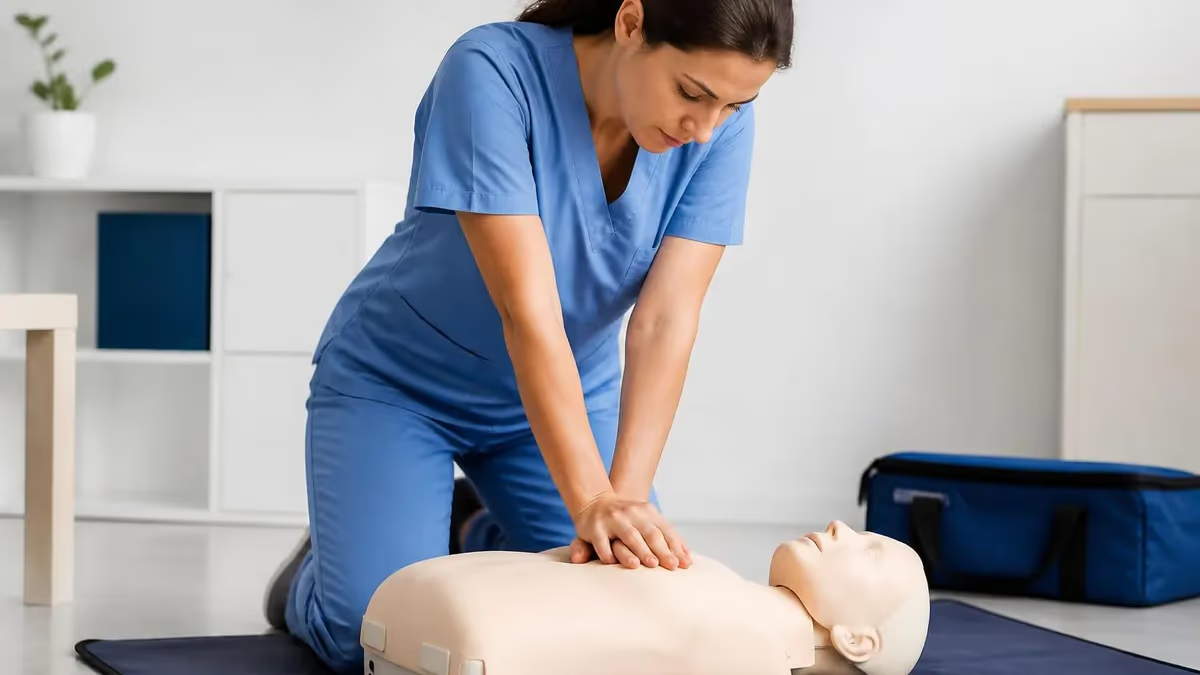
Place the heel of one hand on the center of the chest, on the lower half of the breastbone (sternum). Put your other hand on top, lock your fingers, lock your elbows, and put your shoulders directly over your hands. Compress straight down, not at an angle. For an adult, push at least 2 inches deep — but no more than 2.4 inches. Let the chest fully recoil between each push. Full recoil matters as much as depth because it's what lets the heart refill with blood before the next compression squeezes it out again.
Rate is 100 to 120 per minute. That's faster than most people expect. The classic mental beat is the Bee Gees' "Stayin' Alive" — 103 bpm — or "Another One Bites the Dust" if you prefer Queen's slightly darker take. Count out loud: "one and two and three and four" up to 30. Then stop, give breaths if you're trained, and resume.
Compression Differences by Age
- Hand position: Two hands, heel of one on lower sternum
- Depth: At least 2 inches, no more than 2.4
- Rate: 100-120 per minute
- Ratio (1 rescuer): 30 compressions : 2 breaths
- Hand position: One or two hands on lower sternum
- Depth: About 2 inches (1/3 of chest depth)
- Rate: 100-120 per minute
- Ratio (1 rescuer): 30 : 2
- Hand position: Two fingers (lone rescuer) or two-thumb encircling (two rescuers) just below nipple line
- Depth: About 1.5 inches (1/3 of chest depth)
- Rate: 100-120 per minute
- Ratio (1 rescuer): 30 : 2 — see <a href="/cpr/infant-cpr"><strong>infant CPR</strong></a> guide for full technique
Step 5: Rescue Breaths (If You're Trained)
After 30 compressions, open the airway. Place one hand on the forehead and tilt the head back gently. Use two fingers of your other hand to lift the chin. This moves the tongue off the back of the throat — the most common airway block in an unconscious adult.
Pinch the nose shut. Make a seal over the person's mouth with yours. Blow steadily for about 1 second — just enough to see the chest rise. Take a breath. Give a second one. Then resume compressions immediately. Total breath time should be under 10 seconds. Long breathing pauses kill compression effectiveness. If the chest doesn't rise on your first breath, reposition the head and try again. If it still doesn't rise on the second, go straight back to compressions — the airway might be blocked and chest compressions can sometimes dislodge an obstruction.
For infants, cover both the nose and mouth with your mouth and give small puffs — about the size of a cheek's worth of air. Adult-sized breaths will overinflate infant lungs. The rescue breathing technique is the same head-tilt-chin-lift for children, with a normal-sized breath sized to chest rise.
Step 6: AED — Use It the Second It Arrives
An AED — automated external defibrillator — is the single biggest survival multiplier in cardiac arrest. Bystander CPR doubles survival. Bystander CPR plus an AED within 3 to 5 minutes can push survival above 50% in some studies. That's not a small effect. That's the difference between funerals and family dinners.
When the AED arrives, turn it on. The device talks to you. Follow what it says — every consumer-grade AED is designed for someone who has never used one. Peel the pads and stick them to bare skin: one on the upper right chest below the collarbone, one on the lower left side under the armpit. For children under 8 or under 55 pounds, use pediatric pads if available. If not, adult pads work — just don't let them touch each other. Correct AED pad placement matters because the shock has to cross the heart.
The AED analyzes the rhythm. Stop touching the person while it does. If it says "shock advised," make sure nobody is touching them, then press the button. Immediately resume compressions for another 2 minutes — don't wait for the AED to talk again. After 2 minutes the AED will re-analyze. Repeat the cycle.
Common Mistakes That Reduce CPR Effectiveness
Most bystanders who attempt CPR get one or more of these wrong. Knowing them in advance helps.
What High-Quality CPR Looks Like vs. Common Mistakes
- +Compression depth at least 2 inches in adults — measured, not estimated
- +Compression rate 100-120/min — count out loud or use a song beat
- +Full chest recoil between each compression — let the heart refill
- +Compression pauses under 10 seconds total — for breaths, AED, role swap
- +Switching rescuers every 2 minutes — fatigue ruins depth fast
- +Hard surface under the person — soft mattress absorbs compression force
- −Compressions too shallow — fear of breaking ribs is the #1 cause
- −Compressions too slow — feels fast when it's actually 70/min
- −Leaning on the chest — prevents full recoil, kills blood flow
- −Long pauses for breaths or AED — every second of pause matters
- −Compressing on the abdomen or upper chest — wrong landmark, no flow
- −Stopping early because they 'twitched' — agonal movement isn't recovery

Adult vs Child vs Infant CPR: What Actually Changes
The framework is the same — check, call, compress, breathe, defibrillate. The mechanics scale to the body in front of you. An adult chest is bigger and stiffer, so it needs more force. A child's chest is more compliant. An infant's chest is tiny enough that two fingers do what two hands do for an adult.
Calling 911 Order Flips for Children and Infants
For adults, sudden collapse is almost always a cardiac problem — call 911 first, then start CPR. For children and infants, arrest is more often respiratory — they stopped breathing first and the heart followed. If you're alone with an unresponsive child or infant, give 2 minutes of CPR first, then call 911. "Call first" for adults. "Care first" for kids. The exception: if the child collapsed witnessed and suddenly — like during sports — call 911 first because that's more likely a cardiac event.
Two-Rescuer Infant CPR Uses Different Hand Position
When two people are working on an infant, the chest compressions switch to the two-thumb encircling-hands technique. Wrap both hands around the chest with thumbs side by side on the lower sternum, just below the nipple line. Compress with the thumbs while the hands support the back. Better depth control than two fingers. The compression-to-breath ratio also changes — 15:2 for two-rescuer infant and child CPR, not 30:2.
Age-Based CPR Adjustments at a Glance
- ✓Adult: 2 hands, 2+ inches, 30:2 single rescuer, call 911 first
- ✓Child (1 to puberty): 1-2 hands, ~2 inches, 30:2 single / 15:2 two rescuers, care first
- ✓Infant (under 1): 2 fingers or 2-thumb encircling, ~1.5 inches, 30:2 single / 15:2 two rescuers, care first
- ✓Rate stays 100-120/min across all ages
- ✓Full chest recoil required on every compression
- ✓Hands-Only only applies to adults — children and infants always need breaths
Hands-Only CPR: When and Why
Hands-Only CPR means compressions without rescue breaths. The AHA introduced it as a layperson recommendation because most untrained bystanders won't do CPR at all if they think they have to put their mouth on a stranger. Removing the breath requirement increases the chance someone tries at all — and any CPR beats no CPR.
It works for adult cardiac arrest because the blood already in the lungs and bloodstream still has oxygen for the first few minutes. Compressions circulate that oxygenated blood. After 4 to 6 minutes the oxygen runs out and breaths become more important — but EMS usually arrives by then, or the AED has done its job. For specifically what counts as Hands-Only and when to use it, the what is Hands-Only CPR breakdown covers the rules in more depth.
Hands-Only does not apply when:
- The victim is a child or infant — usually respiratory cause, breaths matter
- The arrest is from drowning — lungs are full of water, oxygen depleted fast
- The arrest is from drug overdose — respiratory cause
- The arrest is from suffocation, choking, or trauma — respiratory cause
- You are trained and willing to give breaths — full CPR is still ideal
When to Stop vs When to Keep Going
- +STOP: EMS arrives and physically takes over
- +STOP: Person moves, coughs, or starts breathing normally
- +STOP: AED instructs you to stand clear for analysis
- +STOP: You are physically unable to continue safely
- −KEEP GOING: Person hasn't responded yet — CPR rarely revives on its own
- −KEEP GOING: You feel tired — swap rescuers if possible, don't stop
- −KEEP GOING: You're unsure if it's working — uncertainty is normal
- −KEEP GOING: The compression is feeling shallow — push deeper, don't quit

When to Stop CPR
You stop when one of four things happens. EMS arrives and takes over — most common, and the moment you've been waiting for. The person shows signs of life — they move, cough, breathe normally on their own. An AED tells you to stop and analyzes — pause for the rhythm check, then resume per its prompts. You become physically unable to continue — you're exhausted, the scene becomes unsafe, or another rescuer is ready to take over.
You do not stop because the person doesn't seem to be responding. CPR rarely revives anyone on its own — it keeps them alive long enough for definitive care. Keep going. If you're tired and have someone with you, swap every 2 minutes. Fresh arms hit better depth.
Getting Certified vs. Just Knowing the Steps
You don't legally need certification to perform basic CPR on a stranger in any U.S. state. Good Samaritan laws protect any reasonable bystander acting in good faith. That said, if you work in healthcare, childcare, fitness, education, or any role that involves vulnerable people, your employer likely requires a card.
The most common are American Heart Association BLS (healthcare provider) and American Red Cross CPR/AED (general public). For deeper training that includes airway adjuncts and rhythm recognition, basic life support certification is the standard healthcare credential. Certifications typically run 4 hours classroom or 2 hours blended online plus a skills check, and they last 2 years.
Refresh Your Skills Every Few Months — Even With a Two-Year Card
Research from the AHA shows CPR skill retention drops sharply after six months. Hand placement drifts. Compression depth gets shallower. Rate slows. Recall of the sequence fades. The AHA now recommends short skills refreshers every 3 to 6 months for healthcare providers, even though formal recertification stays on a 2-year cycle.
For laypeople, the same logic applies. Watch a 60-second refresher video twice a year. Mentally walk through the 6 steps on your morning commute. If your workplace has a manikin available — a lot of corporate gyms and AED stations do — drop down and do a 2-minute set every few months. It feels silly until the day you need it and your hands already know what to do.
One useful drill: time yourself counting to 30 compressions out loud. If it takes 15 to 18 seconds, you're in the 100-120/min target zone. Faster than 15 seconds and you're too quick — depth suffers. Slower than 18 and you've drifted under 100/min. This drill works on a pillow, a folded towel, even a firm couch cushion. The motor memory transfers to the real chest later.
Why Bystander Action Is the Biggest Survival Factor
Out-of-hospital cardiac arrest survival hovers around 10% nationally. In communities with high bystander CPR rates — Seattle, parts of Denmark, parts of Japan — survival climbs above 20%. Same EMS systems. Same hospitals. Same drugs. The variable is who's standing there in the first 4 minutes and whether they act.
That's the premise of public CPR education. You aren't being asked to be a paramedic. You're being asked to compress a chest at a steady rate for a few minutes while help arrives. The bar is low. The impact is enormous. If you finish this guide and remember nothing else: push hard, push fast, don't stop.
You can continue preparing with the cpr test and answers, which includes answer explanations for every question.
The First 4 Minutes: Minute-by-Minute
Minute 0
Minute 0-1
Minute 1-2
Minute 2
Minute 3
Minute 4-5
Minute 6+
Pre-Action Checklist Before You Touch the Person
- ✓Scene safe — no traffic, fire, electrical, or environmental hazard
- ✓Person unresponsive — tap, shout, no reaction
- ✓Breathing absent or only gasping (agonal breaths count as no breathing)
- ✓911 called — speaker on, dispatcher on the line
- ✓AED requested — someone is going to find one
- ✓Person on a hard, flat surface — move them off a bed or couch
- ✓Chest exposed — remove or push aside clothing for compressions and AED pads
- ✓Hands positioned center of chest, heel of palm, fingers locked
- ✓Shoulders directly over hands, arms straight
Quick Reference: Adult, Child, Infant
Definition: Puberty and above (visible secondary sex characteristics).
Call first: If alone, call 911 before starting CPR — adult arrest is usually cardiac.
Compressions: Two hands, lower half of sternum. At least 2 inches deep, 100-120/min, 30:2 ratio.
Breaths: Head-tilt chin-lift. Pinch nose. 1-second breath, watch for chest rise.
Hands-Only acceptable: Yes, for untrained bystanders.
CPR Practice Test Questions
Prepare for the CPR Cardiopulmonary Resuscitation Practice exam with our free practice test modules. Each quiz covers key topics to help you pass on your first try.
CPR Basic CPR
CPR Exam Questions covering Basic CPR. Master CPR Test concepts for certification prep.
CPR and First Aid
Free CPR Practice Test featuring and First Aid. Improve your CPR Exam score with mock test prep.
CPR (Cardiopulmonary Resuscitation) Adult ...
CPR Mock Exam on (Cardiopulmonary Resuscitation) Adult CPR and AED Usage. CPR Study Guide questions to pass on your first try.
CPR (Cardiopulmonary Resuscitation) Airway...
CPR Test Prep for (Cardiopulmonary Resuscitation) Airway Obstruction and Choking. Practice CPR Quiz questions and boost your score.
CPR (Cardiopulmonary Resuscitation) Cardio...
CPR Questions and Answers on (Cardiopulmonary Resuscitation) Cardiopulmonary Emergency Recognition. Free CPR practice for exam readiness.
CPR (Cardiopulmonary Resuscitation) Child ...
CPR Mock Test covering (Cardiopulmonary Resuscitation) Child and Infant CPR. Online CPR Test practice with instant feedback.
CPR (Cardiopulmonary Resuscitation) High-P...
Free CPR Quiz on (Cardiopulmonary Resuscitation) High-Performance Team Dynamics. CPR Exam prep questions with detailed explanations.
CPR (Cardiopulmonary Resuscitation) Legal ...
CPR Practice Questions for (Cardiopulmonary Resuscitation) Legal and Ethical Considerations. Build confidence for your CPR certification exam.
CPR for Specific Populations
CPR Test Online for for Specific Populations. Free practice with instant results and feedback.
CPR Airway & Breathing Management
CPR Exam Questions covering Airway & Breathing Management. Master CPR Test concepts for certification prep.
CPR Assessment & Recognition of Cardiac Ar...
Free CPR Practice Test featuring Assessment & Recognition of Cardiac Arrest. Improve your CPR Exam score with mock test prep.
CPR Chest Compressions & Defibrillation
CPR Mock Exam on Chest Compressions & Defibrillation. CPR Study Guide questions to pass on your first try.
CPR Post-Resuscitation Care & Recovery
CPR Test Prep for Post-Resuscitation Care & Recovery. Practice CPR Quiz questions and boost your score.
CPR Questions and Answers
Related CPR Articles
How to Perform CPR: Step-by-Step Guide 2026 (Adult, Child & Infant)
Infant CPR: Steps, Technique, and Certification Guide
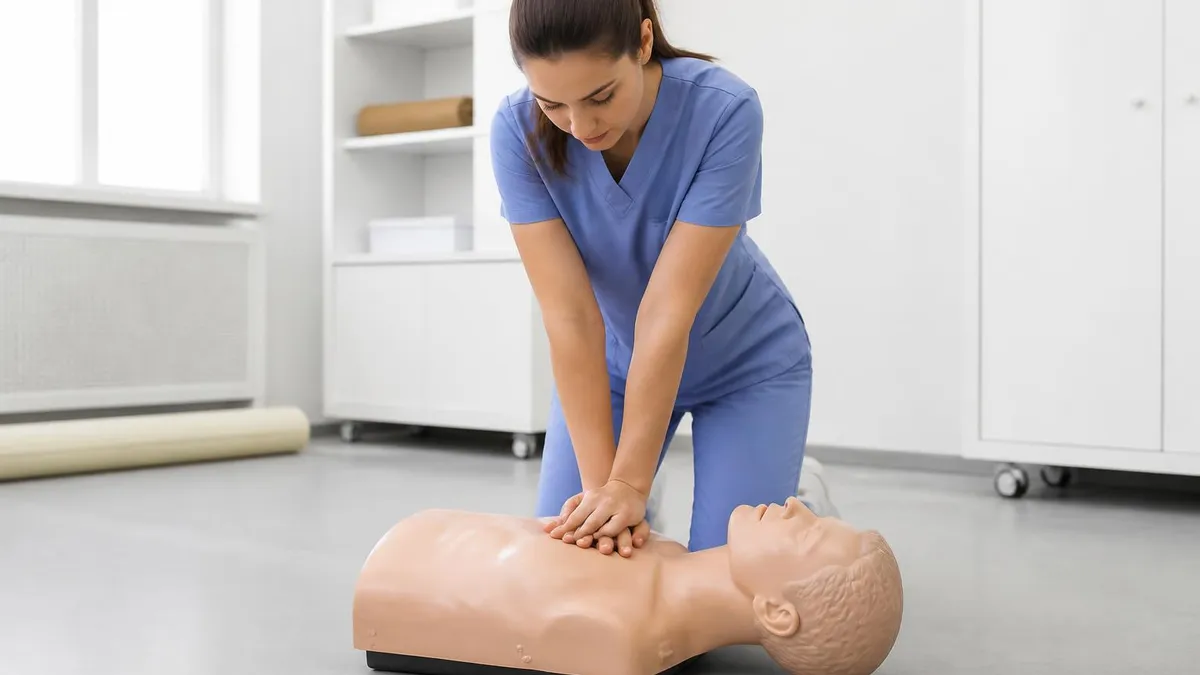
How to Do CPR: Step-by-Step Guide for Adults, Children, and Infants
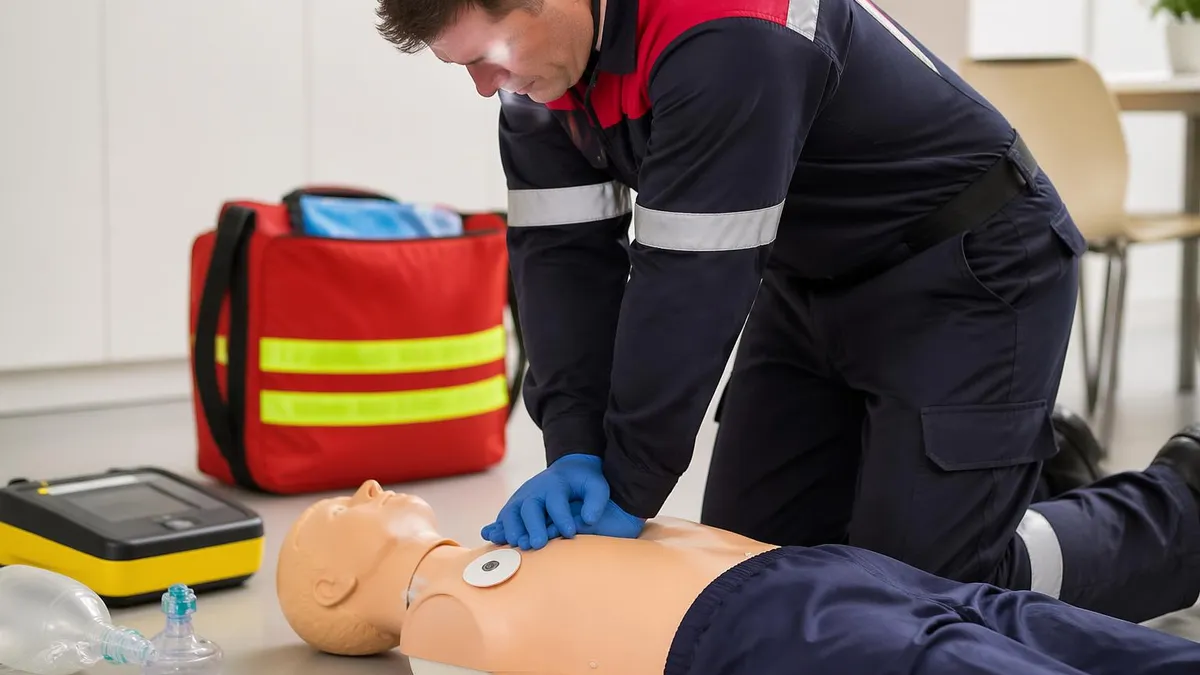
CPR Certification 2026: How to Get Certified and Stay Current
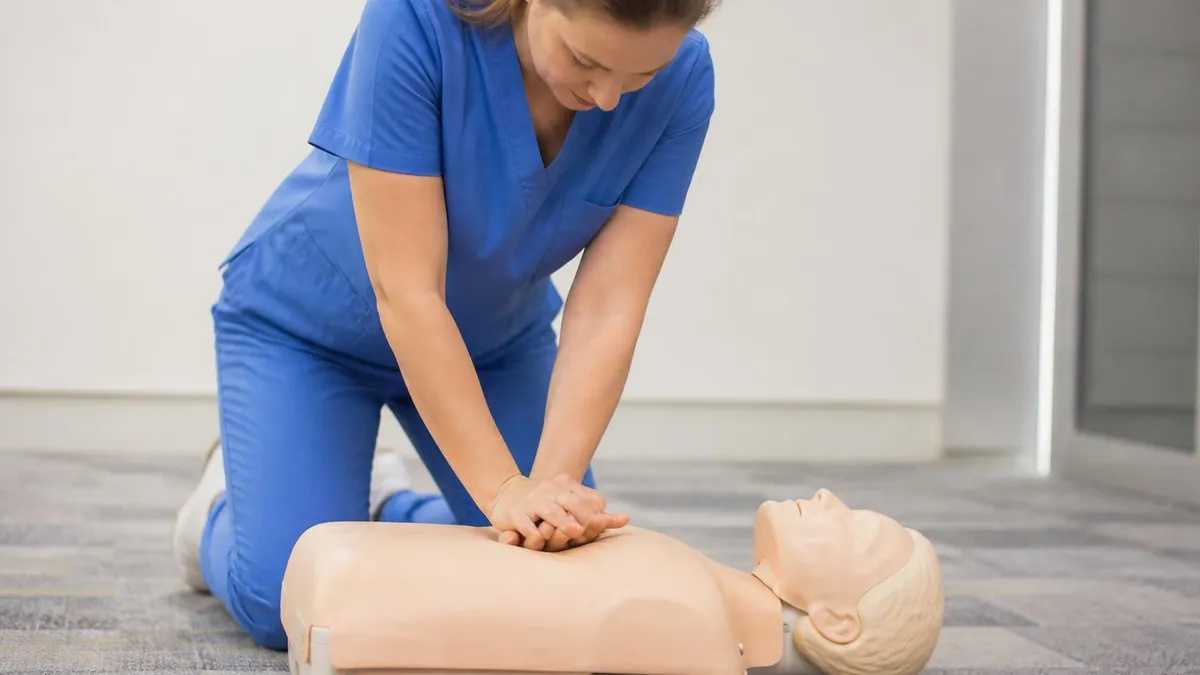
American Heart Association CPR Certification: Courses, Costs, and What to Expect
About the Author

Registered Nurse & Healthcare Educator
Johns Hopkins University School of NursingDr. Sarah Mitchell is a board-certified registered nurse with over 15 years of clinical and academic experience. She completed her PhD in Nursing Science at Johns Hopkins University and has taught NCLEX preparation and clinical skills courses for nursing students across the United States. Her research focuses on evidence-based exam preparation strategies for healthcare certification candidates.
Join the Discussion
Connect with other students preparing for this exam. Share tips, ask questions, and get advice from people who have been there.
View discussion (5 replies)