
CPR Certification 2026 September: How to Get Certified and Stay Current
📚 Get ready for your CPR Certification 2026 September: How to Get certification. Practice questions with step-by-step answer explanations and instant scoring.
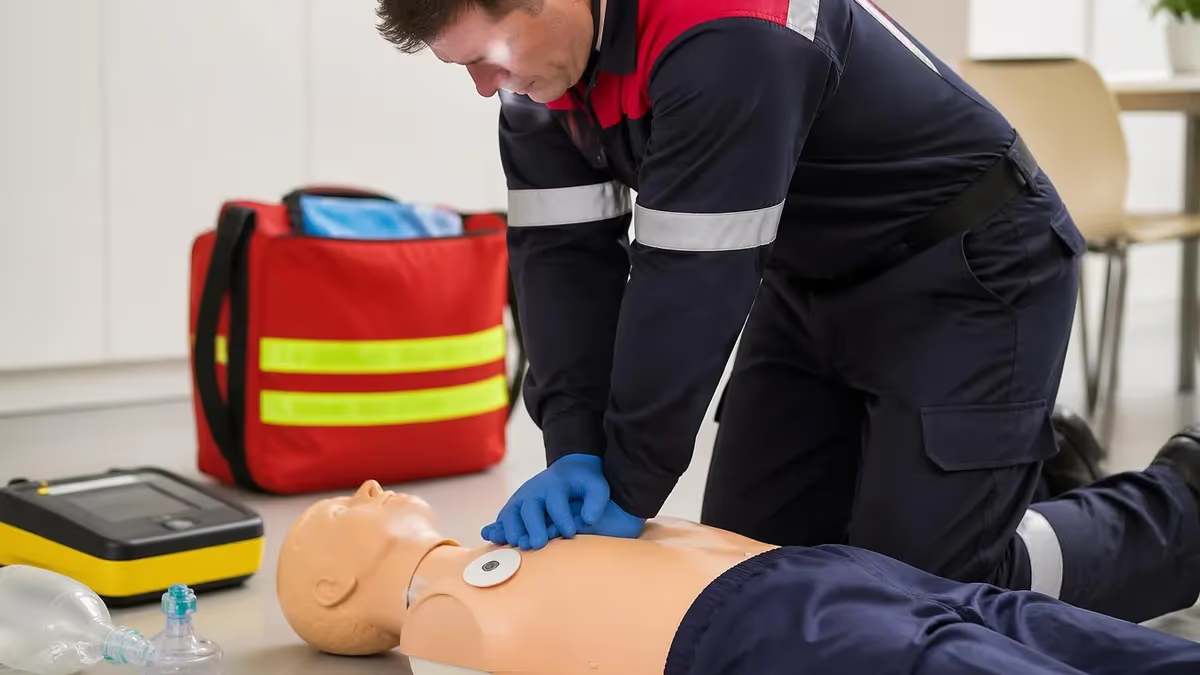
What Is CPR Certification?
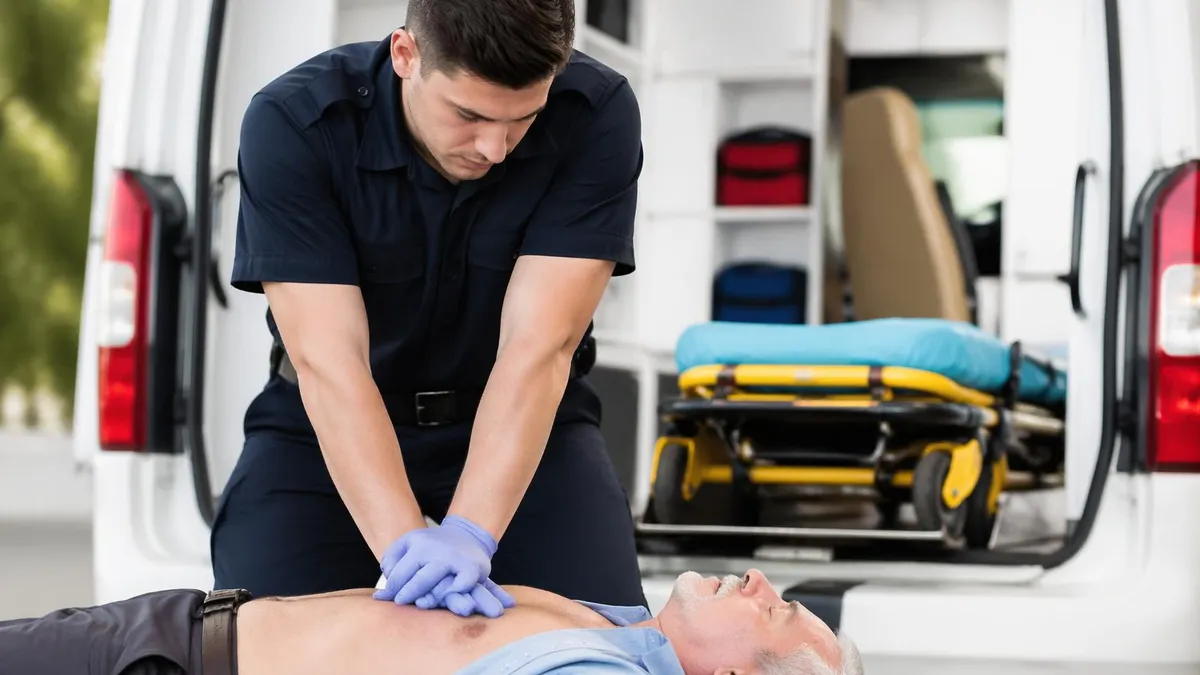
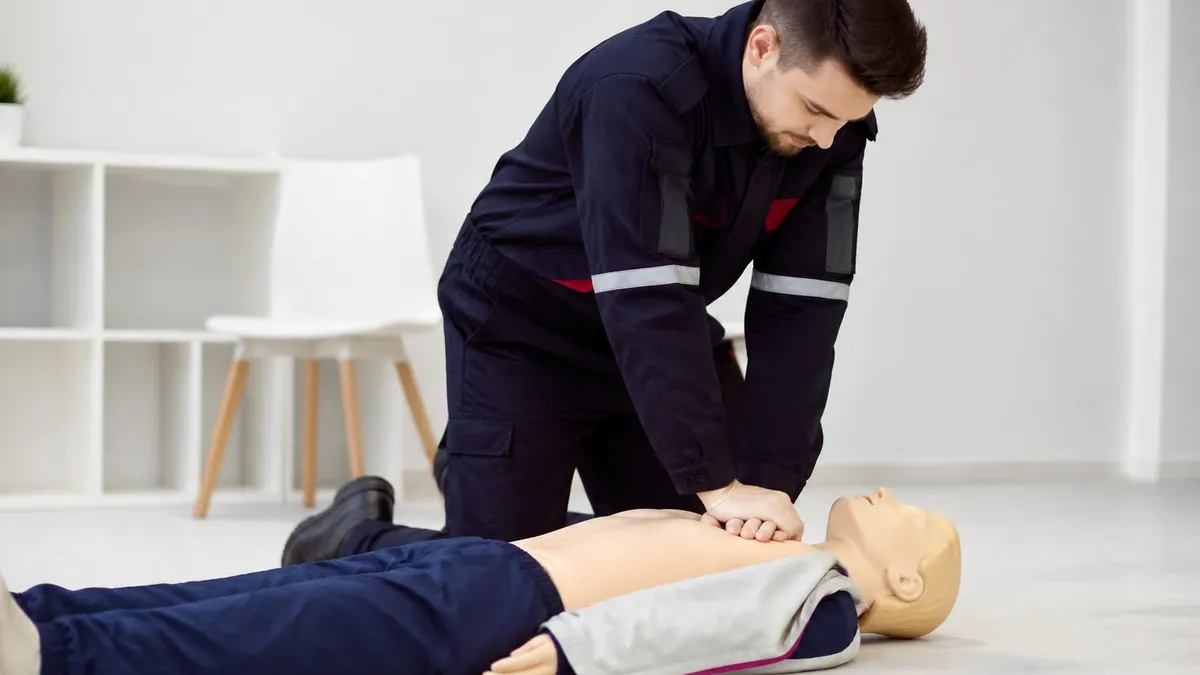
CPR certification is formal recognition that a person has completed training in cardiopulmonary resuscitation and has demonstrated competency in CPR techniques through an approved provider. CPR (Cardiopulmonary Resuscitation) combines chest compressions and rescue breathing to manually circulate blood and oxygen in a person whose heart has stopped beating or who has stopped breathing. CPR certification indicates that the certified person has completed a structured course covering CPR technique, AED (Automated External Defibrillator) use, and related emergency response skills under trained instructor supervision.
CPR certification is required for many professions and strongly recommended for others. Occupations commonly requiring CPR certification include: nurses and nursing assistants, physicians and physician assistants, EMTs and paramedics, lifeguards and swim instructors, childcare workers and teachers in many states, personal trainers and fitness instructors in many facilities, dental professionals, respiratory therapists, and first responders in workplaces designated as having elevated emergency response requirements. Even for people without a professional requirement, CPR certification provides potentially life-saving skills — approximately 70% of cardiac arrests happen in homes and public spaces where bystanders are the first responders.
There are two distinct meanings of 'CPR certification' in common use: a completion certificate from a course (indicating you attended and participated in training) and a certification card from a recognized provider (indicating you passed a skills evaluation and are currently certified). Many employers specifically require the latter — an actual certification card with your name, course type, and expiration date from an AHA or Red Cross authorized provider. Beware of online-only 'certification' programs that issue cards without hands-on skills evaluation — these are not accepted by most employers or licensing boards.

AHA vs. Red Cross CPR Certification
The two dominant CPR certification providers in the United States are the American Heart Association (AHA) and the American Red Cross. Both are nationally recognized, but there are important differences in which settings each credential is preferred.
American Heart Association (AHA)
AHA certification is the gold standard in healthcare settings. Hospitals, medical schools, nursing programs, and most clinical employers specifically require AHA certification for their clinical staff. The AHA's BLS (Basic Life Support) certification for healthcare providers is the most widely required certification for nurses, medical assistants, doctors, and paramedics. AHA certification courses are offered through AHA-authorized training centers, which include hospitals, community organizations, and private training companies.
AHA courses for lay rescuers (non-healthcare providers): Heartsaver CPR/AED covers adult, child, and infant CPR plus AED use; Heartsaver First Aid CPR/AED adds first aid skills. For healthcare providers: BLS (Basic Life Support) is the standard clinical CPR certification; ACLS (Advanced Cardiovascular Life Support) adds cardiac rhythm recognition and advanced interventions; PALS (Pediatric Advanced Life Support) focuses on pediatric emergencies.
American Red Cross
Red Cross certification is widely accepted in non-healthcare settings — schools, daycares, gyms, youth programs, and community organizations. Red Cross CPR/AED courses for lay rescuers are often available through local fire departments, community centers, and Red Cross chapters. Red Cross offers both in-person and blended learning (online + skills session) formats. Red Cross certifications are valid for 2 years, the same as AHA certifications.
Which Should You Choose?
Choose AHA certification if: you work or will work in a healthcare setting; your employer specifically asks for AHA; or you want a credential most universally recognized across all settings. Choose Red Cross certification if: you are a lay rescuer (non-healthcare), your employer specifically accepts Red Cross, or Red Cross classes are more conveniently located or scheduled for you. When in doubt, verify with your employer or licensing board which provider they require before enrolling.
Types of CPR Certification Courses
CPR certification is offered at different levels for different audiences and professional settings. Understanding which course applies to your needs prevents paying for unnecessary training or discovering after enrollment that your course does not meet your employer's requirements.
Lay Rescuer CPR/AED
These courses are designed for members of the general public who want to be prepared to respond to emergencies in their homes, workplaces, or communities. AHA Heartsaver and Red Cross standard CPR/AED courses both fall in this category. They cover: adult CPR (chest compressions and rescue breathing), child and infant CPR (different compression technique and ratio for smaller bodies), AED use, and choking response. These courses typically last 3 to 5 hours in-person and result in a 2-year certification card. They are appropriate for parents, coaches, teachers (in many states), fitness instructors, childcare workers, and anyone wanting general emergency preparedness training.
Healthcare Provider BLS (Basic Life Support)
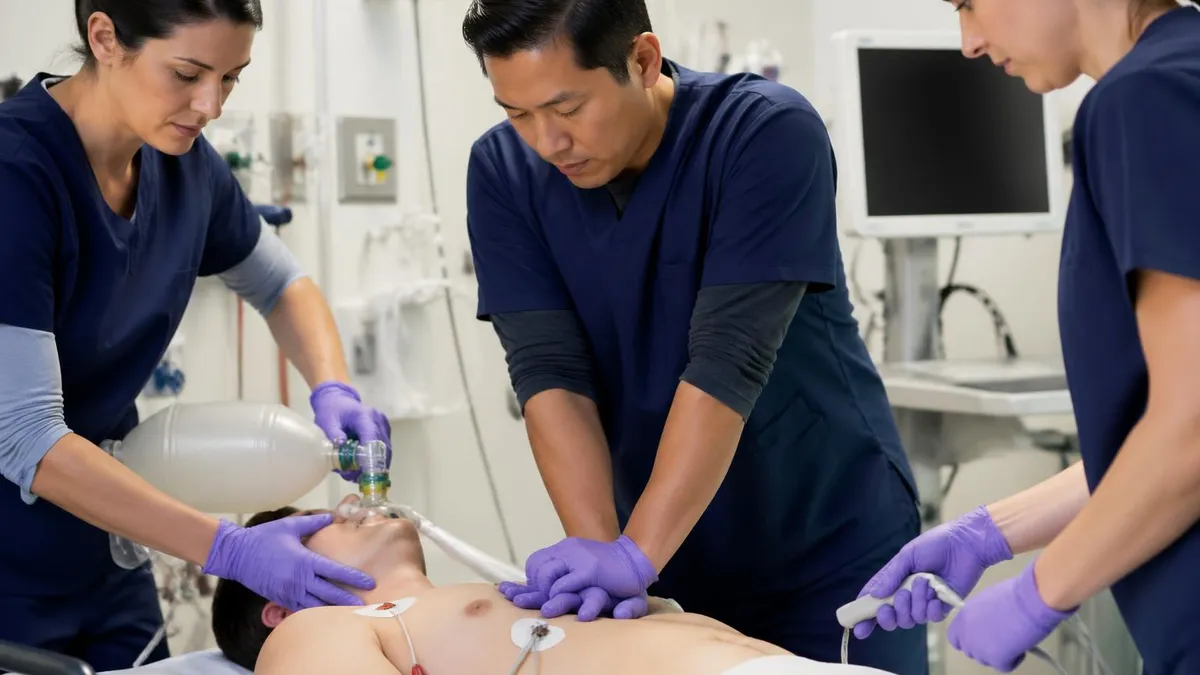
AHA BLS is the standard CPR certification for healthcare professionals. It covers the same core CPR skills as lay rescuer courses, but at a higher performance standard — healthcare providers are expected to perform higher-quality CPR with better compression technique and more consistent ventilation. BLS also covers: 2-rescuer CPR (important in clinical settings where team members share compressions), bag-valve-mask ventilation (the BVM — clinical alternative to mouth-to-mouth), and oropharyngeal airway management basics. AHA BLS is required for virtually all nurses, doctors, medical assistants, therapists, and EMTs working in U.S. healthcare facilities.
Hands-Only CPR
Hands-Only CPR training teaches chest compressions only — no rescue breathing. This is the recommended approach for untrained bystanders responding to witnessed cardiac arrest in adults. Research shows that for adults experiencing sudden cardiac arrest in public, Hands-Only CPR is as effective as conventional CPR in the first few minutes before emergency services arrive. Many fire departments, hospitals, and community organizations offer free Hands-Only CPR training events. Note: Hands-Only CPR training typically does not result in a formal certification card — it provides the most critical skill for community emergency response without the full certification course commitment.
Pediatric CPR and First Aid
Some employers — particularly childcare facilities, schools, and youth programs — require certifications that specifically emphasize pediatric (child and infant) CPR and first aid. AHA's Heartsaver Pediatric First Aid CPR/AED and Red Cross's Pediatric First Aid/CPR/AED courses provide this focus. Childcare licensing regulations in many states specify that childcare facility staff must hold current pediatric CPR certification — check your state's childcare licensing requirements for the specific course type required.

How Long Is CPR Certification Valid?
CPR certification from AHA and Red Cross is valid for 2 years from the date of your initial certification or most recent renewal. After 2 years, certification expires and must be renewed to maintain active certification status. Most employers consider expired certifications unacceptable — verify your employer's policy, but plan to renew before expiration in all cases.
Why CPR Certification Expires
CPR guidelines are updated periodically as new evidence on resuscitation science is published. The AHA updates its CPR guidelines approximately every 5 years (most recent major update: 2020) — certificate expiration ensures that providers receive updated training reflecting current best-practice guidelines. Skills also deteriorate without practice — the required renewal training reinforces techniques and keeps skills sharp.
Tracking Your Expiration Date
Your certification card shows your expiration date. Many providers use the AHA's digital credential system, which allows you to access a digital copy of your certification card and track your expiration date. Hospital credentialing departments track provider certifications and typically notify you when renewal is approaching — but do not rely solely on institutional notification. Maintain your own record and calendar reminder for all your certifications.
Employer Notification Policies
Many employers send renewal reminders 60 to 90 days before certification expiration. Some hospitals and clinical employers provide CPR renewal training on-site through their own AHA-authorized training centers at no cost to employees. If your employer offers this benefit, schedule your renewal well before expiration to ensure a spot is available on the training calendar.
CPR Certification Renewal
Renewing your CPR certification before expiration is straightforward and takes less time than the initial certification course.
AHA CPR Renewal Options
AHA renewal courses are shortened compared to initial certification — typically 2 to 3 hours for in-person renewal versus 4 to 5 hours for initial certification. AHA also offers HeartCode BLS renewal, a blended option combining online content with a brief in-person skills check. You cannot renew an expired AHA certification — if your certification has expired, you must complete the full initial certification course. Find renewal courses through the AHA Training Center Finder at cpr.heart.org.
Red Cross CPR Renewal
Red Cross renewal courses are similarly abbreviated — typically 2 hours for CPR/AED renewal. Red Cross also offers blended renewal options with online and in-person components. Like AHA, Red Cross requires renewal before expiration — expired certifications require the full initial course. Find Red Cross renewal classes through redcross.org/take-a-class.
Renewal Through Employers
Many employers arrange CPR renewal training for their staff, particularly in healthcare settings where CPR certification is a continuous employment requirement. If your employer offers renewal training, use it — it is typically less expensive than individually enrolling in a course, and often scheduled during work hours. Contact your HR or staff development department well in advance of your expiration date to check availability.

CPR Checklist
- ✓Confirm which specific CPR course your employer or licensing board requires (AHA BLS, Heartsaver, Red Cross, Pediatric, etc.)
- ✓Find an authorized training center through cpr.heart.org (AHA) or redcross.org/take-a-class
- ✓Register and complete payment — courses fill quickly, especially at convenient times
- ✓Bring a valid government-issued photo ID to your class
- ✓Wear comfortable clothing — you will practice compressions on the floor
- ✓Receive and keep your certification card — you may need to provide a copy to your employer
- ✓Record your expiration date (2 years from course completion)
- ✓Set a calendar reminder to begin renewal at least 60 days before expiration
CPR Practice Test Questions
Prepare for the CPR - Certified Paramedic Response exam with our free practice test modules. Each quiz covers key topics to help you pass on your first try.
CPR - Certified Paramedic Response Advance...
CPR Exam Questions covering - Certified Paramedic Response Advanced Airway Management. Master CPR Test concepts for certification prep.
CPR - Certified Paramedic Response Cardiac...
Free CPR Practice Test featuring - Certified Paramedic Response Cardiac Arrest Pharmacology. Improve your CPR Exam score with mock test prep.
CPR - Certified Paramedic Response ECG Rhy...
CPR Mock Exam on - Certified Paramedic Response ECG Rhythm Interpretation. CPR Study Guide questions to pass on your first try.
CPR - Certified Paramedic Response Electri...
CPR Test Prep for - Certified Paramedic Response Electrical Therapy Principles. Practice CPR Quiz questions and boost your score.
CPR - Certified Paramedic Response Pediatr...
CPR Questions and Answers on - Certified Paramedic Response Pediatric and Neonatal Resuscitation. Free CPR practice for exam readiness.
CPR - Certified Paramedic Response Post-Ca...
CPR Mock Test covering - Certified Paramedic Response Post-Cardiac Arrest Care. Online CPR Test practice with instant feedback.
CPR - Certified Paramedic Response Resusci...
Free CPR Quiz on - Certified Paramedic Response Resuscitation Team Dynamics. CPR Exam prep questions with detailed explanations.
CPR - Certified Paramedic Response Special...
CPR Practice Questions for - Certified Paramedic Response Special Resuscitation Circumstances. Build confidence for your CPR certification exam.
CPR - Certified Paramedic Response Hemorrh...
CPR Test Online for CPR - Certified Paramedic Response Hemorrhage Control and Vascular Access. Free practice with instant results and feedback.
CPR - Certified Paramedic Response Hemorrh...
CPR Study Material on CPR - Certified Paramedic Response Hemorrhage Control and Vascular Access Questions and Answers. Prepare effectively with real exam-style questions.
CPR - Certified Paramedic Response Respira...
Free CPR Test covering CPR - Certified Paramedic Response Respiratory Emergencies and Management. Practice and track your CPR exam readiness.
CPR - Certified Paramedic Response Respira...
CPR Exam Questions covering CPR - Certified Paramedic Response Respiratory Emergencies and Management Questions and Answers. Master CPR Test concepts for certification prep.
CPR Emergency Medical Procedures & Protocols
Free CPR Practice Test featuring Emergency Medical Procedures & Protocols. Improve your CPR Exam score with mock test prep.
CPR Medical Equipment & Response Operations
CPR Mock Exam on Medical Equipment & Response Operations. CPR Study Guide questions to pass on your first try.
CPR Pros and Cons
- +CPR certification is recognized across employers as evidence of verified competency, often required for specific roles
- +Certification provides a structured framework for professional knowledge that benefits daily work, not just the credential itself
- +Many certified professionals report salary increases of 10–20% compared to non-certified peers in the same role
- +Certification maintenance requirements create ongoing professional development that keeps knowledge current
- +The certification credential differentiates candidates in competitive hiring processes and promotion decisions
- −CPR certification fees can be substantial — exam costs, study materials, and renewal fees add up over a career
- −Certification requirements change over time; candidates who delay testing may face updated content requirements
- −Not all employers or markets equally value or require certification — the salary return varies significantly by geography and industry
- −Exam preparation requires significant time investment alongside existing work and personal responsibilities
- −Certification does not guarantee competency in practice — it validates knowledge at a point in time, not ongoing performance
CPR Questions and Answers
About the Author

Registered Nurse & Healthcare Educator
Johns Hopkins University School of NursingDr. Sarah Mitchell is a board-certified registered nurse with over 15 years of clinical and academic experience. She completed her PhD in Nursing Science at Johns Hopkins University and has taught NCLEX preparation and clinical skills courses for nursing students across the United States. Her research focuses on evidence-based exam preparation strategies for healthcare certification candidates.
Join the Discussion
Connect with other students preparing for this exam. Share tips, ask questions, and get advice from people who have been there.
View discussion (9 replies)