
ACLS Training Programs: Find the Right Course for Your Certification 2026
Pass your ACLS Training Programs: 💡 Find the Right exam on the first attempt. Practice questions with detailed answer explanations, hints, and instant
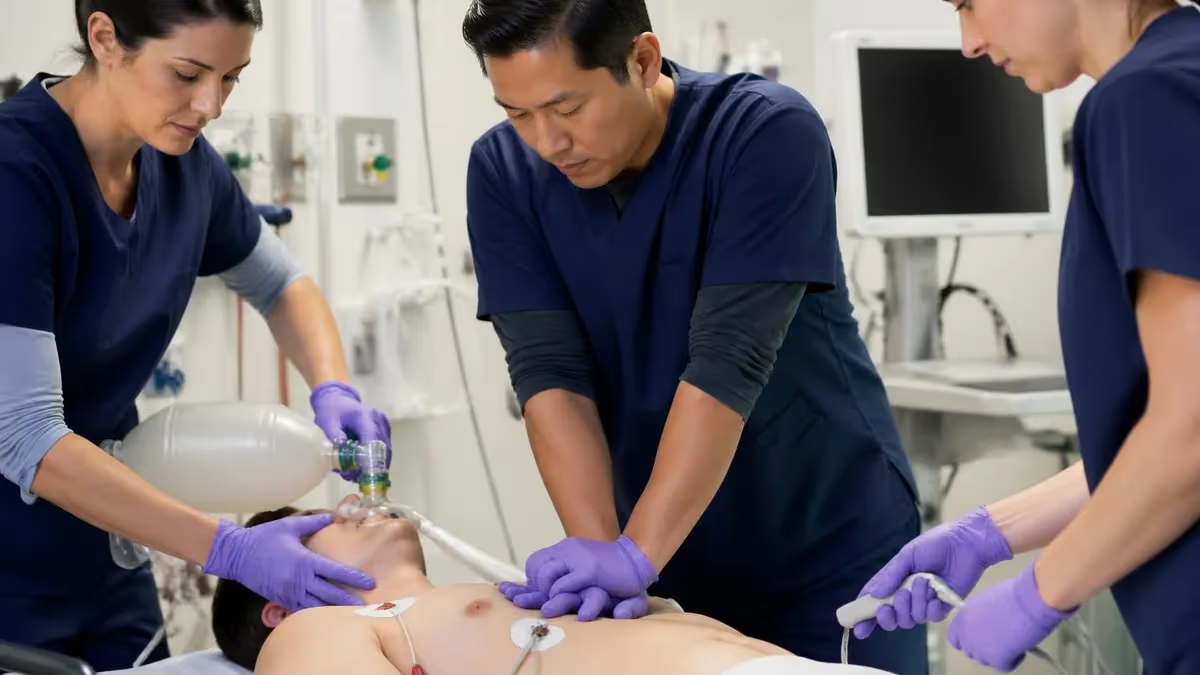
What You Need to Know About ACLS Training Programs
If you're a healthcare provider looking to earn or renew your certification, understanding ACLS training programs is the first step toward making the right choice. Advanced Cardiovascular Life Support training equips you with the skills to manage cardiac arrests, strokes, and other life-threatening emergencies -- and it's required by virtually every hospital and emergency department in the country. Whether you're a nurse, paramedic, physician, or respiratory therapist, acls training gives you the structured clinical knowledge employers demand. Practice with the free ACLS practice test on PracticeTestGeeks (450+ questions with answer explanations).
The American Heart Association (AHA) develops and oversees all official ACLS curricula. That matters. Only AHA-authorized training centers issue the certification cards that hospitals actually accept. You'll find courses offered through hospital education departments, private clinical training companies, community colleges, and dedicated healthcare education organizations. Formats range from traditional full-day classroom sessions to blended options where you complete cognitive content online at your own pace -- making acls training online more accessible than ever.
This article breaks down every format available, walks you through what each course covers, compares costs, and helps you decide which path fits your schedule and learning style. We'll also cover renewal requirements, common pitfalls to avoid, and how to verify that your training center is legitimately AHA-authorized. You don't want to pay for a course only to discover your employer won't recognize the card.
- The AHA ACLS Provider exam contains 50 questions. (American Heart Association)
- The AHA ACLS Provider exam requires a minimum passing score of 84%. (American Heart Association)
- AHA ACLS classroom course fees are set by the Training Center. (American Heart Association)
- Successful completion of AHA ACLS course requirements earns a Provider Course Completion Card valid for two years. (American Heart Association)
- Students must complete the AHA ACLS Precourse Self-Assessment with a score of at least 70% before taking the ACLS course. (American Heart Association)
Facts verified Oct 15, 2026 against American Heart Association. Dates that have passed are removed automatically.
ACLS Exam at a Glance
| Item | Detail | Official source |
|---|---|---|
| Number of questions (Instructor-led ACLS Provider exam) | 50 questions | American Heart Association |
| Passing score (Instructor-led ACLS Provider exam) | 84% | American Heart Association |
| Exam fee (Instructor-led ACLS) | Training Center sets fees | American Heart Association |
| Validity | Two years | American Heart Association |
| Eligibility (Instructor-led ACLS) | Precourse Self-Assessment score of at least 70% | American Heart Association |
Facts verified Oct 15, 2026 against American Heart Association. Dates that have passed are removed automatically.
Free ACLS Study Tools
Interactive ACLS resources on PracticeTestGeeks, free to start:
- Free ACLS Practice Test Question and Answers — 16 questions with instant scoring and answer explanations
- ACLS flashcards — review key terms and concepts card by card
- ACLS study guide — topic-by-topic overview of what the exam covers
- ACLS cheat sheet — one-page printable summary for last-minute review

ACLS Course Formats: Choosing What Works for You
The AHA offers several ACLS course formats, and picking the right one saves you time and frustration. Traditional in-person courses run 6 to 8 hours in a single day. You'll sit through lectures, practice rhythm recognition, run through algorithms, and finish with the megacode simulation -- a high-fidelity scenario where you lead a cardiac arrest resuscitation. It's intense but effective. For providers who thrive in group settings with real-time instructor feedback, this is the gold standard for acls training online preparation and hands-on skill building.
HeartCode ACLS flips the model. You complete the cognitive portion -- rhythms, pharmacology, algorithms, case studies -- through an online self-paced module that takes roughly 4 to 6 hours. Then you schedule a 2 to 3 hour in-person skills session at an AHA training center for hands-on practice and megacode evaluation. This blended approach works well for providers with unpredictable shifts or those who prefer studying on their own timeline. It's become the most popular format for acls certification training among working clinicians.
Renewal courses are shorter. If you're renewing before your card expires, expect 4 to 6 hours in-person or 2 to 3 hours after completing the HeartCode online module. Renewal courses focus on algorithm updates, skills refreshers, and the megacode. They assume you already know the fundamentals. One critical detail: if your certification has already expired, you can't take the renewal course. You'll need to complete the full initial program again.
Online vs. In-Person ACLS Training
Here's the reality about acl training options: there's no such thing as a fully online ACLS certification that employers will accept. Every legitimate program requires hands-on skills evaluation. But the online component of HeartCode ACLS is genuinely useful -- it lets you absorb the material at your own pace, rewind confusing sections, and show up to the skills session already prepared. Many providers prefer this because the in-person time drops from a full day to just a few hours.
Be cautious with websites offering "instant" or "same-day" online-only ACLS certification. These aren't AHA-authorized, and hospitals will reject them. You'll waste your money and still need to take a legitimate course. Always verify through cpr.heart.org that your chosen training center is AHA-authorized before paying. This verification takes two minutes and prevents expensive mistakes. For providers seeking acls certification training that counts, stick with AHA channels.
Hospital-based training programs deserve special mention when considering acls medical training options. Many large hospital systems operate their own AHA training centers. These courses are often cheaper than private providers, may be free for employees, and the instructors typically work in the same clinical environment where you'll apply the skills. If you work at a hospital, check with your Education or Staff Development department first -- you might have a training center right down the hall that offers priority enrollment to staff.
ACLS Training Formats Compared
Duration: 6 to 8 hours in one day. Best for: First-time ACLS candidates who want structured group instruction with immediate feedback. Covers all cognitive content, hands-on skills practice, and megacode simulation in a single session. You'll practice on manikins, run through every algorithm, and get real-time coaching from an AHA instructor. Cost typically ranges from $175 to $300 depending on the training center and location.
What ACLS Training Actually Covers
So what is acls training in practical terms? It's a systematic approach to managing cardiovascular emergencies -- cardiac arrest, dangerous arrhythmias, stroke, and acute coronary syndromes. The AHA organizes the curriculum around specific algorithms: step-by-step treatment protocols for each clinical scenario. You'll memorize these algorithms, practice them on manikins, and demonstrate them during the megacode. The content builds directly on BLS skills -- high-quality CPR, AED use -- and adds advanced interventions.
Cardiac rhythm recognition forms the backbone of acls training aha courses. You'll learn to identify ventricular fibrillation, pulseless ventricular tachycardia, PEA, asystole, symptomatic bradycardia, and various tachycardias on a monitor. Each rhythm has a specific algorithm. Shockable rhythms (VF, pulseless VT) get defibrillation. Non-shockable rhythms (PEA, asystole) get high-quality CPR and a systematic search for reversible causes -- the H's and T's. Bradycardia gets atropine, then pacing. Tachycardia management depends on whether the patient is stable or unstable.
Pharmacology is equally critical. You need to know epinephrine dosing (1 mg IV/IO every 3 to 5 minutes during arrest), amiodarone for refractory VF (300 mg first dose, then 150 mg), adenosine for SVT (6 mg rapid push, then 12 mg), and atropine for bradycardia (1 mg every 3-5 minutes, max 3 mg). Post-cardiac arrest care rounds out the curriculum -- targeted temperature management, hemodynamic optimization, and neurological prognostication for survivors who achieve return of spontaneous circulation.
What to Expect During Hands-On Training
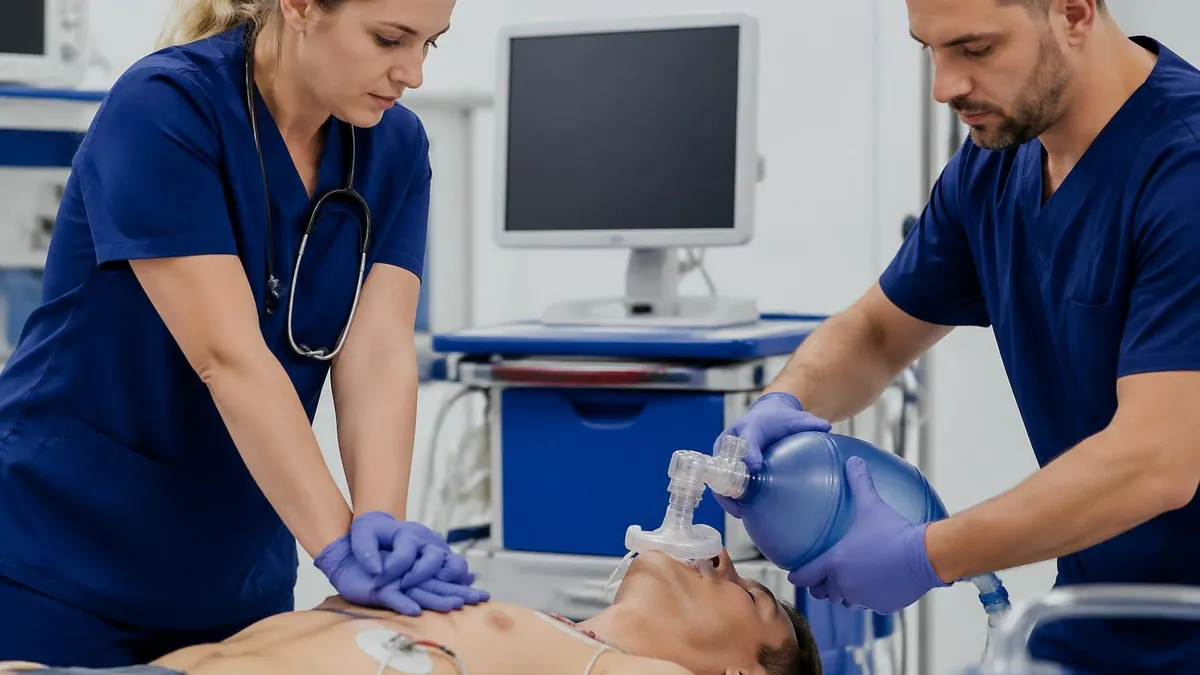
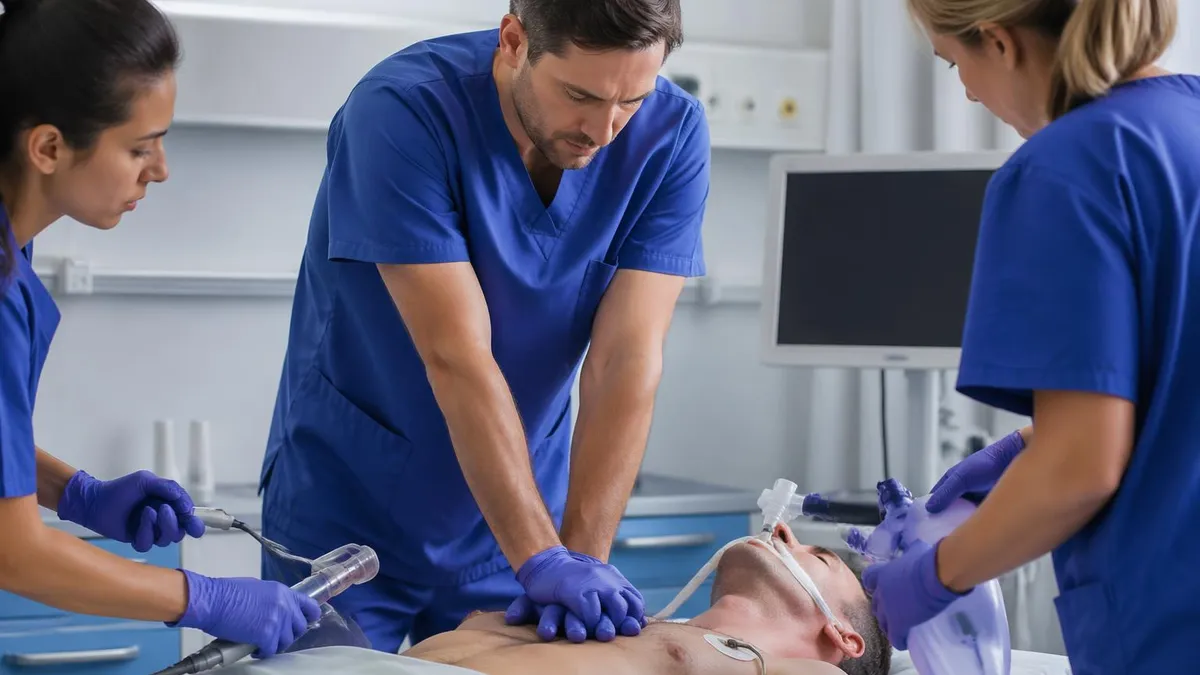
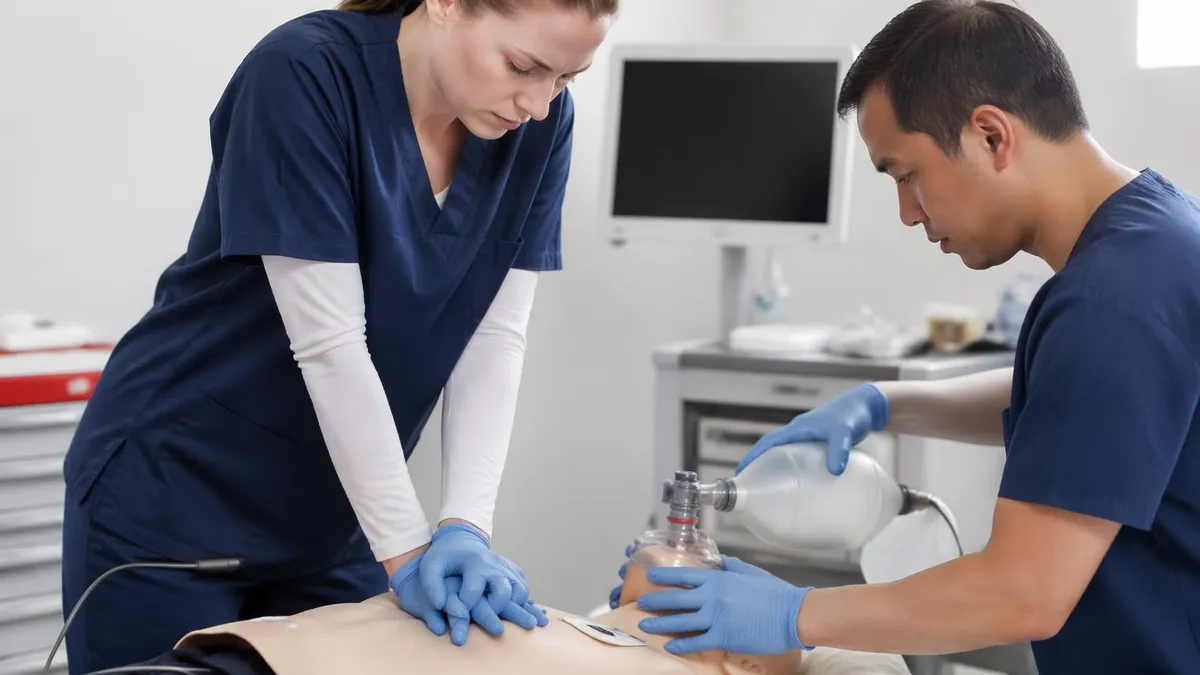
The hands-on component separates real ACLS training from worthless online-only certificates. During your skills session, you'll rotate through stations practicing individual skills -- chest compressions quality, bag-valve-mask ventilation, rhythm interpretation, medication preparation, and defibrillator operation. Instructors watch your technique and provide immediate corrections. It's not just going through the motions; they're evaluating whether you can actually perform under pressure.
The megacode is the final evaluation. Think of it as a practical exam where blue scrubs training cpr bls acls first aid skills all come together in one scenario. You or your team will manage a simulated patient progressing through multiple rhythms and clinical changes. You might start with a stable tachycardia that deteriorates into pulseless VT, requiring you to switch algorithms mid-scenario. The instructor evaluates your assessment, interventions, team communication, and decision-making. Most providers pass on the first attempt, but it's normal to feel nervous. Aha acls training programs are designed to prepare you during the course itself.
After passing, you'll receive your AHA ACLS certification card -- either physical or digital through the AHA's verification system. This card is what you submit to your employer's credentialing office. Keep a copy. Hospitals verify acls medical training credentials electronically now, but having your own record prevents headaches if there's a system glitch.
ACLS Training: Benefits and Drawbacks
- +Required by virtually all hospitals and EDs -- certification opens doors to clinical positions
- +Structured curriculum builds real emergency response skills you'll use in practice
- +AHA certification is universally recognized across all 50 states and internationally
- +Blended HeartCode format offers genuine flexibility for busy clinicians
- +Many employers cover training costs or provide free in-house ACLS courses
- +Renewal every 2 years keeps your skills current with latest evidence-based guidelines
- −Initial course costs $150 to $300 out of pocket if your employer doesn't cover it
- −Traditional in-person format requires a full day away from clinical responsibilities
- −Online-only options aren't accepted -- you must attend an in-person skills session
- −Expired certification means retaking the entire initial course, not just a renewal
- −Course availability in rural areas can be limited, requiring travel to a training center
- −Algorithm updates between renewal cycles can leave you practicing outdated protocols
Pros and Cons at a Glance
| Pros | Cons |
|---|---|
| Required by virtually all hospitals and EDs -- certification opens doors to clinical positions | Traditional in-person format requires a full day away from clinical responsibilities |
| Structured curriculum builds real emergency response skills you'll use in practice | Online-only options aren't accepted -- you must attend an in-person skills session |
| Blended HeartCode format offers genuine flexibility for busy clinicians | Expired certification means retaking the entire initial course, not just a renewal |
| Many employers cover training costs or provide free in-house ACLS courses | Course availability in rural areas can be limited, requiring travel to a training center |
ACLS Training Costs and How to Save Money
Let's talk numbers. An acls training book alone won't get you certified, but it's a useful supplement. The AHA ACLS Provider Manual costs around $30 to $40 and covers all the algorithms, pharmacology, and case studies you'll encounter. Some training centers include the manual in their course fee; others charge separately. Either way, reading the manual before your course dramatically improves your experience -- you'll follow along instead of scrambling to absorb brand-new material.
For the courses themselves, the american heart association acls training initial program typically costs $175 to $300. HeartCode ACLS blended courses sometimes run slightly less because the in-person component is shorter. Renewal courses range from $100 to $200. Private training companies tend to charge more than hospital-based programs. If cost matters -- and it usually does -- check with hospitals in your area first. Many open their courses to non-employees at reduced rates.
Some employers reimburse ACLS costs after you complete the course. Others provide free training through their in-house AHA training center. Travel nurses and per-diem providers often pay out of pocket but can deduct the cost as a professional expense. Group discounts exist at many training centers if you're organizing ACLS training for a department or practice group -- ask about pricing for 5 or more students.
ACLS Training Preparation Checklist
- ✓Verify your BLS certification is current -- it's a prerequisite for ACLS enrollment
- ✓Check if your employer offers free or subsidized ACLS training through an in-house program
- ✓Locate AHA-authorized training centers at cpr.heart.org before booking any course
- ✓Purchase and read the AHA ACLS Provider Manual before your class date
- ✓Review cardiac rhythms: VF, VT, PEA, asystole, SVT, bradycardia, and heart blocks
- ✓Memorize key drug doses: epinephrine 1mg, amiodarone 300mg/150mg, adenosine 6mg/12mg
- ✓Study the cardiac arrest, bradycardia, and tachycardia algorithms until you can recite them
- ✓Bring a watch or timer to practice timing intervals during skills stations
- ✓Get a good night's sleep before your course -- megacode performance suffers when you're tired
- ✓Confirm your course date, location, and any materials you need to bring
Finding the Right ACLS Training Course Near You
Finding a legitimate acls training course starts at one place: cpr.heart.org. The AHA's course finder lets you search by zip code, course type, and date range. Results show only AHA-authorized training centers, which eliminates the risk of paying for a worthless certificate. Filter for ACLS Initial if you're a first-time candidate or ACLS Renewal if you're recertifying. Many centers also list whether they offer HeartCode blended or traditional in-person formats.
Beyond the AHA finder, check with local hospitals directly for online acls training options paired with in-person skills checks. Academic medical centers and large hospital systems often run their own training centers with frequent course offerings. Community colleges in some areas also hold AHA authorization and offer ACLS at competitive prices. Military and VA hospitals run ACLS for their staff and sometimes open enrollment to civilian providers.
Timing matters. ACLS courses fill quickly, especially in January (new year, new requirements) and at the end of summer (academic year preparation). Book at least 2 to 4 weeks in advance. For renewals, schedule well before your expiration date -- most credentialing offices flag providers 90 days out. Don't wait until the last minute. A lapsed certification means taking the full 8-hour initial course instead of the shorter renewal, and your employer may restrict your clinical privileges until you're recertified.
ACLS Instructor Training and Teaching Opportunities
Once you've held your ACLS provider card for a while, you might consider acls instructor training. The AHA offers an ACLS Instructor Essentials course that prepares experienced providers to teach ACLS at authorized training centers. It's a natural career progression for clinicians who enjoy education, and instructor roles often come with additional compensation or reduced course fees for your own renewals.
To become an AHA ACLS instructor, you'll need current ACLS provider certification, recommendation from a Training Center Coordinator, completion of the Instructor Essentials online module, and a monitored teaching session where an experienced instructor evaluates your performance. The process takes several weeks from application to full instructor status. Some training centers actively recruit instructors from their student pool -- if teaching interests you, mention it to your course instructor.
For providers on a tight budget, acls training online free resources can supplement your preparation. The AHA offers free educational videos on its YouTube channel covering key algorithms and skills. Several medical education websites provide free rhythm interpretation practice. These resources don't replace the actual course, but they'll help you arrive better prepared -- which means less stress during the megacode and a higher likelihood of passing on your first attempt. Pair free resources with the official provider manual for the strongest preparation.
If your ACLS certification lapses, you can't take the shorter renewal course -- you'll need the full initial program again, which costs more and takes twice as long. Most hospitals flag providers 90 days before expiration. Schedule your renewal early. Some credentialing offices restrict clinical privileges the day your certification expires, regardless of whether you have a course booked.
ACLS Training Classes: What to Look for in a Provider
Not all acls training classes deliver the same experience. Some training centers pack 20 students into a room with two manikins and one instructor. Others cap enrollment at 8 to 10 with a 6:1 student-to-instructor ratio and individual manikin access. The difference in hands-on practice time is massive. When comparing providers, ask about class size, equipment availability, and instructor credentials.
The best training centers use high-fidelity simulation manikins that provide real-time feedback on compression depth, rate, and recoil. They assign specific roles during megacode practice rather than letting students passively observe. They follow AHA's recommended course structure without cutting corners. Some even provide extra practice time before the formal evaluation for students who need it. These details matter because american heart association cpr bls acls pals training showmecpr standards exist for a reason -- they ensure consistent, high-quality education.
Read reviews from other healthcare providers before choosing a training center. Professional nursing forums, medical education Facebook groups, and even Google reviews can reveal which centers provide quality instruction and which rush students through. Ask colleagues who recently recertified where they went and whether they'd recommend it. A mediocre ACLS course doesn't just waste your money -- it leaves you less prepared for real emergencies.
ACLS Practice Test Questions
Prepare for the ACLS - Advanced Cardiovascular Life Support exam with our free practice test modules. Each quiz covers key topics to help you pass on your first try.
ACLS Airway Management
ACLS Exam Questions covering ACLS Airway Management. Master ACLS Test concepts for certification prep.
ACLS Airway Management and Ventilation
Free ACLS Practice Test featuring ACLS Airway Management and Ventilation. Improve your ACLS Exam score with mock test prep.
ACLS Cardiac Rhythm Recognition
ACLS Mock Exam on ACLS Cardiac Rhythm Recognition. ACLS Study Guide questions to pass on your first try.
ACLS Cardiac Rhythms and ECG Interpretation
ACLS Test Prep for ACLS Cardiac Rhythms and ECG Interpretation. Practice ACLS Quiz questions and boost your score.
ACLS - Advanced Cardiovascular Life Suppor...
ACLS Questions and Answers on - Advanced Cardiovascular Life Support ACLS Emergency Pharmacology. Free ACLS practice for exam readiness.
ACLS - Advanced Cardiovascular Life Suppor...
ACLS Mock Test covering - Advanced Cardiovascular Life Support Acute Coronary Syndromes. Online ACLS Test practice with instant feedback.
ACLS - Advanced Cardiovascular Life Suppor...
Free ACLS Quiz on - Advanced Cardiovascular Life Support Acute Stroke Care. ACLS Exam prep questions with detailed explanations.
ACLS - Advanced Cardiovascular Life Suppor...
ACLS Practice Questions for - Advanced Cardiovascular Life Support BLS and High-Quality CPR. Build confidence for your ACLS certification exam.
ACLS - Advanced Cardiovascular Life Suppor...
ACLS Test Online for - Advanced Cardiovascular Life Support Post-Cardiac Arrest Care. Free practice with instant results and feedback.
ACLS - Advanced Cardiovascular Life Suppor...
ACLS Study Material on - Advanced Cardiovascular Life Support Tachycardia and Bradycardia Algorithms. Prepare effectively with real exam-style questions.
ACLS Advanced Cardiovascular Life Support
Free ACLS Test covering Advanced Cardiovascular Life Support. Practice and track your ACLS exam readiness.
ACLS Bradycardia
Free ACLS Practice Test featuring Bradycardia. Improve your ACLS Exam score with mock test prep.
ACLS Medical Training
ACLS Mock Exam on Medical Training. ACLS Study Guide questions to pass on your first try.
Red Cross and Alternative ACLS Training Providers
While the AHA dominates ACLS training, the American Red Cross also offers red cross acls training through its own authorized instructors and training sites. Red Cross ACLS follows the same evidence-based guidelines and produces a certification that many employers accept alongside AHA credentials. However -- and this is important -- some hospitals and credentialing bodies specifically require AHA ACLS and won't accept alternatives. Check with your employer before enrolling in a non-AHA program.
The american red cross acls training program mirrors AHA's structure: initial and renewal courses, blended online-plus-in-person options, and a hands-on skills evaluation. Red Cross courses tend to be priced competitively with AHA offerings. The key difference is recognition -- AHA certification is universally accepted, while Red Cross ACLS acceptance varies by institution. If you work at multiple facilities or plan to change employers, AHA is the safer choice.
Other organizations like the National Registry of CPR and various military medical training programs also offer ACLS-equivalent courses. Military providers often receive ACLS training through their service branch's medical training pipeline. For civilian providers, the advice is straightforward: unless your specific employer has confirmed they accept an alternative, go with AHA. It's the industry standard for good reason, and you won't have to explain or justify your certification to credentialing offices.
ACLS Questions and Answers

How this page was made: written with AI tools. Exam facts are checked against the official sources listed below. Not reviewed by a subject-matter expert. Editorial policy
Sources & references
Exam facts on this page (fees, format, dates, passing scores) are checked against these official sources; the date is our last check. Editorial policy
- cpr.heart.org — Eligibility, score validity, exam format, passing score, fees · verified Oct 2026