
ACLS Instructor Jobs Reddit: Complete Job Market Guide for Healthcare Educators in 2026 October
Explore acls instructor jobs reddit insights, salary data, ✏️ hiring trends, and career paths for ACLS-certified healthcare educators in 2026 October.
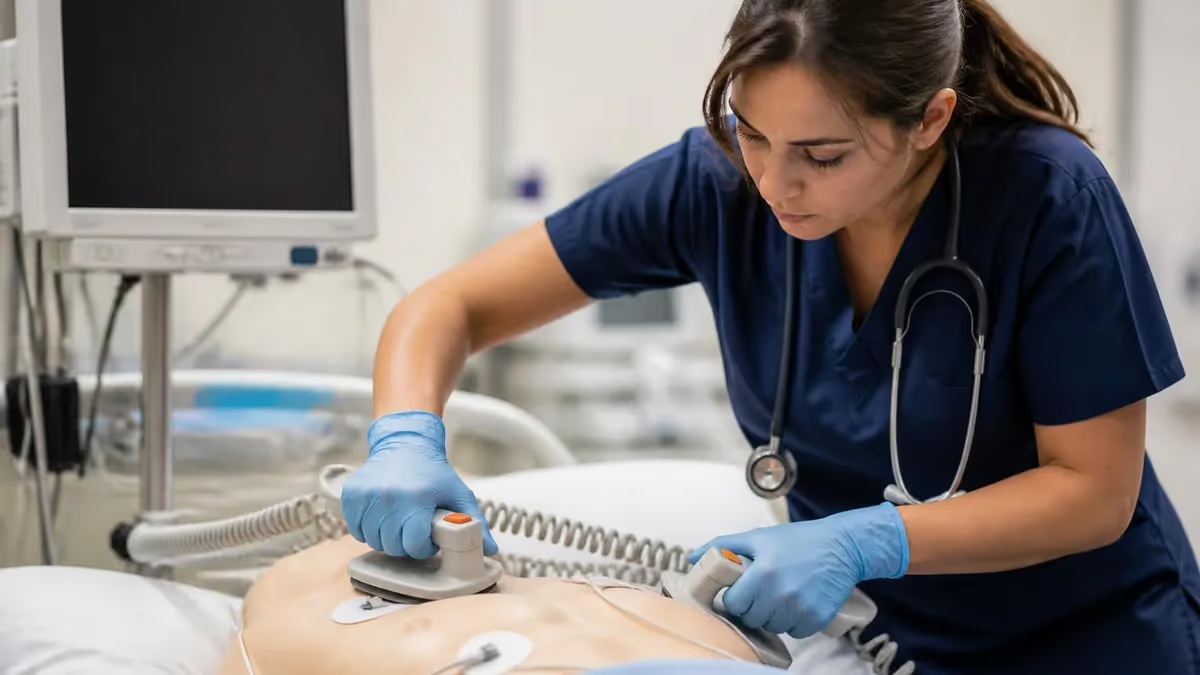
If you have ever searched for acls instructor jobs reddit threads, you already know how much practical hiring intelligence lives inside those community discussions. Nurses, paramedics, and respiratory therapists share real pay rates, hiring timelines, and which training centers actually treat their instructors well. This guide pulls together that crowdsourced wisdom with verified data from the American Heart Association, hospital job boards, and recent acl lineup 2025 instructor cohorts to give you a complete picture of the 2026 job market.
The ACLS instructor market in the United States is in an unusual position right now. Hospitals are racing to recertify staff after pandemic-era backlogs, while community training centers struggle to find qualified teachers willing to work weekends. That mismatch creates real opportunity. Reddit threads from r/nursing, r/EMS, and r/respiratorytherapy show instructors picking up two or three classes a month at $40 to $75 per teaching hour, sometimes more in metro areas like Boston, Seattle, and the San Francisco Bay Area.
What makes this niche so attractive is the low barrier to entry combined with high schedule flexibility. You do not need a master's degree, a teaching credential, or hospital sponsorship. You need an active ACLS provider card, a monitor letter from a Training Center Faculty member, and the willingness to complete the AHA Instructor Essentials course. Most people finish the entire pipeline in 60 to 90 days, then start picking up classes through staffing agencies, hospital education departments, or independent training centers.
The Reddit community is also unusually candid about the downsides. Pay can be inconsistent if you rely on one center. Equipment costs, including manikins, AED trainers, and bag-valve masks, add up quickly if you go independent. And the AHA recently tightened documentation requirements, meaning instructors must verify CPR skills, ACLS algorithms, and post-cardiac-arrest care more rigorously than ever. These changes have reshaped what hiring managers look for in 2026.
This guide answers the questions Reddit users ask most often. How much do ACLS instructors actually earn? Which employers pay best? Is it worth becoming a Training Center Faculty member? What does the path from clinical bedside work to part-time educator really look like? We will walk through compensation benchmarks, the credentialing pipeline, the practical realities of class scheduling, and the long-term career trajectory for instructors who want to make teaching a meaningful part of their income.
You will also find context on how the broader healthcare education industry is shifting. Simulation-based training, blended HeartCode delivery, and resuscitation quality improvement programs are changing what employers expect from their instructor pool. Instructors who can teach across BLS, ACLS, and PALS, debrief using TeamSTEPPS principles, and run high-fidelity simulation scenarios are commanding premium rates. The market rewards depth, not just a single certification card.
By the end of this article you will have a realistic picture of what the ACLS instructor job market looks like in 2026, what to expect financially in your first year, and how to position yourself to land consistent work whether you want a side income of $500 a month or a full-time educator role earning six figures inside a hospital system.
ACLS Instructor Market by the Numbers
From Provider to Paid Instructor
Hold a Current Provider Card
Find a Training Center
Complete Instructor Essentials
Get Monitored Teaching
Start Picking Up Classes
The credentialing pipeline sounds straightforward, but the path from current provider to paid instructor has several pressure points that catch new applicants off guard. Reddit threads are filled with stories of people who finished Instructor Essentials only to discover their local Training Center had a six-month waiting list for monitor opportunities. Understanding these bottlenecks before you start can save you months of frustration and several hundred dollars in re-credentialing fees if your provider card expires during the wait.
The first practical step is verifying your provider status. Your AHA ACLS provider card must be current at the time you teach, not just at the time you apply. Many candidates underestimate how long the alignment and Instructor Essentials process takes, then end up needing to renew their provider card mid-pipeline. Hospital education departments generally want instructors with at least two years of bedside experience because the megacode debrief requires you to speak credibly about real resuscitation events you have participated in.
Choosing the right Training Center matters more than most new instructors realize. Some TCs charge alignment fees of $100 to $300 plus annual renewal dues. Others align instructors for free but require a minimum number of classes per year. Hospital-based TCs often align only their own employees, which limits options for community-based instructors. Independent CPR companies tend to be the most flexible, although their per-class pay can be lower than what hospitals offer their internal staff.
The Instructor Essentials course itself is not particularly difficult, but it does demand attention to detail. You will learn the AHA approach to skill testing, the role of formative versus summative assessment, and the documentation expected for each course you teach. The discipline-specific portion covers the ACLS algorithms, the use of high-fidelity simulation tools, and the proper structure of a megacode evaluation. Reddit users frequently mention that the online modules are dry but essential, because the in-person day moves quickly and assumes you already know the material.
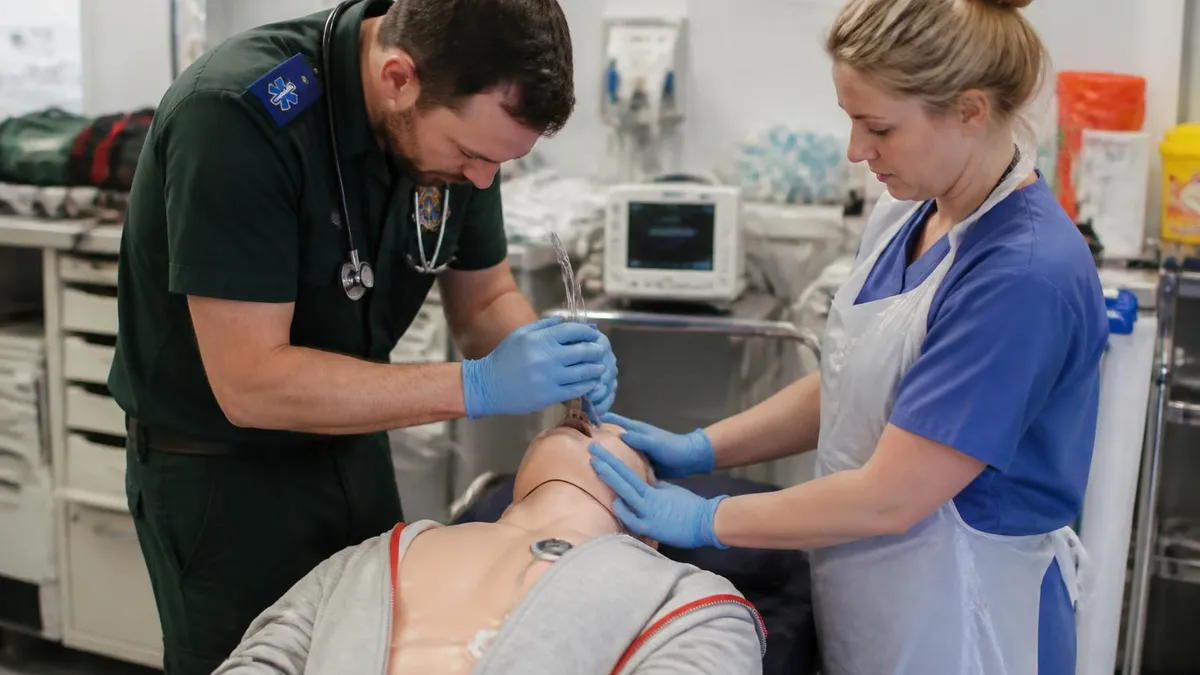
Monitored teaching is where most candidates either shine or stumble. Your Training Center Faculty monitor watches how you run a skills station, how you coach a struggling student through bag-mask ventilation, and how you handle a team leader who freezes during the megacode. They are not looking for perfection. They want to see calm, evidence-based coaching that aligns with the latest AHA guidelines and the structured framework outlined in the acl 2025 educator resources many hospitals now reference.
Once you receive your instructor card, the focus shifts from credentialing to logistics. You will need to decide whether you want to be paid as a W-2 employee, a 1099 contractor, or a combination of both. W-2 arrangements through hospital education departments often pay less per hour but include benefits and consistent scheduling. The 1099 route through independent training centers pays more per class but requires you to track expenses, manage taxes, and sometimes purchase your own equipment.
The final piece is building your roster. New instructors often start by shadowing experienced colleagues, picking up cancelled classes on short notice, and offering to teach the less popular weekend or evening slots. Within six to nine months, most consistent instructors have a steady rhythm of two to six classes per month, and many begin layering in BLS, PALS, and HeartSaver classes to diversify their teaching portfolio and protect against demand fluctuations in any single discipline.
ACLS Practice Test Questions
Prepare for the ACLS - Advanced Cardiovascular Life Support exam with our free practice test modules. Each quiz covers key topics to help you pass on your first try.
ACLS Airway Management
ACLS Exam Questions covering ACLS Airway Management. Master ACLS Test concepts for certification prep.
ACLS Airway Management and Ventilation
Free ACLS Practice Test featuring ACLS Airway Management and Ventilation. Improve your ACLS Exam score with mock test prep.
ACLS Cardiac Rhythm Recognition
ACLS Mock Exam on ACLS Cardiac Rhythm Recognition. ACLS Study Guide questions to pass on your first try.
ACLS Cardiac Rhythms and ECG Interpretation
ACLS Test Prep for ACLS Cardiac Rhythms and ECG Interpretation. Practice ACLS Quiz questions and boost your score.
ACLS - Advanced Cardiovascular Life Suppor...
ACLS Questions and Answers on - Advanced Cardiovascular Life Support ACLS Emergency Pharmacology. Free ACLS practice for exam readiness.
ACLS - Advanced Cardiovascular Life Suppor...
ACLS Mock Test covering - Advanced Cardiovascular Life Support Acute Coronary Syndromes. Online ACLS Test practice with instant feedback.
ACLS - Advanced Cardiovascular Life Suppor...
Free ACLS Quiz on - Advanced Cardiovascular Life Support Acute Stroke Care. ACLS Exam prep questions with detailed explanations.
ACLS - Advanced Cardiovascular Life Suppor...
ACLS Practice Questions for - Advanced Cardiovascular Life Support BLS and High-Quality CPR. Build confidence for your ACLS certification exam.
ACLS - Advanced Cardiovascular Life Suppor...
ACLS Test Online for - Advanced Cardiovascular Life Support Post-Cardiac Arrest Care. Free practice with instant results and feedback.
ACLS - Advanced Cardiovascular Life Suppor...
ACLS Study Material on - Advanced Cardiovascular Life Support Tachycardia and Bradycardia Algorithms. Prepare effectively with real exam-style questions.
ACLS Advanced Cardiovascular Life Support
Free ACLS Test covering Advanced Cardiovascular Life Support. Practice and track your ACLS exam readiness.
ACLS Bradycardia
Free ACLS Practice Test featuring Bradycardia. Improve your ACLS Exam score with mock test prep.
ACLS Medical Training
ACLS Mock Exam on Medical Training. ACLS Study Guide questions to pass on your first try.
Where ACLS Instructors Actually Work in 2026
Large hospital systems remain the single biggest employer of ACLS instructors, accounting for roughly 45 percent of all teaching hours in the United States. Most hospitals run their own AHA Training Center and prefer to align internal staff, which keeps continuing-education costs down and ensures instructors understand the local code response protocols, equipment, and documentation systems.
Pay inside hospital systems is typically structured as a differential layered onto your normal hourly rate. A staff nurse earning $48 per hour might receive an additional $10 to $15 per hour when teaching, often with guaranteed minimum class hours. The trade-off is rigid scheduling, mandatory in-service training, and limited freedom to teach for outside organizations without explicit approval from the education director.
Is Becoming an ACLS Instructor Worth It in 2026?
- +Flexible scheduling that pairs well with shift-based clinical jobs
- +Per-class pay often exceeds bedside hourly rates by 20 to 60 percent
- +Strengthens your own clinical recall through repeated megacode facilitation
- +Opens pathways into simulation education, residency programs, and TCF roles
- +Low startup cost compared to most side careers in healthcare
- +Builds professional network across hospitals, EMS, and outpatient settings
- +Tax-advantaged if you operate as a 1099 contractor with deductible expenses
- −Initial credentialing pipeline can stretch to 90 days or more
- −Equipment costs add up quickly for independent instructors
- −Class cancellations create income volatility month to month
- −Documentation requirements have tightened significantly since 2023
- −Some hospital systems restrict outside teaching for full-time staff
- −Weekend and evening slots dominate the early-career schedule
- −Renewal every two years requires monitored teaching and AHA updates
Pros and Cons at a Glance
| Pros | Cons |
|---|---|
| Flexible scheduling that pairs well with shift-based clinical jobs | Equipment costs add up quickly for independent instructors |
| Strengthens your own clinical recall through repeated megacode facilitation | Class cancellations create income volatility month to month |
| Opens pathways into simulation education, residency programs, and TCF roles | Some hospital systems restrict outside teaching for full-time staff |
| Low startup cost compared to most side careers in healthcare | Weekend and evening slots dominate the early-career schedule |
| Builds professional network across hospitals, EMS, and outpatient settings | Renewal every two years requires monitored teaching and AHA updates |
ACLS Instructor Application Readiness Checklist
- ✓Verify your current ACLS provider card has at least six months remaining
- ✓Document at least one year of clinical experience involving code response
- ✓Identify three local AHA Training Centers and contact each for alignment policy
- ✓Save $300 to $500 for Instructor Essentials and discipline-specific course fees
- ✓Complete the AHA Instructor Essentials online module before any in-person session
- ✓Schedule your monitored teaching session within 60 days of credentialing
- ✓Create a teaching portfolio including provider card, clinical resume, and references
- ✓Set up a separate bank account if you plan to teach as a 1099 contractor
- ✓Purchase a current AHA Provider Manual and Instructor Manual for personal reference
- ✓Join r/ACLS, r/nursing, or r/EMS to track real-time hiring posts and pay data
Align with Two Training Centers, Not One
Across hundreds of Reddit threads, the single most repeated piece of advice is to maintain alignment with at least two Training Centers. One center may slow down hiring during budget cycles or lose contracts unexpectedly. A second alignment protects your income, expands your teaching network, and gives you use to negotiate higher per-class rates without burning bridges.
Reddit is the closest thing the ACLS instructor community has to a public salary database. Threads in r/nursing, r/EMS, r/respiratorytherapy, and the more specialized r/ACLS subreddit are packed with anonymous pay disclosures, regional comparisons, and honest assessments of which employers are worth the effort. When you aggregate these data points across the last two years, a fairly consistent compensation picture emerges that aligns surprisingly well with industry surveys from training-center operators.
For W-2 instructors employed inside hospital education departments, the most commonly reported pay range in 2026 is $55 to $72 per teaching hour, with metro markets like Boston, New York, Seattle, San Francisco, and Washington DC sitting at the top end. Smaller cities and rural systems cluster between $42 and $55. These rates usually include preparation time and equipment setup, although some hospitals only pay for the contact hours when students are physically present in the classroom.
The 1099 contractor market shows more variance. Reddit users report per-class pay between $180 and $450 for a standard four-to-six-hour ACLS course, with the higher end concentrated in cities where independent training centers compete fiercely for limited instructor availability. Renewal classes pay slightly less than initial-provider classes because they tend to be shorter. Instructors who can teach a Friday-evening renewal plus a Saturday initial-provider class often earn $600 to $850 for a single weekend.
Several Reddit threads have analyzed the math of going independent versus staying W-2. The consensus is that contractor work pays more per hour gross but requires you to absorb self-employment tax, equipment depreciation, liability insurance, and the time spent marketing your services. Most posters who have run the numbers conclude that independent instructors need to teach at least eight classes per month to clear the same take-home income as a W-2 instructor working a similar volume inside a hospital system.
One particularly useful Reddit tradition is the annual pay-and-region thread, where instructors anonymously post their city, employer type, years of experience, and current rate. The 2026 thread, which collected more than 400 data points, showed a clear correlation between simulation-fluent instructors and higher pay. Those comfortable running high-fidelity manikin scenarios, debriefing using the PEARLS framework, and integrating acl tickets into pre-class preparation reported earnings 15 to 25 percent above the median.
Reddit also exposes the less glamorous parts of the job. Instructors describe equipment failures during megacode scenarios, students who arrive completely unprepared despite the precourse assessment, and the occasional difficult conversation about a student who cannot pass the skill station. The most upvoted responses to these posts emphasize structured remediation, calm professional language, and treating every class as a coaching opportunity rather than a gatekeeping exercise.
The overall picture from Reddit is encouraging but realistic. ACLS instruction is a genuinely rewarding income stream and career path, particularly for clinicians who enjoy teaching and want to deepen their resuscitation expertise. The community is generous with information, openly critical of bad employers, and consistently helpful to newcomers asking how to break in. Reading even a few months of relevant subreddit history is one of the most efficient ways to calibrate your expectations before investing in the credentialing process.
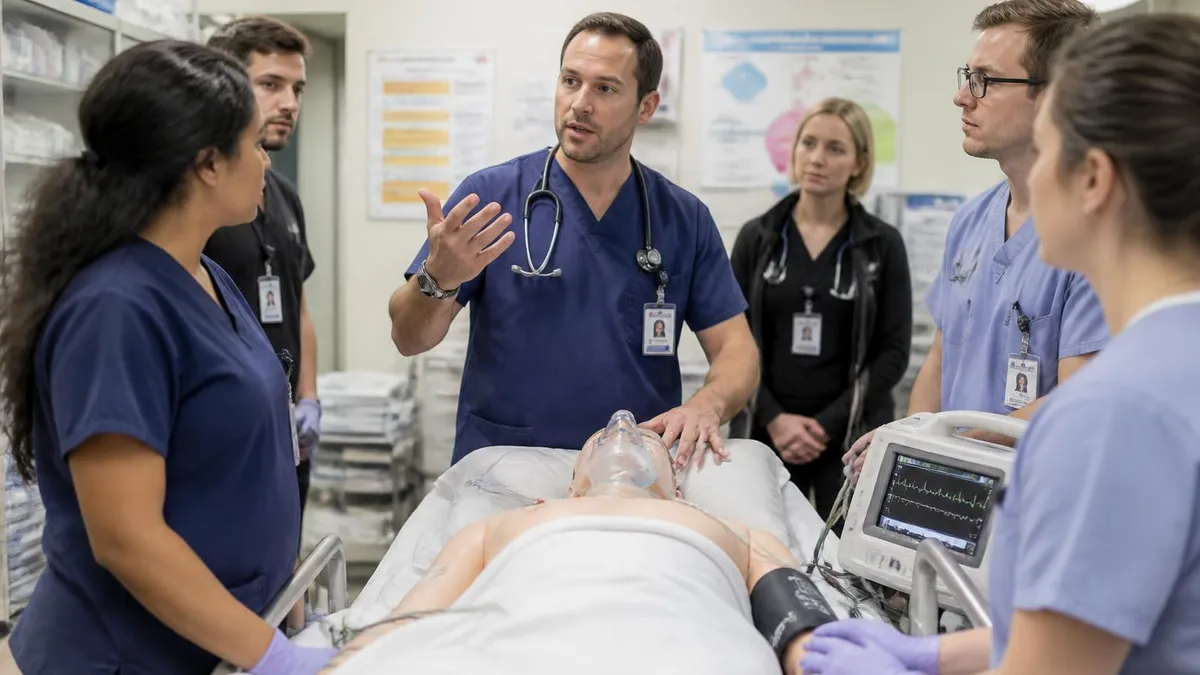
Independent 1099 instructors should carry professional liability insurance specifically endorsed for educational activities. Most clinical malpractice policies exclude teaching scenarios involving equipment like manikins, AEDs, and bag-valve masks. A rider costs $150 to $400 per year and is non-negotiable if you teach outside a hospital umbrella.
Looking beyond the first year or two of teaching, the long-term career trajectory for ACLS instructors has expanded significantly in 2026. What used to be a side income for bedside clinicians has matured into a recognized career track with several distinct advancement paths. Understanding these paths early helps you make smarter choices about which Training Centers to align with, which adjacent certifications to pursue, and how to position yourself for higher-value roles as the simulation and resuscitation-quality fields continue to grow.
The most common long-term path is moving from instructor to Training Center Faculty. TCF members hold the authority to align new instructors, monitor their teaching, and represent the Training Center to the AHA. Becoming a TCF typically requires three years of active instruction, sponsorship from an existing TCF, and completion of the TCF essentials course. The role often comes with a stipend or coordinator pay rate that adds 15 to 25 percent to baseline instructor compensation, and it expands your influence over local educational quality.
A second well-traveled path leads into hospital simulation education. Many large health systems have built dedicated simulation centers staffed by clinical educators who design scenarios, run debriefs, and conduct research on resuscitation team performance. ACLS instruction experience is essentially a prerequisite, because the daily work involves writing megacode-style scenarios for residents, ICU nurses, and rapid-response teams. Salaries in simulation educator roles typically range from $85,000 to $130,000 depending on region and degree level.
The third path is entrepreneurial. Instructors who develop strong reputations sometimes launch their own independent Training Centers, particularly in mid-size cities where existing centers cannot meet demand. Running a TC requires a deeper financial commitment, including manikins, AED trainers, classroom space, and AHA fees, but it can also generate six-figure annual revenue once the instructor roster is built. Reddit threads from successful TC owners emphasize the importance of disciplined scheduling, clear pricing, and strong relationships with referring hospitals and clinics.
Beyond these three main paths, several adjacent specialties reward ACLS instructor experience. Critical-care transport educators, military medical instructors, residency program coordinators, and corporate medical directors all benefit from a documented teaching history and active AHA alignment. Many of these roles also intersect with topics like sports-medicine education, where injury-prevention curricula and even knee brace for acl injuries training modules sit alongside resuscitation content within broader allied-health programs.
To prepare for these longer-term opportunities, focus on accumulating evidence of teaching quality. Keep records of your class evaluations, student pass rates, and any positive feedback. Volunteer to teach difficult classes, support new instructors, and participate in your Training Center's quality-improvement reviews. The instructors who advance fastest are almost always the ones who treat early teaching opportunities as a portfolio-building exercise rather than just an hourly gig.
Finally, consider pairing your ACLS instructor card with additional disciplines. Adding BLS, PALS, and HeartSaver instructor status dramatically expands your bookable hours. Adding TNCC, ENPC, or NRP instruction broadens your reach into emergency and neonatal settings. The most financially successful instructors in 2026 are not the ones teaching the most ACLS classes. They are the ones who built a multi-discipline credential stack and serve as the go-to educator across an entire department or region.
Putting this all into practice begins with the small choices you make in your first month. Decide whether you want teaching to be a true side income of two to four classes per month or a meaningful career pivot toward full-time education. The credentialing pipeline is the same either way, but the Training Centers you align with, the disciplines you pursue, and the time you invest in scenario design will look very different depending on your end goal.
Get organized about documentation from day one. Create a single folder, digital or physical, that holds your provider cards, Instructor Essentials certificate, monitored-teaching evaluation, alignment letters, and copies of your class rosters. AHA audits are not common but they do happen, and instructors who keep clean records have a far easier time renewing every two years. This same folder becomes your portfolio when you apply for simulation-educator roles or TCF sponsorship later.
Invest in a small but high-quality personal equipment kit. Most experienced instructors carry their own pocket mask, stethoscope, ACLS pocket card, and a current provider manual. If you teach as a 1099 contractor, expand the kit to include a basic AED trainer and a portable airway demonstration model. Equipment costs are tax-deductible business expenses, and having reliable gear protects you when a Training Center's manikin fails mid-class, which Reddit threads confirm happens more often than newcomers expect.
Pay close attention to your debrief technique. Skill stations and written tests are relatively easy to standardize, but the megacode debrief is where great instructors separate themselves from average ones. Study frameworks like PEARLS, Debriefing with Good Judgment, and Plus-Delta. Watch how senior instructors handle a student who froze as team leader. Practice asking open-ended questions that get students reflecting on their own performance rather than telling them what they did wrong.
Manage your schedule deliberately. Many new instructors say yes to every class request, then burn out within six months. A sustainable rhythm for someone working full time clinically is two to four ACLS classes per month, supplemented by BLS or HeartSaver classes when your schedule allows. If you want to scale to full-time educator income, plan to phase down clinical hours gradually rather than dropping them all at once, because teaching income takes time to stabilize.
Engage with the broader community. Reddit is a good starting point, but local instructor meetups, AHA Science Days, and simulation conferences like IMSH and SimGHOSTS give you direct access to people running the largest education programs in the country. These connections often lead to higher-paying contracts, invitations to write curriculum, and opportunities to serve on regional resuscitation committees that shape policy.
Finally, treat every class as a chance to keep your own clinical skills sharp. Teaching cardiac arrest care, airway management, and post-arrest stabilization repeatedly will make you a measurably stronger bedside clinician. Many instructors say this is the most underrated benefit of the role. Patients and colleagues notice the difference. Your confidence during real codes improves. And the feedback loop between clinical work and teaching becomes one of the most professionally rewarding parts of a healthcare career.
ACLS Questions and Answers



About the Author

Registered Nurse & Healthcare Educator
Johns Hopkins University School of NursingDr. Sarah Mitchell is a board-certified registered nurse with over 15 years of clinical and academic experience. She completed her PhD in Nursing Science at Johns Hopkins University and has taught NCLEX preparation and clinical skills courses for nursing students across the United States. Her research focuses on evidence-based exam preparation strategies for healthcare certification candidates.
Join the Discussion
Connect with other students preparing for this exam. Share tips, ask questions, and get advice from people who have been there.
View discussion (8 replies)