
ACLS Certification Online: Complete 2026 October Guide to Courses, Cost, and AHA-Accepted Providers
ACLS certification online in 2026 October: 💯 compare AHA-accepted courses, costs, exam format, and study plans. Pass your ACLS cert from home with confidence.
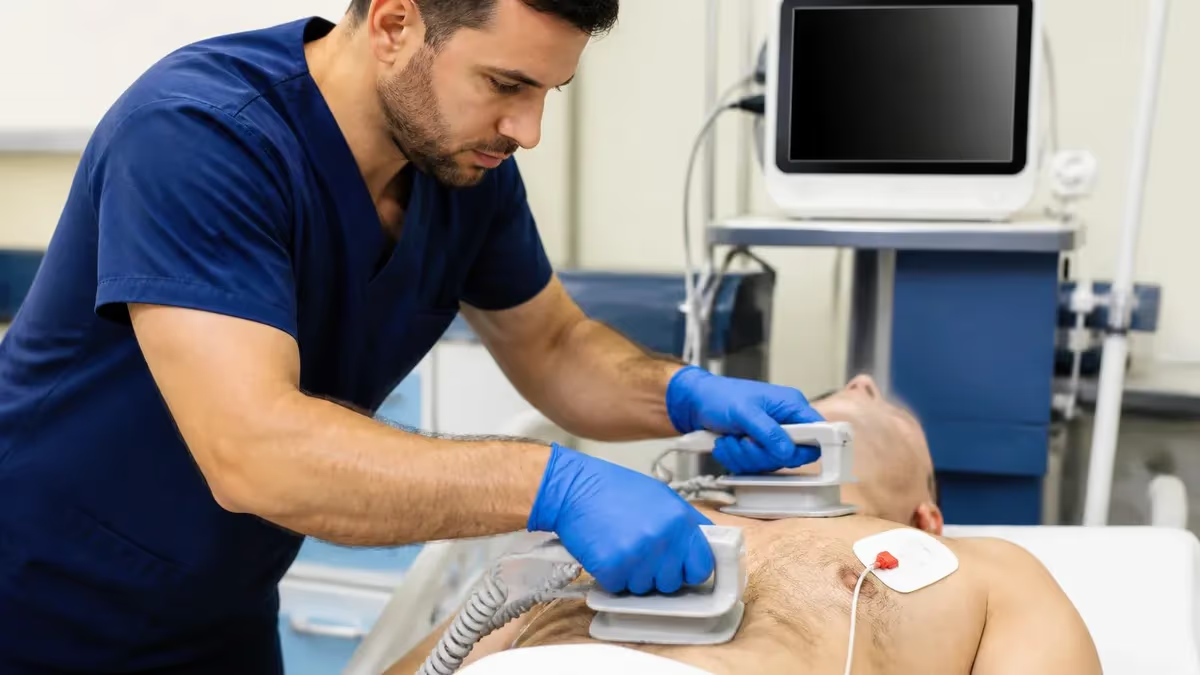
Earning your acls certification online has become the default path for nurses, paramedics, physicians, and respiratory therapists who need Advanced Cardiovascular Life Support credentials without sacrificing clinical shifts or commuting to a training center. In 2026, more than 70% of new ACLS providers complete at least the cognitive portion of their course through a web-based platform, and reputable providers now blend self-paced modules with optional in-person skills verification for full AHA equivalency.
The shift toward online learning accelerated after the American Heart Association expanded its HeartCode ACLS blended platform and several non-AHA vendors entered the market with cheaper, fully remote alternatives. That has created confusion: not every online ACLS card is accepted by every hospital credentialing office, and the price spread between providers ranges from $99 to nearly $400. Choosing the wrong course can mean repeating training months later at full cost.
This guide walks you through every decision point — which courses are recognized by your employer, how online skills checks work, what the written exam actually tests, and how long studying really takes when you balance it against night shifts. We cover both initial certification and renewal, and we flag the red flags that distinguish legitimate accredited programs from credential mills that print pretty PDFs but fail credentialing review.
You will also find structured study plans, algorithm summaries, and links to free practice questions modeled on the official AHA testing bank. By the end, you should know exactly which provider fits your specialty, how to schedule your skills session, and how to walk into a Code Blue with the muscle memory your patients deserve. For a curated list of test-day questions and answers, see our acl lineup 2025 study breakdown.
ACLS is not a one-time chore — it is a recertification cycle that repeats every two years, and the online format you choose now influences how painful renewal will be. Providers who lock you into proprietary content force you to relearn their interface every cycle, while AHA-aligned courses follow the same algorithms hospital-wide, making renewal a true refresh rather than a full re-learn.
Whether you are a brand-new ICU nurse facing your first cardiac arrest scenario or a seasoned ED attending who just wants to knock out a renewal between cases, this article is built to save you time, money, and the embarrassment of arriving at your skills check unprepared. We pull from AHA guidelines, employer credentialing policies, and feedback from thousands of test-takers to give you a realistic picture.
Bookmark this page. Use the table of contents to jump to the section that matters to you most, and treat the practice quizzes scattered throughout as benchmarks — if you score above 84% on each one without notes, you are ready for the real megacode and the 50-question final exam waiting at the end of your online course.
ACLS Online Certification by the Numbers
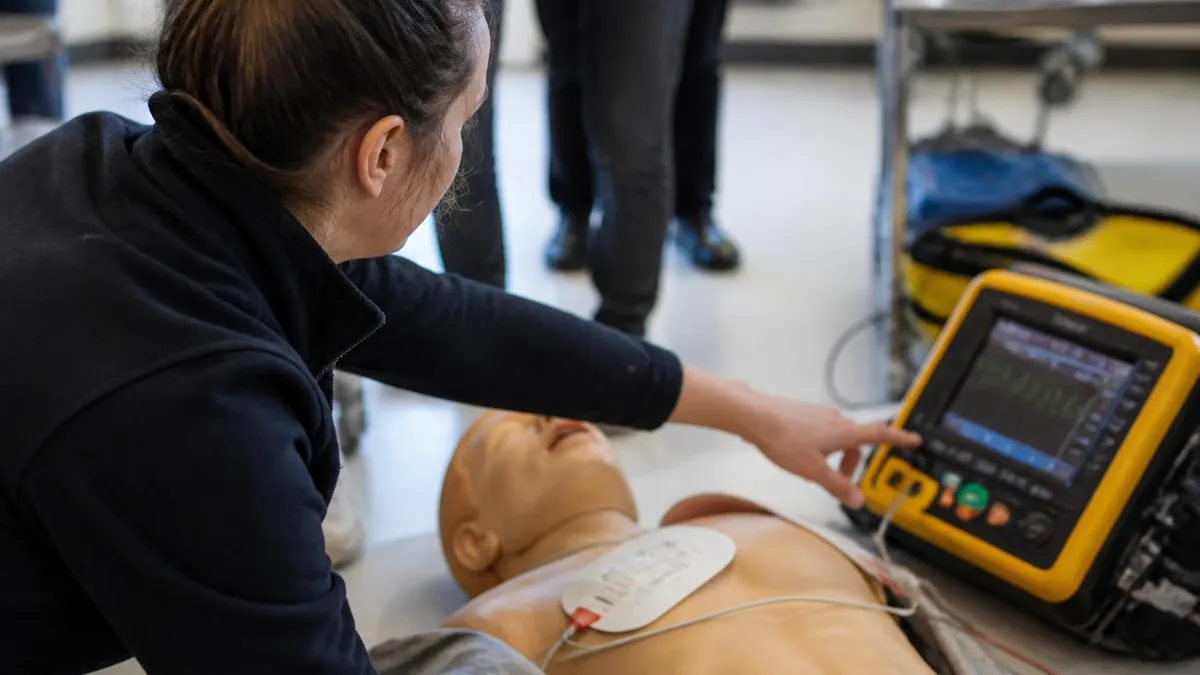
How Online ACLS Courses Are Structured
Self-paced video lectures, interactive case simulations, and chapter quizzes covering airway management, rhythm recognition, pharmacology, and team dynamics. Typically 6-8 hours of seat time.
A 50-question multiple-choice exam delivered online, proctored or unproctored depending on the provider. You must score 84% or higher to advance to the skills portion.
Pre-recorded demonstrations of BLS, bag-mask ventilation, defibrillation, and IV/IO access. You can rewatch unlimited times before your hands-on session.
Mandatory for AHA cards: a 60-90 minute session with a certified instructor who verifies you can run a megacode scenario and perform high-quality CPR.
Upon passing both portions, you receive a digital eCard within 24 hours and a printable wallet card. Cards are verifiable through the AHA Atlas system.
Selecting the right online ACLS provider is the single most consequential decision you will make in this process. The market splits into three tiers: AHA-aligned blended courses (HeartCode ACLS through approved training centers), non-AHA accredited online courses that claim equivalency, and unaccredited providers that issue cards no credentialing department respects. The first two can both be legitimate; the third is a waste of money and a career liability.
The American Heart Association's HeartCode ACLS remains the gold standard because it is universally accepted by hospitals, EMS agencies, and licensing boards across the United States. The cognitive portion runs about $145 directly through the AHA's online store, with the in-person skills component adding $50-$150 depending on your local training center. Total cost lands between $195 and $295, and the resulting card is recognized everywhere from Mayo Clinic to rural critical access hospitals.
Non-AHA providers such as ACLS Medical Training, ProMed Certifications, and the National Health Care Provider Solutions market fully online cards for $99-$169 with no in-person skills check. Some hospitals — particularly outpatient clinics, urgent care chains, and home health agencies — accept these cards. Many do not. Before purchasing, email your nurse manager or credentialing office a screenshot of the provider's accreditation page and get written confirmation. We dive deeper into vendor comparisons in our acl tickets review.
The middle ground is hybrid programs run by university medical centers, community colleges, and large EMS agencies. These often cost $200-$350 but include free retests, instructor office hours, and skills sessions on weekends. For first-time test takers, this added support translates into measurably higher pass rates — internal data from one Midwest training center showed 96% first-attempt pass rates in their hybrid program versus 81% in pure self-study online cohorts.
Watch for predatory practices. Any provider promising a card in under an hour, requiring no exam, or charging more than $400 for initial certification is operating outside industry norms. Legitimate online ACLS requires demonstrated competency, and that takes time. The AHA publishes a list of all International Training Centers on its website; if your prospective provider is not affiliated with one, you are buying a non-AHA credential whether they advertise that distinction or not.
Geographic considerations matter too. If you work in California, Texas, Florida, or New York, hospital systems often have explicit policies requiring AHA-issued cards. In smaller states or rural settings, accepted alternatives are broader. Travel nurses should always carry an AHA card because assignment hospitals across state lines almost universally require it during onboarding paperwork, and switching mid-contract costs both time and money.
Finally, consider future-proofing. The AHA updates its guidelines every five years — most recently in 2025 — and only AHA-aligned providers integrate those changes immediately. A non-AHA provider may still be teaching the 2020 algorithms two years after they have been superseded, which can hurt you on the megacode and, more importantly, at the bedside when a real patient is in V-fib.
ACLS Practice Test Questions
Prepare for the ACLS - Advanced Cardiovascular Life Support exam with our free practice test modules. Each quiz covers key topics to help you pass on your first try.
ACLS Airway Management
ACLS Exam Questions covering ACLS Airway Management. Master ACLS Test concepts for certification prep.
ACLS Airway Management and Ventilation
Free ACLS Practice Test featuring ACLS Airway Management and Ventilation. Improve your ACLS Exam score with mock test prep.
ACLS Cardiac Rhythm Recognition
ACLS Mock Exam on ACLS Cardiac Rhythm Recognition. ACLS Study Guide questions to pass on your first try.
ACLS Cardiac Rhythms and ECG Interpretation
ACLS Test Prep for ACLS Cardiac Rhythms and ECG Interpretation. Practice ACLS Quiz questions and boost your score.
ACLS - Advanced Cardiovascular Life Suppor...
ACLS Questions and Answers on - Advanced Cardiovascular Life Support ACLS Emergency Pharmacology. Free ACLS practice for exam readiness.
ACLS - Advanced Cardiovascular Life Suppor...
ACLS Mock Test covering - Advanced Cardiovascular Life Support Acute Coronary Syndromes. Online ACLS Test practice with instant feedback.
ACLS - Advanced Cardiovascular Life Suppor...
Free ACLS Quiz on - Advanced Cardiovascular Life Support Acute Stroke Care. ACLS Exam prep questions with detailed explanations.
ACLS - Advanced Cardiovascular Life Suppor...
ACLS Practice Questions for - Advanced Cardiovascular Life Support BLS and High-Quality CPR. Build confidence for your ACLS certification exam.
ACLS - Advanced Cardiovascular Life Suppor...
ACLS Test Online for - Advanced Cardiovascular Life Support Post-Cardiac Arrest Care. Free practice with instant results and feedback.
ACLS - Advanced Cardiovascular Life Suppor...
ACLS Study Material on - Advanced Cardiovascular Life Support Tachycardia and Bradycardia Algorithms. Prepare effectively with real exam-style questions.
ACLS Advanced Cardiovascular Life Support
Free ACLS Test covering Advanced Cardiovascular Life Support. Practice and track your ACLS exam readiness.
ACLS Bradycardia
Free ACLS Practice Test featuring Bradycardia. Improve your ACLS Exam score with mock test prep.
ACLS Medical Training
ACLS Mock Exam on Medical Training. ACLS Study Guide questions to pass on your first try.
Mastering the Core ACLS Algorithm Set
The cardiac arrest algorithm is the backbone of every ACLS course and the most heavily tested algorithm on the written final exam. It branches based on whether the rhythm is shockable (V-fib, pulseless V-tach) or non-shockable (asystole, PEA). For shockable rhythms, you defibrillate immediately, resume CPR for two minutes, then assess rhythm again while administering epinephrine 1 mg every 3-5 minutes.
For non-shockable rhythms, epinephrine goes in as soon as IV or IO access is established, and the team focuses on identifying reversible Hs and Ts: hypovolemia, hypoxia, hydrogen ion (acidosis), hypo/hyperkalemia, hypothermia, tension pneumothorax, tamponade, toxins, thrombosis (pulmonary), and thrombosis (coronary). Most arrests have at least one reversible cause hidden in that list.
Online ACLS vs Traditional In-Person Classroom
- +Self-paced learning lets you study during night shifts or days off
- +Significantly lower cost than two full days in a classroom
- +Unlimited replay of video modules and case simulations
- +Modules update automatically with the latest AHA guideline changes
- +Skills sessions are scheduled separately at your convenience
- +Digital eCards arrive within 24 hours of passing
- +Easier to retake the written exam if you fail on the first attempt
- −Requires strong self-discipline to complete modules on schedule
- −Less hands-on practice time before the megacode skills check
- −Some employers still prefer or require traditional classroom completion
- −Technical issues with proprietary platforms can interrupt progress
- −Reduced opportunity to ask instructors questions in real time
- −Non-AHA online cards may not be accepted at all hospital systems
Pros and Cons at a Glance
| Pros | Cons |
|---|---|
| Self-paced learning lets you study during night shifts or days off | Requires strong self-discipline to complete modules on schedule |
| Significantly lower cost than two full days in a classroom | Less hands-on practice time before the megacode skills check |
| Unlimited replay of video modules and case simulations | Some employers still prefer or require traditional classroom completion |
| Modules update automatically with the latest AHA guideline changes | Technical issues with proprietary platforms can interrupt progress |
| Skills sessions are scheduled separately at your convenience | Reduced opportunity to ask instructors questions in real time |
| Easier to retake the written exam if you fail on the first attempt | Non-AHA online cards may not be accepted at all hospital systems |
Your ACLS Certification Online Pre-Course Checklist
- ✓Confirm your employer accepts the specific online provider before purchasing
- ✓Verify your current BLS certification is unexpired — it is a prerequisite
- ✓Download and review the AHA ACLS Provider Manual PDF or print version
- ✓Complete the AHA Precourse Self-Assessment with a target score above 70%
- ✓Memorize all six core algorithms including dosing and energy settings
- ✓Practice ECG rhythm recognition for sinus, V-fib, V-tach, asystole, PEA
- ✓Review high-yield pharmacology: epinephrine, amiodarone, atropine, adenosine
- ✓Schedule your in-person skills session at least one week after starting modules
- ✓Set aside two uninterrupted hours for the 50-question written final exam
- ✓Bring a photo ID and proof of cognitive completion to your skills session
Pre-Course Self-Assessment Predicts Final Exam Success
AHA data shows candidates who score 70% or higher on the precourse self-assessment pass the final exam on the first attempt 94% of the time. Those who skip the self-assessment pass on first attempt only 71% of the time. Spend the extra two hours — it more than pays for itself.
The in-person skills session is where most online ACLS candidates underestimate the work required. After you complete the cognitive modules and pass the written exam with 84% or higher, the AHA requires a hands-on competency verification with a certified instructor. This session typically runs 60-90 minutes for initial certification and 45-60 minutes for renewal, and you cannot receive your provider card without passing it.
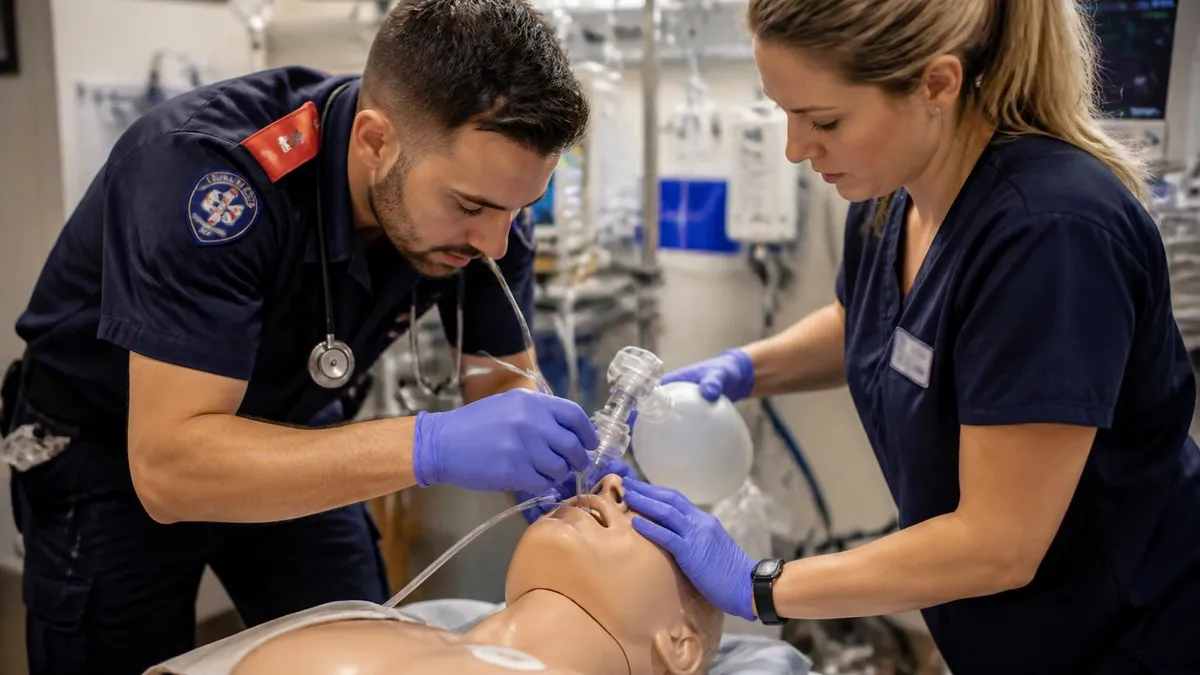
The skills check covers high-quality CPR, bag-mask ventilation, defibrillator and AED use, IV/IO access, advanced airway placement (or assistance), and a full megacode scenario where you lead a simulated resuscitation team through a deteriorating patient. Instructors evaluate your ability to call out actions clearly, delegate roles, time interventions correctly, and recognize the rhythm changes that drive algorithm decisions.
The megacode is the moment of truth. You walk into a room with a manikin, a defibrillator, a code cart, and 3-5 colleagues or instructor-actors playing team roles. The instructor announces an opening scenario — for example, a 64-year-old male collapsed in the cafeteria — and you take over as team leader. The patient's rhythm will change at least twice, forcing you to navigate between cardiac arrest, post-arrest care, and possibly a bradycardia or tachycardia phase.
Common skills-check failures include hesitating to defibrillate a clearly shockable rhythm, mixing up epinephrine dosing intervals, forgetting to assess airway and breathing before chest compressions in unique scenarios, and failing to close the loop on team communication. Closed-loop communication means stating the order, having the recipient repeat it back, and confirming completion — "Push 1 mg epinephrine" / "Pushing 1 mg epi" / "1 mg epi in."
Practice this verbal pattern before you arrive. It feels theatrical at first, but instructors are listening for it specifically. They will fail an otherwise correct decision if you mumble the order or skip the confirmation. Find a colleague who has recently certified and run two or three mock megacodes at the nursing station between patient assignments. Twenty minutes of practice translates directly into smoother performance under instructor scrutiny.
Prepare your reference materials beforehand. The AHA permits you to glance at the ACLS pocket reference card during the megacode for dosing and algorithm steps, but pausing mid-scenario to consult it signals weakness to your evaluator. Aim to know the medications cold so the card is a backup, not a crutch. Build deeper algorithm fluency through our targeted acl 2025 review.
If you fail the skills session, most training centers allow a remediation appointment within 30 days at no additional cost. After 30 days, you typically pay a $50-$100 retest fee. A second failure usually requires you to repeat the cognitive modules as well, which means starting over. This is why front-loading preparation matters: the cost of being underprepared compounds quickly.
Most online ACLS providers will not issue your final card if your BLS certification is expired on the day of your skills session. Verify your BLS expiration date before purchasing ACLS, and renew BLS first if you are within 60 days of expiration.
Renewal is where online ACLS shines brightest. If you are within 30 days of your current card's expiration or up to 60 days past expiration (depending on provider policy), you qualify for a renewal course rather than initial certification. Renewal courses compress the cognitive portion to 4-5 hours instead of 6-8, and the skills session focuses on confirming retained competency rather than teaching from scratch.
The price difference is meaningful: AHA HeartCode ACLS renewal runs roughly $120-$165 versus $195-$295 for initial certification, and the time investment drops by about 40%. Many providers also include free recertification reminders that email you 90, 60, and 30 days before expiration, which prevents the dreaded lapsed-card scenario where you must repeat the full initial course at full cost.
If your card has lapsed beyond your provider's grace window, you are no longer eligible for renewal and must start over. This is one of the most common and expensive mistakes ACLS providers make. Add your expiration date to two calendars — your work calendar and a personal one — and book your renewal at least 45 days before expiration to leave buffer for scheduling delays at the skills site. Detailed timing rules are covered in our knee brace for acl injuries renewal guide.
Renewal content emphasizes guideline updates since your last certification cycle. The 2025 AHA guidelines, for example, refined recommendations on epinephrine timing in non-shockable arrest, clarified TTM (targeted temperature management) thresholds in post-arrest care, and expanded guidance on extracorporeal CPR (eCPR) in select centers. Renewal candidates who skim updates and lean on memory from two years ago often miss these changes on the final exam.
A practical renewal study plan: spend 90 minutes reviewing what changed since your last cert, 90 minutes running the practice megacode scenarios in your provider's platform, and 60 minutes drilling pharmacology flashcards. That three-and-a-half-hour focused investment, spread across two evenings, is usually enough for a confident first-attempt pass. Add another hour if you have not run a real code in your unit during the past year.
Plan for the eCard delay. Most online providers issue digital cards within 24 hours of skills-session sign-off, but some training centers take 3-5 business days. If you need proof of certification for credentialing paperwork, a license renewal, or a new job start date, build a one-week buffer between your skills session and your deadline. Print two physical copies of the digital card and keep one in your work locker for inspections.
Finally, do not let renewal become rote. The most dangerous ACLS provider is the one who has renewed five times without ever running a real code — algorithms memorized, instincts atrophied. Pair every renewal with at least one mock code at your facility, ideally with your usual team, so the muscle memory transfers to the people you actually work with when the alarm goes off.
Practical exam-day tips begin the night before, not the morning of. Sleep is the single biggest predictor of performance on the 50-question written exam. Candidates who pull an all-nighter cramming algorithms score on average 12 percentage points lower than those who reviewed for 45 minutes the prior evening and slept seven or more hours. Your brain consolidates the algorithm decision trees during deep sleep — skipping that process is self-sabotage.
On exam morning, eat a real breakfast with protein and complex carbohydrates. Avoid the temptation to dose up on caffeine — moderate caffeine helps, but jitteriness during the megacode hurts your team-leader presence and your fine-motor skills during IV insertion or defibrillator pad placement. One cup of coffee or tea is fine; three is counterproductive.
Read every question twice on the written exam. ACLS questions often hinge on a single qualifier — "stable" versus "unstable," "witnessed" versus "unwitnessed," "narrow" versus "wide complex." The AHA writes questions to differentiate candidates who memorized algorithms from those who understand when each algorithm applies. Slow down on the first read, identify the qualifier, then evaluate answer choices.
For the megacode, announce your role out loud at the start: "I'm the team leader." This single sentence anchors you and the team. Then verbalize your initial assessment — pulse check, rhythm check, IV access status — even when those things feel obvious. Instructors grade what they hear, not what they assume you are thinking. Externalize every decision.
Use a structured mnemonic during the megacode. Many providers swear by ABCD: Airway, Breathing, Circulation, Differential diagnosis. Others use the AHA's primary and secondary survey framework. Whichever you choose, run through it consistently on every patient phase. The structure prevents you from skipping critical steps under stress.
Manage the team like a conductor. Assign roles explicitly at scenario start: compressor, ventilator, IV/medications, recorder, defibrillator. Rotate compressors every two minutes by name. Acknowledge every team-member input with a brief "thank you" or "good catch." Strong team dynamics are scored separately from clinical decisions and can rescue an otherwise borderline performance.
Finally, accept that you will not perform perfectly. Even ACLS instructors who teach the course weekly make small errors during pressure scenarios. The goal is competent, safe, algorithm-based care — not flawless choreography. Instructors pass candidates who recover smoothly from mistakes more often than those who freeze or argue. Take a breath, restate your plan, and keep the patient at the center of every decision.
ACLS Questions and Answers

ACLS Precourse Self-Assessment Answers — Your Complete 2026 Study Resource

ACLS Medical Training: Honest Review, AHA Comparison & Who Actually Accepts the Cert
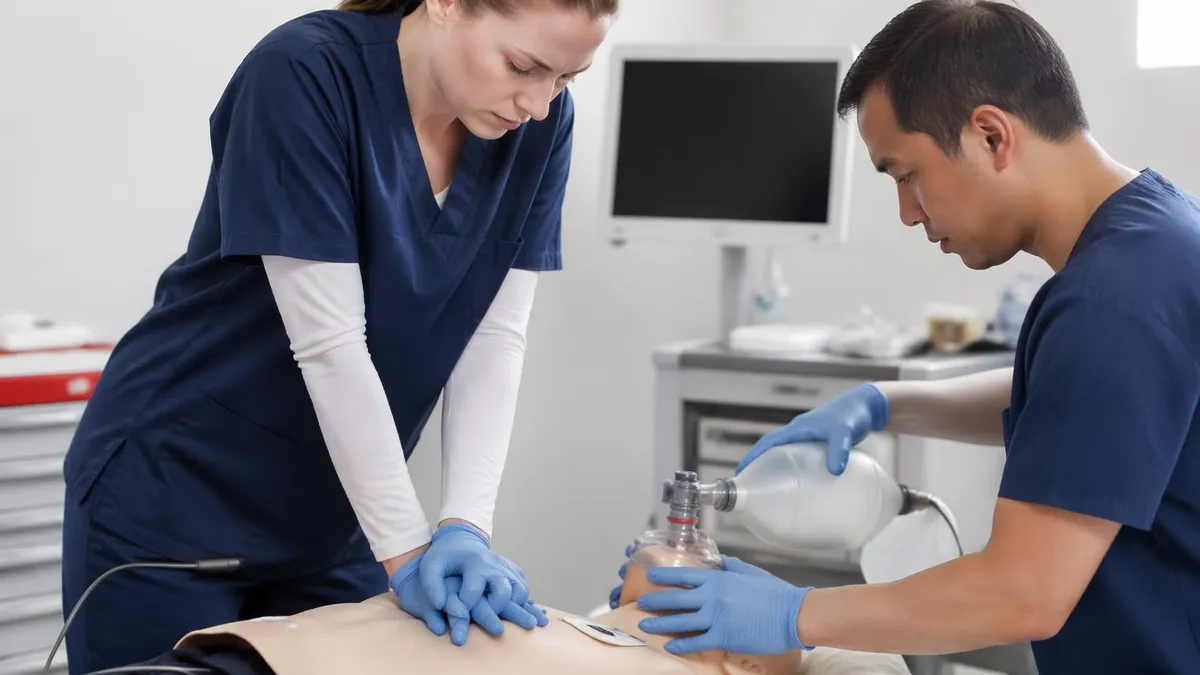
ACLS Subject Knowledge — What Every Provider Must Know for Certification

ACLS Renewal: Online vs In-Person, Cost, AHA Providers, and What to Do If Expired

What Is ACLS? Advanced Cardiovascular Life Support Explained
About the Author

Registered Nurse & Healthcare Educator
Johns Hopkins University School of NursingDr. Sarah Mitchell is a board-certified registered nurse with over 15 years of clinical and academic experience. She completed her PhD in Nursing Science at Johns Hopkins University and has taught NCLEX preparation and clinical skills courses for nursing students across the United States. Her research focuses on evidence-based exam preparation strategies for healthcare certification candidates.
Join the Discussion
Connect with other students preparing for this exam. Share tips, ask questions, and get advice from people who have been there.
View discussion (8 replies)