
ACLS Medical Training: Honest Review, AHA Comparison & Who Actually Accepts the Cert
💯 ACLS Medical Training review: pricing, who accepts the cert, AHA comparison, and whether your hospital will honor the card before you spend $169.

ACLS Medical Training by the Numbers
Key Facts at a Glance
| Item | Value | Details |
|---|---|---|
| ACLS Course Fee | $169 | |
| Advertised Completion Time | ~1 hr | |
| Card Validity (Same as AHA) | 2 yrs | |
| Skills Check Required | $0 |
What ACLS Medical Training Actually Is
ACLS Medical Training is a private, online-only certification company that has operated since roughly 2008. It is not part of the American Heart Association, the American Red Cross, or any hospital system.
The company sells online versions of ACLS, BLS, PALS, CPR, and NRP certifications. It is one of the largest pure-online providers in the United States, and its search-engine footprint is massive — which is how most people end up on their checkout page.
The pitch is simple. You pay a flat fee, watch some videos, read a study guide, then take an unproctored multiple-choice test on your own computer. Pass, and you receive a digital certification card and a printable wallet card.
The whole thing can be done in an afternoon. For people who only need a refresher, or who work outside of a hospital, that convenience is real. The course content covers all current algorithms in a serviceable format.
The friction starts the moment your employer asks to see the card. Many hospital credentialing offices, nursing schools, and state nursing boards have an explicit written policy that they only accept cards issued by an American Heart Association Training Center, sometimes with an OK for Red Cross.
Anything else is rejected on arrival, regardless of how thorough the course content actually was. If you are an experienced clinician who reads up on the ACLS algorithm every two years, you will breeze through the test. But a passing score does not unlock hospital privileges by itself.
That credentialing reality is the single most important thing to understand before you spend $169. The course is not a scam. The content is reasonably aligned with current aha acls guidelines, the digital card is real, and the company will replace it if you lose it.
What you are buying is a piece of paper whose value depends entirely on whether the person checking your credentials accepts it. In nursing, ICU, ED, and most physician roles, that answer is almost always no — and that is the headline of this review.
The company itself does not hide this fact, exactly, but it is buried deep in their terms-of-service page. The marketing pages emphasize speed, price, and convenience. The small print acknowledges acceptance varies. Most buyers never read the small print until after the card has been rejected.
If you are still in the research phase, do a 10-minute test before you pay anything. Call your HR or credentialing office and ask one question: "Do you require an AHA-issued ACLS card, or will any nationally recognized provider work?"
Get the answer in writing if you can. If the answer is AHA only, search acls classes near me for an AHA Training Center near you. If they accept any recognized provider, then ACLS Medical Training becomes a legitimate option worth weighing.
One more piece of context: ACLS Medical Training is a Better Business Bureau accredited business with mixed customer reviews on Trustpilot and similar platforms. Common complaints center on card rejection by employers, slow customer service for refund requests, and confusion over what an unproctored exam actually proves.
Common compliments center on convenience, price, and quick card delivery. The website is clean, the checkout is fast, and the wallet card looks professional when printed. None of that has any bearing on whether your hospital will accept it.
The full picture: the company delivers exactly what it advertises — an inexpensive online certificate. What it cannot deliver is universal acceptance, because acceptance is set by the employer and the state, not by the issuer.
Knowing that distinction up front saves real money. The people who feel scammed by ACLS Medical Training are almost always people who bought the card assuming it would work, then discovered their employer's policy after the fact.
The card is real. The acceptance is not universal. ACLS Medical Training issues a valid course-completion certificate. What it does not issue is an AHA-branded card. Most US hospitals, nursing licensure boards, residency programs, and large EMS agencies require an AHA card and will refuse anything else. Confirm with your specific employer in writing before purchase. A 60-second phone call to credentialing can save you $169 and a forced retake.
ACLS Medical Training Pricing (2026)
Quick Reference: Four Things to Know
Private online certification provider founded around 2008. Sells ACLS, BLS, PALS, CPR, and NRP digital cards for $109 to $169. Not affiliated with the American Heart Association. Headquartered in the US. The course consists of self-paced videos, a downloadable manual, and an unproctored multiple-choice exam taken on your own computer. You receive a PDF card and printable wallet card within a few hours of passing.
Why Hospitals Insist on the AHA Card
Hospital credentialing is not arbitrary. The AHA card requirement traces back to three concrete forces: malpractice insurance language, Joint Commission survey criteria, and resident credentialing committee policies.
Most hospital malpractice carriers contractually require that staff performing resuscitation hold a current AHA card. An audit by the carrier will look for that exact wording in the credentialing file. Anything else triggers questions during the renewal cycle.
The Joint Commission, which surveys hospitals every three years, uses AHA certification as the de facto standard when reviewing code response capability. Surveyors do not write "AHA required" in the standards themselves, but every site visit reinforces it as the accepted norm.
Resident credentialing committees, which approve every physician with hospital privileges, are typically chaired by attending physicians who learned acls and pals through AHA channels and have never approved an exception. Institutional memory becomes policy.
The legal exposure piece is what really drives the policy. If a patient codes and a resuscitation goes badly, plaintiff attorneys will subpoena every provider's certification and verify each one against the issuing organization.
An AHA card pulls up in the AHA's eCard verification system instantly. A card from a private online provider does not, which becomes a line item in the deposition. Hospitals avoid the entire question by mandating AHA in writing, often with explicit language excluding other providers by name.
There is also a culture component worth naming. Code response is a team sport. Hospitals train teams together in AHA megacodes so everyone uses the same hand signals, the same role assignments, and the same closed-loop communication patterns. An online-only certificate skips the team simulation entirely, which is precisely the part that matters most when adrenaline hits.
ACLS Medical Training vs AHA
- +Cheaper — $169 flat for ACLS vs $150 to $300 at AHA Training Centers
- +100% online — no driving to a course, no scheduled class time
- +Fast — advertised completion in about one hour for experienced clinicians
- +Unproctored exam — retake instantly if you fail
- +Same two-year validity period as the AHA card
- +Digital card issued within hours of passing
- +Useful for non-hospital roles, dental, outpatient, refresher self-study
- −Requires in-person skills check with a certified instructor
- −Costs more — typically $200 to $300 for full ACLS class
- −Schedule-locked — must attend a 12 to 14 hour initial course or 4 to 6 hour renewal
- −Accepted by 99%+ of US hospitals, nursing boards, residencies, EMS agencies
- −Required for nursing licensure verification in most states
- −HeartCode ACLS option blends online cognitive work with required skills check
- −Card is the medical-legal standard cited in malpractice insurance contracts

Who Actually Accepts ACLS Medical Training
The acceptance landscape is more nuanced than "AHA only." Several legitimate workplace categories accept ACLS Medical Training and similar online cards.
Dental offices, especially general dentistry and pediatric dentistry practices, frequently accept it for BLS and ACLS where state dental boards do not specifically require AHA. Many oral surgery practices fall into this bucket too.
Outpatient cosmetic surgery centers, fertility clinics, and infusion centers run by physician-owners often accept it because the owner sets the policy. The same is true for many medical spas and aesthetics clinics that staff RNs for emergency response coverage.
Urgent care chains vary widely. Some require AHA, some accept any nationally recognized provider, and a few accept ACLS Medical Training specifically. Corporate-owned chains tend to be stricter than physician-owned independents.
EMS acceptance is highly state-dependent. About a dozen states allow any nationally recognized ACLS provider for EMS recertification, while the rest require AHA or AHA-equivalent. Always check your state EMS office's published list before purchase.
Small private ambulance services are more flexible than county or fire-based EMS, which usually mirror state EMS rules. Veterinary hospitals and animal emergency clinics accept it for staff CPR readiness without much fuss.
Industrial medical teams, occupational health clinics, and corporate first-aid responder programs often accept it. School nurses in some districts can use it; in others, the state department of education mandates AHA specifically.
The pattern is consistent: low-acuity, non-hospital, privately-owned settings tend to accept; high-acuity hospital and licensure-driven settings tend to reject. Map your role onto that pattern and you will know the answer before you call.
5 Questions to Ask Before You Buy
Call HR or credentialing. Ask specifically: 'AHA-issued ACLS card required?' Get the answer in writing.
Name the company directly: 'Does your office accept a card from ACLS Medical Training?' Vague yeses are often nos.
State boards of nursing, medicine, and EMS publish their accepted providers list. Search before you buy.
Some employers give 60 to 90 days to redo with AHA if the card is rejected. Ask before you bet on it.
Less common requirement but very real for independent providers. One phone call to your agent.
The 5 Questions That Save You $169
Before you click checkout, work through these five questions with your actual employer or licensure board. Each one is a 60-second phone call.
Together they will tell you exactly whether ACLS Medical Training will work for your situation. Skipping these five calls is the single most common reason people end up paying twice — once for the online card, then again for a real acls certification through an AHA Training Center after their original card was rejected.
Question one is direct: "Does your credentialing policy require an AHA-issued ACLS card specifically, or any nationally recognized ACLS card?" This is the foundational question and the answer determines everything else.
Question two narrows it: "If I bring a card from ACLS Medical Training, will your credentialing office accept it as fulfilling the ACLS requirement, yes or no?" Name the company specifically — vague yeses are often nos in disguise.
Question three plans for the worst case: "If the answer to question two is no, is there a grace period during which I can complete an AHA course?" Some employers give 60 to 90 days, some give zero.
Question four, if you are using this for nursing licensure: "Does the state board of nursing accept this provider for license renewal or initial application?" Most do not, but a few do, and the answer is in writing on the board's website.
Question five: "For malpractice insurance verification, will my carrier accept this provider's card?" This applies mostly to independent providers — nurse practitioners, dentists, physicians with private practices. Get all five answers in writing — email is fine. If any answer is no or unclear, do not buy.
Verify Before You Purchase Checklist
- ✓Called HR or credentialing and asked if AHA-issued ACLS is required
- ✓Got the credentialing answer in writing via email
- ✓Named ACLS Medical Training specifically and confirmed acceptance
- ✓Checked state nursing or medical board website for accepted providers
- ✓Confirmed any required grace-period policy in writing
- ✓Checked with malpractice carrier if you carry independent coverage
- ✓Compared total cost vs HeartCode ACLS at a local AHA Training Center
- ✓Confirmed two-year validity matches your current employer's renewal cycle
- ✓Read ACLS Medical Training refund window before checkout
- ✓Saved AHA Training Center contact info as your backup plan
AHA Path vs ACLS Medical Training Path
AHA — Step 1: Find a Training Center
AHA — Step 2: Optional HeartCode Online
AHA — Step 3: In-Person Skills Check
AHA — Step 4: eCard Issued
ACLS Med Training — Step 1: Pay $169
ACLS Med Training — Step 2: Take Exam
ACLS Med Training — Step 3: Get Card
ACLS Med Training — Step 4: Employer Reality Check
HeartCode ACLS — The Right Way to Do It Online
If your goal is to minimize seat time but you also need a card every employer will accept, HeartCode ACLS is the answer most clinicians do not know exists.
HeartCode is the American Heart Association's own blended-learning product. You complete the cognitive portion entirely online, on your own schedule, through the AHA's online platform.
The online portion takes about six to eight hours and is genuinely useful. It covers all current algorithms, megacode scenarios, and ECG recognition in a much more interactive format than a static PDF manual. Practice cases simulate real code situations with branching paths.
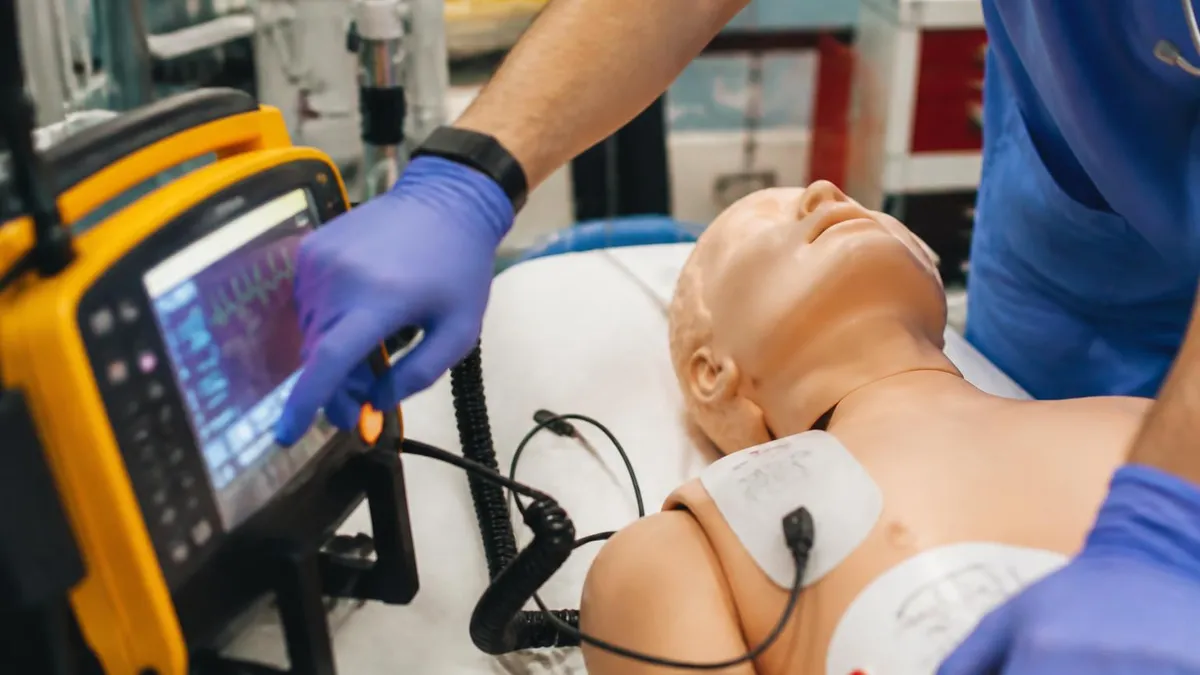
After you finish the online portion, you schedule a one-to-two-hour skills session at an AHA Training Center near you. The instructor watches you run an airway, defibrillator, and team-leader scenario, then signs off.
You receive a true AHA eCard the same day or within a week. Total cost runs $295 to $345 depending on the training center, and the price is often slightly lower for renewal than for initial certification.
Compared to a traditional in-person ACLS course, you save six to eight hours of classroom seat time. Compared to ACLS Medical Training, you spend an extra $130 and one extra in-person hour — and you get a card that works everywhere.
For most working clinicians, that math is obvious. The same hybrid approach works beautifully for acls recertification, which is shorter at the in-person stage. Renewal HeartCode often wraps up in a single afternoon end-to-end.
One detail that surprises first-time buyers: the AHA's eCard system lets your employer's credentialing office verify your card in real time using your unique eCard code. There is no waiting for a paper card in the mail, no scanning a faded wallet photo, no "can you email me a copy?" back-and-forth.
That instant verifiability is a structural advantage no private online provider can match without re-engineering its entire issuance process. It is also why credentialing offices love AHA cards — the cards integrate cleanly with their internal verification workflows and audit logs.
If you are a manager responsible for credentialing your own staff, HeartCode is also the easiest course to recommend across a team. You can buy bulk seats, distribute the cognitive portion, and book group skills sessions at an AHA Training Center. The cost-per-head usually drops below $295 for groups of five or more.
Compared to coordinating five separate ACLS Medical Training purchases and hoping each one is accepted by HR, the bulk HeartCode path is dramatically less work. That is the actual reason most healthcare employers steer staff to HeartCode rather than to private online providers.
Common Online ACLS Alternatives
Similar online-only model, similar pricing at $159 to $179 for ACLS. Same acceptance issues — broadly refused by hospitals, accepted by some dental and outpatient settings. The course quality is comparable to ACLS Medical Training but slightly less polished UI. No skills check. Two-year card validity.
6 Common Mistakes to Avoid
The single most common mistake. Accounts for the overwhelming majority of 'this company is a scam' complaints. Call credentialing first.
It is not. The AHA publishes algorithms publicly, and every provider works from the same source material. Content quality is comparable.
At least four companies use 'ACLS' in the name with similar online models. Read the URL, check BBB, verify which you are buying from.
If your card is days from expiring, do not gamble on online and hope. Grace periods are measured in days. Go straight to an AHA TC.
AHA eCard IDs verify in real time. Online-provider cards do not. That single technical gap drives most of the policy difference.
ACLS certification is non-transferable. Each card is tied to the registered person. Buying for a colleague or family member voids the card.
Final Verdict — Is It Worth $169?
For the right person, yes. For the wrong person, no — and the wrong person is the majority of people who land on the ACLS Medical Training homepage. The decision is binary and it hinges entirely on what your specific employer or licensure board accepts.
If you have a clear written confirmation that your workplace accepts the card, ACLS Medical Training is a legitimate option that saves time and money. If you do not have that confirmation, you are gambling $169 against a refund window that may or may not bail you out.
The smartest move for almost everyone reading this article is the same: spend the 60 seconds on the phone with your credentialing office first. If they say yes to ACLS Medical Training, buy it. If they say AHA only, book an AHA HeartCode course or in-person acls course and skip the online private provider entirely.
Either way, do not rely on marketing copy or third-party reviews to make this decision. The only person whose opinion matters is the person who will look at your card during credentialing.
Take ten minutes today, make the call, then choose with full information rather than hope. The cost of due diligence is zero. The cost of skipping it is $169 plus the fee for whatever course your employer actually accepts. That math is one-sided.
One closing thought: this review is honest about a real product that has helped a real subset of clinicians get their ACLS done conveniently. The criticism is about acceptance, not about the company's integrity. ACLS Medical Training is transparent about being a private provider, not the AHA.
If you read this far, you now have more information than the average buyer who clicks Add to Cart in under thirty seconds. Use that information well, and the decision becomes a non-event rather than a regret.
ACLS Questions and Answers
More ACLS Resources

ACLS Classes Near Me: How to Find AHA-Approved Courses Locally
ACLS Recertification: Full Renewal Process, Cost, and What To Do If Your Card Expired
AHA ACLS: American Heart Association Advanced Cardiovascular Life Support Guide
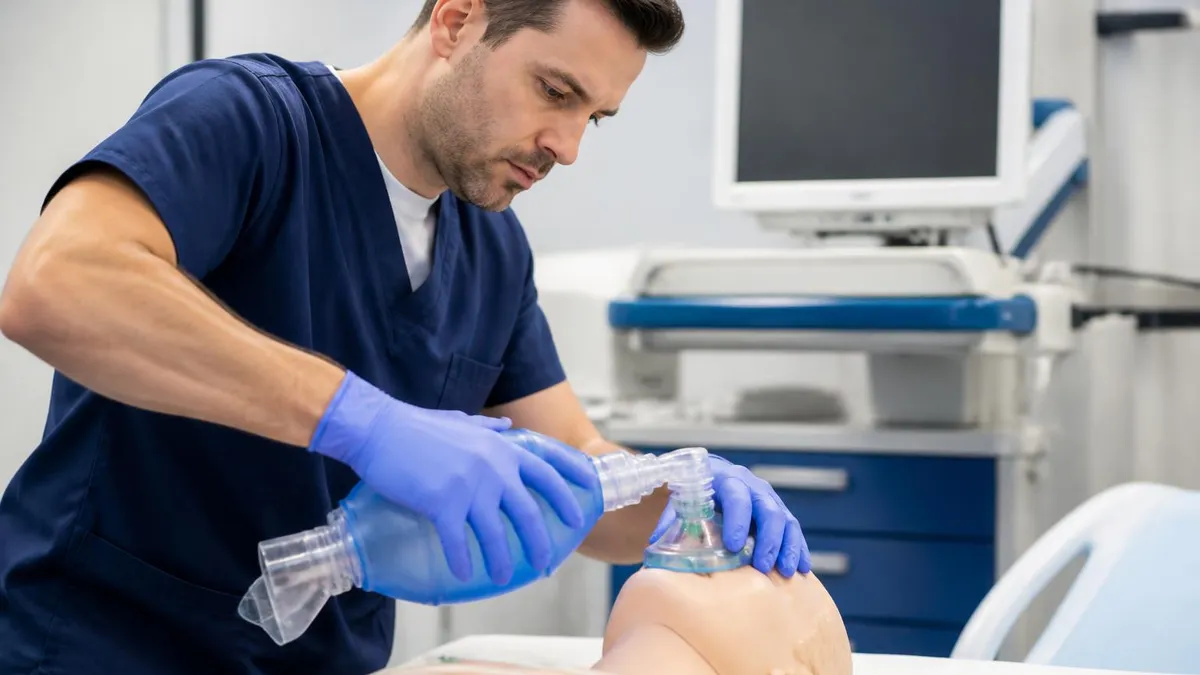
ACLS and PALS: Differences, Who Needs Both, and How to Get Certified

ACLS Renewal: Online vs In-Person, Cost, AHA Providers, and What to Do If Expired
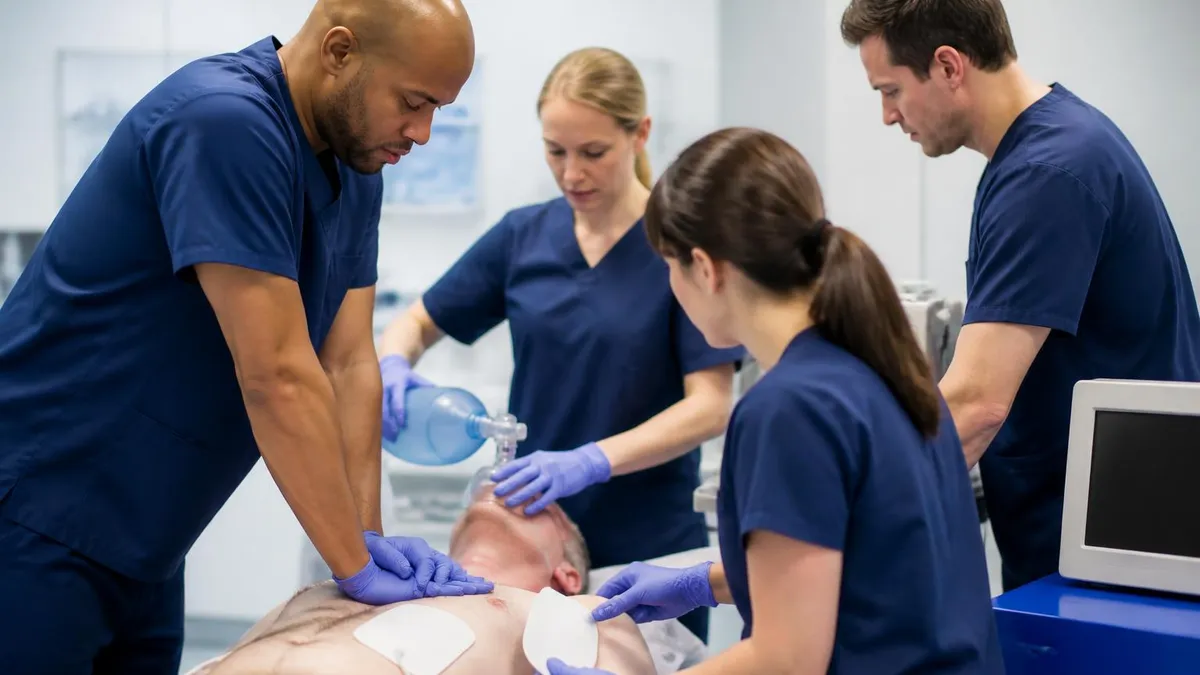
ACLS Course: Length, Cost, Format & Pass Tips (2026)
About the Author

Registered Nurse & Healthcare Educator
Johns Hopkins University School of NursingDr. Sarah Mitchell is a board-certified registered nurse with over 15 years of clinical and academic experience. She completed her PhD in Nursing Science at Johns Hopkins University and has taught NCLEX preparation and clinical skills courses for nursing students across the United States. Her research focuses on evidence-based exam preparation strategies for healthcare certification candidates.
Join the Discussion
Connect with other students preparing for this exam. Share tips, ask questions, and get advice from people who have been there.
View discussion (8 replies)