
What Is ACLS? Advanced Cardiovascular Life Support Explained 2026 October
📗 What is ACLS? Advanced Cardiovascular Life Support — AHA training in cardiac arrest, stroke, ACS algorithms. Who needs it, course length, cost, and

ACLS stands for Advanced Cardiovascular Life Support. It is the provider-level emergency resuscitation course developed and maintained by the American Heart Association (AHA) since 1985, and it is the certification hospitals expect from any clinician who might run, lead, or staff an adult cardiac arrest, peri-arrest, or stroke response.
If you've searched what is ACLS or what does ACLS stand for, the short answer is this: it is the next tier above basic CPR, designed for nurses, paramedics, physicians, respiratory therapists, and other hospital-based providers who need to do more than push on a chest. They have to read rhythms, push drugs, manage airways, lead teams, and make decisions in seconds.
ACLS goes beyond Basic Life Support (BLS) by teaching algorithm-driven decision making for ventricular fibrillation, pulseless ventricular tachycardia, asystole, pulseless electrical activity (PEA), symptomatic bradycardia, stable and unstable tachycardia, acute coronary syndromes, and acute ischemic stroke. The certification is recognized across virtually every U.S. hospital system and is a hiring requirement for emergency department, intensive care, step-down, dialysis, labor and delivery, cath lab, telemetry, and post-anesthesia care unit roles. If you want the long answer — what an ACLS provider actually does, how the course is structured, what gets tested, what it costs, and how to renew — keep reading.
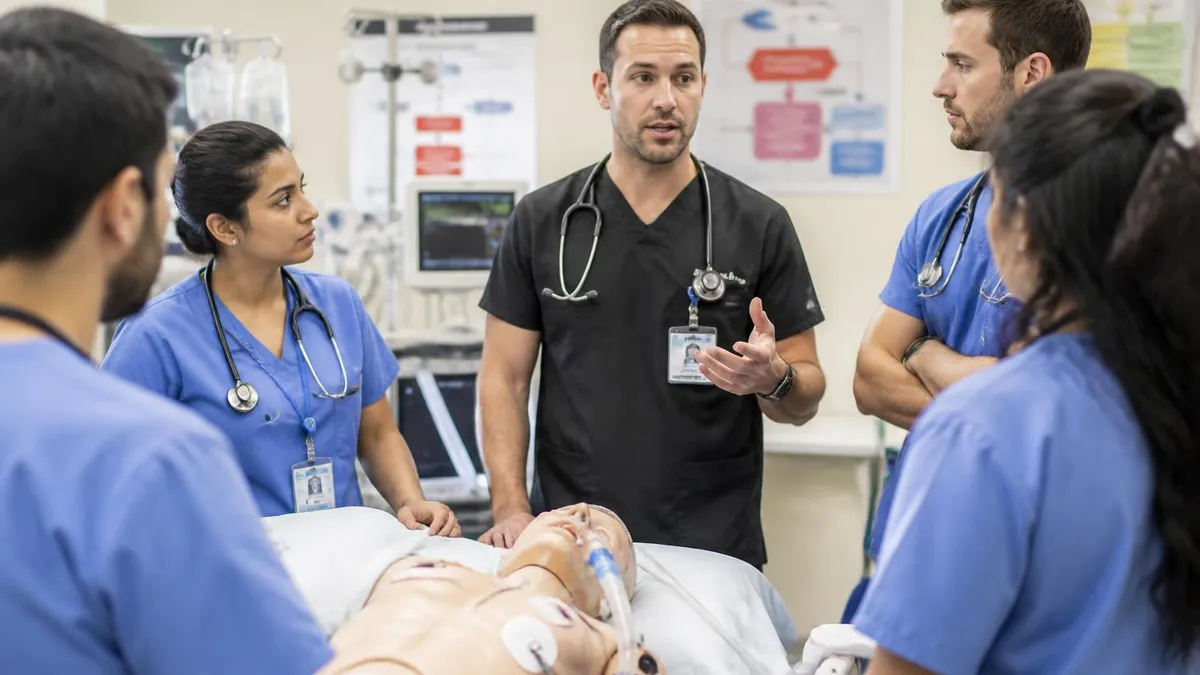
ACLS Certification at a Glance
Key Facts at a Glance
| Item | Value | Details |
|---|---|---|
| Initial course length | 12-14 hrs | |
| Card validity period | 2 years | |
| Written exam questions | 50 |
What ACLS Actually Is (Not Just the Acronym)
The acronym is simple — Advanced Cardiovascular Life Support — but the certification represents something more specific than the name suggests. ACLS is a standardized, evidence-based training program published by the American Heart Association and updated to reflect each five-year revision of the International Liaison Committee on Resuscitation (ILCOR) Consensus on Science with Treatment Recommendations.
Every provider who passes ACLS is trained to the same set of algorithms, the same drug doses, the same airway approach, and the same team-dynamics framework as every other provider on the planet who holds a current AHA card. That standardization is the whole point: when a 47-year-old in cardiac arrest rolls into a Texas emergency department, the team in the resuscitation bay should run the code identically to a team in Seattle, Atlanta, or Cleveland.
The course is built around three pillars. The first is high-quality BLS — compressions at 100 to 120 per minute, two inches deep, full chest recoil, minimal pauses, and a defibrillator on the patient within the first two minutes. ACLS is not a replacement for BLS; it sits on top of it, which is why every initial ACLS course begins with a BLS competency check. If your compressions are shallow or your pulse checks are slow, you will not pass the megacode no matter how well you know the drugs.
The second pillar is recognition and treatment of peri-arrest rhythms — the unstable bradycardias, the wide-complex tachycardias, the supraventricular tachycardias — that, untreated, will deteriorate into cardiac arrest within minutes. The third pillar is integrated post-cardiac arrest care: targeted temperature management, hemodynamic optimization, glucose control, and neuroprognostication. The course teaches all three so that providers can run the entire resuscitation arc, from "I don't like how this patient looks" through return of spontaneous circulation (ROSC) and ICU admission.
You should know that ACLS is not a license to practice. It is a competency credential. State nurse practice acts, hospital protocols, and medical staff bylaws determine what an individual provider is actually allowed to do during a code.
An ACLS-certified registered nurse in a community hospital may have standing orders to push epinephrine and amiodarone during an arrest; a nurse at a different facility with the same card may need a physician at the bedside before pushing the same drugs. The card proves you completed the AHA curriculum and passed the AHA assessment. It does not, on its own, expand your scope.
Four Sides of ACLS
Adult cardiac arrest (shockable and non-shockable rhythms), peri-arrest bradycardia and tachycardia, acute coronary syndromes, acute ischemic stroke, post-arrest care, airway management (bag-mask, supraglottic airways, endotracheal intubation handoff), high-quality CPR, defibrillation and synchronized cardioversion, transcutaneous pacing, and team dynamics. Pharmacology is heavy — epinephrine, amiodarone, lidocaine, atropine, adenosine, magnesium, dopamine, norepinephrine, vasopressin (historical), beta-blockers, calcium channel blockers, and fibrinolytics for stroke.
ACLS vs BLS vs PALS: Where ACLS Sits
A common point of confusion for new graduates is the relationship between BLS, ACLS, and PALS. They are sequential, complementary credentials — not alternatives. BLS (Basic Life Support) is the foundation: high-quality CPR, AED use, choking response, and infant/child/adult ratios. Every healthcare worker who steps onto a hospital unit needs it, from the unit secretary to the cardiothoracic surgeon. ACLS adds the adult algorithms, drugs, and team leadership.
PALS (Pediatric Advanced Life Support) is the equivalent for infants and children — different drug doses, different equipment sizes, different arrest etiologies (respiratory failure dominates in peds, not primary cardiac arrhythmia). For most acute care nurses, the recommended order is BLS first, ACLS within the first six months of bedside practice, and PALS in the first year if the unit treats any pediatric patients. The comparison of acls and pals matters for new hires choosing which to schedule first.
Beyond those three, several adjacent certifications exist. NRP (Neonatal Resuscitation Program) is the AAP/AHA course for delivery-room resuscitation of newborns. ITLS and PHTLS are pre-hospital trauma life support courses. STABLE is the post-resuscitation neonatal transport course. TNCC is the Emergency Nurses Association trauma course. None of these replace ACLS — they sit alongside it for specific patient populations.
Who Needs ACLS Certification
If you work anywhere that a patient might code, you probably need ACLS — or your employer will require it within your first 90 days. The list is longer than most new graduates realize. Registered nurses in adult emergency departments, intensive care units, coronary care units, neuro ICU, surgical ICU, cardiac step-down, telemetry, progressive care, dialysis units (both inpatient and freestanding), labor and delivery, postpartum (high-risk units), cardiac catheterization labs, interventional radiology, electrophysiology labs, and post-anesthesia care all need an active card.
Hospitalists, intensivists, emergency physicians, anesthesiologists, CRNAs, surgical residents, anesthesia assistants, and physician assistants in acute care roles are all required. Paramedics, critical care transport nurses, flight nurses, and flight paramedics need it. Respiratory therapists assigned to code teams need it. Hospital pharmacists who respond to codes need it. Increasingly, ambulatory surgery center nurses, GI endoscopy nurses, and outpatient cath lab staff need it.
You generally do not need ACLS as a med-surg nurse on a true low-acuity floor, a school nurse, an office-based primary care nurse, a hospice nurse, or a home health nurse — though some of these settings still encourage it for career mobility. Many nurses get ACLS within their first year of practice anyway, because it is a prerequisite for transferring to a higher-acuity unit and a hiring screen for travel contracts.
Pay-wise, the differential is modest but real: most acute-care nurses report a $2 to $5 per hour boost for ACLS plus PALS over BLS-only colleagues, and the certification opens the door to ED, ICU, and rapid-response team positions where shift differentials and overtime add up faster than on the floor. If you are looking for an in-person course in your area, acls classes near me walks through how to find AHA-approved training centers locally.
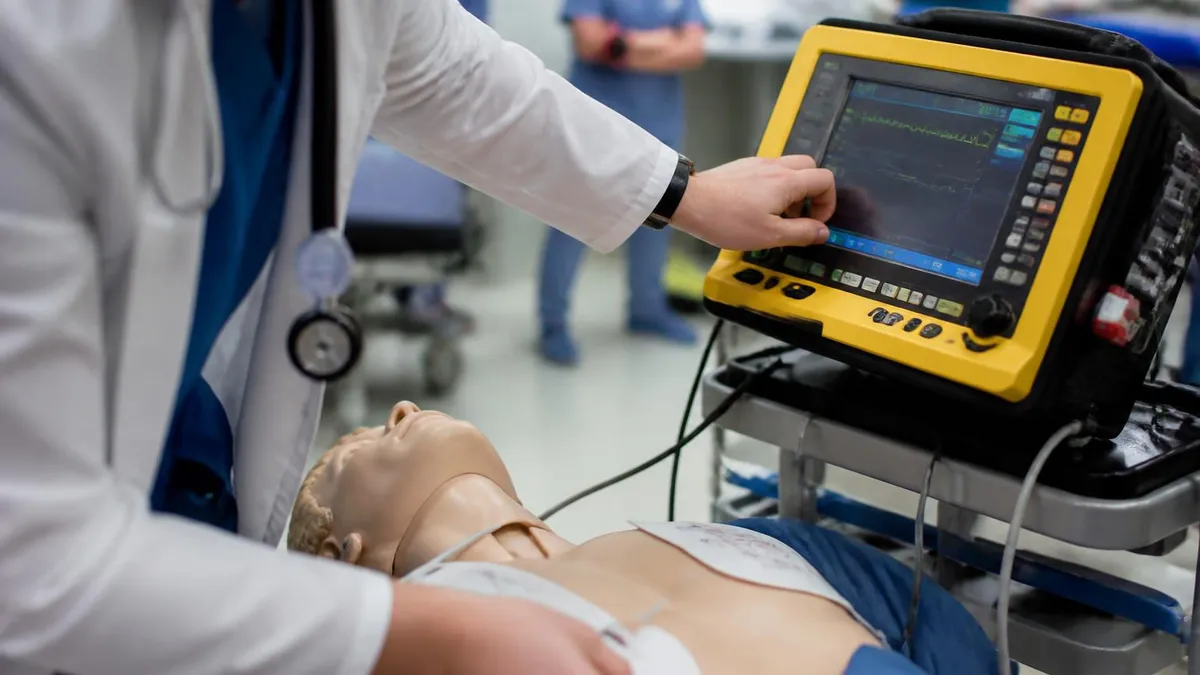
The 7 ACLS Algorithms You'll Master
The foundation. Compressions 100-120/min, depth 2 inches, ratio 30:2, AED on within 2 minutes, minimal pause time. Every ACLS scenario begins and ends with high-quality BLS.
The big one. Two branches: shockable (VF/pulseless VT — defibrillate, CPR, epi 1 mg q3-5 min, amiodarone 300 mg then 150 mg) and non-shockable (asystole/PEA — CPR, epi q3-5 min, search H's and T's).
Symptomatic HR <50. Atropine 1 mg IV push, may repeat q3-5 min to max 3 mg. If atropine fails: transcutaneous pacing, dopamine 5-20 mcg/kg/min, or epinephrine 2-10 mcg/min infusion.
Stable vs unstable branches. Unstable → synchronized cardioversion. Stable narrow regular → adenosine 6 mg then 12 mg. Stable wide → amiodarone or procainamide. Stable irregular AFib RVR → rate control.
12-lead ECG within 10 minutes. STEMI → cath lab in 90 minutes. Aspirin 162-325 mg chewed, nitroglycerin if no inferior MI/right ventricular involvement, morphine for refractory chest pain, oxygen if SpO2 <90%.
Last known well time. Cincinnati or NIHSS scale. Non-contrast head CT within 25 minutes of arrival, read within 45. tPA window 3-4.5 hours from symptom onset if no contraindications. Mechanical thrombectomy up to 24 hours for select LVO.
After ROSC: targeted temperature management 32-36°C for 24 hours, MAP >65 mmHg, glucose control 144-180 mg/dL, 12-lead and cath lab if STEMI, neuroprognostication delayed at least 72 hours.
These seven algorithms are the spine of the course, the megacode, the written exam, and the rest of your acute-care career. The acls bradycardia and tachycardia algorithms are the two you are most likely to encounter outside of an actual arrest — symptomatic bradycardia and unstable tachycardia happen on regular floors and step-down units constantly.
The acls vf vt algorithm is the highest-yield code algorithm because shockable rhythms have the best neurologically intact survival rates, so getting the timing right (CPR until the defibrillator is charged, shock, immediate resume CPR for 2 minutes, drug, shock, repeat) is the difference between a discharge home and a poor outcome.
The exam typically tests these algorithms three ways: (1) recognition — show a rhythm strip, ask what it is; (2) pathway — "this patient presents with X, what is your next action"; (3) drug doses — "the patient remains in VF after the second shock, what dose of which drug do you give and when." None of it is memorization for memorization's sake. Hospital codes happen fast and chaotic, and the ACLS framework is what keeps a team from improvising into a worse outcome.
Your BLS to ACLS to PALS Pathway
Step 1: Complete BLS Healthcare Provider
Step 2: Gain 3-6 months of bedside experience
Step 3: Complete the ACLS precourse self-assessment
Step 4: Sit the initial ACLS course
Step 5: Add PALS if pediatric exposure
Step 6: Renew every 2 years
Course Format, Length, and What Gets Tested
An initial ACLS course runs 12 to 14 hours total, usually split as one full day (8 a.m. to 8 p.m.) or two consecutive half-days. The structure is consistent across AHA-approved training centers because the AHA dictates the agenda. Morning session: BLS competency check, lecture review of cardiac anatomy and arrest physiology, rhythm recognition station (you sit at a monitor and call out 30 rhythms in 5 minutes). Mid-day: pharmacology station (drug doses for every algorithm scenario), airway station (bag-mask, supraglottic, ETT confirmation), team dynamics didactic.
Afternoon: megacode practice — small groups of 4-6 students rotate through simulated arrests with a manikin, a defibrillator, drug cards, and an instructor running the scenario. Late afternoon: 50-question written exam (passing score 84% — that's 42 correct), then individual megacode test where each student leads one full resuscitation scenario from arrival to ROSC or termination of efforts.
The acls course is intense but not designed to fail people. The pass rate at most AHA training centers runs in the 90 to 95 percent range for first-time test takers who actually completed the precourse work. The 5 to 10 percent who fail almost always do so on the megacode rather than the written exam, and they fail for the same reasons: shallow compressions during the BLS portion, hesitation when the rhythm changes, missing a drug dose, or not articulating the algorithm out loud.
Instructors are looking for verbal leadership — "This is VF, charging to 200 joules, clear, shock, resume CPR, epinephrine 1 milligram, prepare amiodarone 300 milligrams" — not silence. Most candidates who fail on the first attempt are offered a remediation session the same day or within a week. The acls medical training review covers what to expect from different providers if you are choosing between options.
The newer HeartCode ACLS option splits the course into two parts. The online cognitive portion (5-7 hours, self-paced, branching simulations) replaces the in-classroom lectures and rhythm/pharm/airway stations. You then attend a 1 to 2 hour in-person skills session at an AHA training center for the BLS check-off, hands-on megacode, and the same written and megacode exams. HeartCode is increasingly the standard format because it cuts in-person time substantially and accommodates shift workers. Cost is usually slightly higher ($295-$345 vs $200-$250 for traditional) because of the proprietary platform fee, but most providers prefer it.
What ACLS Actually Costs

Cost, Renewal, and the AHA eCard
Total out-of-pocket for an initial ACLS — assuming you pay for everything yourself — runs $250 to $400 depending on format, training center pricing, and whether the provider manual is included. Most U.S. hospitals pay for the course either as part of orientation or through a continuing education benefit. Renewal is cheaper ($150 to $200) because the course is shorter.
Some companies advertise "online-only ACLS" for $99 with no in-person skills check; these certifications are not valid for an AHA card, are not accepted by the vast majority of U.S. hospitals, and should be avoided unless your employer specifically pre-approves the issuing organization in writing. The acls recertification page goes through what to do if your card has lapsed or you are switching format types.
Since 2017, the AHA has moved entirely to digital eCards. You no longer receive a physical wallet card from the instructor — instead, within a few days of passing, you get an email from the AHA with a QR code linking to your eCard at heart.org. Employers verify by scanning the QR code or entering your eCard number on the AHA's verification portal. The eCard contains your name, course taken, issue date, expiration date, training center, and instructor name.
It cannot be modified or forged like a paper card could be, which is why hospital credentialing offices have embraced it. If you took the course at a non-AHA training center (American Red Cross, ASHI, the National Safety Council, or a third-party online vendor), you receive that organization's card instead — which may or may not be accepted by your employer. The safest bet is always an AHA-issued eCard from an AHA-approved training center. The full breakdown of aha acls standards covers what the AHA actually controls vs what training centers control.
Resuscitation Quality Improvement (RQI) is the newest renewal option. Instead of biennial recertification, RQI breaks training into quarterly micro-sessions — usually 10 to 15 minutes of online learning followed by a brief manikin-based skills check at a station inside your hospital. The program is contracted by hospital systems, not individuals, so you cannot enroll on your own.
Hospitals like RQI because it keeps skills fresher (quarterly practice vs once every two years) and reduces lost productivity from full-day recertification courses. As of 2026, several large systems — HCA, Ascension, AdventHealth, Kaiser, several VA networks — have moved most of their staff to RQI for both BLS and ACLS maintenance. The downside: RQI credentialing transfers between RQI-participating hospitals, but if you change to a non-RQI employer, you may need to complete a traditional ACLS course to regain a portable eCard.
ACLS = Advanced Cardiovascular Life Support, the American Heart Association's provider-level certification course covering adult cardiac arrest, peri-arrest rhythms, acute coronary syndromes, and stroke — required for ED, ICU, paramedic, and most hospital acute-care clinical roles, valid for two years, and renewable in-person, via HeartCode blended learning, or through RQI quarterly maintenance.
How to Prepare Before You Walk In
The single biggest predictor of passing ACLS on the first attempt is showing up with the algorithms already memorized. Instructors are clear about this: the course is not the place to learn the material. It is the place to demonstrate that you already know it, under simulated pressure, in a team setting.
The AHA provider manual arrives 4 to 6 weeks before the course (or is available as a digital download immediately when you register). Read the cardiac arrest, bradycardia, tachycardia, and ACS chapters thoroughly. Print or download the algorithm cards and quiz yourself on drug doses until you can recite them cold — epinephrine 1 milligram every 3 to 5 minutes; amiodarone 300 then 150; atropine 1 milligram up to 3 milligrams total; adenosine 6 then 12.
The AHA precourse self-assessment is mandatory and gates entry to the course. It is 30 questions covering rhythm recognition, pharmacology, and scenario decisions. You need 70% to print your completion certificate, which the instructor will ask for at sign-in. Most candidates take the assessment 3 to 5 times before passing, which is expected — the AHA designed it as a study tool, not just a gate.
Use the missed questions to identify weak topics. Then drill rhythm strips. Free certification guide resources and the acls practice test pdf downloads are the fastest way to expose yourself to high volumes of rhythm strips before sitting the real exam.
Your 7-Day ACLS Prep Checklist
- ✓Memorize epinephrine, amiodarone, atropine, and adenosine doses cold — no exceptions
- ✓Drill 100+ rhythm strips: VF, pVT, asystole, PEA, AFib, AFlutter, SVT, sinus brady, AV blocks
- ✓Walk through the cardiac arrest algorithm out loud, narrating every step including shock energies
- ✓Pass the AHA precourse self-assessment with at least 80% before course day
- ✓Review the ACS algorithm: aspirin dose, nitroglycerin contraindications, STEMI vs NSTEMI pathway
- ✓Review the stroke algorithm: last known well, tPA window, NIHSS basics
- ✓Practice the megacode flow with a study partner, taking turns as team leader
- ✓Bring a watch with a second hand for compression timing and pulse checks
- ✓Eat breakfast — the course is long, the megacode is stressful, and food breaks are short
Beyond the formal prep, two soft skills matter more than most candidates realize. The first is verbal narration. ACLS instructors are evaluating whether you can lead a team, and a team cannot follow a leader who is thinking silently. Practice talking through scenarios out loud — "Rhythm check, this is ventricular fibrillation, charging to 200 joules biphasic, everyone clear, shock delivered, resume compressions, epinephrine 1 milligram IV push, prepare amiodarone 300 milligrams." The second is closed-loop communication.
When you ask for a drug, the person giving the drug must repeat back the order and confirm administration: "Epinephrine 1 milligram given." Instructors deduct megacode points for orders given without confirmation. Watch a few code simulation videos before your course to internalize the rhythm of how a code actually sounds when it runs well.
Take care of administrative things in advance, too. Bring photo ID, your BLS card, your precourse self-assessment certificate, and a printed copy of your provider manual receipt or eBook access. Many training centers ask for these at sign-in and will not let you start the course without them. Wear comfortable, layered clothing — you will be on the floor doing compressions for parts of the day.
The room temperature is rarely correct for everyone. Bring a water bottle and a couple of snacks. acls training centers vary in how strict they are about timing, but most will not admit you after the first 30 minutes, so plan to arrive 15 minutes early. Once you pass, the acls precourse self assessment answers resources stay useful for the next two years when you start preparing for renewal.
One last note worth knowing: an ACLS card is not just a checkbox on a hiring form. The course teaches a way of thinking — systematic assessment, algorithm-driven decision making, and high-functioning team dynamics — that translates into every clinical situation you face afterward, code or not.
Nurses and paramedics consistently report that the way they think about an unstable patient changes after ACLS, that they're faster to recognize subtle deterioration, more comfortable advocating for a code response before the patient codes, and more confident leading a rapid response team. That clinical confidence is the real return on the $250 course fee.
Once your eCard is issued, list ACLS on your résumé under Certifications (include AHA, issue date, and expiration date), update your hospital credentialing file, add it to your nurse licensure compact records if applicable, and set a calendar reminder 6 months before expiration. Hospitals expect you to recertify before the card expires — letting it lapse usually means starting over with a full initial course rather than the abbreviated renewal. You can also unlock the next certification tier: acls and pals together is the standard combination for ED, ICU, L&D, and PACU roles, and many travel-nursing contracts require both.
ACLS Questions and Answers
Continue Learning

ACLS Algorithm: Master Cardiac Arrest, Bradycardia, and Tachycardia Protocols
ACLS and PALS: Differences, Who Needs Both, and How to Get Certified
ACLS Bradycardia and Tachycardia Algorithms: Complete 2026 Provider Guide
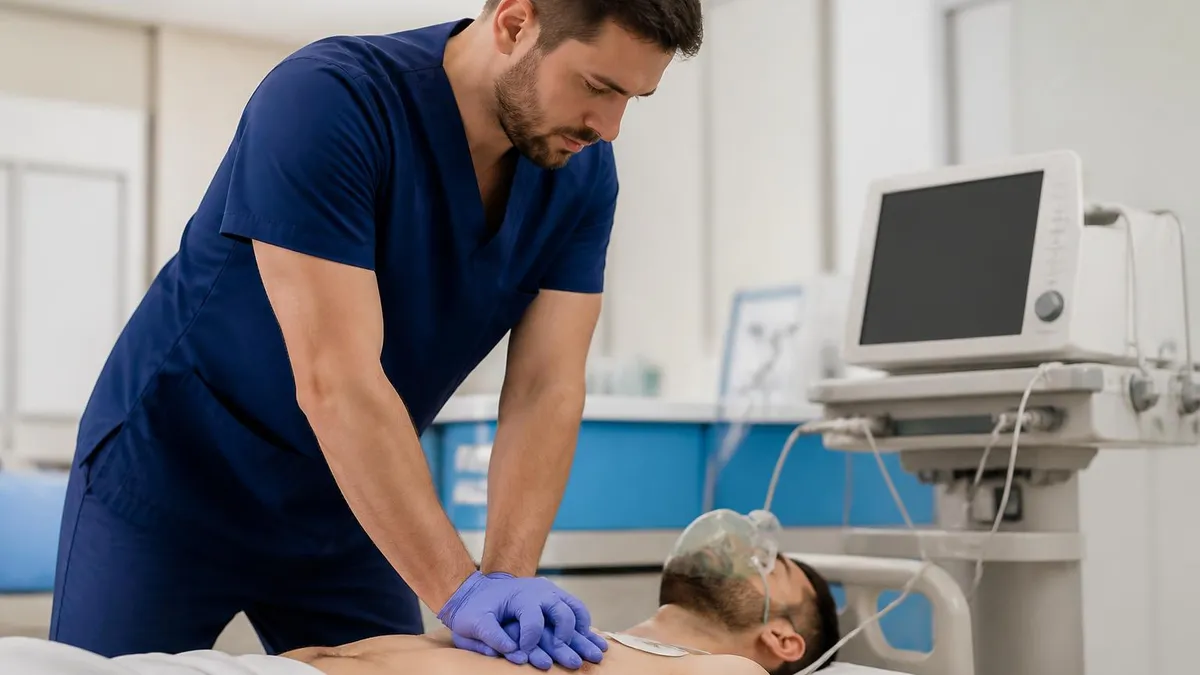
ACLS VF/VT Algorithm: Step-by-Step Cardiac Arrest Pathway
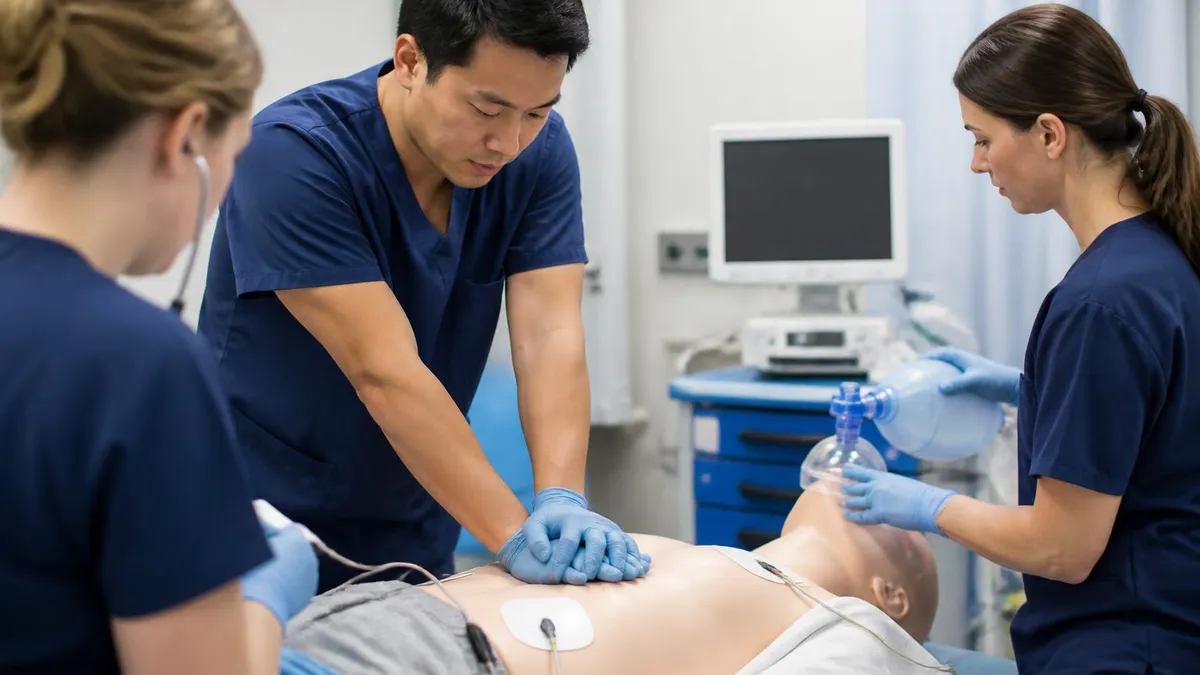
ACLS Recertification: Full Renewal Process, Cost, and What To Do If Your Card Expired
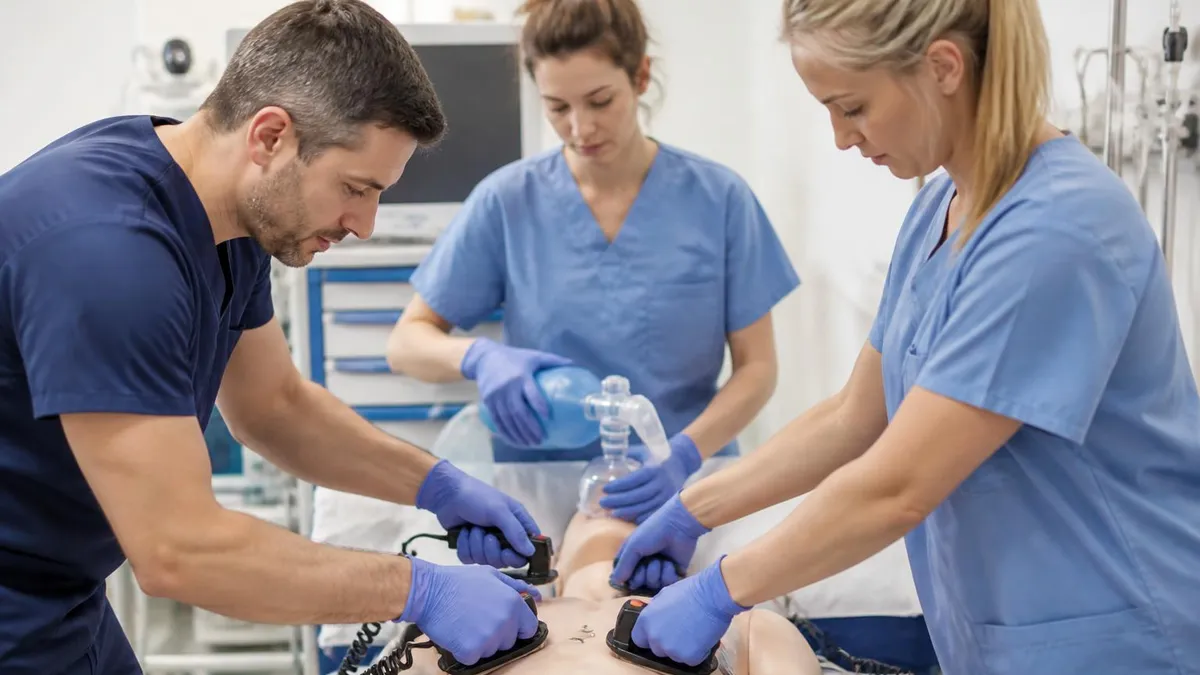
ACLS Classes Near Me: How to Find AHA-Approved Courses Locally
About the Author

Registered Nurse & Healthcare Educator
Johns Hopkins University School of NursingDr. Sarah Mitchell is a board-certified registered nurse with over 15 years of clinical and academic experience. She completed her PhD in Nursing Science at Johns Hopkins University and has taught NCLEX preparation and clinical skills courses for nursing students across the United States. Her research focuses on evidence-based exam preparation strategies for healthcare certification candidates.
Join the Discussion
Connect with other students preparing for this exam. Share tips, ask questions, and get advice from people who have been there.
View discussion (8 replies)