
ACLS Classes Near Me: How to Find AHA-Approved Courses Locally 2026 October
Find ACLS classes near you. Compare AHA Training Centers, costs, formats (Initial, Renewal, HeartCode), prep tips, and exam day requirements. 🆕
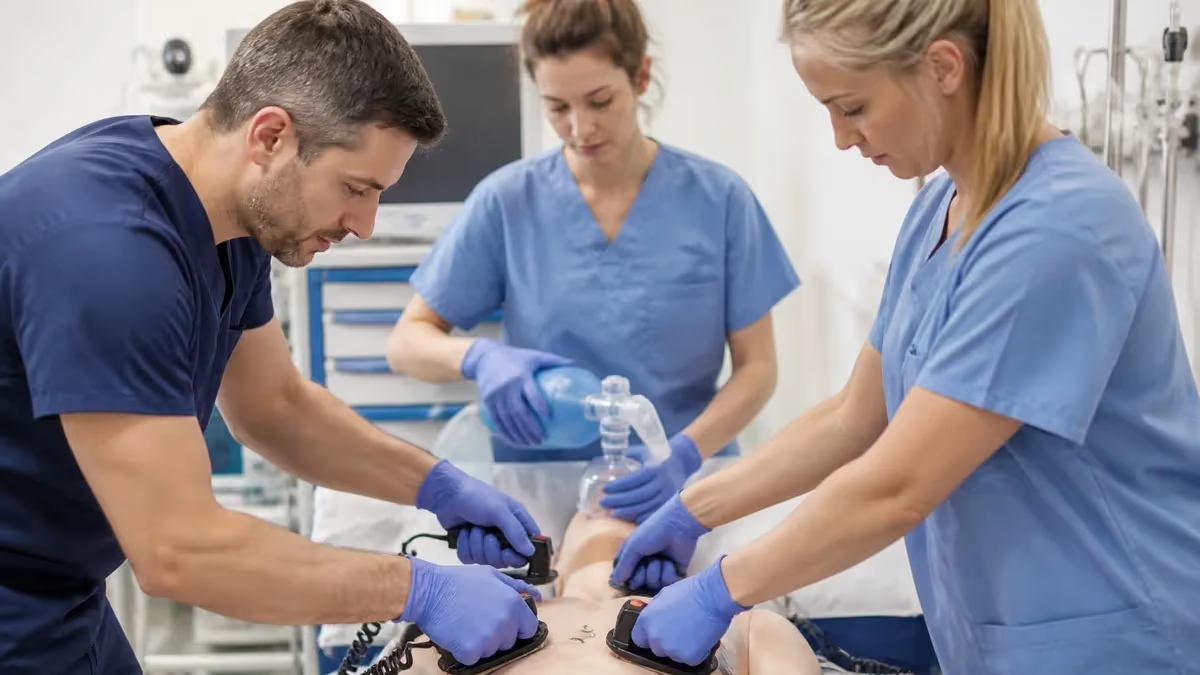
ACLS Classes Near Me: How to Find AHA-Approved Courses Locally
Searching for acls classes near me usually means one thing: you need an Advanced Cardiovascular Life Support card fast, and you want a course that the American Heart Association (AHA) recognizes when your hospital, agency, or school checks your credentials.
The good news is that AHA-aligned ACLS classes run in nearly every metro area in the United States — in hospital education departments, community colleges, EMS academies, private training centers, and even fire stations after hours. The not-so-good news is that not every class you see online is legitimate, and choosing the wrong provider can cost you a job offer if your employer rejects the card.
This guide walks you through the entire process: what ACLS actually is, who needs it, how to compare the Initial Provider course versus Renewal versus HeartCode, where to look for genuine AHA classes in your ZIP code, and what they cost. If you also want to start drilling questions before class, jump to our acls course overview or grab the free acls practice test pdf for offline review.
ACLS is the AHA-developed certification for healthcare providers who manage cardiac arrest, peri-arrest, and acute cardiovascular emergencies. It builds on Basic Life Support (BLS) and adds advanced airway, IV pharmacology, rhythm interpretation, and team leadership. Most U.S. hospitals require an active ACLS card for nurses, paramedics, MDs, DOs, PAs, respiratory therapists, and many ICU pharmacists.
The card is valid for two years, after which you renew either in-person or through the blended HeartCode pathway. The AHA periodically updates its guidelines (most recently in late 2025), so even seasoned providers benefit from a true refresher rather than just a stamp. Reviewing aha acls standards before class will make the lectures feel familiar instead of overwhelming.
If you are still deciding whether you need ACLS at all, or whether BLS plus PALS would be enough, the short answer is straightforward. Any clinician who runs codes, works in critical care, ED, telemetry, cath lab, OR, recovery, or pre-hospital ALS will need it.
Travel nurses almost always need it before their first shift. Newly hired ICU and ED nurses are usually given 60 to 90 days to complete it. Read on for the fastest way to lock down a seat in a class that actually counts. We have helped thousands of providers prep for their megacode and pass on the first attempt — the patterns are predictable once you know what instructors watch for.
Quick facts before you book a class
- Issuing body: American Heart Association (AHA)
- Card validity: 2 years
- Initial course length: 12–14 hours (typically split across 1–2 days)
- Renewal course length: 5–6 hours (single day)
- Typical cost: $150–$300 depending on city, format, and whether your employer pays
- Prerequisite: Current BLS Provider card recommended (required by many Training Centers)
- Pre-class assessment: AHA Precourse Self-Assessment, 84%+ required
- Skills check: Mandatory in-person skills session and megacode for AHA card
5 Ways to Find ACLS Classes Near You
- How: ZIP code search at heart.org/CourseFinder
- Best for: Verifying a class is AHA-aligned
- Pro tip: Filter by 'Classroom' or 'Blended' before booking
- How: Call your local hospital's Center for Clinical Excellence or Staff Development
- Best for: Working clinicians and new hires (often free)
- Pro tip: Open to community providers if seats are available
- How: Search your county EMS agency or fire district training calendar
- Best for: Paramedics, EMT-Intermediates, flight crews
- Pro tip: Evening and weekend slots common
- How: Search 'continuing education + ACLS' on your local university site
- Best for: Nursing students and pre-PA applicants
- Pro tip: Often bundled with BLS and PALS at a discount
- How: Google 'ACLS class [your city]' — look for AHA Training Center badges
- Best for: Same-week scheduling, multiple weekly offerings
- Pro tip: Always confirm the eCard is issued through AHA, not a knockoff
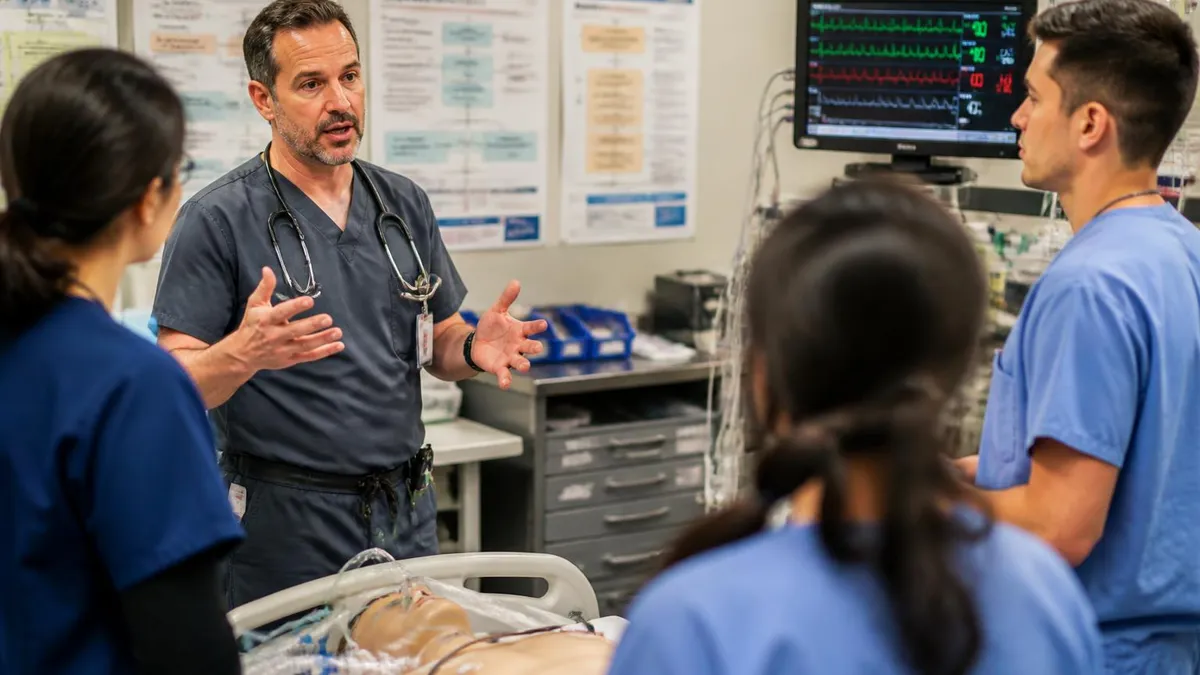
Compare Class Formats: Initial vs Renewal vs HeartCode
The Initial Provider course is designed for clinicians who have never held an ACLS card or whose card has expired beyond the renewal window. It runs 12 to 14 hours and is usually delivered across two days — for example, 8 hours on Saturday and 6 hours on Sunday. You will spend roughly half the time in lectures and case discussions covering BLS review, airway management, the cardiac arrest algorithm, bradycardia, tachycardia with a pulse, acute coronary syndromes, stroke, and post-arrest care. The remaining time is split between learning stations and the megacode skills test, where you lead a simulated resuscitation while managing rhythm interpretation, drugs, airway, and the team. Expect to pay $200 to $300, and plan for a 50-question written exam at the end.
Who Needs ACLS Certification?
ACLS is required for most U.S. clinicians who could realistically be called to a code. That includes registered nurses in ICU, ED, telemetry, cath lab, PACU, OR, and many med-surg units. Advanced practice providers such as nurse practitioners and physician assistants in acute care or emergency settings need it too. Physicians (MDs and DOs) in hospital-based specialties — internal medicine, emergency medicine, anesthesiology, cardiology, and critical care — universally hold it.
Paramedics and other ALS pre-hospital providers carry it as a license requirement. Respiratory therapists who respond to rapid response and code calls must keep it active. Pharmacists who staff ICU and ED satellites are increasingly required to maintain it as well, especially in level-one trauma centers. Pediatric and obstetric providers often also carry PALS or NRP in addition to ACLS, but ACLS remains the baseline adult emergency credential.
Travel nurses and locum providers face the strictest verification. Agency credentialing teams will not let you start an assignment without a current card uploaded and verified. Plan your booking 4 to 6 weeks ahead if you want flexibility on date and Training Center choice. New graduates entering ICU and ED residencies usually have 60 to 90 days from hire to complete the course, paid for by the employer.
What You Will Learn in Class
The AHA curriculum is built around algorithms — flowchart-style decision trees that a provider follows during a real resuscitation. Expect deep coverage of the adult cardiac arrest algorithm for shockable rhythms like ventricular fibrillation and pulseless ventricular tachycardia, and non-shockable rhythms like asystole and pulseless electrical activity. The bradycardia algorithm covers symptomatic slow heart rates and the role of atropine, transcutaneous pacing, and dopamine or epinephrine infusions.
The tachycardia algorithm splits into stable (consider adenosine, beta blockers, or calcium channel blockers) and unstable (synchronized cardioversion). You will also cover the acute coronary syndromes algorithm — recognizing STEMI versus non-STEMI, the door-to-balloon target, and aspirin, nitroglycerin, and oxygen choices. Suspected stroke gets its own algorithm with the FAST exam, last-known-well window, and tPA criteria. Post-cardiac arrest care covers targeted temperature management, hemodynamic optimization, and the 12-lead workup.
Hands-on stations focus on airway management — bag-mask ventilation, oral and nasal airways, advanced airway placement (supraglottic or endotracheal), and waveform capnography for tube confirmation and CPR quality monitoring. Take a few minutes with our acls algorithm review to walk into class already familiar with the decision points your instructor will drill.
How to Prepare Before You Show Up
The AHA expects you to arrive with the cognitive material already mastered. That means downloading the Provider Manual (or accessing the digital version), taking the AHA Precourse Self-Assessment, and passing with at least 84%. Print your certificate of completion to bring to class — most Training Centers will turn you away if you cannot produce it.
The self-assessment covers ECG rhythm recognition, pharmacology, and practical application of the algorithms. If your rhythm recognition is rusty, spend an evening drilling sinus rhythm, sinus tachycardia, atrial fibrillation, atrial flutter, supraventricular tachycardia, ventricular tachycardia, ventricular fibrillation, asystole, and the AV blocks. First, second-degree type I (Wenckebach), second-degree type II, and third-degree block all appear on the exam and in the megacode.
Pharmacology focus areas include epinephrine (1 mg IV/IO every 3 to 5 minutes during arrest), amiodarone (300 mg first dose, 150 mg second), lidocaine as an amiodarone alternative, atropine (1 mg every 3 to 5 minutes for symptomatic bradycardia), and adenosine (6 mg first push, 12 mg second). Knowing dose, indication, and timing without hesitation is the single biggest predictor of megacode success. Our acls precourse self assessment answers resource walks through the trickiest scenarios with explanations.
What ACLS Classes Cost in 2026
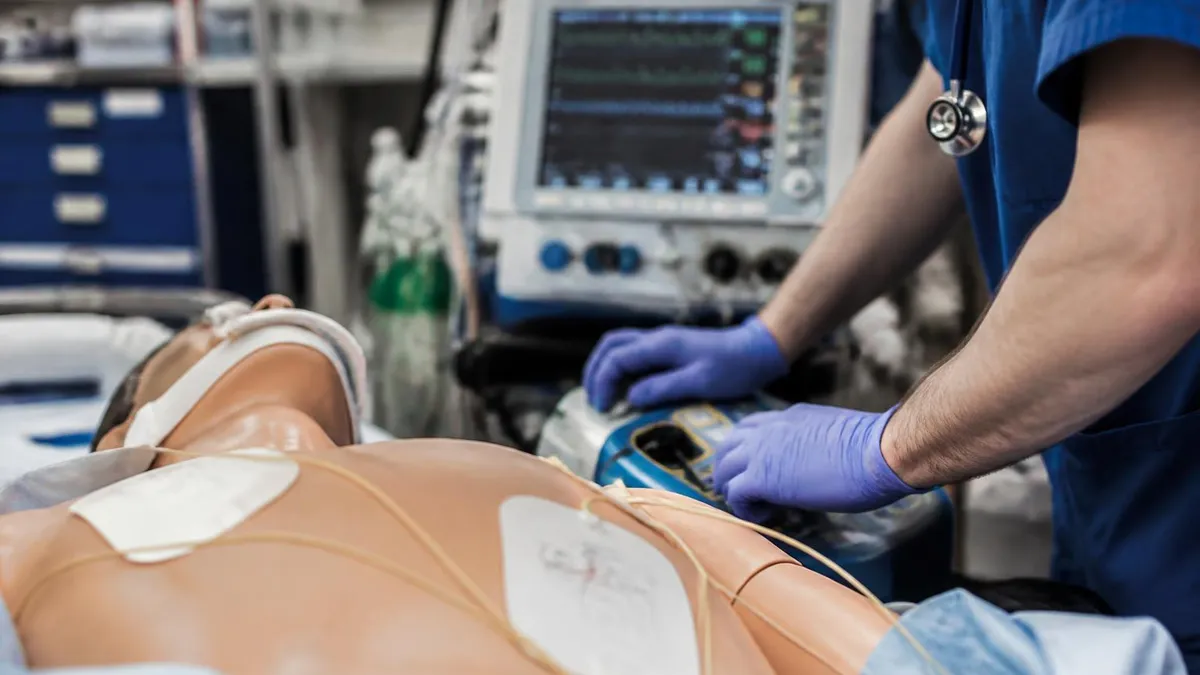
How Class Day Actually Runs
Most ACLS classes follow a similar rhythm. You arrive 15 minutes early, sign in, present your photo ID and BLS card, hand in your precourse certificate, and grab a seat. The instructor opens with a BLS skills check — high-quality chest compressions at 100 to 120 per minute, depth of at least 2 inches, full chest recoil, bag-mask ventilation, and AED use.
Pass that, and you move into lectures and case discussions for the morning. The instructor walks through each algorithm using video scenarios and stops to ask questions, so come ready to participate. After lunch, you cycle through learning stations: airway, IV/IO and drugs, defibrillation, and rhythm. Each station is roughly 20 to 30 minutes with a small group, hands-on with manikins and simulated equipment.
Late afternoon is dedicated to the megacode — a simulated code where you lead a team through a multi-rhythm scenario, calling for compressions, ventilations, IV access, drug doses, and rhythm checks while explaining your decisions. Pass the megacode and the written exam (84% or higher) and your AHA eCard is issued within a few days.
Online-Only ACLS: Legitimate or Not?
This is one of the most common questions we get from travel nurses and rural providers. Pure online ACLS — meaning no in-person skills check at any point — is not AHA-recognized. The AHA's official statement is that hands-on skills validation by a qualified instructor is required for every Initial and Renewal certification.
If a website offers you a fully online ACLS card for $99 in 90 minutes, walk away. Many U.S. employers will reject those cards outright. The legitimate blended path is HeartCode ACLS, which combines online cognitive learning with a mandatory in-person skills session.
If you train for a Canadian, Australian, or international employer, check their specific requirements — some accept different programs. For more on training pathway choices, see acls training programs side by side, and pick the one matched to your role. The cost of a single rejected card is far higher than a few extra hours of due diligence up front.
How to Verify a Class Is Actually AHA-Aligned
Anyone can call themselves a CPR instructor. The AHA designation that matters is Training Center. A Training Center is contracted with the AHA, follows their curriculum, uses their materials, and is authorized to issue AHA eCards. Before paying, ask three questions: Is the class taught by an AHA-aligned ACLS Instructor? Will I receive an AHA eCard at completion? What is the Training Center ID?
Any legitimate provider answers all three quickly. You can verify a Training Center exists by searching the AHA's Atlas tool. If the answer is vague or the provider issues a card from a different brand (some are fine for non-clinical roles, but most hospitals require AHA specifically), keep looking. Hospital credentialing offices increasingly run automated checks against the AHA Atlas registry, so a fake or look-alike card will be caught before you finish onboarding.
Our breakdown of acls certification options includes a checklist for vetting providers and the card verification rules used by hospital credentialing offices.
Big-Metro Tips: Chicago, NYC, LA, San Diego, Denver, Milwaukee
Major metros have dozens of ACLS classes running every week, but the best seats fill 2 to 3 weeks out. In Chicago, the major hospital systems (Northwestern, Rush, UChicago) run open community classes through their education departments — usually cheaper and tightly run. Look at the Illinois Hospital Association calendar for additional bulk-discount classes that accept community providers.
In New York City, both public hospital systems (NYC Health + Hospitals) and private providers (NewYork-Presbyterian, NYU Langone) host frequent sessions. Ferry-accessible Training Centers on Long Island and in New Jersey offer same-week openings when Manhattan fills up. Brooklyn and Queens hospital-based Training Centers usually have lower prices than Manhattan but require checking their calendar directly because they rarely advertise on the AHA finder.
Los Angeles is a heavy market because of the size of the nursing workforce. Private Training Centers in Long Beach, Pasadena, and the Valley often have HeartCode skills slots within 48 hours. Orange County and the Inland Empire are great backups when LA is fully booked — drive time of 30 to 45 minutes can save you a week of waiting.
San Diego sees high demand around Naval Medical Center and Scripps; check community college Continuing Ed schedules first. Denver and Milwaukee both have university-hospital partnerships that include open community seats, and pricing tends to be 10 to 15 percent below coastal cities. Smaller cities in Texas (San Antonio, Austin) and Florida (Tampa, Jacksonville) also have abundant supply year-round.
ACLS Exam Day Prep Checklist
- ✓Photo ID (driver's license, hospital badge, or passport)
- ✓Current BLS Provider eCard or printed copy (most Training Centers require it)
- ✓Precourse Self-Assessment completion certificate (84%+ passing score)
- ✓ACLS Provider Manual (paper or digital — instructor will tell you which)
- ✓Comfortable scrubs or athletic clothes — you will kneel during skills check
- ✓Closed-toe shoes (no sandals or open footwear at compression stations)
- ✓Watch with seconds (rate timing for compressions and meds)
- ✓Water and a light snack — full days have only short breaks
- ✓Notebook and pen for algorithm flow-through
- ✓Arrive 15 minutes early to check in and avoid late-arrival policies
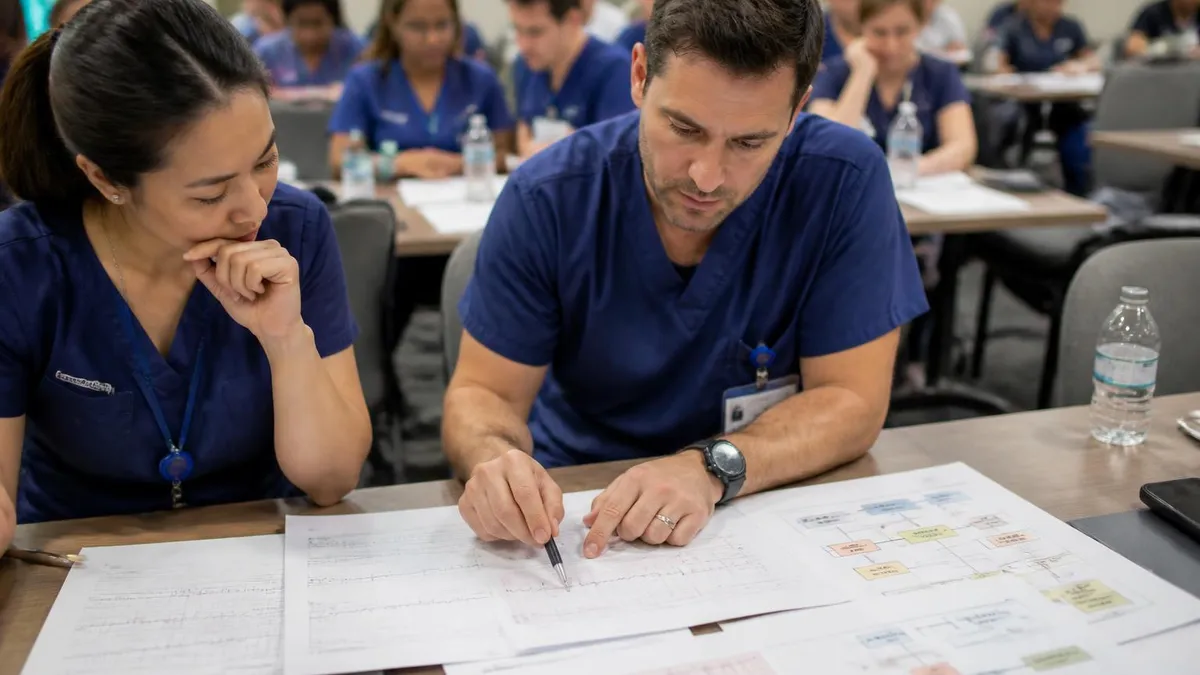
Travel Nurses, New Grads, and Career Switchers
If you are an incoming travel nurse, the cleanest path is HeartCode: complete the online portion before your contract starts, then book the skills check in your assignment city the day you arrive. This avoids losing a precious shift to a full Saturday-Sunday Initial class.
If you are a new grad starting your first ICU or ED job, ask your unit educator on day one — most teaching hospitals provide ACLS during your orientation block at no cost. They typically schedule it within the first 30 to 60 days, so you do not need to scramble independently. Career switchers (paramedic to RN, RN to PA) should plan ACLS as part of their clinical onboarding, not as a separate expense.
If you need a refresher of the underlying advanced cardiovascular life support principles, see acls advanced cardiovascular life support. When renewal time rolls around, our acls renewal page compares in-person, HeartCode, and bridge options side by side.
After Class: Getting and Keeping Your eCard
The AHA shifted years ago from paper cards to eCards. After you pass, the Training Center issues your eCard through the AHA Atlas system, usually within 1 to 7 business days. You will receive an email with a claim link — click it, set up your account, and download or print the card.
Many hospital credentialing systems now pull eCards directly from Atlas, so you may not even need to upload it. The card is valid for exactly 2 years from the date of the course. Set two calendar reminders: one at 90 days before expiration (so you can book renewal), and one at 30 days before (so you do not let it lapse).
If you do let it lapse beyond the 30-day grace, you will need the full Initial course again — costing you an extra day off work and roughly $100 more. For ongoing question review between renewals, dedicated practice test libraries are updated each year with the current AHA guidelines. Many providers find that practicing 10 to 15 questions a week keeps their recall sharp and makes renewal class a true refresher rather than a stressful re-learn.
Finally, a word on continuing education credits: most state nursing and physician boards count ACLS hours toward CE requirements. Save your eCard PDF and a copy of the course completion record to upload at license renewal. Some employers also bundle ACLS hours into clinical ladder credit, which can mean a real raise — ask your unit educator whether your hospital recognizes the hours for advancement.
ACLS by the Numbers
Key Facts at a Glance
| Item | Value | Details |
|---|---|---|
| Initial class length | 12–14 hrs | |
| Renewal class length | 5–6 hrs | |
| Card validity | 2 years | |
| Passing written exam score | 84% | |
| Precourse assessment passing | 84%+ |
In-Person Classroom vs HeartCode Blended
- +In-person classroom delivers immediate instructor feedback on every skill
- +Group case discussions build pattern recognition faster than solo study
- +Single-day completion — walk out with everything done and your card on the way
- +Great for visual and kinesthetic learners who struggle with online video
- +Often cheaper at hospital-affiliated Training Centers
- −Requires a full Saturday-Sunday (Initial) or full Saturday (Renewal)
- −Travel time to the Training Center adds 30 to 90 minutes each way
- −Less flexibility — if you miss a session, rescheduling is hard
- −HeartCode lets you pace the cognitive material at home over days
- −HeartCode skills slots are 2 to 3 hours, far easier to fit around shifts
Your Path From Search to Certification
Week 0: Decide format
Week 0: Find a Training Center
Week 0: Book and pay
Weeks 1–2: Self-study
Days before class: Precourse Assessment
Class day: Skills + megacode
Class day: Written exam
1–7 days after: eCard issued
ACLS Questions and Answers
Related ACLS Articles

ACLS Certification: How to Get Certified, Recertified & Stay Current
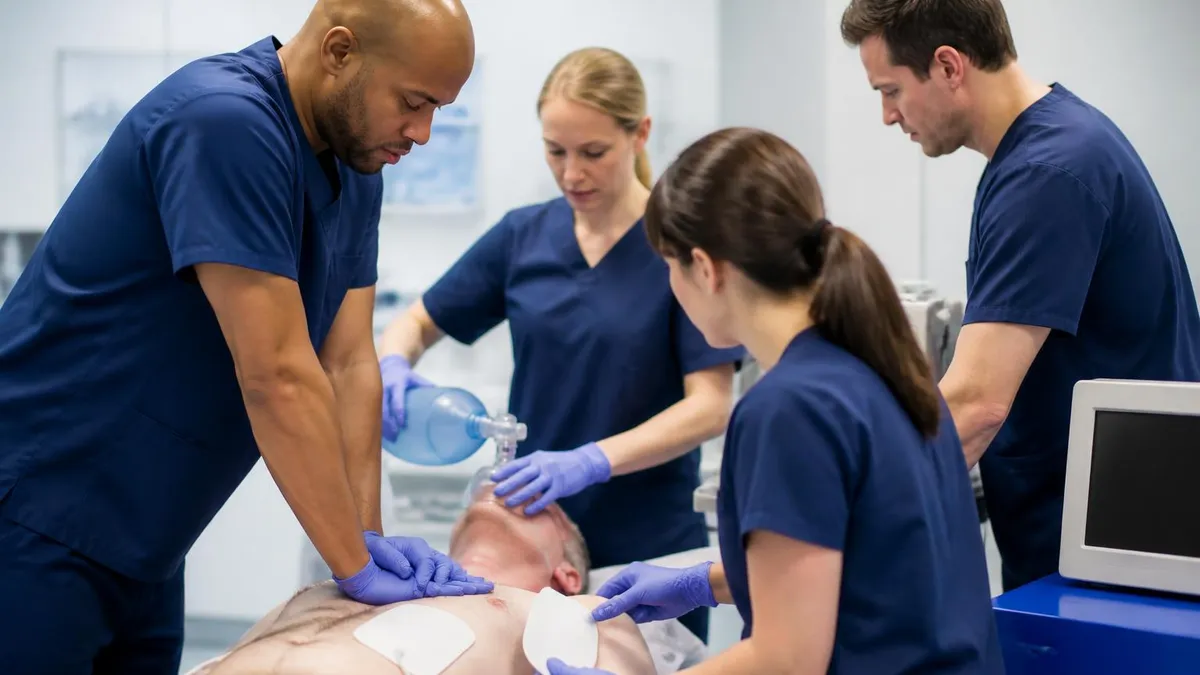
ACLS Course: Length, Cost, Format & Pass Tips (2026)

ACLS Renewal: Online vs In-Person, Cost, AHA Providers, and What to Do If Expired
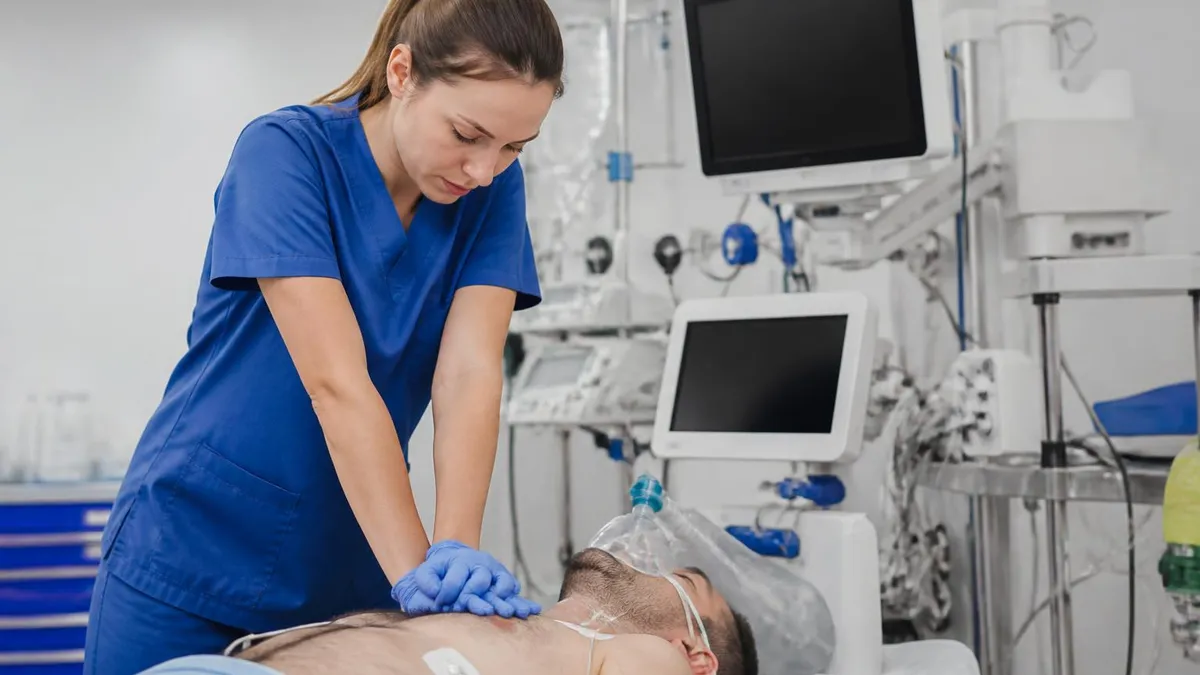
AHA ACLS: American Heart Association Advanced Cardiovascular Life Support Guide
ACLS Algorithm: Master Cardiac Arrest, Bradycardia, and Tachycardia Protocols
ACLS Precourse Self-Assessment Answers — Your Complete 2026 Study Resource
About the Author

Registered Nurse & Healthcare Educator
Johns Hopkins University School of NursingDr. Sarah Mitchell is a board-certified registered nurse with over 15 years of clinical and academic experience. She completed her PhD in Nursing Science at Johns Hopkins University and has taught NCLEX preparation and clinical skills courses for nursing students across the United States. Her research focuses on evidence-based exam preparation strategies for healthcare certification candidates.
Join the Discussion
Connect with other students preparing for this exam. Share tips, ask questions, and get advice from people who have been there.
View discussion (8 replies)