
ACLS VF/VT Algorithm: Step-by-Step Cardiac Arrest Pathway 2026 October
Master the ACLS VF/VT algorithm: ⏳ shock-CPR cycles, epinephrine 1mg q3-5min, amiodarone 300mg, reversible H's and T's, and ROSC care.
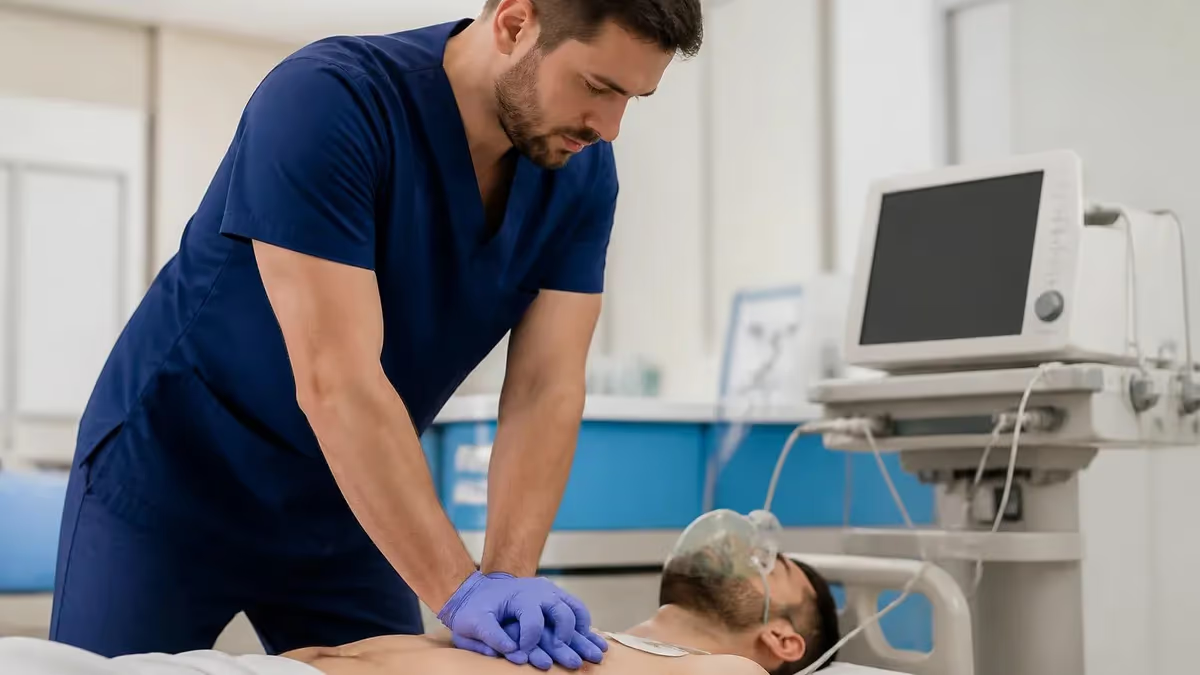
ACLS VF/VT Algorithm: Complete 2026 Provider Guide
The ACLS VF/VT algorithm is the shockable arm of the Adult Cardiac Arrest Algorithm, and it is the pathway you reach for whenever a pulseless patient is in ventricular fibrillation or pulseless ventricular tachycardia. It is the highest-yield protocol on the AHA provider exam and the most common megacode scenario, because these two rhythms account for a large slice of in-hospital arrests and they are the only arrest rhythms where defibrillation actually changes the outcome.
This guide walks the algorithm one beat at a time. We will compare VF and pulseless VT against the non-shockable side (asystole and PEA), break down each shock-CPR cycle, time-stamp every drug dose, and pull apart the H's and T's so you can recall them under stress. The acls algorithm family includes multiple branches, and the VF/VT branch is the one most likely to come up in your simulation lab.
If you also need to brush up on bradycardia and tachycardia with a pulse, those are separate rhythm disturbances on a different track. We already covered them in detail in our acls bradycardia algorithm walkthrough. Make no mistake about scope: those algorithms treat unstable rhythms in a patient who still has a pulse. The VF/VT algorithm is for a patient whose heart has electrically stopped pumping. Different problem, different drugs, different priorities.
The single highest-impact intervention for VF and pulseless VT is early, high-quality CPR paired with rapid defibrillation. Every other element of the algorithm — vasopressors, antiarrhythmics, advanced airway, capnography — only buys time until the next shock. Keep that hierarchy in mind, because it is the difference between passing the megacode and failing it. The acls precourse self assessment answers resource has dozens of practice rhythms to test your eye before you walk in.
What VF and Pulseless VT Look Like and Why They Are Lumped Together
Ventricular fibrillation is chaotic, totally disorganized electrical activity. On the monitor, you see an irregular, undulating waveform with no identifiable QRS, no P waves, and no organized rate. The myocardium is quivering rather than contracting. There is zero cardiac output. The patient is dead unless someone shocks them within minutes. VF is usually classified as coarse (large amplitude) or fine (low amplitude) — coarse responds better to defibrillation, and fine VF can deteriorate to asystole if CPR is delayed.
Pulseless ventricular tachycardia looks completely different on the monitor. You see a wide, regular, fast QRS complex, often 150 to 250 beats per minute, with a uniform morphology (monomorphic) or shifting morphology (polymorphic, including Torsades de Pointes). The patient has no detectable pulse despite the apparently organized rhythm. The electrical pattern looks productive, but the ventricle is firing so fast that it cannot fill or empty effectively.
The reason both rhythms share one algorithm is simple: they are both shockable. Defibrillation depolarizes the entire myocardium simultaneously and gives the sinus node a chance to retake the pacemaking role. CPR meanwhile keeps perfusion going to the brain and coronary arteries between shocks, which is what makes the next shock more likely to succeed. The aha acls 2020 guidelines (still current through 2025 with focused updates) hammer this two-step logic relentlessly.
Shockable rhythms (use VF/VT algorithm): Ventricular fibrillation, pulseless ventricular tachycardia. Defibrillate immediately, then CPR.
Non-shockable rhythms (use asystole/PEA algorithm): Asystole, pulseless electrical activity. No shock. CPR + epinephrine + chase reversible causes.
Bottom line: The first 10 seconds of any cardiac arrest are about answering one question — is this rhythm shockable? Get it right and the algorithm choice is automatic.
Four Arrest Rhythms Side-By-Side
Ventricular Fibrillation — chaotic, irregular, no organized QRS. No pulse. Shockable. Treat with 120-200J biphasic shock + 2 min CPR + epi q3-5 min + amiodarone 300mg after the 2nd or 3rd shock. Coarse VF responds better than fine VF. Most common initial rhythm in out-of-hospital sudden cardiac death.

The 12-Step VF/Pulseless VT Algorithm
The AHA breaks the algorithm into discrete decision points, and the megacode evaluator scores you on hitting them in order. We will run through every step with realistic timing. Mentally rehearse this sequence — the patient is dying while you think, so muscle memory matters more than understanding.
Step 1: Recognize Arrest (0-10 seconds)
Confirm unresponsiveness by shouting and shaking the shoulders. Check breathing — absent or gasping (agonal) breathing counts as not breathing. Palpate the carotid pulse for no more than 10 seconds. If no pulse, call for help, request a defibrillator, and begin compressions immediately. Do not delay CPR while you locate equipment. Anyone with a free hand can run for the crash cart.
Step 2: Start High-Quality CPR
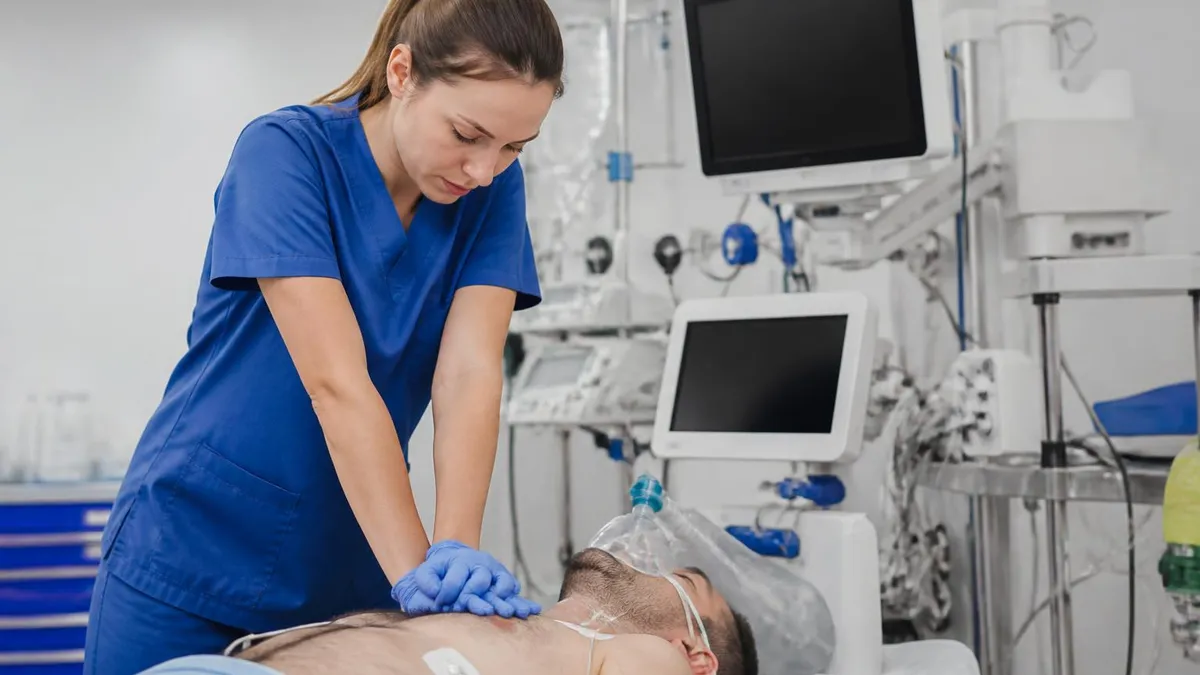
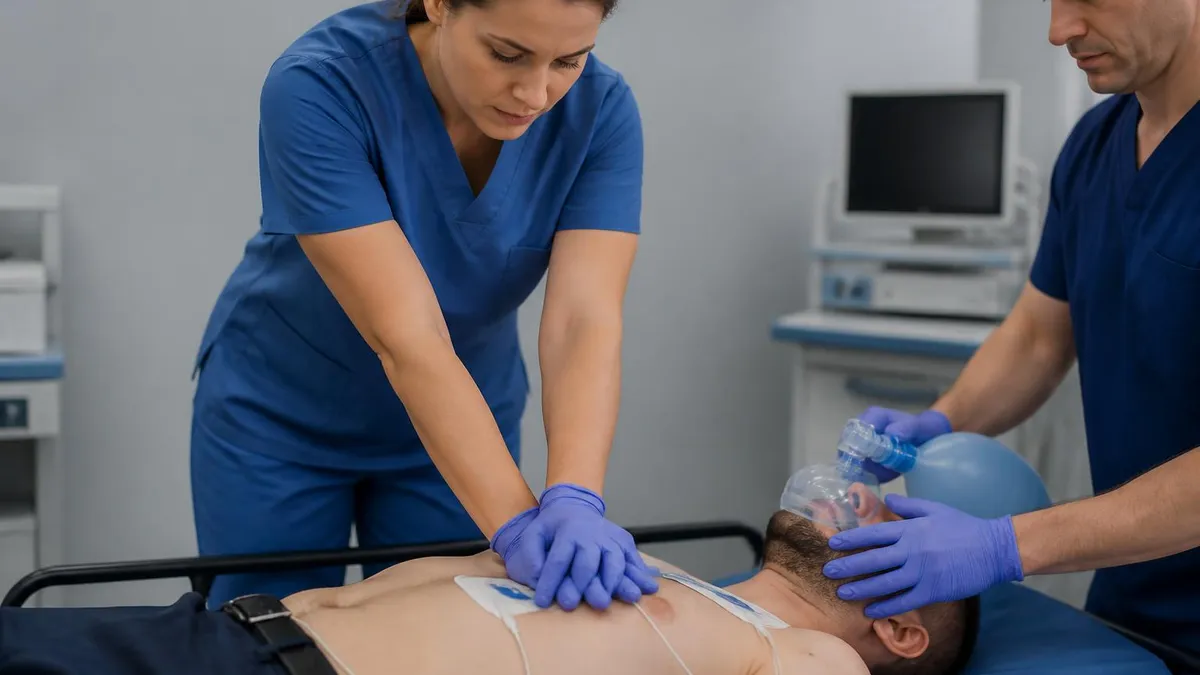
Compress the lower half of the sternum at 100-120 per minute, depth 2 to 2.4 inches (5-6 cm) in an adult, full chest recoil between compressions, and minimize interruptions. Ratio is 30:2 without an advanced airway. Switch the compressor every 2 minutes to fight fatigue — compression depth drops within 90 seconds of starting. Use a metronome or feedback device if available.
Step 3: Attach Monitor and Defibrillator
Place pads on the right upper chest (just below the clavicle) and the left lower lateral chest (mid-axillary line, fifth intercostal space). Anterior-posterior placement also works. As soon as pads are on, pause compressions for under 5 seconds for a rhythm check. Confirm VF or pulseless VT — both are shockable.
Step 4: Deliver Shock #1
Charge the defibrillator while compressions continue. For biphasic devices, use the manufacturer's recommended dose — 120 J for some Philips units, 150 J for Zoll, 200 J for many Lifepak settings. If the recommended dose is unknown, default to 200 J biphasic. For old monophasic units, use 360 J for every shock. Call "clear," verify nobody is touching the patient, and deliver the shock. Immediately resume CPR — do not check the pulse and do not stare at the monitor.
Step 5: 2 Minutes of CPR, Then Establish IV/IO Access
Continue compressions for a full 2 minutes after the shock. During this cycle, get IV access in a large peripheral vein (antecubital is fastest). If you cannot place IV within 90 seconds, drill an intraosseous line in the proximal humerus or proximal tibia. IO works for every ACLS drug at the same dose as IV.
Step 6: Rhythm Check + Shock #2 if Still VF/pVT
After 2 minutes, pause for under 5 seconds to check the rhythm. If still VF or pulseless VT, deliver shock #2 at 200-360 J biphasic (escalating dose). Immediately resume CPR. This is the cycle that repeats: shock, 2 min CPR, rhythm check, shock, 2 min CPR.
Step 7: Give Epinephrine 1 mg IV/IO
Push 1 mg of 1:10,000 epinephrine IV or IO during this cycle, then flush with 20 mL saline and raise the arm. Repeat every 3 to 5 minutes for as long as the patient is in arrest. In the shockable arm, the first dose of epi typically goes in after the second shock (around minute 4-5). The non-shockable arm gives epi as early as possible — that is one of the few real differences between the two pathways.
Step 8: Antiarrhythmic After Shock #3
If the patient is still in VF/pulseless VT after the third shock, give amiodarone 300 mg IV/IO bolus. A second dose of 150 mg can be given 5 minutes later if needed. Alternative: lidocaine 1 to 1.5 mg/kg IV, with a second dose of 0.5 to 0.75 mg/kg. For Torsades or suspected hypomagnesemia, give magnesium sulfate 1 to 2 g IV diluted in 10 mL D5W over 5 to 20 minutes.
ACLS VF/pVT Algorithm Timeline (Minute-by-Minute)
0:00 — Arrest Recognized
0:10 — High-Quality CPR Started
1:00 — Monitor Attached
1:30 — Shock #1 Delivered
3:30 — Rhythm Check #2
4:00 — Epinephrine 1 mg IV/IO
5:30 — Rhythm Check #3 + Shock #3
6:00 — Amiodarone 300 mg IV/IO
7:30 — Rhythm Check #4 + Shock #4
9:00 — Second Epi Dose
10:00+ — Continue or ROSC
Post-ROSC — Targeted Care
Drug Doses You Must Memorize for the Megacode
Megacode evaluators expect you to call out drug doses without hesitation. They are testing whether you can lead a code, not whether you can look up a reference card. There are really only a handful of doses that matter for the VF/pVT pathway, and they are worth burning into memory before exam day. The full pharmacology table also overlaps with the broader acls course curriculum, but for VF/VT specifically, focus on five drugs.
Epinephrine
1 mg of 1:10,000 concentration IV or IO every 3 to 5 minutes. That is 10 mL of the prefilled syringe. Maximum cumulative dose: there is no maximum during arrest — give it as long as you are running the code. Mechanism: alpha-1 vasoconstriction raises aortic diastolic pressure, which is the single biggest determinant of coronary perfusion during CPR. Without that pressure, the heart has no fuel to restart.
Amiodarone
First dose 300 mg IV/IO bolus after the second or third defibrillation. Second dose 150 mg if VF/pVT persists, given 5 minutes after the first. Maximum cumulative 24-hour dose: 2.2 g. Mechanism: blocks potassium, sodium, and calcium channels and beta receptors — it is a broad-spectrum antiarrhythmic that prolongs the action potential and refractory period.
Lidocaine (Alternative to Amiodarone)
First dose 1 to 1.5 mg/kg IV/IO. Second dose 0.5 to 0.75 mg/kg, repeated every 5 to 10 minutes. Maximum cumulative 3 mg/kg. Use lidocaine if amiodarone is contraindicated or unavailable. The 2020 AHA update made lidocaine an equally acceptable first-line agent — older guidelines listed amio as preferred.
Magnesium Sulfate
1 to 2 g IV bolus, diluted in 10 mL of D5W, given over 5 to 20 minutes (faster in arrest). Only indicated for Torsades de Pointes (polymorphic VT with prolonged QT) or known/suspected hypomagnesemia. Do not give magnesium routinely — it has no benefit for monomorphic VF/VT.
Sodium Bicarbonate
1 mEq/kg IV/IO. Routine use during arrest is no longer recommended. Reserve for documented hyperkalemia, severe pre-existing metabolic acidosis, or tricyclic antidepressant overdose. Bicarb in routine arrest causes paradoxical intracellular acidosis and worsens outcomes.
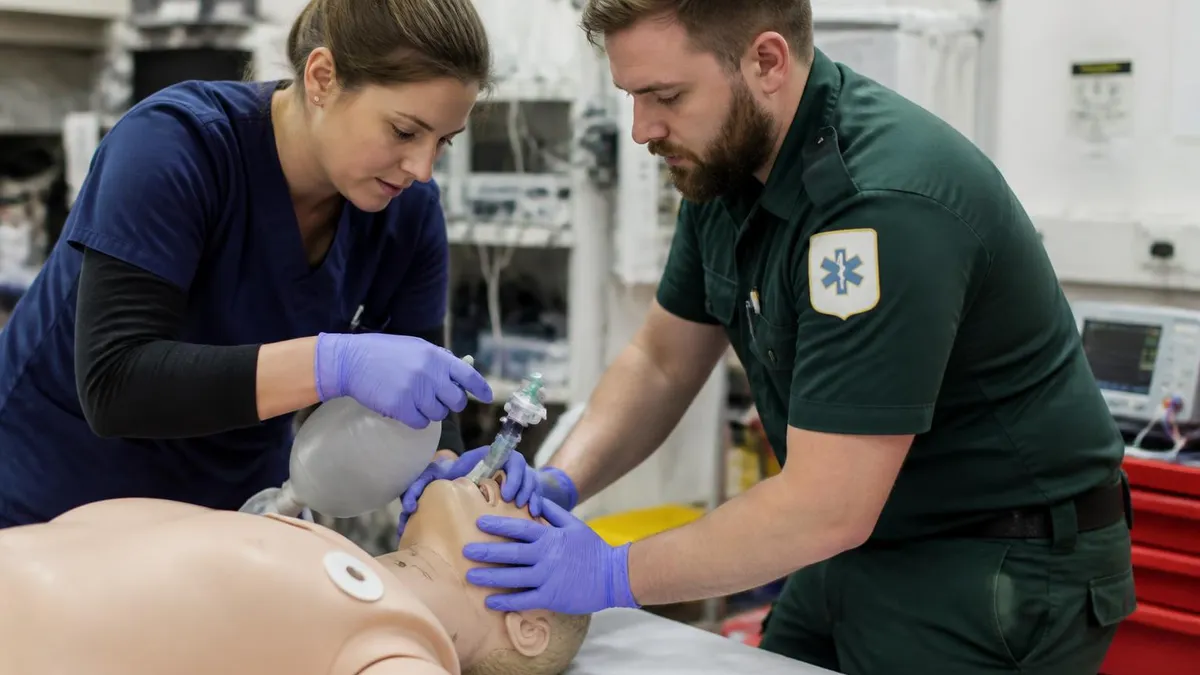
Numbers You Must Know Cold
Reversible Causes — The 5 H's and 5 T's
- Hypovolemia: IV fluids, blood products. Common in trauma and GI bleed.
- Hypoxia: Oxygenate, secure airway. Confirm ETCO2 and chest rise.
- Hydrogen ion (acidosis): Ventilate, treat cause. Bicarb only if severe and documented.
- Hypo/Hyperkalemia: Calcium, insulin/D50, bicarb, kayexalate for hyperK. Replace K+ for hypoK.
- Hypothermia: Rewarm to >30°C before more drugs/shocks. Core temp drives strategy.
- Tension Pneumothorax: Needle decompression 2nd intercostal space midclavicular.
- Tamponade (cardiac): Pericardiocentesis. Look for muffled tones, JVD, hypotension.
- Toxins: Antidotes — bicarb for TCA, glucagon for beta-blocker, lipid emulsion for local anesthetic.
- Thrombosis (pulmonary): Massive PE — consider thrombolytics (tPA) if high suspicion.
- Thrombosis (coronary): Acute MI — emergent cath lab if ROSC achieved.
1. Touching the patient during shock delivery. Always call "I am clear, you are clear, oxygen is clear, everybody clear" and visually confirm before pressing the discharge button. A shocked rescuer is a second patient and an automatic megacode failure.
2. Pausing CPR to check a pulse after a shock. The algorithm is shock → immediate CPR → 2 min cycle → THEN rhythm check. No pulse check after a shock. Pauses kill coronary perfusion pressure.
3. Defibrillating asystole. Asystole is not shockable. If you call for a shock on a flatline, you have switched to the wrong algorithm. Confirm leads, increase gain, then proceed with non-shockable pathway.
Advanced Airway, Capnography, and Switching to Continuous Compressions
Once an advanced airway is in place — endotracheal tube or supraglottic device like an LMA, i-gel, or King airway — the team stops the 30:2 ratio and switches to continuous chest compressions with 1 breath every 6 seconds (10 breaths per minute). The compressor does not pause for ventilations anymore. This is one of the most missed transitions in the megacode and it tanks scores.
Quantitative waveform capnography is mandatory under the current guidelines for any intubated arrest patient. End-tidal CO2 confirms tube placement (PETCO2 above 10 mmHg almost always means the tube is in the trachea), tracks CPR quality (a PETCO2 trend below 10 mmHg means compressions are not perfusing), and signals ROSC (a sudden jump in PETCO2 from 15 to 35 or higher is often the first sign the heart has restarted, sometimes before you can feel a pulse).
If PETCO2 stays under 10 mmHg after 20 minutes of optimized CPR in an intubated patient, evidence-based guidance allows termination of efforts in most settings. That is not a hard rule — pediatric arrest, hypothermia, drug overdose, pregnancy, and other special circumstances change the calculus — but for the typical adult arrest, ETCO2 trends are the most reliable prognostic marker we have during the code itself.
Post-Cardiac Arrest Care After ROSC
The job is not done when the patient gets a pulse back. The first hour after return of spontaneous circulation is when most ROSC patients re-arrest. Post-arrest care is its own algorithm and worth a full review on its own, but here is the core: targeted temperature management at 32 to 36 degrees Celsius for 24 hours in patients who remain comatose, mean arterial pressure target above 65 mmHg using vasopressors if needed, oxygen titrated to 92 to 98 percent saturation (avoid hyperoxia), and a 12-lead ECG looking for STEMI that needs the cath lab.
If you suspect cardiac etiology for the arrest — and the majority of adult VF arrests are coronary in origin — the patient gets an emergent coronary angiogram even if they are not conscious. Survivors of VF arrest with a STEMI on post-ROSC ECG have substantially better neurological outcomes with rapid revascularization. This is one of the strongest evidence-based recommendations in the entire post-arrest bundle.
Megacode Scenarios You Will See on Exam Day
The AHA megacode rotates through a fixed set of scenarios, and VF/pVT comes up in roughly half of all rotations. Common variants: witnessed VF arrest in a monitored unit (defibrillate within 60 seconds), unwitnessed out-of-hospital arrest brought in by EMS (already shocked twice, you take over the algorithm), drug-induced polymorphic VT from QT-prolonging meds (magnesium 2g), and hypothermic VF (rewarm before more drugs). Practice all four — the evaluator picks one at random.
One pattern repeats in every scenario: the evaluator wants to see closed-loop communication. "I need epinephrine 1 mg IV now" followed by a clear assignment to a team member, the team member repeating the order back, and confirmation when the dose is given. Silent or vague code leadership fails. Build the habit during practice scenarios and your acls practice test pdf review sessions — it becomes automatic by exam day.
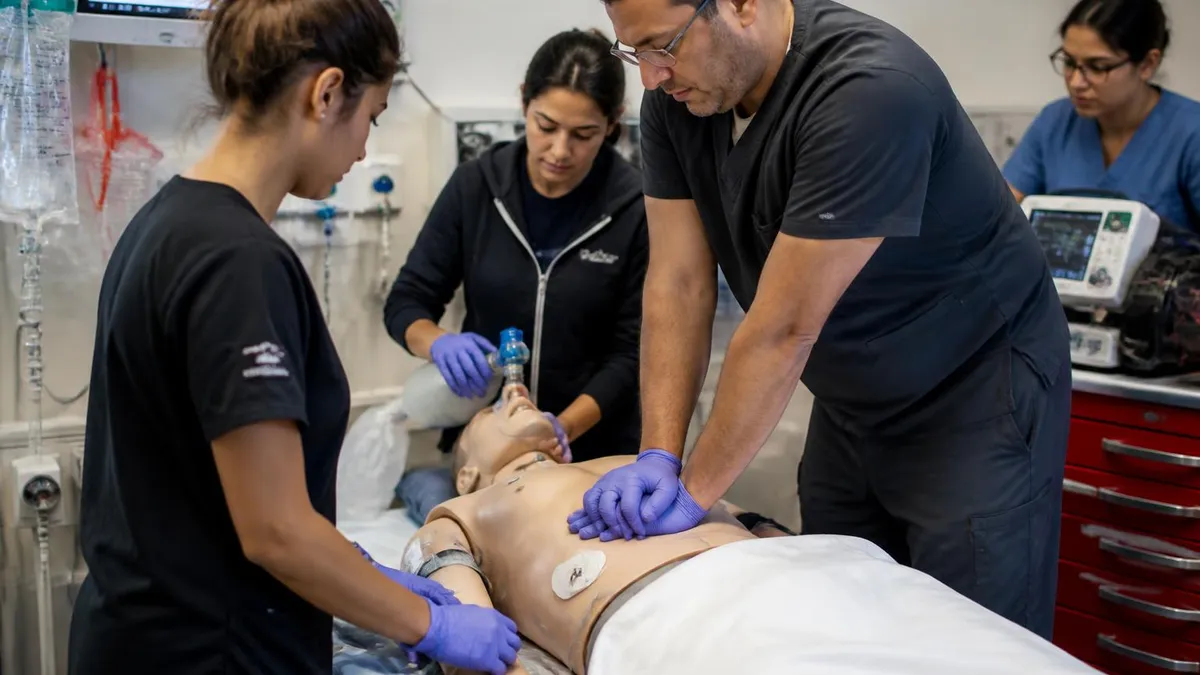
Manual Defibrillator vs AED in Code Situations
- +Manual defibrillator: lets ACLS provider select energy level and shock timing
- +Manual: supports synchronized cardioversion for unstable tachycardia with pulse
- +Manual: allows pacing for symptomatic bradycardia
- +AED: zero training required, voice-prompted, ideal for first responders
- +AED: very low risk of inappropriate shock — algorithm-confirmed shockable rhythms only
- +AED: rugged, fast deployment, public access in airports/gyms/offices
- −Manual: requires trained provider to interpret rhythm correctly
- −Manual: small risk of operator error on energy selection
- −AED: only delivers shocks — cannot cardiovert, pace, or treat non-shockable rhythms
- −AED: longer rhythm analysis time (8-12 sec) interrupts CPR more than manual mode
- −AED: fixed energy doses — cannot escalate above device preset
- −AED: not suitable for in-hospital code teams who need continuous monitoring
Pros and Cons at a Glance
| Pros | Cons |
|---|---|
| Manual defibrillator: lets ACLS provider select energy level and shock timing | Manual: requires trained provider to interpret rhythm correctly |
| Manual: supports synchronized cardioversion for unstable tachycardia with pulse | Manual: small risk of operator error on energy selection |
| Manual: allows pacing for symptomatic bradycardia | AED: only delivers shocks — cannot cardiovert, pace, or treat non-shockable rhythms |
| AED: zero training required, voice-prompted, ideal for first responders | AED: fixed energy doses — cannot escalate above device preset |
| AED: very low risk of inappropriate shock — algorithm-confirmed shockable rhythms only | AED: not suitable for in-hospital code teams who need continuous monitoring |
Megacode Prep Checklist — VF/pVT Scenario
- ✓Verbalize the BLS survey: unresponsive, not breathing, no pulse in 10 sec
- ✓Call for help, request crash cart, assign team roles immediately
- ✓Start compressions at 100-120/min, depth 2-2.4 in, full recoil, switch q2min
- ✓Attach pads correctly: right upper chest + left lower lateral
- ✓First rhythm check under 5 seconds — call out "VF" or "pulseless VT"
- ✓Charge while compressions continue, clear the patient verbally, deliver shock
- ✓Resume CPR immediately after shock — no pulse check
- ✓Establish IV/IO within 90 seconds — large peripheral or proximal humerus IO
- ✓Push epinephrine 1 mg IV/IO every 3-5 min using closed-loop communication
- ✓After 3rd shock: give amiodarone 300 mg IV/IO bolus
- ✓Insert advanced airway and switch to continuous compressions with 1 breath q6 sec
- ✓Confirm tube with quantitative waveform capnography (PETCO2 >10 mmHg)
- ✓Cycle through reversible causes (H's and T's) during compressions
- ✓Recognize ROSC: pulse + sudden ETCO2 rise + return of organized rhythm
- ✓Initiate post-arrest bundle: TTM 32-36°C, MAP ≥65, SpO2 92-98%, 12-lead ECG
When to Stop the Code and How to Document It
Termination of resuscitation is one of the hardest clinical decisions in medicine, and there is no perfect rule. Generally accepted criteria include: arrest unwitnessed, no bystander CPR, no ROSC after full ALS care, no AED shocks delivered, asystole as the persistent rhythm. Some EMS systems use the BLS or ALS Termination of Resuscitation rules to standardize the call. In-hospital arrests rarely use a strict cutoff — instead the code leader uses ETCO2 trend, downtime, comorbidities, and family wishes to call it.
Hypothermia and pediatric arrest are exceptions where prolonged efforts are warranted — "not dead until warm and dead" is the classic teaching. Pregnancy, drug overdose, and cold-water drowning also justify extended resuscitation. Document every drug, every shock, every rhythm check, time of arrest, time of ROSC, total downtime, and the names of every team member. The code recorder's notes are the legal record.
Family presence during resuscitation is supported by current evidence and AHA guidelines when a dedicated support person is available to explain events. Outcomes are not worsened and family adjustment is often improved when relatives are present and supported. Have a chaplain or social worker on standby for every code that runs longer than 10 minutes.
How the VF/VT Algorithm Connects to the Rest of ACLS
The VF/VT pathway is one branch of a connected tree. The full acls algorithms family includes: adult cardiac arrest (this article + asystole/PEA), bradycardia with pulse, tachycardia with pulse (stable and unstable), acute coronary syndromes, suspected stroke, and post-arrest care. Each branch shares the same opening — BLS survey, then ACLS survey — but diverges at the first rhythm strip.
If your renewal cycle is approaching, the algorithm content is the heaviest tested area on both the precourse exam and the megacode. Refreshers concentrate on rhythm strip recognition and drug doses, because everything else is muscle memory. A solid weekend of focused review using simulation videos and case studies will get most providers back to passing standard. The 2025-2030 AHA refresh is expected to fine-tune some dosing windows but the core algorithm structure has been stable since 2015 and is unlikely to change radically.
ACLS Questions and Answers
More ACLS Guides

ACLS Algorithm: Master Cardiac Arrest, Bradycardia, and Tachycardia Protocols
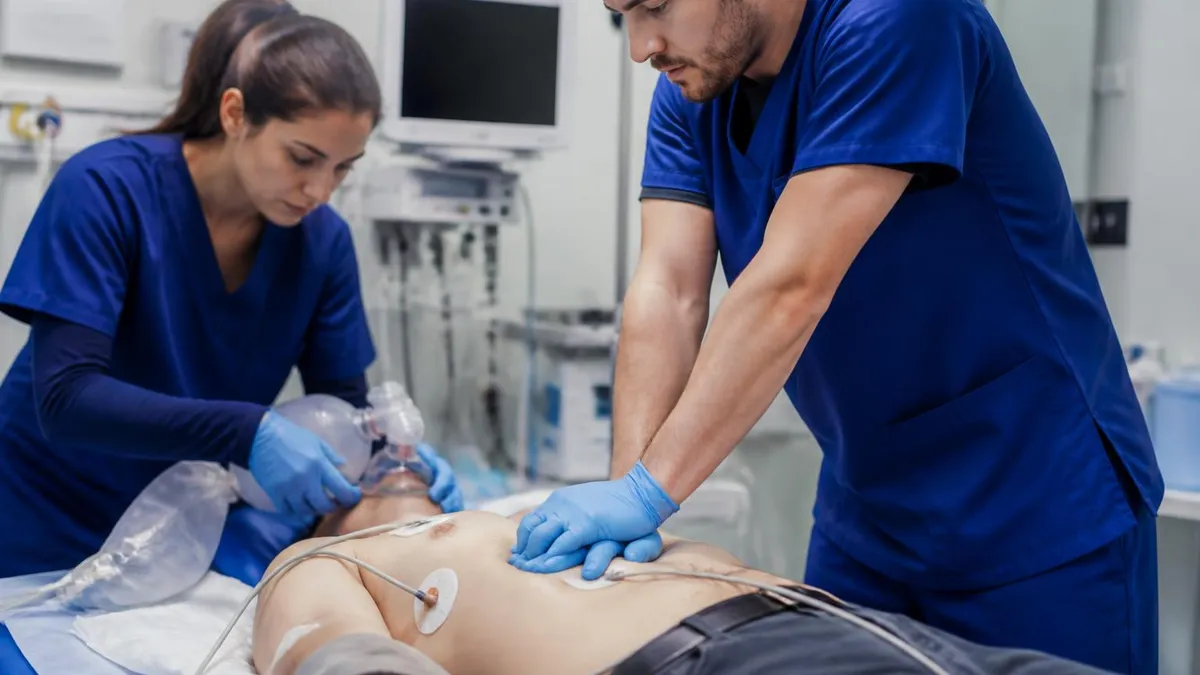
ACLS Bradycardia and Tachycardia Algorithms: Complete 2026 Provider Guide
ACLS Certification: How to Get Certified, Recertified & Stay Current
ACLS Precourse Self-Assessment Answers — Your Complete 2026 Study Resource
AHA ACLS: American Heart Association Advanced Cardiovascular Life Support Guide
ACLS Practice Test PDF 2026: Free Advanced Cardiovascular Life Support Questions
About the Author

Registered Nurse & Healthcare Educator
Johns Hopkins University School of NursingDr. Sarah Mitchell is a board-certified registered nurse with over 15 years of clinical and academic experience. She completed her PhD in Nursing Science at Johns Hopkins University and has taught NCLEX preparation and clinical skills courses for nursing students across the United States. Her research focuses on evidence-based exam preparation strategies for healthcare certification candidates.
Join the Discussion
Connect with other students preparing for this exam. Share tips, ask questions, and get advice from people who have been there.
View discussion (8 replies)