
CPR Complications — Complete Guide (2026 September)
🎓 Broken ribs during CPR occur in 30-80% of cases — normal. Learn CPR complications: rib fractures, bleeding, aspiration, pneumothorax and when to keep
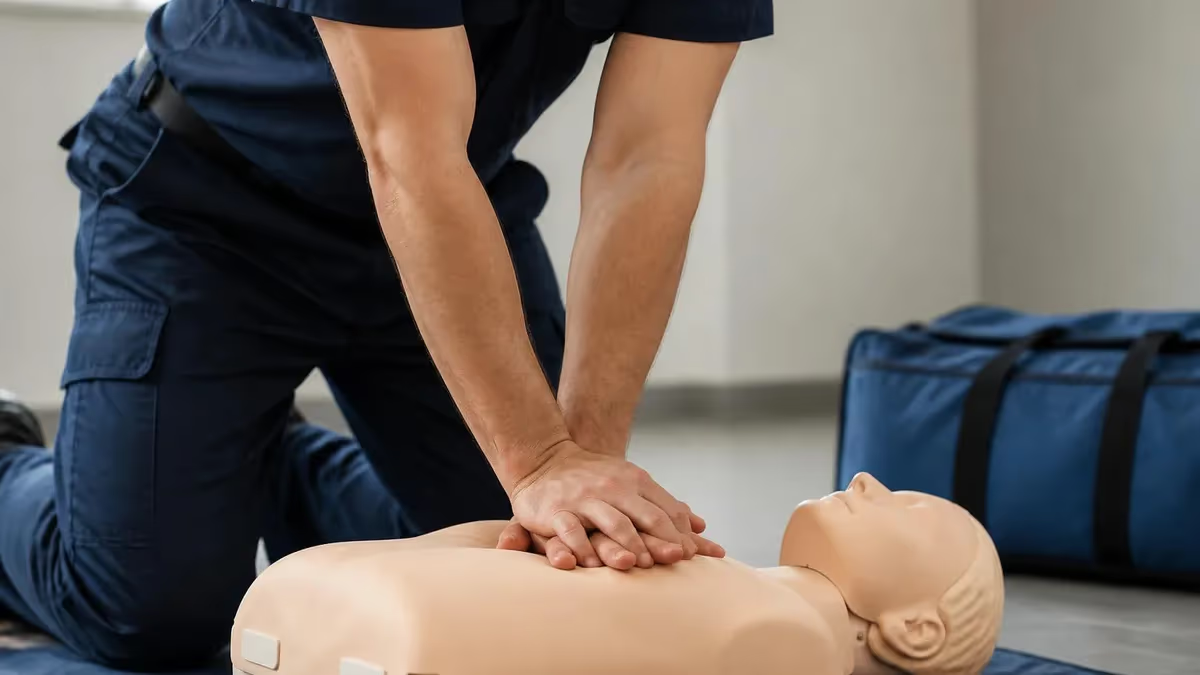
You're pressing hard on someone's chest, trying to keep them alive, and you feel — and hear — a crack. Your stomach drops. Did you just break their ribs? Are you doing this wrong? Should you stop?
The answer is almost always no. CPR requires force. Real, meaningful force — enough to compress an adult chest 2 to 2.4 inches with every push. At that depth, ribs fracture in a significant portion of patients. Studies consistently put the rate of rib fractures during CPR at 30 to 80 percent. That's not a failure. That's physics.
This guide walks through every major complication that can occur during CPR — broken ribs, bleeding, aspiration, pneumothorax, lung damage — and explains what each one means, what you should do, and why imperfect CPR still saves lives when no CPR doesn't.
If you've ever hesitated to do CPR because you were afraid of hurting someone, this article is for you. Bystander CPR more than doubles survival rates after out-of-hospital cardiac arrest. The complications described here are manageable, treatable, and far less devastating than the alternative. A cracked rib can heal. Death can't be undone.
Understanding CPR complications also makes you a better responder. When blood appears at someone's mouth, you don't panic — you recognize it, you manage the airway, you keep going. When ribs crack under your hands, you don't freeze — you maintain depth and rate because you know that's exactly what's needed. Knowledge turns fear into confidence, and confidence saves lives.
There's also an important distinction that often gets lost in lay understanding: CPR isn't designed to be gentle. It's designed to work. Medical professionals and resuscitation researchers have known for decades that the force necessary to circulate blood during cardiac arrest frequently causes injury. That's a recognized, accepted trade-off embedded in every CPR guideline ever written. The American Heart Association doesn't soften it — compression depth requirements stay at 2 to 2.4 inches precisely because research shows that shallower compressions fail to generate adequate circulation.
So when you encounter complications — whether you're a bystander doing CPR for the first time or a trained responder who knows the anatomy — understanding the "why" behind each complication helps you respond appropriately instead of reflexively pulling back at the worst possible moment.
Let's break down every complication, how common it is, and exactly what to do when it happens.
Rib fractures occur in 30–80% of CPR cases. This does NOT mean you did anything wrong — it means you're compressing deeply enough. Continue CPR at the correct depth and rate. Stopping is what kills.
CPR Complications Overview
The most common CPR complication. Ribs crack under the force needed to circulate blood. In elderly or osteoporotic patients, it can happen with the very first compression.
- How common: 30–80% of CPR cases
- Higher risk groups: Elderly, osteoporosis, female patients
- What to do: Continue CPR — do not reduce depth or rate
Internal bleeding can result from rib fractures lacerating vessels, liver or spleen injury from compressions, or blood entering the airway from the lungs.
- How common: Varies; internal bleeding in ~10% of cases
- Signs: Blood from mouth or nose, coughing blood
- What to do: Manage airway, tilt head if vomiting, continue compressions
Stomach contents can reflux into the airway during CPR, especially if the patient vomited. This is a significant risk during rescue breathing.
- How common: ~12-25% of CPR cases involve regurgitation
- Risk factor: Higher with rescue breaths vs. hands-only CPR
- What to do: Turn head, clear airway if possible, use suction if available
A fractured rib can puncture the pleural space, collapsing the lung partially or fully. Tension pneumothorax is a life-threatening emergency requiring immediate needle decompression.
- How common: Estimated 1–5% of CPR cases
- Signs: Decreasing breath sounds, tracheal deviation (medical team assessment)
- What to do: Continue CPR — paramedics will treat on arrival
High compressions or improper hand placement can bruise or lacerate the liver and spleen. Correct hand placement in the center of the chest reduces this risk significantly.
- How common: Rare with correct technique; up to 3% with poor placement
- Prevention: Hands centered on lower half of sternum, not over xiphoid process
- What to do: Correct hand position — continue CPR
Why Ribs Break During CPR — And Why That's OK
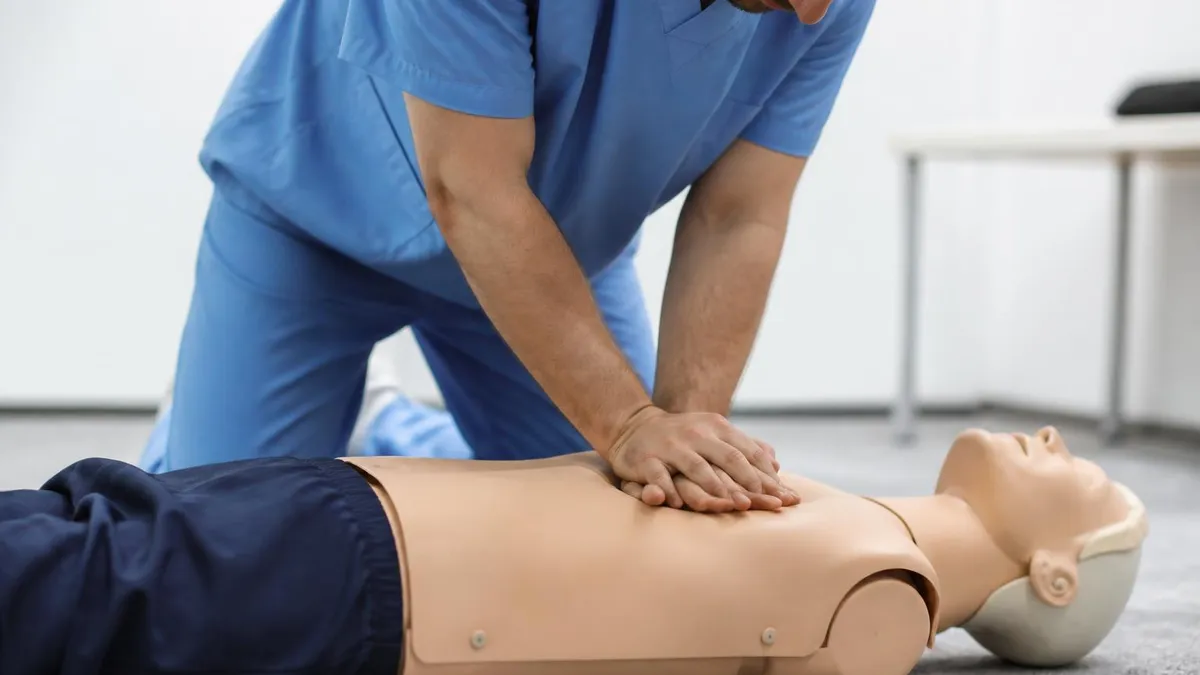
The ribs aren't weak. But they weren't designed to absorb 100 high-force compressions per minute in the direction CPR demands. When you perform adult CPR, you're pushing down 2 to 2.4 inches into the chest — compressing the heart between the sternum and the spine to squeeze blood through the circulatory system. That's the only way compressions work.
That kind of force puts enormous stress on the rib cage. For younger, healthy adults with dense bone, ribs may hold. But in older adults, patients with osteoporosis, women (who statistically have lower bone density), or anyone with a history of steroid use or chronic illness, the ribs often can't take it. One study published in Resuscitation found rib fractures in over 80% of post-mortem CPR cases. Other studies in living patients report rates of 30 to 50 percent — but these likely undercount, since minor fractures often go undetected without imaging.
The sternum itself can crack too. Sternal fractures occur in roughly 30 to 40 percent of CPR cases, often alongside rib fractures.
So why do we still compress that hard? Because shallow compressions don't work. The cpr compression rate with full 2-to-2.4-inch depth. Every inch less than recommended dramatically reduces blood flow to the brain and heart. A cracked rib is survivable. Inadequate CPR leads to death or severe anoxic brain injury. There's no realistic trade-off here.
What should you do if you feel ribs break? Keep going. Maintain proper depth. Don't let the cracking sound cause you to lighten your compressions — that's the moment many bystanders unconsciously back off, and that's when CPR stops being effective. You may feel the chest become slightly easier to compress as structural integrity decreases — use that as a reminder to keep your depth consistent, not as a reason to push harder or softer than the target range.
The one time to reassess technique is if you notice you've drifted off-center. Check that your hands are on the lower half of the sternum — heel of one hand, other hand on top, fingers interlaced. That's correct position. If you're too far down on the xiphoid process or shifted sideways, reposition. But don't stop — reposition during compressions if you can, or with a single brief pause of no more than 10 seconds.
Complications: Causes, Signs, and What To Do
Causes: High-force compressions (2–2.4 inch depth) required to circulate blood. Bone density decreases with age, illness, osteoporosis, and corticosteroid use. First compression can fracture ribs in very frail patients.
Signs: Audible or palpable crack during compressions. Chest may feel different — less resistance or a noticeable pop. Rescuer may feel movement in the chest wall that wasn't there before.
What to do: Continue CPR without stopping. Maintain proper depth and rate. Do not reduce force to "protect" ribs — reduced compressions reduce survival. On hospital arrival, imaging will assess fractures. They heal with time; cardiac arrest does not recover on its own.
Blood During CPR: What It Means and What to Do
Blood appearing at the mouth during CPR is one of the most alarming things a bystander can encounter. It triggers panic — the instinct to stop, to wonder if you've caused serious harm. But blood during CPR is far more common than most people realize, and understanding where it comes from changes how you respond.
Pink, frothy blood — the kind that looks almost like foam — comes from the lungs. This is pulmonary edema fluid mixing with blood, a sign of severe cardiac stress or pulmonary contusion from compressions. It doesn't mean you've ruptured something catastrophic. It means the patient's heart and lungs are under extreme stress, which is consistent with cardiac arrest.
Darker, more viscous blood often comes from the stomach. Gastric reflux during CPR can bring up blood if the patient has a pre-existing GI bleed, an ulcer, or esophageal varices. It can also come from trauma to the esophagus from forceful regurgitation.
Blood in the airway from a lung source — called hemoptysis when coughed up — can result from pulmonary contusion, which is bruising of lung tissue caused by the force of compressions. Studies suggest pulmonary contusion occurs in roughly 10 to 20 percent of CPR cases, more commonly with prolonged resuscitation efforts.
Managing blood in the airway during CPR: If you see blood or vomit in the mouth, turn the head gently to the side and let gravity drain it. Wipe the mouth with cloth if you have it. If you have a suction device — many AED kits now include simple suction tips — use it between compression cycles. Then continue CPR. The AHA CPR guidelines are clear that airway management should not interrupt compressions for more than 10 seconds.
Don't be afraid to continue rescue breathing because of blood. Seal the mouth, breathe in, watch for chest rise. If the airway is partially obstructed by fluid, you may not see good chest rise — adjust head tilt and try once more. If you still can't ventilate, hands-only CPR is better than nothing while waiting for advanced airway support.
When to Continue CPR Despite Complications
- ✓You felt or heard ribs crack — keep going at correct depth and rate
- ✓Blood is visible at the mouth — clear airway briefly, then resume compressions
- ✓The patient vomited — turn head, clear vomit, resume CPR immediately
- ✓You're not sure your compressions are effective enough — maintain 2–2.4 inch depth, 100–120 BPM
- ✓You're fatigued — switch with another rescuer every 2 minutes if possible
- ✓AED delivered a shock and patient hasn't regained pulse — resume CPR immediately
- ✓The scene feels chaotic — focus only on compressions and airway, ignore everything else
- ✓EMS hasn't arrived yet and it's been several minutes — CPR preserves the possibility of survival; stopping eliminates it
Pneumothorax and Lung Damage After CPR
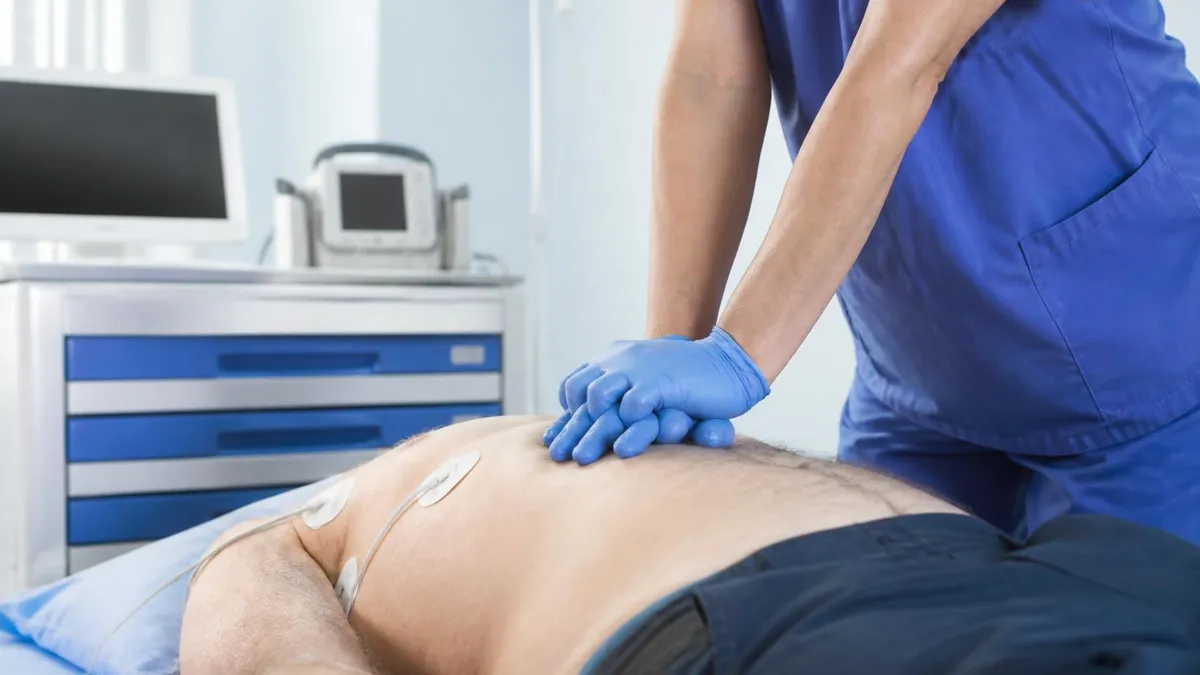
One of the more serious but less-discussed CPR complications is pneumothorax — a collapsed lung caused by air entering the space between the lung and the chest wall. During CPR, a fractured rib can pierce the pleural membrane, allowing air to leak in and the lung to partially or fully collapse.
In most cases, a simple pneumothorax from CPR isn't immediately life-threatening beyond the cardiac arrest itself — the patient is already in extremis, and paramedics will assess for it on arrival. What is dangerous is a tension pneumothorax, where air accumulates under pressure, compresses the heart and great vessels, and prevents effective circulation. Tension pneumothorax is a true emergency — it requires immediate needle decompression — but it also presents with clinical signs (tracheal deviation, absent breath sounds on one side, severe hypotension) that trained emergency responders are equipped to recognize and treat.
For a bystander doing CPR, the response to pneumothorax is the same as the response to any other complication: keep doing CPR. You cannot diagnose or treat a pneumothorax in the field without equipment. What you can do is maintain circulation until someone who can arrives.
Pulmonary contusion is another form of CPR-related lung damage. The force of compressions bruises lung tissue, similar to the way a blunt blow to the chest would. Mild pulmonary contusion causes localized bleeding and edema within the lung; severe contusion can impair gas exchange. This is more common with prolonged CPR — resuscitations lasting over 20 minutes — and is generally managed in the ICU after return of spontaneous circulation.
Hemothorax — blood collecting in the pleural space rather than air — is less common but can occur when a fractured rib lacerates an intercostal vessel or when pulmonary contusion bleeds significantly. Like pneumothorax, it's diagnosed and treated by the medical team after the resuscitation effort.
The survival math is straightforward: a patient who survives cardiac arrest with a pneumothorax has a treatable problem. A patient who doesn't survive cardiac arrest because CPR was stopped early has no problems left to treat — in the worst sense possible. The aha cpr explicitly account for the fact that CPR-related injuries are acceptable risks of a life-saving procedure. Every guideline update has maintained this position because the data supports it consistently.
If you're providing basic CPR and you're worried about causing internal damage — don't let that worry slow your compressions. The damage you might cause is treatable. Cardiac arrest without CPR is not.
What Happens Physiologically During CPR
Compression Begins
Blood Flow Generated
Rib Stress Accumulates
Complications Emerge
EMS Arrives and Defibrillates
Post-Resuscitation Care
CPR Complications — Key Statistics
CPR With Risk of Complications vs. Not Doing CPR
- +Doubles or triples survival rates
- +Preserves brain function during cardiac arrest
- +Gives defibrillation a chance to work
- +Complications like rib fractures are treatable
- +Protected by Good Samaritan laws in all 50 states
- +Even imperfect CPR is significantly better than none
- +Chest compressions alone are effective without rescue breaths
- −Zero chance of survival without CPR for cardiac arrest
- −Brain death begins within 4–6 minutes without circulation
- −Every minute without CPR reduces survival by 7–10%
- −Not acting carries its own psychological burden
- −Defibrillation alone is far less effective without preceding CPR
- −No complications to worry about — because the patient doesn't survive
Good Samaritan Laws and Legal Protection for CPR Complications
One of the biggest barriers to bystander CPR isn't lack of training — it's fear of legal liability. People hesitate because they're afraid that if they break someone's ribs, cause internal bleeding, or don't save the person, they'll be sued. This fear is understandable but, in practice, almost entirely unfounded.
Every U.S. state has Good Samaritan laws that protect bystanders who provide emergency assistance in good faith. These laws vary in their specifics, but their core protection is consistent: if you act reasonably and without expectation of compensation when someone's life is at risk, you're shielded from civil liability for outcomes including injury or death. Rib fractures caused by properly performed CPR are explicitly within the scope of what Good Samaritan laws cover.
Here's the practical reality: lawsuits against bystanders who performed CPR are extraordinarily rare. Legal databases have almost no cases where a bystander was successfully sued for CPR-related injuries. The legal system recognizes that someone dying of cardiac arrest needed aggressive intervention, and that a rescuer acting to save a life can't be held to the standard of a medical professional.
What could create liability — in theory — is gross negligence. CPR performed in a way that a reasonable person would recognize as harmful: jumping on someone's chest, using clearly improper technique intentionally, or performing CPR on someone who is clearly breathing and conscious. Normal CPR complications don't meet this bar by any stretch.
If you've taken a CPR renewal course or hold CPR certification, you're even better protected — evidence that you acted with training and according to established guidelines. The documentation of your training demonstrates good-faith effort, which is the core of Good Samaritan protection.
The short version: do CPR. Don't let legal fear stop you. The risk of being sued successfully for performing bystander CPR is so low it's not a meaningful factor in the decision. The risk of someone dying because no one helped is immediate and real.
CPR in Special Populations — Risk Comparison
CPR in Special Populations
The force required for effective CPR doesn't change based on the patient's vulnerability — but the likelihood of complications does. Understanding this helps you calibrate expectations when you're compressing on different types of patients.
Elderly patients and CPR broken ribs: This is where broken ribs are most common. After age 65, bone density declines significantly, and many elderly patients have additional risk factors: osteoporosis, long-term corticosteroid use, prior fractures. CPR in an 80-year-old is very likely to cause rib fractures within the first minute. The correct approach is unchanged — maintain depth and rate. The bls cpr applies to all adults regardless of age. Research on CPR in elderly patients consistently shows that despite higher complication rates, the survival benefit of full-depth CPR outweighs the benefit of reduced-force compressions.
A common instinct when performing CPR on a frail elderly person is to "go easy" — to reduce compression depth out of concern for injury. Resist that instinct. A rib fracture in a 78-year-old can heal with rest and pain management. Inadequate compressions in a cardiac arrest patient mean the brain goes without oxygen for seconds that accumulate into minutes. The brain doesn't get a chance to heal from that.
Patients with osteoporosis: Even younger patients with osteoporosis — a condition affecting roughly 10% of American adults over 50 — face elevated fracture risk during CPR. Same guidance applies: don't reduce force. Osteoporotic bone fractures at lower stress loads, which means rib fractures can occur earlier in the resuscitation and may be more extensive. Again, this is expected, documented, and doesn't change the standard of care.
Obese patients: Paradoxically, obese patients require more force to achieve the same chest compression depth, not less. Body habitus means the rescuer has to push through more tissue to reach the same 2-to-2.4-inch target depth. Fatigue sets in faster; two-rescuer CPR with frequent rotation is especially important. If you're the only rescuer on scene, compressing on an obese patient will exhaust you more quickly — even more reason to call 911 first so EMS can take over.
Children and infants: Pediatric CPR uses different technique and proportionally less force. For children (ages 1 to puberty): use one or two hands, compress 2 inches (about 1/3 the chest diameter). For infants: use two fingers, compress 1.5 inches. Rib fractures are less common in children due to greater chest wall compliance — cartilage is more flexible than bone at young ages. Aspiration risk is similar to adults; the same airway management principles apply.
In every population, the calculus is the same: the risk of under-compression (inadequate circulation, brain death, death) outweighs the risk of complications. Complications can be treated. The alternative cannot.
CPR Questions and Answers

How to Pass a CPR Certification: Complete Exam Tips Guide

American Heart Association CPR Classes: Types, Cost, and Where to Find
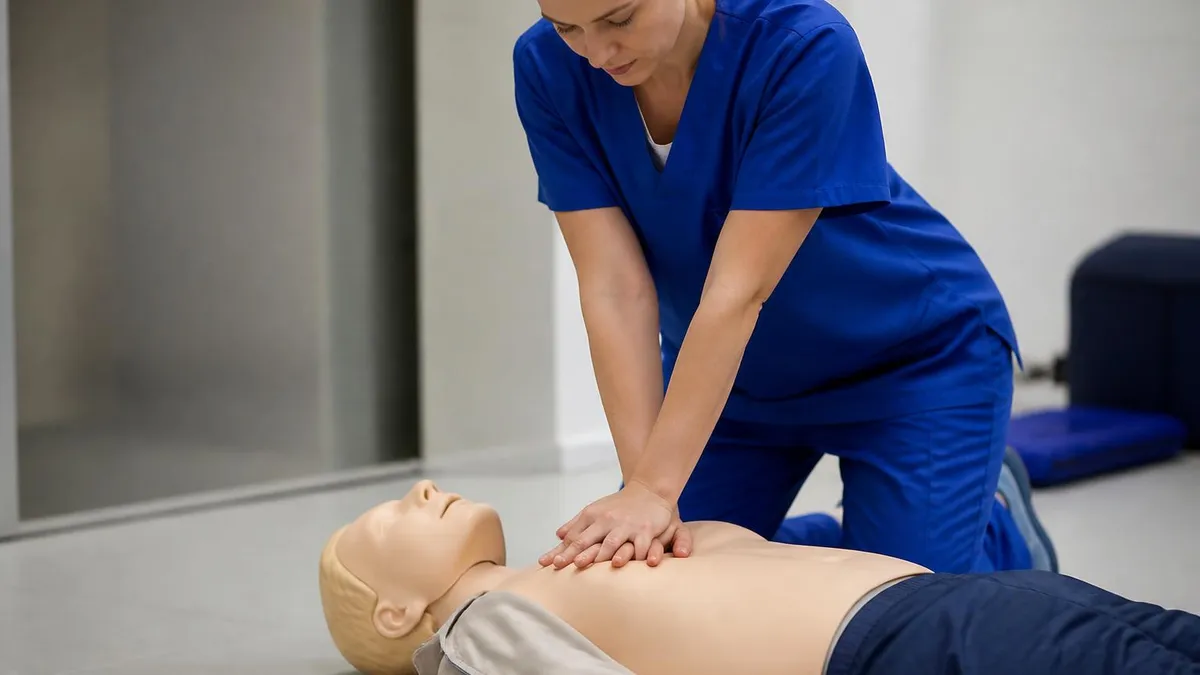
CPR vs BLS: Key Differences, Certification, and Which One You Need
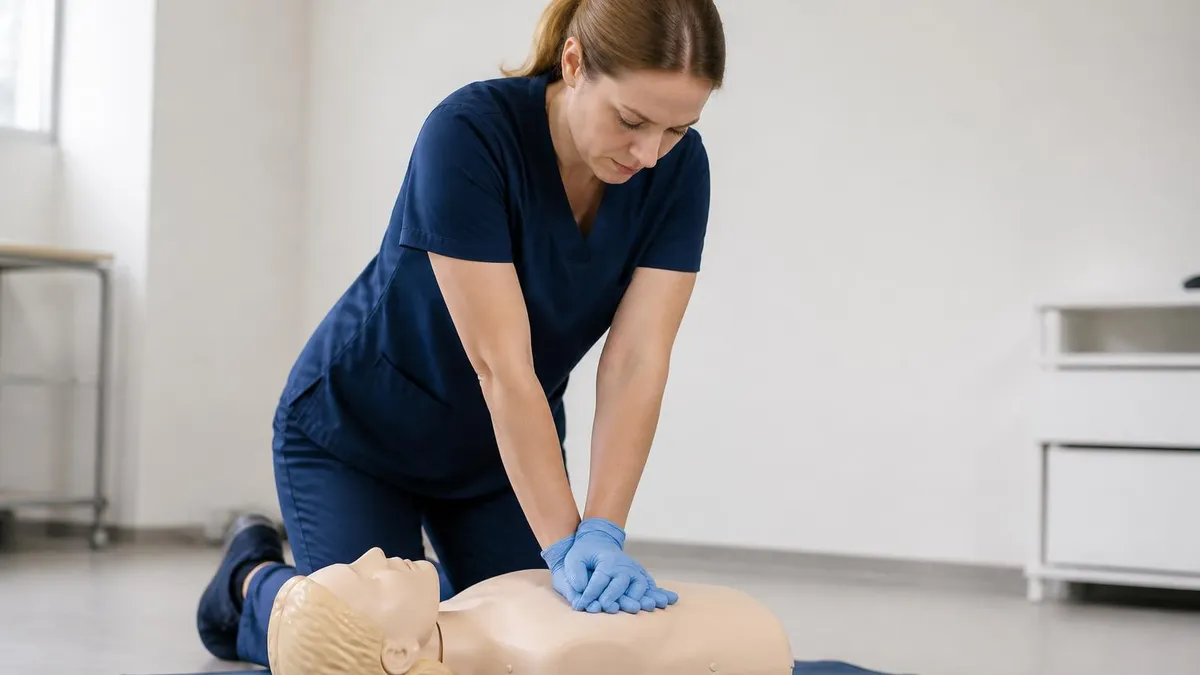
CPR Certification Near Me — Complete Guide (2026)
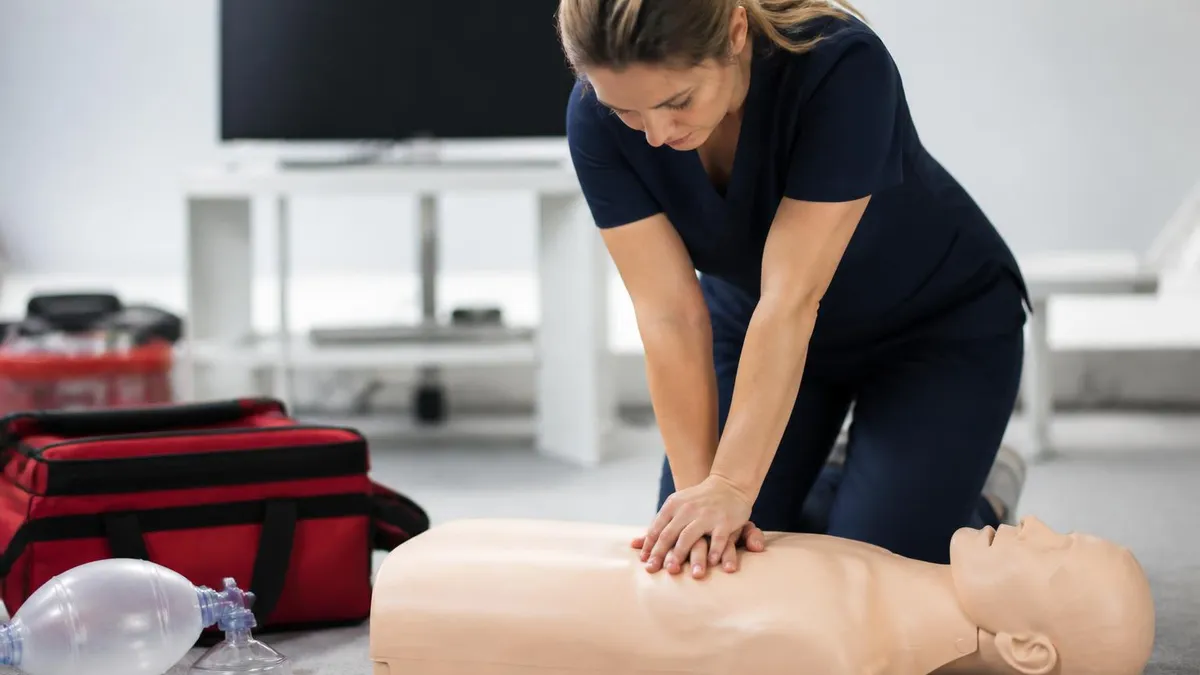
How Much Is a CPR Class? Complete 2026 Cost Guide for Every Budget and Certification Level
About the Author

Registered Nurse & Healthcare Educator
Johns Hopkins University School of NursingDr. Sarah Mitchell is a board-certified registered nurse with over 15 years of clinical and academic experience. She completed her PhD in Nursing Science at Johns Hopkins University and has taught NCLEX preparation and clinical skills courses for nursing students across the United States. Her research focuses on evidence-based exam preparation strategies for healthcare certification candidates.