
CPR Careers: Jobs, Salaries, and Pathways for Lifesavers in 2026 October
🟢 Explore CPR careers in 2026 October: jobs that require CPR certification, salaries, training paths, and how to turn lifesaving skills into a profession.
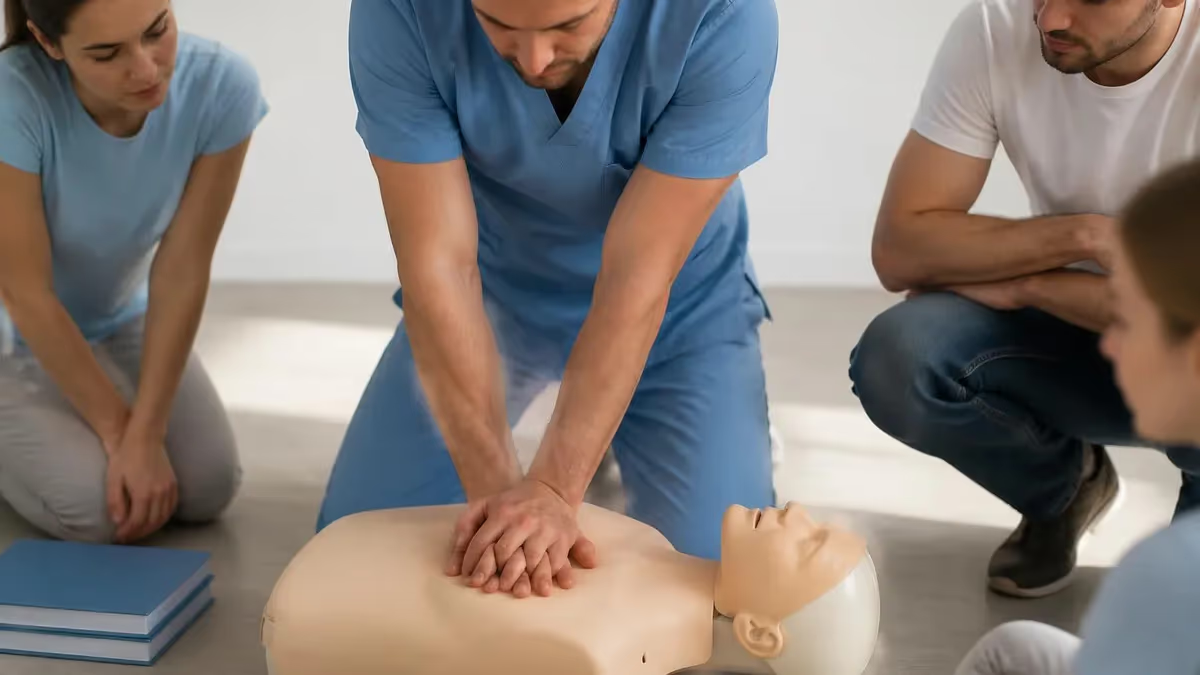
CPR careers span an enormous range of professions, from emergency responders racing toward cardiac arrests to fitness trainers, school nurses, lifeguards, and corporate safety officers who keep their certifications active just in case. If you have ever wondered which jobs require CPR, which pay the most, and how a basic certification can open doors into healthcare or public safety, this guide walks you through the full landscape of CPR careers and the credentials that power them in 2026.
Cardiopulmonary resuscitation is not a single skill but a gateway. The American Heart Association estimates that more than 16 million people in the United States hold a current CPR card, and a sizable portion of them work in fields where that card is a hiring requirement. Employers in hospitals, fire departments, dental offices, daycare centers, gyms, and government agencies all maintain mandatory CPR rosters because seconds matter when a heart stops.
The career value of CPR is most obvious in healthcare, where Basic Life Support is non-negotiable for nurses, paramedics, respiratory therapists, and surgical technologists. But the credential reaches well beyond hospital walls. Police officers, flight attendants, electricians who work near energized equipment, ski patrollers, and personal trainers all carry CPR cards. For many of these roles, CPR is the difference between getting hired and being passed over.
Pay varies enormously across CPR-required jobs. An entry-level patient care technician might earn $36,000 a year, while a critical care nurse with advanced certifications routinely clears six figures. The training pipeline is similarly diverse: a weekend community class can launch a lifeguard career, while a paramedic credential takes two years of college plus thousands of clinical hours. Knowing where you fit on this spectrum helps you choose the right starting point.
Demand is strong and projected to stay that way. The Bureau of Labor Statistics expects healthcare occupations overall to grow about 13 percent through 2032, faster than any other major sector, and many of those roles require CPR on day one. Public safety jobs, school staffing, and senior care are also expanding, which means more openings for workers who can show a current card and a clean skills check.
This article unpacks the most common CPR-dependent careers, the certifications they require, what they pay, and how to move from a basic card into a stable profession. Whether you are a high school student weighing a healthcare path, a career changer eyeing emergency services, or a fitness pro who wants to add credentials, you will find a clear next step. To prepare for the knowledge portion of any CPR course, the free cpr practice test 25 questions and answers is a strong place to begin.
We will start with the numbers, then work through specific job families, training timelines, costs, salaries, and the soft skills employers consistently say matter most. By the end you should know exactly which CPR career fits your goals and what the first 90 days of preparation look like.
CPR Careers by the Numbers
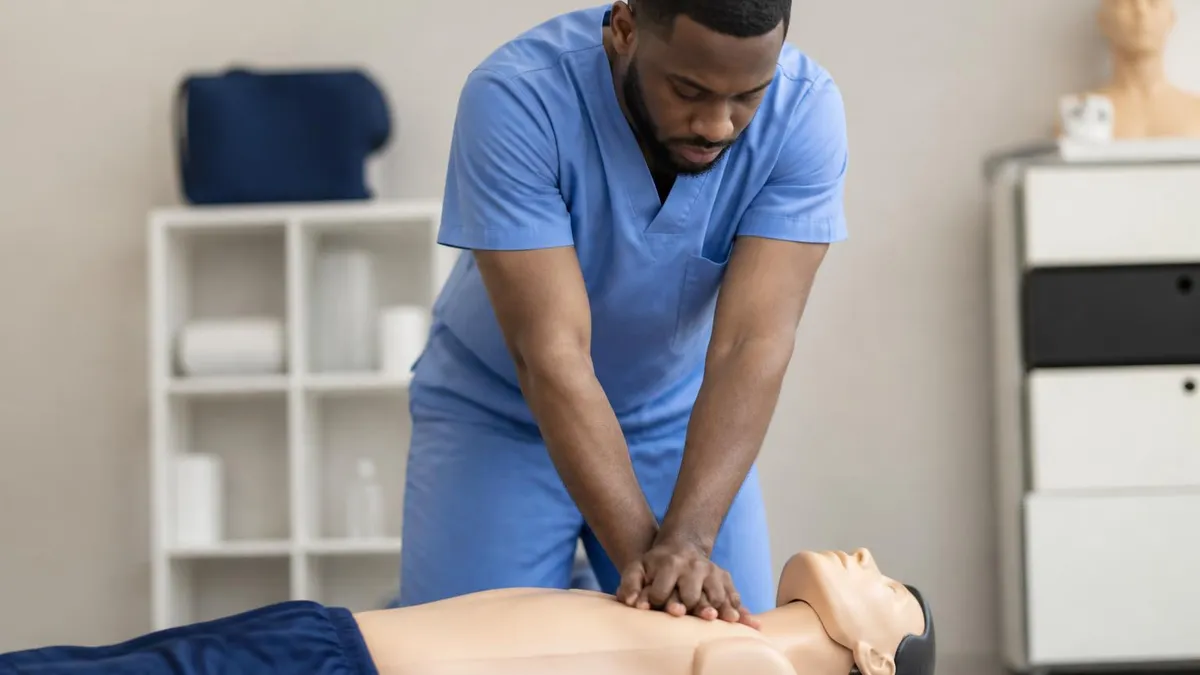
Major Career Paths That Require CPR
EMTs and paramedics respond to 911 calls and provide field treatment for cardiac arrest, trauma, and medical emergencies. They use CPR, AEDs, and advanced airway tools every shift.
Nurses, patient care technicians, respiratory therapists, and surgical techs all need BLS at minimum. Critical care and emergency staff usually add ACLS, PALS, or NRP to their credentials.
Firefighters, police officers, lifeguards, and ski patrollers are typically first on scene. CPR plus AED competency is built into their academy training and annual recertification cycles.
Teachers, school nurses, athletic trainers, daycare workers, and camp counselors carry pediatric CPR certifications. Many state licensing boards require these credentials for employment.
Personal trainers, group fitness instructors, yoga teachers, and aquatic coaches must hold CPR cards under most national certifying body rules and gym insurance policies.
Healthcare is the deepest pool of CPR careers, and within it the roles range from rapid-entry support positions to advanced clinical specialties. A registered nurse working in a cardiac intensive care unit, a flight paramedic running rapid sequence intubation at 3,000 feet, and a dental assistant calming a fainting patient are all using the same foundational chest-compression skill, just in wildly different contexts. Understanding these clinical roles helps you target the path that matches your interest and tolerance for stress.
Registered nurses make up the largest single CPR-required profession in the country, with roughly 3.3 million practicing RNs. The Bureau of Labor Statistics reports a median annual wage near $86,070 in 2023, and nurses in specialty units like neonatal ICU, cath lab, or emergency departments often earn well above six figures with overtime and shift differentials. Every RN must hold BLS, and most hospital units require ACLS, PALS, or both within the first year of hire.
Emergency Medical Technicians and paramedics are the field arm of cardiac arrest response. EMTs complete around 150 to 200 hours of training, while paramedics finish 1,200 to 1,800 hours plus a clinical internship. They run resuscitations in living rooms, on highways, and inside moving ambulances. Pay starts modestly, often around $36,000 for new EMTs, but paramedics in busy urban systems frequently top $70,000 once seniority and overtime are factored in.
Respiratory therapists are CPR-critical because they manage the airway and ventilation half of every code. They earn a median of about $77,960 and hold an associate or bachelor's degree plus state licensure. Hospitals lean on respiratory therapy for intubations, mechanical ventilation, and bedside breathing treatments, which means these clinicians are present at nearly every code blue called inside the building.
Patient care technicians, certified nursing assistants, and medical assistants form the support layer. They typically need a basic BLS card, finish their training in a few weeks to a few months, and start in the $30,000 to $42,000 range. These roles are excellent on-ramps because they put you in clinical settings where you can observe nurses and respiratory therapists, decide whether you want to advance, and often qualify for tuition assistance toward an RN program.
Surgical technologists, operating room nurses, and anesthesia technicians all carry BLS and frequently ACLS. They support cardiac surgery, trauma, and high-risk obstetric cases where the line between routine procedure and full resuscitation can disappear in seconds. The pay range typically runs from $55,000 to over $100,000 depending on specialty, geography, and shift. If you enjoy choreographed precision under pressure, the OR is a strong fit.
Allied healthcare also includes dental hygienists, physical therapists, occupational therapists, pharmacists, and radiologic technologists. Each of these professions requires at minimum a basic CPR card, and many require BLS for healthcare providers specifically. Before enrolling in any program, review the bls cpr certification american heart association to understand which credential matches your target role.
CPR Practice Test Questions
Prepare for the CPR - Cardiopulmonary Resuscitation exam with our free practice test modules. Each quiz covers key topics to help you pass on your first try.
CPR Adult CPR
CPR Exam Questions covering Adult CPR. Master CPR Test concepts for certification prep.
CPR AED Use
Free CPR Practice Test featuring AED Use. Improve your CPR Exam score with mock test prep.
CPR Basic CPR Principles
CPR Mock Exam on Basic CPR Principles. CPR Study Guide questions to pass on your first try.
CPR Child and Infant CPR
CPR Test Prep for Child and Infant CPR. Practice CPR Quiz questions and boost your score.
CPR Certifications by Career Track
Heartsaver CPR AED from the American Heart Association is the workhorse credential for non-clinical workers. Lifeguards, daycare staff, teachers, fitness trainers, flight attendants, and corporate safety officers most often carry this card. It covers adult, child, and infant CPR plus automated external defibrillator use, and many courses include first aid and choking response in the same session.
Class length runs four to eight hours, costs typically fall between $60 and $110, and the card is valid for two years. Heartsaver is acceptance-friendly: nearly every employer outside direct patient care will take it, and many recognize equivalent Red Cross Adult and Pediatric CPR AED programs. If you are not headed to a hospital floor, Heartsaver is almost always the right starting point.
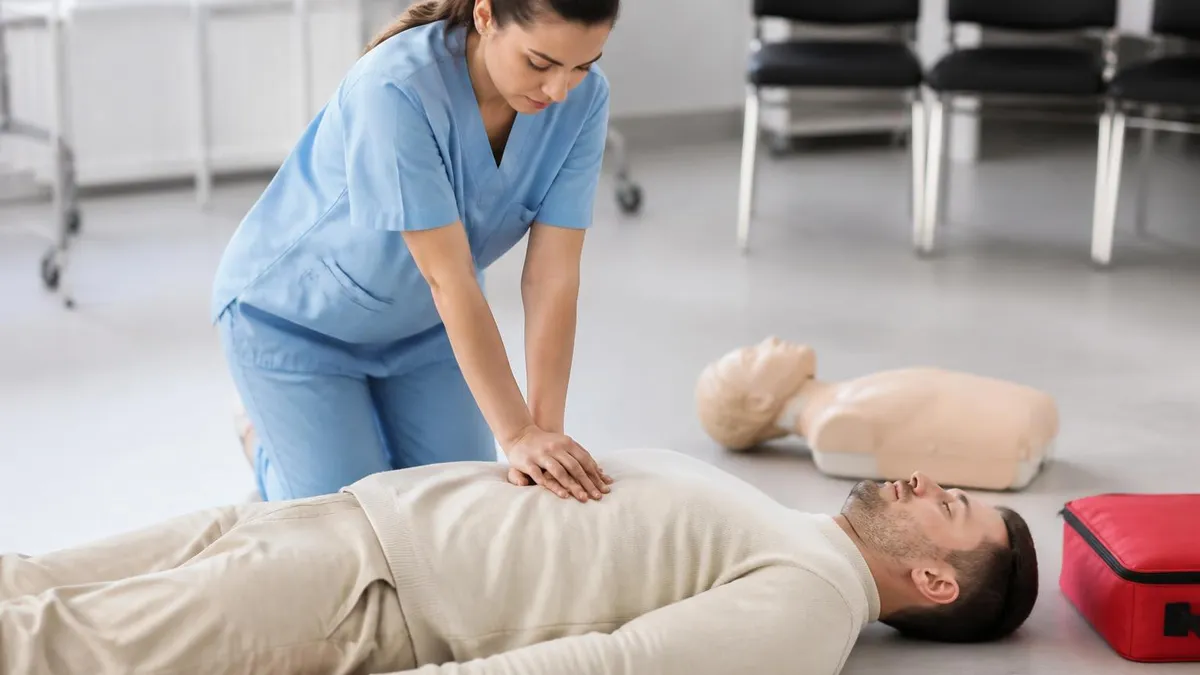
Should You Build a Career Around CPR Skills?
- +Strong job demand across healthcare, public safety, and education
- +Entry-level paths available in under six months of training
- +Transferable credentials accepted in all 50 states
- +Clear ladder from entry roles to six-figure specialty positions
- +Personal satisfaction from genuinely lifesaving work
- +Many employers fully reimburse certification and renewal costs
- +Stable employment that historically resists recession cycles
- −Shift work, nights, weekends, and holidays are common
- −Emotional weight of cardiac arrests and unsuccessful resuscitations
- −Physical demands including lifting, standing, and long shifts
- −Mandatory recertification every two years for life
- −Exposure to infectious disease and workplace stress
- −Higher specialty roles often require multi-year degrees
- −Entry-level wages in some markets remain modest
Pros and Cons at a Glance
| Pros | Cons |
|---|---|
| Strong job demand across healthcare, public safety, and education | Shift work, nights, weekends, and holidays are common |
| Entry-level paths available in under six months of training | Emotional weight of cardiac arrests and unsuccessful resuscitations |
| Clear ladder from entry roles to six-figure specialty positions | Physical demands including lifting, standing, and long shifts |
| Personal satisfaction from genuinely lifesaving work | Mandatory recertification every two years for life |
| Many employers fully reimburse certification and renewal costs | Exposure to infectious disease and workplace stress |
| Stable employment that historically resists recession cycles | Higher specialty roles often require multi-year degrees |
Steps to Launch Your CPR Career
- ✓Decide whether you want clinical, public safety, education, or fitness work
- ✓Choose between Heartsaver and BLS based on the job postings you are targeting
- ✓Find an AHA or Red Cross approved training site within driving distance
- ✓Register for a course that includes hands-on skills testing, not certificate-only options
- ✓Pass the written and skills exams and download your digital card immediately
- ✓Add the certification number and expiration date to your resume
- ✓Apply to entry-level positions while your card is fresh and recent
- ✓Schedule annual skills practice even though renewal is only every two years
- ✓Plan your first advanced credential such as ACLS, EMT, or a CNA program
- ✓Track your continuing education hours for license renewals in regulated states
The card is the on-ramp, not the destination
A single CPR card rarely changes a salary by itself, but it is the entry token for entire industries. Pair it with one additional credential, such as a CNA certificate, EMT license, or personal trainer designation, and your earning power roughly doubles within twelve months. Treat the basic card as week one of a longer plan.
Salary outcomes for CPR-required jobs vary across a wide range, and understanding that range helps you set realistic expectations and negotiate informed offers. The lowest-paid CPR jobs generally start near the federal minimum wage equivalent of around $30,000 a year, while the highest-paid specialties, such as certified registered nurse anesthetists and emergency medicine physician assistants, can exceed $200,000. Where you land depends on your training investment, geography, and willingness to work nights, weekends, and holidays.
Entry-level wages cluster around three benchmarks. Lifeguards and fitness instructors typically earn $13 to $22 an hour. Certified nursing assistants, patient care technicians, and medical assistants run $15 to $24 an hour. EMTs start at $16 to $24 an hour in most regions, though large metropolitan fire departments and private ambulance services in high-cost cities push that higher. None of these jobs require a degree, but each demands a current CPR or BLS card before the first shift.
Mid-tier roles add a license or associate degree and roughly double the entry pay. Registered nurses with two years of experience commonly earn $70,000 to $95,000. Respiratory therapists land in a similar window. Paramedics with five-plus years and overtime often clear $80,000. Surgical technologists, radiologic technologists, and dental hygienists also occupy this band, and the pay rises faster than inflation in most years because demand outpaces supply.
High-tier specialties require either advanced certifications stacked on top of an RN license, additional degrees, or both. Critical care nurses with CCRN certification, flight nurses, certified registered nurse anesthetists, nurse practitioners, and physician assistants in emergency medicine populate this group. Salaries from $110,000 to well over $200,000 are achievable, and CPR remains a baseline requirement for every single one of these roles even though their day-to-day responsibilities go far beyond chest compressions.
Geography swings outcomes significantly. The Bureau of Labor Statistics reports that California, Hawaii, Oregon, Massachusetts, and Alaska consistently top RN pay tables, while Mississippi, Alabama, and South Dakota sit near the bottom. Cost of living offsets only some of that gap. Rural critical-access hospitals frequently offer sign-on bonuses, loan repayment, and housing stipends that can change the math substantially for nurses and paramedics willing to relocate.
Job outlook is strong almost everywhere. Healthcare hiring is projected to add about two million positions through 2032, public safety hiring is steady, and education-sector turnover keeps school nurse and athletic trainer roles open year-round. Even fitness and recreation, which historically swing with the economy, have rebounded as employers add wellness benefits. CPR is one of the lowest-cost credentials with the highest direct connection to active hiring demand.
Beyond base pay, total compensation often includes health insurance, retirement contributions, tuition reimbursement, certification stipends, and shift differentials worth 10 to 30 percent. Many hospitals reimburse the full cost of BLS, ACLS, and PALS renewals and grant paid time for skills-check days. When you compare offers, look at the entire package, not just the hourly rate, because the support structure usually decides whether your CPR career stays sustainable for decades.
Many readers pair this guide with the cpr practice test to check their readiness before exam day.
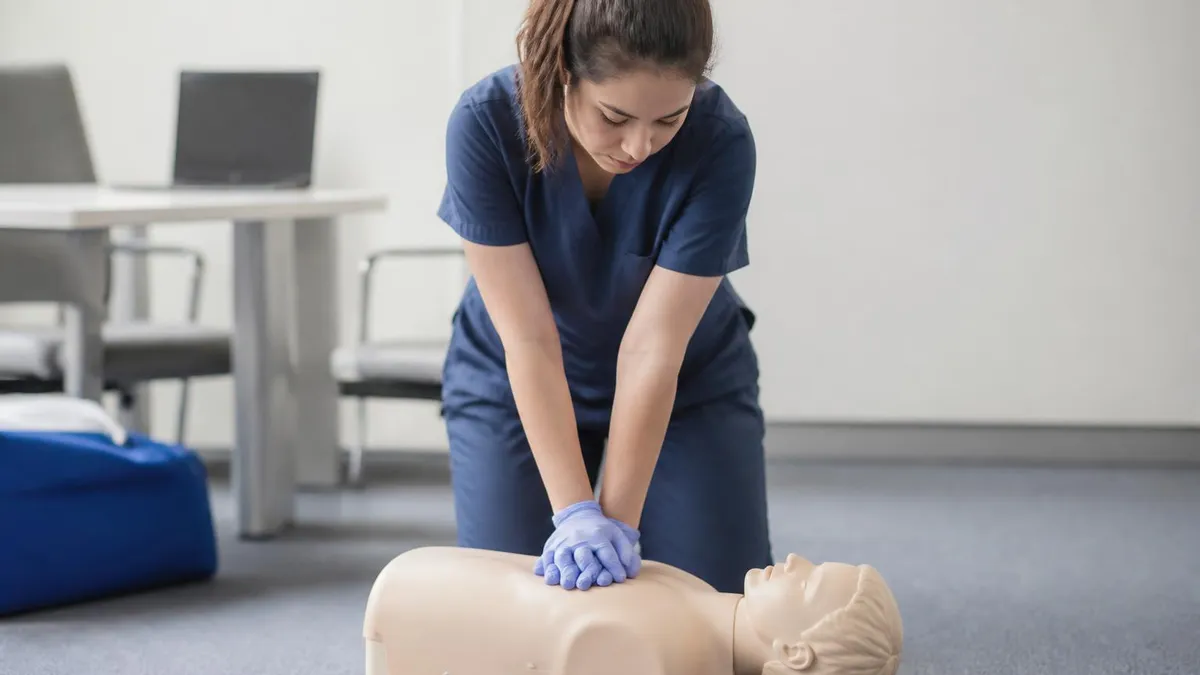
Online-only CPR cards with no in-person skills check are widely refused by hospitals, schools, and public safety agencies. Always verify that your course includes hands-on testing with an AHA, Red Cross, or ASHI-aligned instructor. If a provider promises a card in twenty minutes with no skills evaluation, your employer is likely to reject it on day one.
Advancing beyond an entry-level CPR card means choosing a credential stack that compounds. The most reliable strategy is to add a single licensed or certified role on top of CPR within the first year, then layer specialty certifications every two to three years after that. Done deliberately, this pattern can move you from $32,000 to $90,000 in five years and to six figures within ten, all while keeping a current CPR card at the foundation of your professional identity.
For clinical paths, the most common compounding ladder is CNA, then LPN or paramedic, then RN, then BSN, then specialty certifications like CCRN, CEN, or TNCC. Each step typically takes one to three years and unlocks meaningful pay jumps. Many hospitals will pay for the next degree if you commit to staying two to three years afterward, which can mean tens of thousands in tuition savings and accelerated salary growth without taking on new debt.
For non-clinical paths, advancement looks different. A lifeguard can stack a Lifeguard Instructor certificate, Water Safety Instructor, and Aquatic Facility Operator to move into aquatics management, where salaries often land in the $55,000 to $80,000 range. A personal trainer can add Corrective Exercise Specialist, Performance Enhancement Specialist, or a related niche to charge premium rates and contract with sports teams, physical therapy clinics, or executive wellness programs.
Public safety advancement usually moves on a rank structure rather than a certification stack. Firefighters add Fire Officer, Fire Instructor, Hazmat Technician, and EMT or paramedic credentials to qualify for engineer, captain, and battalion chief positions. Police officers add field training officer, detective, and specialty unit assignments. CPR and AED competence remain part of every promotional exam and annual fitness evaluation, so even leadership keeps the card current.
Education-sector workers can compound CPR with first aid instructor authorizations, allergy and anaphylaxis training, mental health first aid, and athletic training degrees. School districts increasingly require multiple lifesaving credentials for staff who supervise sports, recess, and field trips. A teacher who carries CPR, AED, EpiPen, and concussion-response credentials becomes an easier hire and may qualify for stipends as a school safety coordinator.
Consider the long view of recertification. A two-year renewal cycle is short enough that complacency is risky and long enough that skills decay between classes. The strongest CPR careerists schedule quarterly self-practice on a manikin, watch updated guideline videos when the American Heart Association revises them every five years, and join professional associations that send research summaries. These habits separate competent responders from confident ones.
Finally, think about transferability. CPR credentials cross state lines without re-testing, healthcare licensure compacts now cover dozens of states for nurses and EMS providers, and most professional associations offer national board examinations. If you anticipate relocating for family or lifestyle reasons, build your stack with portable credentials. For a deeper dive into mainstream classroom options, review the american heart association cpr classes near me guide.
Final preparation for a CPR-based career mixes documentation, practical readiness, and a clear job search plan. Start by collecting every credential you currently hold in a single digital folder: your CPR or BLS card, any first aid certificates, high school or college transcripts, professional licenses, and prior job verifications. Many employers now use applicant tracking systems that automatically reject incomplete files, so a well-organized portfolio is a real competitive edge during the first 30 days of your search.
Treat your resume as a CPR-aware document. Place your certification, expiration date, and issuing body in a credentials section near the top. Recruiters in healthcare, fire, EMS, and education scan for that line before reading anything else. If you carry multiple cards, list them in order of relevance to the role you are applying for, and update them within 24 hours of completing a renewal so you never let a stale date sit in a published profile.
Practice the interview answers that CPR-required employers ask repeatedly. Expect questions about your reaction under stress, your experience with team-based emergencies, your understanding of the chain of survival, and your willingness to follow protocols. Even if you have never run an actual code, you can describe simulated experiences from your skills check, scenarios you have studied, and the way you think about prioritizing breathing, circulation, and defibrillation.
Build a 30-60-90 day plan for your first job. Days 1 to 30 are about learning the layout, meeting the team, and demonstrating reliable basics. Days 31 to 60 should include shadowing the most experienced responder you can find, asking to attend codes or skills drills, and beginning a personal log of cases. Days 61 to 90 are when you start volunteering for additional training, suggesting small improvements, and identifying your next credential target.
Stay current with guidelines. The American Heart Association publishes updates every five years, and the most recent cycle emphasized high-quality compressions with minimal interruptions, early defibrillation, and team-based communication. Subscribe to one professional newsletter, follow your certifying body on the platform you check most often, and review the science highlights each time you renew. Employers notice candidates who can speak about current guidelines in plain English.
Look after your own readiness physically and mentally. Performing CPR for even five minutes is exhausting, and a real resuscitation can last twenty minutes or longer with multiple compressors switching every two minutes. Maintain cardiovascular fitness, build core and shoulder strength, and practice the depth and rate cadence on a manikin so your body memorizes the work. Mental readiness includes accepting that some patients will not survive despite excellent care.
Finally, never stop testing your knowledge. Short practice quizzes maintain your recall of compression depth, ratios, AED steps, and special populations far better than rereading a manual once a year. Use spaced repetition between renewals and add a fresh quiz session to your calendar each quarter. The combination of practical skills, documentation discipline, and steady knowledge upkeep is what turns a CPR card into a long, rewarding career.
CPR Questions and Answers
About the Author

Registered Nurse & Healthcare Educator
Johns Hopkins University School of NursingDr. Sarah Mitchell is a board-certified registered nurse with over 15 years of clinical and academic experience. She completed her PhD in Nursing Science at Johns Hopkins University and has taught NCLEX preparation and clinical skills courses for nursing students across the United States. Her research focuses on evidence-based exam preparation strategies for healthcare certification candidates.