
CPR Certification: How to Get Certified in CPR for 2026 October
📗 Prepare for the CPR Certification: How to Get Certified certification. Practice questions with answer explanations covering all exam domains.
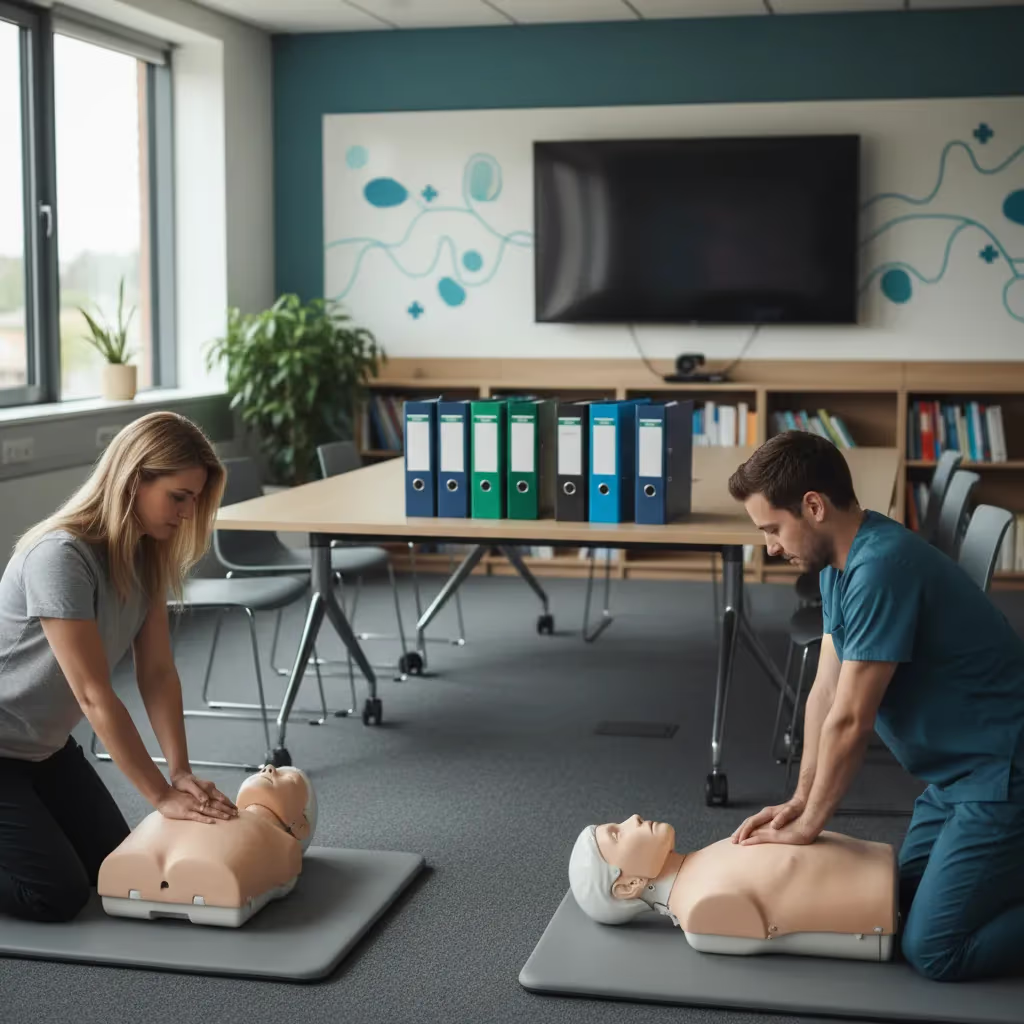
Getting your CPR certification could literally save someone's life. It's not an exaggeration. Cardiac arrest kills over 350,000 Americans outside of hospitals every year, and bystander CPR doubles or triples a victim's chance of survival. Yet only about 18% of people who experience cardiac arrest outside a hospital receive bystander CPR. That gap exists because most people don't know how—or they're afraid they'll do it wrong. CPR certification fixes both problems.
Your CPR certification proves you've learned the correct techniques for chest compressions, rescue breathing, and using an AED (automated external defibrillator). Employers in healthcare, education, fitness, childcare, and construction often require it. But even if your job doesn't demand it, having certification means you're ready when an emergency strikes at home, at a store, or on the street. That readiness matters more than most people realize—emergencies don't send advance notice, and they rarely happen in convenient locations near a hospital.
This guide covers everything about CPR certification: who offers it, what it costs, how long it takes, and whether online courses are worth your time. You'll also find tips for passing your skills assessment on the first try and keeping your certification current through timely renewal. Whether you're a first-time learner or renewing an expired credential, the information here gets you certified quickly and confidently. No fluff, no runaround—just what you need to know.
CPR certification isn't one-size-fits-all. Several organizations offer it, and each targets slightly different audiences. The American Heart Association (AHA) is the most recognized provider in the US—their BLS (Basic Life Support) certification is the gold standard for healthcare workers. The American Red Cross runs the most popular courses for the general public and workplace compliance. The National Safety Council and ASHI (American Safety & Health Institute) round out the major providers.
Which certification you need depends on your profession and employer. Healthcare workers almost always need AHA BLS or an equivalent. Teachers, coaches, and childcare workers typically need Red Cross or AHA Heartsaver certification. Lifeguards need specialized aquatic CPR training. Office workers and parents can choose any reputable provider—the techniques are identical across organizations since they all follow the same American Heart Association guidelines for resuscitation science.
Don't fall for uncredited online-only courses that promise instant certification for $15. Many employers won't accept them. Legitimate certification always includes a hands-on skills assessment where you demonstrate proper technique on a manikin. Some courses blend online learning with an in-person skills session—that's fine and widely accepted. But a certification without any physical skills check isn't worth the card it's printed on.
The path to CPR certification is straightforward. Pick a course, attend the class (online, in-person, or blended), pass the written test and skills assessment, and receive your card. The entire process takes as little as a few hours for basic certification. BLS certification for healthcare professionals takes about 4 hours since it covers more advanced techniques including two-rescuer CPR and bag-mask ventilation.
In-person courses remain the most effective way to learn CPR. You'll practice on manikins, work through realistic scenarios, and get immediate feedback from certified instructors. Most people feel significantly more confident after hands-on training compared to watching videos alone. Community centers, fire stations, hospitals, and YMCAs host classes regularly. Your local Red Cross chapter lists upcoming courses on their website with easy online registration.
Blended courses split the difference nicely. Complete the knowledge portion at your own pace online—usually 1 to 2 hours of video lessons and quizzes—then attend a shorter in-person session for the skills assessment. This format works well for busy schedules. You still get hands-on practice with manikins, but you've already absorbed the theory before walking into the classroom. Both AHA and Red Cross offer popular blended options for CPR certification, and many employers accept them without any reservations about the format.
Types of CPR Certification Explained
Heartsaver CPR AED is designed for the general public and workplace requirements. It covers adult, child, and infant CPR plus AED use. Course length runs about 2 to 3 hours. This certification satisfies most non-healthcare employer requirements and is ideal for teachers, coaches, personal trainers, parents, and office safety teams. Both AHA and Red Cross offer this level.
Cost for CPR certification ranges from free to about $100, depending on the provider and course type. Community organizations, fire departments, and some hospitals offer free CPR classes periodically—especially during events like National CPR Week in June. Red Cross classroom courses typically run $75 to $90. AHA Heartsaver courses cost $50 to $80 through authorized training centers. BLS certification runs $60 to $90 in most areas.
Some employers cover the full cost of CPR certification as a workplace benefit. Ask your HR department before paying out of pocket. Schools and universities often provide discounted group rates for students. Military personnel and veterans frequently have access to free certification through base resources and VA programs. If money is tight, search for community-sponsored free events in your area first—they happen more often than you'd expect.
Online-only courses are cheaper—some as low as $15—but verify that your employer accepts them before enrolling. Many healthcare employers explicitly require AHA or Red Cross certification with an in-person skills component. Paying $25 for an online-only card that your employer rejects wastes both time and money. Always confirm what your workplace or licensing board requires before choosing a course format for your CPR certification.
The CPR certification exam isn't designed to trick you. It tests whether you know the critical steps and can perform them correctly. The written portion covers topics like the chain of survival, compression-to-ventilation ratios (30:2 for single rescuer), compression depth (at least 2 inches for adults), compression rate (100 to 120 per minute), and when to use an AED. Most courses provide study materials during the class itself, so you're studying and testing on the same day.
For the skills assessment, you'll demonstrate CPR on adult, child, and infant manikins depending on your certification level. Instructors watch for proper hand placement, adequate compression depth and rate, full chest recoil between compressions, and effective rescue breaths. They also test your ability to recognize cardiac arrest, call 911, retrieve an AED, and follow the device's prompts. Practice these sequences until they feel automatic—muscle memory carries you through the assessment.
Common mistakes that trip people up: compressing too shallow, not allowing full chest recoil, interrupting compressions for too long, and tilting the head incorrectly for rescue breaths. Your instructor will coach you through practice rounds before the actual assessment. Listen to their feedback carefully. Most people pass on their first attempt. If you don't, you typically get a chance to remediate and retest the same day—it's not a high-stakes exam like a licensing test.
CPR Certification: Benefits and Considerations
- +Confidence to act in cardiac emergencies—not freeze
- +Required for many healthcare, teaching, and fitness careers
- +Doubles or triples cardiac arrest survival rates
- +Courses are short—most take just 2 to 4 hours
- +Good Samaritan laws protect certified rescuers in most states
- +Valuable life skill that benefits your family and community
- −Certification expires every 2 years and requires renewal
- −In-person skills assessment means you can't skip the classroom
- −Not all online certifications are accepted by employers
- −Costs can add up with biennial renewals over your career
- −Techniques change periodically—what you learned years ago may be outdated
- −Some people find practicing on manikins stressful or uncomfortable
CPR certification renewal is something you'll need to plan for every two years. Don't wait until your card expires—some employers check expiration dates during audits and will bench you from patient-facing roles until you're current. Mark your renewal date in your calendar six months early so you have plenty of time to find a convenient class. Recertification courses are shorter than initial certification, usually 2 to 3 hours, and cost slightly less.
The renewal process mirrors initial certification: complete a course and pass both the written test and skills check. AHA and Red Cross both offer dedicated renewal courses that skip the introductory material and focus on updated guidelines and skills practice. CPR science evolves—the compression-to-ventilation ratio changed in 2010, hands-only CPR gained prominence in 2015, and updated pediatric protocols rolled out in 2020. Renewal courses keep you current on these changes.
Can you renew online? Partially. Blended renewal courses let you complete the knowledge portion online and attend only a brief in-person skills session. Fully online renewal (no hands-on component) exists but isn't accepted by most healthcare employers or state licensing boards. If your certification is purely for personal knowledge, online-only renewal is fine. For professional requirements, stick with options that include hands-on skills verification for your CPR certification renewal.
CPR Certification Exam Prep Checklist
- ✓Know the adult compression depth: at least 2 inches (5 cm)
- ✓Memorize the compression rate: 100 to 120 per minute
- ✓Practice the 30:2 compression-to-ventilation ratio for single rescuer
- ✓Learn proper head-tilt chin-lift technique for opening the airway
- ✓Understand when and how to use an AED on adults and children
- ✓Know the differences between adult, child, and infant CPR techniques
- ✓Practice recognizing signs of cardiac arrest vs other emergencies
- ✓Review choking response for conscious and unconscious victims
- ✓Take at least one CPR certification practice test before your exam
- ✓Arrive to your class wearing comfortable clothing that allows movement
Hands-only CPR has changed the game for bystander response. The AHA now recommends that untrained bystanders perform chest compressions without rescue breaths if they witness a teen or adult collapse. Push hard and fast in the center of the chest at 100 to 120 compressions per minute. That's it. No mouth-to-mouth contact required at all. This simplified approach removes the biggest barrier to bystander action—hesitation about giving breaths to a stranger.
But don't let hands-only CPR make you think full certification is unnecessary. It's not. Certification teaches you infant and child CPR (where breaths are essential), AED use, choking response, and team-based resuscitation. These skills go far beyond simple chest compressions. If you work in healthcare, education, or any field involving vulnerable populations, you need the complete training that CPR certification provides. Hands-only is a backup for untrained civilians, not a replacement for proper certification.
AED training is a critical part of every modern CPR certification course. These portable devices analyze heart rhythm and deliver an electric shock when needed. They're found in airports, schools, gyms, offices, and shopping centers. Using one within the first few minutes of cardiac arrest dramatically improves survival—some studies show up to 70% survival rates when CPR and AED are applied together within 3 to 5 minutes of collapse. During your certification course, you'll practice with training AEDs until the process feels natural and automatic.
Workplace CPR certification requirements vary by industry and state. OSHA doesn't mandate CPR training for most workplaces, but it strongly recommends it—and many states have their own rules. Healthcare facilities require BLS certification universally. Schools in most states require at least some staff members to hold current CPR certification. Fitness facilities and pools typically require all trainers and lifeguards to be certified. Construction sites with 10 or more workers often need designated first-aid responders with CPR certification.
If you're job hunting, having CPR certification on your resume signals preparedness and responsibility. It's a small credential that makes a real impression, especially for roles involving public interaction or safety. Teachers, coaches, flight attendants, hotel staff, security guards—all benefit from listing current CPR certification. Some employers view it as a leadership indicator. You took the initiative to learn a life-saving skill. That says something about your character beyond the technical ability itself.
Group certification discounts are worth exploring if multiple people at your workplace need training. AHA and Red Cross both offer on-site group classes where an instructor comes to your location. This is more convenient and usually cheaper per person than individual registration. Companies with 10 or more employees needing certification should always request group pricing. Some insurance providers even offer premium discounts to businesses with CPR-trained staff on site, making the entire investment essentially pay for itself over time.
CPR certification expires every 2 years regardless of provider. An expired certification is treated the same as having no certification at all by most employers and licensing boards. If your job requires CPR certification and yours lapses, you may be suspended from clinical duties, barred from teaching, or flagged during compliance audits. Set calendar reminders and renew 1 to 2 months before expiration.
Parents and caregivers have some of the strongest reasons to get CPR certification. Children and infants are vulnerable to choking, drowning, and other emergencies where CPR can be the difference between life and death. Infant CPR uses different techniques—two-finger compressions instead of two-handed, gentler breaths, and shallower compression depth. These aren't intuitive at all. You absolutely need to learn and practice them before an emergency happens, not during one when panic sets in.
Grandparents stepping in as caregivers should consider getting certified or renewing lapsed certification. CPR guidelines have changed significantly over the past decade. What you learned in the 1990s doesn't reflect current best practices. Compression depth, rate, and the role of rescue breathing have all been updated based on new research. A quick recertification course brings you current and builds confidence that you can protect the children in your care.
Community CPR events make certification accessible to everyone. Many fire departments host free classes quarterly. Libraries, churches, and neighborhood associations organize group training sessions. During National CPR and AED Awareness Week (first week of June), free and discounted courses pop up nationwide. Follow your local Red Cross chapter on social media to catch these opportunities. Getting your CPR certification doesn't have to be expensive or time-consuming—it just has to happen.
CPR Practice Test Questions
Prepare for the CPR - Cardiopulmonary Resuscitation exam with our free practice test modules. Each quiz covers key topics to help you pass on your first try.
CPR Adult CPR
CPR Exam Questions covering Adult CPR. Master CPR Test concepts for certification prep.
CPR AED Use
Free CPR Practice Test featuring AED Use. Improve your CPR Exam score with mock test prep.
CPR Basic CPR Principles
CPR Mock Exam on Basic CPR Principles. CPR Study Guide questions to pass on your first try.
CPR Child and Infant CPR
CPR Test Prep for Child and Infant CPR. Practice CPR Quiz questions and boost your score.
Good Samaritan laws protect people who provide emergency CPR in most states. These laws shield you from civil liability as long as you act in good faith, don't expect compensation, and don't act with gross negligence. Fear of being sued is one of the top reasons bystanders hesitate during emergencies. Your CPR certification training covers these legal protections in detail so you understand your rights and responsibilities well before you ever need to act in a real emergency situation.
That said, always call 911 before starting CPR. Professional help is essential—bystander CPR buys time, but it doesn't replace advanced medical care. If you're alone with a victim, call 911 on speakerphone and begin compressions. If other people are present, delegate: point at someone specific and tell them to call 911 while you start CPR. Being directive in emergencies works better than shouting general requests into a crowd. Your certification course teaches this delegation technique explicitly.
The psychological impact of performing CPR on a real person is something courses mention but can't fully prepare you for. It's intense. The sternum may crack under compressions—that's normal and means you're pushing hard enough. The outcome isn't always survival. But knowing you tried, that you had the skills and the courage to act, matters enormously. CPR certification doesn't just teach technique. It builds the mental readiness and emotional preparedness to step forward when everyone else steps back. And that confidence—that willingness to act—makes all the difference when seconds count.
CPR Questions and Answers
About the Author

Registered Nurse & Healthcare Educator
Johns Hopkins University School of NursingDr. Sarah Mitchell is a board-certified registered nurse with over 15 years of clinical and academic experience. She completed her PhD in Nursing Science at Johns Hopkins University and has taught NCLEX preparation and clinical skills courses for nursing students across the United States. Her research focuses on evidence-based exam preparation strategies for healthcare certification candidates.