
Online ACLS: The Complete 2026 October Guide to Training, Certification, and Renewal for Healthcare Professionals
Online ACLS training guide covering courses, costs, AHA requirements, and certification steps. ✅ Learn how to earn or renew your ACLS credential fast.

Online ACLS training has transformed how healthcare professionals earn and maintain their Advanced Cardiovascular Life Support certification. Whether you are a physician, nurse, paramedic, or other qualified provider, completing your ACLS course through a reputable online platform gives you the flexibility to study at your own pace while meeting the rigorous standards established by the American Heart Association. Understanding what online ACLS involves, how it compares to traditional classroom instruction, and which programs deliver genuine certification is essential for anyone entering or advancing in emergency medicine.
The demand for online ACLS courses has surged in recent years as healthcare systems recognize the validity and convenience of blended learning approaches. Hospitals and clinics across the United States now accept online ACLS certification from approved providers, provided the course includes both a cognitive component and a hands-on skills assessment. This dual requirement ensures that providers can demonstrate competency in interpreting cardiac rhythms, administering emergency medications, and leading resuscitation teams during actual cardiac emergencies in clinical settings.
Choosing the right online ACLS program requires careful evaluation of accreditation status, course structure, and employer acceptance policies. Not all programs carry equal weight in the eyes of hiring managers and hospital credentialing committees. AHA-aligned courses that include simulation-based practice and proctored skills testing consistently receive broader acceptance than fully self-paced alternatives without any practical component. The distinction matters significantly when your certification directly impacts your ability to practice and maintain employment.
Cost is another critical factor for healthcare professionals considering online ACLS certification. Prices range from as low as forty dollars for basic cognitive-only courses to over two hundred fifty dollars for comprehensive programs that include skills sessions and official provider cards. Understanding what each price point includes helps you avoid paying twice when an employer rejects a certificate from an unrecognized provider. Budget-conscious professionals should always weigh upfront savings against the potential costs of needing to recertify through an accepted program.
The typical online ACLS course covers cardiac arrest algorithms, bradycardia and tachycardia management, acute coronary syndromes, and stroke recognition protocols. Most programs organize content into modules that build sequentially, starting with rhythm recognition fundamentals and progressing through pharmacology and team dynamics. Interactive case scenarios test your ability to apply protocols under simulated pressure. These scenarios mirror real-world resuscitation situations and help cement your understanding of when to shock, when to medicate, and when to reassess the patient.
Timeline expectations for completing an online ACLS course vary considerably based on the provider and your existing clinical knowledge base. First-time certification candidates should expect to invest between eight and fourteen hours in coursework, while renewal candidates with prior experience often complete the cognitive portion in four to six hours. Planning adequate study time ensures you retain the material rather than merely passing the exam, which ultimately makes you a more effective resuscitation team member in high-pressure situations.
This comprehensive guide walks you through every aspect of earning your ACLS certification online in 2026. You will learn how to evaluate course providers, understand the step-by-step enrollment and completion process, compare the advantages and disadvantages of online versus in-person training, and prepare effectively for both the written exam and the skills assessment. By the end, you will have a clear roadmap for obtaining a credential that advances your career and strengthens your clinical capabilities in cardiovascular emergency care.
Online ACLS Certification by the Numbers
Steps to Complete Your Online ACLS Certification
Verify Eligibility and Prerequisites
Choose an Accredited Course Provider
Complete Online Cognitive Modules
Pass the Written Certification Exam
Schedule and Complete Skills Assessment
Receive Your Provider Card
Selecting an online ACLS course provider is arguably the most consequential decision you will make during the entire certification process. The American Heart Association operates its own online learning platform and also authorizes independent training centers to deliver ACLS education using official curriculum materials. AHA-branded courses carry universal acceptance because they follow standardized curricula, use validated testing instruments, and require in-person skills verification by certified instructors. Third-party providers may offer similar content at lower prices, but their certificates sometimes face scrutiny from hospital credentialing departments and hiring committees.
When evaluating third-party online ACLS providers, examine their accreditation claims with careful attention to detail and documentation. Legitimate programs display their International Accreditors for Continuing Education and Training accreditation or similar recognized credentials prominently on their websites. They also provide verifiable course completion certificates with unique identification numbers that employers can authenticate through independent verification systems. Be wary of providers who guarantee passing without studying or who offer certificates immediately upon payment without requiring any assessment or demonstrated competency.
The cognitive component of a quality online ACLS course is structured around the core algorithms established in the current AHA guidelines. You will study the cardiac arrest algorithm covering ventricular fibrillation, pulseless ventricular tachycardia, pulseless electrical activity, and asystole management. Each algorithm prescribes specific sequences of interventions including CPR quality metrics, defibrillation energy levels, medication dosages, and reassessment intervals. Understanding these algorithms is not about memorization alone but about developing the clinical reasoning needed to adapt established protocols to unique patient presentations and dynamic resuscitation situations.
Pharmacology represents a substantial portion of online ACLS coursework because medication administration during resuscitation events requires both precision and speed under extreme pressure. You must know the indications, contraindications, dosages, and administration routes for epinephrine, amiodarone, lidocaine, adenosine, atropine, and other critical emergency drugs. Online courses typically present pharmacology through interactive drug cards, dosage calculators, and scenario-based questions that test your ability to choose the right medication for specific dysrhythmias and hemodynamic states. Mastering this content directly impacts patient survival outcomes during actual emergencies.
Team dynamics and communication skills receive increasing emphasis in modern online ACLS training programs following updated AHA recommendations. The Association recognizes that resuscitation outcomes depend not only on individual clinical knowledge but also on effective team coordination during chaotic emergency situations. Online modules now include video demonstrations of closed-loop communication, role assignment during code events, and mutual performance monitoring techniques. While these concepts may seem difficult to teach remotely, interactive simulations and branching scenario designs create realistic practice environments that prepare you for collaborative resuscitation efforts.
Post-cardiac arrest care is another critical domain that online ACLS courses must address thoroughly and with current evidence-based protocols. This includes targeted temperature management, hemodynamic optimization, coronary angiography decision-making criteria, and neurological prognostication timelines. These topics have evolved significantly with recent guideline updates, making current and regularly refreshed online content particularly valuable for practicing clinicians. Providers who update their course materials within months of new AHA recommendations demonstrate a commitment to evidence-based education that should strongly influence your provider selection decision.
The written examination at the conclusion of your online ACLS course typically consists of fifty multiple-choice questions with a minimum passing score of eighty-four percent. Questions test both factual recall and clinical application, presenting detailed patient scenarios that require you to identify rhythms, choose appropriate interventions, and sequence treatments correctly under time constraints. Most online platforms allow two attempts at the exam with a brief study period between tries. Preparing thoroughly before your first attempt reduces anxiety and demonstrates the genuine competency that ACLS certification is designed to represent.

ACLS Practice Test Questions
Prepare for the ACLS - Advanced Cardiovascular Life Support exam with our free practice test modules. Each quiz covers key topics to help you pass on your first try.
ACLS Airway Management
ACLS Exam Questions covering ACLS Airway Management. Master ACLS Test concepts for certification prep.
ACLS Airway Management and Ventilation
Free ACLS Practice Test featuring ACLS Airway Management and Ventilation. Improve your ACLS Exam score with mock test prep.
ACLS Cardiac Rhythm Recognition
ACLS Mock Exam on ACLS Cardiac Rhythm Recognition. ACLS Study Guide questions to pass on your first try.
ACLS Cardiac Rhythms and ECG Interpretation
ACLS Test Prep for ACLS Cardiac Rhythms and ECG Interpretation. Practice ACLS Quiz questions and boost your score.
ACLS - Advanced Cardiovascular Life Suppor...
ACLS Questions and Answers on - Advanced Cardiovascular Life Support ACLS Emergency Pharmacology. Free ACLS practice for exam readiness.
ACLS - Advanced Cardiovascular Life Suppor...
ACLS Mock Test covering - Advanced Cardiovascular Life Support Acute Coronary Syndromes. Online ACLS Test practice with instant feedback.
ACLS - Advanced Cardiovascular Life Suppor...
Free ACLS Quiz on - Advanced Cardiovascular Life Support Acute Stroke Care. ACLS Exam prep questions with detailed explanations.
ACLS - Advanced Cardiovascular Life Suppor...
ACLS Practice Questions for - Advanced Cardiovascular Life Support BLS and High-Quality CPR. Build confidence for your ACLS certification exam.
ACLS - Advanced Cardiovascular Life Suppor...
ACLS Test Online for - Advanced Cardiovascular Life Support Post-Cardiac Arrest Care. Free practice with instant results and feedback.
ACLS - Advanced Cardiovascular Life Suppor...
ACLS Study Material on - Advanced Cardiovascular Life Support Tachycardia and Bradycardia Algorithms. Prepare effectively with real exam-style questions.
ACLS Advanced Cardiovascular Life Support
Free ACLS Test covering Advanced Cardiovascular Life Support. Practice and track your ACLS exam readiness.
ACLS Bradycardia
Free ACLS Practice Test featuring Bradycardia. Improve your ACLS Exam score with mock test prep.
ACLS Medical Training
ACLS Mock Exam on Medical Training. ACLS Study Guide questions to pass on your first try.
Online ACLS Course Formats Compared
The AHA HeartCode ACLS online platform represents the gold standard for blended ACLS certification recognized nationwide. This program combines a self-paced online cognitive component with mandatory in-person skills testing at an authorized training center. HeartCode uses adaptive learning technology that adjusts content difficulty based on your performance metrics, ensuring you spend more time on clinical areas where you need improvement. The course includes high-fidelity simulation scenarios with realistic patient responses that challenge your decision-making abilities under pressure.
HeartCode ACLS typically costs between one hundred fifty and two hundred fifty dollars depending on your training center location and regional pricing. The online portion takes approximately eight to twelve hours to complete at your own pace, and the skills session requires an additional two to three hours with an AHA-certified instructor evaluating your performance. Upon successful completion of both components, you receive an official AHA provider card valid for two years. This certification enjoys universal acceptance across all hospital systems and emergency medical services organizations nationwide without exception.
Online ACLS vs. In-Person Training: Pros and Cons
- +Study at your own pace from any location with reliable internet access
- +Lower total cost than traditional two-day classroom courses
- +Flexible scheduling that accommodates rotating shift work and family obligations
- +Self-directed review allows you to spend extra time on personally challenging topics
- +Immediate access to updated content reflecting the latest AHA guideline revisions
- +Digital progress tracking lets you pause and resume sessions anytime without penalty
- −Hands-on skills assessment must still be completed at an in-person testing site
- −Some employers and credentialing bodies only accept AHA-issued provider cards
- −Requires strong self-discipline without the accountability of instructor-led scheduling
- −Limited real-time interaction with instructors for immediate clarification of complex concepts
- −Internet connectivity disruptions can interrupt timed exam attempts and progress
- −Practical team dynamics and leadership skills are harder to develop in a remote format
Pros and Cons at a Glance
| Pros | Cons |
|---|---|
| Study at your own pace from any location with reliable internet access | Hands-on skills assessment must still be completed at an in-person testing site |
| Lower total cost than traditional two-day classroom courses | Some employers and credentialing bodies only accept AHA-issued provider cards |
| Flexible scheduling that accommodates rotating shift work and family obligations | Requires strong self-discipline without the accountability of instructor-led scheduling |
| Self-directed review allows you to spend extra time on personally challenging topics | Limited real-time interaction with instructors for immediate clarification of complex concepts |
| Immediate access to updated content reflecting the latest AHA guideline revisions | Internet connectivity disruptions can interrupt timed exam attempts and progress |
| Digital progress tracking lets you pause and resume sessions anytime without penalty | Practical team dynamics and leadership skills are harder to develop in a remote format |
Online ACLS Readiness Checklist
- ✓Confirm your current BLS provider card is valid and will not expire during your ACLS course.
- ✓Verify your employer accepts online ACLS certification from your chosen provider.
- ✓Ensure you have a reliable computer with stable high-speed internet and updated browser.
- ✓Set aside eight to fourteen hours of uninterrupted study time over one to two weeks.
- ✓Gather a notebook and reference materials for algorithm notes and pharmacology summaries.
- ✓Locate an authorized skills testing center within reasonable travel distance of your home.
- ✓Pre-schedule your in-person skills session within thirty days of your planned course completion.
- ✓Review basic cardiac anatomy and twelve-lead ECG fundamentals before starting the course.
- ✓Download or bookmark the current AHA ACLS algorithm reference cards for study support.
- ✓Notify your supervisor of your certification timeline and any schedule adjustments needed.
Skills Session Timing Is Critical
Research shows that candidates who complete their in-person skills assessment within two weeks of finishing the online cognitive component pass at significantly higher rates than those who wait thirty days or longer. Schedule your skills session before you begin studying online to create a fixed deadline that drives consistent preparation. This simple planning step can be the difference between passing on your first attempt and needing costly retesting.
Preparing for the online ACLS certification exam requires a strategic approach that goes well beyond simply clicking through course modules and hoping for the best. Successful candidates combine systematic content review with active practice testing to build both knowledge recall speed and clinical decision-making accuracy under pressure. Start by identifying the core algorithms for cardiac arrest, bradycardia, tachycardia, and immediate post-cardiac arrest care management. Create summary reference cards for each algorithm that include the entry criteria, intervention sequences, medication dosages, and critical decision branch points that determine your next clinical action.
Rhythm interpretation forms the foundation of nearly every ACLS exam question and practical skills scenario you will encounter. You must be able to distinguish normal sinus rhythm from atrial fibrillation, atrial flutter, supraventricular tachycardia, ventricular tachycardia, ventricular fibrillation, and asystole within seconds of viewing a rhythm strip. Practice with as many sample tracings as possible, focusing not only on classic textbook presentations but also on artifact-laden and ambiguous rhythms that commonly appear in clinical settings. Many online ACLS platforms include dedicated rhythm identification trainers that provide instant feedback on your interpretations.
Pharmacology questions on the ACLS exam test your knowledge of drug selection, dosing protocols, and precise administration timing within specific clinical contexts and patient scenarios. Epinephrine one milligram intravenously every three to five minutes during cardiac arrest is a fundamental protocol you must fully internalize. Beyond basic dosing, expect questions about when amiodarone takes precedence over lidocaine, the role of calcium chloride in hyperkalemia-induced cardiac arrest, and the correct adenosine dosing sequence for stable narrow-complex tachycardia presentations. Understanding the pharmacological rationale behind each medication choice strengthens your ability to answer complex scenario-based questions accurately.
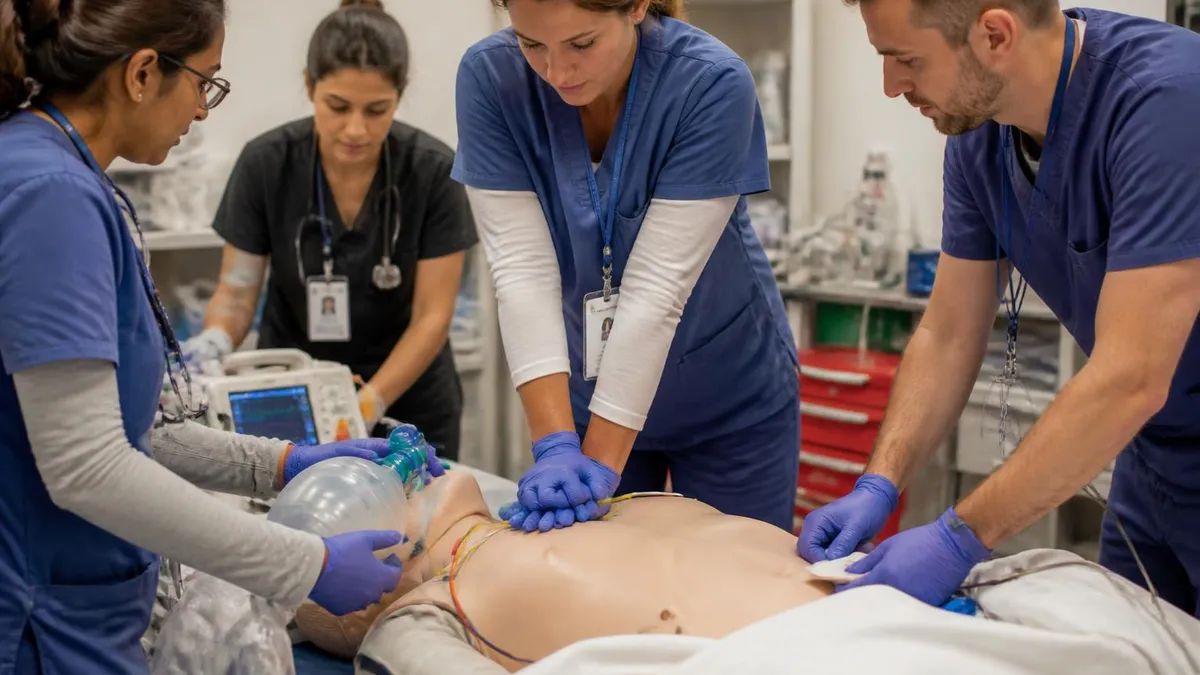
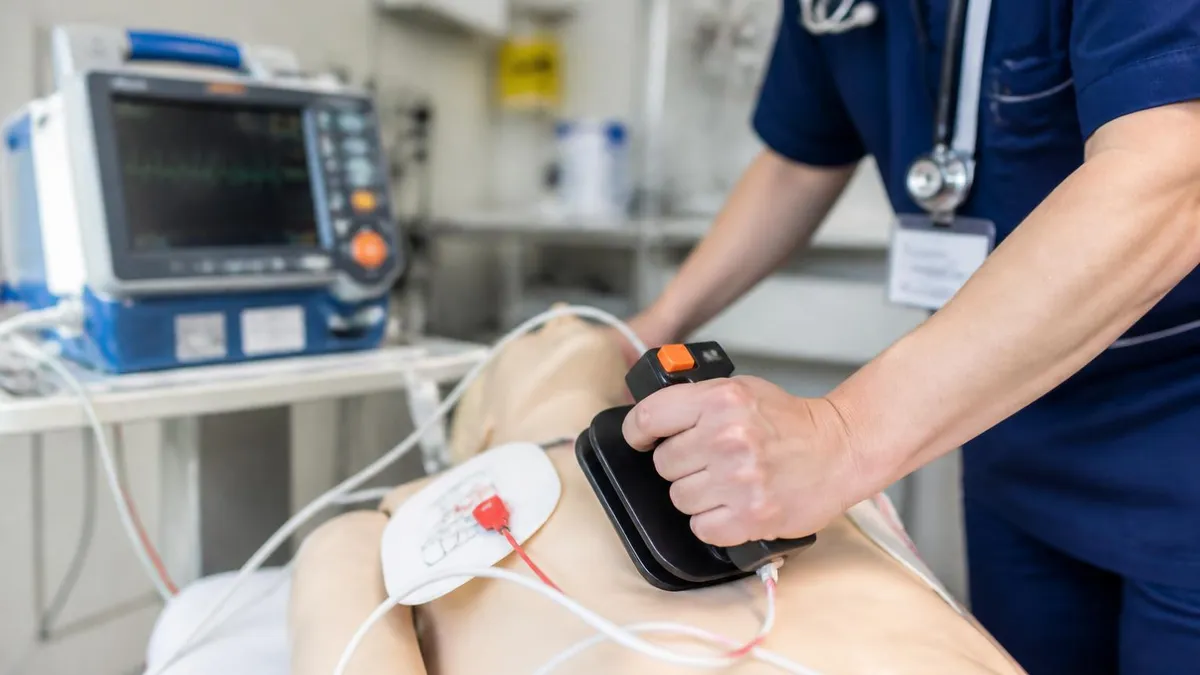
The hands-on skills assessment is a critical component that no fully online course can adequately replace or eliminate from the certification pathway. During this evaluation, an AHA-certified instructor observes your performance in simulated resuscitation scenarios using high-fidelity manikins connected to cardiac monitors displaying real-time rhythm data. You will be assessed on your CPR compression depth and rate accuracy, your ability to integrate defibrillation seamlessly into the resuscitation sequence, your airway management technique, and your team leadership communication effectiveness. Practicing these physical skills repeatedly before your assessment date significantly increases both your confidence and your first-attempt pass rate.
High-performance CPR metrics have become a central focus of modern ACLS skills testing following updated AHA emphasis on measurable quality indicators. The current guidelines emphasize compression depth of at least two inches, a compression rate between one hundred and one hundred twenty per minute, full chest recoil between compressions, and minimized interruptions to chest compressions throughout the resuscitation. During your skills session, the manikin feedback device will measure these parameters quantitatively and display them in real time. Many candidates who comfortably pass the cognitive exam struggle with the physical demands of maintaining high-quality compressions consistently.
Megacode scenarios represent the culminating assessment in most ACLS skills evaluations and test your ability to integrate all learned competencies simultaneously. These complex, multi-phase simulations present a patient whose condition evolves through multiple rhythms and clinical states during a single continuous scenario. You might begin managing a patient in stable tachycardia who deteriorates into pulseless ventricular tachycardia and then transitions to a post-resuscitation care phase requiring targeted temperature management and hemodynamic support. Demonstrating smooth transitions between algorithms while maintaining clear team communication proves your readiness to lead real resuscitation events confidently.
Time management during the written exam is another factor that candidates frequently underestimate until they find themselves running short on the clock. With fifty questions and a typical time limit of approximately ninety minutes, you have roughly one minute and forty-five seconds per question on average. Questions involving rhythm strip interpretation or multi-step clinical scenarios require careful analysis that can consume significantly more than your average time allotment. Develop a strategy of answering straightforward recall questions quickly, then returning to complex scenario questions with your remaining time to prevent rushed errors on material you know well.
A current Basic Life Support provider card is a mandatory prerequisite for ACLS certification. If your BLS card expires while you are in the middle of your online ACLS course, you will be unable to complete the skills assessment until you renew it. Check your BLS expiration date before enrolling and renew early if it falls within your planned ACLS completion window. This common oversight delays certification by weeks for many healthcare professionals each year.
Once you successfully complete your online ACLS certification, understanding the maintenance and renewal cycle ensures you never experience a damaging lapse in your professional credentials. ACLS provider cards issued through AHA-aligned programs are valid for two years from the date of successful completion of both course components. Most healthcare employers require active ACLS certification as a mandatory condition of employment, meaning an expired card can result in suspension from clinical duties, loss of scheduling priority, or even termination in some practice settings. Planning your renewal timeline well in advance protects both your career and your patients.
The renewal process for online ACLS certification mirrors the initial certification pathway but typically requires less time and fewer preparatory steps for experienced providers. Clinicians who have maintained their resuscitation skills through regular clinical practice often complete the cognitive renewal course in four to six hours rather than the eight to fourteen hours required for initial certification. The renewal exam covers the same core content domains but may include updated protocols reflecting the most recent AHA guideline revisions published since your last certification cycle. Staying current through continuing education between cycles significantly reduces your renewal preparation burden.
Employers evaluate ACLS certification as substantially more than a simple credential checkbox on a hiring or credentialing form. In competitive hiring environments across hospitals and emergency departments, candidates who demonstrate ongoing commitment to advanced cardiac life support education distinguish themselves meaningfully from peers who treat certification as a minimal compliance exercise. Some healthcare systems offer salary differentials, shift preference bonuses, or advancement opportunities for providers who hold multiple advanced certifications including ACLS, Pediatric Advanced Life Support, and Neonatal Resuscitation Program credentials simultaneously. Building a comprehensive portfolio of current certifications signals dedication to clinical excellence.
The clinical impact of thorough ACLS preparation extends far beyond passing the certification exam and hanging a provider card on your wall. Research published in major resuscitation medicine journals consistently demonstrates that providers who engage deeply with ACLS education deliver measurably higher-quality resuscitation care to their patients. Metrics including time to first defibrillation, compression fraction percentages, and medication administration timing accuracy all improve significantly among providers who recently completed comprehensive ACLS training. These improvements translate directly into better patient survival rates and superior neurological outcomes following cardiac arrest events in real clinical practice.
Online ACLS training platforms continue to evolve rapidly with emerging educational technologies that enhance learning effectiveness and engagement for healthcare professionals. Virtual reality simulations, artificial intelligence-driven adaptive learning paths, and gamified progress tracking systems represent the next generation of online medical education delivery. Early adopters of these advanced platforms report higher knowledge retention scores and greater self-reported confidence during clinical emergencies. As technology continues to transform healthcare education, online ACLS courses will likely incorporate increasingly sophisticated simulation experiences that further narrow the gap between virtual training and in-person instruction.
The cost-effectiveness of online ACLS certification makes it particularly valuable for healthcare organizations managing training budgets for large provider staffs across multiple facilities. A hospital system certifying three hundred nurses through traditional classroom ACLS courses might spend over one hundred thousand dollars in combined course fees, instructor compensation, facility rental costs, and lost clinical productivity. Transitioning even a portion of that training volume to online blended formats can reduce total expenditure by thirty to fifty percent while maintaining equivalent educational outcomes and certification validity. These organizational savings can fund additional clinical training opportunities.
Professional liability considerations also connect directly to your ACLS certification status and renewal compliance throughout your clinical career. In medical malpractice cases involving cardiac arrest management, attorneys routinely examine whether the treating provider held current ACLS certification and whether their documented actions aligned with established resuscitation protocols. An expired or absent ACLS credential can be presented to argue inadequate training or professional negligence, even if the clinical care actually delivered was medically appropriate. Maintaining current certification through timely online renewal creates a documented record of ongoing competency that provides important legal protection.
Maximizing your success in online ACLS training begins with creating a dedicated study environment that minimizes distractions and supports focused, productive learning sessions. Choose a quiet space with reliable high-speed internet connectivity, a comfortable ergonomic chair, and a screen large enough to view rhythm strips and medication protocol tables clearly without straining. Close unnecessary browser tabs and silence your mobile phone during every study session. Treating your online ACLS coursework with the same seriousness and professionalism as an in-person classroom session dramatically improves information retention and reduces the total hours needed to reach examination competency.
Breaking your study time into focused sessions of sixty to ninety minutes followed by brief ten-minute rest periods aligns with established research on optimal adult learning patterns and cognitive performance. The demanding nature of ACLS material, particularly rhythm interpretation nuances and pharmacology dosing calculations, causes mental fatigue that measurably diminishes learning efficiency after prolonged continuous study without breaks. Short rest periods between modules allow your brain to consolidate newly acquired information into long-term memory storage more effectively. This spaced learning approach consistently produces better examination performance compared to marathon cramming sessions attempted the night before scheduled testing.
Supplementing your primary online ACLS course with additional practice resources from varied sources strengthens your preparation significantly and exposes gaps in your understanding. Free rhythm interpretation tools, pharmacology flashcard applications, and algorithm practice quizzes available through medical education websites provide valuable repetition that reinforces core concepts from different angles. Many successful candidates find that practicing with materials from multiple independent sources exposes them to varied question formats and clinical scenarios, building versatile problem-solving skills that serve them well on both the certification exam and in actual clinical resuscitation practice. Diversifying your study materials effectively prevents content familiarity bias.
Connecting with study partners or forming small virtual study groups adds both accountability and collaborative learning opportunities to your online ACLS preparation experience. Discussing complex clinical scenarios with colleagues who bring different professional perspectives and clinical backgrounds often reveals nuances in algorithm application that individual study consistently misses. Video conferencing platforms make it straightforward to review rhythm strips together, quiz each other on emergency drug dosages, and practice verbal team communication skills that the certification evaluates during megacode scenarios. Even two or three collaborative sessions during your overall study period can significantly enhance your depth of understanding.
Scheduling your hands-on skills assessment promptly after completing the online cognitive component ensures the studied material remains fresh and accessible in your working memory. Most authorized training centers recommend completing the skills session within two weeks of finishing the online portion for optimal performance, though some allow up to sixty days before expiration. Delaying the skills assessment beyond the recommended window risks significant knowledge decay that requires substantial additional review time and effort. Book your skills session date before starting the online course to create a fixed deadline that motivates consistent daily study progress throughout your entire preparation period.
On the day of your in-person skills assessment, arrive at the testing center early and bring all required documentation including your online course completion certificate, a valid government-issued photo identification, and any prerequisite certifications your specific training center requires for admission.
Wear comfortable athletic clothing that allows completely unrestricted movement during CPR practice sessions, as you will be performing sustained chest compressions and airway management techniques on floor-level manikins for extended periods. Reviewing the four major algorithms one final time during the morning before your assessment refreshes critical decision points without causing the counterproductive anxiety that extensive last-minute studying typically creates.
After earning your online ACLS certification, actively integrate the protocols and clinical skills into your daily practice rather than simply filing your provider card away until renewal time approaches two years later. Regularly reviewing the cardiac arrest algorithm poster displayed in your department resuscitation bay, enthusiastically participating in departmental mock code drills, and thoughtfully debriefing after actual code events all maintain the competencies your certification officially represents.
Active and continuous engagement with ACLS principles between certification cycles makes your eventual renewal preparation significantly easier and ensures you consistently deliver the highest quality resuscitation care when your patients need it most during their critical moments.
You can continue preparing with the acls algorithms, which includes answer explanations for every question.
You can continue preparing with the acls precourse self assessment answers, which includes answer explanations for every question.
ACLS Questions and Answers

ACLS Study Guide: Complete 2026 Certification Prep with Algorithms, Drugs & Practice Tests

ACLS Guidelines 2026: Complete AHA Update on Algorithms, Drugs, CPR Quality & Post-Arrest Care

ACLS Algorithm PDF: Complete 2026 Download Guide with All AHA Cardiac Arrest, Bradycardia, Tachycardia & Post-Arrest Algorithms

Online ACLS Renewal: Complete 2026 Guide to Recertifying Your Advanced Cardiovascular Life Support Credential Fast
ACLS Certification Online: Complete 2026 Guide to Courses, Costs, AHA Approval & Fast-Track Renewal
About the Author

Registered Nurse & Healthcare Educator
Johns Hopkins University School of NursingDr. Sarah Mitchell is a board-certified registered nurse with over 15 years of clinical and academic experience. She completed her PhD in Nursing Science at Johns Hopkins University and has taught NCLEX preparation and clinical skills courses for nursing students across the United States. Her research focuses on evidence-based exam preparation strategies for healthcare certification candidates.
Join the Discussion
Connect with other students preparing for this exam. Share tips, ask questions, and get advice from people who have been there.
View discussion (8 replies)