
ACLS Arizona: Complete State Training Guide, Requirements & Certification Pathways for 2026 October
Complete ACLS Arizona training guide covering state requirements, certification pathways, costs, and exam prep with practice questions for 2026 October. 📝

If you're searching for ACLS Arizona training, you're entering one of the most well-regulated emergency cardiovascular care environments in the Southwest. Arizona healthcare professionals — from Phoenix-based ICU nurses to flagstaff paramedics serving high-altitude rural communities — must navigate specific state requirements, approved provider networks, and renewal timelines that differ subtly from national norms. This guide walks through every aspect of Advanced Cardiovascular Life Support certification in the Grand Canyon State, including approved courses, costs, scheduling, and how to align prep with the latest acl lineup 2025 updates from the AHA.
Arizona's Board of Nursing, Department of Health Services, and EMS Bureau collectively shape how ACLS certification functions within scope-of-practice rules. Whether you're a registered nurse moving from California, a paramedic recertifying after a busy season at Banner Health, or a respiratory therapist preparing for your first cardiac code response, understanding the state's training landscape saves you time, money, and surprise rejections from credentialing offices. The wrong course provider can mean repeating a two-day class — an expensive lesson.
The American Heart Association remains the gold standard for ACLS certification accepted throughout Arizona hospitals, but the American Red Cross and other newer providers like ASHI have gained traction at certain urgent care chains and surgical centers. Knowing which credential your employer accepts before you register is non-negotiable. Maricopa County's largest health systems, for example, almost universally require AHA-issued cards, while smaller Yuma and Cochise County facilities may show more flexibility for ARC equivalents — but always verify in writing first.
Training format matters enormously. Arizona offers traditional two-day in-person classes, blended HeartCode courses that combine online modules with hands-on skills sessions, and accelerated one-day renewal options. Phoenix, Tucson, Mesa, Chandler, Scottsdale, Glendale, Tempe, Peoria, and Gilbert all host multiple training centers, while rural areas like Page, Show Low, and Sierra Vista may require a 90-minute drive or sponsoring a traveling instructor. Booking early during summer hiring waves — when new graduates flood the market — is essential.
This article also addresses one of the most-asked questions: how to balance ACLS demands with related certifications like BLS, PALS, and TNCC. Many Arizona employers bundle these credentials into onboarding packages, but timing them correctly prevents schedule conflicts and reduces redundant fees. The interplay between Arizona Department of Health Services rules, individual hospital policies, and federal CMS guidelines creates layers worth understanding before you swipe your card for a $250+ course.
Finally, we'll cover practical exam preparation strategies grounded in the latest 2020 guideline updates carried forward through 2026, including changes to high-quality CPR metrics, post-cardiac-arrest care, and team dynamics emphasis. Whether you pass on the first attempt or need a retest, knowing the structure of the megacode, written exam, and skills checks helps reduce the anxiety that derails otherwise competent clinicians. Let's break it all down by region, role, and renewal pathway.
By the end of this guide, you'll know exactly which course to register for, what to study, where to take it across Arizona, how much to budget, and how to schedule the credential alongside the rest of your professional life. We'll cite real Arizona-based training centers, average costs as of 2026, typical waiting periods, and the documentation you'll need at check-in. Bookmark this page — credentialing seasons return faster than expected, and small details save big headaches.
ACLS Arizona by the Numbers
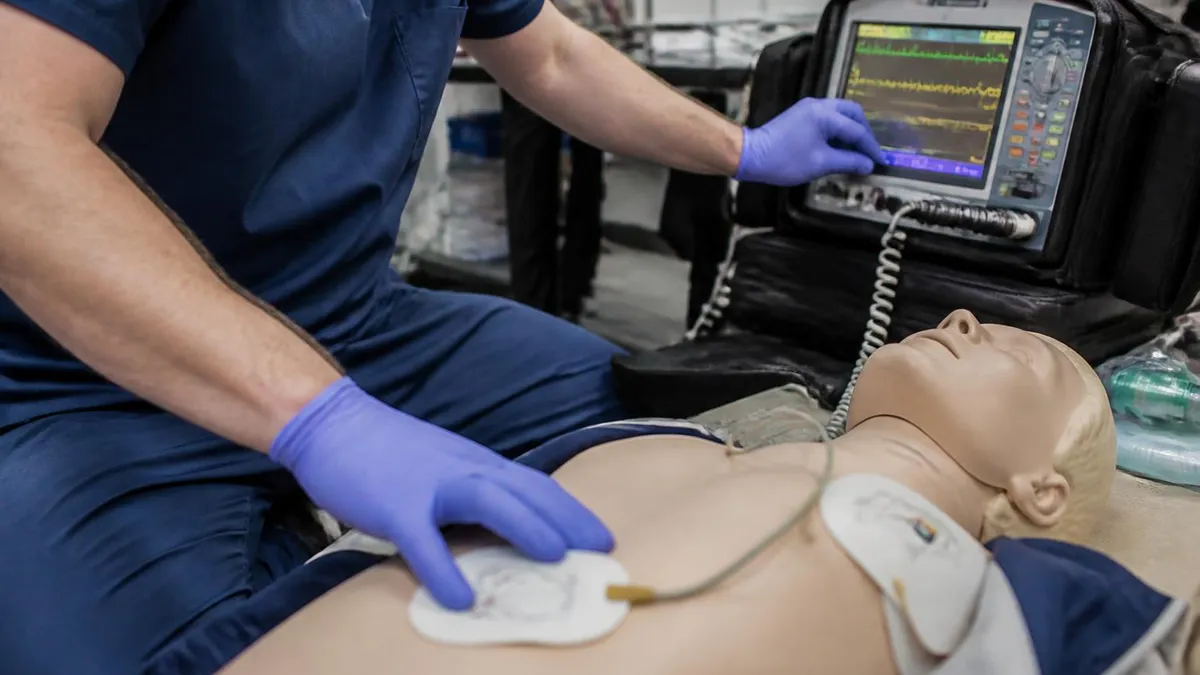
Arizona ACLS Requirements & Training Pathways
Arizona BON requires ACLS for ICU, ED, PACU, and cath lab roles. Most hospitals demand AHA certification renewed every two years, verified at hire and during license renewals.
AZDHS Bureau of EMS mandates ACLS for paramedics performing advanced cardiac interventions. Renewal aligns with paramedic certification cycles every two years statewide.
Emergency medicine, anesthesia, and hospitalist physicians routinely maintain ACLS. PAs in critical care, urgent care, and surgical settings face similar employer-driven requirements.
AARC-credentialed RTs in Arizona ICUs and EDs must hold ACLS for code response. Many hospitals bundle this with PALS for pediatric-capable facilities.
Clinical pharmacists embedded in code teams at Banner, HonorHealth, and Mayo Clinic Arizona increasingly carry ACLS credentials for medication reconciliation during arrests.
Arizona's ACLS training ecosystem centers around three primary provider categories: the American Heart Association, the American Red Cross, and a handful of smaller alternatives like ASHI and the National Health Care Provider Solutions network. The AHA dominates hospital settings, with training centers operated by Banner Health, HonorHealth, Dignity Health, Mayo Clinic, Tucson Medical Center, and numerous independent CPR schools. Before committing to any course, verify your employer's accepted provider list — purchasing acl tickets for the wrong issuer wastes both time and money in a competitive job market.
Course formats break into three categories. The traditional two-day in-person class runs roughly 16 hours over consecutive days, covering didactic lectures, station-based skills practice, megacode simulations, and written testing. The blended HeartCode option lets candidates complete cognitive modules online beforehand and then attend a four-to-six-hour hands-on session, ideal for experienced providers refreshing skills. Finally, renewal courses condense everything into a single day for current cardholders, assuming you're within the 30-day grace window after card expiration.
Geographic distribution favors the Phoenix and Tucson metro areas, where you'll find five-to-ten weekly course offerings across multiple training centers. Mesa, Chandler, Scottsdale, Gilbert, and Tempe all host weekly classes. Outside these hubs, availability thins considerably. Flagstaff offers two-to-three monthly sessions through North Country HealthCare and NAU. Yuma, Lake Havasu City, Sierra Vista, and Prescott typically schedule one or two classes per month. Reservation booking systems vary — some open six weeks ahead, others ninety days.
The Arizona Department of Health Services doesn't directly issue ACLS cards but recognizes nationally accredited certifications when verifying continuing education for license renewals. This means your AHA-issued card from any U.S. state transfers seamlessly when relocating to Arizona, provided it remains within its two-year validity window. EMS providers must additionally meet AZDHS Bureau requirements, which include CAPCE-accredited continuing education hours tracked alongside ACLS expiration dates.
Hospital credentialing offices in Arizona typically require original cards or verified electronic credentials at hire, and many also conduct random audits during the credentialing cycle. Banner Health, the state's largest employer of nurses, uses a digital credentialing platform that automatically flags cards expiring within 90 days. HonorHealth, Dignity Health, and Mayo Clinic Arizona maintain similar systems. The lesson: don't wait until the week of expiration — book your renewal at least 60 days out to avoid scheduling gaps that could pause your shifts.
For new graduates entering Arizona's nursing workforce, many hospitals fold ACLS into paid orientation. Banner Health, for instance, includes ACLS, BLS, and unit-specific training during the first six weeks of new-graduate residency programs. If you're hired into an ICU or ED slot, you'll typically complete certification before independent practice begins. However, agency nurses, travelers, and per-diem staff bear individual responsibility for arriving with active credentials in hand — no exceptions.
Specialty pathways add layers. Pediatric-capable facilities like Phoenix Children's Hospital and Tucson Medical Center pair ACLS with PALS. Trauma centers expect TNCC alongside ACLS. Cath lab and electrophysiology nurses often pursue additional certifications like CCRN. Mapping your career trajectory against employer expectations early prevents redundant scheduling and unexpected costs as you advance through clinical specialties over the coming years.
ACLS Practice Test Questions
Prepare for the ACLS - Advanced Cardiovascular Life Support exam with our free practice test modules. Each quiz covers key topics to help you pass on your first try.
ACLS Airway Management
ACLS Exam Questions covering ACLS Airway Management. Master ACLS Test concepts for certification prep.
ACLS Airway Management and Ventilation
Free ACLS Practice Test featuring ACLS Airway Management and Ventilation. Improve your ACLS Exam score with mock test prep.
ACLS Cardiac Rhythm Recognition
ACLS Mock Exam on ACLS Cardiac Rhythm Recognition. ACLS Study Guide questions to pass on your first try.
ACLS Cardiac Rhythms and ECG Interpretation
ACLS Test Prep for ACLS Cardiac Rhythms and ECG Interpretation. Practice ACLS Quiz questions and boost your score.
ACLS - Advanced Cardiovascular Life Suppor...
ACLS Questions and Answers on - Advanced Cardiovascular Life Support ACLS Emergency Pharmacology. Free ACLS practice for exam readiness.
ACLS - Advanced Cardiovascular Life Suppor...
ACLS Mock Test covering - Advanced Cardiovascular Life Support Acute Coronary Syndromes. Online ACLS Test practice with instant feedback.
ACLS - Advanced Cardiovascular Life Suppor...
Free ACLS Quiz on - Advanced Cardiovascular Life Support Acute Stroke Care. ACLS Exam prep questions with detailed explanations.
ACLS - Advanced Cardiovascular Life Suppor...
ACLS Practice Questions for - Advanced Cardiovascular Life Support BLS and High-Quality CPR. Build confidence for your ACLS certification exam.
ACLS - Advanced Cardiovascular Life Suppor...
ACLS Test Online for - Advanced Cardiovascular Life Support Post-Cardiac Arrest Care. Free practice with instant results and feedback.
ACLS - Advanced Cardiovascular Life Suppor...
ACLS Study Material on - Advanced Cardiovascular Life Support Tachycardia and Bradycardia Algorithms. Prepare effectively with real exam-style questions.
ACLS Advanced Cardiovascular Life Support
Free ACLS Test covering Advanced Cardiovascular Life Support. Practice and track your ACLS exam readiness.
ACLS Bradycardia
Free ACLS Practice Test featuring Bradycardia. Improve your ACLS Exam score with mock test prep.
ACLS Medical Training
ACLS Mock Exam on Medical Training. ACLS Study Guide questions to pass on your first try.
Master the ACLS Algorithm for Your State Exam
The ACLS cardiac arrest algorithm anchors every megacode scenario tested in Arizona courses. You must demonstrate fluency in the VF/pVT pathway — high-quality CPR, defibrillation at 200J biphasic, epinephrine every three-to-five minutes, and amiodarone or lidocaine after the third shock. Treat reversible Hs and Ts methodically while maintaining compression depth between 2 and 2.4 inches at 100–120 per minute.
For non-shockable rhythms like asystole and PEA, focus on the same epinephrine schedule, immediate CPR resumption, and aggressive reversible-cause hunting. Hypoxia, hypovolemia, hydrogen ion imbalance, hypo/hyperkalemia, hypothermia, tension pneumothorax, tamponade, toxins, thrombosis, and trauma form the systematic differential. Arizona evaluators expect you to verbalize this list during simulation debrief sessions confidently.
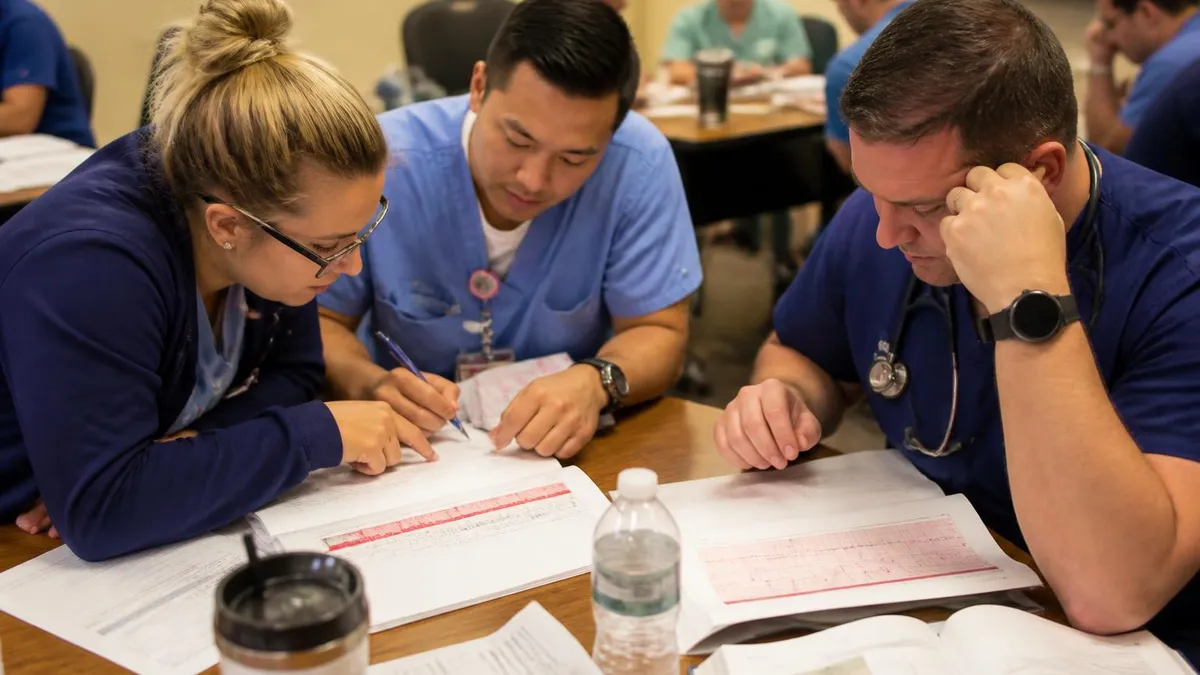
In-Person vs. Blended ACLS Courses in Arizona
- +Hands-on practice with manikins and live instructor feedback throughout
- +Real-time clarification of algorithm questions and edge-case scenarios
- +Stronger team-dynamics learning during group megacode simulations
- +Easier integration with hospital-sponsored cohort training schedules
- +More accountability and engagement than self-paced online learning
- +Networking opportunities with peers across Arizona healthcare systems
- −Two consecutive full days off work required for traditional format
- −Higher cost compared to blended HeartCode online modules
- −Limited availability in rural Arizona counties outside metro Phoenix
- −Less flexibility for shift workers with irregular schedules
- −Travel time can exceed two hours from remote communities
- −Potential exposure during respiratory illness seasons in shared rooms
Pros and Cons at a Glance
| Pros | Cons |
|---|---|
| Hands-on practice with manikins and live instructor feedback throughout | Two consecutive full days off work required for traditional format |
| Real-time clarification of algorithm questions and edge-case scenarios | Higher cost compared to blended HeartCode online modules |
| Stronger team-dynamics learning during group megacode simulations | Limited availability in rural Arizona counties outside metro Phoenix |
| Easier integration with hospital-sponsored cohort training schedules | Less flexibility for shift workers with irregular schedules |
| More accountability and engagement than self-paced online learning | Travel time can exceed two hours from remote communities |
| Networking opportunities with peers across Arizona healthcare systems | Potential exposure during respiratory illness seasons in shared rooms |
ACLS Arizona Pre-Course Preparation Checklist
- ✓Complete the AHA precourse self-assessment with a minimum passing score of 70%
- ✓Review the ACLS Provider Manual cover-to-cover at least two weeks before class
- ✓Memorize all six core algorithms including doses, energy levels, and rate thresholds
- ✓Practice ECG rhythm recognition for VF, VT, asystole, PEA, SVT, and AV blocks
- ✓Confirm your BLS certification is current and brings the physical or digital card
- ✓Print or save your AHA precourse completion certificate for instructor verification
- ✓Verify your employer accepts AHA, ARC, or alternate provider credentials in writing
- ✓Schedule the course within your renewal grace window to avoid relapse penalties
- ✓Bring photo ID, payment confirmation, and any required hospital orientation paperwork
- ✓Wear comfortable clothing suitable for floor-based CPR and skills station practice
Book Renewals 60+ Days Before Expiration
Arizona credentialing offices typically flag ACLS cards 90 days before expiration and may temporarily suspend clinical privileges if certification lapses. Booking renewal classes 60 days ahead provides buffer for rescheduling, illness, or unexpected exam retests without jeopardizing your active employment status.
Costs for ACLS certification across Arizona vary based on provider, format, and location. Phoenix metro area initial courses average $250–$300 through AHA-aligned training centers, while renewal classes typically run $175–$225. Tucson, Flagstaff, and Yuma trend slightly lower at $225–$275 for initial certification due to less competition among providers and lower overhead. Hospital-employed staff often receive free or subsidized training through their employer's internal training centers, a major benefit worth confirming during job negotiations and contract reviews.
The blended HeartCode format runs $325–$375 because it includes the online module licensing fee plus the in-person skills session. Many candidates find this premium worthwhile because it cuts classroom time roughly in half. ASHI and Red Cross alternatives sometimes undercut AHA pricing by $50–$100, but always verify employer acceptance first — a $200 savings means nothing if your hospital refuses the credential and you must repeat the entire course through an AHA-approved provider within weeks.
Phoenix offers the densest concentration of training options. The Banner Simulation Education Center, HonorHealth Education, Phoenix College EMT programs, and dozens of independent CPR schools all host regular ACLS classes. The Maricopa Community Colleges system runs subsidized courses for affiliated nursing students. Tucson centers around Pima Community College, the University of Arizona Health Sciences, and Tucson Medical Center's education department for the bulk of regional offerings throughout each calendar year.
Scheduling demands strategic planning. Summer and early fall fill quickly as new graduates rush to certify before residency program start dates. Late spring sees a secondary surge as travel nurses prepare for assignment changes. November through January typically shows better availability as fewer providers schedule training around holidays. If you have flexibility, targeting these slower windows yields lower stress, smaller class sizes, and often better individual instructor attention overall throughout the experience.
For multi-credential bundles, several Arizona providers offer combined ACLS-BLS or ACLS-PALS packages at modest discounts. Banner's internal training program bundles ACLS, BLS, PALS, and NRP for new ICU and emergency hires. Smaller schools may offer $50–$75 discounts when registering for two courses simultaneously. If your role demands multiple credentials anyway, bundling saves both money and the logistical headache of separate scheduling across distinct training centers spread across the metro area.
Don't overlook hidden costs. The AHA Provider Manual runs $50–$75 and is required for the course — verify whether your training center includes it in tuition. Some centers charge separate fees for retesting if you fail the written exam or megacode on the first attempt, typically $50–$100 per retest. Parking fees at hospital-based training centers can add $10–$20 per day. Pocket card replacement after loss runs $25 through most issuing centers, a frustrating but common added expense.
Reimbursement opportunities exist for many Arizona healthcare workers. Most major hospital systems reimburse certification costs upon successful completion if the credential is required for your role. Independent contractors, travelers, and per-diem staff may deduct certification expenses on federal taxes as continuing professional education. Always retain receipts, completion certificates, and any required employer documentation. Discuss reimbursement policies during onboarding to avoid surprise out-of-pocket costs that erode your effective hourly compensation over time.
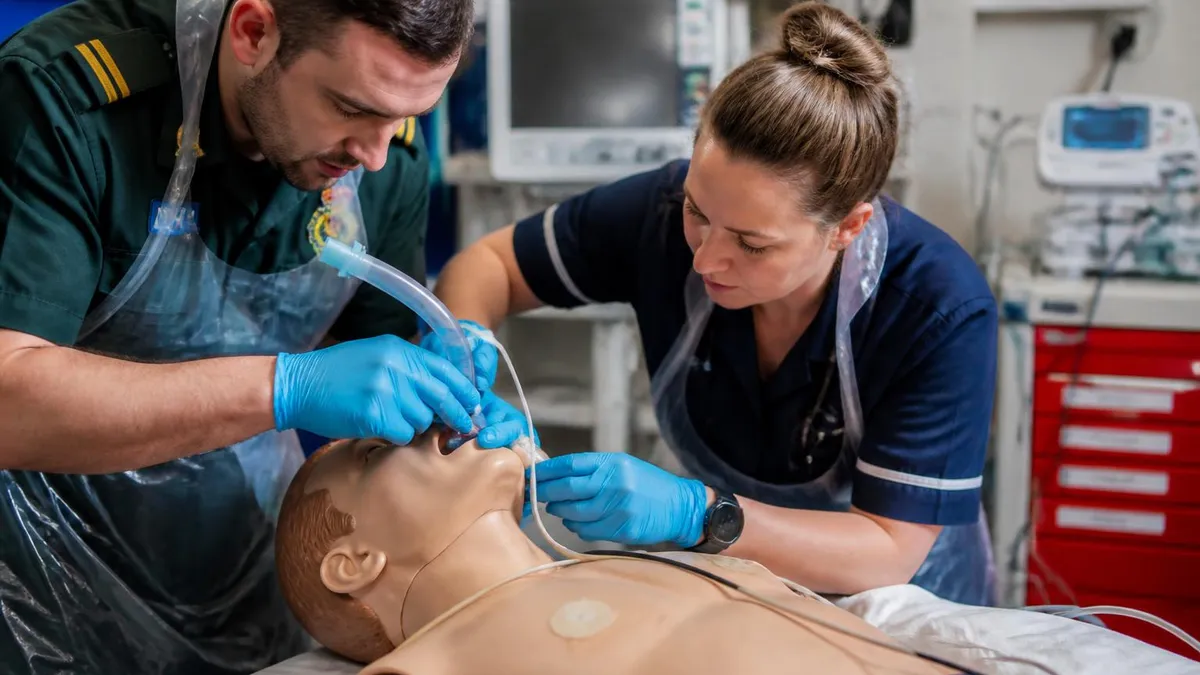
Once an ACLS card expires beyond the 30-day AHA grace window, you must complete the full initial two-day course rather than the abbreviated renewal class. This nearly doubles your time and cost. Arizona hospitals routinely audit credentials, so plan well ahead.
Renewing your ACLS certification in Arizona follows a predictable two-year cycle, but the details can trip up even experienced clinicians. The AHA permits renewal classes within 30 days after card expiration without penalty, but waiting beyond that grace window forces you back into the full initial course — adding eight hours and roughly $100 to your costs. Set calendar alerts at the 90-day and 60-day marks before expiration to ensure scheduling flexibility, especially during high-demand training months across the state's metropolitan centers.
The renewal class itself condenses the full curriculum into roughly eight hours and assumes you arrive with current algorithm knowledge. Instructors move quickly through skills stations, expecting demonstrated competency rather than extensive teaching. Reviewing the provider manual thoroughly beforehand makes the difference between a smooth renewal and a stressful retest scenario. Many candidates also benefit from completing practice scenarios online before walking into the classroom, particularly if their daily clinical role doesn't involve frequent code participation.
Arizona's specialty hospitals often add internal requirements beyond the basic ACLS credential. Phoenix Children's Hospital pairs ACLS with PALS for staff working in mixed-age units. Tucson Medical Center's cardiac program expects ACLS plus additional electrophysiology-specific in-services. Mayo Clinic Arizona, with its strong transplant and oncology programs, layers ACLS with department-specific competencies tracked separately by service line. Reviewing the latest knee brace for acl injuries-related guidance won't help you here, but reviewing actual ACLS certification requirements absolutely will.
For traveling nurses and locum tenens physicians moving in and out of Arizona, credential portability is generally straightforward. AHA-issued ACLS cards transfer across state lines without additional verification needed. However, individual facility credentialing offices may take 7–14 business days to process credentials during onboarding, so submit copies early to avoid delays in start dates. Some agencies maintain credential repositories that simplify this process, but always confirm submission requirements with each new assignment before arrival.
Continuing education obligations extend beyond the ACLS card itself. Arizona Board of Nursing requires 12 contact hours of nursing-specific CE every two years for license renewal, and your ACLS completion can count toward this total. Paramedics tracked under AZDHS EMS Bureau need 48 hours of CAPCE-accredited education across each two-year cycle. Coordinating ACLS renewal with these broader CE requirements creates efficient credentialing cycles that minimize separate course registration fees and time commitments.
Documentation matters more than people realize. Keep digital copies of every card, completion certificate, and continuing education attendance record in a secure cloud-accessible folder. When credentialing audits or license renewals arrive — sometimes with tight response deadlines — you'll save hours of frantic searching. Many Arizona providers also recommend maintaining a backup printed credential portfolio for situations where employer digital systems experience outages during critical credentialing windows or transitions between hospital systems.
Looking ahead, the AHA periodically updates ACLS guidelines based on new evidence from international resuscitation councils. The most recent comprehensive update arrived in 2020, with focused interim updates through 2026. Watch for upcoming 2025–2026 guideline refinements that may affect specific medication protocols, post-arrest care temperature targets, and team communication standards. Staying current through reputable resources like AHA bulletins and hospital education newsletters ensures you renew with the most accurate knowledge rather than outdated practices.
Practical exam preparation strategies separate confident first-attempt passers from anxious retakers across Arizona's training centers. The most effective approach combines spaced repetition of algorithms with active scenario simulation rather than passive reading. Spend the final week before your class running through cardiac arrest, bradycardia, and tachycardia scenarios aloud — verbalizing decisions trains your brain for the megacode environment far more effectively than silently rereading the provider manual cover-to-cover repeatedly until exam morning arrives.
Form a study group with two or three colleagues registered for the same course date when possible. Run mock scenarios where one person acts as team leader, another as recorder, and others as compressors and medication administrators. This mirrors the actual megacode structure and exposes weaknesses in real time. Banner Health, HonorHealth, and Mayo Clinic Arizona unit-based educators often help informal study groups for staff preparing for renewal — ask your charge nurse or clinical educator about available resources.
Don't neglect the written exam component. While the megacode generates more pre-class anxiety, the 50-question written test can derail otherwise prepared candidates with surprisingly specific dosing or rhythm-recognition questions. The AHA precourse self-assessment serves as a strong predictor — candidates scoring above 85% typically pass the written exam comfortably on the first attempt. Those below 75% should plan extra review sessions, focusing particularly on pharmacology and rhythm interpretation, two consistently challenging areas for many candidates.
Physical preparation matters too. ACLS courses involve significant time on the floor performing CPR on manikins, kneeling beside simulation patients, and standing through extended lecture segments. Arrive well-rested, hydrated, and fueled with a substantial breakfast. Wear comfortable closed-toe shoes and clothing that accommodates floor-level movement without restriction. Bring water and snacks for breaks. These small physical-comfort details prevent the fatigue that can compromise performance during late-afternoon megacode sessions when assessments typically occur after long instructional days.
Test anxiety affects even experienced clinicians. Techniques like box breathing — four seconds inhale, four hold, four exhale, four hold — calm the autonomic response before walking into the simulation room. Verbalize your initial assessment out loud as soon as the scenario starts: airway, breathing, circulation, defibrillator. This anchors your thought process and signals to evaluators that you're following a systematic approach. Remember that instructors want you to pass — they're not adversaries hunting for failure but coaches.
If you do fail any component on your first attempt, don't panic. Arizona training centers typically offer one free retest within 30 days of the original class date. Use that intervening time strategically — identify specific weaknesses, run targeted scenarios with peers, and review the provider manual sections corresponding to your missed content. Most candidates who fail initially pass the retest comfortably because the second attempt feels less overwhelming once the format becomes familiar territory.
Finally, integrate ongoing skill maintenance between renewal cycles. Participate in unit-based mock codes, debrief actual code responses with colleagues, and refresh algorithm knowledge quarterly even when not approaching renewal. Skills decay measurably within months of certification, and clinicians who treat ACLS as a one-time hurdle rather than continuous practice often struggle during real cardiac emergencies. Arizona's busy emergency departments and ICUs reward those who maintain readiness consistently throughout the entire two-year certification cycle without exception.
ACLS Questions and Answers


About the Author

Registered Nurse & Healthcare Educator
Johns Hopkins University School of NursingDr. Sarah Mitchell is a board-certified registered nurse with over 15 years of clinical and academic experience. She completed her PhD in Nursing Science at Johns Hopkins University and has taught NCLEX preparation and clinical skills courses for nursing students across the United States. Her research focuses on evidence-based exam preparation strategies for healthcare certification candidates.
Join the Discussion
Connect with other students preparing for this exam. Share tips, ask questions, and get advice from people who have been there.
View discussion (8 replies)