
Hands-Only CPR: How to Save a Life With Just Two Steps
Hands-only CPR step-by-step: call 911, push hard and fast in the chest. Learn rate, depth, and when to use vs full CPR.
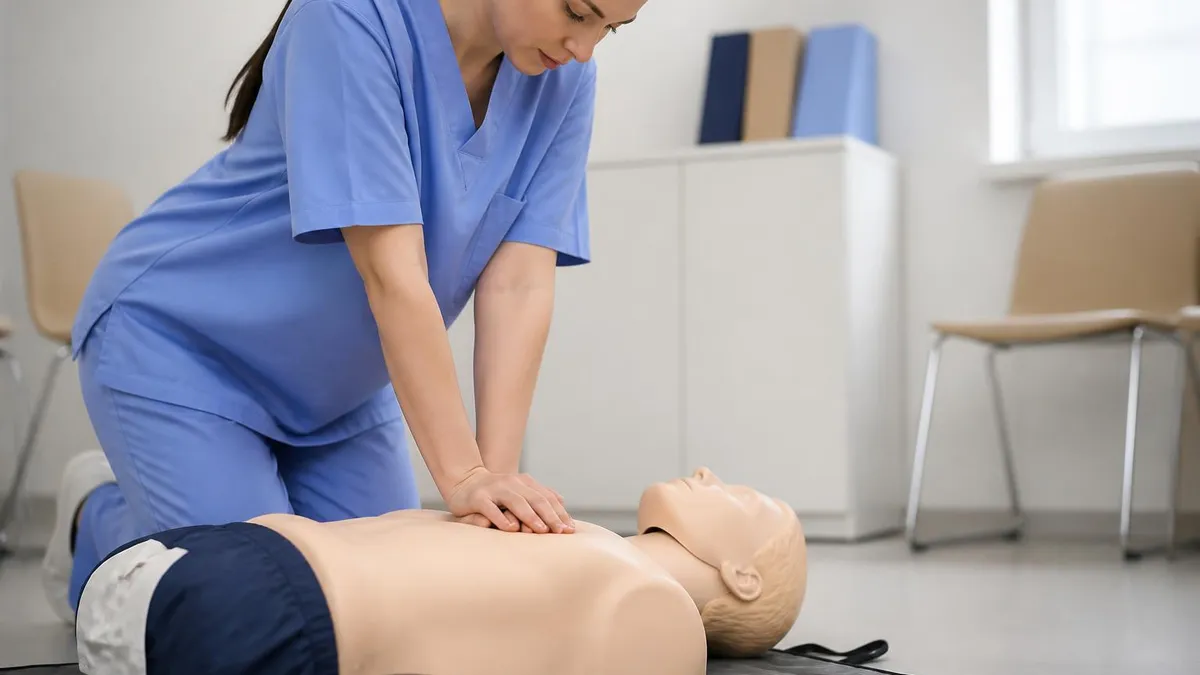
Someone collapses in front of you at the gym, the airport, or the grocery checkout. They aren't breathing normally. You have maybe four to six minutes before brain damage starts. What you do in the next ten seconds matters more than anything an ambulance crew can do later. Hands-only CPR was designed for exactly this moment, and it was built so that anyone, trained or not, can step in and help.
The American Heart Association introduced hands-only CPR in 2008 to remove the single biggest reason bystanders froze: fear of mouth-to-mouth. The new approach is two steps. Call 911. Push hard and fast in the center of the chest. That's the entire protocol for an adult who suddenly drops in public. No breath checks, no rescue breaths, no overthinking. You don't need a card, a class, or permission to act.
This guide walks you through every part of the protocol — the rate, the depth, the hand placement, the rare exceptions, the role of the AED, the legal protections, and the realistic expectations for survival. Read it once tonight. Bookmark it on your phone for a quick refresher. The next time you witness a collapse, your hands will move before your brain has time to second-guess.
The reasoning is simple. When an adult drops suddenly, the cause is almost always electrical, usually ventricular fibrillation. The blood already in the lungs and bloodstream is still oxygenated for the first several minutes. What that blood needs is movement. Compressions push it from the heart to the brain and back. Skipping breaths costs almost nothing in those first minutes, and it keeps the rhythm of compressions unbroken, which turns out to matter a lot.
If you've ever taken an old CPR class with the 30-and-2 ratio, hands-only feels almost too easy. That's the point. The AHA looked at the data and saw that lay rescuers who tried to remember everything ended up doing nothing. Simplicity saves lives. You can read more about the modern approach in our guide to American Heart Association CPR guidelines or compare it with American Red Cross CPR certification programs.
Before 2008, the official recommendation was 15 compressions and 2 breaths. Then it became 30 and 2. The latest research showed that uninterrupted compressions at the right rate and depth produced equal or better outcomes for adult cardiac arrest, while removing the psychological barrier that froze bystanders in their tracks. Hands-only CPR is the result of that research, and the data has only gotten stronger every year since.
When to Use Hands-Only vs Full CPR
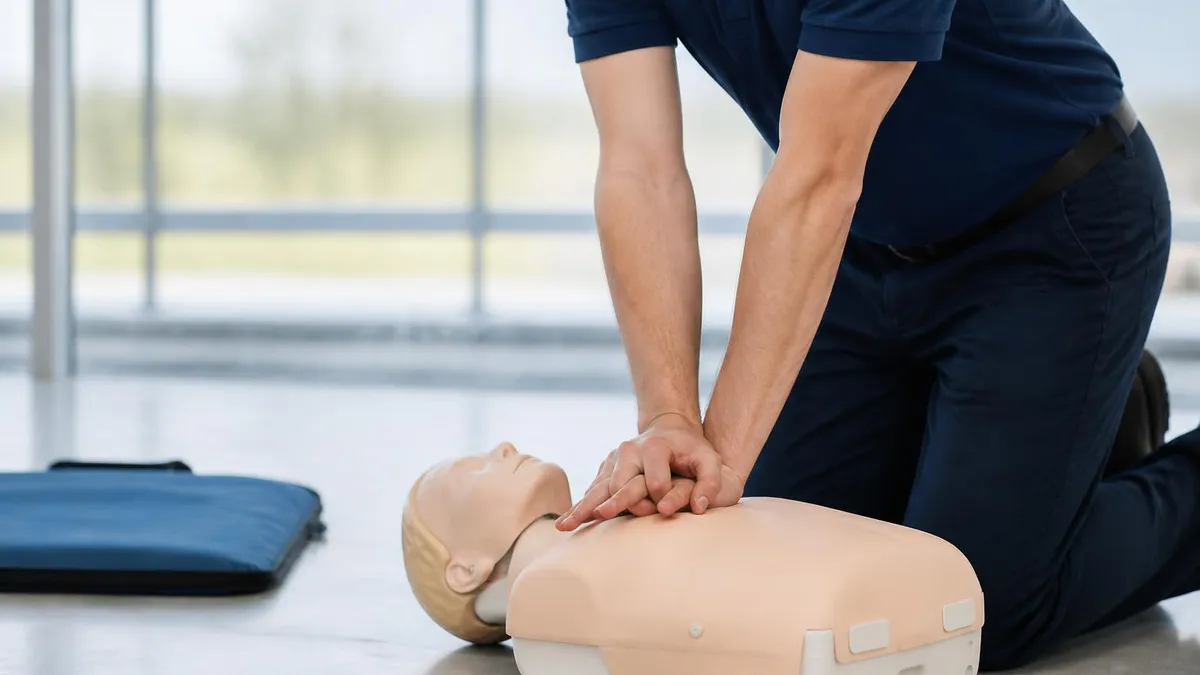
Use hands-only CPR when an adult or teenager collapses suddenly in front of you and isn't breathing normally. This covers the classic public cardiac arrest: someone clutches their chest, drops, or just slides off a chair. You should also default to hands-only if you're untrained, if you've forgotten what you learned, or if you simply aren't comfortable giving rescue breaths. The AHA explicitly endorses this for any bystander, and the outcomes for adult cardiac arrest are statistically equal to conventional CPR in the first several minutes.
Before we get into the step-by-step protocol, picture the scene. You're at the airport gate, the office breakroom, the church parking lot. Someone in front of you suddenly slumps over. There's a half-second of disbelief, then a wave of panic. The instinct is to look around for someone who knows what to do. Don't. You know what to do. Hands-only CPR was specifically designed to remove the need for any specialist on scene. Your job is to act, not to defer.
The single most important habit to build is naming responsibilities out loud. If you're with a group, point at one specific person and say, "You — call 911 right now." Then point at someone else and say, "You — find an AED." Then drop to your knees and start compressions. Specific commands break the diffusion-of-responsibility spell that paralyzes crowds. Without a name and a finger pointed at them, people freeze.
Step-by-Step: Hands-Only CPR
Check the Scene
Tap and Shout
Call 911
Position the Victim
Place Your Hands
Push Hard and Fast
Don't Stop
Use the AED
Rate is where most untrained rescuers drift. The target is 100 to 120 per minute, which feels surprisingly fast. The AHA's famous trick is to hum or think of the Bee Gees' "Stayin' Alive" — its tempo is right at 103 beats per minute. "Crazy In Love" by Beyoncé and "I Will Survive" by Gloria Gaynor work too. Pick whichever song lives rent-free in your head and pump along to it. If you're going slower than that, the brain isn't getting blood.
Depth matters just as much. Adults need at least 2 inches (5 cm) but no more than 2.4 inches (6 cm). That's deeper than most people imagine, and you should expect to feel ribs flex or even crack. Roughly 30% of CPR recipients end up with rib fractures. Ribs heal. Death doesn't. Don't ease off because you hear popping. The other rookie mistake is bending your elbows — straight arms transfer body weight, bent arms tire your shoulders out in 90 seconds.
Full chest recoil between compressions is the third part of quality that gets ignored. The heart can only refill with blood when the chest fully springs back. Leaning on the chest between pushes — even slightly — cuts cardiac output dramatically. Push down, then let your hands ride up with the chest. Don't lift your hands off, just stop applying pressure. The motion should look like a controlled bouncing piston, not a slow grind.
One detail people forget: cardiac arrest is not the same as a heart attack. A heart attack is a plumbing problem — a blocked artery cuts flow to heart muscle, but the person is usually conscious and complaining of chest pain. Cardiac arrest is electrical — rhythm goes haywire, pumping stops, person collapses. Hands-only CPR is for cardiac arrest, not heart attacks. If someone is conscious and clutching their chest, call 911 and keep them calm. The moment they go unresponsive and stop breathing normally, then start compressions.
The Numbers That Make Bystander CPR Worth It
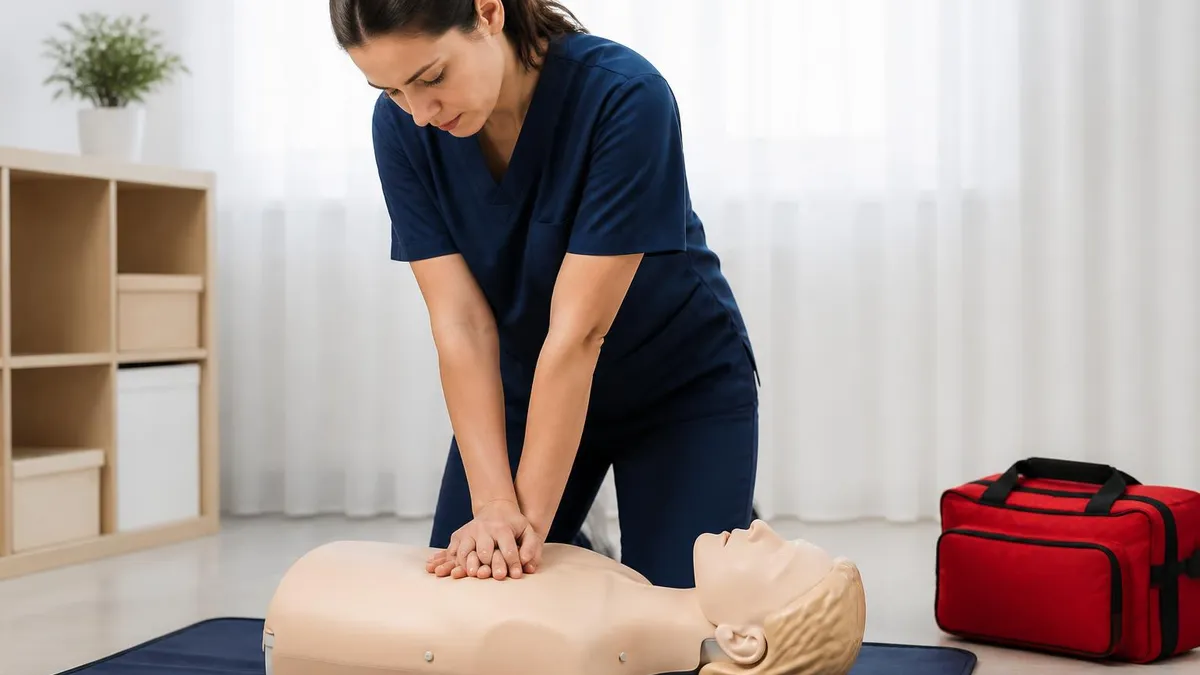
Those statistics tell a frustrating story. Cardiac arrest is one of the most common causes of death in the United States, and yet the survival rate has barely budged in decades — not because medicine doesn't know what works, but because too many bystanders don't act. The treatment exists. The protocol is simple. The legal protections are airtight. The only missing piece is the willingness of the person standing closest to start pushing. That's why public hands-only training campaigns exist, and that's why reading this guide is, in a real sense, civic infrastructure.
Hands-Only vs Conventional CPR (30:2)
- Best For: Adult sudden collapse, untrained bystanders
- Compressions: Continuous, no breaks for breaths
- Rate: 100-120 per minute
- Depth: 2 to 2.4 inches (5-6 cm)
- Breaths: None required
- When to Stop: EMS arrives, AED ready, victim moves, exhaustion
- Best For: Drowning, OD, infants/children, trained rescuers
- Compressions: 30 compressions, then 2 rescue breaths, repeat
- Rate: 100-120 per minute (during compression cycles)
- Depth: 2 inches adult, 2 inches child, 1.5 inches infant
- Breaths: 2 rescue breaths after every 30 compressions
- When to Stop: Same triggers as hands-only
- Best For: Infants under 1, children to puberty
- Compressions: 30:2 single rescuer, 15:2 two rescuers
- Rate: 100-120 per minute
- Depth: About 1/3 chest depth
- Breaths: Required — most pediatric arrests are respiratory
- Hands-Only?: Only if you don't know how to give breaths
The compare-and-contrast above is worth re-reading because the choice of protocol depends entirely on the situation in front of you. Adult who collapsed at lunch? Hands-only. Toddler pulled from a pool? Full CPR with breaths. Teenager who overdosed? Full CPR if you can. Construction worker electrocuted on a job site? Full CPR after you've made sure the power is off.
The flowchart isn't really a flowchart — it's a habit. Read the cause, then pick the protocol, then go. If you can't read the cause in five seconds, default to hands-only. Adult cardiac arrest is by far the most common scenario in public, and hands-only matches conventional CPR for that case in every credible study so far. Compressions matter more than perfect classification.
Why do infants and children get full CPR while adults often get hands-only? The cause is different. A child's heart rarely stops on its own — it stops because their lungs stopped first. Choking, drowning, asthma, breath-holding spells, sudden infant death syndrome. By the time the heart quits, the bloodstream is already starved of oxygen. Pumping that blood without putting fresh oxygen in doesn't help much. Breaths are non-negotiable for kids.
That said, an untrained bystander watching a child collapse should still do hands-only CPR if that's all they know. Something is always better than nothing. Once you know you'll be working with kids regularly — parents of small children, grandparents, teachers, coaches, lifeguards — sign up for a real CPR classes session that includes pediatric techniques. The skill is genuinely different.
The age cutoff is roughly puberty. Adolescents who look adult-sized can be treated with adult protocols, including hands-only if needed. For anything younger, the recommendation tilts hard toward conventional CPR with breaths. If you're a parent, this is a worthwhile weekend investment. A 4-hour Heartsaver class will teach you adult, child, and infant CPR plus AED use, and the credential lasts two years.
Training is cheaper and easier than ever. The AHA's free 60-second hands-only video has been viewed millions of times. A short video and one practice session on a manikin will dramatically increase your confidence and willingness to act. The data is clear: people who've watched even a brief video are far more likely to step in and start compressions than those who haven't. The barrier to entry is genuinely low.
How to Get Hands-Only CPR Trained
- ✓Watch the AHA's free 60-second Hands-Only CPR video at heart.org
- ✓Take a community CPR/AED course ($40-$80, about 4 hours, certifies you for 2 years)
- ✓Sign up for an American Red Cross Adult First Aid/CPR/AED class in person
- ✓Try a HeartCode online module followed by an in-person skills check
- ✓Ask your employer — many workplaces offer free CPR training during work hours
- ✓Download the PulsePoint Respond app to be notified of nearby cardiac arrests
- ✓Install the free AHA Hands-Only CPR mobile app for a 1-minute refresher anytime
- ✓Practice on a manikin at a community health fair or fire station open day
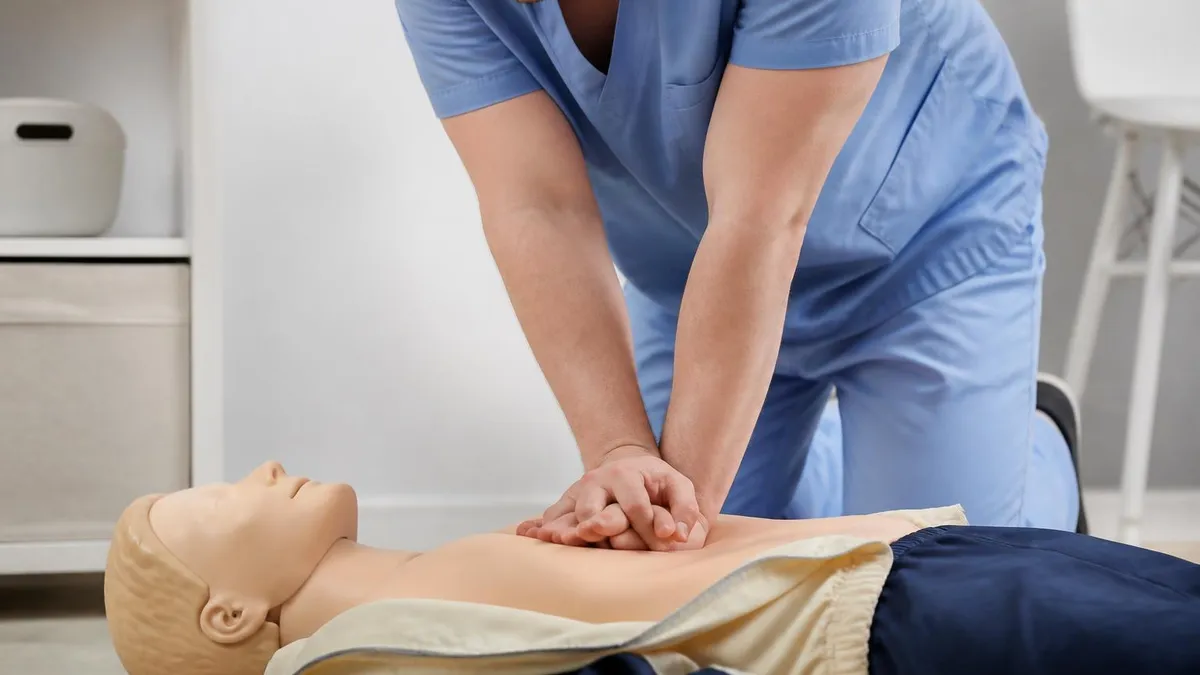
Once you commit to learning, the next decision is what credential level fits your life. A simple Heartsaver-style class is enough for parents, teachers, and most adults who want to be useful. A Basic Life Support (BLS) card is required for healthcare workers and many fitness professionals. Advanced Cardiovascular Life Support (ACLS) is for nurses, doctors, paramedics, and anyone working in a code team. For 99% of bystanders, Heartsaver or even just a video refresher is plenty. Don't let "I'm not certified" become an excuse for inaction.
Refresh your training every couple of years. CPR skills decay surprisingly fast — depth and rate accuracy drop measurably within months of a class. A 15-minute manikin practice each year keeps your muscle memory sharp. Most certifying bodies require renewal every two years anyway, and many community centers offer free refreshers. Treat it like a fire drill: rare, easy, and worth the time.
An AED — automated external defibrillator — is the closest thing modern medicine has to a magic button. Public AEDs are everywhere now: airports, gyms, malls, schools, sports stadiums, casinos, and most office buildings. They're designed for someone who has never touched one. You open the lid, the machine starts talking, and you do exactly what the voice says. It analyzes the rhythm itself and refuses to deliver a shock unless one is needed.
Hands-only compressions and an AED are partners. Compressions buy time. The AED actually fixes the underlying electrical chaos of ventricular fibrillation. The fastest survival numbers come from communities where bystanders start hands-only within seconds and an AED arrives within the first three to five minutes. If you ever take a more advanced course, you'll also encounter a mechanical CPR machine — those exist for ambulances and hospitals, but they're not a bystander tool.
Don't worry about "hurting" anyone with the shock. The AED won't fire unless it detects a shockable rhythm, and you can't override that decision. If it tells you the rhythm isn't shockable, the answer is to keep pushing. The machine will reanalyze every two minutes. Your only job is to follow its prompts and minimize any pause in compressions when it's analyzing or shocking.
Worried about getting sued? Don't be. All 50 US states have Good Samaritan laws that protect anyone acting in good faith during a medical emergency. You cannot be successfully sued for performing CPR honestly, even if you do it imperfectly, even if the person doesn't survive. The protection covers lay rescuers — it doesn't extend to professionals who are on duty and required to act, but that's not you. If you step in to help, the law is firmly on your side.
Two-rescuer scenarios change the choreography slightly. One person calls 911 and runs for the AED. The other starts compressions immediately. When both are back, swap compressors every two minutes — fatigue kills compression quality faster than most people realize. Count down the swaps out loud and minimize the pause when you change. A clean handoff is a couple of seconds. A messy one is fifteen, and that gap shows up in survival rates.
If you're alone, that's still fine. Phone on speaker, dispatcher in your ear, hands on the chest. Modern 911 dispatchers receive specific training in telephone-CPR coaching. They will count cadence with you, remind you of depth, and tell you when EMS is two minutes out. Solo rescuers routinely save lives every day in this country. You don't need a partner to make a difference.
One question that comes up constantly: how do I know if they're really not breathing? Agonal gasping is a common trap. In the first minute or two of cardiac arrest, the brain reflex can produce slow, irregular, gasping breaths that look almost like normal breathing. They aren't effective ventilation. If the person is unresponsive and the only "breathing" is occasional snoring-like gasps, treat it as cardiac arrest and start compressions. Don't spend more than ten seconds checking. When in doubt, push.
Pros and Cons of Hands-Only CPR
- +Anyone can do it — no certification or training required
- +Removes the mouth-to-mouth barrier that stops so many bystanders
- +Easy to remember under stress: call, push, don't stop
- +Statistically equivalent to full CPR for adult sudden cardiac arrest
- +Encourages more bystanders to actually intervene
- +Backed by the American Heart Association and every major resuscitation council
- −Not the best choice for respiratory arrests (drowning, OD, choking)
- −Less effective for infants and small children, who usually need breaths
- −Can't restart the heart on its own — an AED or defibrillation is still needed
- −Quality drops fast with rescuer fatigue if there's no one to swap with
- −Brief education still helps — a 5-minute video makes a real difference
What about being alone? If you're with an adult who suddenly collapses, call 911 first. Cardiac causes are most likely, the fix is the AED, and EMS needs to be on the way before you start. If you're alone with an unresponsive infant or child, do two minutes of CPR first, then call 911 — respiratory causes dominate in pediatric arrests, so circulating oxygen for two minutes can buy real time. Either way, put the phone on speaker as soon as the dispatcher answers and follow their coaching.
What happens after you start? The dispatcher coaches you by phone. EMS typically arrives in 6 to 15 minutes depending on where you are. They take over with advanced airway tools, IV medications, and a manual defibrillator. The hospital ER stabilizes the patient, then ICU care begins. Long-term outcomes depend almost entirely on two factors: how fast bystander CPR started, and how soon defibrillation happened. Both are in your hands during those first crucial minutes.
Survival from out-of-hospital cardiac arrest in communities with strong bystander CPR programs runs about three times higher than in communities without them. Cities like Seattle and Rochester, Minnesota have invested heavily in citizen training and AED placement, and their numbers prove what's possible. The technique works. The bottleneck is always whether someone nearby was willing to act.
One last point worth committing to memory: imperfect CPR is dramatically better than no CPR. The single biggest predictor of survival from cardiac arrest is whether a bystander did anything at all. Worry about depth and rate after you start. Don't worry about them before. Hesitation kills more often than poor technique. If you take one thing from this article, take that. Then take some CPR training — even a free video — so the next time you see someone drop, your hands move before your brain has time to second-guess.
Watch the 60-second AHA video tonight. Bookmark this page on your phone. Tell one person at dinner this week what hands-only CPR is. That's how survival rates go up — one person at a time, one neighbor at a time, until enough of us know what to do that nobody collapses in public without somebody nearby ready to push hard and fast in the center of the chest.
And if the worst happens — if you do everything right and the person doesn't make it — please understand: cardiac arrest is fatal more often than not, and that's not on you. Most arrests outside hospitals end in death even with perfect care. What you did mattered. You gave that person their best shot. The community owes you gratitude, not second-guessing. Find a debrief, a friend, or a chaplain. Take care of yourself. Then go take a class so you're even more ready next time.
Hands-Only CPR Questions and Answers
About the Author
Registered Nurse & Healthcare Educator
Johns Hopkins University School of NursingDr. Sarah Mitchell is a board-certified registered nurse with over 15 years of clinical and academic experience. She completed her PhD in Nursing Science at Johns Hopkins University and has taught NCLEX preparation and clinical skills courses for nursing students across the United States. Her research focuses on evidence-based exam preparation strategies for healthcare certification candidates.