
CPR Class: What to Expect, Cost, and How to Find One Near You 2026 October
Find a CPR class near you. Learn what's covered, ❓ how long classes take, AHA vs Red Cross options, and what you need to recertify.
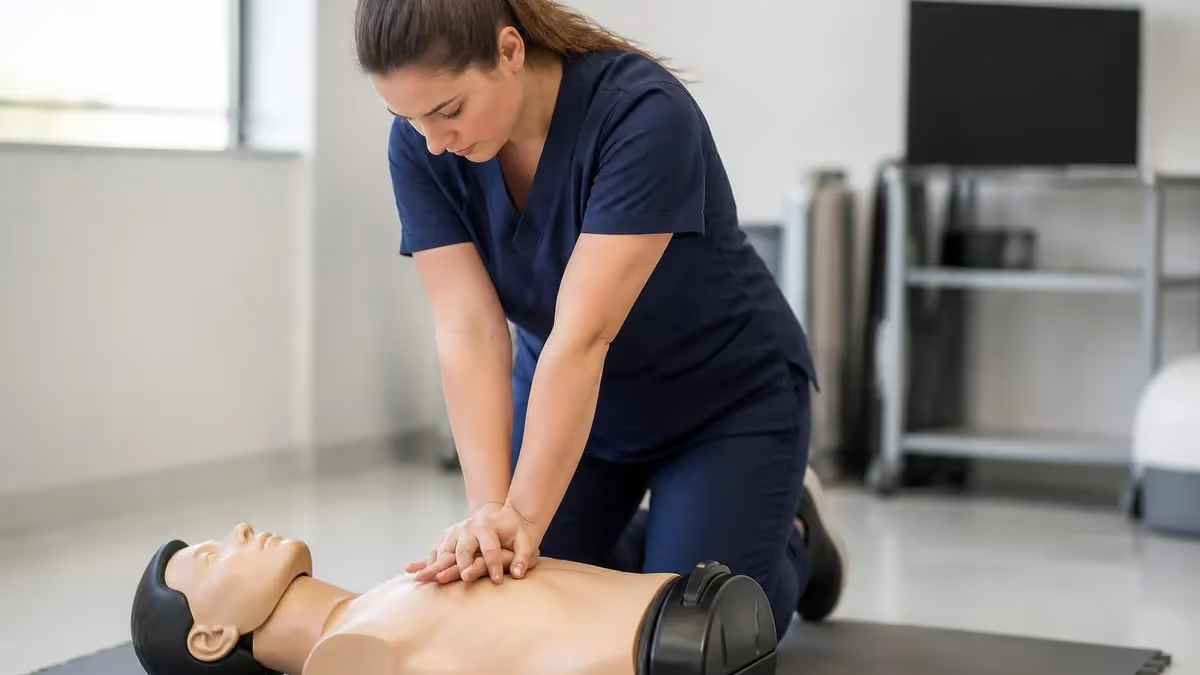
What a CPR Class Covers
A CPR class teaches you how to perform cardiopulmonary resuscitation — the combination of chest compressions and rescue breathing used to maintain blood flow and oxygenation in a person whose heart has stopped or who is not breathing. Most standard CPR classes also cover AED (automated external defibrillator) use and basic choking response, making the training a complete emergency response package rather than just one technique.
Adult CPR is the foundation of most classes — you'll learn the compression rate (100–120 per minute), compression depth (at least 2 inches for adults), hand placement on the sternum, and how to open the airway. Classes for healthcare providers, childcare workers, and parents extend coverage to child CPR (1 to 8 years) and infant CPR (under 1 year), since the technique, compression depth, and rescue breath volume differ significantly for smaller patients. If you're taking CPR for a professional credential, confirm that the class covers the age ranges and techniques required by your certification standard.
AED training is integrated into virtually all CPR classes today. You'll learn to recognize when a defibrillator is needed, how to apply the pads correctly, and how to follow the device's audio prompts. Modern AEDs are designed to be used by bystanders without medical training — the device analyzes heart rhythm and only instructs you to deliver a shock when appropriate. CPR training gives you the confidence to use an AED quickly in the critical first minutes before emergency services arrive.
Hands-only CPR — chest compressions without rescue breaths — is emphasized for bystander response to sudden cardiac arrest in adults. Studies show that bystanders who are willing to perform hands-only CPR significantly improve survival rates compared to no CPR. Full CPR with rescue breathing is still taught in most certified classes and is required for drowning, respiratory arrest in children, and opioid overdose situations. Understanding when to use each method is part of what a CPR training course covers in detail.
Choking response — the Heimlich maneuver for adults and children, and back blows plus chest thrusts for infants — is covered in most CPR/AED classes, though it's sometimes an optional add-on module depending on the course. If choking response is important for your role (parents, childcare workers, restaurant staff), confirm it's included in the specific class you're booking. First aid topics like bleeding control, shock management, and allergic reaction response are often bundled into combination CPR + First Aid courses, which are slightly longer but provide broader overall emergency readiness than CPR alone.
- Typical duration: 2–4 hours for basic CPR/AED; 4–8 hours for BLS (Basic Life Support) for healthcare providers
- Certification validity: 2 years from date of class (most AHA and Red Cross certifications)
- What you'll learn: Adult CPR, child CPR, infant CPR, AED use, choking response
- Major providers: American Heart Association (AHA), American Red Cross, National Safety Council
- Cost range: $30–$80 for community classes; $50–$100+ for healthcare provider courses
- Online vs. in-person: Blended learning (online knowledge + in-person skills session) is now widely accepted; fully online with no skills session does NOT typically satisfy employer requirements
What Happens in a CPR Class
Knowledge Introduction
Adult CPR Skills Practice
Child and Infant CPR
AED Training
Skills Testing
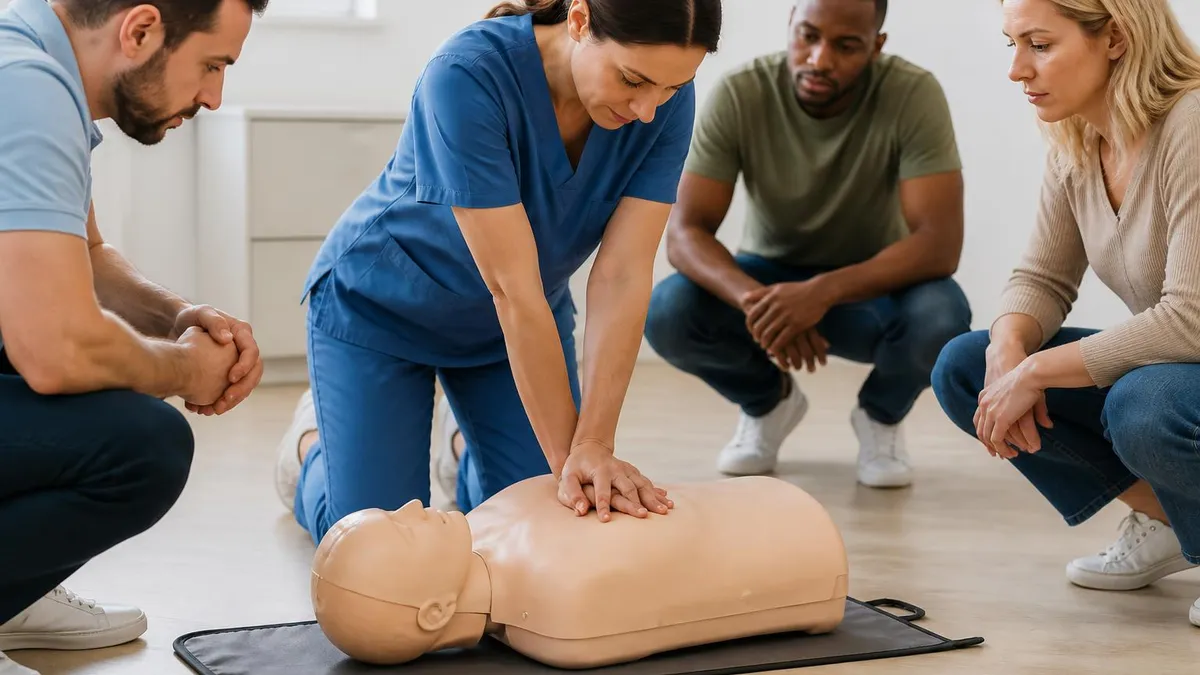
Types of CPR Classes and Which One You Need
Choosing the right CPR class depends on whether you need certification for a job, for a personal health reason, or for a general interest in preparedness. Different classes serve different purposes, and taking the wrong level can mean your certification doesn't satisfy your employer or licensing board.
Heartsaver CPR/AED is the American Heart Association's community-level course for non-healthcare providers — parents, teachers, fitness trainers, coaches, workplace safety personnel, and general members of the public who want CPR skills without healthcare provider credentials. It covers adult CPR and AED, with optional modules for child and infant CPR and first aid. Most community CPR classes and employer-required training programs use Heartsaver or its Red Cross equivalent.
BLS (Basic Life Support) for Healthcare Providers is the standard for nurses, doctors, paramedics, medical students, dental professionals, and anyone whose job involves clinical patient contact. BLS is more rigorous than Heartsaver — it covers two-rescuer CPR, bag-mask ventilation, and team dynamics for coordinated resuscitation response. If your employer or licensing body requires BLS, a Heartsaver class won't satisfy that requirement. BLS is typically offered by hospitals, nursing schools, and certified training centers rather than community venues.
ACLS (Advanced Cardiovascular Life Support) and PALS (Pediatric Advanced Life Support) are advanced courses for healthcare providers who manage cardiac arrest or acute cardiovascular emergencies — typically ER nurses, ICU nurses, paramedics, and physicians. These are renewal certifications built on top of BLS, not standalone courses. If you're entering healthcare and need to know which certification applies to your role, check with your employer or program director rather than guessing — the wrong course wastes time and money.
Online CPR certification with no in-person skills component is available from many providers but is not accepted by most healthcare employers, many childcare licensing agencies, or CPR credentialing bodies. The online CPR certification guide explains exactly which situations accept fully online certifications and which require an in-person or blended skills session — read it before purchasing any online-only course.
Pediatric Emergency Assessment, Recognition, and Stabilization (PEARS) is another course worth knowing about if you work in pediatric or school settings. It sits between basic Heartsaver pediatric CPR and full PALS, teaching early recognition of children in respiratory distress or shock before cardiac arrest occurs. This preventive focus distinguishes PEARS from standard CPR — it's taught by hospitals and certified training centers for pediatric and school nursing staff who want skills beyond basic CPR without the full PALS course commitment.
CPR Class Types by Audience
For: general public, teachers, coaches, workplace safety staff, parents. Covers adult CPR and AED; optional child/infant and first aid modules. Most community classes use this standard. Does NOT satisfy healthcare provider BLS requirements.
For: nurses, doctors, medical students, paramedics, dental professionals. Covers two-rescuer CPR, bag-mask ventilation, and team resuscitation dynamics. Required by most hospitals and clinical programs. Offered at certified training centers and hospitals.
For: advanced practice nurses, ER/ICU staff, paramedics, physicians. Built on BLS. Covers medications, airway management, and team leadership for complex cardiac/pediatric emergencies. Required for specific clinical roles, not for general CPR certification.
For: anyone needing AHA or Red Cross certification with scheduling flexibility. Complete the knowledge portion online, then attend a 1–2 hour in-person skills session. Accepted for both Heartsaver and BLS credentials at most employers.
AHA vs. American Red Cross vs. Other Providers
The AHA is the most widely recognized CPR certification provider in the United States, particularly in healthcare settings. AHA certifications (Heartsaver, BLS, ACLS, PALS) are accepted at virtually all hospitals, nursing schools, and clinical employer settings.
Key AHA features:
- 2-year certification validity
- Blended learning options for most courses (online knowledge + in-person skills)
- Strict instructor and training center certification requirements maintain consistency
- BLS is the de facto standard for healthcare provider CPR in most U.S. hospitals
- Use the AHA's online course locator to find certified training centers
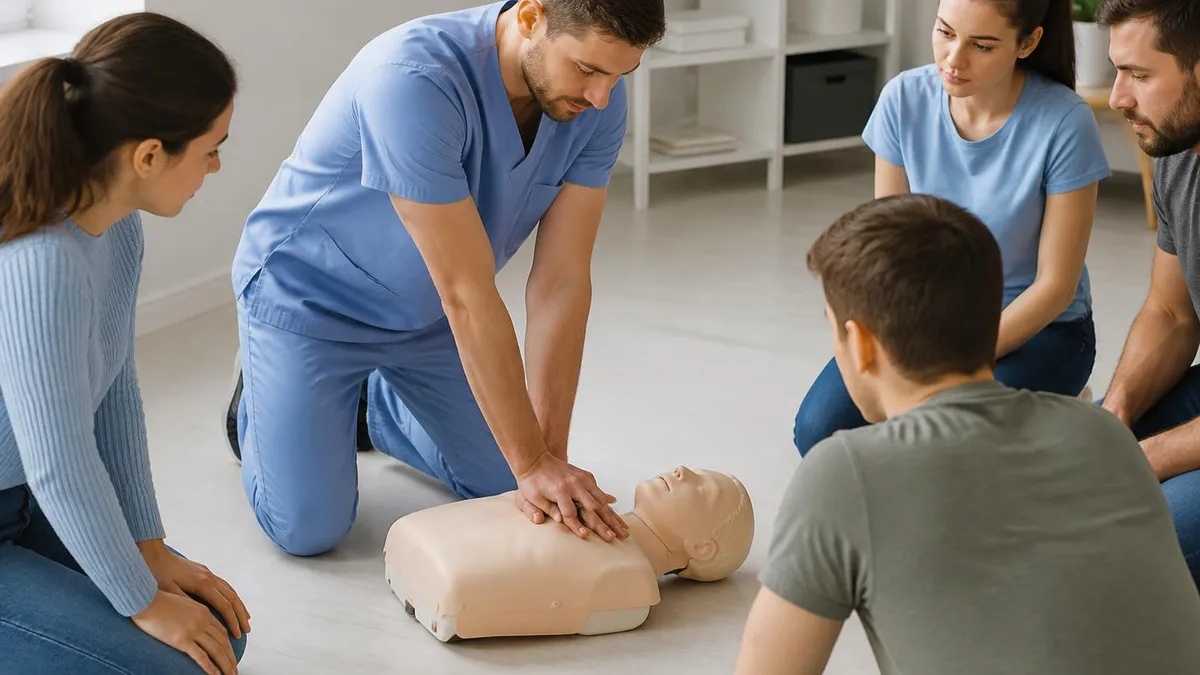
How to Find a CPR Class Near You
Finding a CPR class is straightforward once you know which type you need. The American Heart Association's website has a course locator that lets you search by zip code, course type, and date — it shows AHA-certified training centers near you. The American Red Cross has a similar locator on its website. Both tools let you filter by Heartsaver or BLS level and by format (in-person vs. blended).
Local hospitals and healthcare systems are major CPR training venues, particularly for BLS. Many hospitals offer BLS classes to community members and students in addition to their own staff. Community colleges and vocational schools often offer low-cost or subsidized CPR classes for local residents, particularly for childcare worker recertification. Fire departments and ambulance services in some areas offer free community CPR training as a public health initiative.
Workplace CPR training is often arranged through employers for teams of employees. Bringing a certified instructor to your workplace is frequently more cost-effective than sending employees individually to external classes — a group rate for 10 to 20 employees at one session is typically less expensive per person than individual enrollment. If your team needs training, check whether your employer's safety or HR department already has a certified training partner relationship.
For CPR classes near you, the AHA and Red Cross course finders are the fastest starting points. If you're in a rural area, consider blended learning options — the online knowledge portion removes geography as a barrier, and the skills session can often be arranged through a local hospital, fire station, or training center that serves as a testing site even if they don't run the full course themselves.
CPR Class Preparation Checklist
- ✓Determine which CPR certification type you need: Heartsaver, BLS, ACLS — different roles require different courses
- ✓Verify your employer or licensing board accepts the provider (AHA, Red Cross, or other) before enrolling
- ✓Check whether a blended learning format is accepted — completing the online portion before the in-person session saves class time
- ✓Wear comfortable, loose-fitting clothing — you'll be kneeling and leaning over manikins during practice
- ✓Arrive on time — many instructors won't admit late arrivals due to the sequential nature of skills practice
- ✓Bring a photo ID — required for identity verification when certification cards are issued
- ✓Bring payment if not pre-paid — most training centers don't accept payment day-of without prior registration
- ✓Note your certification expiration date (typically 2 years) and calendar your recertification before it expires
- ✓Review your employer's recertification deadline — many require renewal 30 to 60 days before expiration, not at expiration
- ✓Store your certification card safely — some employers require you to present the physical card; others accept the digital version
In-Person vs. Blended CPR Classes
- +In-person: direct instructor feedback on technique during practice — immediate correction prevents learning errors
- +In-person: full-length class with ample practice time and peer observation
- +Blended: online knowledge portion completed at your own pace and schedule before the in-person session
- +Blended: in-person skills session is shorter (1–2 hours) — less time away from work or family
- +Both formats produce the same AHA or Red Cross certification accepted by employers
- −In-person full class: scheduling more difficult — fixed class times may not match rotating or night shifts
- −In-person full class: travel to the training location required for the full duration
- −Blended: requires self-discipline to complete the online portion before the skills session
- −Blended: some older employers or licensing agencies haven't updated their policies to accept blended format — verify first
- −Neither fully online CPR certificates (no skills session) are accepted for most employer and licensing requirements
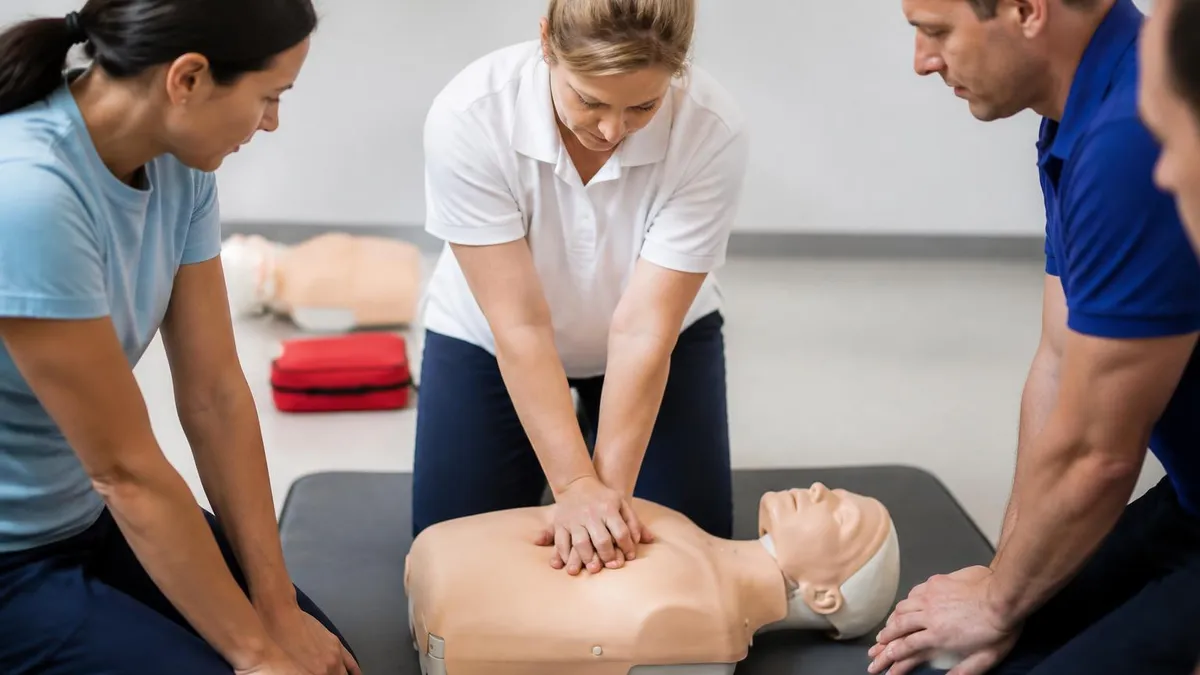
Cost of CPR Classes and Certification
Community Heartsaver CPR/AED classes typically cost $30 to $70 per person at AHA or Red Cross certified training centers. Some community organizations — hospitals, fire departments, churches, libraries — offer subsidized or free classes for local residents as part of public health outreach. Workplace group rates can reduce per-person costs to $25 to $40 for organizations booking sessions for 10 or more employees.
BLS for Healthcare Providers courses cost $50 to $100 at most certified training centers. Some hospitals offer BLS to employees at no charge as part of their required credential maintenance programs. If you're a nursing student or medical student, your program likely includes BLS training as part of your curriculum costs — check before purchasing a course independently.
Renewal courses are typically less expensive than initial certification courses. AHA renewal (called 'Renewal' or 'Update' courses) and Red Cross renewal classes may cost $10 to $30 less than initial courses since they assume existing knowledge and focus on skills practice and any guideline updates. Renewal courses must be taken before your certification expires — some providers require you to show your unexpired card to enroll in the renewal course.
The CPR certification validity guide covers exactly how long certifications last, what happens if yours expires before renewal, and how to document your certification for employer records. Most CPR certifications last exactly 2 years from the date of the class — plan your renewal accordingly to avoid a lapse that could affect your job or licensure status.
Group discounts for workplace CPR training are worth pursuing if you have five or more employees who need certification at the same time. Calling a certified training center and requesting an on-site group session is typically more cost-effective than paying individual class fees for each person. The training center brings equipment and instructors to your location; your team completes training without travel time. Large organizations often negotiate annual site agreements where an instructor visits quarterly — keeping certification current across a rotating workforce without the scheduling complexity of sending employees to external venues.
CPR Class Quick Stats
Key Facts at a Glance
| Item | Value | Details |
|---|---|---|
| Validity of most AHA and Red Cross CPR certifications before renewal is required | 2 years | |
| Typical duration of a community Heartsaver CPR class (in-person or blended skills session) | 2–4 hrs | |
| Cost range for community Heartsaver CPR/AED classes at AHA or Red Cross training centers | $30–$80 | |
| Minimum chest compression depth for adult CPR | ≥2 inches |
CPR Recertification: When and How to Renew
Most AHA and Red Cross CPR certifications expire 2 years from the class date. Your certification card shows the expiration date. Plan your recertification for at least 30 to 60 days before that expiration date — waiting until the last week creates scheduling risk if classes are full or if your employer has their own renewal deadline that precedes the card's actual expiration.
Renewal courses are available from the same providers as initial certification and generally take less time — many BLS renewal classes run 3 to 4 hours compared to 4 to 6 hours for initial BLS. The renewal format covers updates to CPR guidelines (the AHA revises its guidelines every 5 years) and focuses skills practice time on areas where rescuers commonly fall below competency over time.
If your certification has already expired, you typically can't take a renewal course — you must retake the full initial course. Check this policy with your provider before booking. Some training centers will accept recently expired cards (within a few months of expiration) for renewal rather than full initial course; others are strict about the cutoff. Don't let a lapse develop — an expired CPR certification can put your job or clinical credential at risk.
Many employers track employee CPR certification expiration dates and send reminder notifications before renewal is required. If you're a self-employed healthcare provider, fitness professional, or childcare provider, you'll need to manage your own renewal timeline. Set a calendar reminder 90 days before expiration so you have ample time to schedule a class without scrambling. The American Heart Association CPR guide explains the renewal process, including how to use the AHA's HeartCode blended learning system for online renewal with a brief in-person skills confirmation.
A certificate from an online CPR course with no in-person skills component is NOT equivalent to AHA or Red Cross certification for most employment, licensing, or childcare purposes. Many low-cost online providers issue certificates immediately after completing an online course — these can look official but don't satisfy requirements that specify AHA, Red Cross, or an accredited in-person skills demonstration. If your employer, school, or licensing board requires CPR certification, ask exactly which provider and format they accept before purchasing any course. When in doubt, choose an AHA or Red Cross class with an in-person or blended skills component.
CPR Classes for Special Populations and Settings
Standard CPR classes cover the general adult population, but some settings and roles require additional or specialized training. Childcare providers, school nurses, and pediatric healthcare workers benefit from courses with significant emphasis on child and infant CPR techniques, which differ substantially from adult CPR in compression depth, hand placement, and breath volume. Always check that a class explicitly covers infant and child CPR if your role involves caring for children under 8 years old.
Pregnancy CPR has specific modifications — hand placement shifts upward and to the left when performing CPR on a pregnant woman to account for uterine displacement of abdominal organs. Standard CPR classes don't always cover this. Obstetric nurses, midwives, and labor and delivery staff typically receive this training through ALSO (Advanced Life Support in Obstetrics) or similar specialty programs in addition to standard BLS.
CPR for elderly patients is covered in standard courses, but instructors often discuss the higher incidence of rib fractures during compressions in older adults and the ethical considerations around CPR in certain end-of-life situations. Standard compression depth guidelines apply regardless of patient age — rib fractures are a known outcome of effective CPR and don't mean you should stop or reduce compression force.
If you're interested in becoming a CPR instructor yourself, most AHA and Red Cross instructor programs require you to hold a current certification, complete an instructor course (usually a full weekend), and demonstrate teaching skills to a monitored class. Instructors must affiliate with a certified training center and complete continuing education to maintain their instructor status. The CPR certification guide covers instructor pathway requirements alongside learner certification pathways for anyone considering teaching as part of their professional role.
CPR class anxiety is common — many people feel nervous about the physical skills practice or about performing in front of others during the skills test. Instructors at certified classes are accustomed to working with nervous participants and will provide support and correction without judgment. You don't need to know anything about CPR before arriving at a beginner class. The skills are straightforward and teachable to anyone willing to practice them — the class is specifically designed to take someone from no knowledge to demonstrated competency in a single session.
Arriving with a willingness to try and make mistakes during practice is all the preparation you actually need. If you have a physical condition that limits kneeling or applying force, tell the instructor beforehand — accommodations are usually available, and the cognitive knowledge of CPR has independent value even if you can't perform every physical component of the skills test.
CPR Questions and Answers
About the Author

Registered Nurse & Healthcare Educator
Johns Hopkins University School of NursingDr. Sarah Mitchell is a board-certified registered nurse with over 15 years of clinical and academic experience. She completed her PhD in Nursing Science at Johns Hopkins University and has taught NCLEX preparation and clinical skills courses for nursing students across the United States. Her research focuses on evidence-based exam preparation strategies for healthcare certification candidates.