
Heart Attack vs Cardiac Arrest: Key Differences and What to Do 2026 October
Heart attack and cardiac arrest are different emergencies. 🧠 Learn the key differences, warning signs, and the correct first aid response for each situation.
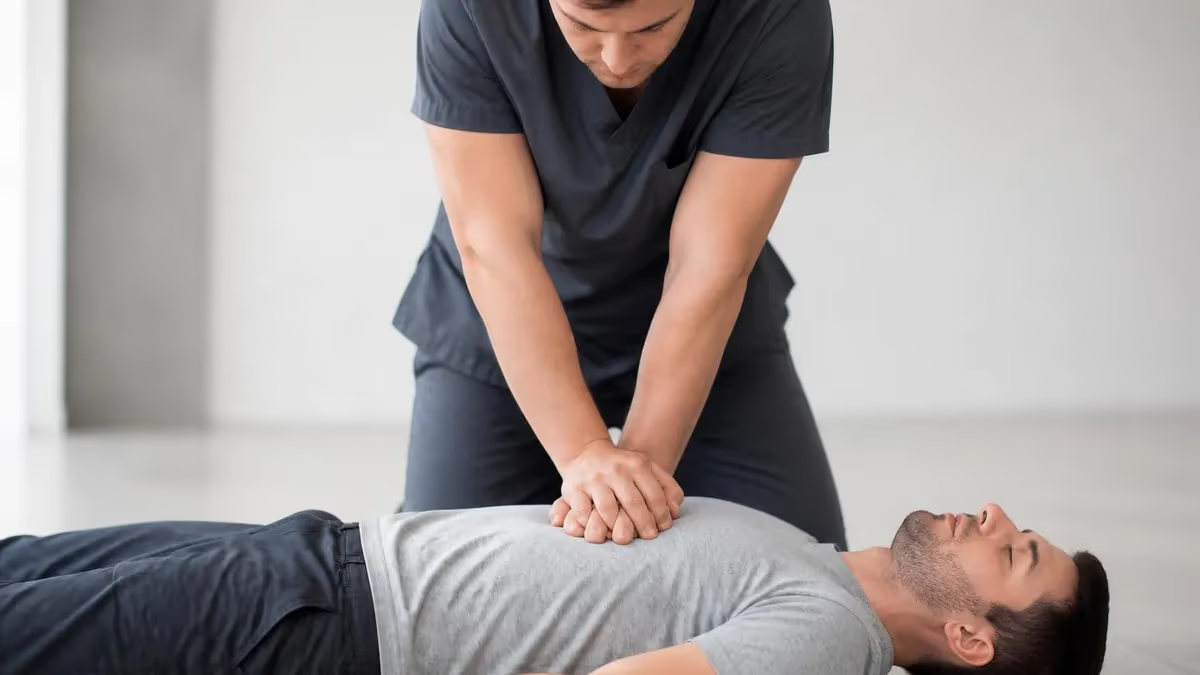
Heart Attack vs Cardiac Arrest: What's the Difference?
Every year, people die because bystanders who witness a cardiac emergency don't know the difference between a heart attack and cardiac arrest — and respond with the wrong action. Giving CPR to a conscious heart attack patient is unnecessary and frightening for the patient. Failing to give CPR to a cardiac arrest victim because you're waiting for the ambulance is fatal. These are opposite errors caused by the same confusion: treating two fundamentally different emergencies as if they're the same thing. Once you understand the difference, you'll know exactly what to do in either situation.
Heart attack and cardiac arrest are two terms people use interchangeably — but they're completely different medical emergencies with different causes, different symptoms, and different immediate responses. Confusing them isn't just a vocabulary issue; it can delay the correct response when seconds matter. A heart attack is a circulation problem. Cardiac arrest is an electrical problem. Understanding this distinction could genuinely save someone's life, because the first aid response for each is fundamentally different.
A heart attack happens when blood flow to part of the heart muscle is blocked — usually by a blood clot in a coronary artery. The heart is still beating, the person is usually conscious, and they typically experience chest pain, shortness of breath, and other warning symptoms that can develop over minutes or even hours. A heart attack is serious and requires immediate medical attention, but the heart hasn't stopped — it's a plumbing problem where the heart isn't getting enough blood supply.
Cardiac arrest happens when the heart suddenly stops beating effectively — its electrical system malfunctions, causing it to quiver erratically (ventricular fibrillation) or stop entirely. The person collapses, becomes unresponsive, and stops breathing normally within seconds. Without immediate CPR and defibrillation, death occurs within minutes. Cardiac arrest is the more immediately life-threatening of the two — there's no gradual onset, no warning symptoms in most cases, and no time to wait for an ambulance without starting CPR.
The connection between them is real: a heart attack can trigger cardiac arrest. When the heart muscle is damaged by a blocked artery, the resulting injury can disrupt the heart's electrical system and cause it to go into a lethal rhythm. This is why heart attacks are dangerous even when the person is initially conscious and talking — the situation can deteriorate into cardiac arrest without warning. But cardiac arrest can also happen without any preceding heart attack, caused by other electrical abnormalities, drug reactions, electrolyte imbalances, or structural heart problems.
- Heart attack: A blocked artery stops blood flow to part of the heart muscle. The heart is still beating. Person is usually conscious.
- Cardiac arrest: The heart's electrical system malfunctions. The heart stops beating effectively. Person is unconscious and not breathing normally.
- Heart attack symptoms: Chest pain/pressure, shortness of breath, pain radiating to arm/jaw/back, nausea, cold sweat — develops over minutes to hours
- Cardiac arrest symptoms: Sudden collapse, unresponsiveness, no pulse, no normal breathing — happens within seconds
- Heart attack response: Call 911, chew aspirin (325mg) if not allergic, keep person calm, monitor for deterioration
- Cardiac arrest response: Call 911, start CPR immediately, use AED if available — every minute without CPR reduces survival by 7-10%
- Connection: A heart attack can trigger cardiac arrest, but they're not the same event
What to Do: Heart Attack vs Cardiac Arrest Response
Heart Attack: Call 911 and Give Aspirin
Cardiac Arrest: Start CPR Immediately
Use an AED as Soon as Available
Monitor a Heart Attack Patient for Cardiac Arrest
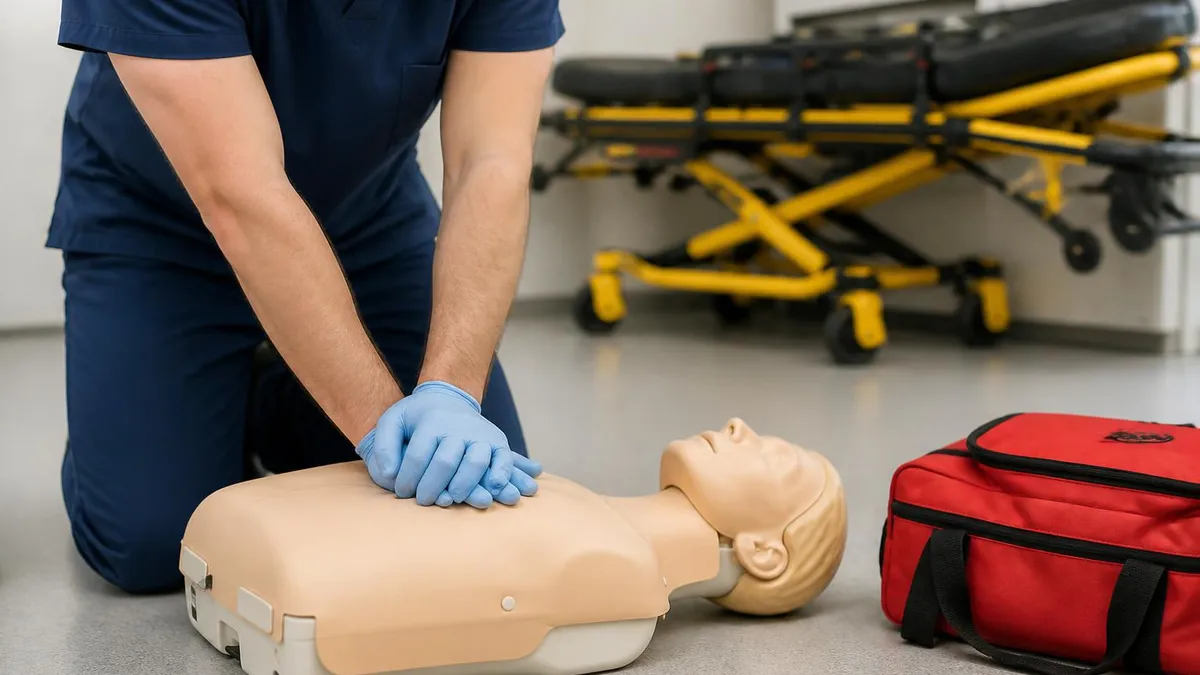
Heart Attack: Causes, Symptoms, and Risk Factors
A heart attack — medically called a myocardial infarction (MI) — occurs when a coronary artery that supplies blood to the heart muscle becomes blocked, usually by a blood clot forming on top of a fatty plaque that has built up inside the artery wall over years. When the blood flow stops, the section of heart muscle supplied by that artery begins to die from lack of oxygen. The longer the blockage persists, the more muscle dies — which is why rapid treatment (ideally within 90 minutes of symptom onset) is critical to preserving heart function.
Heart attack symptoms vary between individuals — and especially between men and women. Classic symptoms include chest pain or pressure (often described as tightness, squeezing, or heaviness rather than sharp pain), pain radiating to the left arm, jaw, neck, or back, shortness of breath, nausea or vomiting, cold sweat, and lightheadedness.
These symptoms can develop gradually over minutes to hours, which is why some people delay calling 911 — they hope the discomfort will pass. It's worth emphasising: if you suspect a heart attack, call 911 immediately. Waiting to see if symptoms improve is the most dangerous decision you can make.
Women often experience heart attack symptoms differently than men. Women are more likely to have shortness of breath without chest pain, nausea, back or jaw pain, and unusual fatigue as their primary symptoms — rather than the classic crushing chest pain that most people associate with heart attacks. This difference in symptom presentation contributes to delayed recognition and treatment in women, which is one reason women have worse heart attack outcomes than men on average.
Risk factors for heart attack include high blood pressure, high cholesterol, smoking, diabetes, obesity, sedentary lifestyle, family history of heart disease, and age (risk increases significantly after 45 for men and 55 for women). Many of these risk factors are modifiable through lifestyle changes — which is why understanding your risk profile and acting on it is one of the most effective things you can do for your long-term cardiac health.
Heart attack treatment in the hospital focuses on restoring blood flow to the blocked artery as quickly as possible. This is done either through percutaneous coronary intervention (PCI — also called angioplasty, where a catheter with a balloon opens the blocked artery and a stent is placed to keep it open) or through thrombolytic therapy (clot-dissolving drugs administered intravenously). The choice between these treatments depends on how quickly the patient reaches the hospital and the hospital's capabilities. Time is muscle — every minute of delay means more heart tissue dies.
Cardiac Arrest: Causes and Types
The most common cause of cardiac arrest. The heart's lower chambers (ventricles) quiver chaotically instead of contracting in a coordinated rhythm. No blood is pumped. This is the rhythm that AEDs are designed to treat — the electrical shock can reset the heart's electrical system to a normal rhythm. V-fib is why immediate defibrillation dramatically improves survival: with each minute of untreated V-fib, survival decreases by 7-10%.
The ventricles beat dangerously fast — too fast to fill with blood between contractions. If sustained, V-tach can deteriorate into V-fib and cause cardiac arrest. Some V-tach episodes are brief and self-correcting; others require immediate defibrillation. V-tach is more common in people with pre-existing heart conditions, particularly those with previous heart attacks that left scar tissue in the heart muscle.
Asystole is the complete absence of electrical activity — the 'flatline' seen in movies. PEA (Pulseless Electrical Activity) means the heart's electrical system is firing but the heart isn't actually pumping blood. Neither of these rhythms responds to defibrillation (an AED will analyse and correctly advise 'no shock'). CPR and advanced medications are the treatment. Survival rates for asystole and PEA are significantly lower than for V-fib, making the timing of intervention even more critical.
While cardiac arrest is more common in older adults with heart disease, it can occur in seemingly healthy young athletes. Causes in young people include hypertrophic cardiomyopathy (abnormally thick heart muscle), long QT syndrome (electrical conduction abnormality), commotio cordis (a blow to the chest at precisely the wrong moment in the cardiac cycle), and undiagnosed structural heart defects. This is why AED availability at sports venues and schools is a public health priority.
CPR and AED: The Cardiac Arrest Response
Hands-only CPR (compressions without rescue breaths) is recommended for untrained bystanders and is effective for adult cardiac arrest:
- Step 1: Confirm the person is unresponsive — tap their shoulders and shout 'Are you okay?'
- Step 2: Call 911 (or have someone else call) and get an AED if one is nearby
- Step 3: Place the heel of one hand on the centre of the chest (lower half of the sternum). Place your other hand on top, fingers interlocked
- Step 4: Push hard and fast — at least 2 inches deep, at a rate of 100-120 compressions per minute (the tempo of 'Stayin' Alive' by the Bee Gees)
- Step 5: Don't stop until paramedics arrive, an AED is ready to use, or the person starts breathing normally
- Key point: Imperfect CPR is vastly better than no CPR — don't hesitate because you're worried about doing it wrong
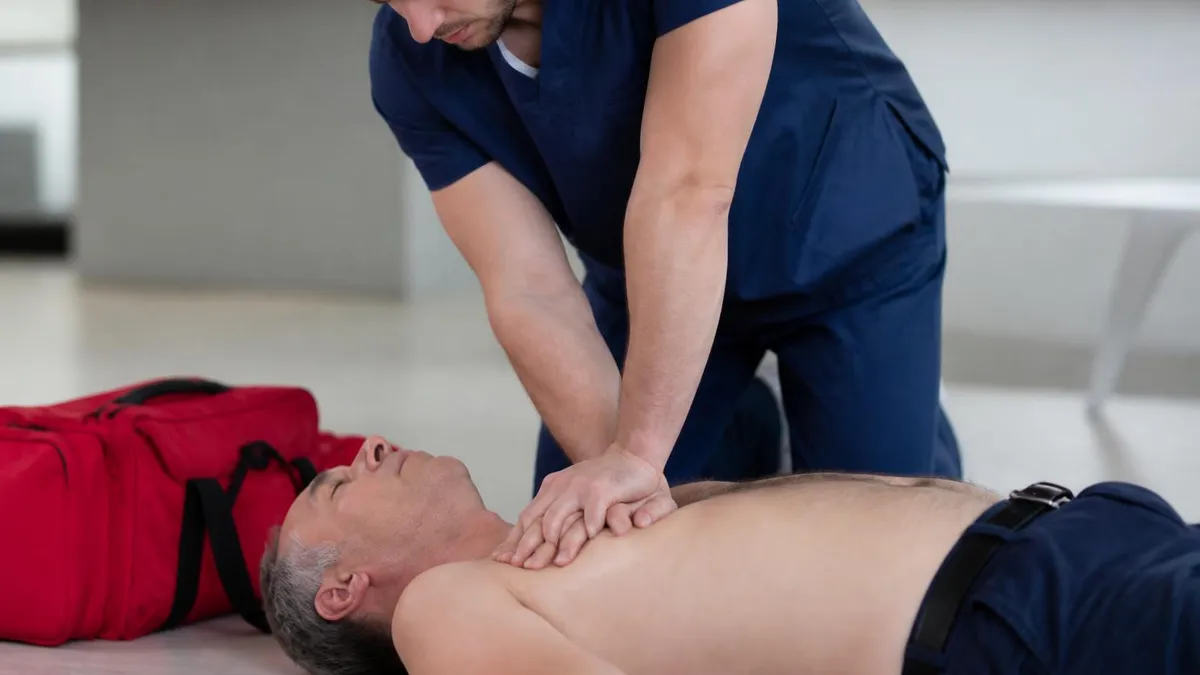
Survival Statistics: Why Immediate Response Matters
The survival statistics for cardiac arrest are stark — and they make the case for bystander CPR and AED access more powerfully than any argument. Approximately 350,000 out-of-hospital cardiac arrests occur in the United States each year. Without bystander CPR, survival to hospital discharge is roughly 10%. With bystander CPR, survival doubles or triples. With bystander CPR plus AED use before paramedics arrive, survival rates can exceed 50-70% for witnessed arrests with a shockable rhythm.
Every minute without CPR reduces the chance of survival by 7-10%. After 10 minutes without CPR, survival is extremely unlikely. Paramedic response times average 7-8 minutes in urban areas and longer in rural areas. The maths is clear: if no one starts CPR until paramedics arrive, the patient has already lost 70-80% of their survival probability. Bystander CPR during those critical first minutes is what bridges the gap between collapse and professional medical care.
These statistics are why CPR training and AED availability are public health priorities — and why the difference between a heart attack and cardiac arrest matters practically. A heart attack patient who is conscious and breathing needs you to call 911 and provide supportive care while waiting. A cardiac arrest patient needs you to start CPR within 60 seconds of collapse and use an AED within 3-5 minutes. Knowing which situation you're facing determines which response saves the person's life.
One encouraging trend: bystander CPR rates have been increasing in the United States, from approximately 30% of witnessed cardiac arrests in 2010 to over 40% in recent years. This increase is attributed to expanded CPR training programmes, hands-only CPR campaigns (which eliminated the barrier of mouth-to-mouth contact that discouraged some bystanders), and greater AED availability in public spaces. Every percentage point increase in bystander CPR rates translates to thousands of additional lives saved nationally each year.
The quality of CPR also matters, not just whether it happens. High-quality CPR — correct rate (100-120/min), adequate depth (at least 2 inches), full chest recoil between compressions, and minimal interruptions — produces better outcomes than shallow, slow, or frequently interrupted compressions. If you've taken a CPR course, practise the physical skills periodically so your muscle memory stays sharp. If you haven't taken a course, even untrained compressions significantly outperform no compressions at all — don't let lack of formal training stop you from acting in a real emergency.
Know the Difference: Quick Recognition Guide
- ✓If the person is CONSCIOUS with chest pain or pressure — it's likely a heart attack. Call 911, give aspirin, keep them calm, and monitor
- ✓If the person is UNCONSCIOUS, not breathing normally, and has no pulse — it's cardiac arrest. Call 911, start CPR immediately, use an AED
- ✓Heart attack symptoms develop over minutes to hours — there's usually time to call 911 and get the person to emergency care
- ✓Cardiac arrest happens in seconds — there's no warning. Immediate CPR is the only intervention that matters before paramedics arrive
- ✓A heart attack CAN become cardiac arrest — monitor conscious heart attack patients closely for signs of deterioration (loss of consciousness, stopping breathing)
- ✓Hands-only CPR (compressions only, no breaths) is effective for adult cardiac arrest and is recommended if you're not trained in full CPR
- ✓AEDs are safe for untrained users — the device analyses the rhythm and will not shock a normal heart. Don't hesitate to use one
Common Misconceptions About Heart Attack and Cardiac Arrest
- +CORRECT: Heart attack patients are usually conscious and talking. Cardiac arrest patients are unconscious and not breathing — the level of consciousness is the key differentiator in the field
- +CORRECT: CPR is for cardiac arrest, not heart attack. A conscious person having a heart attack does NOT need chest compressions — they need 911, aspirin, and monitoring
- +CORRECT: AEDs can be used by anyone — they're designed for untrained bystanders with voice prompts that guide every step, and they won't deliver a shock unless the rhythm is shockable
- +CORRECT: Bystander CPR doubles or triples cardiac arrest survival — doing something imperfectly is dramatically better than doing nothing while waiting for paramedics
- −WRONG: 'Heart attack and cardiac arrest are the same thing' — they're different events with different causes, symptoms, and treatments. Using the terms interchangeably causes confusion
- −WRONG: 'Only old people have cardiac arrest' — while risk increases with age, cardiac arrest can occur in young athletes and seemingly healthy people due to undiagnosed heart conditions
- −WRONG: 'CPR always involves mouth-to-mouth' — hands-only CPR (compressions only) is effective for adult cardiac arrest and is the recommended approach for untrained bystanders
- −WRONG: 'You can hurt someone with an AED' — AEDs analyse the heart rhythm and will not deliver a shock unless it's needed. They're designed to be impossible to misuse
Pros and Cons at a Glance
| Pros | Cons |
|---|---|
| CORRECT: Heart attack patients are usually conscious and talking. Cardiac arrest patients are unconscious and not breathing — the level of consciousness is the key differentiator in the field | WRONG: 'Heart attack and cardiac arrest are the same thing' — they're different events with different causes, symptoms, and treatments. Using the terms interchangeably causes confusion |
| CORRECT: AEDs can be used by anyone — they're designed for untrained bystanders with voice prompts that guide every step, and they won't deliver a shock unless the rhythm is shockable | WRONG: 'Only old people have cardiac arrest' — while risk increases with age, cardiac arrest can occur in young athletes and seemingly healthy people due to undiagnosed heart conditions |
| CORRECT: Bystander CPR doubles or triples cardiac arrest survival — doing something imperfectly is dramatically better than doing nothing while waiting for paramedics | WRONG: 'CPR always involves mouth-to-mouth' — hands-only CPR (compressions only) is effective for adult cardiac arrest and is the recommended approach for untrained bystanders |
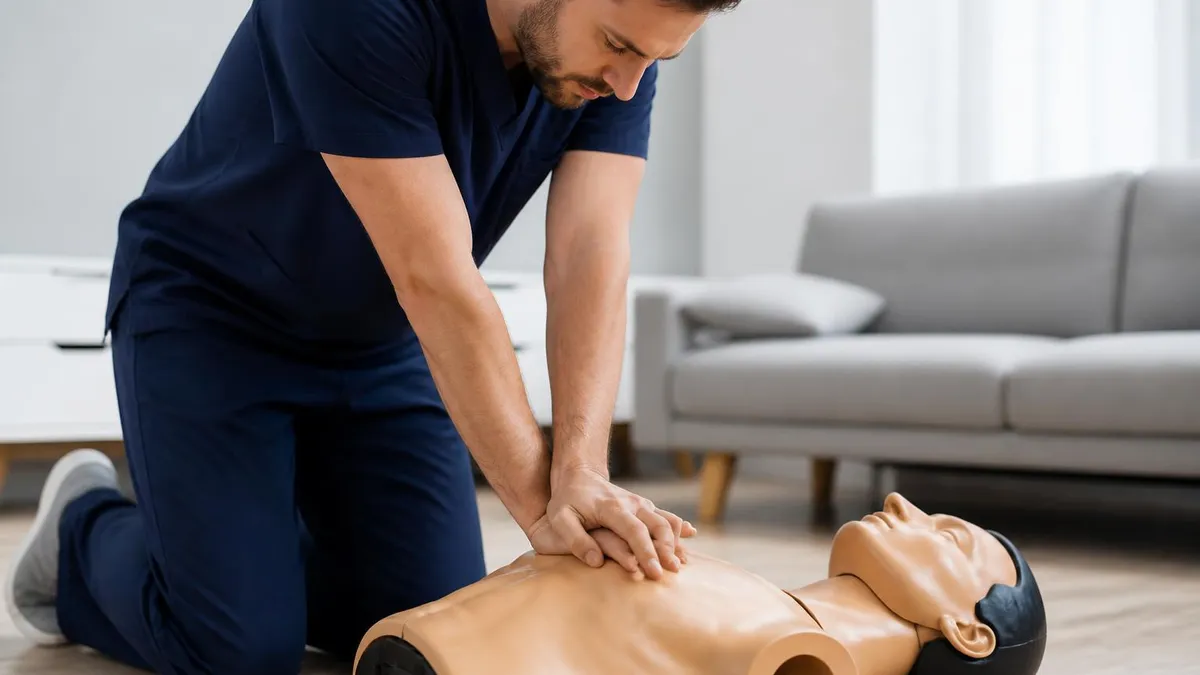
Prevention: Reducing Your Risk of Both
Many of the risk factors for heart attack and cardiac arrest overlap — because heart disease is the most common underlying cause of both. Reducing your cardiovascular risk reduces your chances of experiencing either event.
The modifiable risk factors are well-established: high blood pressure, high cholesterol, smoking, diabetes, obesity, physical inactivity, and excessive alcohol use. Addressing any of these — even partially — reduces your cardiovascular risk meaningfully. You don't need to achieve perfection in every category; each improvement contributes to lower overall risk. Quitting smoking alone reduces heart attack risk by 50% within one year. Regular physical activity (150 minutes per week of moderate exercise) reduces cardiovascular event risk by 30-40%.
Screening for heart disease risk factors should start in your 20s with blood pressure and cholesterol checks, and become more comprehensive after 40 (or earlier if you have family history). Know your numbers: blood pressure below 120/80 mmHg, total cholesterol below 200 mg/dL, LDL cholesterol below 100 mg/dL, and fasting blood glucose below 100 mg/dL. If any of these are elevated, work with your doctor on a management plan — medication if appropriate, lifestyle modifications in all cases.
For young athletes, pre-participation cardiac screening can identify some of the structural and electrical heart conditions that cause sudden cardiac arrest. While routine screening isn't universally mandated, an ECG (electrocardiogram) as part of a sports physical can detect conditions like long QT syndrome and hypertrophic cardiomyopathy. Parents of student athletes should discuss cardiac screening options with their child's paediatrician, particularly if there's a family history of sudden cardiac death or unexplained fainting during exercise.
Beyond individual prevention, community-level preparedness saves lives from cardiac arrest. AED placement in schools, gyms, community centres, airports, and office buildings puts life-saving defibrillation within reach for the majority of out-of-hospital cardiac arrests. If you manage a facility, ensuring AED availability and training staff in CPR and AED use is one of the most impactful safety investments you can make — far more likely to save a life than many other safety measures that receive more attention and budget.
Heart Attack vs Cardiac Arrest: Key Numbers
When to Call 911: Don't Wait
The most dangerous mistake people make with both heart attacks and cardiac arrests is waiting too long to call for help. With heart attacks, people rationalise their symptoms — 'it's probably just indigestion,' 'I don't want to overreact,' 'it'll pass in a few minutes.' On average, heart attack patients wait 2-3 hours after symptom onset before calling 911.
Every hour of delay increases heart muscle damage and reduces the effectiveness of treatment. There's no downside to calling 911 for a suspected heart attack that turns out to be something less serious — but there's a potentially fatal downside to not calling when it is a heart attack.
With cardiac arrest, the urgency is even more extreme. There's no decision to make — if someone collapses and isn't breathing normally, call 911 and start CPR immediately. Don't check for a pulse first (most untrained people can't reliably feel a pulse, and the time spent checking is time not spent on compressions). Don't drive the person to the hospital (CPR in a moving car is ineffective, and the delay in starting compressions is deadly). Call 911 from the scene and start CPR while help is on the way.
Teach your family members — including older children — how to recognise the difference between a heart attack and cardiac arrest, how to call 911, and how to perform hands-only CPR. Cardiac arrests that occur at home (which account for about 70% of out-of-hospital cardiac arrests) are more likely to be survived when a family member starts CPR immediately rather than waiting for paramedics. A brief family conversation about emergency response could be the most impactful health discussion you ever have.
Never leave a heart attack patient alone while waiting for paramedics. Heart attacks can deteriorate into cardiac arrest without warning — the person who was conscious and talking can suddenly become unresponsive. If you're with someone having heart attack symptoms, stay with them, monitor their breathing and consciousness continuously, and be prepared to begin CPR immediately if they become unresponsive and stop breathing normally. Having called 911 already means help is on the way; your role is to provide continuous monitoring and be ready to act if the situation changes.
Heart Attack and Cardiac Arrest in Women
Women experience both heart attacks and cardiac arrest, but the presentation and outcomes differ in ways that affect recognition and response.
Women having a heart attack are more likely than men to experience atypical symptoms — shortness of breath, nausea, back pain, jaw pain, and extreme fatigue rather than the classic crushing chest pain. This atypical presentation leads to delayed recognition by both the woman herself and sometimes by medical professionals.
Women are also more likely to dismiss their symptoms as stress, anxiety, or acid reflux. If you're a woman experiencing any combination of unexplained shortness of breath, unusual fatigue, nausea, or upper body discomfort that doesn't resolve — call 911 and describe your symptoms. Don't talk yourself out of seeking help because 'it doesn't feel like a heart attack should feel.'
Cardiac arrest survival rates are lower for women than for men, partly because bystanders are less likely to perform CPR on women. Studies have found that bystander CPR rates for women in public settings are significantly lower than for men — possibly due to concerns about removing clothing to place AED pads or perform compressions on a woman's chest.
This hesitation costs lives. The correct response to cardiac arrest is the same regardless of gender: call 911, start chest compressions, and use an AED. Modesty concerns are irrelevant when someone is dying — and any trained CPR provider will confirm that saving a life always takes priority over every other consideration.
Emergency situations demand action — and the person in cardiac arrest needs chest compressions regardless of their gender, body type, or any other characteristic. If you'd perform CPR on a man without hesitation, you should perform it on a woman with exactly the exact same urgency and full commitment.
Heart Attack vs Cardiac Arrest Questions and Answers
About the Author

Registered Nurse & Healthcare Educator
Johns Hopkins University School of NursingDr. Sarah Mitchell is a board-certified registered nurse with over 15 years of clinical and academic experience. She completed her PhD in Nursing Science at Johns Hopkins University and has taught NCLEX preparation and clinical skills courses for nursing students across the United States. Her research focuses on evidence-based exam preparation strategies for healthcare certification candidates.