
CPR Stands For: Cardiopulmonary Resuscitation Explained 2026 October
CPR stands for cardiopulmonary resuscitation — 🧠 learn what CPR means, how it works, the steps involved, and how to get certified to save a life.
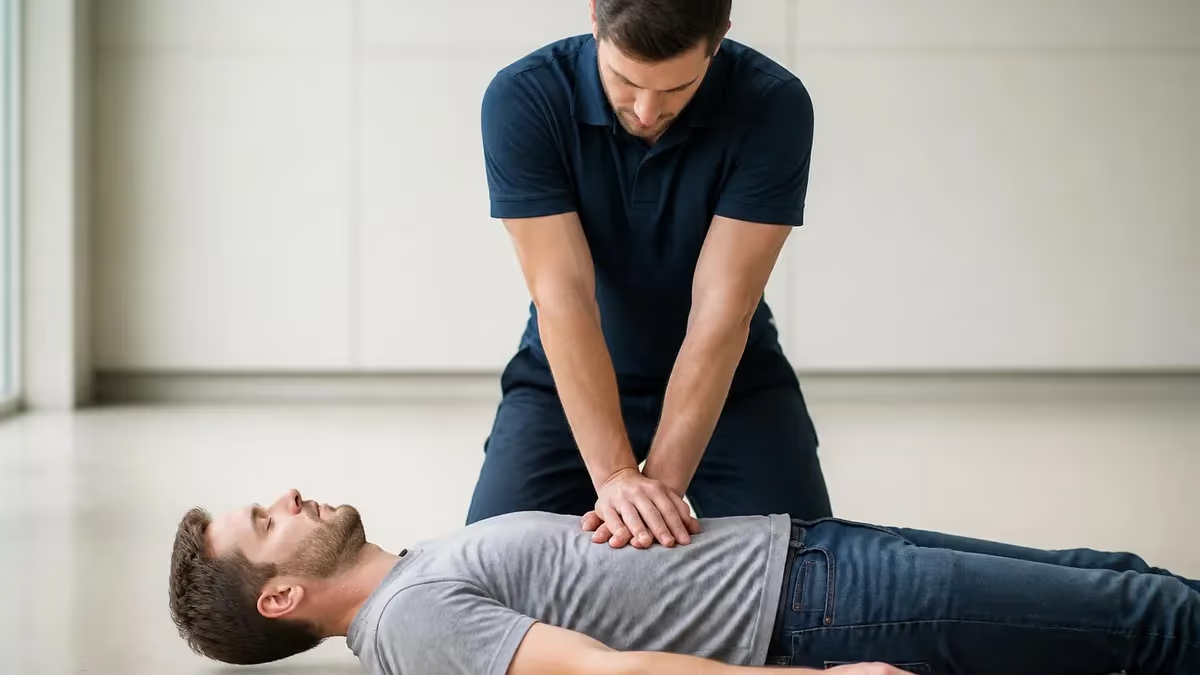
What Does CPR Stand For?
CPR stands for cardiopulmonary resuscitation. It's a lifesaving emergency technique used when someone's heart stops beating or they stop breathing — typically following cardiac arrest, near-drowning, drug overdose, or severe choking. The three components of the acronym describe exactly what the technique does: 'cardio' refers to the heart (from the Latin and Greek roots for heart), 'pulmonary' refers to the lungs (from the Latin for lung), and 'resuscitation' means to revive or bring back to consciousness.
In practical terms, cardiopulmonary resuscitation combines chest compressions — which manually pump the heart to keep oxygenated blood circulating to the brain and vital organs — with rescue breaths, which supply oxygen to the lungs. Together, these two actions replicate the basic mechanical functions of a beating heart and breathing lungs, buying critical time until an automated external defibrillator (AED) can restore the heart's natural rhythm or until professional emergency services arrive.
When the heart stops, the brain begins to suffer irreversible damage within four to six minutes due to oxygen deprivation. CPR performed immediately after cardiac arrest — by a bystander, before ambulance services can arrive — can double or even triple a person's chance of survival.
The average emergency response time in the United States is eight to twelve minutes; without bystander CPR, irreversible brain damage or death is likely before paramedics arrive. This is why widespread CPR training matters: the people most likely to perform bystander CPR are the people who happen to be present when cardiac arrest occurs, not trained medical professionals.
The American Heart Association (AHA) and the Red Cross are the two primary organisations that set CPR guidelines and provide training in the United States. Internationally, standards are set by the International Liaison Committee on Resuscitation (ILCOR) and implemented by national resuscitation councils. Guidelines are updated periodically — the most recent major update was in 2020 — based on new evidence about compression depth, rate, and the role of rescue breathing versus chest compressions alone. Understanding what cardiopulmonary resuscitation involves in full clinical detail provides context beyond the basic acronym explanation.
It's worth noting that CPR is not a cure — it's a bridge. It bridges the gap between the moment cardiac arrest occurs and the moment definitive treatment arrives or becomes available. The goal isn't to restart the heart with compressions alone; it's to keep enough blood and oxygen flowing to the brain to prevent irreversible neurological damage during that gap.
A person who receives effective bystander CPR immediately after cardiac arrest is more likely to have a shockable heart rhythm when defibrillation is attempted, more likely to survive to hospital admission, and more likely to leave hospital with good neurological function than someone whose CPR was delayed or absent.
- Full name: Cardiopulmonary Resuscitation — 'cardio' (heart) + 'pulmonary' (lungs) + 'resuscitation' (revival)
- Purpose: Maintain blood circulation and oxygen delivery to the brain and organs when the heart stops
- Main components: Chest compressions + rescue breaths (or chest compressions only in hands-only CPR)
- Compression rate: 100-120 compressions per minute — roughly the beat of 'Stayin' Alive' by the Bee Gees
- Compression depth: At least 2 inches (5cm) for adults
- Ratio: 30 compressions to 2 rescue breaths in standard CPR; continuous compressions in hands-only CPR
- Effect on survival: Bystander CPR can double or triple cardiac arrest survival rates
- Certification: Basic CPR certification takes 2-4 hours; widely available through AHA, Red Cross, and other providers
The Steps of CPR (Adult)
Check for Safety and Responsiveness
Call 911 (or Ask Someone Else To)
Begin Chest Compressions
Give Rescue Breaths (if trained)
Continue and Use AED When Available
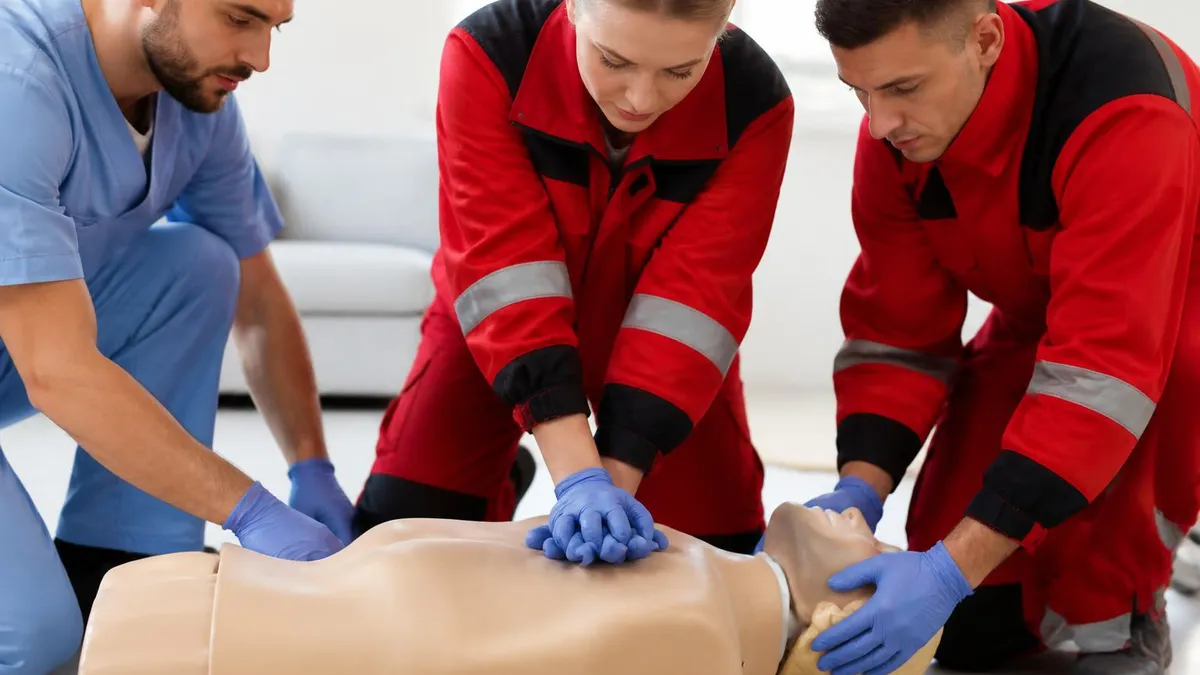
Breaking Down What CPR Means: Cardio, Pulmonary, Resuscitation
Understanding the three words in cardiopulmonary resuscitation gives you a clearer picture of what the technique is doing to the body and why each element matters.
'Cardio' comes from the Greek 'kardia,' meaning heart. The cardiac component of CPR — chest compressions — physically compresses the heart between the breastbone and spine, forcing blood out of the heart and into the circulatory system with each compression. As the chest recoils, the heart refills. This mechanical pumping replicates the heart's normal function when it is no longer beating effectively. The compression rate of 100-120 per minute approximates a normal resting heart rate and is enough to maintain a basic level of circulation to keep the brain and organs viable.
'Pulmonary' comes from the Latin 'pulmonalis,' meaning lung. The pulmonary component — rescue breathing — delivers oxygen into the lungs. Without oxygen input, the blood being circulated by compressions quickly becomes depleted of oxygen and circulation becomes less effective at preserving brain function. Rescue breaths counter this by replenishing the oxygen in the bloodstream every 30 compressions. In hands-only CPR (without rescue breaths), the residual oxygen already in the blood at the time of cardiac arrest is enough to support compressions for several minutes, which is why hands-only CPR is considered effective and recommended for untrained bystanders.
'Resuscitation' comes from the Latin 'resuscitare,' meaning to rouse or revive. CPR does not definitively revive someone — it maintains the minimum conditions (circulation of oxygenated blood) necessary for survival until a definitive treatment can restore the heart's normal rhythm.
That definitive treatment is typically defibrillation — delivering an electric shock to the heart via an AED — which can restore a normal rhythm in cases of ventricular fibrillation or pulseless ventricular tachycardia (the two shockable cardiac rhythms). CPR without defibrillation has limited ability to convert a fibrillating heart back to a normal rhythm, but it dramatically extends the window during which defibrillation can be effective.
Types of CPR
The complete CPR technique — 30 chest compressions followed by 2 rescue breaths, repeated in continuous cycles. Recommended for trained rescuers who are confident performing rescue breathing. The ratio of 30:2 maximises compression time while delivering rescue breaths frequently enough to maintain blood oxygen levels.
Continuous chest compressions without rescue breaths. Recommended by AHA for untrained bystanders or those unwilling to perform rescue breathing. Highly effective in the first few minutes after cardiac arrest when blood oxygen levels are still adequate. Removes the barrier of mouth-to-mouth contact, encouraging more bystanders to act.
Modified technique for infants (under 1 year) and children (1 to puberty). Uses two fingers for infant compressions (on the centre of the chest), or one hand for small children. Compression depth is 1.5 inches for infants and 2 inches for children. Rescue breath volume is smaller — just enough to make the chest rise. The ratio remains 30:2 (15:2 for two-rescuer child CPR).
The most effective out-of-hospital cardiac arrest response combines immediate CPR with early defibrillation via an AED. AEDs are designed for use by untrained bystanders — they analyse the heart rhythm, determine whether a shock is needed, and provide voice instructions. The combination of bystander CPR and AED use within 3-5 minutes of cardiac arrest has achieved survival rates over 50% in some communities.
CPR Techniques in Detail
Chest compressions are the most critical component of CPR — if you can only do one thing, do compressions.
- Hand position: Heel of dominant hand on the lower half of the breastbone (sternum), centre of the chest — not on the ribs or stomach
- Depth: At least 2 inches (5cm) for adults — don't be afraid to push hard
- Rate: 100-120 compressions per minute (use a metronome app or 'Stayin' Alive' as a rhythm guide)
- Full recoil: Allow complete chest recoil between compressions — leaning on the chest reduces effectiveness
- Minimise interruptions: Try to keep chest compressions going — each pause reduces blood pressure built up by compressions
- Rescuer fatigue: Compressions are tiring — switch with another rescuer every 2 minutes if possible to maintain quality
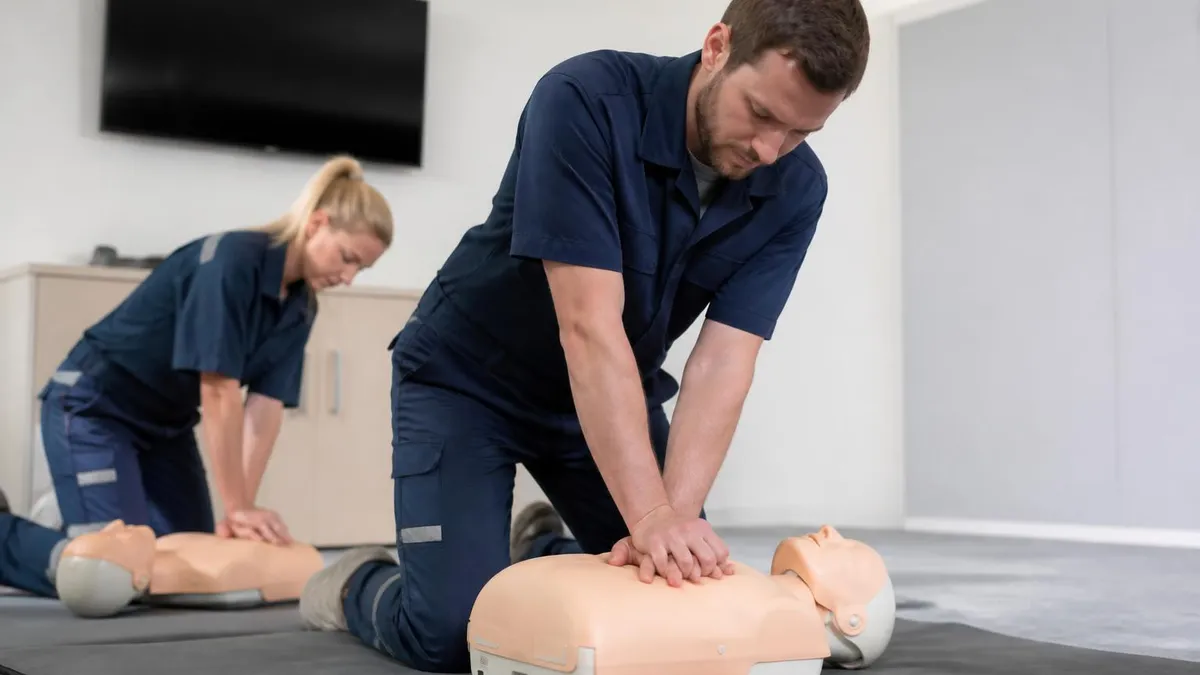
Who Should Know CPR and Why It Matters
The American Heart Association recommends that all adults — not just healthcare workers — learn basic CPR. The reason is statistical: about 70% of out-of-hospital cardiac arrests happen in homes. The person most likely to witness your cardiac arrest is a family member, friend, or neighbour, not a trained medical professional. When a family member knows CPR, the chance of surviving cardiac arrest at home improves dramatically.
Workplace CPR training is required or strongly recommended in many industries — healthcare, education, childcare, fitness and recreation, construction, and others all commonly mandate CPR certification for their staff. Some states require school staff to be trained; youth sports coaches and childcare workers are often required to hold current certification. Even without a professional requirement, CPR classes are widely accessible and take only a few hours to complete.
Certain populations particularly benefit from household CPR knowledge. Families with young children should understand infant and child CPR differences. Those living with elderly family members or people with known heart disease should be especially motivated to learn — the highest-risk group for cardiac arrest is adults over 60 with cardiovascular risk factors. Swimmers, boaters, and those who spend time in and around water should also understand CPR in the context of near-drowning, where rescue breathing plays a particularly important role.
Even partial CPR knowledge — knowing to call 911, to start compressions, and to use an AED — saves lives. Studies consistently show that bystander CPR rates are increasing in communities with active public education programs, and this correlates with improved survival rates from out-of-hospital cardiac arrest. If you've never taken CPR training, consider it an essential life skill in the same category as basic first aid and fire safety — something you hope never to need but that could make the difference between life and death for someone close to you.
The disparity in bystander CPR rates across different communities is striking and well-documented. In some US cities, bystander CPR is performed in fewer than 20% of witnessed cardiac arrests; in communities with strong public training programs, the rate exceeds 70%. That gap translates directly into lives.
Research published in JAMA found that for every 100 people who experience cardiac arrest, roughly 8 additional people survive when bystander CPR rates increase from 20% to 70%. At population scale, that's thousands of preventable deaths annually attributable to undertrained communities. This is why the AHA and Red Cross prioritise community CPR campaigns, and why schools in many states now teach CPR as part of the standard curriculum — building a generation of trained potential rescuers is a proven public health strategy.
When to Start CPR
- ✓The person is unresponsive — does not wake up, speak, or move when you tap their shoulders firmly and shout at them
- ✓The person is not breathing normally — no breath, or only occasional gasps (agonal breathing, which is not normal breathing)
- ✓The person's heart has stopped beating — no pulse detectable at the carotid artery in the neck (if you're trained to check; untrained rescuers should skip the pulse check and start CPR if in doubt)
- ✓The person has collapsed suddenly and you don't know why — in doubt, start CPR; the risk of injury from CPR is far lower than the risk of inaction in true cardiac arrest
- ✓An AED is available — use it immediately alongside CPR; don't wait for paramedics to arrive before attempting defibrillation
- ✓Do NOT start CPR if the person is breathing normally, has a clear pulse, is responsive, or has an obvious fatal injury — direct resources to calling 911 and keeping the person comfortable in those situations
Hands-Only CPR vs. Standard CPR (30:2)
- +Hands-only CPR removes barriers — no mouth-to-mouth contact required, which increases the likelihood that untrained or hesitant bystanders will actually perform CPR
- +Hands-only CPR is easier to remember and perform correctly under stress — continuous compressions without the interruption of rescue breaths maintains a higher compression fraction
- +Standard CPR (30:2) is preferred for prolonged cardiac arrest — after several minutes, blood oxygen levels drop and rescue breaths become more important for maintaining effectiveness
- +Standard CPR is recommended for drowning, drug overdose, and child cardiac arrest — these situations involve respiratory failure as a primary cause, making the pulmonary component especially critical
- +Both types significantly improve survival compared to no CPR — bystander CPR of either type roughly doubles survival rates compared to waiting for emergency services alone
- −Hands-only CPR becomes less effective after about 4-6 minutes as blood oxygen depletes — rescue breaths replenish oxygen and extend the window of effective CPR
- −Standard CPR requires training to perform rescue breaths correctly — incorrect technique (wrong head position, wrong breath volume) reduces effectiveness and wastes time
- −The interruptions required for rescue breaths in standard CPR briefly reduce the compression fraction — each 2-breath pause drops the blood pressure built up by compressions
- −Fear of disease transmission from mouth-to-mouth contact is a recognised barrier to bystander CPR — this fear is largely unfounded in normal circumstances but affects willingness to act
- −Standard CPR is more physically demanding than hands-only CPR for a single rescuer — maintaining correct form for both compressions and rescue breaths while managing fatigue is harder with fewer rescuers
Pros and Cons at a Glance
| Pros | Cons |
|---|---|
| Hands-only CPR removes barriers — no mouth-to-mouth contact required, which increases the likelihood that untrained or hesitant bystanders will actually perform CPR | Standard CPR requires training to perform rescue breaths correctly — incorrect technique (wrong head position, wrong breath volume) reduces effectiveness and wastes time |
| Hands-only CPR is easier to remember and perform correctly under stress — continuous compressions without the interruption of rescue breaths maintains a higher compression fraction | Fear of disease transmission from mouth-to-mouth contact is a recognised barrier to bystander CPR — this fear is largely unfounded in normal circumstances but affects willingness to act |
| Standard CPR is recommended for drowning, drug overdose, and child cardiac arrest — these situations involve respiratory failure as a primary cause, making the pulmonary component especially critical | Standard CPR is more physically demanding than hands-only CPR for a single rescuer — maintaining correct form for both compressions and rescue breaths while managing fatigue is harder with fewer rescuers |
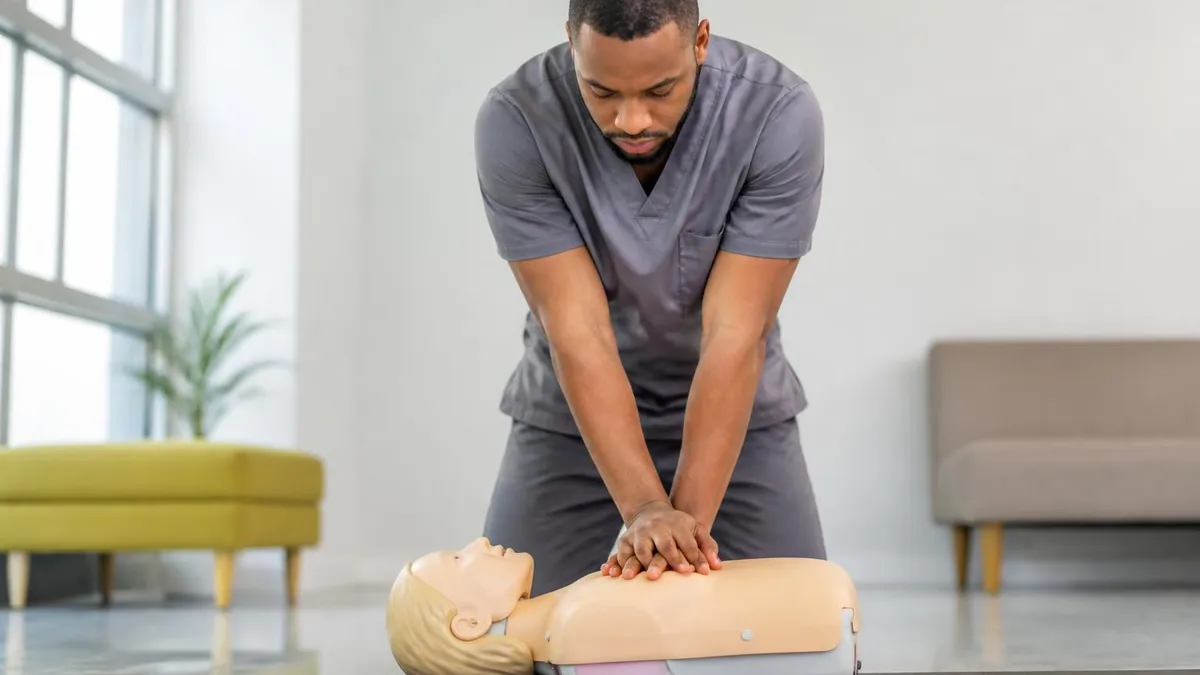
How Long Does It Take to Learn CPR?
Getting CPR certified is faster than most people expect. A standard adult CPR certification course — covering adult, child, and infant CPR plus AED use — takes approximately 2-4 hours in person. Many providers also offer online CPR courses that combine a video/test component with a brief in-person skills check, reducing the time commitment further. Some workplaces, schools, and community organisations offer even shorter 'CPR Anytime' or 'Heartsaver' courses focused on high-priority skills.
The AHA and Red Cross both offer several certification levels. Heartsaver CPR AED is the standard course for non-healthcare workers — it covers adult, child, and infant CPR and AED use and is typically completed in 2-3 hours. BLS (Basic Life Support) for Healthcare Providers is a more advanced course designed for medical professionals, covering two-rescuer CPR, bag-mask ventilation, and team dynamics. It typically takes 4-6 hours. Both certifications are valid for two years, after which a renewal course (shorter than the original) is required.
Finding a class near you is straightforward — the AHA and Red Cross maintain searchable databases of certified instructors and upcoming courses by zip code on their websites. Many hospitals, community centres, fire stations, and workplace safety programs also offer CPR training to the public at low or no cost. CPR classes near you can be found through these databases or by calling your local hospital or fire department.
For those who want to start learning before taking a class, both the AHA and Red Cross provide free online resources, video guides, and practice tools that teach the fundamental concepts of CPR. While these don't replace hands-on certification, they build familiarity with the steps and increase confidence. The key skills — compression rate, compression depth, rescue breathing technique, and AED operation — all benefit from physical practice that online modules alone can't provide.
CPR: Key Statistics
CPR Certification: Getting Trained and Staying Current
There's a meaningful difference between knowing what CPR stands for and being trained to perform it effectively under pressure. Certification through a recognised program ensures that your technique is correct, your skills have been assessed by an instructor, and you're up to date with the current AHA or Red Cross guidelines. Certified individuals also tend to act more confidently in emergencies — training reduces the paralysing uncertainty that prevents some bystanders from acting.
The American Heart Association CPR and Red Cross CPR certification programs are the most widely recognised in the United States. Both offer multiple course formats, and certification is valid for two years. Healthcare providers, teachers, coaches, and childcare workers typically need to renew their certification every two years to meet professional or regulatory requirements.
After completing a certification course, staying current means more than just renewing every two years. CPR guidelines are occasionally updated — the 2020 guidelines, for example, refined guidance on compression fraction, the role of AEDs, and resuscitation for COVID-19 contexts. Following AHA or Red Cross communications and checking for guideline updates at your renewal keeps your technique aligned with the best available evidence.
Practising the physical skills between courses also matters. The muscle memory for compression depth and rate can fade over time. Practising on a CPR manikin — available through some workplaces, community centres, and fire stations — or even practising compression rate using a firm pillow as a stand-in keeps the technique fresher than simply holding a certification card. Understanding how to get CPR certified including the full range of available programs and formats helps you choose the right course for your situation and professional requirements.
One often-overlooked benefit of in-person CPR training is the hands-on feedback from a certified instructor — being told your compressions are too shallow, or that your hands are positioned incorrectly, in real time is something no online module can replicate. First-time students are frequently surprised at how physically demanding proper compressions are, and at how much depth is actually required. The first time you perform compressions on a manikin and feel the resistance, you understand why muscle memory matters and why periodic refreshers are worthwhile, not just a bureaucratic renewal requirement.
One of the most common reasons people hesitate to perform CPR is fear of legal consequences — 'What if I break a rib? What if they die?' In the United States, all 50 states have Good Samaritan laws that protect bystanders who provide emergency assistance in good faith. You cannot be held legally liable for injuries that occur while performing CPR on someone who is in cardiac arrest, provided you acted reasonably and in good faith and did not engage in gross negligence. Broken ribs — a possibility with effective compressions — are repairable; cardiac arrest without CPR is often fatal. The law is designed to encourage people to act. Don't let fear of legal liability be the reason someone dies while you hesitate.
CPR Stands For More Than an Acronym
Beyond the literal translation — cardiopulmonary resuscitation — CPR represents a fundamental principle of emergency medicine: that trained bystanders, acting immediately before professional help arrives, are the most powerful tool available for improving survival from sudden cardiac arrest. No ambulance can compete with someone already present who knows what to do.
The evidence base for bystander CPR is among the strongest in emergency medicine. Communities that invest in public CPR education — training school children, workplace staff, and neighbourhood residents — consistently see higher bystander CPR rates and better survival outcomes from cardiac arrest. Seattle and King County, Washington, have run community-level CPR training programs since the 1970s and have some of the highest cardiac arrest survival rates in the world as a result.
Every person who learns CPR becomes a potential link in the chain of survival. The chain of survival is a framework developed by the AHA that describes the sequential steps most likely to result in survival from cardiac arrest: early recognition and calling 911, early bystander CPR, early defibrillation with an AED, advanced care by paramedics, and post-cardiac arrest care in hospital.
Bystander CPR is the second link in that chain — and without it, the chain breaks. Defibri llation is less likely to restore a normal rhythm in a heart that has been oxygen-deprived for several minutes without compressions; advanced paramedic care has less to work with when a patient arrives having received no CPR.
If you haven't yet taken a CPR certification course, consider this your reminder. Two to four hours of your time could directly determine whether someone you love lives or dies from cardiac arrest. The acronym stands for cardiopulmonary resuscitation — and for the principle that ordinary people are capable of extraordinary things in a crisis, when they're prepared.
CPR Questions and Answers
About the Author

Registered Nurse & Healthcare Educator
Johns Hopkins University School of NursingDr. Sarah Mitchell is a board-certified registered nurse with over 15 years of clinical and academic experience. She completed her PhD in Nursing Science at Johns Hopkins University and has taught NCLEX preparation and clinical skills courses for nursing students across the United States. Her research focuses on evidence-based exam preparation strategies for healthcare certification candidates.