
How to Get CPR Certified: Steps, Cost, and Best Providers 2026 October
Learn how to get CPR certified step by step. Covers AHA and Red Cross providers, course types, cost, what to expect in class, and how to renew your ✏️
What Is CPR Certification and Who Needs It?
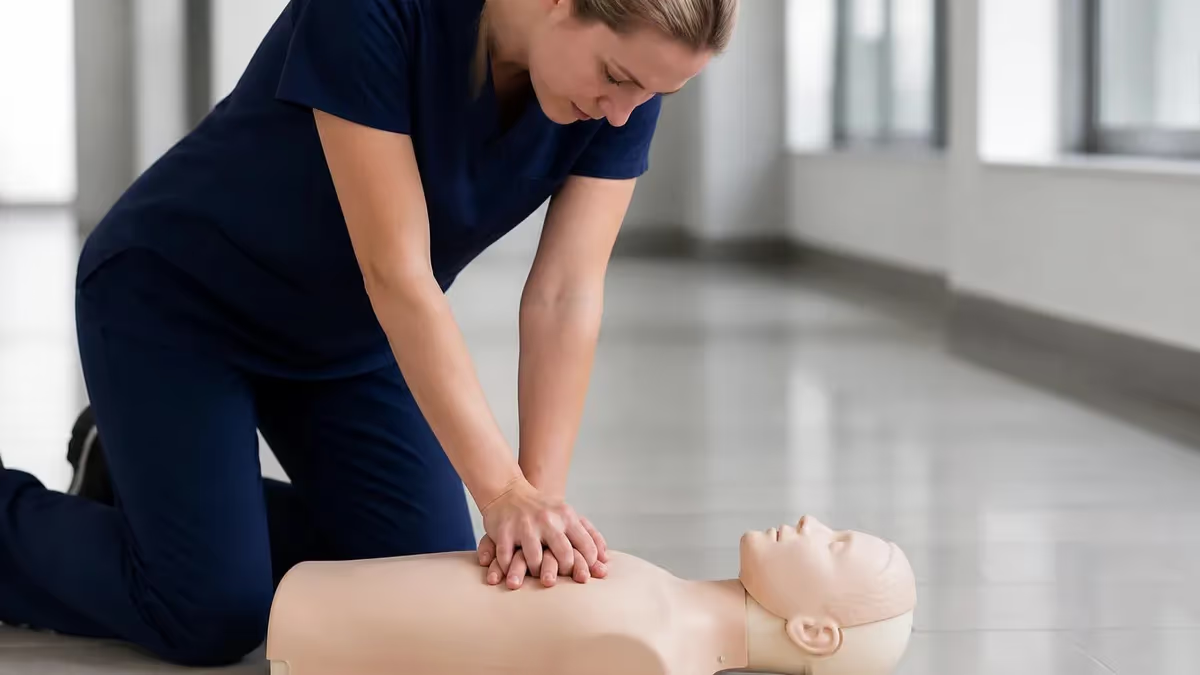
CPR certification is formal training in cardiopulmonary resuscitation — the emergency technique of chest compressions and rescue breaths used to maintain circulation and oxygenation in someone whose heart has stopped beating. Getting certified means completing a course that teaches you not just the mechanics of CPR but how to assess an unresponsive victim, when to call 911, how to use an AED (automated external defibrillator), and how to adjust your technique for adults, children, and infants. The certification is typically valid for two years and is renewed through a refresher course before it expires.
Cardiac arrest kills around 350,000 Americans outside of hospitals every year. Bystander CPR — performed by someone nearby before emergency services arrive — can double or triple a victim's chance of survival, yet fewer than 40 percent of cardiac arrest victims receive it. Most bystanders who don't act report feeling untrained or uncertain. CPR certification closes that gap: it gives you the knowledge and physical confidence to respond effectively in the first critical minutes while waiting for paramedics, when every minute without circulation reduces survival odds by 7 to 10 percent.
Who needs CPR certification? The list is broader than most people assume. Healthcare workers — nurses, medical assistants, dental hygienists, EMTs, respiratory therapists, physical therapists — are almost universally required to maintain current certification as a condition of employment or licensure. BLS (Basic Life Support) certification satisfies this requirement for most clinical settings.
Beyond healthcare, many employers require CPR certification for teachers, childcare workers, fitness instructors, lifeguards, camp counsellors, security personnel, and construction workers. In some states, teacher certification renewal now requires proof of current CPR certification. Many parents, grandparents, and coaches choose to get certified voluntarily to be prepared to respond to emergencies involving children.
The two most widely recognised certification bodies in the United States are the American Heart Association (AHA) and the American Red Cross. Both organisations issue nationally recognised certifications accepted by virtually all employers, licensing boards, and hospitals. A third category — independent online CPR certification providers — offers faster, lower-cost options with varying levels of employer acceptance. This guide covers the different certification types, how to choose the right one for your purpose, what the certification process involves step by step, what it costs at different providers, and how long your card remains valid before you need to renew.
- Validity period: Most CPR certifications are valid for 2 years — mark your expiry date and renew before it lapses
- Two main providers: American Heart Association (AHA) and American Red Cross — both nationally recognised and accepted by employers and licensing boards
- BLS vs. Heartsaver: BLS (Basic Life Support) is required for healthcare workers; Heartsaver CPR AED is designed for non-medical professionals and the general public
- In-person requirement: Most employer-accepted certifications require a hands-on skills session — purely online certification cards are not accepted by hospitals or clinical employers
- AED training included: Standard CPR certification courses include AED operation training alongside chest compressions and rescue breaths
- Renewal is shorter: Renewal courses (HeartSaver, BLS) are shorter than initial certification — typically 2-3 hours vs. 3.5-4 hours
- Cost range: $30-$130 depending on provider, course type, and whether it's employer-sponsored
How to Get CPR Certified: Step by Step
Step 1: Determine Which Certification You Need
Step 2: Find a Course Near You
Step 3: Register and Pay
Step 4: Complete the Course
Step 5: Receive Your Certification Card
Types of CPR Certification: Which Level Do You Need?
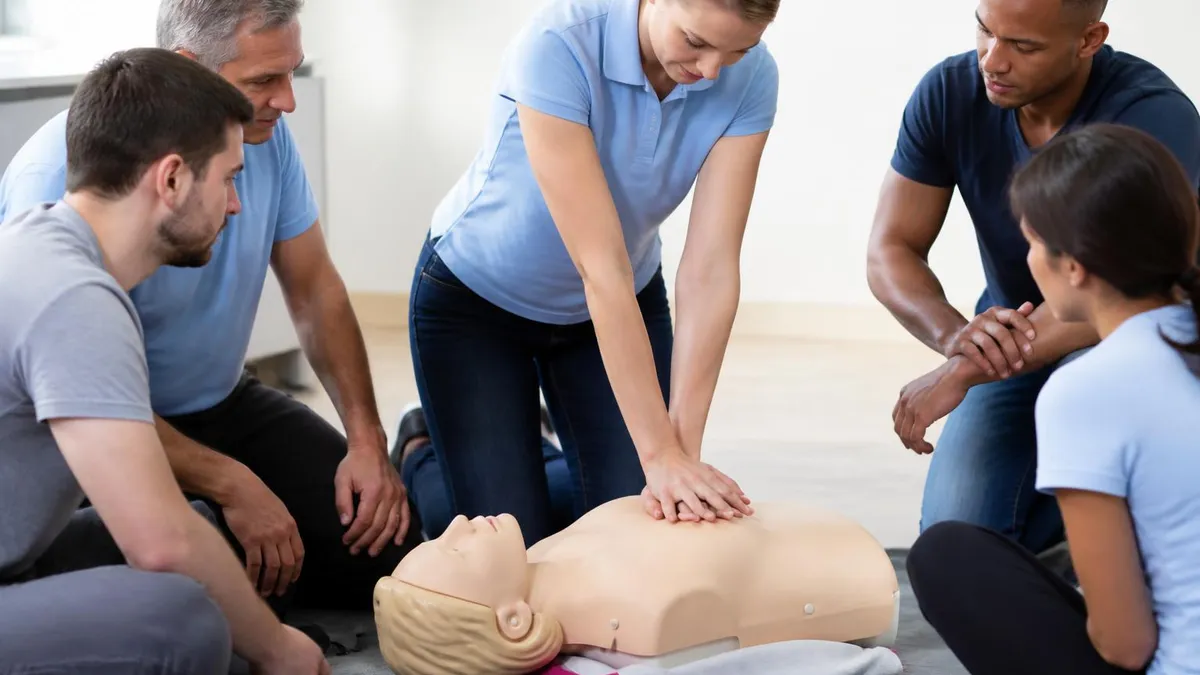
CPR certification is not one-size-fits-all. The appropriate certification level depends on your professional setting, your employer's requirements, and whether you work with adults only or also with children and infants. Choosing the wrong certification level — even from a reputable provider — can result in having to retake a course at the correct level.
BLS (Basic Life Support) is the standard certification for healthcare professionals. It covers single-rescuer and team-based CPR for adults, children, and infants; proper AED use; relief of choking (foreign-body airway obstruction) in adults and infants; and two-rescuer CPR techniques. The AHA BLS certification is the most widely required in clinical settings — hospitals, clinics, dental offices, EMS agencies, and nursing facilities specify AHA BLS or Red Cross BLS on their job postings. The course runs approximately 4.5 hours for initial certification. If you're a nurse, dental assistant, EMT, or any other healthcare worker, BLS is almost certainly what you need.
Heartsaver CPR AED is AHA's certification for the non-medical public and workplace responders. It covers adult CPR and AED use and is the appropriate choice for teachers, coaches, childcare workers, gym staff, office employees required to be workplace first responders, and anyone seeking personal preparedness training. Heartsaver First Aid CPR AED adds first aid skills (wound care, burns, allergic reactions) for a more comprehensive course. Red Cross's equivalent courses are called Adult and Pediatric First Aid/CPR/AED (for non-medical settings) or Basic Life Support (for clinical settings).
Online CPR certification through independent providers (ProCPR, CPR Select, National CPR Foundation, and others) offers much faster certification — sometimes in as little as 30-60 minutes — at lower cost, often $10-30. These providers issue certification cards that are accepted by some employers for general workplace requirements but are typically not accepted by hospitals, clinical employers, state nursing boards, or any employer that specifies AHA or Red Cross certification.
Before choosing an online-only provider, verify with your employer that their card will be accepted — otherwise you'll need to retake the course. For more on online options, the online CPR certification guide covers which providers are legitimate, what to look for, and when online-only is acceptable.
Paediatric CPR and infant CPR training is included in BLS and most Heartsaver Family & Friends courses. If your primary concern is CPR for children — for example, you're a parent of a newborn or a childcare provider — you can find courses specifically focused on infant and child techniques, though the full BLS course covers these age groups comprehensively and is worth completing for the broader competency. See the CPR classes guide for a full breakdown of class types and how to find them.
CPR Certification Types at a Glance
For healthcare workers — nurses, EMTs, medical assistants, dentists, and any clinical professional. Covers adult, child, and infant CPR, team-based resuscitation, and AED use. Required by hospitals, clinics, and state licensing boards. AHA and Red Cross BLS are the two accepted versions.
For non-medical workplaces and the general public — teachers, gym staff, coaches, office first responders, and personal preparedness. Covers adult CPR and AED use. AHA Heartsaver and Red Cross Adult/Pediatric CPR AED serve this audience. Accepted by most non-clinical employers.
Adds first aid skills to CPR and AED training — wound care, burns, choking, allergic reactions, and sudden illness response. Best for anyone who wants a comprehensive emergency response credential. Ideal for childcare workers, coaches, and workplace designated first responders.
Faster, lower-cost certification (often $10-30) from providers like ProCPR, CPR Select, and National CPR Foundation. Accepted by some general workplaces but not by hospitals, clinical employers, or boards specifying AHA or Red Cross. Always verify with your employer before enrolling.
CPR Certification Providers Compared
The AHA is the most commonly required CPR certification provider in healthcare. Its BLS certification is accepted by virtually every hospital, nursing board, and clinical employer in the US.
- Courses offered: BLS for Healthcare Providers, Heartsaver CPR AED, Heartsaver First Aid CPR AED, Heartsaver Pediatric First Aid CPR AED
- Format: In-person (traditional) or blended learning (online module + skills session)
- Cost: $50-$130 depending on course and Training Center
- Card validity: 2 years
- Certification card: Digital card via AHA Training Network; physical cards available from some Training Centers
- Find a class: heart.org course finder
AHA blended learning allows you to complete the online knowledge portion on your own schedule (roughly 90 minutes) and then attend a shorter in-person skills session (1.5-2 hours) with an AHA instructor.
How Much Does CPR Certification Cost?
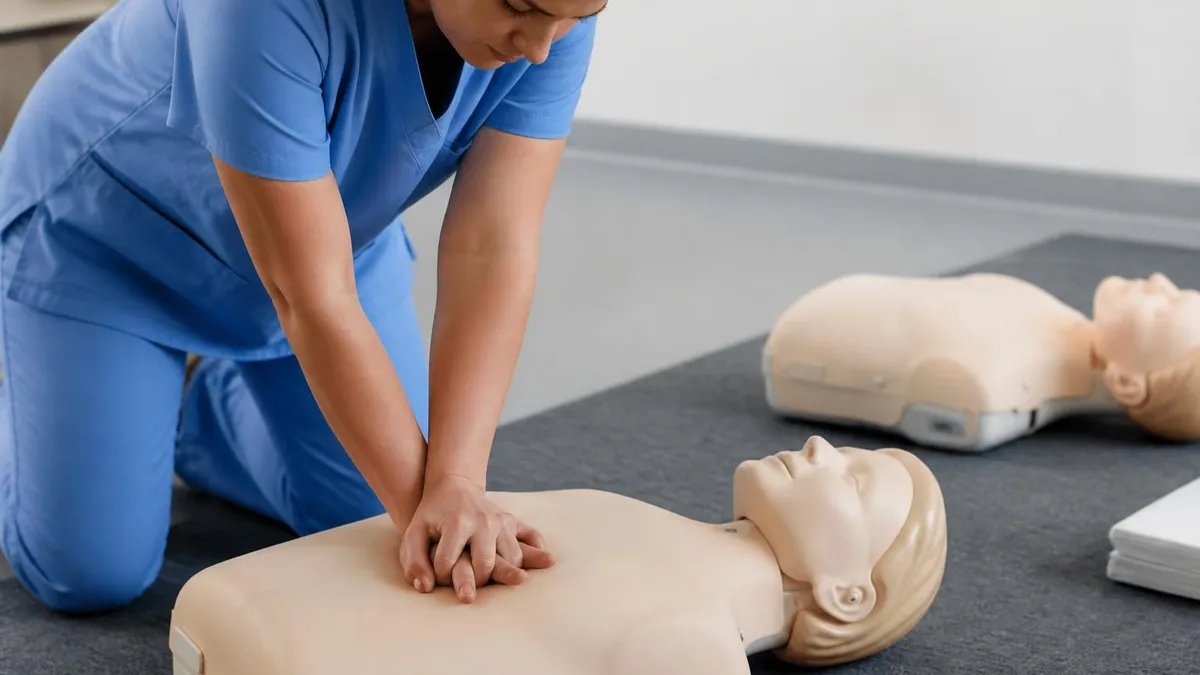
CPR certification cost varies significantly depending on the provider, course type, your location, and whether you're getting certified independently or through an employer program. Understanding the range helps you avoid overpaying and choose the right option for your budget without sacrificing certification validity.
AHA courses delivered through Training Centers typically cost $50-$130. BLS for Healthcare Providers runs toward the higher end — $70-$130 — because it's a longer course covering more material. Heartsaver CPR AED courses typically run $50-$80. AHA blended learning courses are often priced at $30-$50 for the online portion, plus a separate skills session fee of $20-$40 charged by the Training Center. The total blended learning cost is usually comparable to or slightly lower than in-person-only AHA courses at the same Training Center.
Red Cross in-person courses run $45-$120 depending on course type and location. The Red Cross Simulation Learning format (blended) is generally comparable in cost to in-person. Red Cross courses are available at Red Cross chapters, hospitals, community centres, and corporate training sites across the country. Group pricing is available when organisations book on-site training for five or more employees, which significantly reduces the per-person cost.
Independent online CPR certification costs $10-$40 and is significantly cheaper than AHA or Red Cross courses — but this price difference reflects the absence of an in-person skills component and the limited employer acceptance of the resulting card. For non-clinical workplace requirements where your employer accepts any nationally recognised provider, an online course may be entirely appropriate and saves meaningful money. For healthcare workers, the cost difference doesn't justify the risk of having an unaccepted certification.
Employer-sponsored CPR training is free to the employee in many industries. Healthcare employers, schools, gyms, and many corporate workplaces pay for staff CPR certification as part of onboarding or annual compliance training. Check with your HR department before paying out of pocket — if your employer requires certification, they may provide it. Some employers pay for certification only if you use their approved vendor or class, so confirm the specific provider they accept before self-registering. For detailed information on CPR training options including employer programs and community classes, the training guide covers what to expect in each format.
What to Bring to Your CPR Certification Class
- ✓Photo ID — most Training Centers require identification at registration check-in
- ✓Comfortable clothing you can kneel and move in — you'll be on the floor practising compressions on a manikin
- ✓Your registration confirmation or receipt — especially for blended learning where you need to show online completion
- ✓Water bottle — classes run 2-4.5 hours and you'll be physically active
- ✓Any pre-work completed — for AHA blended learning, complete the online module before arriving at the skills session
- ✓Your employer's certification requirement details — course name, provider, and level — so you can confirm you're in the right class
- ✓Payment method if paying at the door (some Training Centers accept walk-ins with payment on site)
- ✓Glasses or contacts if you need them for reading and screen-based knowledge checks
In-Person vs. Online CPR Certification
- +In-person courses provide hands-on manikin practice that builds muscle memory — you'll actually know how hard and how fast to compress
- +In-person certification from AHA or Red Cross is accepted universally — no employer rejection risk
- +Instructors can correct your technique in real time — a critical advantage since improper compressions are less effective
- +Online certification is faster — some providers complete in 30-60 minutes vs. 3-4.5 hours for in-person
- +Online certification costs significantly less — $10-30 vs. $50-130 for in-person AHA or Red Cross
- −In-person courses require scheduling coordination and travel to a Training Center
- −Online-only certifications from independent providers are not accepted by hospitals, clinical employers, or boards specifying AHA or Red Cross
- −Online certification without hands-on practice leaves you less physically prepared to perform CPR effectively in a real emergency
- −In-person courses are more expensive — $50-130 vs. $10-30 for online-only options
- −Online certification validity and renewal processes vary by provider — less standardised than AHA or Red Cross programs
How Long Does CPR Certification Last?
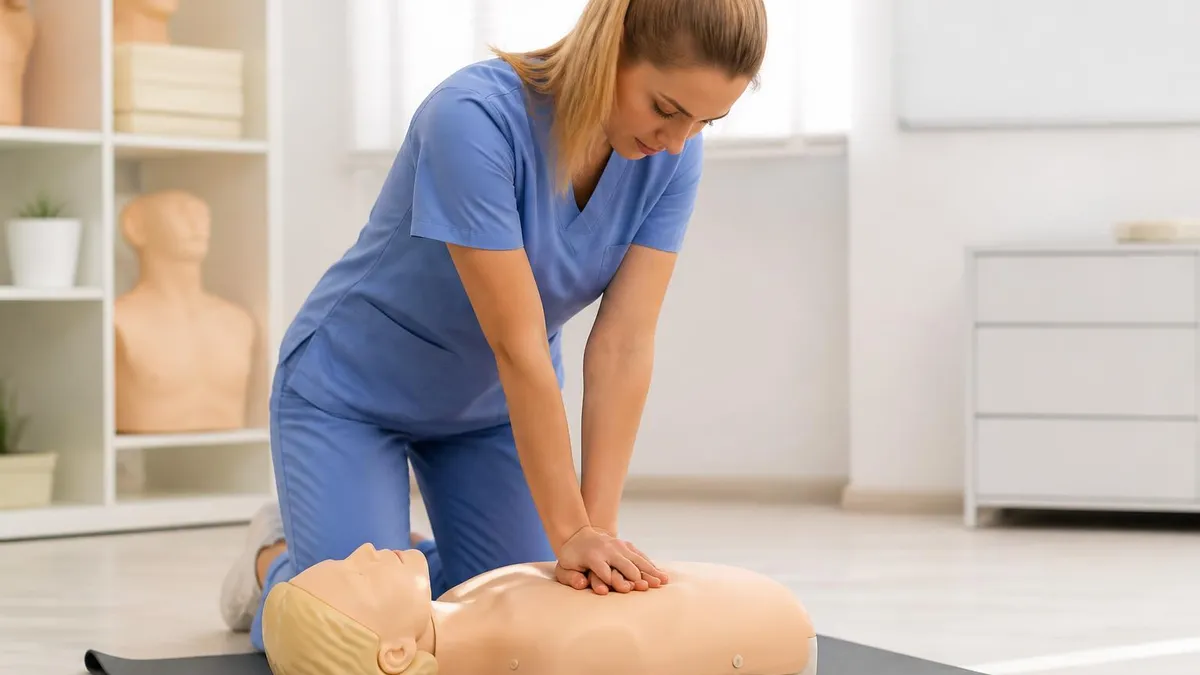
Most CPR certifications issued by the American Heart Association and American Red Cross are valid for two years from the date of certification. This expiration is not arbitrary — the AHA and Red Cross both update their CPR guidelines periodically (major updates occur roughly every five years, with smaller adjustments in between), and the two-year validity ensures that certified individuals have training consistent with current science-based protocols. Recertification courses incorporate any guideline updates since your last training.
The two-year validity applies to all major AHA certifications — BLS for Healthcare Providers, Heartsaver CPR AED, Heartsaver First Aid CPR AED — and to all Red Cross certifications of the same types. Some employer and state licensing requirements specify that certification must be current (not expired) on a particular date, so if your card expires in September and your hospital's compliance audit is in October, you need to renew before expiration, not after.
Independent online providers vary in their stated validity periods — some claim two years, others one year, and some don't specify clearly. Regardless of what the card states, employer acceptance determines whether the certification is useful. A card that says 'valid 2 years' from an online provider that your hospital doesn't recognise is no more useful than an expired card.
To verify whether your CPR certification is still valid, AHA certification can be verified through the AHA Training Network. Red Cross certification can be verified through the Red Cross digital certificate portal. These verification tools matter for clinical employers who may check your certification status before credentialing or during an audit. For more detail on certification validity and what how long CPR certification lasts means for your specific situation, that guide covers AHA, Red Cross, and independent provider expiration timelines. For the National CPR Foundation specifically, its certification validity and acceptance is explained in detail for anyone considering that provider.
CPR Certification: Key Statistics
Key Facts at a Glance
| Item | Value | Details |
|---|---|---|
| Standard validity period for AHA and Red Cross CPR certification — renew before expiration to maintain compliance | 2 years | |
| Typical length of initial in-person CPR certification class — renewal classes are shorter (1.5-3 hours) | 3-4.5 hrs | |
| Typical cost of AHA or Red Cross CPR certification — employer-sponsored programs may be free to employees | $50-$130 | |
| Reduction in survival odds per minute without CPR after cardiac arrest — early intervention is critical | 10% |
How to Renew CPR Certification
CPR certification renewal follows a similar process to initial certification but is typically faster and less expensive. AHA and Red Cross renewal courses are designed for people who already have foundational knowledge — they focus on skills practice, any guideline updates since your last certification, and the written or online knowledge check. You do not need to repeat the full initial course format for renewal; dedicated renewal or recertification courses are shorter.
For AHA BLS recertification, the renewal course runs approximately 2-3 hours compared to 4.5 hours for initial certification. AHA also offers a blended learning renewal option where you complete an online module first and then attend a shorter skills session. Red Cross BLS and Heartsaver renewal courses are similarly shortened for people renewing within two years of their previous certification date. If your certification has already expired — even by a few weeks — most Training Centers will still accept you in a renewal course rather than requiring the full initial course, though policies vary by center.
The best time to renew is 30-60 days before your certification expires. This gives you flexibility to find a convenient class without the risk of lapsing. Many healthcare employers send reminders before employee certification expiration dates; if yours doesn't, mark your own calendar. Some employers block scheduling of clinical shifts for employees with expired certifications — an administrative headache you can avoid entirely by renewing proactively.
For online renewal, AHA offers online-based renewal components through their HeartCode platform for BLS and Heartsaver courses. The online portion is completed independently; the skills session is completed with a local AHA Training Center instructor. This format is particularly convenient for healthcare workers with unpredictable schedules who can't commit to a four-hour block class. Red Cross's Simulation Learning format offers the same flexibility. See the CPR certification online guide for specifics on which online renewal formats are accepted by different employer types.
If you work in healthcare or any setting where your employer or licensing board specifies AHA or Red Cross certification, a purely online CPR certificate will not satisfy the requirement — even if it looks official. Hospitals, nursing boards, dental boards, and EMS agencies that require CPR certification almost universally specify hands-on skills demonstration with a certified instructor. An online-only certificate from any provider — including some that use 'official' language and claim national recognition — will be rejected. Always check your employer's specific requirement before registering for any course. The $100 cost difference is not worth having to repeat the certification process with an accepted provider.
Which CPR Certification Should You Choose?
The right CPR certification depends on why you need it. For healthcare workers — including students in nursing, medical, dental, or allied health programs — the answer is almost always BLS (Basic Life Support) from either the American Heart Association or the American Red Cross. Both are accepted equivalently by the vast majority of clinical employers and licensing boards.
The AHA's BLS card is specified more often in hospital job postings, but most employers that mention AHA will accept Red Cross BLS as an equivalent. When in doubt, call your employer's HR or credentialing department and ask specifically: 'Do you accept Red Cross BLS for Healthcare Providers?' Almost all will say yes.
For non-healthcare purposes — teachers, coaches, fitness instructors, parents, workplace designated responders — Heartsaver CPR AED from AHA or the equivalent Adult and Pediatric First Aid/CPR/AED from Red Cross is the appropriate level. These courses are designed for the general public, shorter than BLS, less focused on clinical team dynamics, and more focused on bystander response. If your workplace also requires first aid training, consider the combined Heartsaver First Aid CPR AED course rather than taking separate courses.
If budget is your primary concern and your employer accepts any nationally recognised provider, online certification from a reputable independent provider is a reasonable option for non-clinical workplace requirements. Check the provider's accreditation — look for ASHI, ECSI, or similar accreditation bodies — and verify acceptance with your employer before paying. For workplaces that simply need employees to have 'CPR certification' without specifying a provider, this path is legitimate and significantly cheaper.
Geography also matters. AHA Training Centers are more densely distributed in some areas; Red Cross chapters are stronger in others. Use each provider's online course finder to see what's available near you at a convenient time. Both providers also offer on-site group training for organisations wanting to certify multiple employees at once — a cost-effective option for schools, gyms, and businesses. The CPR training guide covers how to find courses and what the on-site training process involves for groups.
CPR Certification Questions and Answers
About the Author

Registered Nurse & Healthcare Educator
Johns Hopkins University School of NursingDr. Sarah Mitchell is a board-certified registered nurse with over 15 years of clinical and academic experience. She completed her PhD in Nursing Science at Johns Hopkins University and has taught NCLEX preparation and clinical skills courses for nursing students across the United States. Her research focuses on evidence-based exam preparation strategies for healthcare certification candidates.