
CPR First Aid Certification: Complete Guide for 2026 October
Everything about CPR first aid certification: what it covers, how long it takes, who needs it, best providers, costs, and how to renew your card. ✍🏼
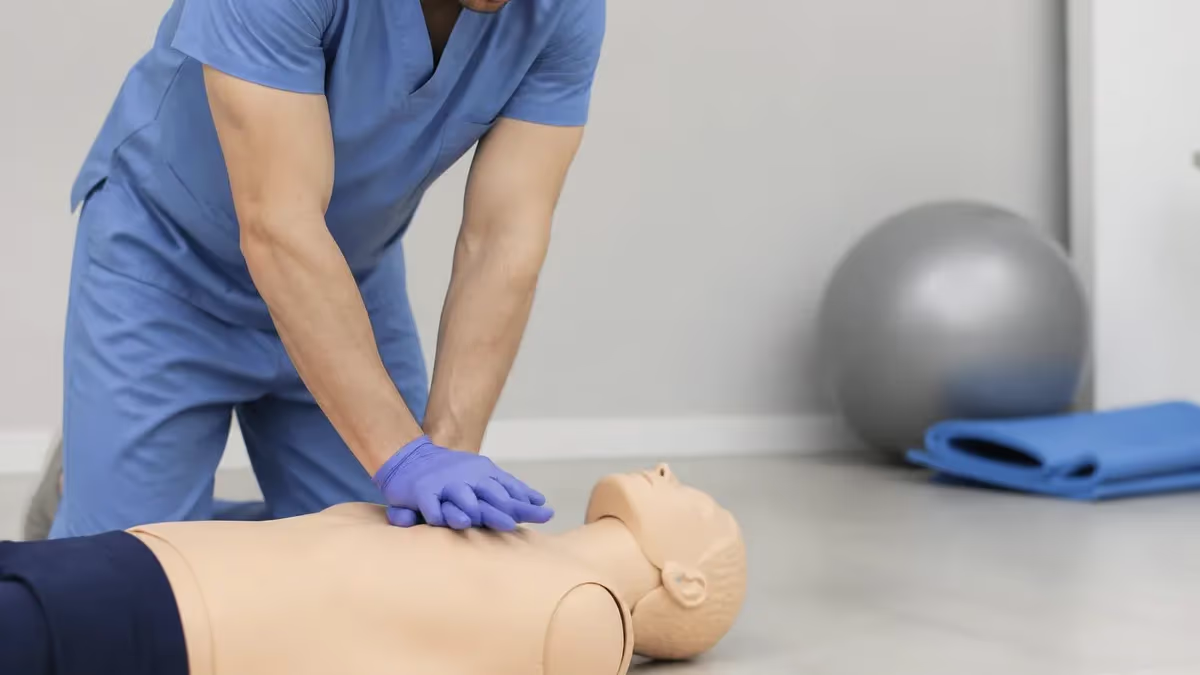
CPR first aid certification is a combined credential that covers two complementary emergency response skill sets in a single course: cardiopulmonary resuscitation (CPR) for cardiac arrest, and first aid for a broad range of medical emergencies that do not involve cardiac arrest.
Together, these skills equip a certified person to respond effectively to the most common life-threatening emergencies they are likely to encounter — including choking, severe bleeding, allergic reactions, bone fractures, burns, seizures, and unconsciousness — in the minutes before emergency medical services arrive. The combined credential is the most practical and cost-efficient certification for most people, requiring only marginally more time than CPR alone while dramatically expanding the range of emergencies you can respond to.
Combined CPR and first aid certification is required for a wide range of employment and volunteer contexts: childcare workers, school staff, camp counselors, coaches, fitness instructors, lifeguards, security personnel, construction workers, and many workplace safety roles all commonly require current CPR/First Aid certification as a condition of employment or professional credentialing. Beyond employment requirements, CPR/First Aid certification is one of the most practically valuable life skills available to any adult — cardiac arrest, choking, and traumatic injuries all happen in everyday settings, and trained bystanders who act immediately while waiting for EMS consistently improve outcomes for the people around them.
The structure of a combined CPR and first aid course reflects the way emergencies actually unfold. Cardiac arrest rarely arrives without warning signs, and those warning signs often require first aid intervention before the heart stops entirely. A bystander who recognizes the chest pain, pale skin, and cold sweat of an impending heart attack, calls 911, keeps the person calm and seated, and then seamlessly transitions to CPR when the person loses consciousness is performing a connected sequence of skills — not two separate skill sets.
Training programs that teach CPR and first aid together are designed around this reality, using scenarios that begin with a conscious casualty and progress through deterioration, giving trainees practice at the full chain of care rather than isolated snapshots of each skill in a vacuum.
For employers, the combined credential is administratively convenient as well as practically superior. A single training event certifies staff in both competencies, reducing scheduling complexity, minimizing lost productivity from multiple training days, and generating a single audit-ready record confirming that employees meet both the CPR and first aid requirements of their industry regulator simultaneously.

CPR First Aid Certification at a Glance
- Duration: 4-8 hours depending on provider and format (blended or in-person)
- Cost: $40-$120 for combined CPR/First Aid courses
- Validity: 2 years from completion date
- Major providers: American Red Cross, American Heart Association, ASHI, MEDIC First Aid
- Format options: In-person only, blended (online + skills session), online knowledge + in-person hands-on
- First aid topics: Bleeding control, burns, fractures, choking, allergic reactions, seizures, diabetic emergencies, heat/cold injuries
- CPR topics: Adult, child, and infant CPR, AED use, rescue breathing
The first aid component of CPR/First Aid certification covers the recognition and initial management of medical emergencies across multiple categories.
Trauma-related content includes: wound care (pressure, packing, tourniquet application for severe bleeding), burns (classification and cooling protocols), musculoskeletal injuries (recognizing fractures and sprains, splinting principles), and head/spinal injuries (recognition and stabilization). Medical emergency content includes: allergic reaction and anaphylaxis response (recognizing anaphylaxis, using epinephrine auto-injector), diabetic emergencies (distinguishing hypoglycemia from hyperglycemia, giving sugar for hypoglycemia), seizure management (protecting during seizure, recovery position after), stroke recognition (FAST mnemonic — Face drooping, Arm weakness, Speech difficulty, Time to call 911), and heat and cold-related emergencies (heat stroke vs. heat exhaustion, hypothermia recognition and rewarming).
Knowing when to call 911 is a foundational principle taught throughout first aid training. In almost every emergency scenario, the correct first step — or a simultaneous step — is activating the emergency response system. First aid training explicitly addresses the hesitation and uncertainty that causes bystanders to delay or avoid calling emergency services: fear of being wrong, uncertainty about the severity, or assumption that someone else has already called.
The research on bystander behavior in emergencies consistently shows that 911 is called too late rather than too early in most incidents. First aid training internalizes the principle that calling 911 is never wrong when there is any uncertainty about whether someone needs emergency care.
Pediatric first aid is the specific focus of CPR/First Aid courses designed for childcare workers, teachers, and parents. Pediatric first aid covers the same categories as adult first aid but with age-specific modifications: medication dosing by weight, child-specific choking response (back blows and abdominal thrusts adjusted for size), age-appropriate communication during an emergency, safe sleep guidelines for infants, and reporting requirements for suspected child abuse or neglect injuries.
Many states require childcare workers to hold a specifically pediatric-focused CPR/First Aid credential (the Red Cross Pediatric First Aid/CPR/AED course satisfies this requirement in most states) rather than an adult-focused combined course. Checking your state's childcare licensing requirements before enrolling ensures the course you complete satisfies your specific credential requirement. Questions about which course meets employment requirements are answered directly by the Red Cross CPR classes page for your state.
Scenario-based practice is the pedagogical backbone of quality first aid training. Rather than memorizing steps from a slide deck, trainees work through realistic scenarios — a colleague who slips on a wet floor and has a suspected ankle fracture, a child who puts a small object in her mouth and starts choking, a co-worker who feels faint and slowly slides to the floor.
Each scenario introduces the physical and emotional conditions of a real emergency: the background noise of an office, the absence of the supplies you wish you had, the need to direct bystanders clearly while simultaneously managing the casualty. Skills practised in scenario conditions transfer to real emergencies far more reliably than skills learned from a slideshow, which is why hands-on in-person training retains a significant advantage over fully online-only formats for the practical components of first aid.
What CPR First Aid Certification Covers
Chest compression depth (2-2.4 inches), rate (100-120/min), hand placement, full chest recoil, compression-to-ventilation ratio (30:2 with breaths, or continuous for hands-only). AED operation and when to use it. Recognizing cardiac arrest signs.
Child CPR: 2-inch depth, two-finger or two-thumb technique for infants. Infant CPR: 1.5-inch depth, covering mouth AND nose with your mouth. Age and size affect technique significantly. Pediatric-focused courses spend more time on this content.
Conscious adult/child: Heimlich maneuver (abdominal thrusts). Infant choking: alternating 5 back blows and 5 chest thrusts (not abdominal thrusts). Unconscious choking victim: begin CPR, look for object before rescue breaths. Pregnancy and obesity modifications.
Direct pressure, wound packing for deep wounds, tourniquet application for extremity arterial bleeding. STOP THE BLEED campaign principles integrated into many current first aid curricula. Recognizing shock and positioning for shock.
Allergic reaction and anaphylaxis (epinephrine auto-injector use), diabetic emergencies (glucose for hypoglycemia), seizures (protect and recovery position), stroke recognition (FAST), heart attack recognition (call 911, give aspirin if appropriate).
Heat emergencies: distinguishing heat exhaustion (move to cool area, fluids) from heat stroke (call 911, active cooling). Cold emergencies: hypothermia (warm gently, avoid rubbing), frostbite (warm water immersion, no friction). Lightning safety.

Choosing between CPR/First Aid certification providers primarily comes down to which organizations are recognized or preferred by your employer or credentialing body. The American Red Cross and American Heart Association are the two most universally recognized providers nationally, and certification from either is accepted by virtually all employers, licensing boards, and volunteer organizations in the US.
ASHI (American Safety and Health Institute) and MEDIC First Aid are also widely recognized and may be preferred by certain employers in industrial or occupational health contexts. If your employer has no preference, choose the provider with the most convenient class schedule and location in your area — the certification quality is equivalent across all major accredited providers.
The blended learning format significantly reduces the in-person time required for CPR/First Aid certification without sacrificing skills evaluation quality. In a blended course, you complete the knowledge and decision-making content online at your own pace — typically 2-4 hours — then attend an in-person skills session of 2-3 hours where an instructor observes your technique on a CPR manikin and bandaging mannequin.
Total time commitment is 4-7 hours compared to 6-8 hours for a fully in-person course. Blended format courses typically cost slightly less than fully in-person courses since they require less instructor time. The Red Cross Blended Learning format and AHA's HeartCode programs are the most widely available blended CPR/First Aid options nationally. Knowing how long CPR certification lasts — two years — helps you plan renewal timing.
Workplace CPR/First Aid requirements are often more specific than general certification alone. OSHA guidelines recommend that the number of first aid-certified employees be sufficient to provide first aid to all workers at a site in case of an emergency — in practice, this means one trained first responder for every 50-100 employees in many industries. Construction sites under OSHA 1926.50 must have at minimum one trained person (or a clinic within 3-4 minutes) available at all times.
Healthcare facilities have specific resuscitation training requirements through Joint Commission standards. Understanding which standards apply to your specific workplace helps you select the right certification level — standard CPR/First Aid versus BLS for Healthcare Providers, for example — before enrolling. The American Heart Association CPR resources cover the professional-level BLS standards in detail for healthcare applicants.
Group booking discounts are widely available for organizations training five or more employees simultaneously, with per-person costs often dropping to £15-£25 in the UK or $12-$20 in the US for group sessions at the workplace. Some certification bodies — particularly those serving high-volume corporate clients — offer train-the-trainer programs that allow a designated in-house trainer to deliver CPR and first aid courses to new employees on an ongoing basis, eliminating per-head course fees for organizations with high staff turnover.
The upfront investment in a trainer certification, typically £600-£1,200 or $700-$1,400, pays back within the first year for organizations training more than 20-30 employees annually. Whichever path an employer takes, the regulatory requirement in most industries is that certification must be from a recognized accredited body — not simply a YouTube tutorial or internal instructional session without formal assessment.
Fully in-person CPR/First Aid courses run 6-8 hours. Blended learning courses complete knowledge modules online (2-4 hours at your pace) plus a 2-3 hour in-person skills session. Both formats result in identical certification; blended is more schedule-flexible. Certification quality is equivalent — the skills evaluation component is the same in both formats.
Fully online CPR/First Aid certification without any in-person component is not accepted by most employers and licensing bodies. Be cautious of online-only programs that claim full certification validity — they generally do not meet employer or credentialing requirements for positions that specify CPR/First Aid as a job requirement.

Mental rehearsal is an underused preparation technique for CPR/First Aid skills that improves both retention and performance under stress. Studies of first responder training show that people who mentally rehearse emergency response scenarios — visualizing themselves finding an unresponsive person, calling 911, beginning CPR — perform the skills more effectively in real events than those who complete training without mental practice.
Taking 5 minutes after completing your certification course to mentally walk through each major scenario (cardiac arrest, choking, severe bleeding, anaphylaxis) in realistic settings where you might encounter them — your workplace, home, sporting event — encodes the response sequence with the situational context that makes recall more automatic under the cognitive load of an actual emergency.
Psychological first aid, though not a standard component of basic CPR/First Aid certification, is a complementary skill set that addresses the emotional and psychological dimensions of emergency response. After completing CPR or witnessing a traumatic emergency, both bystanders and survivors can experience acute stress reactions, and knowing how to provide calm, reassuring support while waiting for EMS — and how to process your own stress response after the event — makes you a more effective and resilient responder.
Many workplace safety programs now incorporate brief psychological first aid modules alongside CPR/First Aid training, recognizing that the psychological aftermath of emergencies is an important part of complete emergency preparedness.
Deliberate stress inoculation is one of the more sophisticated elements built into quality CPR and first aid training programs. The research on emergency response performance consistently shows that people perform best under stress when they have previously practised under conditions that simulate at least some of the physiological and cognitive load of a real emergency.
Training programs that include timed drills, unexpected scenario variations, and peer observation replicate modest versions of this stress, conditioning trainees to continue thinking clearly and acting systematically even when adrenaline is affecting their concentration and fine motor control. This is why the physical practice of chest compressions — not just watching a video of chest compressions — is irreplaceable. The muscle memory formed through repeated correct physical practice is far more reliable under stress than knowledge stored only as abstract verbal instructions.
Letting certification expire before renewing: Most employers and licensing boards require a current (unexpired) card. Build a renewal reminder for 18 months after your certification date so you have time to schedule and complete renewal before expiration.
Choosing a fully online program: Programs claiming full CPR/First Aid certification without any in-person skills component are generally not accepted for employment requirements. Always verify that a program includes an in-person skills evaluation.
Not verifying your provider is accredited: Not all CPR training providers are equal. Verify that your provider is accredited by a recognized organization (Red Cross, AHA, ASHI, MEDIC) before enrolling, particularly for employment-required certification.
Forgetting the AED component: AED operation is included in CPR/First Aid courses, but some people do not realize it. Verify that your course explicitly includes AED training — it is a required component for most employment certifications.
The public access defibrillation (PAD) movement has placed AEDs in thousands of public locations — airports, gyms, schools, shopping centers, sports arenas — and CPR/First Aid training directly enables their use. Many untrained bystanders walk past AEDs in emergencies because they do not know how to use them or do not realize that the device provides step-by-step voice instructions.
CPR/First Aid certification teaches that AED operation is not technically difficult — the device guides you through every step — but that triggering its use quickly requires confidence that the device is appropriate, which training provides. Every minute that passes before defibrillation in a shockable cardiac arrest reduces survival probability by 7-10%; being the person who retrieves the AED and applies it immediately rather than waiting for EMS can determine whether a victim survives.
First aid supply familiarity is a practical skill that training develops alongside procedural knowledge. A first aid kit that you have never opened is less useful in an emergency than one whose contents are familiar. CPR/First Aid courses introduce standard first aid kit components — various bandage sizes, gauze, tape, gloves, CPR face shield, instant cold packs, triangular bandages, and emergency blankets — and demonstrate their use in treatment scenarios.
Maintaining a stocked, organized first aid kit at home, in your vehicle, and at your workplace, and knowing where it is located, converts your certification knowledge into immediately deployable emergency response capacity. Many workplaces have first aid kits that are outdated, unstocked, or in obscure locations that most employees are unaware of — part of first aid preparedness is knowing where the supplies are before you need them.
Regular skills refreshers between certification renewals are an underappreciated component of sustained first aid readiness. Research on CPR skills retention shows measurable decay in compression quality and technique accuracy within three to six months of initial training, even among people who passed their certification assessment with high scores. Organizations that schedule annual half-day refresher sessions — shorter and less formal than the full certification course — maintain a meaningfully higher standard of response capability than those that rely solely on the two-year certification cycle.
Many training providers offer refresher modules specifically designed for this purpose at reduced cost. Individual certificate holders can supplement formal training with the CPR feedback devices now available for home practice: small chest compression feedback tools that measure rate and depth and display performance on a paired smartphone app, enabling private skills maintenance at any time.
The case for maintaining CPR and first aid certification is ultimately straightforward: cardiac arrest, choking, severe bleeding, and anaphylaxis kill quickly, within minutes, and the gap between when emergency services are called and when they arrive is almost always longer than the window in which bystander intervention makes a survival difference.
Key Facts at a Glance
| Item | Value | Details |
|---|---|---|
| Certification validity for all major providers | 2 years | |
| Cost for combined CPR/First Aid course | $40-120 | |
| Total duration including knowledge and skills | 4-8hrs | |
| Survival reduction per minute without defibrillation | 7-10% |
- +Combined CPR/First Aid covers a much broader range of emergency scenarios
- +CPR-only is faster and cheaper if only CPR certification is required
- +Combined credential satisfies both requirements with one course and one card
- +First aid skills are useful in far more everyday emergencies than cardiac arrest alone
- +Many employers require first aid in addition to CPR — combined covers both
- −Combined courses cost $20-$40 more than CPR-only courses
- −Combined courses take 2-4 hours longer than CPR-only
- −CPR-only suffices for many healthcare positions that separately track first aid
- −Some organizations count CPR and first aid certifications separately in their credentialing
- −More content to remember and practice at the renewal interval
CPR Questions and Answers
About the Author

Registered Nurse & Healthcare Educator
Johns Hopkins University School of NursingDr. Sarah Mitchell is a board-certified registered nurse with over 15 years of clinical and academic experience. She completed her PhD in Nursing Science at Johns Hopkins University and has taught NCLEX preparation and clinical skills courses for nursing students across the United States. Her research focuses on evidence-based exam preparation strategies for healthcare certification candidates.