
CPR and First Aid Certification: Courses, Cost, and More 2026 October
🆕 Everything you need to know about CPR and first aid certification — course types, providers, costs, how long it lasts, and where to get certified.
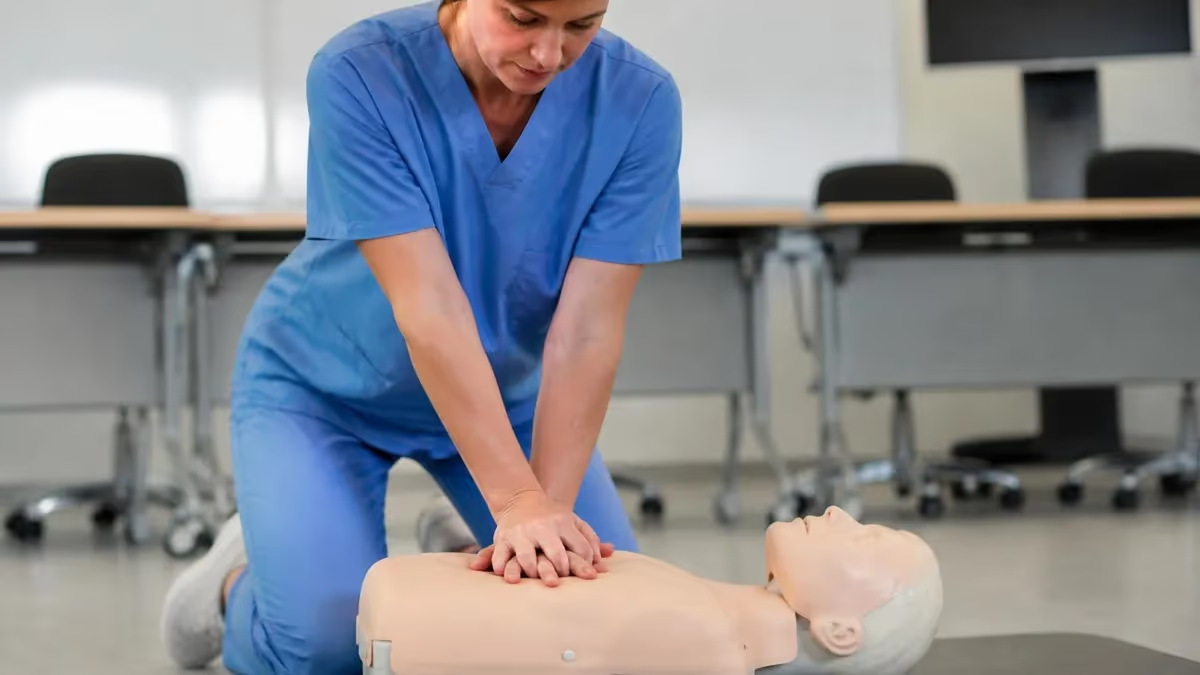
CPR and first aid certification is one of those things most people know they should have but keep putting off. Then a moment arrives — a job application that requires it, a child who starts choking, or a coworker who collapses — and the preparation you delayed suddenly feels very urgent. The good news is that getting certified is genuinely straightforward. Most courses run two to four hours, certification is widely available online and in person, and the skills you learn are among the most directly life-saving you will ever acquire.
CPR stands for cardiopulmonary resuscitation — the combination of chest compressions and rescue breaths that keeps blood circulating and oxygen reaching the brain when someone's heart has stopped. First aid covers a broader set of emergency response skills: controlling bleeding, treating burns, responding to choking, managing allergic reactions, stabilizing fractures, and handling other common medical emergencies until professional help arrives. Combining both in a single certification course is the standard approach, and most employers and certification bodies that require one also require the other.
There are several organizations that offer CPR and first aid certification, and they're not all equivalent. The American Heart Association (AHA), American Red Cross, and American Safety and Health Institute (ASHI) are the three most widely recognized. Some employers specify which provider they accept; others accept any accredited certification. Knowing the difference between providers — their course structures, costs, and employer recognition — helps you make the right choice rather than completing a course only to discover it doesn't satisfy your requirement.
This guide covers everything you need: which providers and courses exist, what the courses actually teach, how long certification lasts, whether online certification is legitimate, how much it costs, and who typically requires it. If you want to see what CPR knowledge actually looks like as a structured quiz, the national cpr foundation offers courses and certification that many workplaces accept.
Even if you never use CPR in an emergency, the knowledge changes how you move through the world. You notice AED locations in airports and offices. You watch someone collapse and immediately assess whether they are breathing. You know what to do if a child chokes at a birthday party. The mental model that certification builds is valuable entirely independently of whether you ever have to use it. Most certified people hope they never need it; the peace of mind that comes with knowing exactly what to do in a crisis is reason enough on its own.
Types of CPR and First Aid Certification Courses
Not all CPR and first aid courses cover the same content or target the same audience. The three main course categories are Heartsaver (or equivalent lay rescuer courses), BLS (Basic Life Support), and ACLS (Advanced Cardiovascular Life Support). For most people — parents, teachers, coaches, childcare workers, gym staff, construction workers, office employees — the Heartsaver or lay rescuer CPR/AED plus first aid course is the right choice.
Heartsaver courses from the AHA and equivalent courses from the Red Cross (called CPR/AED and First Aid) are designed for non-medical professionals. They cover adult CPR, child CPR, infant CPR, AED use, choking response, and first aid skills. These courses typically run 3-4 hours in person and can be completed partially or fully online depending on the provider and your employer's requirements. This is the standard course for workplaces, daycares, and personal readiness.
BLS (Basic Life Support) is a medical-grade certification required for healthcare providers — nurses, medical assistants, EMTs, physical therapists, dental hygienists, and others in clinical settings. BLS covers the same core CPR skills as Heartsaver but goes deeper on team-based resuscitation scenarios, bag-mask ventilation, and adult and pediatric advanced airway management. If you work in healthcare, your employer will specify BLS rather than a general consumer course.
ACLS (Advanced Cardiovascular Life Support) is a step above BLS and required for physicians, nurses working in critical care or emergency settings, paramedics, and other advanced providers. It covers systematic algorithms for cardiac arrest management, arrhythmia interpretation, and advanced pharmacology. ACLS recertification is typically required every two years, the same as BLS and Heartsaver.
Knowing which course level is appropriate for your situation prevents wasting time on the wrong level. A nurse who completes a Heartsaver course instead of BLS still needs to complete BLS for their job requirement — the courses are not interchangeable. Verify with your employer or licensing board which specific certification they require before enrolling.
For parents and caregivers, a combined CPR and first aid course that includes infant cpr content is essential. Infant CPR technique differs meaningfully from adult CPR — the compression depth, rate, and rescue breath method are all adjusted for an infant's size and fragility. Separate infant CPR training is available but most combined courses include it.
For those who want to go beyond basic certification, wilderness first aid (WFA) and wilderness first responder (WFR) courses extend first aid training to remote settings where evacuation may take hours or days. These are popular among hikers, campers, guides, and outdoor educators. They cover the same core skills as standard first aid but extend them significantly for scenarios where improvised care and patient management over time are required. Standard CPR and first aid certification is a prerequisite for most wilderness courses.
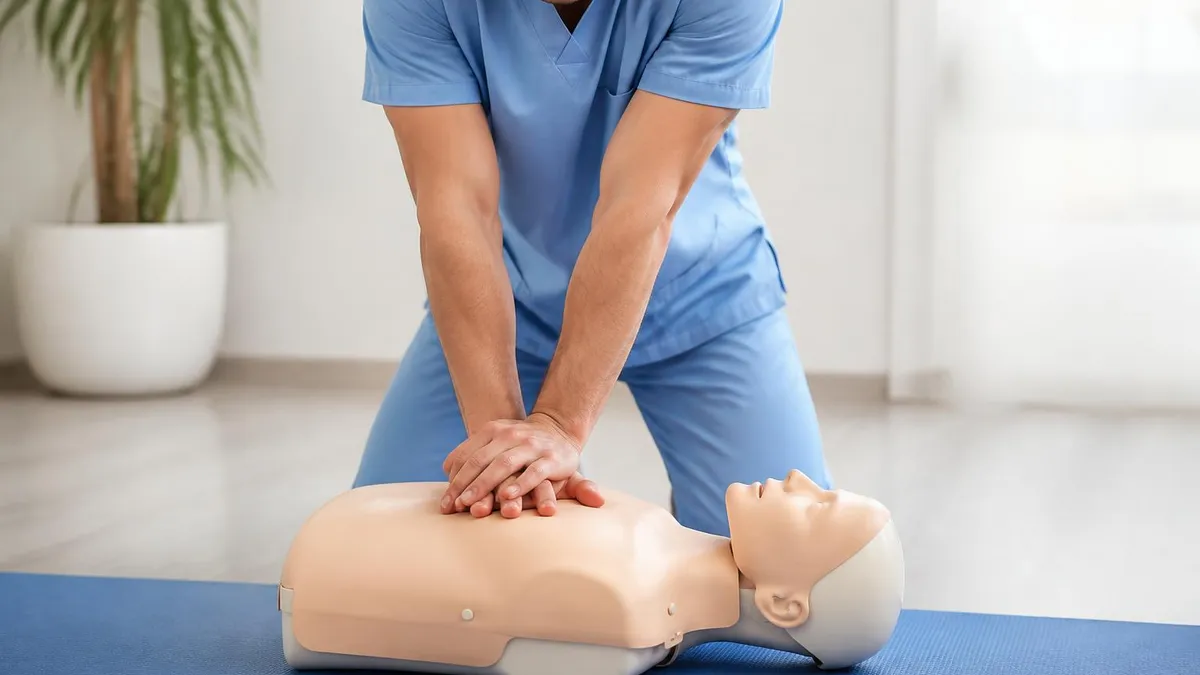
CPR Certification Course Types at a Glance
For non-medical professionals. Covers adult, child, and infant CPR, AED use, choking response, and first aid. Available online and in person. Most commonly required by employers outside healthcare.
Required for healthcare providers. Deeper coverage than Heartsaver including team-based resuscitation, bag-mask ventilation, and pediatric skills. Requires in-person skills validation.
For advanced clinical providers — ER nurses, physicians, paramedics. Covers cardiac arrest algorithms, arrhythmia management, and advanced pharmacology. Builds on BLS certification.
Focused specifically on child and infant emergencies. Often required for childcare workers, teachers, and camp counselors. May be taken standalone or as part of a combined course.
How Long Does CPR and First Aid Certification Last?
The standard CPR and first aid certification validity period is two years, regardless of provider. After two years, you need to take a renewal or recertification course to maintain your credentials. Renewal courses are typically shorter than the initial certification — usually 2-3 hours versus 3-4 hours for first-time certification — because they assume you already know the material and focus on updates and skills refresher rather than building from zero.
The two-year cycle aligns with updates to CPR guidelines from the American Heart Association, which revises its evidence-based CPR recommendations periodically. Most major guideline updates happen every five years, but two-year recertification ensures that healthcare providers and trained rescuers stay current with any changes and that hands-on skills remain practiced rather than going years without use.
It is worth noting that the skills deteriorate faster than the certification period. Studies on CPR skill retention consistently show that technique — particularly compression depth, rate, and recoil — degrades significantly within 6-12 months without practice. This is why many healthcare employers and professional training programs recommend annual refreshers even though certification technically remains valid for two years. If your certification is approaching the one-year mark, a quick skills refresher is worthwhile even if recertification isn't yet required.
Detailed information on the renewal process — including which providers offer online renewal and how renewal timing works relative to expiration dates — is covered in the how long does cpr certification last guide, which includes a timeline for planning your recertification.
Employer requirements sometimes impose shorter validity windows than the standard two-year period. Some healthcare facilities require annual BLS recertification regardless of the two-year standard. Childcare licensing requirements in some states mandate annual or biennial CPR recertification specifically for daycare workers. Always verify the specific requirement with your employer or licensing authority rather than assuming the standard two-year validity applies.
One practical tip for renewal timing: do not wait until your certification expires to renew. Most providers allow you to renew up to 3 months before expiration without losing any time on the new certification period. Renewing early means your new 2-year window starts from the expiration date of your old certification, not from the date you took the renewal course. This approach keeps you continuously certified without gaps and without losing the tail end of your current certification period.
Checking expiration dates on existing certifications before they lapse is a simple habit that prevents compliance gaps. Set a calendar reminder 90 days before your certification expiration — that gives you enough runway to find a convenient renewal course and schedule it. If you hold multiple certifications (BLS plus first aid, for example), track them separately since they may expire at different times depending on when you originally completed each one.
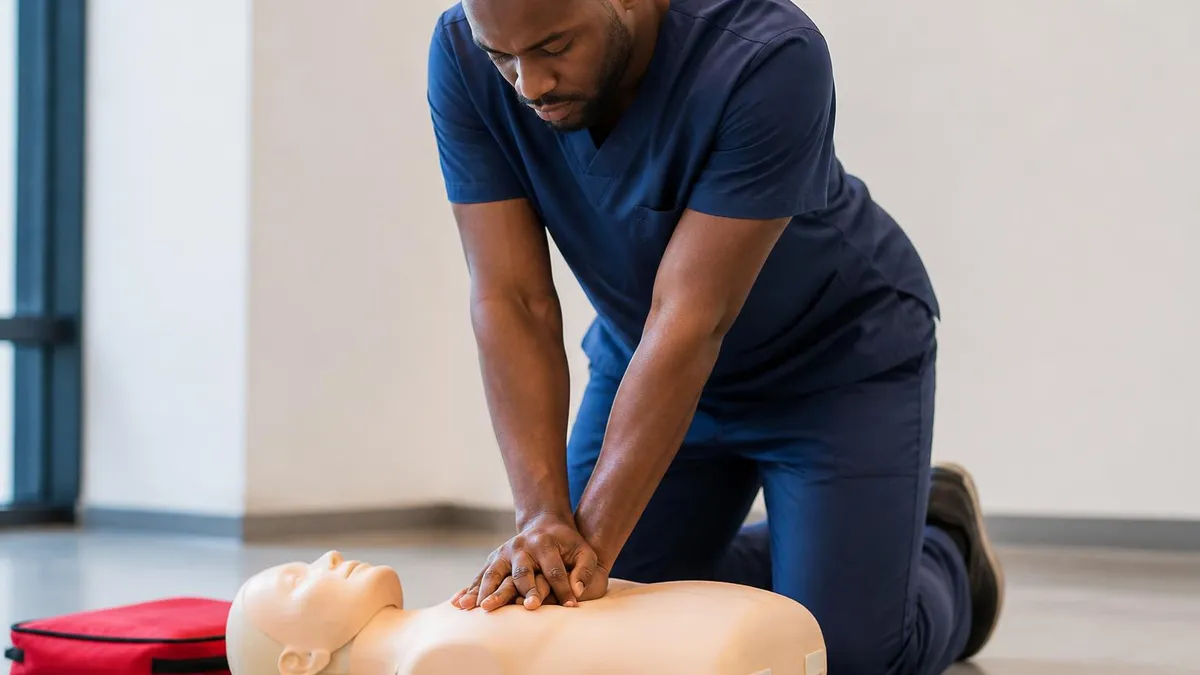
CPR and First Aid Certification: Key Numbers
Key Facts at a Glance
| Item | Value | Details |
|---|---|---|
| Standard certification validity period for most providers | 2 years | |
| Typical duration of an in-person Heartsaver course | 3-4 hrs | |
| Typical cost range depending on provider and course type | $20-100 |
Online vs. In-Person CPR Certification
The question of whether online certification is legitimate comes up frequently, and the honest answer is: it depends on the provider and what your employer or licensing body accepts. The American Heart Association, American Red Cross, and other recognized providers offer blended learning formats — you complete the knowledge portion online and the hands-on skills check with an instructor in person. This blended format is widely accepted by employers and is not the same as a fully online certificate that requires no hands-on component.
Fully online CPR certificates from some providers (particularly lower-cost options) complete everything online with no in-person skills assessment. These can be convenient and inexpensive — some cost as little as $10-20 — but they are not accepted by hospitals, medical facilities, or employers that specifically require a skills component. If your employer requires certification from AHA, Red Cross, or a specific recognized provider, verify their online policy before purchasing an online-only option.
For the general public seeking certification for personal readiness — parents wanting to be prepared for an emergency at home — online courses from recognized providers are a reasonable option. The knowledge component is the same; what's missing is hands-on practice on a manikin, which is genuinely valuable but not always accessible. If in-person training is available in your area, it's worth taking even if online would be more convenient.
For those wanting flexibility in when and where they get certified, an online certification course through the how long is cpr certification good for guide explains the blended learning format options from major providers and which ones include a skills check component.
Location-based options like community CPR classes at local fire stations, YMCAs, community centers, and employer-provided training are often free or low-cost and provide the in-person component that online-only courses lack. Many fire departments offer free public CPR training as part of community outreach — calling your local fire station to ask is often all it takes to find a free option.
For employers considering whether to make CPR and first aid training available to all employees, not just those who are required to have it, research on workplace cardiac arrest outcomes is compelling. When more employees in a workplace are trained, the probability that someone nearby can respond immediately to a cardiac arrest increases substantially. The AHA's Heartsaver Workplace program is specifically designed for employer-sponsored group training and is more cost-effective than individual enrollment.
Technology is also changing how CPR training is delivered. Manikins with real-time feedback devices — tools that measure compression depth and rate and provide immediate audio coaching during training — are now standard in most quality training programs. Research shows that feedback-based training produces better skill retention than training without feedback. When evaluating in-person course options, asking whether the provider uses feedback manikins is a reasonable quality check.
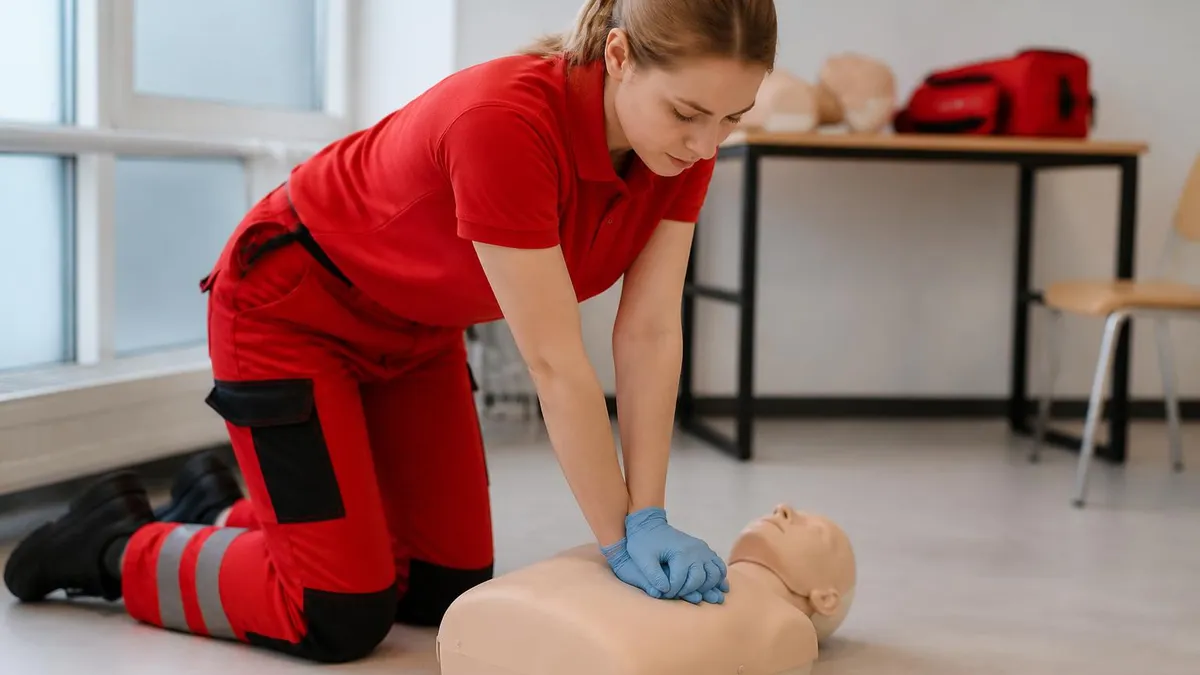
Who Needs CPR and First Aid Certification
Nurses, medical assistants, physical therapists, dental hygienists, EMTs, and most other licensed healthcare providers are required to maintain BLS certification as a condition of employment and often as a condition of licensure. BLS must typically come from an AHA-authorized training center. Many hospitals provide BLS recertification on-site through their education departments. Allowing BLS to lapse is a compliance issue that can result in suspension of work privileges until recertified.
Cost of CPR and First Aid Certification
The cost of CPR and first aid certification varies widely depending on the provider, course format, and whether you take it individually or through an employer or group. Individual certification through the American Red Cross typically runs $50-100 for a combined CPR/AED and First Aid course taken in person. AHA Heartsaver courses through authorized training centers are in a similar range. Online-only certificates from lower-recognition providers may cost as little as $15-25.
Employer-sponsored training is frequently free to employees. If your job requires certification, ask your HR department whether the company covers the cost before paying out of pocket. Many employers hold in-house training sessions, particularly for jobs where certification is a compliance requirement. Healthcare facilities almost universally provide BLS training on-site or cover the cost of external certification.
Group rates significantly reduce per-person cost for organizations. A community organization, sports team, or small business that needs multiple people certified can often negotiate a group rate with a Red Cross instructor or AHA training center. Group rates of $20-40 per person are common for in-person group sessions versus $60-100 for individual registrations.
To find a class near you from the most recognized provider, use the red cross cpr classes near me course locator, which shows in-person and blended class options by zip code with current pricing and availability.
Vouchers and discounts are sometimes available through employers, unions, health insurers, and professional associations. It is worth asking whether any of these apply before paying full price. The American Heart Association occasionally runs promotional pricing, and Red Cross membership sometimes includes certification discounts. Many community colleges include CPR certification as part of health and safety courses, making it accessible as part of continuing education enrollment.
Corporate wellness programs increasingly include CPR and first aid training as a benefit. If you work for a larger employer, check whether your company runs group training sessions annually or on request. Human resources departments at most mid-to-large companies have a process for scheduling this — you may be able to get certified during work hours at no cost simply by requesting it through the right channel. The regulatory exposure for employers who have employees who need certification and don't have it is enough incentive that many companies are quite willing to help it.
CPR and First Aid Certification: Pros and Cons
- +Skills are directly life-saving — bystander CPR doubles or triples cardiac arrest survival rates
- +Courses are short — most combined courses complete in 3-4 hours
- +Widely available online, in person, and through employer-sponsored programs
- +Recognized by employers across healthcare, childcare, fitness, construction, and many other industries
- +Blended learning formats allow online knowledge completion with in-person skills check
- +Recertification courses are shorter than initial certification and available every two years
- −Skill retention degrades within 6-12 months without practice, despite 2-year certificate validity
- −Fully online certifications are not accepted by all employers — verify before purchasing
- −BLS and Heartsaver certifications are not interchangeable — using the wrong level doesn't satisfy some requirements
- −In-person courses require scheduling around an instructor's availability, which can be limiting in rural areas
- −Certification doesn't cover all emergency scenarios — major trauma, stroke response, and other emergencies require additional training
- −Individual course costs of $50-100 add up when multiple employees need certification
CPR and First Aid Certification Questions and Answers
About the Author

Registered Nurse & Healthcare Educator
Johns Hopkins University School of NursingDr. Sarah Mitchell is a board-certified registered nurse with over 15 years of clinical and academic experience. She completed her PhD in Nursing Science at Johns Hopkins University and has taught NCLEX preparation and clinical skills courses for nursing students across the United States. Her research focuses on evidence-based exam preparation strategies for healthcare certification candidates.