
How to Perform CPR: Step-by-Step Guide 2026 September (Adult, Child & Infant)
Free How to Perform CPR: Step practice test with questions and answer explanations. Prepare for the 2026 September exam with instant scoring. 🧠
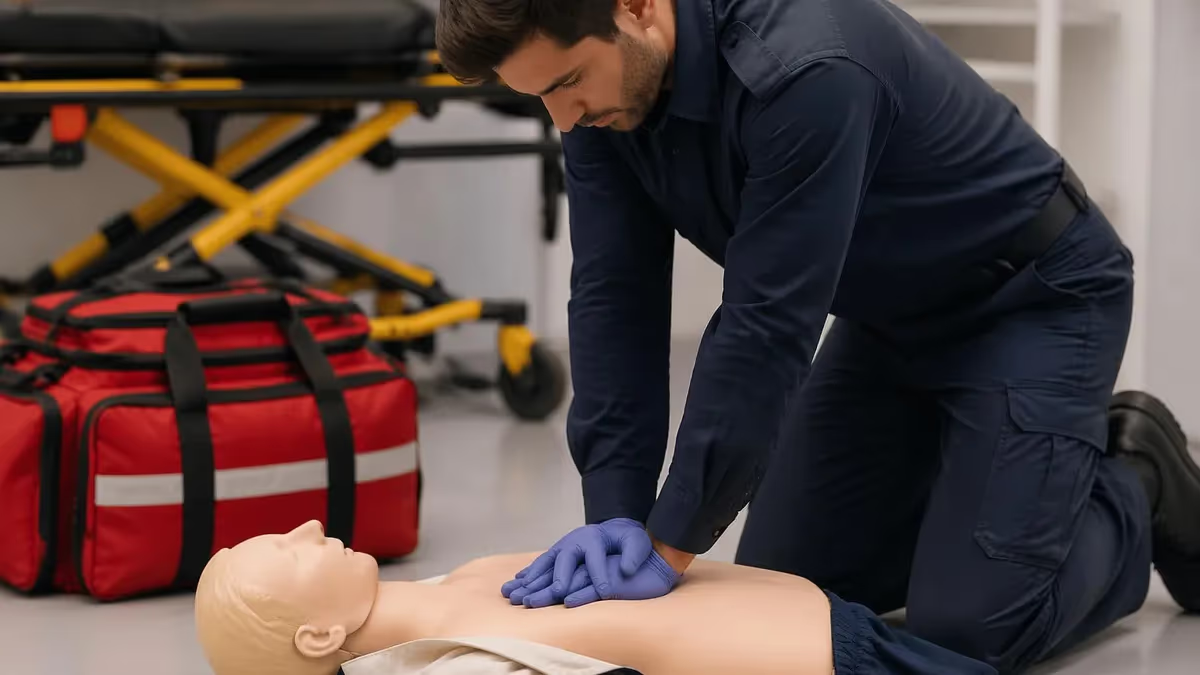
What Is CPR?
CPR stands for Cardiopulmonary Resuscitation — a combination of chest compressions and rescue breaths used to manually pump blood through the body and deliver oxygen to the brain and vital organs when the heart has stopped (cardiac arrest). CPR does not restart the heart; rather, it buys time by maintaining circulation until a defibrillator (AED or hospital defibrillator) can deliver an electric shock to restore a normal heart rhythm, or until emergency medical services (EMS) arrive with advanced equipment.
Cardiac arrest is not the same as a heart attack. A heart attack occurs when blood flow to a section of the heart muscle is blocked — the person is usually conscious and complaining of chest pain. Cardiac arrest occurs when the heart's electrical system malfunctions, causing the heart to stop beating suddenly — the person collapses, is unresponsive, and is not breathing normally. CPR is the immediate response to cardiac arrest, not a heart attack (though a heart attack can sometimes trigger cardiac arrest).
Modern CPR guidelines (AHA 2020, updated 2025) emphasize hands-only CPR for untrained bystanders and for adult victims who collapse in front of you in a public setting. Hands-only CPR — continuous chest compressions without rescue breaths — is nearly as effective as conventional CPR for the first few minutes of cardiac arrest when the victim still has oxygen in their blood. For children, infants, drowning victims, and drug-overdose victims, rescue breaths are critical because these individuals are more likely to be in respiratory arrest before cardiac arrest occurs.

How to Perform CPR on an Adult (Step-by-Step)
Follow these steps if you find an adult who is unresponsive and not breathing normally. Before starting, ensure the scene is safe — do not enter an unsafe environment (moving traffic, structural hazard, live electrical wire) to reach the victim.
- Check responsiveness: Tap the person's shoulders firmly and shout "Are you okay?" If no response, shout for help.
- Call 911 (or have someone call): Tell a specific person "You — call 911 and come back to report." Put the phone on speaker so you can receive dispatcher instructions while performing CPR.
- Position the victim: Lay the person on their back on a firm, flat surface. Kneel beside their chest.
- Open the airway: Tilt the head back and lift the chin (head-tilt chin-lift method). This moves the tongue away from the airway.
- Check for breathing: Look, listen, and feel for normal breathing for no more than 10 seconds. Occasional gasps (agonal breathing) are not normal breathing — begin CPR.
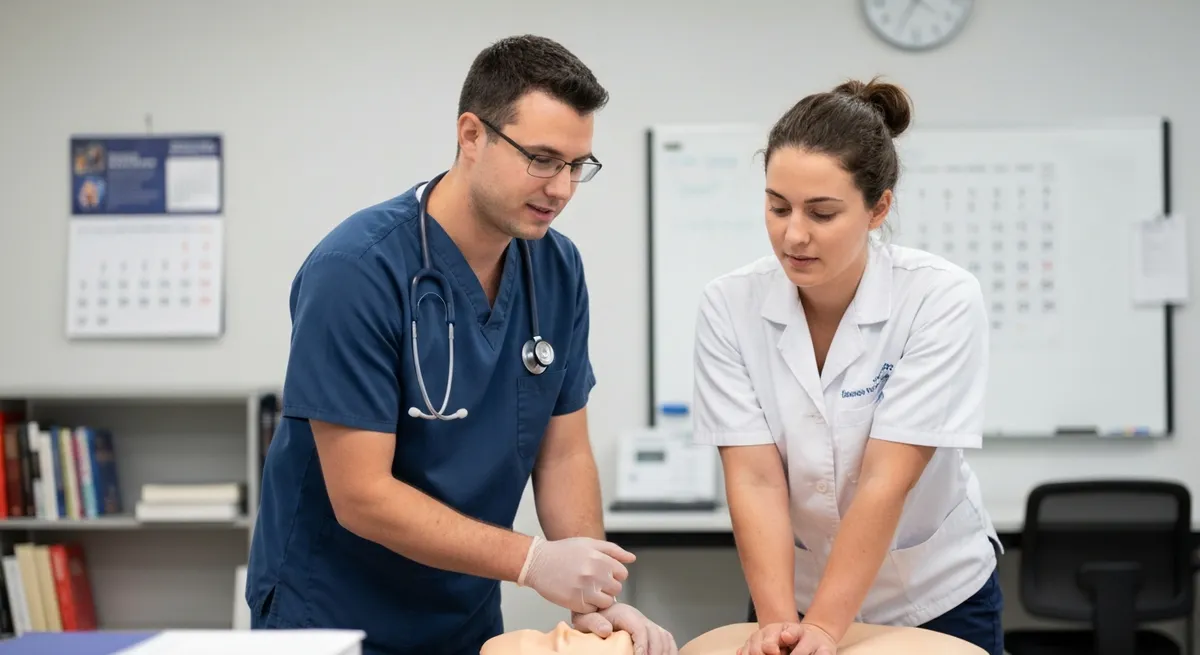
- Begin chest compressions: Place the heel of one hand on the center of the chest (lower half of the sternum). Place your other hand on top, interlacing fingers. Keep arms straight, elbows locked. Compress down at least 2 inches (5 cm) at a rate of 100–120 compressions per minute. Allow the chest to fully recoil between compressions — do not lean on the chest.
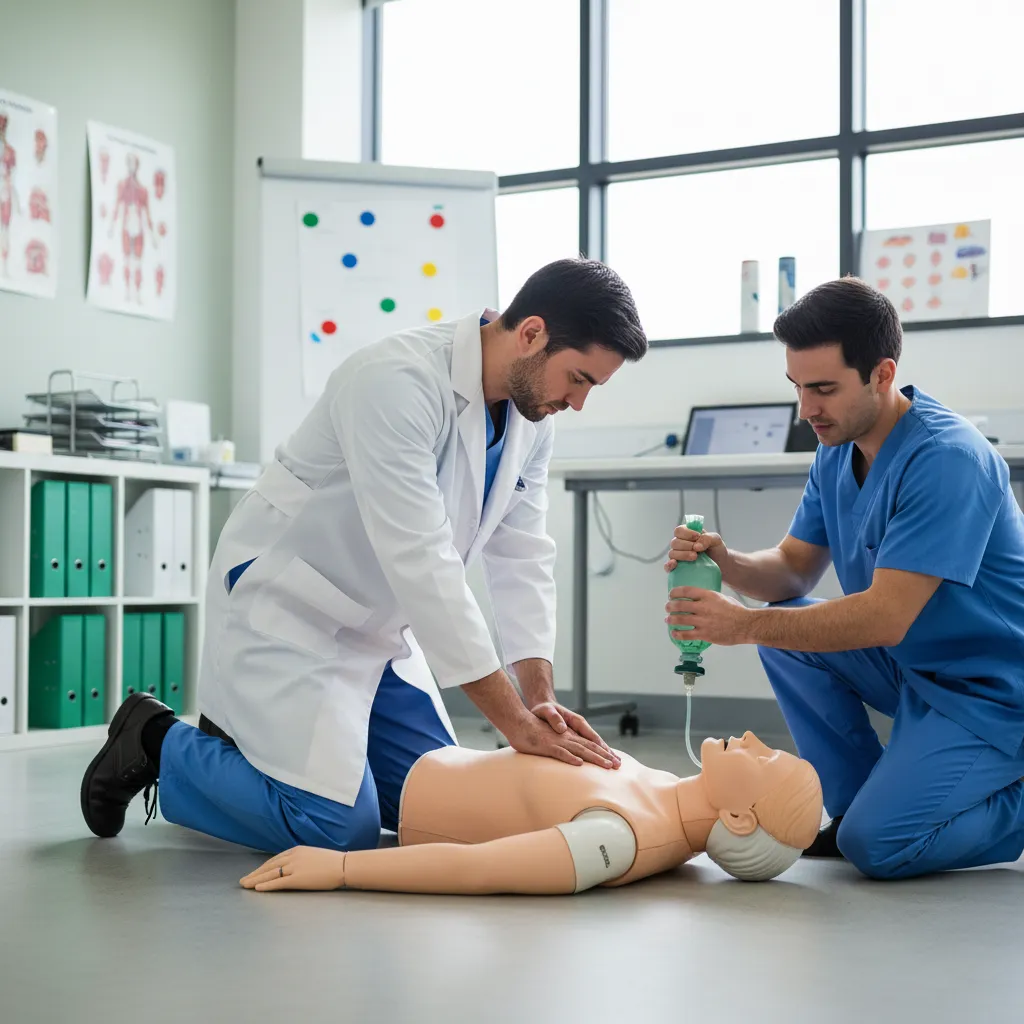
- Give rescue breaths (trained rescuers): After 30 compressions, give 2 rescue breaths. Pinch the nose closed, seal your mouth over the victim's, and breathe in for 1 second while watching for chest rise. If untrained or unwilling to give breaths, continue hands-only CPR.
- Continue 30:2 cycles: Alternate 30 compressions with 2 rescue breaths until an AED arrives, EMS takes over, the person starts breathing, or you are too exhausted to continue.
For a more detailed preparation for CPR certification online testing, including practice exam questions, refer to the basic life support certification study guide which covers all AHA guidelines in depth.
CPR Overview
Compression Depth: At least 2 inches (5 cm), but not more than 2.4 inches (6 cm). Too shallow is ineffective; too deep can cause rib fractures or organ injury.
Compression Rate: 100–120 compressions per minute. This is roughly the beat of the song "Stayin' Alive" by the Bee Gees — a widely used memory aid taught in CPR courses.
Compression-to-Breath Ratio: 30:2 for single rescuers (30 compressions, then 2 breaths). For 2-rescuer CPR, maintain 30:2 and switch compressor roles every 2 minutes to avoid fatigue.
Hand Position: Heel of hand on the lower half of the sternum (breastbone), center of the chest. Do not compress on the ribs or below the sternum (xiphoid process).
Using an AED (Automated External Defibrillator)
An AED is a portable medical device that analyzes the heart's rhythm and delivers a controlled electric shock to restore a normal rhythm in cases of ventricular fibrillation (VF) or ventricular tachycardia (VT) — the two most common life-threatening heart rhythms in sudden cardiac arrest. AEDs are designed for use by untrained bystanders: they provide voice prompts for every step and will not deliver a shock unless the heart is actually in a shockable rhythm.
Steps to use an AED:
- Turn on the AED (open the lid or press the power button — it will begin speaking).
- Attach the electrode pads as shown in the diagram on the pads: one pad on the upper right chest, one pad on the lower left side below the armpit.
- Make sure no one is touching the victim and press "Analyze" (or the AED will analyze automatically).
- If a shock is advised, ensure everyone stands clear, then press "Shock."
- Immediately resume CPR — do not wait to see if the victim responds. Continue CPR for 2 minutes, then let the AED re-analyze.
AEDs are now required by law in many public venues (schools, gyms, airports, shopping centers) and are typically mounted on walls in bright red or green cases. Survival rates from out-of-hospital cardiac arrest are highest when CPR begins within 1 minute and an AED is used within 3–5 minutes of collapse.
CPR Study Tips
What's the best study strategy for CPR?
Focus on weak areas first. Use practice tests to identify gaps, then study those topics intensively.
How far in advance should I start studying?
Most successful candidates begin 4-8 weeks before the exam. Create a structured study schedule.
Should I retake practice tests?
Yes! Take each practice test 2-3 times. Focus on understanding why answers are correct, not memorizing.
What should I do on exam day?
Arrive 30 min early, bring required ID, read questions carefully, flag difficult ones, and review before submitting.
CPR Certification: How to Get Certified in 2026
A CPR certification is formal training that qualifies you to perform CPR according to established guidelines and proves your competency to employers, licensing boards, and healthcare facilities. Most CPR certifications are valid for 2 years before renewal is required. The main certifying organizations in the United States are the American Heart Association (AHA) and the American Red Cross — both offer equivalent training that meets OSHA and ILCOR guidelines.
For healthcare professionals, the AHA's Basic Life Support (BLS) certification is the standard requirement. BLS covers CPR for adults, children, and infants, AED use, rescue breathing, relief of choking, and 2-rescuer CPR techniques. The AHA also offers the Heartsaver course for non-healthcare workers such as teachers, coaches, lifeguards, and childcare providers — this is the typical cpr certification for general public with workplace safety requirements.
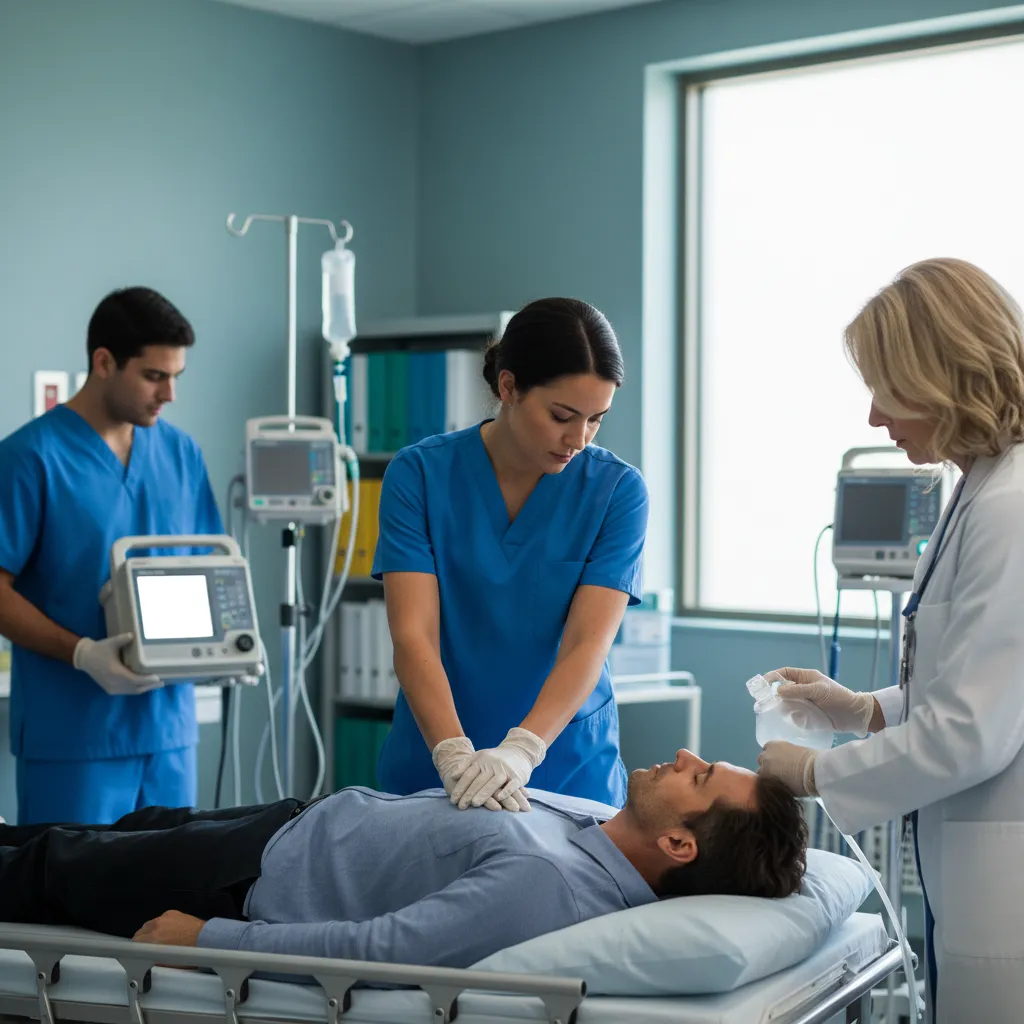
For professional rescuers and healthcare providers working in high-acuity settings (ICU, ER, cardiac care), the AHA's Advanced Cardiovascular Life Support (ACLS) and Pediatric Advanced Life Support (PALS) courses cover the full resuscitation algorithm, medication protocols, cardiac rhythms, and team leadership. ACLS certification requires a current BLS card as a prerequisite. See our basic life support certification study guide for preparation materials.
CPR certification can be completed in person (4–8 hours including skills practice), online with a blended learning component (online didactic + in-person skills check), or fully online for awareness-level certifications. In-person or blended certifications that include a hands-on skills check are required for most healthcare professional licensing boards. The cpr training requirements vary by profession — nurses, paramedics, and physicians require BLS or ACLS; childcare workers typically need Heartsaver CPR/AED.

CPR Certification Checklist
- ✓Choose the right CPR course: BLS for healthcare professionals, Heartsaver CPR/AED for general public, ACLS for advanced providers.
- ✓Find an AHA or Red Cross authorized training center near you, or complete a blended learning course online.
- ✓Bring a valid ID and any prerequisite certifications (BLS card for ACLS enrollment).
- ✓Practice hands-on compression technique before the skills test — compression depth and rate are the most common failure points.
- ✓Pass both the written knowledge test and the hands-on skills demonstration to receive your certification card.
- ✓Note your certification expiration date — BLS and CPR certs are valid for 2 years. Set a reminder 60 days before expiration.
- ✓Consider instructor certification if you want to teach CPR — AHA Instructor certification requires completing a formal training course.
BLS, ACLS, and Advanced Life Support Training
Beyond basic CPR certification, healthcare professionals require additional life support training depending on their specialty and practice setting. The progression from basic to advanced life support follows a structured path, with each level building on the previous one.
Basic Life Support (BLS) is the foundation. BLS certification covers CPR for all age groups, AED use, relief of foreign body airway obstruction (choking), and 2-rescuer CPR. It is required for virtually all healthcare professionals including nurses, medical assistants, EMTs, dental hygienists, and respiratory therapists. BLS renewal is required every 2 years.
Advanced Cardiovascular Life Support (ACLS) builds on BLS to cover the full cardiac arrest algorithm, including the management of shockable rhythms (VF/VT), non-shockable rhythms (PEA/asystole), post-cardiac arrest care, and a comprehensive review of resuscitation pharmacology including epinephrine, amiodarone, and vasopressin. The acls algorithm — the systematic decision tree for managing cardiac arrest — is the centerpiece of the ACLS certification exam. ACLS is required for physicians, advanced practice nurses, and paramedics in most hospital settings.
Pediatric Advanced Life Support (PALS) covers the equivalent ACLS content for pediatric patients, with additional emphasis on respiratory failure (the most common cause of cardiac arrest in children), pediatric arrhythmias, and fluid resuscitation. PALS certification is required for providers in pediatric emergency, pediatric ICU, and neonatal care settings.
The national cpr foundation and AHA both offer practice resources for all certification levels. Reviewing the algorithms and pharmacology tables before your ACLS exam is the most efficient preparation strategy.
CPR Pros and Cons
- +CPR has a defined, publicly available content blueprint — candidates know exactly what to prepare for
- +Multiple preparation pathways (self-study, courses, coaching) accommodate different learning styles and schedules
- +A growing ecosystem of study resources means candidates at any budget level can access quality preparation materials
- +Clear score reporting allows candidates to identify specific strengths and weaknesses for targeted remediation
- +Professional recognition associated with strong performance provides tangible career and academic benefits
- −The scope of tested content requires substantial preparation time that competes with existing professional or academic commitments
- −No single resource covers the full content scope — candidates typically need multiple study tools for comprehensive preparation
- −Test anxiety and exam-day performance variability mean preparation effort does not always translate linearly to scores
- −Registration, preparation, and potential retake costs accumulate into a significant financial investment
- −Content and format can change between exam versions, making older preparation materials less reliable
CPR Questions and Answers
About the Author

Registered Nurse & Healthcare Educator
Johns Hopkins University School of NursingDr. Sarah Mitchell is a board-certified registered nurse with over 15 years of clinical and academic experience. She completed her PhD in Nursing Science at Johns Hopkins University and has taught NCLEX preparation and clinical skills courses for nursing students across the United States. Her research focuses on evidence-based exam preparation strategies for healthcare certification candidates.
Join the Discussion
Connect with other students preparing for this exam. Share tips, ask questions, and get advice from people who have been there.
View discussion (9 replies)