
When to Do CPR: A Complete Guide to Recognizing Cardiac Arrest and Acting Fast in 2026 October
Learn exactly when to do CPR, how to recognize cardiac arrest, and the acls algorithm steps that save lives. Adult, child, and infant CPR explained. 🎓
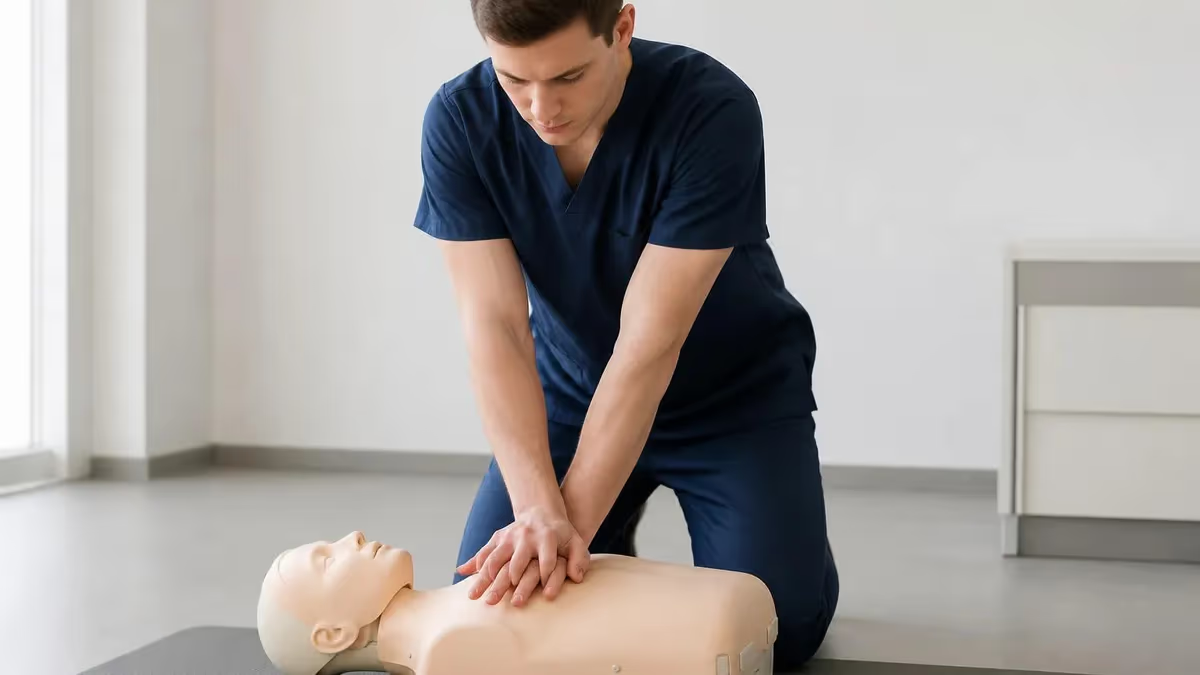
Knowing when to do CPR is the difference between a bystander who saves a life and one who watches helplessly. Cardiopulmonary resuscitation is required the moment a person becomes unresponsive, stops breathing normally, and has no detectable pulse. The acls algorithm and basic life support guidelines both reinforce the same principle: any delay beyond ten seconds of recognition meaningfully reduces survival odds, and brain cells begin dying within four to six minutes without circulating oxygen.
Sudden cardiac arrest does not announce itself politely. It collapses someone mid-sentence, mid-step, or in their sleep. The victim slumps, stops responding, and may briefly gasp in irregular agonal breaths that are commonly mistaken for normal breathing. These gasps are not breathing — they are a dying reflex, and they are one of the strongest indicators that chest compressions must begin immediately. If you wait to confirm a pulse the way television dramas suggest, you will lose the window that matters.
The decision to start CPR is binary and unforgiving: if the person is unresponsive and not breathing normally, you push hard and fast on the chest. You do not wait for paramedics to arrive. You do not search for a heartbeat for thirty seconds. You do not assume someone else has called 911. Recent leather cpr training materials and AHA updates have simplified the recognition steps to remove hesitation, because hesitation kills more people than incorrect technique ever has.
This guide walks through every scenario you might encounter: an adult collapsing in a restaurant, an infant turning blue in a crib, a child drowning at a pool party, a coworker found slumped at their desk. Each situation has shared principles and a few important distinctions. You will learn the visual and behavioral cues that signal cardiac arrest, how to differentiate it from fainting, seizure, or stroke, and how to coordinate with 911 dispatchers who can guide you through compressions in real time.
You will also learn what to do when an AED arrives, how the cpr index of compression depth and recoil predicts outcomes, and why infant cpr requires a different hand position and depth than adult resuscitation. The data is clear: bystander CPR doubles or triples survival rates, but only when it begins within the first two minutes. Hospitals, EMS systems, and the national cpr foundation track these intervals carefully, and the variable that consistently matters most is whether a bystander acted at all.
By the end of this article you will be able to answer the central question — when do I start CPR? — without hesitation, in any setting, on any victim. You will also understand when not to start CPR, when to stop, and how to integrate rescue breathing if you are trained. Read it once now, and consider taking a hands-on certification course soon afterward, because muscle memory under stress is what turns knowledge into action.
When to Do CPR by the Numbers

The First 120 Seconds: Recognition Timeline
Seconds 0-10: Scene Safety
Seconds 10-20: Check Responsiveness
Seconds 20-30: Look for Normal Breathing
Seconds 30-45: Call 911 & Get AED
Seconds 45-60: Begin Compressions
Seconds 60-120: Maintain Rhythm
The decision tree for when to do CPR is identical across age groups — unresponsive plus not breathing normally equals start compressions — but the technique adjusts for body size. Adult CPR targets a depth of at least two inches with the heel of one hand on top of the other. Child CPR (ages one to puberty) uses one or two hands at two-inch depth depending on the child's size, and infant cpr uses two fingers or the two-thumb encircling technique at roughly 1.5 inches.
Cardiac arrest in adults is most often caused by an electrical problem in the heart — ventricular fibrillation, ventricular tachycardia, or pulseless electrical activity. In children and infants, the underlying cause is far more frequently respiratory: a blocked airway, drowning, severe asthma, or sudden infant death syndrome. This is why pediatric resuscitation places stronger emphasis on rescue breaths and on opening the airway before assuming a primary cardiac event. The pals certification curriculum drills this distinction extensively.
A common confusion among new rescuers is whether to start CPR on a person who is breathing but unresponsive. The answer is no — instead, place them in the respiratory arrest recovery position on their side, monitor their breathing, and wait for EMS. CPR on a breathing person can cause rib fractures and is unnecessary if the heart is still pumping. The trigger for compressions is the absence of normal breathing, not unconsciousness alone.
Another scenario that confuses bystanders is the seizure victim. During a seizure, the person may appear blue, rigid, and unresponsive. Wait until the seizure ends — usually within one to three minutes — then check responsiveness and breathing. Most post-ictal patients will resume normal breathing on their own. If they do not, then cardiac arrest may have triggered the seizure (a phenomenon called hypoxic convulsion) and CPR should begin immediately.
Drowning victims represent a special category. Unlike adult cardiac arrest, drowning is fundamentally a respiratory event, and rescue breaths are critical. If you pull someone unresponsive from the water, give two rescue breaths first before starting compressions. This is the only major scenario in modern guidelines where breaths precede compressions in lay-rescuer protocols. Opioid overdose victims also benefit disproportionately from rescue breathing because the primary problem is suppressed respiratory rate, not heart rhythm.
Trauma victims with massive blood loss require a different approach: stop the bleeding first with direct pressure or a tourniquet, because compressions on an empty circulatory system accomplish nothing. CPR is appropriate for trauma victims only after major hemorrhage has been controlled and there is still no pulse. EMS protocols call this the 'circulation before compressions' rule for traumatic arrest, and it is one of the few situations where the standard CAB sequence reverses.
The most overlooked indicator that CPR is needed right now is the agonal gasp. Roughly 40% of cardiac arrest victims display these gasps in the first minute, and bystanders consistently misinterpret them as 'still breathing.' If breathing looks slow, noisy, irregular, or fish-like, the person is in arrest. Start compressions. The cost of being wrong about a gasping patient is zero; the cost of doing nothing during true arrest is everything.
CPR Practice Test Questions
Prepare for the CPR Cardiopulmonary Resuscitation Practice exam with our free practice test modules. Each quiz covers key topics to help you pass on your first try.
CPR Basic CPR
CPR Exam Questions covering Basic CPR. Master CPR Test concepts for certification prep.
CPR and First Aid
Free CPR Practice Test featuring and First Aid. Improve your CPR Exam score with mock test prep.
CPR (Cardiopulmonary Resuscitation) Adult ...
CPR Mock Exam on (Cardiopulmonary Resuscitation) Adult CPR and AED Usage. CPR Study Guide questions to pass on your first try.
CPR (Cardiopulmonary Resuscitation) Airway...
CPR Test Prep for (Cardiopulmonary Resuscitation) Airway Obstruction and Choking. Practice CPR Quiz questions and boost your score.
CPR (Cardiopulmonary Resuscitation) Cardio...
CPR Questions and Answers on (Cardiopulmonary Resuscitation) Cardiopulmonary Emergency Recognition. Free CPR practice for exam readiness.
CPR (Cardiopulmonary Resuscitation) Child ...
CPR Mock Test covering (Cardiopulmonary Resuscitation) Child and Infant CPR. Online CPR Test practice with instant feedback.
CPR (Cardiopulmonary Resuscitation) High-P...
Free CPR Quiz on (Cardiopulmonary Resuscitation) High-Performance Team Dynamics. CPR Exam prep questions with detailed explanations.
CPR (Cardiopulmonary Resuscitation) Legal ...
CPR Practice Questions for (Cardiopulmonary Resuscitation) Legal and Ethical Considerations. Build confidence for your CPR certification exam.
CPR for Specific Populations
CPR Test Online for for Specific Populations. Free practice with instant results and feedback.
CPR Airway & Breathing Management
CPR Exam Questions covering Airway & Breathing Management. Master CPR Test concepts for certification prep.
CPR Assessment & Recognition of Cardiac Ar...
Free CPR Practice Test featuring Assessment & Recognition of Cardiac Arrest. Improve your CPR Exam score with mock test prep.
CPR Chest Compressions & Defibrillation
CPR Mock Exam on Chest Compressions & Defibrillation. CPR Study Guide questions to pass on your first try.
CPR Post-Resuscitation Care & Recovery
CPR Test Prep for Post-Resuscitation Care & Recovery. Practice CPR Quiz questions and boost your score.
Real Scenarios: When Respiratory Rate and Pulse Decide Your Next Move
An adult collapses in front of you at a restaurant. They are slumped, unresponsive to a shoulder tap, and making a snoring sound every few seconds. The respiratory rate looks abnormal — far below the usual 12 to 20 breaths per minute. This is cardiac arrest until proven otherwise, and the snoring is almost certainly agonal breathing.
Skip the pulse check unless you are a trained provider. Lay rescuers should call 911, request an AED, and begin chest compressions within sixty seconds of collapse. The acls algorithm prioritizes high-quality compressions over every other intervention, including rescue breaths in the first minutes for hands-only CPR.

Hands-Only CPR vs Standard CPR: When Each Is Appropriate
- +Hands-only CPR removes the barrier of mouth-to-mouth for untrained bystanders
- +Compressions alone are proven effective for the first 4-6 minutes of adult cardiac arrest
- +Easier to maintain high-quality rhythm without interruption for breaths
- +Dispatchers can coach hands-only CPR over the phone in under 30 seconds
- +No equipment or training required to begin saving a life immediately
- +Eliminates hesitation caused by hygiene concerns or unfamiliarity
- −Standard CPR with breaths is superior for drowning, overdose, and pediatric arrest
- −Hands-only does not address the underlying respiratory cause in many child arrests
- −Prolonged hands-only CPR (over 10 minutes) becomes less effective without ventilation
- −Infants and children specifically benefit from rescue breaths from minute one
- −Trained rescuers should always default to 30:2 compression-to-breath ratio when possible
- −Some advanced scenarios (asphyxial arrest) require breaths as the first intervention
Pros and Cons at a Glance
| Pros | Cons |
|---|---|
| Hands-only CPR removes the barrier of mouth-to-mouth for untrained bystanders | Standard CPR with breaths is superior for drowning, overdose, and pediatric arrest |
| Easier to maintain high-quality rhythm without interruption for breaths | Hands-only does not address the underlying respiratory cause in many child arrests |
| No equipment or training required to begin saving a life immediately | Infants and children specifically benefit from rescue breaths from minute one |
| Eliminates hesitation caused by hygiene concerns or unfamiliarity | Some advanced scenarios (asphyxial arrest) require breaths as the first intervention |
When to Do CPR: Your 10-Step Action Checklist
- ✓Scan the scene for hazards before approaching the victim
- ✓Tap both shoulders and shout to confirm unresponsiveness
- ✓Look for normal chest rise and fall for no more than 10 seconds
- ✓Treat agonal gasps as cardiac arrest — not as breathing
- ✓Call 911 or instruct a specific bystander to call, and put the phone on speaker
- ✓Request an AED by name and have someone retrieve it
- ✓Place the heel of your hand on the center of the chest between the nipples
- ✓Push at least 2 inches deep at 100-120 compressions per minute
- ✓Allow full chest recoil between compressions — do not lean on the chest
- ✓Continue without interruption until EMS arrives or the victim shows signs of life
If in doubt, start compressions.
The risk of doing CPR on someone who does not need it is minor — a few bruises or rare rib fractures. The risk of not doing CPR on someone in cardiac arrest is death. Every second of hesitation reduces survival by approximately 10%. When the question 'should I start?' arises, the answer is yes, immediately.
Once compressions are underway, the next critical intervention is defibrillation. So what does aed stand for? Automated External Defibrillator — a portable device that analyzes heart rhythm and delivers an electrical shock if the rhythm is shockable. AEDs are designed for untrained users; they speak step-by-step instructions, detect the rhythm automatically, and refuse to deliver a shock if one is not needed. The earlier an AED arrives and is applied, the better the outcome.
Survival from sudden cardiac arrest drops by roughly 10 percentage points for every minute that defibrillation is delayed. After ten minutes without a shock, survival approaches zero. This is why public-access AED programs in airports, gyms, and shopping centers have transformed outcomes — when an AED is applied within three minutes, survival rates can exceed 70% for shockable rhythms. The device itself does not replace compressions; it works because compressions kept the heart muscle viable long enough for the shock to convert it back to a perfusing rhythm.
Life support is a continuum, not a single intervention. Basic life support (BLS) covers what bystanders and entry-level providers do: compressions, ventilation, AED use. Advanced cardiac life support (ACLS) layers on intravenous medications, advanced airway management, and rhythm-specific algorithms once paramedics or hospital teams arrive. The acls algorithm flowchart guides clinicians through differentiating ventricular fibrillation, asystole, pulseless electrical activity, and bradycardia — each with a different drug and intervention sequence.
For lay rescuers, the role ends when EMS takes over, the victim regains a pulse, or you become physically unable to continue. Do not stop because you feel awkward, because the victim has not yet responded, or because you are tired — swap with another bystander every two minutes if possible. Compression quality degrades sharply after 90 seconds of continuous effort, even for fit rescuers, and rotating maintains the depth and rate the heart needs.
The national cpr foundation, American Heart Association, and American Red Cross all converge on the same recommendations: hands-only CPR for untrained bystanders responding to adult cardiac arrest; conventional 30:2 CPR with breaths for trained rescuers and for pediatric, drowning, or overdose victims. Certifications such as BLS, ACLS, and pals certification update these protocols on a five-year cycle, with the most recent significant changes in 2020 emphasizing earlier compressions and de-emphasizing pulse checks for lay rescuers.
Special populations require special considerations. Pregnant patients in cardiac arrest need manual left uterine displacement during compressions to relieve pressure on the inferior vena cava. Hypothermic patients require longer resuscitation attempts because cold-protected brains can survive far longer without oxygen. Patients with implanted defibrillators or pacemakers receive AED pads placed at least one inch away from the device, but the resuscitation proceeds normally otherwise.
The interaction between rescuers and 911 dispatchers has become one of the most studied parts of resuscitation science. Dispatcher-assisted CPR programs train operators to identify cardiac arrest from caller descriptions within sixty seconds and to talk untrained callers through compressions in real time. Communities that implement these programs see measurable jumps in bystander CPR rates and in survival to hospital discharge — proof that the most important variable is whether the call gets help started immediately.

For lay rescuers, the pulse check is removed from modern guidelines. Studies show that even healthcare providers correctly identify the presence or absence of a pulse only about 65% of the time in under ten seconds. If the victim is unresponsive and not breathing normally, start compressions. Do not waste 30 seconds searching for a carotid pulse you may never find.
There are a small number of situations in which CPR should not be initiated or should be discontinued. The first is when the scene is unsafe — an active shooter, ongoing electrocution, fire, or unstable structure. You are not obligated to become a casualty, and EMS protocols explicitly prohibit rescuers from entering hazardous environments without protective equipment. Stabilize the scene first, then assess the victim.
The second is when obvious signs of irreversible death are present: rigor mortis, lividity (pooling of blood causing purple-red discoloration on the dependent side of the body), decapitation, decomposition, or injuries clearly incompatible with life. In these cases CPR cannot help, and most state Good Samaritan laws and EMS guidelines explicitly recognize these conditions as appropriate reasons to withhold resuscitation.
The third is when a valid Do Not Resuscitate (DNR) order or Physician Orders for Life-Sustaining Treatment (POLST) form is presented. Honoring these documents is both a legal and ethical obligation in most states, though specific requirements vary. If the document is not immediately visible or you have any uncertainty, default to starting CPR — you can stop once the order is confirmed. Erring on the side of resuscitation is always defensible. Helpful background on certification verification is available through cpr fix phones resources.
When should you stop CPR once you've started? There are four standard stopping points: EMS or another trained rescuer takes over; the victim shows obvious signs of life (purposeful movement, eyes opening, normal breathing returning); the scene becomes unsafe; or you are physically unable to continue and no one can take over. Note that signs of life mean clear, sustained recovery — not a single twitch or shallow gasp. Maintain compressions until you are certain.
Family members, witnesses, and even other healthcare providers sometimes urge rescuers to stop because 'it doesn't seem to be working.' Resist this pressure unless one of the standard stopping criteria is met. Outcomes from prolonged CPR — especially when paired with early defibrillation — are far better than most bystanders intuitively believe. Cases of full neurologic recovery after 30 to 60 minutes of continuous CPR are well-documented, particularly in cold-water drowning and hypothermia scenarios.
One area of growing legal and ethical clarity is the question of partial-effort or 'slow code' resuscitation. Modern medical ethics rejects the concept of intentionally inadequate CPR. Either you commit fully to resuscitation, or you do not start. Half-measures are both ineffective and ethically indefensible. For bystanders, this means: when you push, push hard and fast, push deep, and do not stop until one of the four legitimate stopping criteria applies.
Finally, remember that every state in the US has Good Samaritan laws that protect lay rescuers acting in good faith from civil liability. You cannot be successfully sued for providing CPR to an unresponsive person, even if you break a rib or fail to revive them. The legal system overwhelmingly favors bystanders who attempt to help, and the moral calculus is clear: action carries minimal risk, while inaction guarantees the worst possible outcome.
Preparing yourself to act decisively in a real emergency starts long before the moment arrives. Reading guides like this one builds knowledge, but only hands-on practice builds the muscle memory you'll need when adrenaline narrows your focus and trembles your hands. Consider enrolling in a formal BLS or Heartsaver course through the American Heart Association, the American Red Cross, or a local fire department — most courses cost between $50 and $90 and certify you for two years.
Practice compression rhythm to common songs. The classic recommendation is 'Stayin' Alive' by the Bee Gees at 103 beats per minute, but newer playlists include 'Crazy in Love' by Beyoncé, 'Walk the Line' by Johnny Cash, and 'Cecilia' by Simon & Garfunkel. Mental rehearsal with a beat anchored in your head prevents the most common error in real CPR: pushing too slowly. Many bystanders deliver only 60 to 80 compressions per minute when they think they are pushing at 100.
Know where AEDs live in the places you frequent. Most gyms, large office buildings, schools, airports, and public transit hubs have at least one AED, usually mounted in a clearly marked wall cabinet near the main entrance or stairwell. Some smartphone apps and 911 dispatch systems can direct you to the nearest device. Spending sixty seconds the next time you enter a new building to locate the AED could save a life later. Familiar cpr songs and rhythm cues become surprisingly useful when paired with location awareness.
Practice the scene-safety scan as a habit. When you enter a crowded room, restaurant, or event, briefly note the exits, the obvious hazards, and the people around you. This is not paranoia — it is the same situational awareness EMTs and police officers cultivate. In an emergency, this two-second mental map becomes the foundation of an effective response and prevents the freezing that often immobilizes untrained bystanders.
Talk through scenarios with family members, especially if you have children, elderly parents, or anyone with a known cardiac history. Agree on who calls 911, who starts compressions, and who retrieves the AED. Households that rehearse emergency roles before they are needed respond measurably faster than households that have never discussed it. This is especially true for infant cpr — the technique is unfamiliar enough that without rehearsal, panicked parents often default to inappropriate adult-sized compressions.
Finally, refresh your skills annually even if your certification is good for two years. Skill decay is real and measurable: studies show that compression depth and rate quality degrade significantly within three to six months of training. Watching a ten-minute refresher video or practicing on a $25 compression mannequin every few months keeps the technique sharp. Free refresher resources from the AHA, Red Cross, and major hospital systems are available online at any time.
The cpr index — a composite measure of compression depth, rate, recoil, and minimal pauses — is now built into many AED training devices and feedback manikins. If you have access to one, use it. Real-time feedback dramatically accelerates skill acquisition and exposes the gap between what you think you're doing and what you're actually doing. Even thirty minutes a year of feedback-driven practice produces measurably better real-world performance.
CPR Questions and Answers
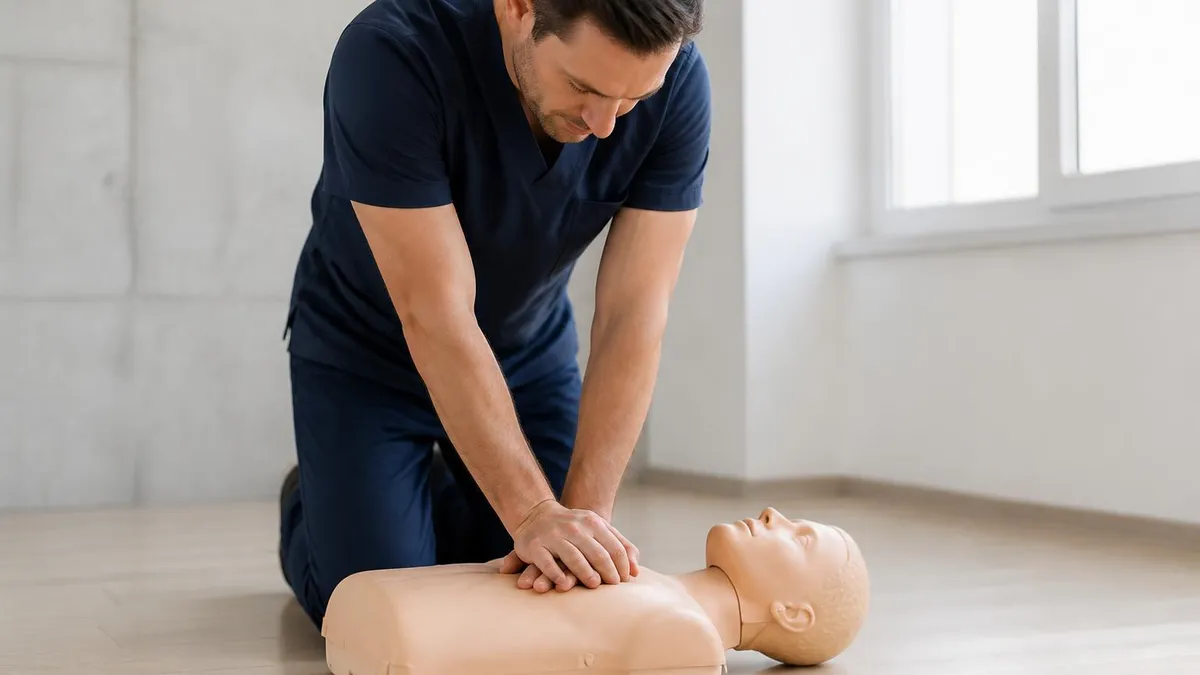
CPR vs BLS: Complete Comparison Guide for 2026 — Which Certification Do You Need?
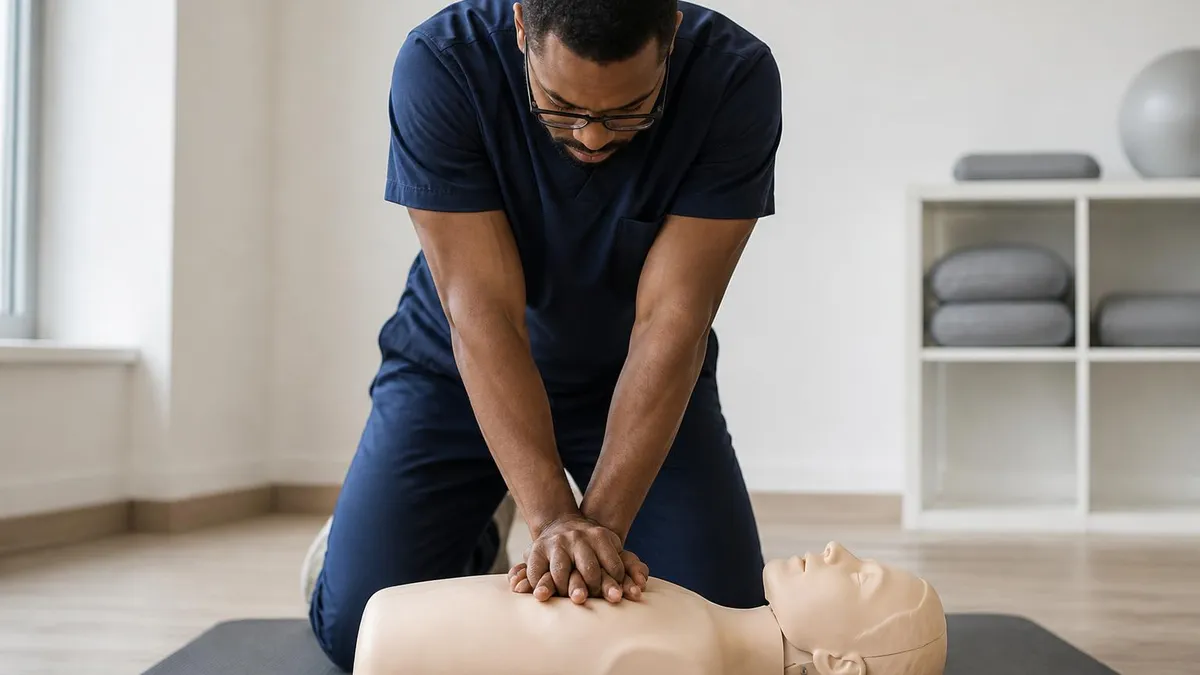
CPR Card Lookup: How to Verify, Replace, and Access Your CPR Certification in 2026
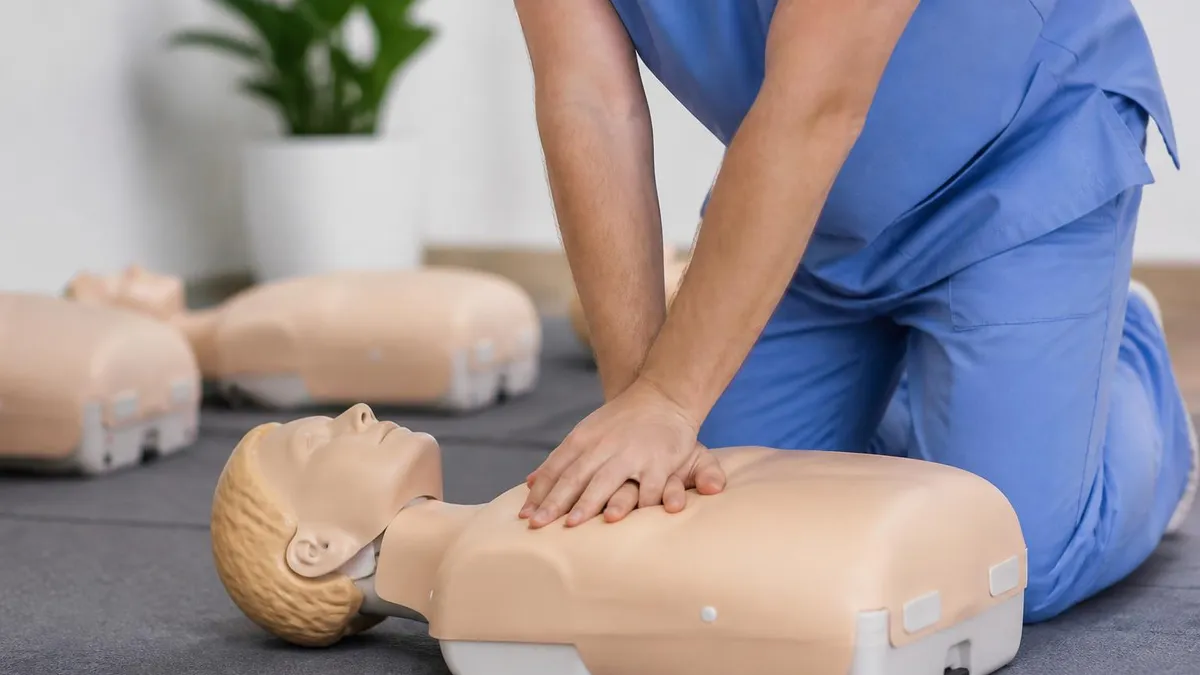
AHA CPR: What It Is, Which Course You Need, and How to Get Certified
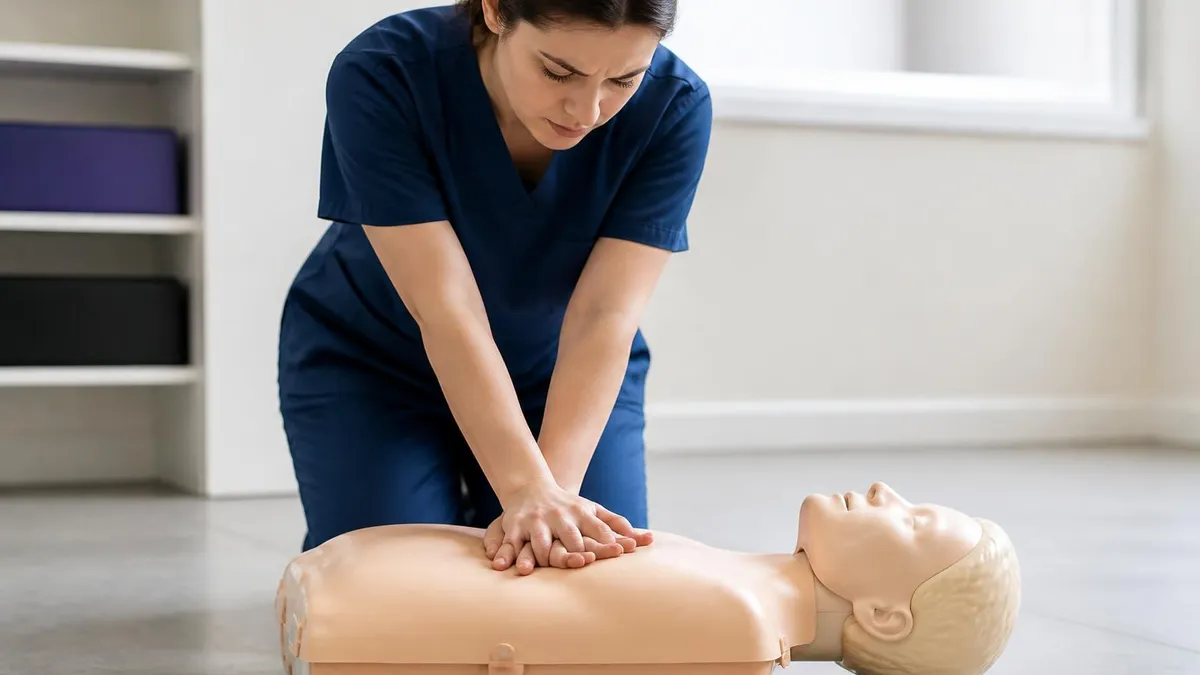
CPR Instructor Jobs 2026: How to Become a Certified Instructor, Salary Expectations, and Career Pathways
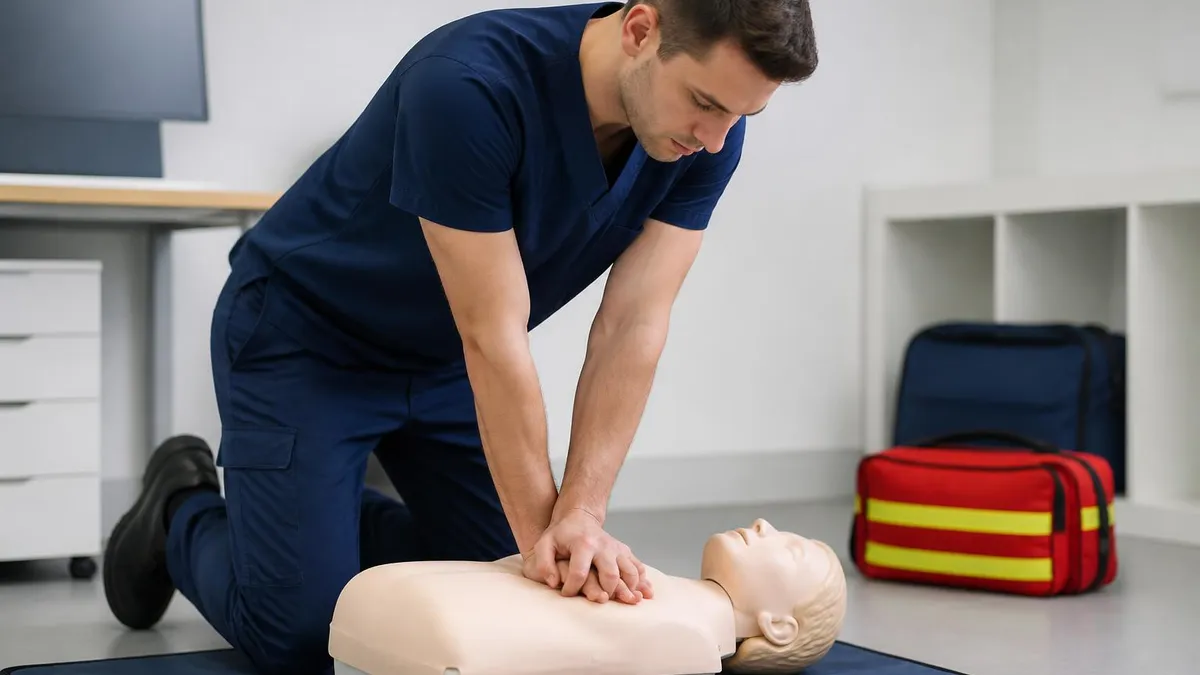
Adult CPR: Complete Step-by-Step Guide to Hands-Only and Standard CPR in 2026
About the Author

Registered Nurse & Healthcare Educator
Johns Hopkins University School of NursingDr. Sarah Mitchell is a board-certified registered nurse with over 15 years of clinical and academic experience. She completed her PhD in Nursing Science at Johns Hopkins University and has taught NCLEX preparation and clinical skills courses for nursing students across the United States. Her research focuses on evidence-based exam preparation strategies for healthcare certification candidates.
Join the Discussion
Connect with other students preparing for this exam. Share tips, ask questions, and get advice from people who have been there.
View discussion (5 replies)