
Free CPR Course: Complete Guide to No-Cost CPR Training, Certification Options, and Online Classes in 2026 October
Find the best free CPR course online with certification options, ACLS algorithm basics, infant CPR steps, AED training, and printable study guides ⏳
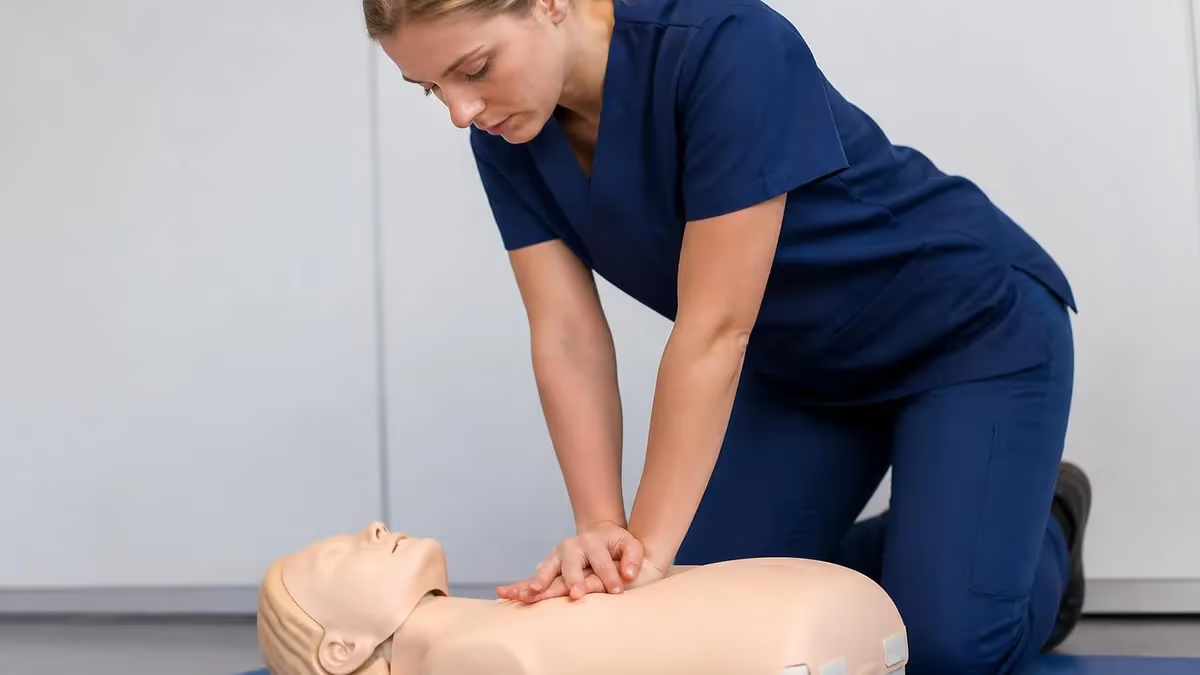
Finding a free CPR course in 2026 has never been easier, thanks to the wide availability of online platforms, community programs, and nonprofit organizations offering complimentary training to anyone willing to learn. Whether you are a healthcare professional brushing up on the acls algorithm, a parent who wants to master infant cpr techniques, or a workplace safety coordinator preparing colleagues for emergencies, a free cpr course can provide foundational knowledge without the financial barrier traditional certification programs sometimes impose on first-time learners worldwide today.
Cardiopulmonary resuscitation training is one of the most valuable skills a person can acquire, and statistics consistently show that bystander CPR can double or even triple the survival rate of cardiac arrest victims. Yet despite this life-saving potential, only about 40 percent of people who experience an out-of-hospital cardiac arrest receive immediate help from someone nearby. Free training programs aim to close this gap by removing cost barriers and making essential rescue skills accessible to everyone, regardless of income, location, profession, or prior medical experience whatsoever.
This comprehensive guide will walk you through everything you need to know about free CPR education, including which platforms offer legitimate courses, what topics they typically cover, how to determine whether a free option meets your certification needs, and what supplementary resources can reinforce your learning. We will also clarify the difference between completion certificates issued by free programs and accredited certifications required for healthcare or workplace settings, so you can make an informed decision before enrolling in any program online.
You will learn about reputable providers like the national cpr foundation, the American Heart Association, the American Red Cross, and ProCPR, each of which approaches training differently and serves distinct audiences. Some free courses are entirely self-paced and video-based, while others combine reading materials with interactive quizzes that test knowledge retention. By comparing the structure, depth, and credibility of each option, you can find a program that aligns with your personal goals, professional requirements, or family safety preparedness plans this year.
Beyond the basic chest compression rhythm of 100 to 120 beats per minute, modern CPR education emphasizes early recognition of cardiac emergencies, proper use of automated external defibrillators, and the importance of high-quality compressions with minimal interruption during the resuscitation cycle. Free courses increasingly include modules on choking response, the recovery position, rescue breathing techniques, and team-based dynamics that mirror what professional rescuers practice in clinical environments, ensuring learners receive a well-rounded introduction to emergency cardiac care today.
It is important to note that while a free cpr course can teach you the skills and knowledge needed to act in an emergency, certain employers and licensing boards require a hands-on skills evaluation conducted by an authorized instructor before issuing an official certification card. We will explain this distinction clearly so you understand exactly what you are receiving when you complete a no-cost program and what additional steps may be necessary if your job demands formal documentation of CPR competency or BLS provider status.
By the end of this guide, you will have a clear roadmap for selecting, completing, and supplementing a free CPR course that fits your schedule, learning style, and certification needs. We will also point you toward practice quizzes, printable algorithms, video demonstrations, and community resources that reinforce your learning long after you finish the initial coursework, giving you the confidence to respond effectively if you ever witness a cardiac arrest, choking incident, or other life-threatening medical emergency in real life.
Free CPR Training by the Numbers

Top Free CPR Course Providers in 2026
Offers a free online CPR course with optional paid certification card. Covers adult, child, and infant CPR, AED use, and choking response with a final exam available 24/7.
Provides free educational videos, refresher modules, and community classes in many areas. While certification costs a fee, the learning content is freely accessible for personal preparedness.
Free video-based instruction taught by paramedics, covering hands-only CPR, two-rescuer techniques, and AED operation. Optional certification upgrade available for healthcare providers.
Many local hospitals, fire departments, and EMS agencies host free hands-only CPR events monthly. These short sessions teach compression-only technique in 20-30 minutes for laypeople.
The American Heart Association provides free instructional videos, posters, and printable algorithms emphasizing compression-only CPR for untrained bystanders facing sudden cardiac arrest.
A well-designed free cpr course covers far more than just chest compressions. Most reputable programs begin with the chain of survival, a concept developed by the American Heart Association that emphasizes the critical sequence of actions needed to maximize a cardiac arrest victim's chance of recovery. These links include early recognition and activation of emergency services, immediate high-quality CPR, rapid defibrillation with an AED, advanced life support by paramedics, and integrated post-cardiac-arrest care at a hospital equipped to handle complex resuscitation cases effectively.
The bulk of any introductory CPR course focuses on adult resuscitation technique. Learners are taught to assess scene safety, check for responsiveness, call for emergency help, and begin compressions at a depth of at least 2 inches and a rate of 100 to 120 per minute. Modern instruction emphasizes pushing hard, pushing fast, allowing complete chest recoil between compressions, and minimizing interruptions whenever possible. Many programs also include hands-only technique, which is recommended for untrained bystanders responding to an adult collapse.
Pediatric resuscitation receives significant attention, particularly infant cpr, which differs in several important ways from adult technique. For infants under one year old, rescuers use two fingers on the breastbone for compressions, deliver smaller breaths if trained in rescue breathing, and follow a slightly different compression-to-ventilation ratio when two rescuers are present. Child CPR for ages one through puberty uses one or two hands depending on body size, with compressions at roughly one-third the depth of the chest at maximum chest recoil.
Automated external defibrillator training is another core component. Students learn what does aed stand for, how to power on the device, where to place adhesive pads on an adult versus a pediatric victim, and how to follow the verbal prompts that guide rescuers through analysis and shock delivery. Programs explain when an AED should not deliver a shock, what to do if the victim is wet or has a hairy chest, and how to coordinate AED use with ongoing chest compressions to minimize any interruption in circulation.
Choking response and airway management round out the practical skills taught in most free courses. Learners practice recognizing the universal choking sign, performing abdominal thrusts on conscious adults and children, modifying technique for pregnant or obese victims, and delivering back blows and chest thrusts to infants. Instruction also covers what to do when a choking victim becomes unresponsive, transitioning into full CPR while checking the mouth for visible obstructions before delivering each rescue breath as appropriate during the resuscitation sequence.
Recognition of medical emergencies is taught alongside hands-on skills. Students learn the warning signs of heart attack, including chest pressure, radiating arm or jaw pain, shortness of breath, nausea, and sudden cold sweats. Stroke recognition uses the FAST acronym—Face drooping, Arm weakness, Speech difficulty, Time to call. Free courses also touch on opioid overdose response, naloxone administration where legal, and the importance of monitoring breathing, respiratory rate, and pulse while awaiting professional medical responders to arrive on scene.
Finally, modern programs include legal and emotional topics often overlooked in older curricula. Good Samaritan laws are explained so bystanders understand they are protected from civil liability when acting in good faith. Instructors discuss the psychological impact of performing CPR, including post-event stress, and emphasize the importance of debriefing with mental health resources if needed. This holistic approach ensures students leave the course not only technically prepared but emotionally ready to act decisively during a real cardiac emergency situation.

CPR Practice Test Questions
Prepare for the CPR Cardiopulmonary Resuscitation Practice exam with our free practice test modules. Each quiz covers key topics to help you pass on your first try.
CPR Basic CPR
CPR Exam Questions covering Basic CPR. Master CPR Test concepts for certification prep.
CPR and First Aid
Free CPR Practice Test featuring and First Aid. Improve your CPR Exam score with mock test prep.
CPR (Cardiopulmonary Resuscitation) Adult ...
CPR Mock Exam on (Cardiopulmonary Resuscitation) Adult CPR and AED Usage. CPR Study Guide questions to pass on your first try.
CPR (Cardiopulmonary Resuscitation) Airway...
CPR Test Prep for (Cardiopulmonary Resuscitation) Airway Obstruction and Choking. Practice CPR Quiz questions and boost your score.
CPR (Cardiopulmonary Resuscitation) Cardio...
CPR Questions and Answers on (Cardiopulmonary Resuscitation) Cardiopulmonary Emergency Recognition. Free CPR practice for exam readiness.
CPR (Cardiopulmonary Resuscitation) Child ...
CPR Mock Test covering (Cardiopulmonary Resuscitation) Child and Infant CPR. Online CPR Test practice with instant feedback.
CPR (Cardiopulmonary Resuscitation) High-P...
Free CPR Quiz on (Cardiopulmonary Resuscitation) High-Performance Team Dynamics. CPR Exam prep questions with detailed explanations.
CPR (Cardiopulmonary Resuscitation) Legal ...
CPR Practice Questions for (Cardiopulmonary Resuscitation) Legal and Ethical Considerations. Build confidence for your CPR certification exam.
CPR for Specific Populations
CPR Test Online for for Specific Populations. Free practice with instant results and feedback.
CPR Airway & Breathing Management
CPR Exam Questions covering Airway & Breathing Management. Master CPR Test concepts for certification prep.
CPR Assessment & Recognition of Cardiac Ar...
Free CPR Practice Test featuring Assessment & Recognition of Cardiac Arrest. Improve your CPR Exam score with mock test prep.
CPR Chest Compressions & Defibrillation
CPR Mock Exam on Chest Compressions & Defibrillation. CPR Study Guide questions to pass on your first try.
CPR Post-Resuscitation Care & Recovery
CPR Test Prep for Post-Resuscitation Care & Recovery. Practice CPR Quiz questions and boost your score.
ACLS Algorithm & Advanced Life Support Topics
The acls algorithm guides healthcare providers through the management of cardiac arrest, bradycardia, tachycardia, and post-cardiac-arrest care. It builds on BLS by integrating advanced airway placement, intravenous medication administration, and continuous rhythm interpretation. The most recognized branch is the cardiac arrest algorithm, which alternates between two-minute cycles of high-quality CPR and rhythm checks every cycle to determine whether defibrillation is needed.
Free introductory courses cover ACLS conceptually rather than offering full certification, which requires hands-on megacode evaluation. Learners review the shockable rhythms of ventricular fibrillation and pulseless ventricular tachycardia, and the non-shockable rhythms of asystole and pulseless electrical activity. Understanding these distinctions prepares nurses, paramedics, and medical students for formal pals certification and ACLS provider courses required for clinical employment in critical care.
Is a Free CPR Course Right for You?
- +Zero financial cost, removing barriers to lifesaving education and community preparedness
- +Self-paced online format fits around work, school, and family commitments easily
- +Reputable platforms offer high-quality video instruction from paramedics and nurses
- +Excellent option for parents, babysitters, teachers, and concerned community members
- +Foundational knowledge can be supplemented later with formal certification if needed
- +Includes AED instruction, choking response, and life support recognition skills
- +Refreshes existing certification holders between renewal cycles at no cost
- −Most free courses do not provide employer-accepted certification cards
- −No hands-on skills evaluation means technique flaws may go uncorrected entirely
- −Healthcare jobs typically require AHA, ARC, or ASHI accredited certification
- −Some free providers upsell paid certification cards after course completion online
- −Online-only learning lacks the realism of mannequin practice and instructor feedback
- −Quality varies widely between providers, requiring research before enrolling
- −Skills retention drops significantly within months without periodic practice sessions

Pre-Course Preparation Checklist for Your Free CPR Course
- ✓Verify the provider is reputable by checking reviews and accreditation disclosures
- ✓Confirm whether your employer requires AHA, ARC, or ASHI certification specifically
- ✓Reserve 2 to 4 uninterrupted hours for completing video modules and assessments
- ✓Download or print the course manual to follow along during video instruction
- ✓Prepare a notebook for jotting down compression rates, ratios, and key sequences
- ✓Test your computer audio, video, and internet stability before starting any module
- ✓Identify a mannequin or pillow for safe at-home compression practice technique
- ✓Locate a real AED in your workplace or community to familiarize yourself with
- ✓Schedule a hands-on skills session if you need an employer-accepted certification card
- ✓Save emergency numbers and your local poison control hotline in your phone contacts
Every Minute Without CPR Reduces Survival by 7-10%
Research consistently demonstrates that survival from sudden cardiac arrest decreases by 7 to 10 percent for every minute that passes without CPR and defibrillation. After 10 minutes without intervention, the chances of meaningful neurological recovery approach zero. This is why bystander CPR, even imperfect compression-only technique, is dramatically better than waiting for paramedics to arrive on scene.
One of the most common questions learners ask is whether an online-only free cpr course is truly equivalent to traditional in-person instruction. The honest answer is that both formats have distinct advantages, and the right choice depends on your goals. Online courses excel at delivering theoretical content efficiently, allowing students to pause, rewind, and review complex topics like the acls algorithm or pediatric compression ratios. They also fit easily into busy schedules, which is why digital learning has expanded so rapidly across every healthcare education segment over the past decade.
However, hands-on training offers irreplaceable benefits that no video can fully replicate. Practicing compressions on a feedback mannequin reveals whether you are pressing deep enough, releasing fully, and maintaining the correct rate of 100 to 120 per minute. Without this tactile feedback, many self-taught learners unknowingly perform compressions that are too shallow or too slow, which significantly reduces blood flow to the brain and heart during a real cardiac arrest event in the field today.
In-person courses also build muscle memory through repetition. Performing the same skill sequence multiple times under instructor observation helps the actions become automatic, which matters enormously during the high-stress chaos of a true emergency. Adrenaline impairs fine motor control and decision-making, so techniques that feel natural during practice become much more likely to be performed correctly when seconds matter and a real human life hangs in the balance during cardiac arrest situations in homes, gyms, restaurants, and offices.
Many learners benefit from a hybrid approach, completing the cognitive portion of a free online course and then attending a short in-person skills session to demonstrate competency. This blended model is increasingly popular among healthcare employers and credentialing bodies, who recognize that online learning is efficient but hands-on validation remains essential. Some free courses partner with local hospitals or fire departments to offer the in-person component at no cost, especially during national CPR awareness week observed each June across hundreds of American communities every year.
For laypeople with no professional certification requirement, a free online course is often sufficient. Studies have shown that even bystanders who have watched a brief instructional video are significantly more likely to attempt CPR than those who have never received any training at all. The American Heart Association has actively promoted compression-only CPR for this exact reason: simplifying the message increases the likelihood that ordinary people will act when they witness a sudden collapse rather than freezing in fear or doing nothing while waiting for emergency responders.
If you decide to take a free course, supplement it with regular practice and refresher viewing. Skills retention research shows that CPR competency degrades within three to six months after initial training, regardless of how thorough the original course was. Brief refresher sessions every quarter, even just rewatching a 10-minute compression video, dramatically improve long-term skill retention. Some platforms send automatic email reminders to revisit content, and free mobile apps now offer micro-lessons designed to keep core skills sharp between formal training cycles each year.
Workplace-based CPR programs deserve special mention. Many employers, especially in education, childcare, fitness, and hospitality industries, will pay for or sponsor on-site certification courses for staff. If your job does not currently require CPR training, ask your HR department whether they offer it as a wellness benefit. Even when a free online course suffices for personal preparedness, employer-sponsored hands-on training provides documented certification, professional networking opportunities, and the comfort of knowing your coworkers share the same emergency response capabilities throughout the workplace, ultimately benefiting everyone.
Many free CPR courses provide a printable certificate of completion, but these are not the same as accredited certification cards from the American Heart Association, American Red Cross, or ASHI. If your employer, licensing board, or volunteer organization requires CPR certification, verify which credential they accept before relying solely on a free course. Some free providers offer optional paid upgrades to issue an accredited card after you pass their final assessment online.
Understanding the certification landscape is essential before committing to any free cpr course. In the United States, three primary credentialing bodies dominate CPR education: the American Heart Association, the American Red Cross, and the Health and Safety Institute, which administers ASHI courses. Each issues certifications recognized by hospitals, schools, and most employers. A growing number of online providers also offer their own branded certification cards, which may or may not be accepted depending on your industry, state regulations, and the specific requirements of the employer or institution requesting documentation of competency.
For healthcare professionals, the gold standard is the AHA BLS Provider Course, which is required for nurses, paramedics, respiratory therapists, dentists, and most clinical roles. This certification is rarely offered for free because it requires in-person skills evaluation by an approved instructor. However, the cognitive portion can be completed online through HeartCode BLS, and some employers cover the cost entirely. If you are pursuing a healthcare career, plan for a paid AHA course rather than relying on a free alternative that may not satisfy clinical requirements at most facilities.
For laypeople, teachers, coaches, lifeguards, and childcare workers, a wider range of certifications is acceptable. The American Red Cross offers an Adult and Pediatric First Aid/CPR/AED course that combines essential skills into a single credential lasting two years. Some online providers, including the national cpr foundation, issue certifications accepted by many employers in non-clinical settings. Always confirm with the requesting party whether a specific provider's card is acceptable before paying for or relying on any certification that may not meet documentation standards.
Renewal requirements vary by certification type. AHA and Red Cross cards typically expire after two years, requiring a renewal course that may be shorter than initial training. Some online providers issue cards valid for one year only, while others offer two-year certifications matching the major bodies. Mark your renewal date on a calendar and begin the refresher process at least 60 days before expiration to avoid lapses that could affect employment, volunteer eligibility, or your ability to respond confidently during a workplace emergency requiring certified responders to act immediately.
Interestingly, search results for cpr-related terms sometimes surface unrelated businesses. When researching CPR education, add qualifiers like training, certification, or course to your search queries to filter out these irrelevant results. This is a common point of confusion for new learners who simply type cpr into a search engine and receive a mixed page of unrelated business listings instead.
If you complete a free course and decide later that you need formal certification, you can often skip ahead to a shorter renewal course rather than starting from scratch. Demonstrating prior knowledge can save time during in-person classes, since instructors can focus on hands-on skills evaluation rather than reviewing concepts you already understand. Bringing your free course completion certificate may help establish your baseline competency, though it does not formally substitute for an accredited course required by employers or licensing authorities in most professional healthcare environments today.
Finally, consider community impact when choosing your training path. Free courses dramatically expand the pool of trained bystanders, which directly improves cardiac arrest survival rates in your neighborhood. Even if you personally need formal certification for work, encouraging family members, friends, and neighbors to complete free training creates a stronger safety net for everyone. Many cities run public access defibrillation programs that combine free training with strategically placed AEDs in schools, gyms, airports, and shopping centers, creating layered communities of prepared responders ready to act in genuine emergencies.
To get the most out of your free cpr course, approach it with the same seriousness you would bring to any professional development opportunity. Schedule dedicated time without distractions, take handwritten notes during each module, and pause the video to repeat key skill demonstrations until you can perform them mentally without prompting. Treat the assessment quizzes as genuine learning tools rather than obstacles to rush through, and revisit any questions you answer incorrectly until you fully understand the underlying concept and rationale that supports the correct response.
Practical reinforcement is the single most important factor in skill retention. After watching compression demonstrations, immediately practice the motion on a firm pillow or rolled towel, maintaining the 100 to 120 per minute rhythm using a metronome app or by mentally counting the beat of Stayin' Alive by the Bee Gees, which famously matches the recommended cadence. Build in 10 to 15 minutes of compression practice each week for the first month after training to cement muscle memory before it begins to fade naturally over time.
Family training is another high-value practice. After completing your own course, walk through the basic compression rhythm with your spouse, children, or roommates. Teaching reinforces your own learning, identifies gaps in your knowledge, and ensures that more than one person in your household can respond if you become the victim. Pediatric households should pay special attention to infant cpr techniques and choking response, since young children are at higher risk for airway obstruction from foods and small toys at home each year.
Familiarize yourself with the AED locations in places you frequent. Many gyms, schools, airports, and large retailers now have AEDs mounted in visible cabinets near entrances or break rooms. Knowing where they are stored saves precious seconds during an emergency. Some smartphone apps, including PulsePoint AED, allow users to crowdsource and locate the nearest defibrillator. Adding these apps to your phone before an emergency arises can make the difference between successful early defibrillation and tragic delay during cardiac arrest situations in any environment.
Stay current on guideline updates. The American Heart Association revises its CPR and emergency cardiovascular care guidelines every five years based on new research. The current 2025 update emphasizes high-quality compressions, minimal interruptions, early defibrillation, and a renewed focus on bystander response in opioid-related cardiac arrests. Subscribing to free newsletters from major training organizations keeps you informed without requiring you to retake an entire course every time evidence-based recommendations change for adult and pediatric resuscitation worldwide today.
Document your training for future reference. Save your completion certificate to a cloud folder, take a screenshot of your final quiz score, and note the date you completed the course. This documentation can help if you later decide to pursue formal certification, apply for a volunteer position, or simply remind yourself when it is time for a refresher. Many learners discover that consistent record-keeping motivates them to maintain skills over years rather than letting training fade into vague memory of a single online experience.
Finally, mentally rehearse emergency response scenarios. Visualization is a proven technique used by elite athletes, military personnel, and emergency responders to prepare for high-stress situations. Spend a few minutes each month imagining yourself recognizing a cardiac arrest, calling 911, starting compressions, and operating an AED. Mental rehearsal reduces panic during real emergencies and increases the likelihood that you will act decisively. Combined with hands-on practice and regular refresher viewing, this approach turns free course knowledge into lifelong emergency response capability for any future situation.
CPR Questions and Answers
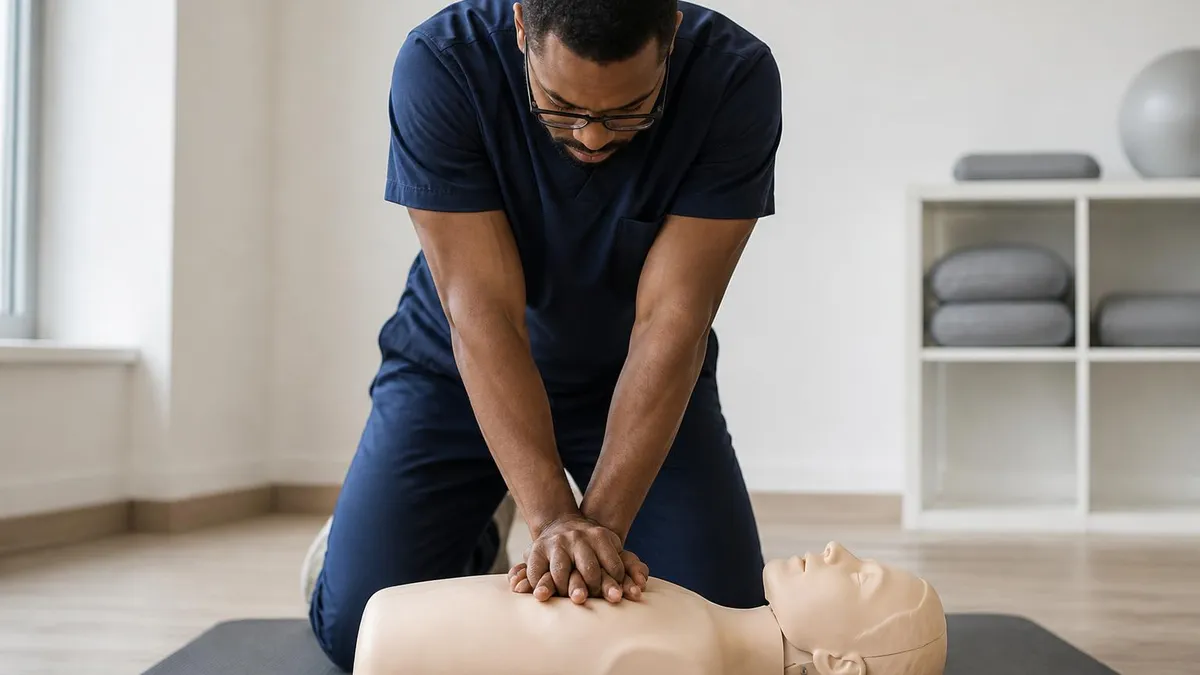
CPR Card Lookup: How to Verify, Replace, and Access Your CPR Certification in 2026
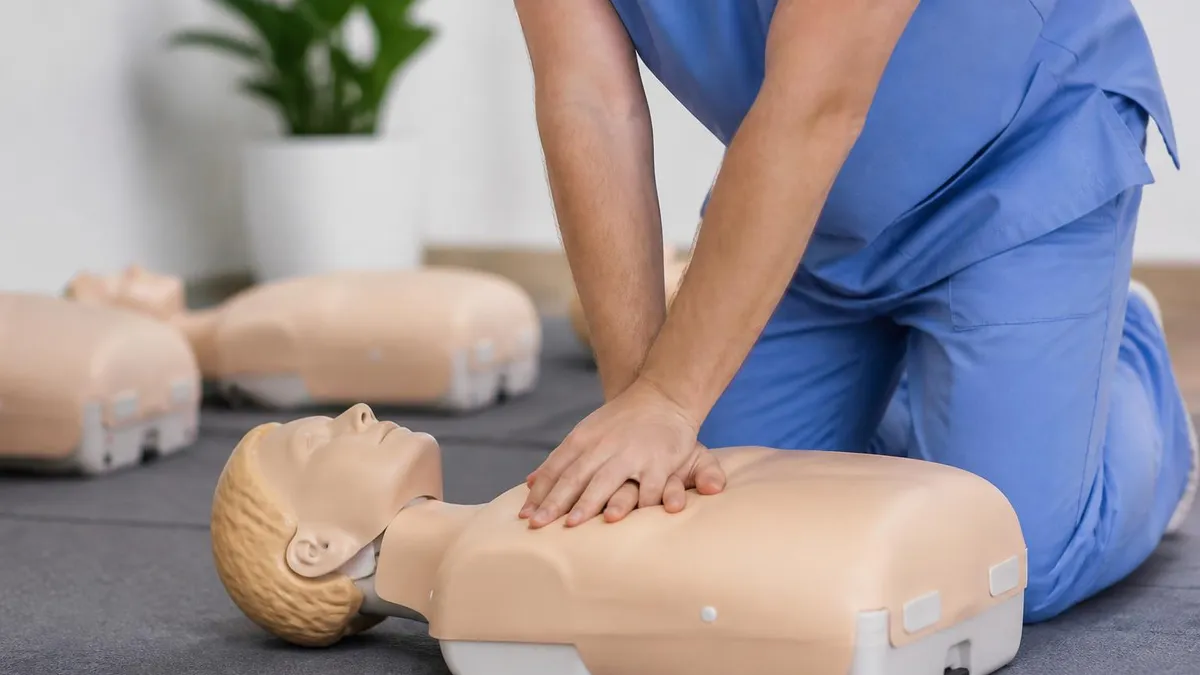
AHA CPR: What It Is, Which Course You Need, and How to Get Certified
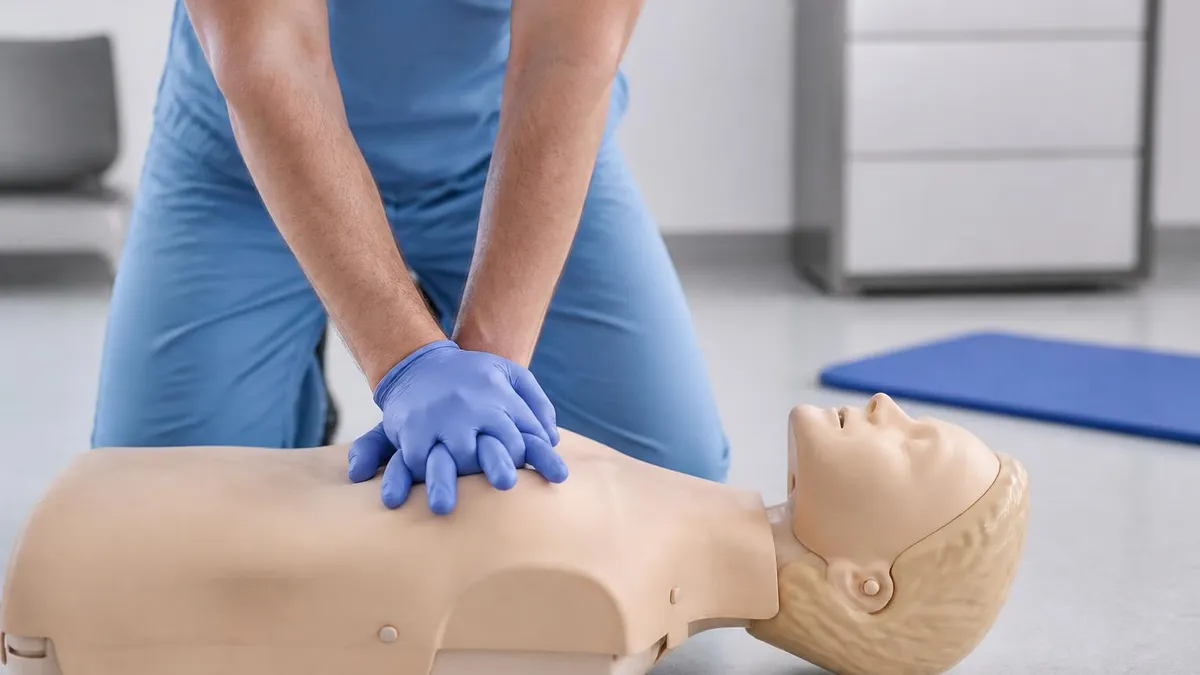
BLS CPR Course: Complete Guide to Basic Life Support Certification in 2026
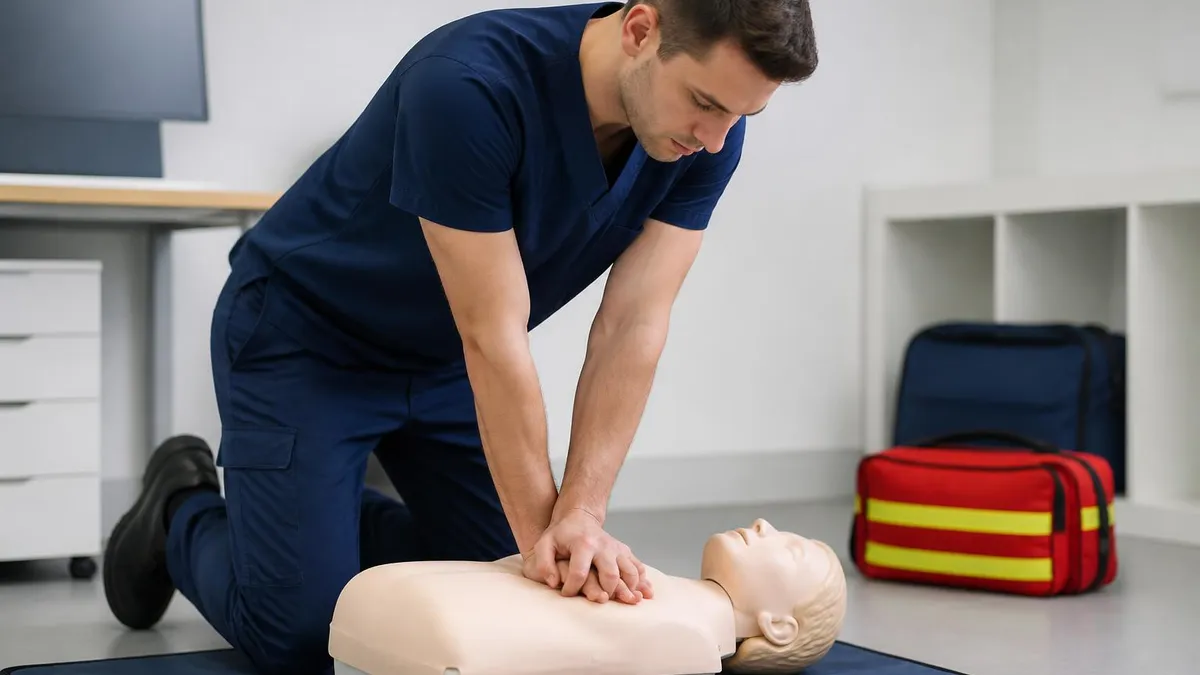
Adult CPR: Complete Step-by-Step Guide to Hands-Only and Standard CPR in 2026
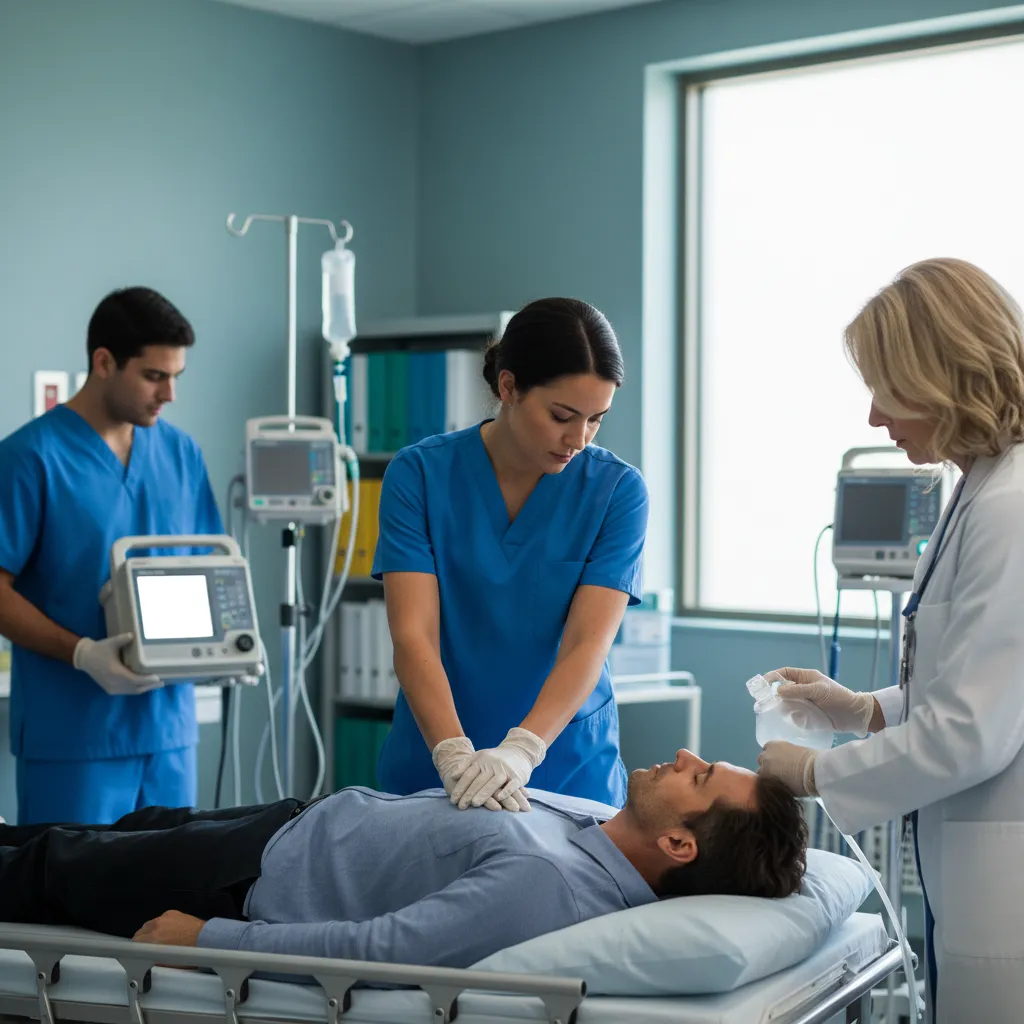
CPR - Cardiopulmonary Resuscitation: Complete Study Guide 2026
About the Author

Registered Nurse & Healthcare Educator
Johns Hopkins University School of NursingDr. Sarah Mitchell is a board-certified registered nurse with over 15 years of clinical and academic experience. She completed her PhD in Nursing Science at Johns Hopkins University and has taught NCLEX preparation and clinical skills courses for nursing students across the United States. Her research focuses on evidence-based exam preparation strategies for healthcare certification candidates.
Join the Discussion
Connect with other students preparing for this exam. Share tips, ask questions, and get advice from people who have been there.
View discussion (5 replies)