
CPR Test Questions: Complete 2026 October Practice Guide for High-Quality CPR Certification
Master CPR test questions with our 2026 October guide covering high-quality CPR components, ACLS algorithm basics, AED use, infant CPR, and BLS certification prep. ⏳
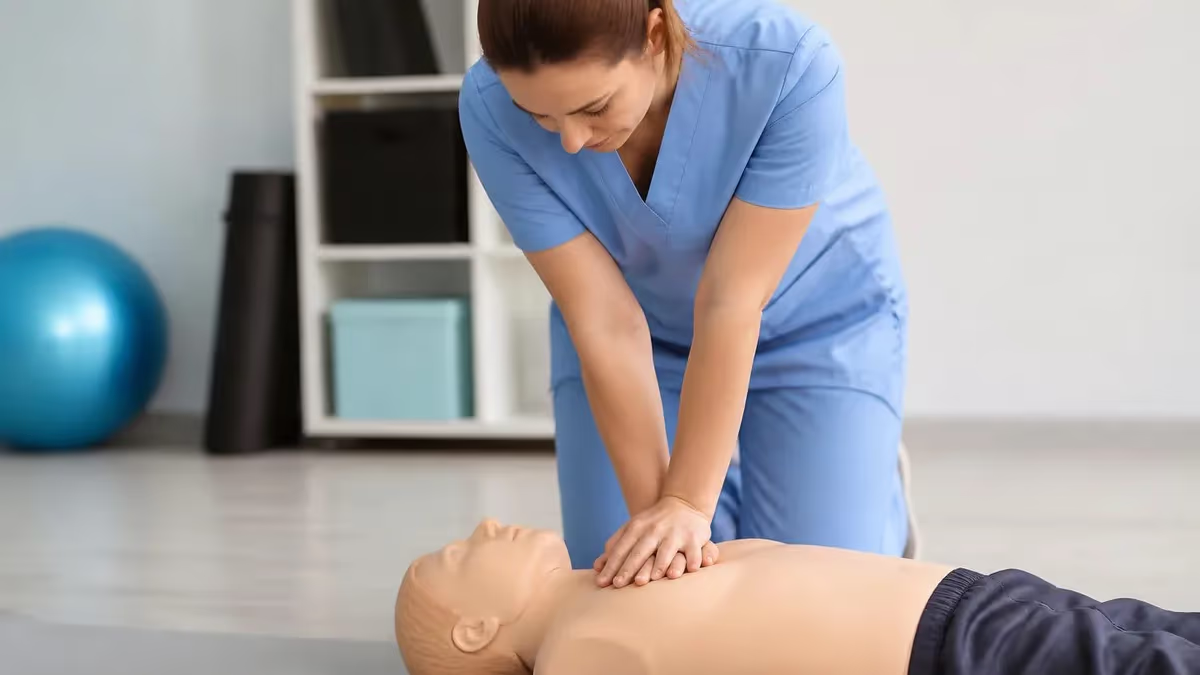
If you are preparing for a certification exam, one of the first questions you will encounter is: which of the following are components of high-quality cpr? This single question covers the four pillars examiners care about most: adequate compression depth, the correct cpr compression rate of 100 to 120 per minute, full chest recoil between compressions, and minimal interruptions.
Understanding why each component matters — not just memorizing the list — is what separates a passing score from a perfect one, and it is what helps you perform when a real cardiac arrest happens at the gym, in a parking lot, or at home with a family member.
CPR test questions in 2026 are noticeably tougher than they were five years ago. The American Heart Association updated its guidelines, the Red Cross expanded its scenario-based testing, and the cpr compression rate standards now include explicit fatigue-rotation protocols. Whether you are renewing a Basic Life Support card, sitting for pals certification, or studying for an advanced acls algorithm exam, the testing format has shifted toward case studies, AED integration, and team dynamics rather than rote memorization.
This guide is built around the actual question types you will face on exams from the AHA, the Red Cross, the national cpr foundation, and Emergency Care & Safety Institute. We break down adult, child, and infant cpr standards side by side, explain what does aed stand for and how the device fits into resuscitation sequences, and walk through the recovery position, life support priorities, and respiratory rate assessment. Each section includes practice-style questions you can use to test yourself.
You will also find scoring tables, common wrong-answer traps, and the exact wording examiners use when testing high-quality CPR concepts. Pay close attention to the difference between "adequate depth" and "excessive depth" — a phrasing trap that catches many candidates — and to the order of operations when an AED arrives mid-cycle. Knowing the textbook answer is one thing; knowing why other plausible options are wrong is the skill that wins certification.
For learners searching cpr cell phone repair by accident: this is not that. CPR here means Cardiopulmonary Resuscitation, the chest-compression and rescue-breathing technique that doubles or triples cardiac arrest survival when performed correctly within the first minutes. Confusion with the phone-repair franchise is common in search results, so we will keep the focus tightly on resuscitation science, certification testing, and the practical motor skills examiners assess.
By the end of this guide you will know how to answer the components-of-high-quality-CPR question, how to navigate AED prompts, when to use one rescuer versus two, and how to recognize the subtle differences between adult, child, and infant protocols. You will also have a clear study plan, a self-test checklist, and links to free practice quizzes that mirror the exam blueprints used by the major certifying bodies for 2026.
Most importantly, you will leave with the confidence to perform — not just pass. The components of high-quality CPR are not exam trivia; they are the difference between a survivor and a statistic. Treat every practice question as a rehearsal for the moment when the skills count for real.
CPR Test Questions by the Numbers

CPR Exam Format and Question Types You Will See
The bulk of every CPR exam — typically 25 to 50 questions covering compression rate, depth, AED operation, scene safety, and the chain of survival. Expect 4 options per question with at least one distractor that is partially correct but missing a key detail.
You read a short case — collapsed shopper, drowning child, unresponsive infant — and choose the next correct action. These questions test prioritization, not memorization, and they reward candidates who understand the algorithm flow rather than isolated facts.
A live or video-recorded demonstration where an instructor evaluates compression depth, rate, hand placement, recoil, and ventilation technique on a manikin. Many programs use feedback devices that score compressions in real time.
Used in ACLS and PALS, megacode simulations test team leadership, rhythm recognition, medication timing, and defibrillation decisions. Candidates must verbalize each step and lead a mock resuscitation from start to ROSC or termination.
The single most-tested concept on any resuscitation exam is the list of components that define high-quality CPR. The American Heart Association defines five core elements: adequate compression rate, adequate depth, full chest recoil, minimal interruptions, and avoiding excessive ventilation. Every CPR test question that begins with "which of the following" is essentially probing whether you can identify these five — and recognize the imposters examiners insert as distractors, such as "loud verbal counting" or "compressions deeper than 3 inches."
Compression rate is straightforward: 100 to 120 per minute for adults, children, and infants. Faster than 120 reduces venous return and cardiac output; slower than 100 fails to generate adequate coronary perfusion pressure. The metronome cadence of the Bee Gees' "Stayin' Alive" sits squarely in this range, which is why instructors still teach it — and why exam writers love to insert tempting wrong answers like "at least 80 per minute" or "as fast as possible."
Depth is the second pillar and the one most often performed poorly in real arrests. Adults require at least 2 inches but no more than 2.4 inches. Children need approximately one-third the depth of the chest, roughly 2 inches. Infant cpr depth is also one-third the chest, approximately 1.5 inches. Test questions frequently pair depth with age group, so memorize the numbers as a matched set rather than in isolation.
Full chest recoil is the third component and the most overlooked. Leaning on the chest between compressions prevents the heart from refilling, which directly reduces the next compression's output. Examiners test this with phrases like "allow complete recoil" or "avoid leaning on the chest between compressions." Both are correct; if you see them as separate options, both should be selected on a multi-answer item.
Minimizing interruptions ties directly to the chest compression fraction metric, which measures the percentage of resuscitation time spent actively compressing. The 2020 and 2025 guidelines target a fraction greater than 60%, with 80% as the goal in monitored settings. Pauses for pulse checks, intubation, and rhythm analysis should each last less than 10 seconds whenever clinically feasible.
The fifth component — avoiding excessive ventilation — surprises many candidates. Over-ventilation increases intrathoracic pressure, reduces venous return, and worsens outcomes. The correct ventilation rate is one breath every 6 seconds (10 per minute) for advanced airway patients, and 30:2 compressions-to-breaths for basic CPR. Anything faster, deeper, or more forceful is a wrong answer no matter how intuitive it sounds.
When a question asks you to choose all components of high-quality CPR, the safe answer set is: correct rate, correct depth, full recoil, minimal interruptions, and avoiding excessive ventilation. Anything outside those five — loud counting, dramatic posture, deeper-is-better — is almost certainly the distractor the examiner planted.

CPR Practice Test Questions
Prepare for the CPR Cardiopulmonary Resuscitation Practice exam with our free practice test modules. Each quiz covers key topics to help you pass on your first try.
CPR Basic CPR
CPR Exam Questions covering Basic CPR. Master CPR Test concepts for certification prep.
CPR and First Aid
Free CPR Practice Test featuring and First Aid. Improve your CPR Exam score with mock test prep.
CPR (Cardiopulmonary Resuscitation) Adult ...
CPR Mock Exam on (Cardiopulmonary Resuscitation) Adult CPR and AED Usage. CPR Study Guide questions to pass on your first try.
CPR (Cardiopulmonary Resuscitation) Airway...
CPR Test Prep for (Cardiopulmonary Resuscitation) Airway Obstruction and Choking. Practice CPR Quiz questions and boost your score.
CPR (Cardiopulmonary Resuscitation) Cardio...
CPR Questions and Answers on (Cardiopulmonary Resuscitation) Cardiopulmonary Emergency Recognition. Free CPR practice for exam readiness.
CPR (Cardiopulmonary Resuscitation) Child ...
CPR Mock Test covering (Cardiopulmonary Resuscitation) Child and Infant CPR. Online CPR Test practice with instant feedback.
CPR (Cardiopulmonary Resuscitation) High-P...
Free CPR Quiz on (Cardiopulmonary Resuscitation) High-Performance Team Dynamics. CPR Exam prep questions with detailed explanations.
CPR (Cardiopulmonary Resuscitation) Legal ...
CPR Practice Questions for (Cardiopulmonary Resuscitation) Legal and Ethical Considerations. Build confidence for your CPR certification exam.
CPR for Specific Populations
CPR Test Online for for Specific Populations. Free practice with instant results and feedback.
CPR Airway & Breathing Management
CPR Exam Questions covering Airway & Breathing Management. Master CPR Test concepts for certification prep.
CPR Assessment & Recognition of Cardiac Ar...
Free CPR Practice Test featuring Assessment & Recognition of Cardiac Arrest. Improve your CPR Exam score with mock test prep.
CPR Chest Compressions & Defibrillation
CPR Mock Exam on Chest Compressions & Defibrillation. CPR Study Guide questions to pass on your first try.
CPR Post-Resuscitation Care & Recovery
CPR Test Prep for Post-Resuscitation Care & Recovery. Practice CPR Quiz questions and boost your score.
AED, ACLS Algorithm and PALS Certification Concepts
So what does aed stand for? Automated External Defibrillator — a portable device that analyzes heart rhythm and delivers a shock if a shockable rhythm (ventricular fibrillation or pulseless ventricular tachycardia) is detected. Knowing what is aed is foundational to every CPR exam, and questions almost always test the sequence: power on, attach pads, allow analysis, clear the patient, and deliver shock if advised. Resume compressions immediately after the shock without rechecking pulse.
Pad placement is a frequent test item. Adults use anterior-lateral placement: one pad below the right clavicle, the other on the left mid-axillary line. Children under 8 or under 55 pounds typically use pediatric pads or an attenuator. If only adult pads are available for a pediatric patient, anterior-posterior placement is acceptable. Never delay defibrillation searching for pediatric pads — survival drops 10% per minute without a shock.
Self-Study vs Instructor-Led CPR Test Prep: Which Wins?
- +Self-paced online modules let you review weak topics repeatedly without classroom pressure
- +National cpr foundation and similar online providers cost 60 to 80% less than in-person blended courses
- +Practice question banks mirror real exam wording and grow your test-taking instincts
- +Video demonstrations can be slowed, paused, and replayed for fine motor skill review
- +Most online programs are accessible 24/7, ideal for shift workers and parents
- +You can complete cognitive content in 2 to 3 hours instead of a full classroom day
- −Pure online certifications are not accepted by many hospitals, EMS agencies, or state licensing boards
- −No hands-on manikin feedback means depth and recoil errors go uncorrected
- −Skills decay faster without instructor-led muscle memory reinforcement
- −Scenario practice is limited compared to live team-based simulations
- −Some employer HR systems flag non-AHA, non-Red Cross cards during credentialing
- −Renewal expectations may differ — verify employer acceptance before paying for any course
Pros and Cons at a Glance
| Pros | Cons |
|---|---|
| Self-paced online modules let you review weak topics repeatedly without classroom pressure | Pure online certifications are not accepted by many hospitals, EMS agencies, or state licensing boards |
| Practice question banks mirror real exam wording and grow your test-taking instincts | No hands-on manikin feedback means depth and recoil errors go uncorrected |
| Video demonstrations can be slowed, paused, and replayed for fine motor skill review | Skills decay faster without instructor-led muscle memory reinforcement |

Pre-Exam Mastery Checklist for CPR Test Questions
- ✓I can list all five components of high-quality CPR without hesitation
- ✓I know the compression rate range is 100 to 120 per minute for every age group
- ✓I can state adult, child, and infant compression depths in inches
- ✓I understand the 30:2 ratio applies to single rescuers across all age groups
- ✓I can name what AED stands for and describe the correct pad placement
- ✓I know to resume compressions immediately after an AED shock without pulse check
- ✓I can recite the adult respiratory rate of one breath every 6 seconds with advanced airway
- ✓I recognize the difference between shockable and non-shockable rhythms in the ACLS algorithm
- ✓I can describe the recovery position and explain when it is appropriate
- ✓I have completed at least two timed practice tests scoring 85% or higher
Chest compression fraction above 60% is the strongest predictor of survival — and the most-tested concept on 2026 exams
If you remember only one number from this guide, make it 60%. The 2025 AHA guidelines emphasize that chest compression fraction — the percentage of arrest time spent compressing — should exceed 60%, with 80% as the elite target. Every pause to check a pulse, swap rescuers, or analyze a rhythm should last under 10 seconds. Exam writers know this is the highest-yield concept and reward candidates who can quote both the number and the rationale.
Adult, child, and infant CPR share a common framework but differ in critical details that examiners love to test. For adults, the sequence is C-A-B: compressions first, then airway, then breathing. The rationale is that adult arrests are predominantly cardiac in origin, so circulation must be restored before oxygenation matters. Compressions begin within 10 seconds of recognizing unresponsiveness and absent or abnormal breathing, with no more than a brief pulse check at the carotid artery.
Child CPR — defined as age 1 year to puberty — uses the same C-A-B sequence but with modified depth and hand position. One hand may be sufficient for smaller children; depth is approximately one-third the chest, roughly 2 inches. Two-rescuer child CPR uses a 15:2 compression-to-breath ratio rather than 30:2 — a frequent malibu cpr exam distinction that catches candidates who only studied adult protocols.
Infant cpr applies to babies under 1 year and uses two fingers (single rescuer) or two thumbs encircling (two rescuers) at the lower half of the sternum, just below the nipple line. Depth is approximately 1.5 inches or one-third the chest. The brachial artery — inside the upper arm — replaces the carotid for pulse checks because infant necks are too short and soft for reliable carotid palpation.
Rescue breath volumes differ as well. Adult breaths last about 1 second and produce visible chest rise. Pediatric and infant breaths are gentler — just enough to see the chest rise — because forceful breaths can cause gastric inflation, vomiting, and aspiration. Test questions about breath delivery typically reward the answers "just enough to make the chest rise" and "each breath over 1 second," never "as much air as possible."
The recovery position — also called position recovery in some translated curricula — is reserved for unresponsive patients who are breathing normally and have no suspected spinal injury. Roll the patient onto one side with the lower arm extended, the upper leg bent for stability, and the head tilted to keep the airway clear. Reassess breathing every 2 minutes. If breathing stops or becomes abnormal, immediately reposition supine and begin CPR.
Choking protocols branch by age and consciousness. For responsive adults and children over 1, abdominal thrusts (Heimlich) are first-line. For responsive infants, alternate 5 back blows with 5 chest thrusts — never abdominal thrusts in infants because of liver injury risk. If a choking victim becomes unresponsive, lower them carefully, begin CPR starting with compressions, and check the mouth for visible obstructions before each set of breaths.
Two-rescuer dynamics introduce the team-based questions seen on BLS provider and higher exams. Rescuers should swap compressor roles every 2 minutes — or every 5 cycles of 30:2 — to prevent fatigue-related quality decline. The swap should take less than 5 seconds, and the new compressor should begin immediately at the correct rate and depth. Verbal communication, closed-loop callouts, and AED pad management all factor into team-based scoring.
The single most-missed CPR exam question asks candidates to identify components of high-quality CPR — and the most common wrong answer is "compressions deeper than 2.4 inches." Deeper is NOT better. Excessive depth causes rib fractures, pneumothorax, and cardiac injury without improving outcomes. The correct answer set always pairs adequate depth with the upper limit. Read every depth option carefully for the ceiling, not just the floor.
Test day strategy starts the week before the exam, not the morning of. Review the AHA or Red Cross provider manual the night before, but do not cram new material — confidence beats overload. Get a full night of sleep, eat a normal breakfast, and arrive 15 minutes early to settle into the testing environment. Scenarios feel less stressful when your nervous system is regulated, and accurate decision-making depends on prefrontal cortex function that fatigue erodes quickly.
During the written portion, read each question twice before scanning answer choices. Pay particular attention to qualifiers like "most," "first," "best," and "except" — these single words flip the correct answer. If a question asks for the FIRST action, eliminate any option that is clearly second or later in the sequence, even if it is technically correct. The exam rewards the action you would take next, not the entire sequence.
For multi-select questions about components of high-quality CPR, default to selecting the textbook five: rate 100-120, depth 2 inches (adults), full recoil, minimal interruptions, and avoiding excessive ventilation. If you see a sixth option that sounds reasonable — "loud verbal counting" or "placing the patient on a hard surface" — those are helpful practices but not graded components. Selecting them often costs points on strict-scoring exams.
Scenario questions reward candidates who verbalize the algorithm internally: scene safety, responsiveness check, call for help and AED, breathing and pulse check, then 30:2 compressions and breaths. If you blank on a scenario, walk the algorithm forward from step one until you reach the choice point. Examiners design distractors to look correct in isolation but wrong at the specific step the scenario describes.
Skills check sessions test motor accuracy more than knowledge. Use the rate metronome if provided, push to the depth marker without stopping at the surface, lift your hands fully between compressions, and call out "clear" before AED shocks. Most failures happen because of shallow compressions, incomplete recoil, or pauses longer than 10 seconds — all of which feedback manikins detect in real time. Practice on a manikin or firm pillow before the test if possible.
For megacode and team leader scenarios, leadership communication is graded as heavily as clinical decisions. Assign roles by name ("You take compressions, you take airway"), use closed-loop communication ("Give 1 mg epinephrine" → "1 mg epi given"), and verbalize every transition. A clinically correct candidate who cannot lead a team often fails megacode, while a moderately knowledgeable candidate with clear communication frequently passes.
Finally, manage time. Most written CPR exams allow 60 to 90 minutes for 30 to 50 questions — far more than you need if you are prepared. Do not rush, but do not over-think either. Flag uncertain questions, complete the easy ones, and return to flagged items with the time remaining. Your first instinct is correct more often than not — change answers only when you find a clear error in your original reasoning.
Practical preparation outside of formal courses can dramatically improve your performance on CPR test questions. Start by acquiring a basic CPR manikin or a firm pillow you can compress safely. Cheap inflatable manikins are available online for under $40 and include compression depth indicators that click audibly when 2 inches is reached. Pair this with a free metronome app set to 110 beats per minute, and you can rehearse the motor pattern at home for 5 minutes a day in the two weeks before the exam.
Form a study pair or small group. Quizzing each other on scenario questions builds the recall speed examiners reward, and explaining concepts out loud cements them in memory faster than silent reading. Rotate roles: one person reads the scenario aloud, another verbalizes the response, and the third critiques the answer against the official algorithm. This three-role rotation mirrors megacode and prepares you for team-based skill stations.
Use spaced repetition for fact-heavy content. Flashcards covering compression depths by age, ventilation rates, drug doses for ACLS candidates, and pediatric vital sign ranges should be reviewed daily for 5 to 10 minutes. Apps like Anki or paper cards both work — the key is daily exposure rather than cramming. Most candidates who fail CPR exams know the material at some level; they fail because they cannot retrieve facts quickly under timed pressure.
Take at least three full-length timed practice tests in the final week. Score yourself honestly, mark every missed question, and read the explanation until you understand why the correct answer was correct and why each distractor was wrong. A 70% practice score on tougher banks usually translates to 85%+ on the real exam, which is the cushion you want for first-time pass confidence. Sub-70% practice scores indicate you need another week of focused study before sitting for the official test.
For visual learners, the AHA's official videos remain the gold standard, but YouTube offers excellent supplements from EMS instructors, paramedic schools, and university nursing programs. Watch with a critical eye — some older videos still teach outdated A-B-C sequencing or pre-2010 depth standards. Confirm any technique you see against the current provider manual or your course materials before incorporating it into your mental model.
Do not neglect the BLS theory chapters most candidates skip. Questions about chain of survival, recognition of cardiac arrest, post-resuscitation care, and signs of effective CPR appear on every modern exam and are easy points if you have read the material once. Knowing what is a bls certification, who needs it, and how it differs from ACLS and PALS is the kind of context question that opens the written exam and sets your confidence for the rest.
Finally, on the morning of the test, run a mental sequence rehearsal. Picture walking up to a collapsed adult, checking scene safety, tapping shoulders, calling 911, retrieving the AED, starting compressions, and integrating defibrillation. This 60-second visualization activates the same neural pathways you will use during testing and reduces freeze responses on scenario questions. Show up prepared, breathe, and trust the practice — you will pass.
CPR Questions and Answers
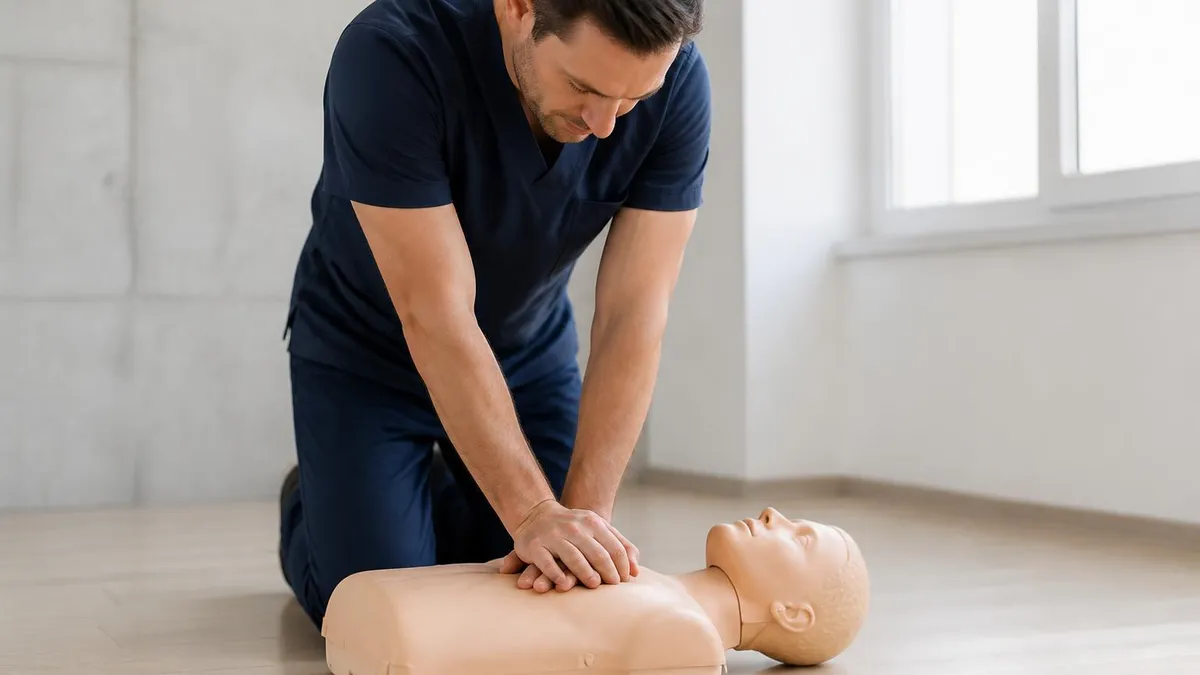
CPR vs BLS: Complete Comparison Guide for 2026 — Which Certification Do You Need?
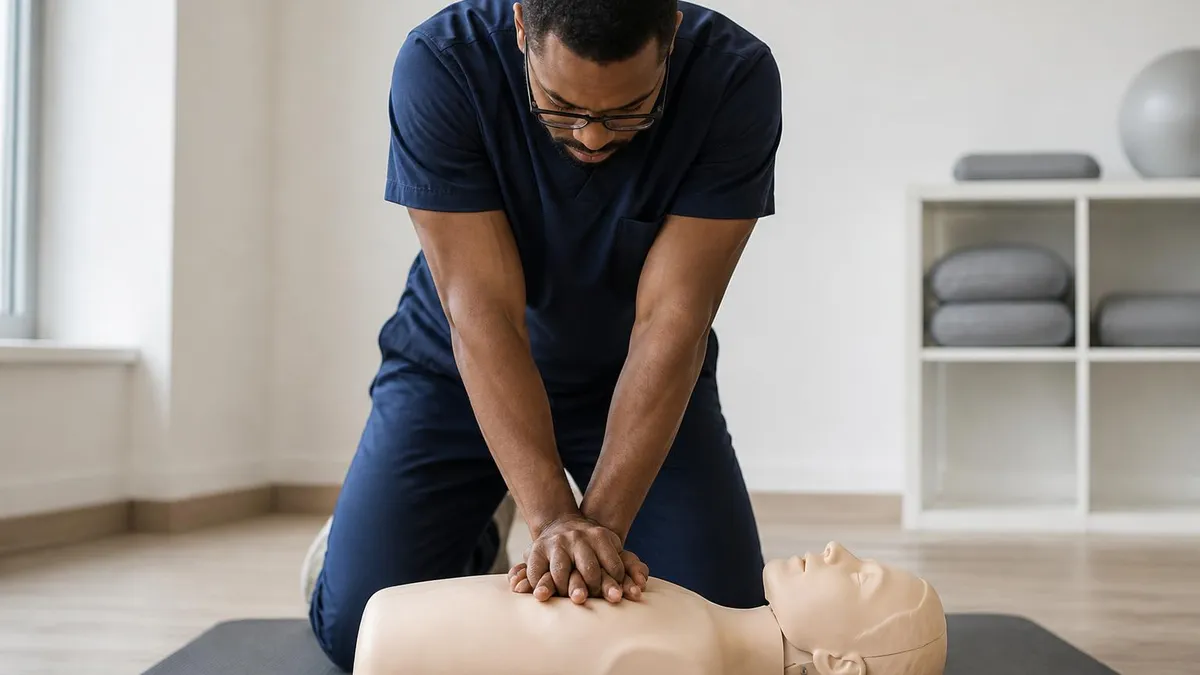
CPR Card Lookup: How to Verify, Replace, and Access Your CPR Certification in 2026
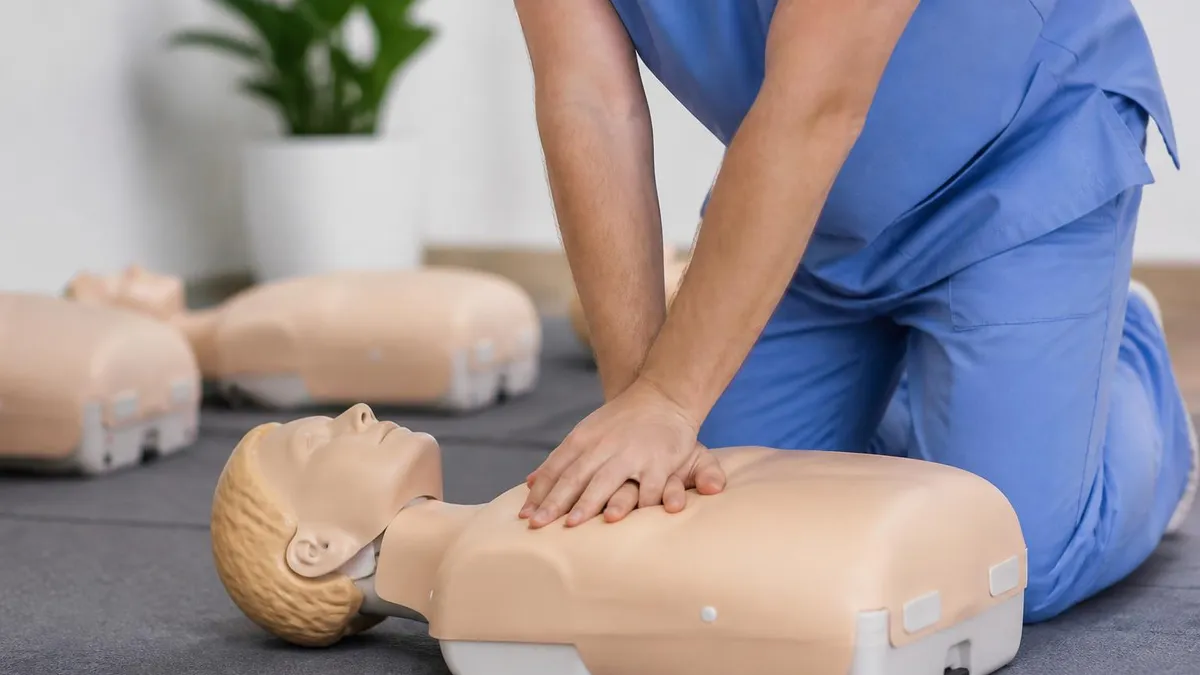
AHA CPR: What It Is, Which Course You Need, and How to Get Certified
Adult CPR: Complete Step-by-Step Guide to Hands-Only and Standard CPR in 2026

CPR - Cardiopulmonary Resuscitation: Complete Study Guide 2026
About the Author

Registered Nurse & Healthcare Educator
Johns Hopkins University School of NursingDr. Sarah Mitchell is a board-certified registered nurse with over 15 years of clinical and academic experience. She completed her PhD in Nursing Science at Johns Hopkins University and has taught NCLEX preparation and clinical skills courses for nursing students across the United States. Her research focuses on evidence-based exam preparation strategies for healthcare certification candidates.
Join the Discussion
Connect with other students preparing for this exam. Share tips, ask questions, and get advice from people who have been there.
View discussion (5 replies)