
Free CPR Classes: Complete 2026 October Guide to Finding Legitimate No-Cost Training Near You
Find legitimate free CPR classes near you in 2026 October. 🆕 Learn which programs offer real certification, what's covered, and how to qualify for no-cost training.
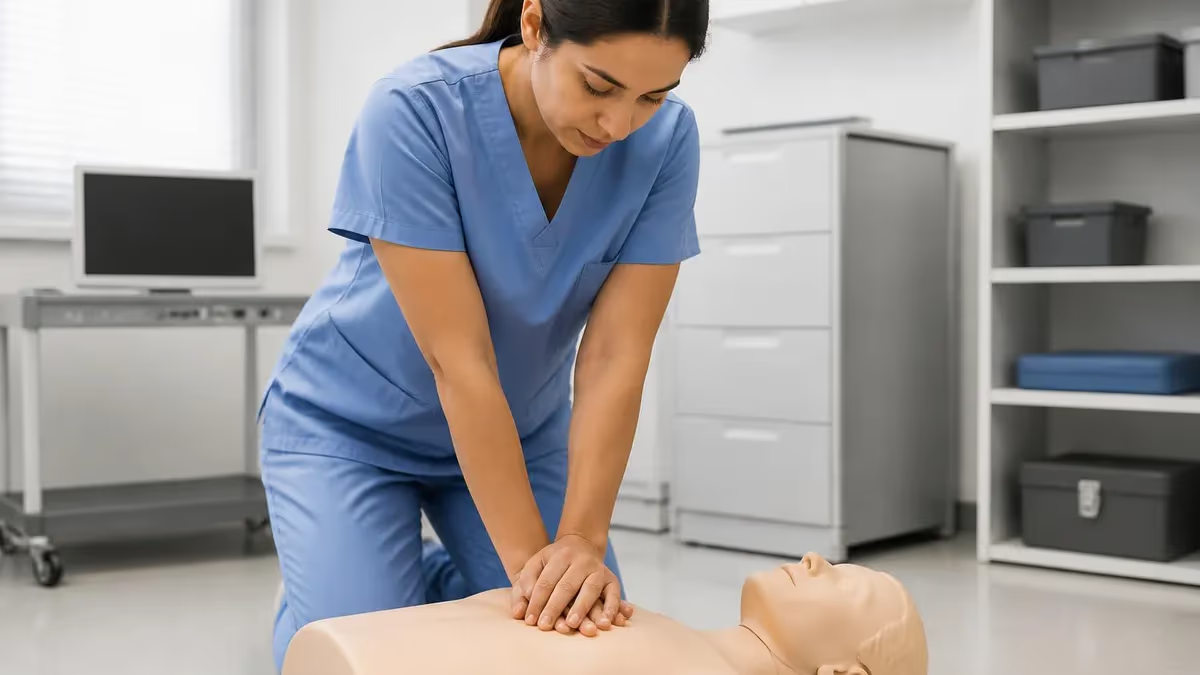
Free CPR classes have become one of the most searched health-education topics in the United States, and for good reason: roughly 350,000 out-of-hospital cardiac arrests occur every year, and survival rates more than double when a bystander begins compressions within the first two minutes. Finding legitimate, no-cost training is harder than it looks, however, because the marketplace is crowded with online-only certificates that employers refuse to accept. This guide explains where to find genuinely free CPR classes, what kind of certification card you can expect, and how to avoid common pitfalls.
The phrase "free CPR" generally falls into three buckets: community awareness sessions taught by fire departments and hospitals, employer-sponsored Basic Life Support courses, and online theory modules that still charge a fee for the skills check-off. Knowing which bucket a class belongs to determines whether you walk away with a wallet card recognized by nursing schools, daycare licensing boards, or OSHA workplace requirements. The national cpr foundation, American Heart Association, and American Red Cross all maintain different rules for what counts as a valid credential.
Demand for free training has exploded since 2020 because more states now require CPR proficiency for high-school graduation. As of 2026, forty states mandate hands-only CPR instruction before a diploma is issued, which has pushed school districts to partner with EMS agencies and the what is aed training programs that bundle automated external defibrillator demos. Parents, teachers, coaches, and faith-community volunteers often qualify for the same district-level free seats if they ask.
This article also unpacks the difference between an awareness card and a true certification card. A two-hour community session might teach excellent compression technique, but it rarely satisfies state licensing for childcare providers, lifeguards, or healthcare students. By contrast, a sponsored Heartsaver or BLS Provider course delivers a card that hospitals accept for clinical rotations. We will show you exactly which questions to ask before registering so you do not burn a Saturday on training that will not count.
You will also learn how the acls algorithm, pals certification, and Basic Life Support standards relate to entry-level free classes. Most free sessions teach only the foundational layperson skill set, but they are still the prerequisite stepping stone to advanced courses. Understanding the credential ladder helps you map a low-cost path from a free community class today to a paid professional certification a year from now without duplicating tuition.
Finally, we cover virtual instruction, blended learning, and skills-only check-offs that some agencies now waive for low-income applicants. Free training is widely available if you know where to look, how to verify the provider, and which keywords filter out scams. By the end of this guide you will have a concrete shortlist of programs in your zip code, a checklist of questions to ask, and a study plan to lock in the skills long after the class ends.
One last note before we dive in: free does not mean low quality. Some of the best instructors in the country volunteer with the American Heart Association Training Network or staff hospital community-outreach booths. The trick is filtering out marketing-driven "free certifications" that exist only to upsell printed cards, and instead routing yourself toward classes backed by accredited training centers, public-health departments, or 501(c)(3) nonprofits with verifiable credentials.
Free CPR Training by the Numbers
Key Facts at a Glance
| Item | Value | Details |
|---|---|---|
| Typical Cost Range | $0–$95 | Free community vs paid BLS |
| Class Length | 2–4.5 hrs | Varies by certification level |
| Card Validity | 2 years | Most agencies |

Types of Free CPR Classes Available in 2026
Typically 1–2 hours, taught by fire departments, EMS, or hospitals. Teaches hands-only CPR and AED basics but usually does not issue a certification card accepted for employment or licensure.
Hospitals, school districts, and large employers pay full tuition for staff to earn American Heart Association BLS Provider cards. Open seats sometimes go to family members or community volunteers on a first-come basis.
Forty states require CPR instruction before graduation. Many districts open evening or weekend sessions to parents, coaches, and youth-group leaders at zero cost using grant-funded manikins.
Organizations like the American Red Cross Volunteer Network and local Heart Safe Community initiatives offer scholarships and skills-only stations for low-income residents or first-generation students.
County health departments and public libraries host free Sidewalk CPR and Restart-a-Heart Day events each October, teaching compression-only technique in 15–30 minute pop-up demonstrations.
Finding free CPR classes near you starts with three reliable channels: your local fire department, your county health department, and the American Heart Association Training Center locator. Most metropolitan fire departments run "CPR Saturdays" once a quarter, and the seats fill within days of being posted. Calling the non-emergency line and asking for the community-risk-reduction coordinator is the fastest route to the registration list. Many departments also keep a waitlist that gets prioritized when grant funding releases new manikin kits.
Hospital systems are the second major source. Large networks like HCA, Kaiser Permanente, Ascension, and academic medical centers all run continuing-education departments that periodically open public seats. The trick is that these listings rarely appear on the hospital's main website — instead, search the foundation or community-benefit subdomain. Hospitals also frequently sponsor Heartsaver classes for school employees and youth coaches at no cost, because doing so reduces liability exposure across the community they serve.
Your employer is the third channel and the one most people overlook. If you work in childcare, education, fitness, hospitality, manufacturing, or any field touching OSHA general-duty workplace safety, your employer may already be required to provide free CPR training as part of orientation or annual refresh. Ask your human-resources department whether the company maintains a relationship with a training center. The session you take through work usually issues the same wallet card you would have paid $95 for individually.
Online directories help, but they need filtering. Useful starting points include the AHA Atlas of Science directory, the Red Cross course finder, and SaveAStLife.com. Avoid generic "top 10 free CPR sites" listicles — most of those promote certificate mills that charge for the card after a free quiz. A real provider lists an accredited training center number you can verify and produces a card searchable by respiratory arrest response database tools.
If you are a student in healthcare, your school is obligated to point you toward subsidized training. Nursing programs, EMT academies, dental hygiene schools, and respiratory therapy programs all bake BLS into the first semester. Some schools include it in tuition; others provide a voucher. Talk to your program coordinator before paying out of pocket — duplicate certification is the single most common money mistake new healthcare students make in their first year.
Community college continuing-education catalogs are another underused option. While the courses themselves cost $40–$95, many colleges waive fees for residents over 60, veterans, current K-12 educators, or anyone on SNAP/Medicaid. The fee waiver applications take ten minutes and convert a paid class into a free seat with a legitimate AHA or Red Cross card. Always ask the registration office about senior, veteran, and need-based waivers.
Finally, do not overlook professional associations. The National Safety Council, YMCA, Boy Scouts of America, and many trade unions offer member-discounted or fully-free CPR training as a benefit. If you belong to any membership organization, search the member portal for "safety training" or "first aid" before paying outside. Pairing a free class with a refresher every two years builds skill retention far better than a single one-time session.

CPR Practice Test Questions
Prepare for the CPR Cardiopulmonary Resuscitation Practice exam with our free practice test modules. Each quiz covers key topics to help you pass on your first try.
CPR Basic CPR
CPR Exam Questions covering Basic CPR. Master CPR Test concepts for certification prep.
CPR and First Aid
Free CPR Practice Test featuring and First Aid. Improve your CPR Exam score with mock test prep.
CPR (Cardiopulmonary Resuscitation) Adult ...
CPR Mock Exam on (Cardiopulmonary Resuscitation) Adult CPR and AED Usage. CPR Study Guide questions to pass on your first try.
CPR (Cardiopulmonary Resuscitation) Airway...
CPR Test Prep for (Cardiopulmonary Resuscitation) Airway Obstruction and Choking. Practice CPR Quiz questions and boost your score.
CPR (Cardiopulmonary Resuscitation) Cardio...
CPR Questions and Answers on (Cardiopulmonary Resuscitation) Cardiopulmonary Emergency Recognition. Free CPR practice for exam readiness.
CPR (Cardiopulmonary Resuscitation) Child ...
CPR Mock Test covering (Cardiopulmonary Resuscitation) Child and Infant CPR. Online CPR Test practice with instant feedback.
CPR (Cardiopulmonary Resuscitation) High-P...
Free CPR Quiz on (Cardiopulmonary Resuscitation) High-Performance Team Dynamics. CPR Exam prep questions with detailed explanations.
CPR (Cardiopulmonary Resuscitation) Legal ...
CPR Practice Questions for (Cardiopulmonary Resuscitation) Legal and Ethical Considerations. Build confidence for your CPR certification exam.
CPR for Specific Populations
CPR Test Online for for Specific Populations. Free practice with instant results and feedback.
CPR Airway & Breathing Management
CPR Exam Questions covering Airway & Breathing Management. Master CPR Test concepts for certification prep.
CPR Assessment & Recognition of Cardiac Ar...
Free CPR Practice Test featuring Assessment & Recognition of Cardiac Arrest. Improve your CPR Exam score with mock test prep.
CPR Chest Compressions & Defibrillation
CPR Mock Exam on Chest Compressions & Defibrillation. CPR Study Guide questions to pass on your first try.
CPR Post-Resuscitation Care & Recovery
CPR Test Prep for Post-Resuscitation Care & Recovery. Practice CPR Quiz questions and boost your score.
Class Formats: In-Person, Blended, and What Is a BLS Certification Online
Traditional classroom sessions run 3–4.5 hours with an instructor demonstrating compressions on adult, child, and infant cpr manikins. Students rotate through skills stations and complete a final scenario test. This format remains the gold standard for employers in healthcare, childcare, and emergency response because it includes hands-on evaluation.
Free classroom sessions are most common at fire stations, hospitals, and community colleges. Expect a class size of 6 to 12 students per instructor, which is the AHA-mandated ratio. Bring comfortable clothing that lets you kneel on the floor and prepare for an open-book written test that asks about respiratory rate, life support priorities, and AED pad placement.
Free CPR Classes: Advantages and Limitations
- +Zero cost to learners, often including manikin and AED trainer use
- +Builds community resilience and bystander response confidence
- +Teaches identical hands-only technique used by professionals
- +Many include free infant CPR and child CPR modules
- +Available in evenings and weekends through fire departments
- +Often paired with free Stop the Bleed or Narcan training
- +Counts toward Heart Safe Community recognition programs
- −Awareness sessions usually do not produce employer-accepted cards
- −Seats fill within hours of being posted online
- −May not include written exam or skills verification
- −Limited availability in rural or under-resourced counties
- −Instructor-to-student ratio sometimes exceeds AHA standards
- −Refresher cycles less structured than paid programs
- −Card lookup verification may not be available with all free providers

Pre-Registration Checklist for Free CPR Classes
- ✓Confirm the provider issues an American Heart Association or American Red Cross card
- ✓Verify the training center holds a current accreditation number you can look up
- ✓Ask whether the class includes adult, child, and infant CPR or only adult
- ✓Confirm AED practice with a real trainer unit is part of the session
- ✓Check that the wallet card is valid for two years from issue date
- ✓Ask if the certification is accepted by your employer or licensing board in advance
- ✓Bring a photo ID, comfortable clothing, and a water bottle to class
- ✓Arrive 15 minutes early to complete sign-in and pre-test paperwork
- ✓Request written confirmation of any prerequisite online module deadlines
- ✓Save the instructor's contact info in case your card has a typo or delay
The 60-Second Provider Check
Before you commit to any free CPR class, call the agency and ask for their AHA Training Center ID or Red Cross Authorized Provider number. A legitimate provider will give you that number without hesitation, and you can verify it on the AHA Atlas or Red Cross directory in under a minute. If they refuse or claim certification works "without those steps," walk away — the card will not be accepted where it matters.
Understanding the difference between a certification card and an awareness certificate is the single most important decision point in your free CPR journey. A certification card — typically called a BLS Provider card, Heartsaver CPR/AED card, or Red Cross Adult and Pediatric CPR/AED card — proves that you completed a hands-on skills evaluation in front of an authorized instructor. It is the only credential that satisfies licensure for nurses, EMTs, daycare workers, lifeguards, and many fitness professionals across the United States.
An awareness certificate, on the other hand, simply documents that you watched a video or completed an online quiz. It can be genuinely useful for parents, grandparents, and concerned citizens who want to refresh their memory, but it carries no legal weight. The trouble starts when websites blur this line, advertising "free CPR certification" while delivering only an awareness document. Recipients often discover the gap only after an employer rejects the card during onboarding, sometimes weeks after starting a new role.
The credential ladder begins with Heartsaver-level certifications aimed at laypeople, then moves up through BLS Provider for healthcare workers, ACLS Provider for clinicians managing cardiac arrest scenarios, and PALS Provider for pediatric-focused practitioners. The acls algorithm builds directly on BLS fundamentals, and pals certification candidates must hold a current BLS card. Knowing this ladder helps you plan a multi-year credential path that begins with a free entry-level class today.
Many free programs only certify at the Heartsaver level, which is perfectly adequate for teachers, coaches, parents, and most non-clinical staff. If your goal is healthcare employment, you specifically need a BLS Provider card — and the good news is that hospitals frequently sponsor those classes for community health workers, certified nursing assistants, and incoming students. The card looks similar to a Heartsaver card but has "BLS Provider" printed across the bottom and unlocks dramatically more job opportunities.
Card verification has improved significantly since 2024. The AHA, Red Cross, and most major training networks issue eCards with QR codes and unique serial numbers. Employers can scan or look up your card on the issuer's portal in seconds. If a free class produces a paper card with no serial number and no online lookup, it is functionally identical to an awareness certificate even if it has the word "certification" printed on it.
State-specific rules add another layer of complexity. Several states — California, Washington, and Texas among them — require that childcare provider CPR training include separate adult, child, and infant CPR modules with skills demonstration. A free awareness class that covers only adult compression will not satisfy these requirements no matter what the certificate says. Always cross-reference your state's licensing board requirements before registering.
Finally, recognize that legitimate free CPR classes do exist at every credential level if you know where to look. The combination of fire department community programs, hospital community-benefit grants, employer sponsorships, and nonprofit scholarships covers nearly every demographic. The key is matching your goal — personal knowledge versus professional employment — with the right tier of training, then verifying the provider before you commit your Saturday morning.
Websites that promise "100% online CPR certification accepted everywhere" for a small fee are almost universally rejected by hospitals, daycares, and licensing boards. No state in the United States accepts online-only CPR training without an in-person skills evaluation for professional credentials. If a provider cannot show you an AHA Training Center ID or Red Cross Authorized Provider number, your card will likely be refused when it counts most.
Making the most of your free CPR seat starts before you walk through the door. Spend 20–30 minutes the night before reviewing hands-only compression technique on YouTube — the AHA channel and the British Heart Foundation "Vinnie Jones" video are both excellent free resources. Watching even a single demonstration before class makes the in-person skills session feel familiar instead of overwhelming, and instructors notice the difference immediately. Pre-class prep also helps you ask better questions, especially around the normal average respiratory rate in adults and how to recognize agonal breathing.
During the class, prioritize hands-on practice over note-taking. The instructor will hand you a printed reference, so resist the urge to copy slides. Instead, get your hands on the manikin every chance you can, because compression depth and recoil are skills your body memorizes — not your notebook. Volunteer for the AED demonstration, ask to practice infant CPR on a baby manikin if the class includes one, and stay engaged during airway obstruction scenarios even if you feel awkward.
After class, schedule a refresher reminder for 18 months out. The AHA and Red Cross both require recertification every two years, but skill decay begins within three to six months without practice. Many free providers will let you sit in on a future class as a refresher even before your card expires. You can also pair your training with the normal average respiratory rate in adults reference materials your instructor distributes for ongoing review.
Build muscle memory at home with cheap practice tools. A rolled-up bath towel laid on a sturdy floor or a CPR practice keychain costing under $20 lets you rehearse compression rate and depth without manikin access. Practicing two minutes per week keeps you sharp far better than a single annual session. Set a metronome to 110 beats per minute or use the "Stayin' Alive" track most instructors recommend as the standard cadence cue.
If you are studying for a healthcare career, layer in free practice quizzes that cover related concepts — pals certification basics, BLS algorithms, choking response, and AED troubleshooting. Free online question banks help reinforce the cognitive side of training, especially the timing rules that confuse new learners. Look for quizzes from accredited education sites rather than ad-heavy aggregator pages that recycle outdated 2010 guidelines.
Consider becoming a CPR instructor yourself once you hold a Provider-level card for at least six months. Instructor-trainer courses cost $200–$400 typically, but many fire departments, hospitals, and Red Cross chapters reimburse the fee if you commit to teaching a minimum number of community classes per year. This pathway converts your free training into a side income while serving your community — a meaningful long-term return on a single Saturday investment.
Finally, share your training with at least three other people. Teach your spouse the basic compression rhythm, show a teenage child where the AED at school is located, and remind a parent how to clear a choking infant's airway. Studies show that bystander CPR rates rise sharply in households where one trained family member shares techniques informally with relatives. Your free class becomes exponentially more valuable when its lessons ripple outward.
Long-term skill retention is the most overlooked aspect of CPR training, and it is where free classes can quietly outperform paid ones. Because community providers often welcome you back for refresher sessions at no charge, you can rehearse at 6-, 12-, and 18-month intervals instead of waiting two full years between certifications. Multiple studies show that brief, spaced practice every six months produces compression quality nearly identical to that of paramedics — far better than annual or biannual single-day refreshers.
Beyond the basics, free programs increasingly bundle adjacent skills like Stop the Bleed, opioid overdose response with naloxone, and pediatric first aid. Pediatricians and emergency physicians strongly recommend adding infant cpr and child choking response modules even if you have no children at home, because emergencies involving young relatives, neighbors, or passersby occur with surprising frequency. Many free providers run these adjunct classes back-to-back on the same Saturday morning, letting you stack training efficiently.
Workplace integration matters too. Once certified, identify the nearest AED at your office, gym, school, place of worship, and favorite store. Time how long it takes to retrieve the device and return to a simulated victim. Many casual bystanders freeze during real emergencies because they have never practiced the retrieval-and-deployment sequence under time pressure. A 30-second mental rehearsal once a month keeps the entire response chain — recognize, call, compress, defibrillate — primed for an actual event.
For families, build an emergency action plan that includes who calls 911, who starts compressions, who retrieves the AED, and who manages bystanders or children. Roles eliminate hesitation, and hesitation is the single biggest predictor of poor outcomes in out-of-hospital cardiac arrest. Print the plan on a magnet for the refrigerator and review it during the first weekend of every new year, the same way you check smoke detector batteries.
If cost ever becomes a barrier to recertification, return to the same channels that delivered your initial free class. Most fire departments, hospitals, and nonprofits maintain rolling enrollment, and many specifically prioritize alumni of previous free sessions for renewal seats. Stay on their email lists, follow their social accounts, and respond quickly when seats open. The same network that gave you your first card will almost always renew it at no charge.
Note that some employers — especially in education, fitness, and hospitality — will reimburse you for recertification fees even if they did not initially sponsor the training. Submit a receipt with a brief memo explaining how the certification protects students, members, or guests, and many HR departments approve reimbursement under general training budgets. It never hurts to ask, and a polite request frames CPR currency as a workplace safety investment rather than a personal expense.
Free CPR classes are abundant, legitimate, and life-saving when you know how to find and verify them. The combination of fire department community sessions, hospital outreach, employer sponsorship, nonprofit scholarships, and continuing-education waivers means almost every adult in the United States can earn a real, employer-accepted certification without spending money. Pair that training with practice, refreshers, and skill-sharing across your community, and a single free Saturday class becomes one of the highest-use health investments you will ever make.
CPR Questions and Answers
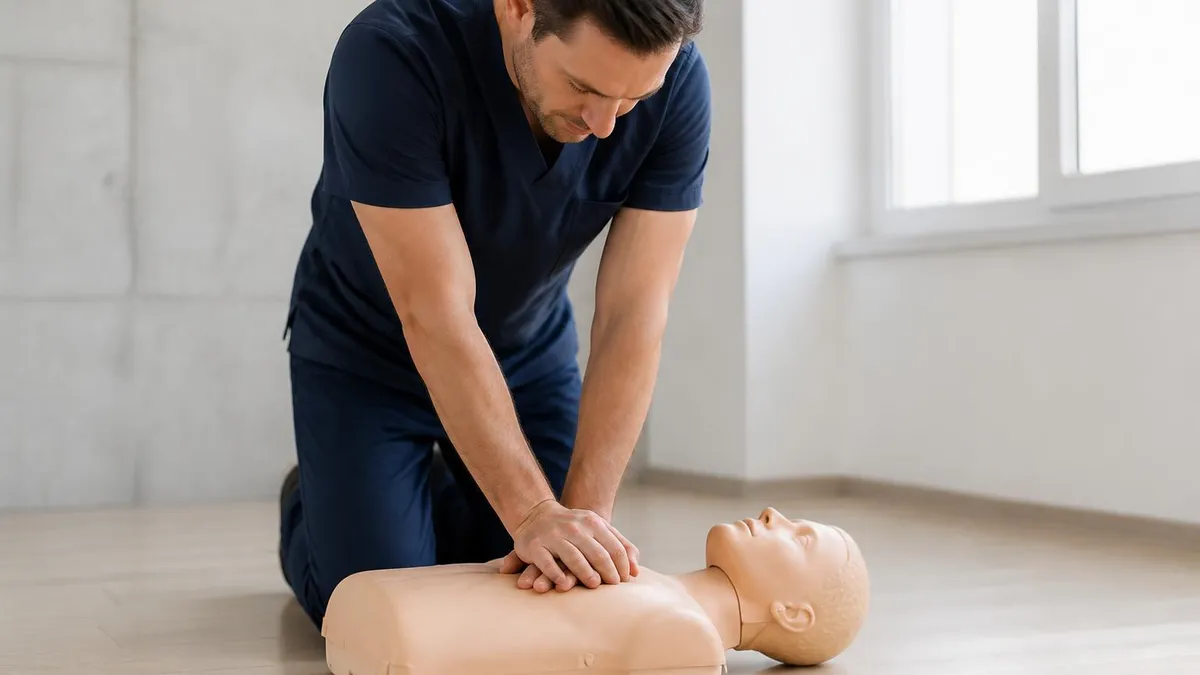
CPR vs BLS: Complete Comparison Guide for 2026 — Which Certification Do You Need?
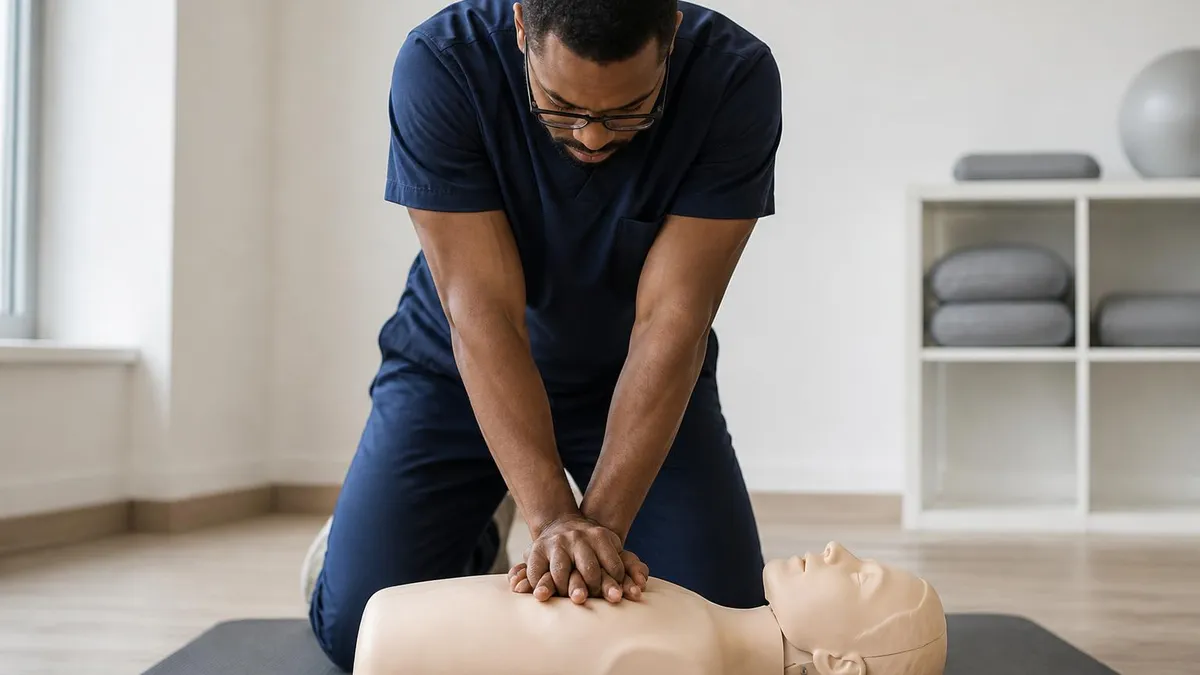
CPR Card Lookup: How to Verify, Replace, and Access Your CPR Certification in 2026
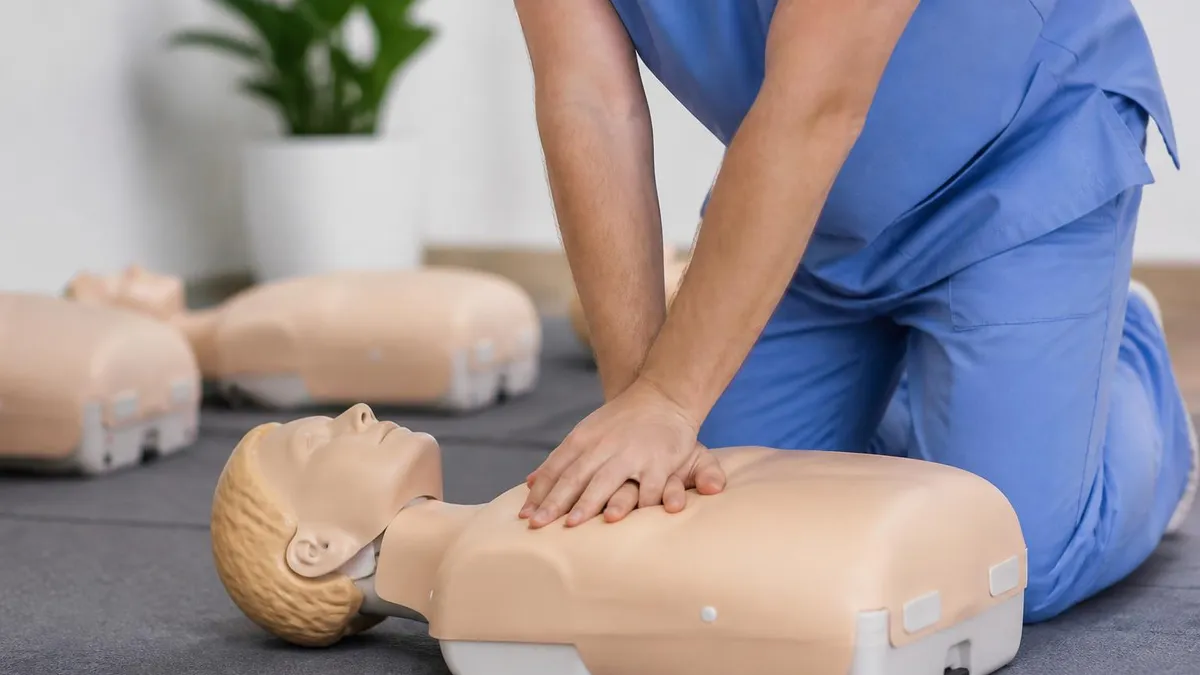
AHA CPR: What It Is, Which Course You Need, and How to Get Certified
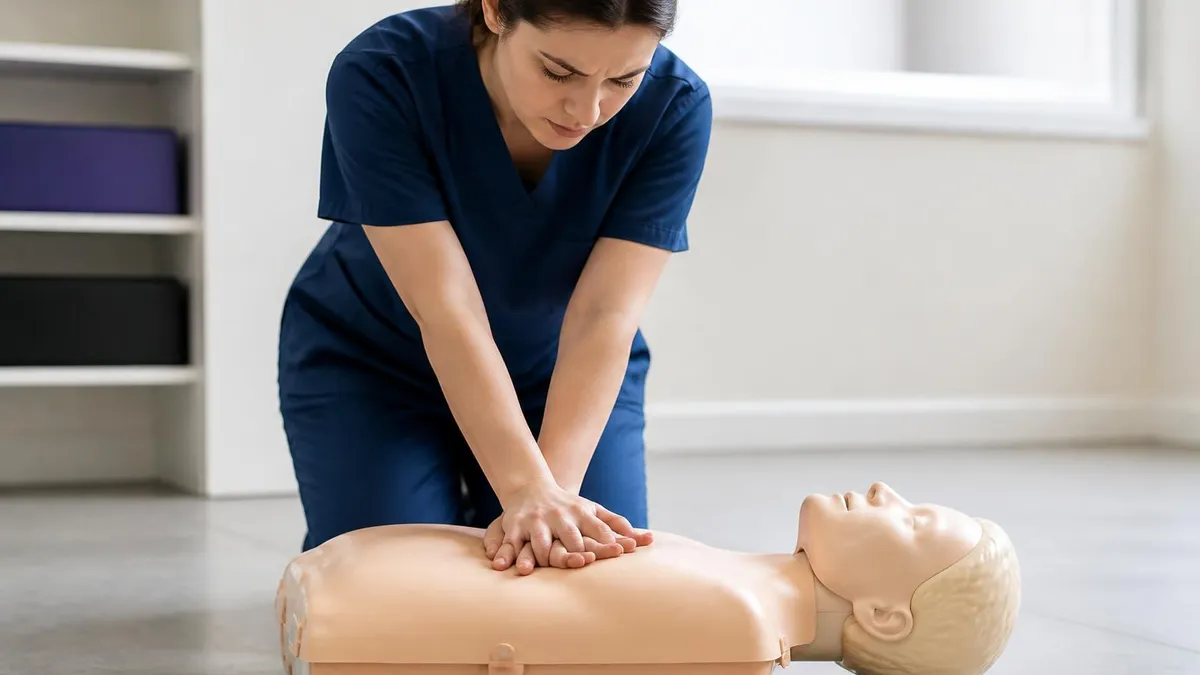
CPR Instructor Jobs 2026: How to Become a Certified Instructor, Salary Expectations, and Career Pathways
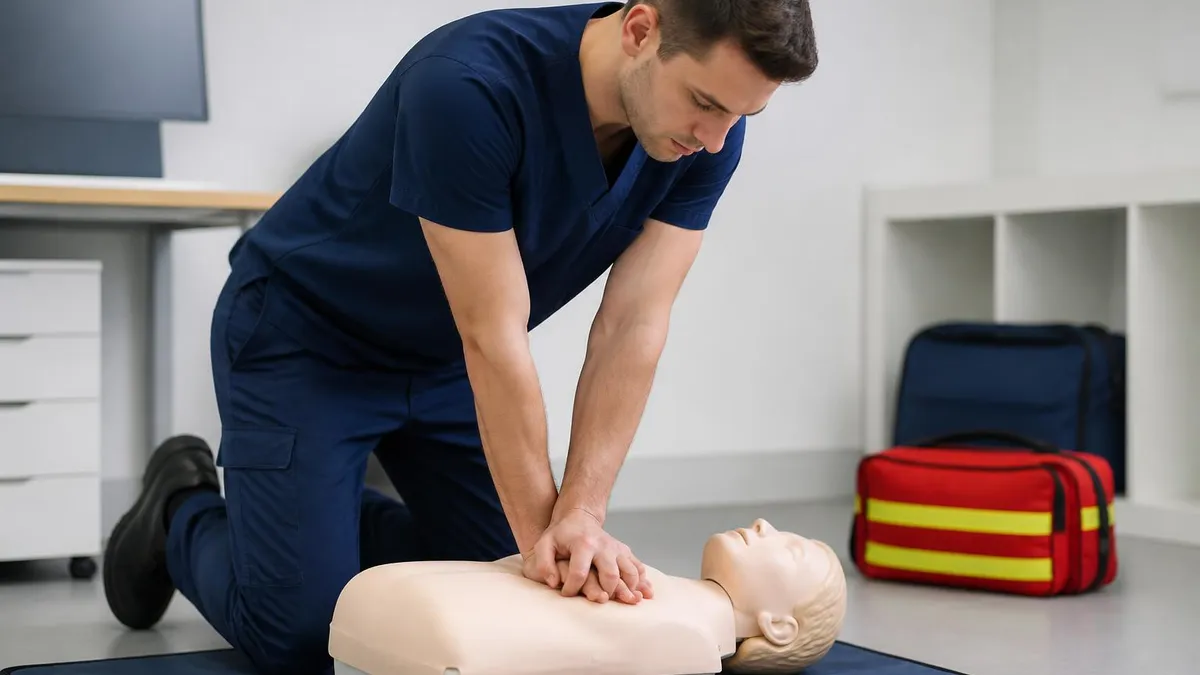
Adult CPR: Complete Step-by-Step Guide to Hands-Only and Standard CPR in 2026
About the Author

Registered Nurse & Healthcare Educator
Johns Hopkins University School of NursingDr. Sarah Mitchell is a board-certified registered nurse with over 15 years of clinical and academic experience. She completed her PhD in Nursing Science at Johns Hopkins University and has taught NCLEX preparation and clinical skills courses for nursing students across the United States. Her research focuses on evidence-based exam preparation strategies for healthcare certification candidates.
Join the Discussion
Connect with other students preparing for this exam. Share tips, ask questions, and get advice from people who have been there.
View discussion (5 replies)