
CPR Playlist: Songs at the Right BPM for Perfect Chest Compression Rhythm
Discover the best CPR playlist songs at 100-120 BPM. 🎓 Learn how rhythm aids the ACLS algorithm, infant CPR, and life support training.

When it comes to effective cardiopulmonary resuscitation, maintaining the correct chest compression rate of 100 to 120 compressions per minute is one of the most critical — and most difficult — skills to master. A well-curated cpr playlist of songs at the right beats per minute gives rescuers an intuitive, memorable rhythm to anchor their compressions during the high-stress moments of a real cardiac emergency. From laypeople learning basic life support to clinicians mastering the ACLS algorithm, music-based rhythm training has become a widely endorsed memory tool.
The American Heart Association recommends a compression rate between 100 and 120 beats per minute for adult, child, and infant CPR. Songs that fall within this BPM range — such as "Stayin' Alive" by the Bee Gees at exactly 103 BPM — provide a natural metronome that keeps compressions consistent without requiring the rescuer to count aloud or check a timer. Studies have shown that people who practice CPR to music retain the correct compression rate significantly longer than those who rely on counting alone.
Understanding why rhythm matters starts with understanding the mechanics of blood flow during cardiac arrest. Each compression physically pumps blood from the heart to the brain and vital organs. Too slow and not enough oxygen-rich blood reaches the brain; too fast and the heart chambers cannot refill adequately between compressions. The target of 100 to 120 BPM is not arbitrary — it represents the physiological sweet spot where output is maximized and neurological damage is minimized during a cardiac event.
For healthcare providers preparing for PALS certification or BLS recertification, incorporating a music-based training approach into study sessions can dramatically improve muscle memory. When your hands have practiced hundreds of compressions to a familiar song, your body recalls the correct rate instinctively even when adrenaline is surging and situational stress is at its peak. This is especially valuable during the first critical minutes before an AED or advanced life support resources arrive at the scene.
The national CPR foundation and other credentialing bodies have embraced music-based learning as a supplement to hands-on practice. Instructors across the country now open CPR training classes by playing a BPM-calibrated playlist while students practice on mannequins. The feedback is consistently positive: learners find it easier to maintain the correct rate, stay engaged during repetitive drills, and recall the rhythm during simulated emergencies later in the course.
Whether you are preparing for a certification exam, brushing up on the ACLS algorithm for a hospital recertification, or simply want to be ready if a family member ever collapses, building a personal CPR playlist is a smart, low-effort step that takes minutes to set up but could make a life-saving difference. In this guide we break down the best songs by BPM, explain how rhythm connects to broader CPR technique, and show you how to use music training alongside traditional practice to maximize your readiness.
Beyond compression rate, the right playlist also serves as a pacer for other time-sensitive CPR tasks: when to switch compressors, when to deliver rescue breaths, and when to analyze rhythm on an AED. Think of the music not just as a metronome but as a mental scaffold that structures the entire two-minute cycle of high-quality CPR so every action happens at the right moment.
CPR Playlist & Rhythm Training by the Numbers

Best Songs for Your CPR Playlist at 100–120 BPM
The gold standard of CPR songs and the most recommended by the American Heart Association. At 103 BPM it falls squarely in the target compression range. The steady, driving beat is easy to follow and the song is universally recognized, making it ideal for both layperson and healthcare provider training.
Hovering right at the 100 BPM lower threshold, this pop anthem provides a confident, driving rhythm that works well for adult CPR practice. The strong downbeats align naturally with compression delivery, and the tempo is consistent enough throughout the song to maintain reliable chest compression depth and rate.
A classic rock track sitting comfortably in the middle of the AHA's recommended range. Despite its dark title, Queen's iconic song has been used in CPR courses for decades. The bass-driven beat creates a clear, metronomic pulse that rescuers can feel as well as hear during high-intensity simulation drills.
An upbeat pop track at exactly 100 BPM that works well for group CPR training sessions. The consistent tempo and strong percussive elements make it easy to synchronize compressions across multiple rescuers, which is especially useful when practicing two-rescuer CPR technique in BLS or ACLS team scenarios.
A rock staple that works as a backup option when training in environments where pop music may not resonate with learners. Its guitar-driven rhythm hovers right at the 100 BPM mark. Healthcare instructors at rural training centers have found this song effective for engaging older adult learners in CPR drills.
The ACLS algorithm — Advanced Cardiovascular Life Support — is the structured decision-making framework used by healthcare teams to manage cardiac arrest and other life-threatening cardiovascular emergencies. At its core, the algorithm depends on high-quality CPR as the unbroken foundation on which every other intervention is built. Rhythm-based compression training directly supports ACLS performance because providers who internalize the correct rate through music practice are less likely to deviate under pressure when the algorithm is unfolding rapidly around them.
During an ACLS resuscitation, a team leader typically calls out two-minute cycles of CPR punctuated by rhythm checks on the cardiac monitor and, where indicated, defibrillation shocks. Within those two-minute cycles, the compressor must maintain 100 to 120 compressions per minute at a depth of at least two inches for adults. A rehearsed internal beat — one anchored to a familiar song — helps providers hit these targets even when they are simultaneously processing medication orders, airway status updates, and team communication from the surrounding code team.
Connecting a CPR playlist to the ACLS algorithm also reinforces the concept of minimizing interruptions. The guidelines are explicit: pauses in chest compressions should be as brief as possible, ideally under ten seconds, even for defibrillation. Providers who have trained to music develop a powerful instinct to resume compressions immediately after any pause because the internal rhythm they have rehearsed does not stop playing in their head. This automatic return-to-rhythm behavior is one of the most underappreciated benefits of music-based CPR training in clinical settings.
Respiratory rate is another critical variable in advanced life support. During CPR with an advanced airway in place — such as an endotracheal tube or supraglottic device — ventilations should be delivered at a rate of one breath every six seconds, or approximately ten breaths per minute, completely asynchronous with compressions. This contrasts with the 30:2 ratio used in basic life support without an advanced airway. Understanding this distinction is essential for PALS certification, where pediatric patients often require advanced airway management early in the resuscitation sequence.
Music can also help learners understand the 30:2 compression-to-ventilation ratio used in basic life support. If you count out thirty compressions to a 100 BPM song, approximately eighteen seconds will have elapsed — leaving about two seconds for two rescue breaths before the next cycle begins. This timing becomes second nature with repetition, and song-based practice accelerates the internalization process compared to counting aloud during silent drills. Many BLS instructors now use split playlists that shift tempo slightly to cue the transition from compressions to ventilations.
It is worth noting that the role of music extends beyond compression rate. Fatigue is a significant factor in CPR quality: research shows that compression depth and rate both decline within sixty to ninety seconds of continuous compressions for untrained rescuers, and within two minutes even for trained providers. Structured playlist cycling — where a new song signals a compressor switch — can serve as an audio cue for two-rescuer CPR rotation, ensuring that compression quality remains high throughout prolonged resuscitation efforts without requiring the team leader to constantly monitor and call out timing cues.
For those preparing for ACLS or BLS certification exams, practicing to music during mannequin sessions is a strategy that combines muscle memory development with cognitive association. When you later see an ACLS algorithm flowchart on an exam question, your body may actually recall the rhythm you trained to, reinforcing the correct sequence of actions. This cross-modal memory encoding is well-documented in educational neuroscience and represents a genuine study advantage for certification candidates.
Infant CPR, PALS Certification & Life Support Timing
Infant CPR requires a compression rate of 100 to 120 per minute — the same target as adult CPR — but the technique differs significantly. Providers use two fingers on the center of the chest (or the two-thumb-encircling technique for two-rescuer infant CPR) and compress to a depth of approximately one and a half inches. A CPR playlist calibrated at 100 to 120 BPM works just as well for infant practice as it does for adults, making it easy to transition between mannequin types in a single training session without changing your mental rhythm.
PALS certification candidates should be aware that pediatric cardiac arrest most commonly results from respiratory failure rather than a primary cardiac event, which means infant CPR often begins with airway management and ventilation before compressions become necessary. The respiratory rate for infants in respiratory distress is typically 12 to 20 breaths per minute for assisted ventilation, distinctly different from the compression rhythm. Music training helps learners keep these two rates — compressions and ventilations — mentally separated and clearly defined in high-pressure simulation scenarios.

Music-Based CPR Training: Benefits and Limitations
- +Provides an intuitive, memorable rhythm reference that does not require counting aloud during compressions
- +Improves long-term retention of the 100–120 BPM target compared to counting-only practice methods
- +Reduces cognitive load during high-stress cardiac emergencies by automating rhythm recall
- +Works equally well for adult, child, and infant CPR since all share the same BPM target
- +Easy to implement at home between formal training sessions using any music streaming platform
- +Helps two-rescuer teams coordinate compressor switches using song transitions as natural audio cues
- −Cannot replace hands-on mannequin practice required for certification by any credentialing organization
- −Ambient noise at a real emergency scene may make it impossible to hear music from a phone speaker
- −Song tempos can vary slightly between sections, potentially introducing momentary rhythm confusion
- −Over-reliance on external audio cues may reduce performance if no music is available during an emergency
- −Some learning environments or workplace cultures may not permit music during CPR training drills
- −BPM apps and playlists require setup time that should not delay beginning compressions in a real event
CPR Playlist Training Checklist: 10 Steps to Rhythm Mastery
- ✓Verify each song on your playlist falls between 100 and 120 BPM using a free app like BPM Analyzer or Spotify's BPM display.
- ✓Practice compressions on a firm surface or mannequin to at least three songs before any certification exam.
- ✓Confirm compression depth reaches at least two inches for adults by using a feedback device or training mannequin with indicators.
- ✓Allow the chest to fully recoil between compressions — do not lean on the chest even when following a musical beat.
- ✓Practice the transition from 30 compressions to 2 rescue breaths in real time, timing the breath delivery within the song.
- ✓Use a two-rescuer drill where a song change signals the compressor switch to build team coordination around audio cues.
- ✓Review the ACLS algorithm flowchart after each playlist session to connect your rhythm practice to clinical decision-making.
- ✓Include at least one song above 115 BPM to practice recognizing when your rate is too fast and self-correcting.
- ✓Record a short video of yourself compressing to music to review depth, rate, and hand position objectively.
- ✓Re-verify your BPM accuracy every 30 days and refresh your playlist if any songs have been re-mastered at different tempos.
"Stayin' Alive" Has Literally Saved Lives in Training
A 2011 study published in the British Medical Journal found that medical professionals who learned to perform CPR to "Stayin' Alive" maintained significantly more accurate compression rates eight weeks after training compared to a control group. The song's 103 BPM tempo matched the AHA guideline so precisely that participants recalled the rhythm instinctively — no counting required. This is the power of associative memory: link a physical skill to a familiar sensory cue and retention improves dramatically.
The national CPR foundation is one of several major organizations that offer CPR and AED certification in the United States, alongside the American Heart Association, the American Red Cross, and the National Safety Council. Each organization structures its courses slightly differently, but all share the same core compression rate standard derived from the AHA's evidence-based guidelines. Understanding the role of each organization helps learners choose the right certification for their workplace, volunteer role, or healthcare career pathway.
For individuals wondering what does AED stand for, the answer is Automated External Defibrillator — a portable device that analyzes the heart's electrical rhythm and, when appropriate, delivers a shock to restore a normal heartbeat. AEDs are designed for use by untrained bystanders as well as trained responders, and modern devices provide step-by-step voice instructions that walk users through pad placement and shock delivery. The AED is a critical component of the chain of survival, and understanding when and how to use one is covered in every major CPR certification course.
CPR cell phone repair shops — often abbreviated as CPR, which stands for Cell Phone Repair in that context — are a completely unrelated business category that sometimes creates confusion when people search for CPR certification resources online. If you encounter a cpr phone repair listing in your search results when looking for CPR training courses, simply look for results that specifically mention cardiopulmonary resuscitation, the American Heart Association, or certification providers. The shared acronym is a common source of search confusion, particularly for first-time certification seekers.
For those pursuing formal certification, the national CPR foundation offers courses that can be completed online with a brief in-person skills check. These hybrid formats have become increasingly popular since 2020 and are now accepted by many employers, particularly in education, fitness, and hospitality sectors where staff CPR requirements are mandated by state law or accreditation standards. Healthcare employers, however, typically require fully hands-on certification from the AHA or equivalent provider to meet joint commission and accreditation requirements.
Respiratory rate monitoring is a skill that complements CPR training, particularly for healthcare providers who may need to assess a patient's breathing before deciding whether to initiate compressions. A normal adult respiratory rate is 12 to 20 breaths per minute. Rates below 8 or above 30 indicate respiratory distress or failure and may require ventilatory support even before cardiac arrest occurs. Music-based training that incorporates ventilation rhythm — practicing one breath every six seconds for advanced airway management — helps providers internalize respiratory rate targets alongside compression rate targets in a unified sensory experience.
For those interested in becoming CPR instructors, the path typically involves completing a provider-level course first, then an instructor-essentials or instructor-candidate training program. Instructor candidates must demonstrate compression accuracy, ventilation technique, and the ability to coach and assess students. Many instructor candidates find that their experience with music-based training gives them a ready-made teaching tool to share with their own future students, creating a compounding benefit within the CPR training community that extends well beyond individual certification.
Position recovery, sometimes called the recovery position, is the final skill that rounds out a complete basic life support protocol. After a person regains spontaneous circulation but remains unconscious, placing them in the recovery position — on their side with the airway open and drainage-ready — prevents aspiration of vomit and maintains airway patency until emergency medical services arrive. A comprehensive CPR training session covers not only compressions and ventilations but also this critical post-resuscitation stabilization step, ensuring that the benefits of successful CPR are not lost in the minutes before advanced care arrives.

A CPR playlist is a training aid, not an emergency tool. In a real cardiac arrest, begin chest compressions immediately — do not spend time searching your phone for the right song. The goal of playlist training is to internalize the rhythm so deeply that you no longer need external audio cues when it counts. Practice with music; respond without it.
Understanding what does AED stand for — Automated External Defibrillator — is foundational knowledge for anyone serious about CPR readiness. AEDs are now found in airports, gyms, schools, shopping malls, and many workplaces throughout the United States, and their widespread deployment has significantly improved out-of-hospital cardiac arrest survival rates in communities where public access defibrillation programs have been implemented. The AED works by analyzing the heart's electrical activity and delivering a controlled shock — defibrillation — to interrupt life-threatening rhythms such as ventricular fibrillation and pulseless ventricular tachycardia.
The position recovery — also known as the lateral recumbent or recovery position — is a technique that every CPR-trained individual should know how to execute. When a victim regains a pulse and begins breathing on their own but remains unresponsive, rolling them onto their side with the lower arm extended in front, the upper knee bent forward for stability, and the head tilted back to keep the airway open can prevent aspiration and maintain circulation to the brain.
Emergency dispatchers often instruct bystanders to place victims in the recovery position while waiting for EMS, making it a real-world skill as important as compression technique itself.
For rescuers trained in the ACLS algorithm, the two-minute CPR cycle serves as the rhythm backbone of the entire resuscitation effort. After each two-minute cycle — five cycles of 30:2 in basic life support, or 200 asynchronous compressions with an advanced airway in place — the team pauses briefly to check the cardiac monitor rhythm, decide whether to shock, administer medications, and reassign roles. Music-trained providers excel in these transitions because their internal rhythm allows them to resume compressions immediately after the rhythm check pause without losing the rate or depth they had established.
The connection between life support quality and neurological outcome is direct and well-documented. For every minute that passes without CPR after cardiac arrest, survival rates decline by approximately seven to ten percent. For every minute that passes without defibrillation in a shockable rhythm, survival rates decline by an additional seven to ten percent. These numbers make clear that speed and quality are both essential — and that any training tool, including music, that improves the speed of initiation or the quality of compressions has the potential to save lives at a population level.
Certification renewal is an important consideration for anyone who relies on CPR skills professionally. Most CPR and BLS certifications are valid for two years from the date of completion, after which renewal is required to maintain currency. Some employers require annual skills refreshers in addition to the formal two-year recertification. Integrating playlist-based practice into a monthly routine — even just ten minutes of compression practice to a BPM-calibrated song — helps providers maintain skill currency between formal training sessions and arrive at renewal courses with muscle memory already sharp.
For healthcare providers who hold both BLS and ACLS certifications, the combination of basic and advanced life support skills creates a comprehensive resuscitation capability that is greater than the sum of its parts. BLS skills handle the immediate response — compressions, ventilations, and AED use — while ACLS skills layer on top with rhythm interpretation, medication administration, advanced airway management, and team coordination. A CPR playlist that helps providers maintain BLS quality is therefore an indirect investment in ACLS performance as well, since every ACLS algorithm depends on uninterrupted, high-quality basic life support as its foundation.
Preparing for your next CPR certification renewal? Our comprehensive renewal guide walks you through exactly what to expect, how long each certification level remains valid, and the fastest legitimate path to staying current. Keeping your credentials active is not just a professional requirement — it is the assurance that when a cardiac emergency happens near you, your skills are sharp enough to make a difference in the critical minutes before emergency medical services arrive.
Building an effective CPR playlist takes less than fifteen minutes using any major music streaming platform. Start by searching for "CPR playlist" or "100 BPM songs" in your platform's search bar — Spotify, Apple Music, and YouTube Music all have curated playlists created by CPR instructors and emergency medicine communities. Download the playlist for offline access so it remains available even when your cellular signal is unreliable, which is common in hospital stairwells, parking garages, and rural locations where cardiac arrests frequently occur.
When selecting songs, prioritize tracks with a consistent, unwavering tempo rather than songs that dramatically speed up or slow down between sections. Ballads with tempo variations can confuse the rhythm mid-compression, while electronic dance music and classic rock tracks tend to hold their BPM steady from start to finish. Use a free BPM counter app to verify each song before adding it to your training playlist — even professionally produced music can drift a few BPM from its listed tempo depending on the version or remaster you are using.
For group training environments, playing the CPR playlist through a portable Bluetooth speaker rather than a phone speaker dramatically improves audibility across a room full of practicing students. Instructors should position the speaker at the front of the room and set the volume loud enough that compressions can be heard over the music — this dual-feedback loop of hearing the beat and feeling the resistance of the mannequin creates the strongest possible sensory encoding of the correct compression rate and rhythm.
Advanced practitioners can use music training to work on compression depth consistency as well as rate. Set up a phone camera to record yourself compressing to music, then review the footage to assess whether your depth remains consistent across all thirty compressions in a cycle or whether it degrades toward the end as fatigue sets in. Most providers show measurable depth reduction after the fifteenth compression, which is precisely the fatigue window that two-rescuer CPR rotation is designed to address. Identifying your personal fatigue threshold through video review allows you to time compressor switches more precisely.
If you are preparing for a national CPR foundation exam or any other certification skills assessment, practice your playlist training within one week of the assessment date to ensure the rhythm is fresh in muscle memory. Do not practice to music for the first time the night before — instead, incorporate it consistently over the weeks of your preparation so the BPM becomes automatic. Pair your music practice with review of the ACLS algorithm flowchart and AED operation steps for a well-rounded final preparation session that covers all major assessment domains.
Parents, teachers, and community volunteers who are not healthcare professionals can benefit equally from playlist-based CPR training. The simplicity of "compress to the beat" removes the intimidation factor that prevents many bystanders from attempting CPR during an emergency. Research consistently shows that bystander CPR — even imperfect CPR — dramatically improves survival compared to no CPR at all. If a familiar song gives someone the confidence and rhythm reference to start compressions on a collapsed stranger, that song has done its most important job.
Finally, remember that your CPR skills are only as current as your last practice session. Technology changes, guidelines update, and muscle memory fades without reinforcement. Commit to a monthly five-minute playlist session on a firm surface — no mannequin required for maintenance practice — and schedule your formal recertification well before your certification expiration date. The combination of regular music-based maintenance practice and timely formal recertification is the most reliable formula for staying genuinely prepared when a real cardiac emergency occurs in your presence.
CPR Questions and Answers
How Long Does CPR Certification Last? 2026 Renewal Guide
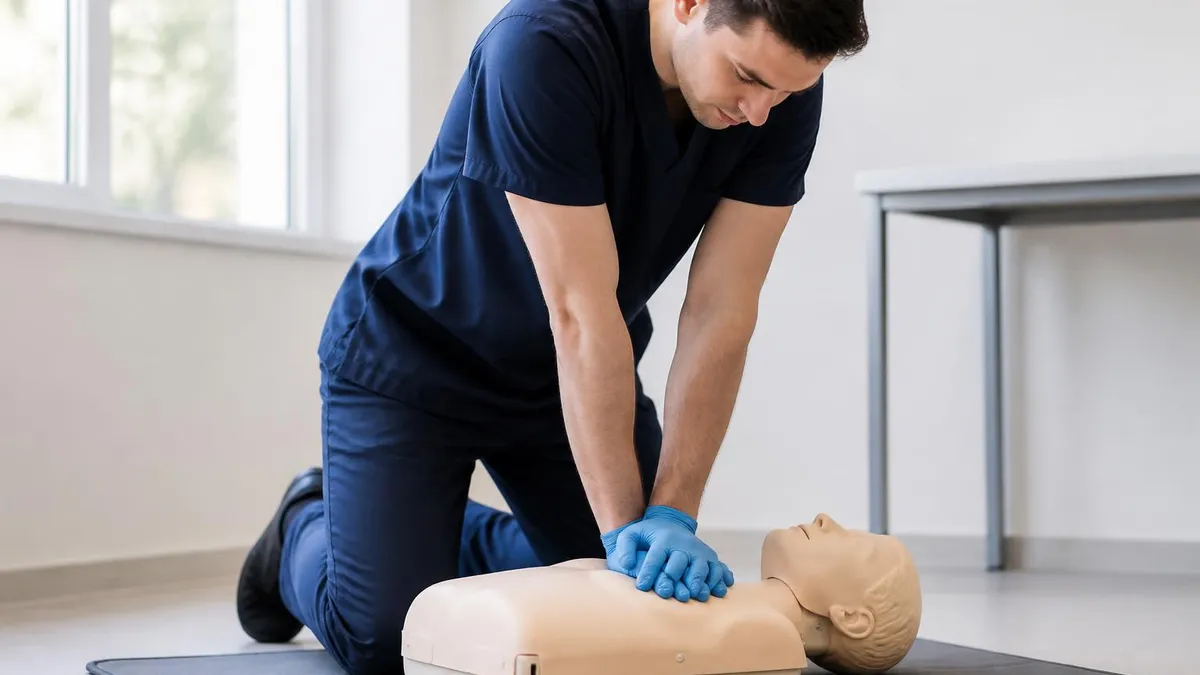
CPR Training Providers 2026: How to Choose a Course That Counts
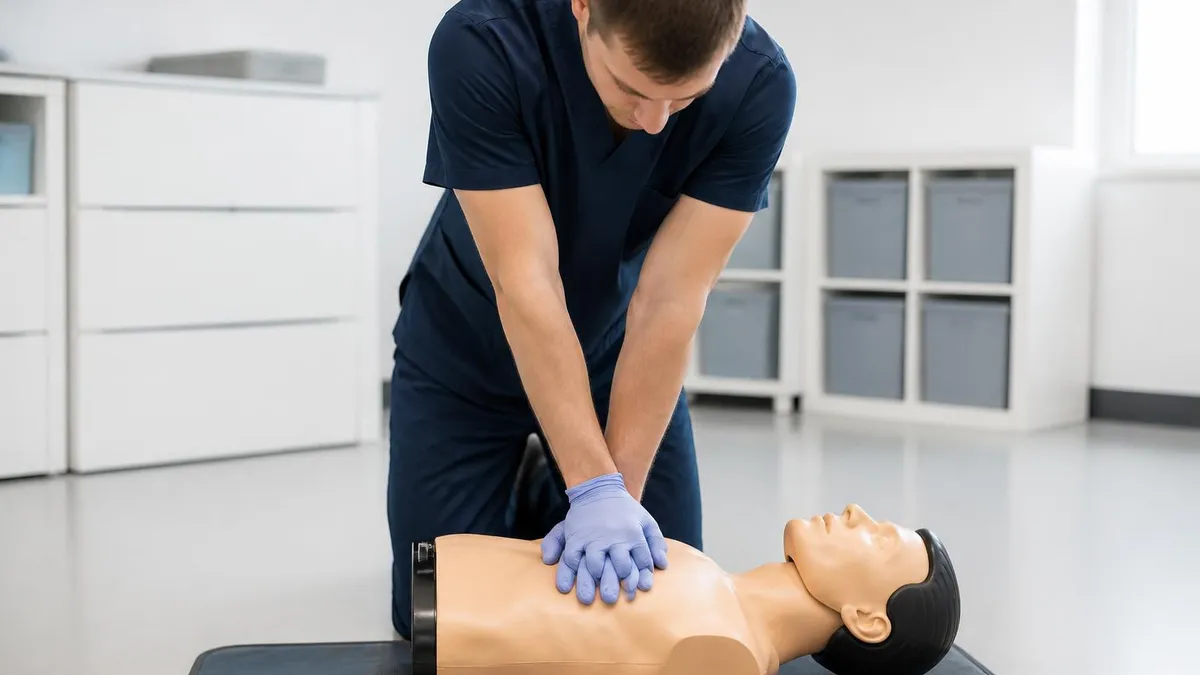
Free Online CPR Certification: Complete Guide to Legitimate Courses, Costs, and Workplace Acceptance in 2026
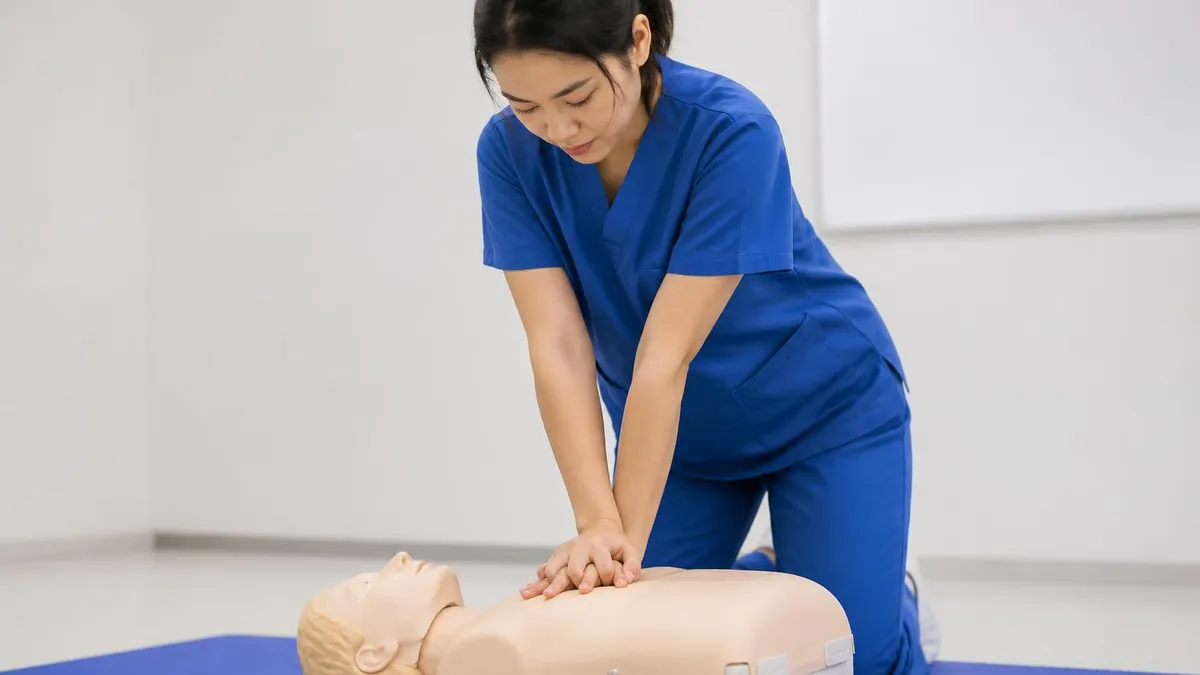
CPR Instructor Certification 2026: Complete Path to Teaching CPR
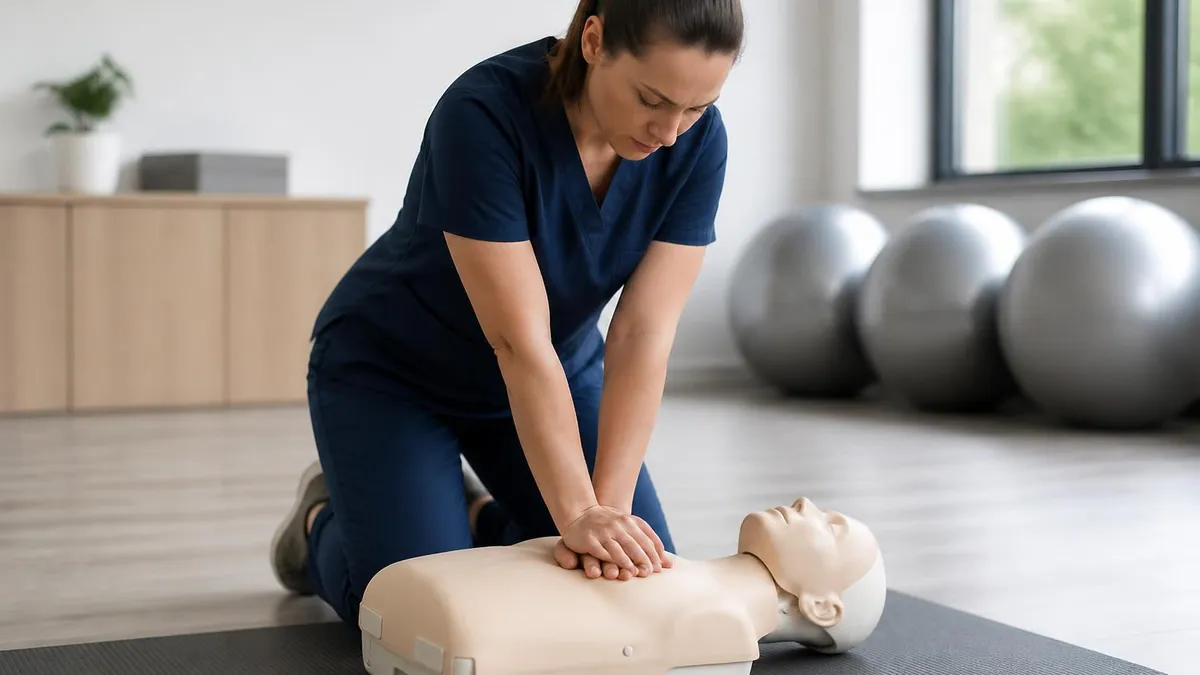
Red Cross CPR Class: Complete Guide to Courses, Certification, and What to Expect in 2026
About the Author

Registered Nurse & Healthcare Educator
Johns Hopkins University School of NursingDr. Sarah Mitchell is a board-certified registered nurse with over 15 years of clinical and academic experience. She completed her PhD in Nursing Science at Johns Hopkins University and has taught NCLEX preparation and clinical skills courses for nursing students across the United States. Her research focuses on evidence-based exam preparation strategies for healthcare certification candidates.
Join the Discussion
Connect with other students preparing for this exam. Share tips, ask questions, and get advice from people who have been there.
View discussion (5 replies)