
CPR Certification Expiration: Complete Guide to Renewal, ACLS Algorithm, and Staying Certified in 2026 September
CPR certification expiration explained ✅ Learn renewal timelines, ACLS algorithm updates, PALS, infant CPR, and how to stay certified in 2026 September.
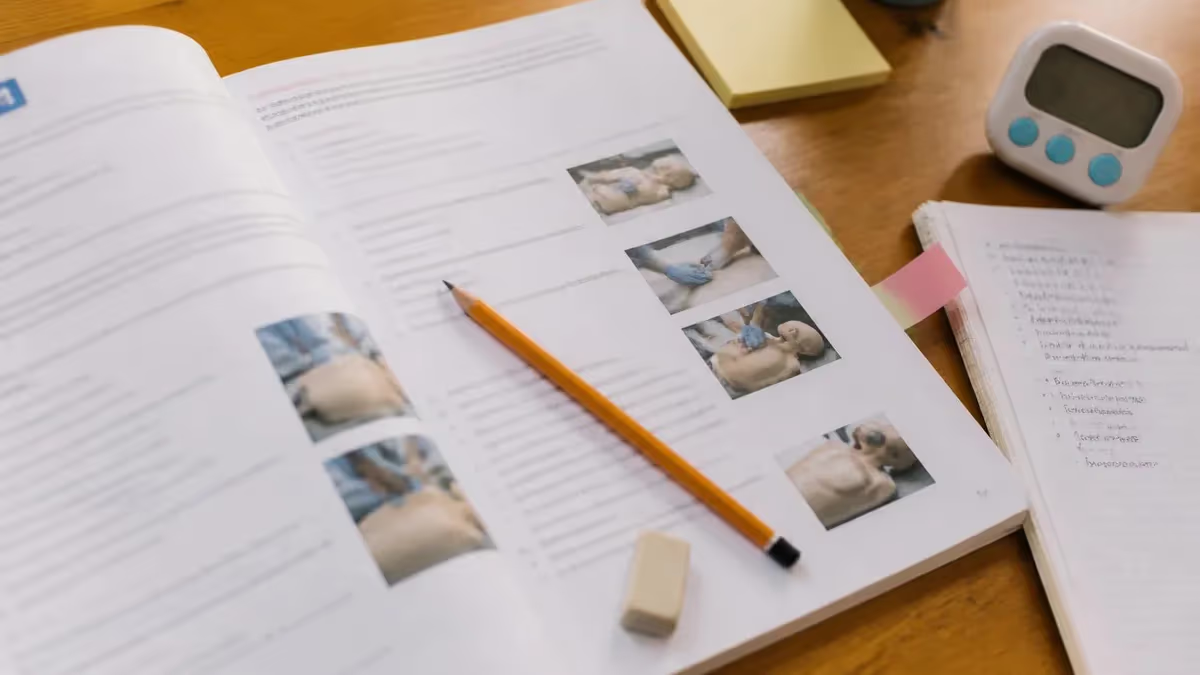
Understanding cpr certification expiration is essential for healthcare workers, first responders, teachers, coaches, and anyone required to maintain valid life support credentials. Most standard CPR certifications issued by organizations like the American Heart Association, Red Cross, and the National CPR Foundation expire every two years, though some specialized credentials — including ACLS algorithm-based courses and PALS certification — follow their own renewal schedules. Staying aware of your exact expiration date is not just a professional formality; it can mean the difference between being legally authorized to respond and being caught unprepared during a critical emergency.
The ACLS algorithm, which guides providers through advanced cardiovascular life support protocols, is updated periodically by the AHA based on the latest clinical evidence. When certification expires, providers may miss critical updates to these algorithms, including changes to compression-to-ventilation ratios, drug dosing, and rhythm recognition. Healthcare employers, hospitals, and accrediting bodies all require current certification, and an expired card can lead to suspension from clinical duties, failed audits, or even liability issues in the event of a cardiac arrest response. Renewal is not simply a bureaucratic step — it is a clinical safety requirement.
PALS certification, which covers pediatric advanced life support, and infant CPR training share a similar two-year renewal window but involve unique skill sets that require hands-on refreshers. Infant CPR technique differs substantially from adult CPR: providers use two fingers rather than the heel of the hand, deliver gentler chest compressions, and carefully measure respiratory rate because infants breathe much faster than adults — typically 30 to 60 breaths per minute at rest. Failing to keep infant CPR skills current is a significant concern for pediatric nurses, daycare workers, and parents with newborns in the home.
One important concept tied to CPR certification is the recovery position, sometimes called the position recovery technique, used when a victim is unconscious but breathing normally. This lateral positioning prevents aspiration by allowing fluids to drain from the airway.
Knowing when and how to place a patient in this position is part of comprehensive CPR and first aid training, and it is often tested on certification renewal exams. Another common question in renewal courses is: what does AED stand for? The answer — automated external defibrillator — reflects a device that is now standard in airports, schools, gyms, and offices across the United States.
The question of what does AED stand for comes up frequently in certification exams because AED integration is central to the modern chain of survival. Early defibrillation dramatically increases survival rates from sudden cardiac arrest, and AEDs are designed to be used by laypeople without prior training — though certified providers are expected to operate them confidently and quickly. Recertification courses review AED operation in detail, including pad placement, voice prompt interpretation, and when to deliver a shock versus when to continue CPR cycles.
Some people searching for CPR help inadvertently find results about CPR cell phone repair or CPR phone repair shops — a completely unrelated chain of electronics stores. When you are looking for information about life support recertification, be specific in your search queries to avoid confusion. This article focuses entirely on cardiopulmonary resuscitation certification, covering every major renewal scenario so you can maintain uninterrupted credentials and stay prepared to save a life at any moment.
Whether you are a registered nurse approaching your two-year mark, a personal trainer whose employer mandates current BLS credentials, or a parent who completed an infant CPR course and wants to know when to renew, the information in this guide will walk you through every aspect of CPR certification expiration — from understanding grace periods and lapsed certification policies to navigating the specific renewal requirements for ACLS, PALS, and basic life support courses across all major certifying bodies.
CPR Certification Expiration by the Numbers

CPR Certification Types and Their Expiration Schedules
The most common certification for healthcare providers. BLS credentials from the AHA or Red Cross expire every two years. Renewal requires a skills check and written exam, and most employers mandate this before the expiration date, not after.
Advanced Cardiovascular Life Support certification, built around the ACLS algorithm, also expires every two years. It targets physicians, nurses, paramedics, and respiratory therapists managing complex cardiac emergencies in clinical settings.
Pediatric Advanced Life Support certification for providers treating critically ill children. Like ACLS, PALS certification expires every two years and requires both a written exam and a hands-on scenario station for renewal.
Designed for non-healthcare workers including teachers, coaches, and corporate employees. These certifications typically expire every two years and may be offered in blended online-plus-skills formats by the National CPR Foundation and others.
Instructors who teach CPR classes hold their own credentials, which generally expire every two years but require active teaching logs and instructor monitoring sessions to maintain. Some organizations extend validity up to four years.
The ACLS algorithm is one of the most clinically significant frameworks in emergency medicine, and understanding how its updates affect your certification is critical for every provider. The American Heart Association revises the ACLS algorithm based on periodic evidence reviews conducted by the International Liaison Committee on Resuscitation (ILCOR). These reviews occur every five years, with interim updates published as new evidence emerges.
When you renew your ACLS certification, you are not simply refreshing old knowledge — you are learning the current, evidence-based protocol that reflects the best available science. Skipping renewal means operating with outdated algorithms, which can have serious consequences in the resuscitation bay.
PALS certification renewal follows a similar two-year cadence and is often required alongside ACLS for providers working in emergency departments, pediatric ICUs, and neonatal units. The PALS curriculum covers respiratory emergencies including recognition of abnormal respiratory rate in infants and children, shock management, cardiac arrest algorithms specific to the pediatric population, and post-resuscitation care.
A child's normal respiratory rate varies dramatically by age — a newborn breathes 40 to 60 times per minute, a toddler 24 to 40, and a school-age child 18 to 30. Recognizing deviations from normal respiratory rate values is a key skill tested in PALS renewal scenarios.
The National CPR Foundation is one of the more flexible certifying organizations, offering fully online CPR and AED certification that is accepted by many employers. Their certifications also carry a two-year expiration. However, it is important to note that purely online certifications without a hands-on component may not satisfy requirements for clinical healthcare positions, where AHA or Red Cross certification with in-person skills validation is often mandated. Always verify your employer's specific requirements before choosing a renewal pathway through the National CPR Foundation or any online-only provider.
Life support training encompasses far more than chest compressions. A complete renewal course covers the full chain of survival: recognizing cardiac arrest, activating emergency services, providing high-quality CPR, using an AED, and supporting advanced life support until EMS or hospital staff take over. The concept of life support also extends to airway management — positioning the airway with a head-tilt chin-lift or jaw thrust, providing rescue breaths, and using bag-valve masks. Each of these skills degrades without practice, which is precisely why two-year renewal intervals were established as the evidence-based standard for maintaining competency.
One frequently asked question is whether certification from one organization is accepted when renewing through another. For example, can an AHA BLS card be renewed through a Red Cross course? The answer depends on your employer and state regulations. Most hospitals accept both AHA and Red Cross credentials interchangeably for BLS, but ACLS and PALS are more organization-specific. If your hospital's policy stipulates AHA ACLS, a Red Cross ACLS renewal may require additional verification. Always check with your HR or education department before switching certifying bodies to avoid compliance gaps.
Another nuance in the renewal landscape involves grace periods. While the AHA does not officially endorse grace periods for expired credentials, some healthcare systems allow providers up to 30 or 60 days past the expiration date before restricting clinical activity. This is an institutional policy, not a standard rule, and it varies widely.
Relying on a grace period is risky — if an adverse event occurs while your certification is expired, even during a grace window, liability and regulatory scrutiny can be significant. The safest approach is to renew 60 to 90 days before your expiration date to accommodate scheduling conflicts, class availability, and any required retesting.
For providers managing multiple certifications — such as a nurse holding BLS, ACLS, and PALS simultaneously — staggering renewal dates can be a practical strategy. If all three expire at the same time, you face a tight renewal window with high course fees clustered together. Some providers intentionally renew ACLS one year after their initial BLS renewal so that the two expirations are offset. Similarly, those who hold NRP (Neonatal Resuscitation Program) credentials, which also expire every two years, should map out a certification calendar and set reminders at the 18-month mark to begin scheduling their renewal courses early.
Infant CPR, Recovery Position, and AED Essentials
Infant CPR differs fundamentally from adult technique. Providers use two fingers placed just below the nipple line on the sternum, compressing approximately 1.5 inches deep at a rate of 100 to 120 compressions per minute. Breaths are delivered as gentle puffs covering both the infant's mouth and nose simultaneously, with each breath lasting about one second and producing visible chest rise. The compression-to-ventilation ratio for a single rescuer is 30:2, while two trained rescuers use a 15:2 ratio to optimize oxygenation in pediatric cardiac arrest cases.
Monitoring respiratory rate is especially important when assessing infants before and after CPR intervention. A normal infant breathes 30 to 60 times per minute; any rate below 20 or above 60 paired with labored breathing, nasal flaring, or retractions signals a potential emergency requiring immediate intervention. Renewal courses for infant CPR use high-fidelity manikins that mimic realistic infant anatomy, ensuring providers practice the correct hand position, compression depth, and ventilation volume. Annual skills refreshers between formal two-year renewals are strongly recommended for providers who regularly care for neonates or infants in clinical or home settings.

Online vs. In-Person CPR Renewal: Pros and Cons
- +Online blended courses allow providers to complete the knowledge portion on their own schedule, reducing time away from work
- +National CPR Foundation and similar online platforms offer certifications at a fraction of in-person class costs
- +Digital completion cards are issued immediately after passing the exam, eliminating waiting periods for physical cards
- +Self-paced online modules accommodate night-shift workers, travel nurses, and providers in rural areas with limited class access
- +Video demonstrations in online courses often allow multiple replays, reinforcing ACLS algorithm steps and infant CPR technique
- +Blended renewal options are increasingly accepted by non-clinical employers, corporate wellness programs, and community organizations
- −Purely online certifications typically do not satisfy AHA or ARC requirements for clinical healthcare roles requiring hands-on skills validation
- −Hands-on manikin practice, which is essential for maintaining compression depth and ventilation technique, cannot be replicated online
- −Instructors cannot provide real-time corrective feedback on posture, hand placement, or breath delivery through an online-only platform
- −Some state regulations and Joint Commission standards explicitly require in-person or blended (not fully online) certification for licensed providers
- −Technology issues — poor internet connection, browser incompatibilities, or video buffering — can disrupt or delay the renewal process
- −Providers who renew purely online may develop confidence gaps that only emerge under the physiological stress of a real cardiac arrest scenario
CPR Certification Renewal Checklist: 10 Steps Before Your Expiration Date
- ✓Locate your current certification card and record the exact expiration date in a digital calendar with an 18-month reminder.
- ✓Confirm whether your employer requires AHA, Red Cross, or National CPR Foundation credentials — do not assume all cards are interchangeable.
- ✓Determine which certification levels you must renew: BLS only, or BLS plus ACLS algorithm, PALS, or infant CPR specializations.
- ✓Register for a renewal course at least 60 to 90 days before your expiration date to account for scheduling and retesting delays.
- ✓Review the latest ACLS algorithm updates and any AHA guideline changes published since your last certification cycle.
- ✓Practice chest compressions, ventilation rates, and AED operation on a manikin at home or through a skills refresher session before your renewal class.
- ✓Brush up on infant CPR technique, respiratory rate norms by age group, and the recovery position for unconscious but breathing victims.
- ✓Complete any required online pre-course modules before your in-person skills session to maximize hands-on practice time.
- ✓Bring your previous certification card, a valid photo ID, and any employer paperwork requiring the provider's completion date to your renewal class.
- ✓Verify your digital or physical renewal card has been issued and upload a copy to your employer's HR system or credentialing portal within 48 hours.
Renewing 60–90 Days Early Protects Your Credentials
Your renewed certification clock resets from your old expiration date — not the date you took the renewal class. This means renewing 60 to 90 days early does not shorten your next certification cycle. You effectively get a longer valid period while eliminating the risk of a lapsed credential window. Schedule your renewal class well in advance, especially for ACLS and PALS, where seat availability in hospital-based courses fills quickly at the end of each calendar quarter.
When CPR certification expires, the consequences range from minor administrative inconvenience to serious professional and legal complications, depending on your role and workplace policies. For lay responders — teachers, office workers, or fitness instructors — an expired card typically means they are no longer officially authorized to respond as a designated first responder within their organization's emergency action plan. While a bystander is never legally required to have a valid CPR card to help someone in distress, most employers require current certification as a condition of a specific job duty or emergency response team membership.
For licensed healthcare providers, the stakes are considerably higher. Registered nurses, physicians, paramedics, and respiratory therapists are generally required by their state licensing boards, hospital credentialing committees, and accrediting organizations such as The Joint Commission to maintain current BLS and any advanced life support certifications without interruption.
An expired ACLS or BLS credential can trigger a credentialing hold, preventing the provider from working in certain clinical areas until the certification is renewed and documented. In high-acuity settings — emergency departments, cardiac catheterization labs, and intensive care units — losing clinical privileges even temporarily disrupts patient care and creates staffing emergencies for the department.
Another consequence of certification lapse involves life support protocols. Providers who allow their ACLS algorithm certification to lapse may be unfamiliar with the most recent guideline updates when they return to practice. The AHA updated its guidelines in 2020 with significant changes to CPR quality metrics, drug use in cardiac arrest, and post-resuscitation care.
Providers who last certified before 2020 and then lapsed for several years re-entered practice with a knowledge deficit. Renewal courses are specifically designed to bridge this gap, but only if the provider actually completes them in a timely manner rather than waiting until a crisis forces action.
The situation is also complex for providers holding multiple advanced certifications. A lapsed PALS card, for instance, means a pediatric emergency nurse can no longer independently manage a pediatric code or participate in PALS-required simulation drills. Hospitals track these certifications through credentialing software, and automated alerts are sent to managers when a provider's card is within 90 days of expiration.
Failing to act on these alerts — which are also sent to the provider — is a common cause of preventable lapses. Building renewal into your personal professional development calendar, not just relying on employer reminders, is essential for uninterrupted certification status.
Some providers wonder whether a lapsed certification can be renewed using an expedited or makeup pathway, rather than starting a full initial certification course from scratch. The answer depends on the certifying organization and how long the credential has been expired.
The AHA allows providers whose BLS, ACLS, or PALS certifications have been expired for less than 30 days to complete a renewal course rather than a full initial course. Beyond 30 days, most organizations require the full initial certification course — including all content modules and skills stations — rather than the abbreviated renewal format, which adds time and cost to the process.
It is worth noting that some states have specific laws governing CPR certification requirements for particular occupations beyond healthcare. California, for example, requires CPR certification for childcare workers, school employees, coaches, and personal care aides. Texas mandates CPR training for athletic coaches in public schools. Florida requires it for certain lifeguard and aquatics positions. In each of these regulatory environments, an expired CPR card could jeopardize employment or trigger mandatory administrative leave until the certification is restored. Staying current is therefore both a clinical competency issue and, in many states, a legal employment requirement.
The financial implications of lapsed certification are also worth considering. Full initial certification courses cost significantly more than renewal courses — typically $150 to $250 for ACLS or PALS initial certification versus $75 to $125 for a renewal. If you allow your certification to lapse by more than 30 days and must retake the full course, you pay a substantial premium in both course fees and time investment.
For providers holding three certifications simultaneously, the cost of avoidable full recertification across all three could easily exceed $500, compared to roughly $225 to $375 for timely renewals. The math strongly favors proactive renewal scheduling.

While some healthcare systems informally allow 30 to 60 days past expiration before restricting clinical privileges, this is an institutional policy — not an AHA or regulatory standard. If a patient adverse event occurs while your certification is technically expired, even within an employer's grace window, you may face heightened liability and regulatory scrutiny. Always renew at least 60 days before your expiration date to maintain uninterrupted, unquestioned credentials and professional standing.
Choosing the right renewal provider is one of the most consequential decisions in maintaining your CPR credentials, and it deserves careful thought rather than a hasty online search that might surface results for CPR cell phone repair shops rather than life support training centers. The landscape of CPR certification providers in the United States includes several major national organizations, each with distinct course structures, price points, and employer acceptance profiles. The American Heart Association remains the gold standard for healthcare settings, with BLS, ACLS, and PALS courses offered through a vast network of training centers and hospital education departments nationwide.
The American Red Cross is the second major player and is broadly accepted across both clinical and non-clinical settings. Red Cross courses are available in person at community locations and through blended online-plus-skills formats. Their Heartsaver CPR AED course is widely used in corporate settings, schools, and fitness facilities. The National CPR Foundation offers a fully digital certification pathway that is especially popular among non-clinical workers who need a valid card quickly and affordably. While National CPR Foundation cards are not accepted by all hospitals for clinical roles, they satisfy many employer requirements in education, fitness, childcare, and corporate environments.
When evaluating renewal providers, consider four key factors: employer acceptance, cost, scheduling flexibility, and course content currency. Employer acceptance is non-negotiable — verify before enrolling that your workplace or licensing board accepts the certifying organization's credentials. Cost matters, particularly for providers managing multiple certifications, but the cheapest option is worthless if your employer rejects it. Scheduling flexibility is important for providers with irregular shifts or rural locations where in-person classes are infrequent. Course content currency ensures you are learning the most up-to-date ACLS algorithm, infant CPR protocols, and AED integration techniques based on the latest international guidelines.
Hospital-based renewal programs deserve special mention for healthcare providers. Many large health systems operate their own AHA-authorized training centers within the hospital, offering BLS, ACLS, and PALS renewal courses exclusively for staff. These programs are typically subsidized by the employer, reducing or eliminating the out-of-pocket cost for the provider. They are also scheduled around shift patterns, with early morning, evening, and weekend options to accommodate 24-hour staffing models. If your hospital offers an internal renewal program, it is almost always the most convenient and cost-effective option, and the completion is automatically recorded in the credentialing system.
Community colleges and vocational schools also offer CPR renewal courses at competitive rates, particularly for non-clinical populations. These programs often run Heartsaver or community CPR courses rather than healthcare-level BLS, so confirm the course level matches your job requirements before enrolling. For providers who travel frequently or work across multiple states, mobile CPR training companies offer on-site group renewal sessions that can be booked for teams of five or more, reducing both cost and logistics for employers who need to renew an entire department simultaneously.
International providers and travelers should be aware that CPR certification issued by US organizations may not be automatically recognized in other countries. Providers working abroad, on international medical missions, or for global employers may need to obtain host-country certifications in addition to their US credentials. Conversely, internationally trained providers working in the US are typically required to obtain AHA or Red Cross certification to meet American hospital credentialing standards, regardless of their training history. This is a common challenge for internationally educated nurses and physicians entering the US healthcare workforce.
Finally, remember that CPR renewal is most effective when combined with regular practice between certification cycles. Skills studies show that CPR quality degrades significantly within months of a training session without reinforcement. Many hospitals now use CPR prompt devices, feedback manikins available for free practice in break rooms, and quarterly code simulation drills to keep provider skills sharp between formal two-year renewals.
Taking advantage of these resources — and periodically reviewing the ACLS algorithm, infant CPR technique, and recovery position protocol on your own — ensures you are always ready to perform at your best when a real emergency demands it.
Practical preparation for CPR certification renewal begins long before you sit down in a classroom. Providers who perform best on renewal exams and skills stations are those who have been mentally and physically rehearsing their techniques throughout the two-year certification cycle, not cramming the night before class.
One of the most accessible preparation tools is a high-quality online practice test, which can reveal knowledge gaps in areas like the ACLS algorithm, infant CPR compression ratios, respiratory rate thresholds, and AED operation steps. Taking several practice exams in the weeks before your renewal course helps solidify knowledge and reduces test anxiety during the formal evaluation.
For ACLS renewal, focus specifically on rhythm recognition, as this is where providers most commonly struggle. The ability to rapidly identify ventricular fibrillation, pulseless ventricular tachycardia, asystole, and pulseless electrical activity on a monitor tracing — and respond with the correct ACLS algorithm branch — is a core competency tested in every renewal. Study the peri-arrest rhythms as well, including atrial fibrillation with rapid ventricular response, symptomatic bradycardia, and third-degree heart block, since the ACLS algorithm addresses cardioversion and pacing for these conditions even when cardiac arrest has not yet occurred.
For PALS renewal, review the pediatric assessment triangle — appearance, work of breathing, and circulation to the skin — which is the foundational framework for rapidly categorizing a sick child's condition. Practice computing normal respiratory rate ranges for different pediatric age groups and recall the weight-based drug dosing principles that make pediatric resuscitation fundamentally different from adult protocols. Simulation-based preparation, where you walk through pediatric respiratory failure, septic shock, and cardiac arrest scenarios verbally or with a practice partner, builds the mental fluency needed to perform smoothly under pressure during the skills evaluation station.
For infant CPR renewal specifically, physical practice on an infant manikin is indispensable. The subtle differences in hand position, compression depth (1.5 inches versus 2 inches for adults), and breath volume (small puffs rather than full breaths) require muscle memory that verbal rehearsal cannot fully develop.
Many hospital pediatric education departments offer open-skills lab sessions between formal classes, allowing providers to practice on high-fidelity infant manikins at no cost. Parents of infants and toddlers in particular should seek out these resources, since infant CPR is one of the most critical skills a caregiver can possess and one of the most anxiety-provoking to use in a real emergency.
AED proficiency is another area where physical practice pays significant dividends. Knowing the answer to what does AED stand for is the starting point, but confident hands-on operation under pressure is the goal. Practice attaching pads quickly and correctly, clearing the patient assertively before shock delivery, and immediately resuming chest compressions after the shock without waiting to reassess the rhythm. The AHA recommends limiting the pause around shock delivery — from stopping compressions to restarting them after the shock — to under 10 seconds. This can only be achieved consistently through repeated practice, not just theoretical knowledge.
Beyond technical skills, renewal preparation should also address the emotional and psychological dimensions of responding to a cardiac arrest. Studies consistently show that bystander CPR rates are lower than they should be, and one significant barrier is provider hesitation rooted in fear of doing harm, fear of liability, or emotional overwhelm in the moment.
Renewal courses increasingly incorporate team dynamics, communication training, and debriefing strategies to address these human factors. Learning to assign clear roles during a code, communicate compression counts and drug timing, and conduct a structured post-event debrief are skills that separate minimally competent providers from truly effective resuscitation team members.
The final piece of practical advice for maintaining CPR certification without gaps is to build redundancy into your tracking system. Do not rely on a single reminder — set calendar alerts on your phone and your home computer, inform a trusted colleague or spouse who can remind you as well, and check in with your department's education coordinator annually.
Keep a digital photo of your certification card stored in your phone's photo library for quick reference, and maintain a personal professional portfolio that documents all your certifications, renewal dates, and continuing education credits. This proactive approach ensures that CPR certification expiration never sneaks up on you, and that you remain always ready to deliver life-saving care when it matters most.
CPR Questions and Answers
How Long Does CPR Certification Last? 2026 Renewal Guide
Extracorporeal CPR (ECPR): Complete Guide to Mechanical Circulatory Support During Cardiac Arrest in 2026
Free Online CPR Certification: Complete Guide to Legitimate Courses, Costs, and Workplace Acceptance in 2026
CPR Instructor Certification 2026: Complete Path to Teaching CPR
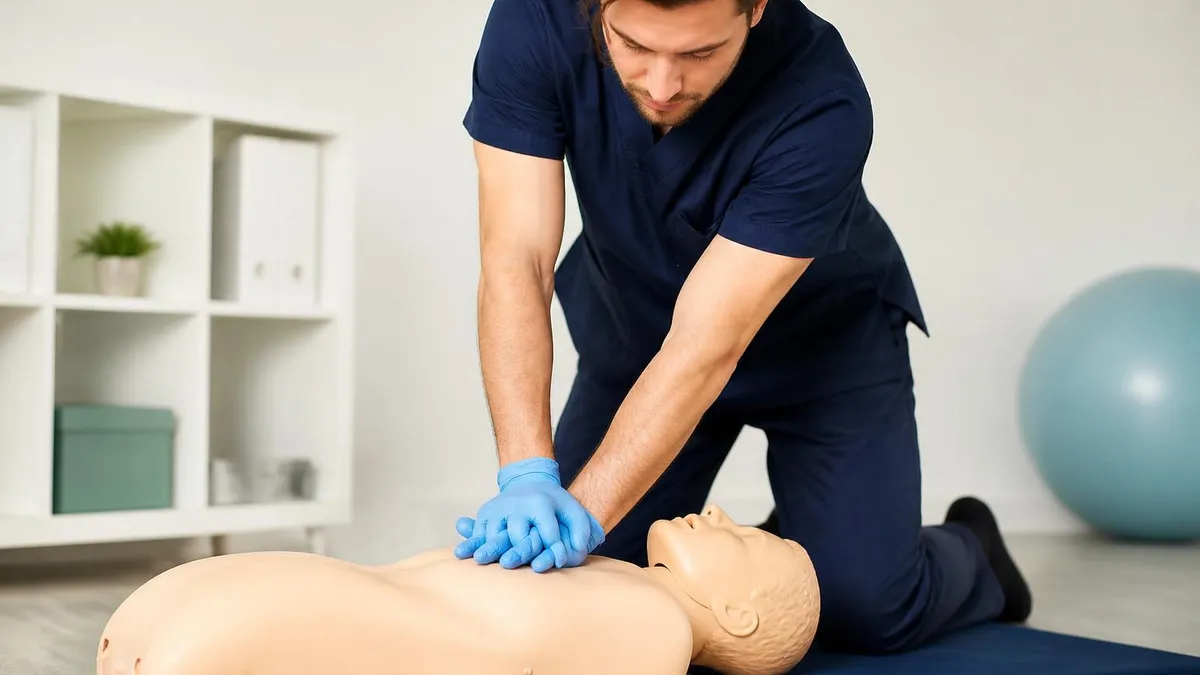
CPR Course: How to Choose the Right Training Program
About the Author

Registered Nurse & Healthcare Educator
Johns Hopkins University School of NursingDr. Sarah Mitchell is a board-certified registered nurse with over 15 years of clinical and academic experience. She completed her PhD in Nursing Science at Johns Hopkins University and has taught NCLEX preparation and clinical skills courses for nursing students across the United States. Her research focuses on evidence-based exam preparation strategies for healthcare certification candidates.
Join the Discussion
Connect with other students preparing for this exam. Share tips, ask questions, and get advice from people who have been there.
View discussion (5 replies)