
CPR and AED Certification: Courses, Cost and What to Expect 2026 October
CPR and AED certification guide — ✏️ Heartsaver vs BLS, course content, costs, formats, renewal cycle and how AEDs work alongside CPR.
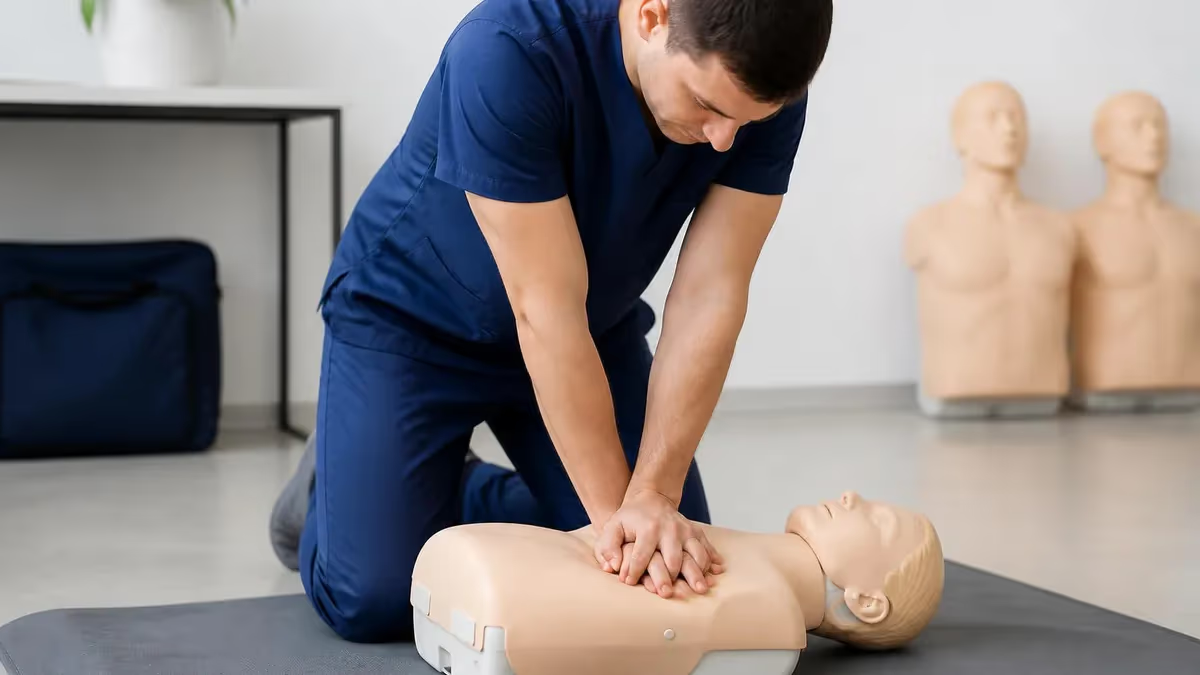
CPR and AED certification combines the two most important skills for responding to sudden cardiac arrest — cardiopulmonary resuscitation to maintain blood flow and breathing, and use of an automated external defibrillator to restore a normal heart rhythm when one is needed. Sudden cardiac arrest kills more than 350,000 Americans outside of hospitals each year, and the survival rate is heavily dependent on whether bystanders perform effective CPR and apply an AED before paramedics arrive. Trained bystanders save lives in measurable numbers each year through these two skills.
The combined CPR and AED certification courses run 3 to 4 hours for non-medical professionals (Heartsaver level) and 4 to 5 hours for healthcare providers (Basic Life Support level). The curriculum covers chest compression technique, adult/child/infant CPR variations, AED operation including pad placement and shock delivery, choking response and recovery position. Each course includes hands-on practice on manikins so students physically perform the skills before the certification is issued. Cost runs $50 to $100 for Heartsaver and $80 to $150 for BLS depending on provider and location.
The combination of CPR and AED is more powerful than CPR alone. Sudden cardiac arrest is most often caused by ventricular fibrillation, a chaotic electrical rhythm that the heart cannot recover from on its own. CPR maintains some blood flow but does not restore the rhythm. The AED delivers a measured electrical shock that can reset the heart back to normal sinus rhythm if applied within minutes. Combined, CPR plus prompt AED use can produce survival rates of 50% to 70% in witnessed cardiac arrests where bystanders responded immediately.
This guide explains the combined CPR and AED certification — what each component teaches, the difference between Heartsaver (lay-person level) and BLS (healthcare provider level), course formats and costs, where AEDs are typically located in your community, the rules around employer requirements and Good Samaritan laws, and the renewal cycle that maintains your certification over time. Whether you are a parent, teacher, gym member, office worker or healthcare professional, understanding the certification helps you choose the right level for your needs.

CPR and AED in 30 seconds
Combined CPR and AED certification covers chest compressions, rescue breaths, AED operation and choking response. AHA Heartsaver CPR AED is the lay-person course (3-4 hours, $50-$100). AHA BLS for healthcare providers covers more advanced techniques (4-5 hours, $80-$150). Cards are valid 2 years. Combined CPR plus prompt AED use can produce survival rates of 50% to 70% in witnessed cardiac arrests. AEDs are now common in airports, gyms, schools, offices and many public spaces.
The Heartsaver CPR AED course from the American Heart Association is designed for laypersons — anyone who is not a healthcare provider but wants the skills to respond to a cardiac emergency. The course runs 3 to 4 hours in person, covering hands-only CPR and full CPR with rescue breaths, AED operation, adult/child/infant CPR variations and choking response. Students practice each skill on manikins under instructor supervision until competence is demonstrated. Cards are valid for 2 years and accepted by virtually every employer requiring CPR/AED certification.
The Basic Life Support (BLS) for Healthcare Providers course is the more advanced version aimed at clinical professionals. Medical assistants, nurses, doctors, EMTs, paramedics, dental hygienists and most clinical roles need BLS specifically rather than Heartsaver. The course covers two-rescuer CPR, use of bag-valve masks and pocket masks, more advanced AED scenarios and integration with healthcare team responses. Course length is 4 to 5 hours with the same 2-year card validity. Cost runs $80 to $150 depending on provider.
The American Red Cross offers equivalent courses at similar pricing. Red Cross CPR/AED for the Workplace is the lay-person equivalent to AHA Heartsaver. Red Cross CPR/AED for Professional Rescuers is the equivalent of AHA BLS. The two organizations dominate the U.S. CPR certification market with comparable curricula and similar broad acceptance. Most employers accept either AHA or Red Cross certifications interchangeably; check specific employer or licensing board requirements before paying for a course to avoid surprises.
Other recognized providers include ASHI (American Safety and Health Institute), the National Safety Council, Health & Safety Institute and various smaller organizations. These providers' certifications are accepted by most employers and meet OSHA standards for workplace responder training. The choice between providers usually comes down to local availability, scheduling fit and minor course content differences. The big-name AHA and Red Cross certifications are universally accepted; smaller-provider certifications cover the vast majority of common scenarios.
Top CPR/AED course providers
Largest U.S. CPR certification provider. Heartsaver CPR AED is the lay-person course (3-4 hours, $50-$100). BLS for Healthcare Providers is the clinical version (4-5 hours, $80-$150). Cards valid 2 years. AHA-affiliated training centers exist in nearly every U.S. city and accept group bookings for workplaces.
Second-largest provider with equivalent curricula. CPR/AED for the Workplace is the Heartsaver equivalent. CPR/AED for Professional Rescuers is the BLS equivalent. Cards valid 2 years. Red Cross chapters and affiliated training centers offer broad availability across the U.S. Wide acceptance by employers and licensing boards.
American Safety and Health Institute and National Safety Council offer equivalent CPR/AED certifications. Acceptable for OSHA workplace responder requirements and most employer policies. Often used in workplace safety contexts and through occupational health providers. Pricing similar to AHA and Red Cross with 2-year card validity.
Various online-only CPR certification providers exist but acceptance is mixed. Many employers require in-person or blended training. Online-only certifications work for some general preparedness purposes but are not accepted for healthcare providers, lifeguards, athletic trainers and many regulated workplace roles. Verify acceptance with your employer first.
The course content covers four major skill areas. CPR for adults emphasizes high-quality chest compressions — the technique to push hard and fast at 100 to 120 compressions per minute, allow full chest recoil between compressions, minimize interruptions, and combine with rescue breaths if trained. The compression rate is the same whether the rescuer is alone or part of a team; the depth (about 2 inches for adults) and rhythm matter as much as the technique itself.
Pediatric CPR (child and infant) involves modifications. Child CPR (ages 1 to 8) uses one or two hands depending on the child's size. Infant CPR (under 1) uses two fingers in the center of the chest just below the nipple line, compressing about 1.5 inches deep. The compression rate stays at 100 to 120 per minute. The breath-to-compression ratio is 30:2 for one rescuer or 15:2 for two rescuers in pediatric CPR. The technique adjustments matter because adult-style CPR on an infant can cause injury.
AED operation is intuitive but important to understand. The device is designed for use by laypersons. Turn it on, place the pads on the bare chest as shown on the device's images (typically one pad on the upper right chest and one on the lower left chest), let the device analyze the heart rhythm, follow the voice prompts to deliver a shock if advised, and immediately resume CPR after the shock. The whole AED interaction takes about 30 to 60 seconds per cycle, with CPR resuming as fast as the device allows.
Choking response covers conscious and unconscious adult, child and infant scenarios. For conscious adults and children, the technique is alternating sets of back blows and abdominal thrusts (Heimlich maneuver). For infants, gentle back blows and chest thrusts replace abdominal thrusts which are dangerous to infants. For unconscious choking victims, CPR is initiated immediately and the airway is checked between sets of compressions. The course teaches the specific differences for each age group.
Course skill components
Hands-only and full CPR with rescue breaths. Technique: heel of hand on center of chest, push hard and fast at 100-120 compressions per minute, depth about 2 inches, allow full chest recoil. For full CPR add 2 rescue breaths every 30 compressions. Continue until AED arrives, paramedics take over, or the victim shows signs of recovery. The single most important skill in cardiac arrest response.

Sudden cardiac arrest is the most common scenario where CPR and AED skills are needed. Each year more than 350,000 Americans experience cardiac arrest outside of hospitals; without intervention the survival rate is about 10%. With prompt bystander CPR and AED use, survival rates rise dramatically — research consistently shows 2 to 3 times higher survival when bystanders begin CPR within 1 to 2 minutes of collapse. AED use within 3 to 5 minutes can produce survival rates above 50% for certain rhythms.
AED placement in public spaces has expanded substantially over the past two decades. Airports, gyms, schools, large offices, sporting venues, casinos, malls and many other high-traffic spaces now have AEDs visibly located near the entrance or in central locations. Look for the green and white heart-and-lightning-bolt symbol that identifies AED stations. The PulsePoint app helps locate AEDs in many cities. The expanded availability means more cardiac arrest victims have an AED within reach when bystanders trained to use one are nearby.
Good Samaritan laws in all 50 states protect bystanders who attempt CPR or use AEDs in good faith from civil liability for injuries that may occur during the rescue. The protections vary by state but generally cover untrained and trained bystanders alike, as long as the help is provided without expectation of payment and the rescuer's actions are not grossly negligent. The laws exist specifically to encourage bystanders to act in cardiac emergencies. Concerns about liability should not deter trained rescuers from helping.
Employer requirements for CPR/AED certification vary by industry. OSHA general industry standard requires first aid trained personnel at workplaces lacking immediate medical access; certified CPR/AED responders satisfy this requirement. Specific industries (healthcare, childcare, fitness, education, food service, hospitality) often mandate certification for some or all employees. Schools commonly require certification for teachers, coaches and administrators. Confirm your specific employer's requirements; certification you obtain on your own initiative may also qualify for tuition reimbursement programs.
Even untrained bystanders can save lives through hands-only CPR (chest compressions without rescue breaths). 911 dispatchers walk callers through hands-only CPR in real time over the phone. Push hard and fast in the center of the chest at 100 to 120 compressions per minute. Hands-only CPR is nearly as effective as full CPR for adult cardiac arrest in the first several minutes. If you are not trained or unsure, do hands-only CPR rather than nothing — the alternative for the victim is no help at all.
The course format options include traditional in-person, blended (online plus in-person hands-on) and workplace group training. Traditional in-person courses run 3 to 5 hours in a single session. Blended courses split into 1 to 2 hours of online content (covering the cognitive material) plus 2 to 3 hours of in-person hands-on practice. The blended format is increasingly popular for working professionals because it splits the time commitment without compromising the hands-on validation that makes the certification credible.
Online-only CPR certification has limitations worth understanding. Some employers explicitly require in-person or blended training and reject online-only cards. Healthcare providers cannot use online-only certifications to satisfy clinical role requirements. Most state-licensed roles (childcare, build parents, teachers, athletic coaches) also require in-person or blended courses with hands-on validation. For pure preparedness without specific employer requirements, online-only courses provide some value but are usually not sufficient for professional roles.
Workplace group training delivered on-site is the most cost-effective and convenient path for employers certifying multiple employees. AHA training centers, Red Cross chapters and independent instructors deliver custom courses for groups of 6 to 24 employees. Cost per person typically runs $40 to $80 in group format versus $60 to $150 for individual public courses. Many employers fully cover the cost as a workplace benefit; ask your HR department before paying out of pocket.
For families and parents, the case for getting certified is strong. Children, elderly parents and family members with chronic medical conditions all face improved cardiac risk. Having someone in the household who can perform CPR within seconds rather than waiting 8 to 12 minutes for paramedics can be the difference between survival and death. The 3 to 4 hour course commitment is modest; the value if it ever matters is enormous. Many parents take the certification together as a household exercise.
Choose a CPR/AED course checklist
- ✓Confirm whether you need lay-person (Heartsaver) or healthcare provider (BLS) level
- ✓Verify acceptance with your employer or licensing board
- ✓Choose between traditional, blended or workplace group format
- ✓Confirm course covers both CPR and AED (some are CPR only)
- ✓Verify pediatric coverage (child and infant) if relevant
- ✓Check the course schedule fits your availability
- ✓Confirm certification card delivery (paper or digital)
- ✓Set a 60-day calendar reminder before your card expiration
- ✓Save digital and physical copies of your certification card
The 2-year card validity is the standard across major providers. Cards include the cardholder's name, the certification type, the date issued and the expiration date. AHA cards are increasingly issued digitally through the eCard system at heart.org/CPR; Red Cross cards are similarly available digitally. Bring or display the card when employers verify certification. Recertification before the card expires is the standard renewal path with abbreviated 3 to 4 hour courses at slightly lower cost than initial certification.
Skill retention is a real concern. Studies show that CPR skills decay substantially within 6 to 12 months without practice. The 2-year recertification cycle reflects this reality but many programs are moving toward shorter cycles or continuous practice models. The AHA's RQI (Resuscitation Quality Improvement) program rotates 3-month skill checks on feedback manikins for healthcare providers, maintaining accuracy continuously rather than letting skills decay between certifications.
For workplaces wanting to maintain organizational CPR readiness, the practical approach is to certify multiple employees per shift rather than relying on a single trained responder. Account for vacations, leaves of absence, employees who happen to be elsewhere when an emergency occurs and turnover. Coverage of two to four certified employees per shift ensures someone is always available. Posting names and locations of certified responders on bulletin boards near AED stations helps everyone know who to call when seconds matter.
For households with regular childcare needs (grandchildren, neighborhood babysitters), the case for child and infant CPR specifically is strong. The Heartsaver Pediatric First Aid CPR AED course is designed specifically for this population with extensive pediatric scenarios. The American Red Cross Adult and Pediatric First Aid/CPR/AED course is appropriate for parents who want comprehensive coverage across all age groups. Either path produces a useful credential applicable to family caregiving situations.

Public access defibrillation programs have transformed survival rates for cardiac arrest in equipped venues. Casinos, airports and large gym chains were among the first to install AEDs; many now report survival rates of 50% to 70% for cardiac arrests on their premises because the combination of fast bystander CPR and rapid AED deployment produces dramatically better outcomes than waiting for paramedics. The success of public access programs has driven AED installations into schools, sporting venues, places of worship and many other community spaces.
For the personal AED option, prices have dropped substantially. A consumer-grade AED for home use runs $1,200 to $2,500 in 2026, down from $3,000 to $5,000 a decade ago. Home AEDs make sense for households with high cardiac risk — known cardiac disease, family history of sudden cardiac death, elderly residents living alone. The AED is a one-time purchase with periodic battery and pad replacement (about $100 every 4 to 5 years). For high-risk households, the cost is modest insurance against the worst-case scenario.
CPR and AED quick reference
AED locations to know
Nearly every commercial airport in the U.S. has multiple AEDs visible near security checkpoints, gate areas and baggage claim. Major train stations and bus terminals also have AEDs. Look for the green and white heart-and-lightning-bolt symbol. Airport staff are typically CPR/AED certified and can assist or take over response if needed.
K-12 schools, colleges, fitness centers and chain gyms commonly have AEDs near front desks, athletic facilities and main offices. Many states mandate AEDs in schools or athletic facilities. Cardiac arrests during athletic activity are particularly responsive to AED treatment because the underlying heart is often otherwise healthy.
Large office buildings, manufacturing facilities, warehouses and similar workplaces increasingly have AEDs in common areas. OSHA does not yet mandate AEDs but encourages them. The AHA recommends AEDs at any workplace where a cardiac arrest could occur with response time greater than 3 to 5 minutes by paramedics.
Shopping malls, casinos, sporting venues, government buildings, museums, places of worship, large hotels. The PulsePoint app helps locate registered AEDs in many cities. The expansion of public access defibrillation has placed AEDs within minutes of nearly every cardiac arrest in urban areas, dramatically improving outcomes for victims who collapse in public.
For employers building organizational cardiac readiness, the practical steps include certifying multiple employees per shift, installing AEDs in central locations and registering them with local emergency dispatch systems so 911 calls can direct callers to the device. Many municipalities maintain registries of AED locations that integrate with dispatcher software. The combination of trained responders, on-site AEDs and integrated dispatch produces the best outcomes for cardiac arrests at the workplace.
For schools specifically, the legal landscape now strongly favors AED installation. Many states mandate AEDs in schools or athletic facilities, and high-profile cases of student-athlete cardiac arrest have driven adoption beyond statutory requirements. Coaches, athletic trainers and physical education staff typically maintain CPR/AED certification as a condition of employment. The combination has produced documented saves for student athletes whose cardiac events would have been fatal without trained on-site response.
CPR: Pros and Cons
- +CPR certification validates expertise recognized by employers nationwide
- +Certified professionals typically earn 15-20% higher salaries
- +Opens doors to advanced positions and leadership roles
- +Demonstrates commitment to professional standards and ethics
- +Builds a strong professional network through certification communities
- −Exam preparation typically requires 2-4 months of dedicated study
- −Certification and exam fees can range from $150-$500+
- −Must complete continuing education to maintain active certification
- −Pass rates vary — thorough preparation is essential for success
- −Some certifications require prerequisite experience or education
Pros and Cons at a Glance
| Pros | Cons |
|---|---|
| CPR certification validates expertise recognized by employers nationwide | Must complete continuing education to maintain active certification |
| Opens doors to advanced positions and leadership roles | Pass rates vary — thorough preparation is essential for success |
| Demonstrates commitment to professional standards and ethics | Some certifications require prerequisite experience or education |
CPR Questions and Answers
About the Author

Registered Nurse & Healthcare Educator
Johns Hopkins University School of NursingDr. Sarah Mitchell is a board-certified registered nurse with over 15 years of clinical and academic experience. She completed her PhD in Nursing Science at Johns Hopkins University and has taught NCLEX preparation and clinical skills courses for nursing students across the United States. Her research focuses on evidence-based exam preparation strategies for healthcare certification candidates.
Join the Discussion
Connect with other students preparing for this exam. Share tips, ask questions, and get advice from people who have been there.
View discussion (5 replies)