
CPR Classes Yakima: Complete Training Guide for Certification, ACLS, PALS & Life Support Skills
Find CPR classes in Yakima covering ACLS algorithm, PALS certification, infant CPR & AED use. 🎯 Complete guide to local training options and requirements.
If you are searching for CPR classes in Yakima, Washington, you have taken the first critical step toward becoming someone who can make a life-or-death difference in your community. Yakima County sees thousands of cardiac emergencies each year, and bystander CPR can more than double a victim's chance of survival. Whether you are a healthcare professional pursuing advanced credentials like the ACLS algorithm or a concerned parent wanting to learn infant CPR, Yakima offers a range of training programs designed to meet every skill level and professional requirement.
Understanding what the ACLS algorithm entails is essential for any healthcare provider working in high-acuity settings. The Advanced Cardiovascular Life Support algorithm is a systematic, evidence-based approach to managing cardiac arrest, stroke, and other cardiovascular emergencies. Developed and updated by the American Heart Association, the ACLS algorithm guides providers through rhythm recognition, medication administration, airway management, and team-based resuscitation. Courses covering this algorithm are widely available through hospitals, community colleges, and private training centers throughout the Yakima Valley.
Beyond ACLS, many Yakima residents seek out PALS certification — Pediatric Advanced Life Support — which is specifically designed for healthcare providers who respond to emergencies involving infants and children. PALS training combines didactic instruction with hands-on simulation scenarios so that providers can confidently manage pediatric respiratory distress, shock, and cardiac arrest. Local hospitals such as Virginia Mason Memorial and Astria Regional Medical Center regularly host PALS renewal and initial certification classes for their clinical staff.
For community members without medical backgrounds, basic CPR classes in Yakima provide the foundational skills needed to respond to emergencies at home, at work, or in public. These courses teach chest compression technique, rescue breathing, the recovery position, and how to use an automated external defibrillator. Many employers in Yakima — particularly those in construction, manufacturing, childcare, and education — require their employees to hold a current CPR card as a condition of employment, making certification both a life-saving skill and a professional credential.
The National CPR Foundation is one of several nationally recognized organizations offering CPR training curricula adopted by instructors in Yakima. Alongside the American Heart Association and the American Red Cross, the National CPR Foundation provides blended-learning courses that combine online coursework with a brief in-person skills check, making it easier for busy Yakima residents to earn their certification without sacrificing quality or rigor. These accredited programs are widely accepted by employers, schools, and licensing boards across Washington State.
One question that comes up frequently among those exploring cpr classes yakima is how long a certification remains valid. Most standard CPR and AED certifications are valid for two years, after which renewal training is required to maintain current status. ACLS and PALS certifications follow the same two-year renewal cycle. Staying current ensures that your skills reflect the latest guidelines issued by organizations like the American Heart Association, which updates its resuscitation science on a regular basis.
This comprehensive guide will walk you through everything you need to know about CPR training in Yakima — from choosing the right course level and provider to understanding what to expect during class, how much certification costs, and how to maintain your credentials long-term. Whether you are a first-time learner or a seasoned healthcare professional due for renewal, this article gives you the knowledge to make an informed decision and take confident action when it matters most.
CPR Training in Yakima by the Numbers
CPR Course Types Available in Yakima
Designed for the general public and non-clinical workers. Covers adult, child, and infant CPR, rescue breathing, choking relief, AED use, and the recovery position. Typically 3–4 hours and valid for two years.
Targets nurses, EMTs, medical assistants, and other clinical staff. Includes two-rescuer CPR, bag-mask ventilation, and high-performance team dynamics. Required by most Washington State healthcare employers.
Advanced Cardiovascular Life Support for physicians, nurses, and paramedics. Teaches the ACLS algorithm, rhythm interpretation, IV medication protocols, and megacode simulations. Initial courses run 2 full days.
Pediatric Advanced Life Support for providers treating children. Combines pharmacology, rhythm recognition, and pediatric-specific simulation scenarios. Essential for pediatric, emergency, and critical care staff.
Qualifies you to teach CPR and BLS courses independently. Requires current provider certification, completion of an instructor essentials course, and monitored teaching experience before full certification is granted.
The ACLS algorithm is the backbone of advanced resuscitation training and a required competency for physicians, registered nurses, nurse practitioners, physician assistants, and paramedics working in emergency, critical care, or surgical settings in Yakima. The algorithm covers the entire chain of survival: from recognizing a cardiac arrest and activating emergency services, to performing high-quality CPR, delivering defibrillation when indicated, administering appropriate medications, and providing post-resuscitation care. Understanding each link in this chain is what separates a good responder from a great one.
ACLS certification courses in Yakima typically run over two days for initial certification and one day for renewal. During initial ACLS training, participants work through a series of case-based scenarios covering ventricular fibrillation, pulseless ventricular tachycardia, asystole, pulseless electrical activity, bradycardia, tachycardia, acute coronary syndromes, and stroke. Each scenario tests not just individual skill but also the provider's ability to function as a team leader or team member, communicate clearly under pressure, and close the loop on critical tasks. Renewal courses condense this content with the assumption that participants already have foundational knowledge.
PALS certification similarly demands both cognitive knowledge and hands-on simulation competency. Pediatric emergencies are statistically less common than adult cardiac arrests, which means that providers who treat children must train diligently to maintain readiness. Yakima's PALS courses cover respiratory failure, respiratory arrest, shock (distributive, obstructive, hypovolemic, and cardiogenic), and cardiac arrest in the pediatric patient. Instructors emphasize that prompt recognition of respiratory distress — before it progresses to arrest — is the single most important skill in pediatric emergency medicine, because children most often arrest from respiratory causes rather than primary cardiac ones.
A critical concept introduced in both ACLS and PALS courses is the importance of monitoring respiratory rate as a vital sign. Normal respiratory rate in adults is 12–20 breaths per minute; in infants it is 30–60 breaths per minute; and in toddlers it falls between 20 and 30. Tachypnea — an elevated respiratory rate — is often the earliest warning sign of respiratory compromise, sepsis, or metabolic acidosis. Providers trained in Yakima's advanced life support courses learn to integrate respiratory rate assessment into their systematic patient evaluation alongside heart rate, blood pressure, oxygen saturation, and level of consciousness.
For professionals in Yakima who want the flexibility of self-paced study, blended-learning ACLS and PALS courses are available through the American Heart Association's HeartCode platform and through the National CPR Foundation. These programs deliver the cognitive portion of training online, allowing learners to study at their own pace before attending a condensed in-person skills session with an authorized instructor. This format is particularly popular among Yakima's healthcare workers who have irregular schedules due to night shifts or rotating assignments.
When evaluating providers for ACLS and PALS training in Yakima, it is important to select instructors and training sites that are aligned with a nationally recognized organization. The American Heart Association, American Red Cross, and National CPR Foundation all issue certifications that are broadly accepted by Washington State licensing boards and accreditation bodies. Some employers, particularly those affiliated with specific hospital systems, may have a preference for AHA certification specifically, so it is worth confirming your employer's requirements before enrolling.
Mastering the ACLS algorithm and earning PALS certification also opens doors to career advancement in Yakima's healthcare sector. Certified providers are eligible for positions in the emergency department, intensive care unit, cardiac catheterization laboratory, labor and delivery, and flight nursing programs. These certifications signal to employers that a provider has invested in their own competency and is prepared to function at a high level in the most demanding clinical environments. For anyone on a healthcare career path in Yakima, advanced life support certification is not optional — it is foundational.
Infant CPR, AED Use & Life Support Skills Explained
Infant CPR differs meaningfully from adult technique and requires specific training to perform correctly. For infants under one year of age, rescuers use two fingers (or two thumbs with encircling hands in a two-rescuer scenario) positioned just below the nipple line on the sternum. Compressions should compress the chest approximately 1.5 inches at a rate of 100–120 per minute. Rescue breaths for infants use only a small puff of air — enough to see the chest gently rise — because infant lung capacity is very limited compared to an adult.
One of the most common errors in infant CPR is delivering breaths that are too forceful, which can cause gastric inflation and increase the risk of regurgitation and aspiration. Yakima CPR instructors spend considerable time on infant manikin practice to help learners develop the right touch. Courses also cover infant choking relief, which uses alternating back blows and chest thrusts rather than the abdominal thrusts used for older children and adults. Parents, grandparents, childcare workers, and school staff in Yakima are especially encouraged to seek out infant CPR training as part of their certification.
In-Person vs. Online CPR Classes in Yakima: Which Is Right for You?
- +In-person classes provide immediate instructor feedback on compression depth and hand placement
- +Hands-on manikin practice builds true muscle memory you cannot develop through video alone
- +Real-time Q&A allows you to clarify confusing concepts with a certified instructor
- +In-person skills checks are required by most healthcare employers and licensing boards
- +Group scenarios in class simulate real emergency teamwork and communication dynamics
- +You leave class with a physical or same-day digital certification card ready for your employer
- −In-person classes require scheduling around fixed class times that may not suit shift workers
- −Travel to a training site may be challenging for residents in rural Yakima County
- −Full-day ACLS and PALS courses require significant time commitment from busy professionals
- −In-person-only courses may cost more than blended-learning alternatives
- −Class sizes can fill quickly, meaning you may wait weeks for the next available session
- −Some providers charge additional fees for retesting if you do not pass the written or skills evaluation on the first attempt
CPR Certification Checklist: What to Prepare Before Your Yakima Class
- ✓Confirm your employer's or licensing board's accepted certification organization (AHA, Red Cross, or National CPR Foundation).
- ✓Register for the correct course level — Heartsaver, BLS, ACLS, or PALS — based on your professional role.
- ✓Complete any required online pre-course work before your scheduled in-person skills session.
- ✓Wear comfortable, loose-fitting clothing that allows you to kneel and perform chest compressions on a floor manikin.
- ✓Bring a valid photo ID and any previous certification card if you are enrolling in a renewal course.
- ✓Review the compression rate (100–120/min), compression depth (2–2.4 inches for adults), and 30:2 compression-to-breath ratio before class.
- ✓Familiarize yourself with the steps for recognizing cardiac arrest: unresponsive, no normal breathing, no pulse.
- ✓Study basic AED operation: power on, attach pads, analyze rhythm, deliver shock if prompted, resume CPR immediately.
- ✓For ACLS renewal, review key medications including epinephrine, amiodarone, and atropine dosages and indications.
- ✓Plan to arrive 10–15 minutes early so you can complete any registration paperwork and get settled before class begins.
High-Quality CPR Starts Before the First Compression
Research consistently shows that the quality of CPR — measured by compression rate, depth, full chest recoil, and minimal interruptions — matters as much as the speed of defibrillation. Yakima instructors emphasize that learners who practice deliberately on manikins during class retain skills longer and perform better in real emergencies than those who simply watch demonstrations. Come to class ready to practice repeatedly, accept instructor corrections openly, and you will leave prepared to save a life.
Understanding the costs associated with CPR training in Yakima helps you budget appropriately and find the right program without overspending. Basic Heartsaver CPR and AED classes typically cost between $50 and $80 per person when taken through a community provider, a fire station community outreach program, or a community college. Group rates are available for employers who want to train multiple staff members at once — many Yakima businesses in the construction, education, and retail sectors take advantage of group pricing to fulfill their safety compliance requirements cost-effectively.
BLS for Healthcare Providers courses in Yakima generally run between $60 and $100, reflecting the slightly longer class duration and the more rigorous skills evaluation required. ACLS initial certification is the most expensive of the commonly sought credentials, typically ranging from $200 to $300 for a two-day course that includes all materials, manikin use, and certification card fees. ACLS renewal courses, which take one day rather than two, are usually priced between $125 and $175. PALS courses are similarly priced to ACLS, ranging from $200 to $280 for initial certification and $120 to $175 for renewal.
Some Yakima residents are surprised to discover that their health insurance plan may cover the cost of CPR training, particularly for courses that qualify as preventive health education. It is worth checking with your insurer before paying out of pocket. Additionally, many Yakima employers — especially in healthcare, manufacturing, and education — reimburse employees for the cost of required certification courses. Keep your receipt and certification card documentation to submit for reimbursement if this benefit is available to you.
Free or reduced-cost CPR training is available in Yakima through several channels. The Yakima Fire Department and Yakima County Emergency Management periodically offer free community CPR events, particularly during Heart Month in February and Stop the Bleed awareness campaigns. Local chapters of the American Red Cross may offer subsidized classes for low-income community members. Some employers, churches, and community organizations host free CPR training as a public service, with instructors volunteering their time to increase community readiness.
When comparing providers, do not choose solely on price. Confirm that the training organization is nationally accredited, that the instructor holds current teaching credentials, and that the certification card issued will be accepted by your employer or professional licensing board. A certification obtained from an unrecognized provider may not satisfy your workplace requirement, forcing you to retrain at additional cost. The few extra dollars spent on an accredited course is always a worthwhile investment in credential legitimacy and skills quality.
For healthcare providers in Yakima who need to meet continuing education requirements in addition to maintaining CPR certification, many local training centers offer package deals that bundle BLS renewal with other required competency training. Virginia Mason Memorial and Astria Regional Medical Center both maintain robust education departments that coordinate mandatory annual training for their clinical staff, often including BLS renewal as part of a broader skills day. Checking with your employer's education department is a smart first step before seeking training externally.
It is also worth noting that some Yakima-area community colleges — particularly Yakima Valley College — integrate CPR training into their allied health and nursing assistant programs. Students in these programs often earn their BLS certification as part of their tuition-included coursework, eliminating the need to seek certification separately. If you are already enrolled in or considering a healthcare career program, inquire whether CPR certification is included in the curriculum before paying for a standalone course.
CPR, BLS, ACLS, and PALS certifications are valid for exactly two years from the date of issue. Many Washington State healthcare employers conduct regular audits of staff certification status and may suspend clinical privileges for providers whose cards have expired. Set a calendar reminder 90 days before your expiration date to allow ample time to find and schedule a renewal course in Yakima without rushing or risking a lapse in your credentials.
Renewing your CPR certification in Yakima is a straightforward process, but it is important to understand what renewal entails versus initial certification so you can plan accordingly. Renewal courses assume that you already have foundational knowledge and skills from your initial training, so they move at a faster pace and spend more time on scenario practice than on basic instruction. For BLS renewal, most courses run two to three hours and include a skills verification station where you must demonstrate competent compressions, breaths, and AED use to your instructor's satisfaction.
ACLS and PALS renewal courses in Yakima are typically one full day in length. They revisit the core algorithm, cover any updates to the most recent AHA guidelines, and require participants to successfully complete a megacode scenario — a simulated cardiac arrest that tests your ability to lead a resuscitation team through the entire algorithm from recognition to post-arrest care. Instructors assess both clinical decision-making and team leadership skills during these scenarios, so it is worth reviewing your algorithm cards and practicing rhythm strips before attending your renewal class.
One of the most effective strategies for staying sharp between certification renewals is to practice CPR skills regularly on a manikin, even outside of a formal class setting. Some Yakima healthcare employers maintain skills labs or simulation centers where staff can practice at any time. Portable CPR manikins are also available for purchase at modest cost for home or workplace practice. Regular repetition is the best antidote to skill decay, which research shows begins within weeks of initial training for hands-on psychomotor skills like CPR.
Online resources and practice tests are another valuable tool for maintaining knowledge between renewals. Platforms like PracticeTestGeeks.com offer free CPR practice questions that test your recall of compression ratios, medication doses, rhythm recognition, and algorithm steps. Using these resources regularly — even for 15 minutes a week — keeps your cognitive knowledge fresh and reduces the study time you need before your next renewal class. The confidence that comes from consistent knowledge reinforcement also translates to better performance during the high-stress megacode scenarios in ACLS and PALS renewals.
Washington State does not currently mandate a specific number of CPR renewal attempts within a two-year cycle — one valid renewal every two years is sufficient for most healthcare licensing and employment purposes. However, some specialized practice settings, such as pediatric intensive care units or cardiac catheterization laboratories, may require providers to complete additional simulation training or demonstrate competency on a more frequent basis as part of departmental quality assurance programs. Always verify your specific workplace requirements rather than assuming that a standard two-year renewal is sufficient.
For those who find that their schedule makes attending a traditional renewal class difficult, blended-learning renewal options offer a practical alternative. The AHA's HeartCode ACLS and PALS renewal programs allow providers to complete the cognitive portion online at their own pace, then schedule a brief in-person skills check at a convenient time. Many Yakima-area hospitals and training centers are authorized HeartCode skills check locations, making it easy to complete the in-person component close to home or work without attending a full-day class.
Ultimately, the goal of renewing your certification every two years is not just to maintain a credential on paper — it is to ensure that your skills remain current, evidence-based, and ready to deploy when a patient's life depends on it. The science of resuscitation continues to evolve, and each renewal course reflects the latest evidence on compression quality, defibrillation timing, medication efficacy, and post-resuscitation care. By committing to regular renewal and ongoing skills practice, Yakima healthcare providers and community members alike contribute to a more prepared, more resilient community.
Practical preparation for your CPR class in Yakima goes beyond simply showing up on the scheduled day. Experienced instructors consistently report that students who arrive with even a basic understanding of the core concepts perform better during hands-on skills stations and feel more confident during scenario simulations. Before your class, spend 30 minutes reviewing the compression rate of 100 to 120 per minute, the correct depth of 2 to 2.4 inches for adult compressions, and the importance of allowing full chest recoil between compressions to let the heart refill with blood before the next compression cycle.
If you are preparing for an ACLS class, invest time in studying cardiac rhythms before you arrive. Being able to rapidly identify ventricular fibrillation, ventricular tachycardia, asystole, and pulseless electrical activity on a rhythm strip is a prerequisite for navigating the ACLS algorithm effectively. Free rhythm strip practice resources are available online, and many ACLS textbooks include practice sets with dozens of strips at varying difficulty levels. Arriving in class already comfortable with rhythm recognition means you can focus your attention on team leadership and medication decision-making rather than struggling with the foundational cognitive content.
For PALS preparation, review the pediatric assessment triangle — a rapid visual tool that evaluates appearance, work of breathing, and circulation to skin — as it is the starting point for every pediatric patient encounter in the PALS curriculum. Understanding how to categorize a child's condition using this framework will help you quickly identify the correct treatment pathway during simulated scenarios. Also review normal vital sign ranges by age group, since pediatric normal values differ significantly from adult norms and must be memorized for accurate clinical decision-making during the course.
On the day of your CPR class, arrive a few minutes early, introduce yourself to the instructor, and do not hesitate to ask questions throughout the session. CPR instructors in Yakima are trained to create a supportive learning environment where mistakes are part of the process, not a source of embarrassment. If you do not pass a skills station on the first attempt, most providers allow one or two remediation attempts within the same day. Approach any feedback as valuable data that will make you a more effective responder, not as a criticism of your abilities.
After completing your certification, store your card in a safe place and enter the expiration date in your phone's calendar immediately. Many providers also issue digital certification cards that can be stored in a wallet app on your smartphone, which is especially convenient for healthcare providers who may need to present their card to human resources or a credentialing office. If you lose your physical card, contact the training organization promptly — most can reissue your card or provide a verification letter within a few business days.
Beyond formal certification, consider practicing your CPR skills in low-stakes settings to reinforce muscle memory. Some Yakima community organizations — including youth sports leagues, faith communities, and neighborhood associations — welcome trained volunteers to lead brief skills refreshers for group members. Teaching others is one of the most effective ways to cement your own learning, as it forces you to articulate and demonstrate the correct technique with clarity and precision. Even a five-minute refresher demonstration at a parent meeting or staff meeting keeps your skills sharp and spreads CPR readiness throughout your community.
Finally, remember that CPR skills alone are only one part of the cardiac emergency response. Knowing how to call 911 effectively, how to direct bystanders to retrieve an AED, how to communicate clearly with arriving emergency responders, and how to manage your own stress during a high-pressure situation are all skills developed through training and reflection. Yakima's CPR classes are designed to build not just technical competency but also the situational awareness and calm confidence that allow a trained responder to take effective action in the chaotic, emotionally charged environment of a real cardiac emergency.
CPR Questions and Answers
How Long Does CPR Certification Last? 2026 Renewal Guide

CPR Certification License Number: Complete Guide to ACLS Algorithm, Credentials, and Certification Logistics
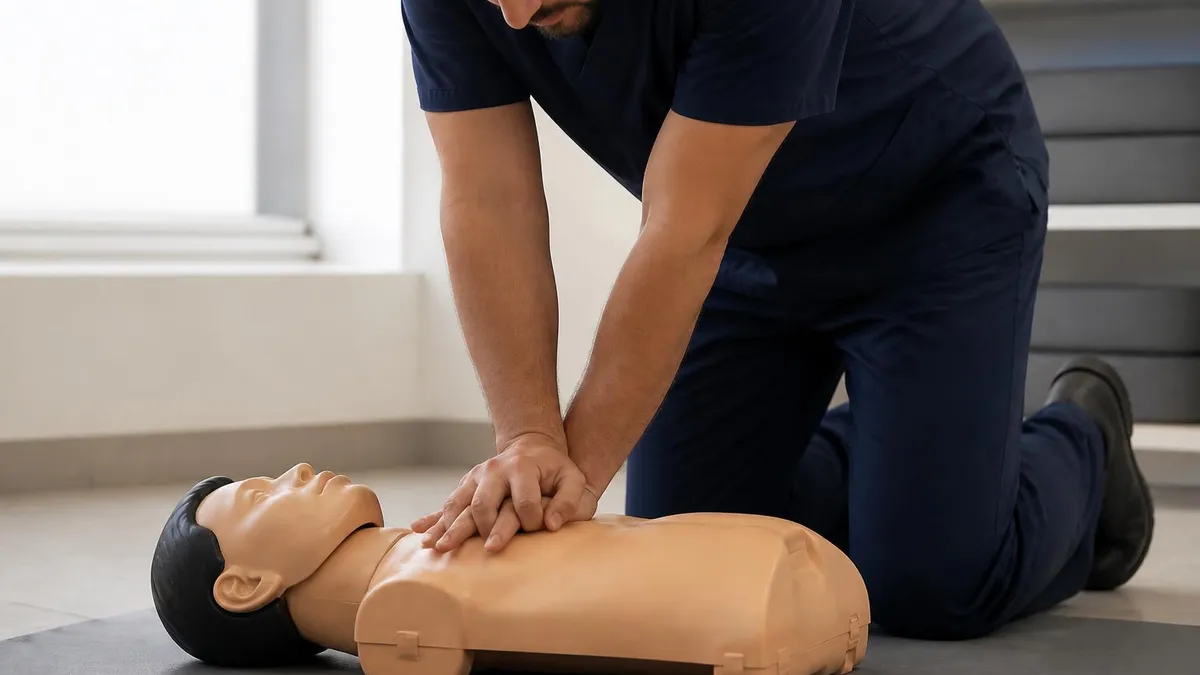
Extracorporeal CPR (ECPR): Complete Guide to Mechanical Circulatory Support During Cardiac Arrest in 2026
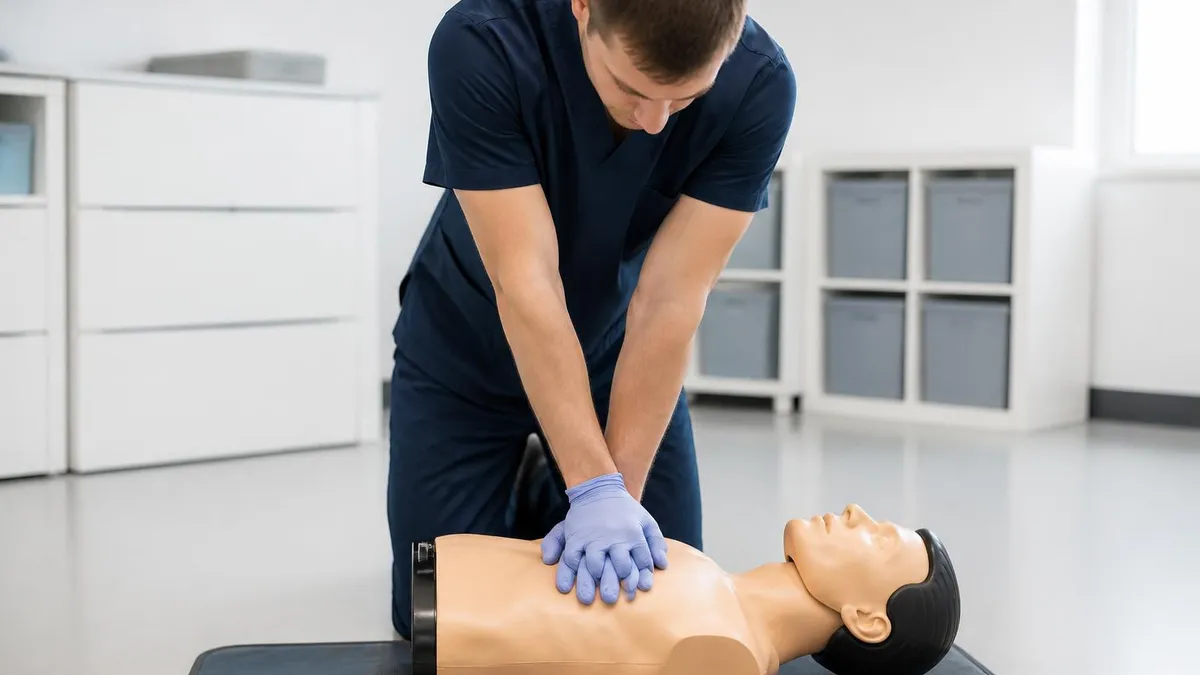
Free Online CPR Certification: Complete Guide to Legitimate Courses, Costs, and Workplace Acceptance in 2026
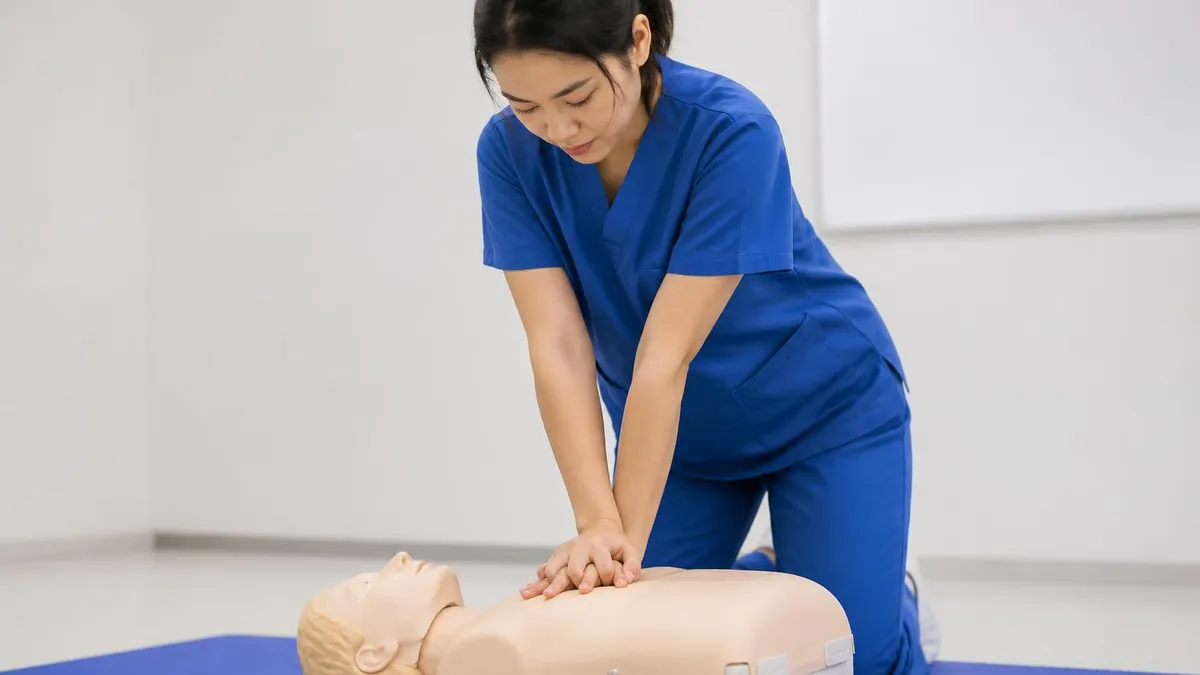
CPR Instructor Certification 2026: Complete Path to Teaching CPR
About the Author

Registered Nurse & Healthcare Educator
Johns Hopkins University School of NursingDr. Sarah Mitchell is a board-certified registered nurse with over 15 years of clinical and academic experience. She completed her PhD in Nursing Science at Johns Hopkins University and has taught NCLEX preparation and clinical skills courses for nursing students across the United States. Her research focuses on evidence-based exam preparation strategies for healthcare certification candidates.
Join the Discussion
Connect with other students preparing for this exam. Share tips, ask questions, and get advice from people who have been there.
View discussion (5 replies)