
CPR AED Certification Online: The Complete 2026 October Guide to Getting Certified, Recertified, and Workplace-Compliant
CPR AED certification online in 2026 October: ⏳ course comparison, costs, ACLS algorithm prep, AHA acceptance, recertification, and how to verify your card fast.
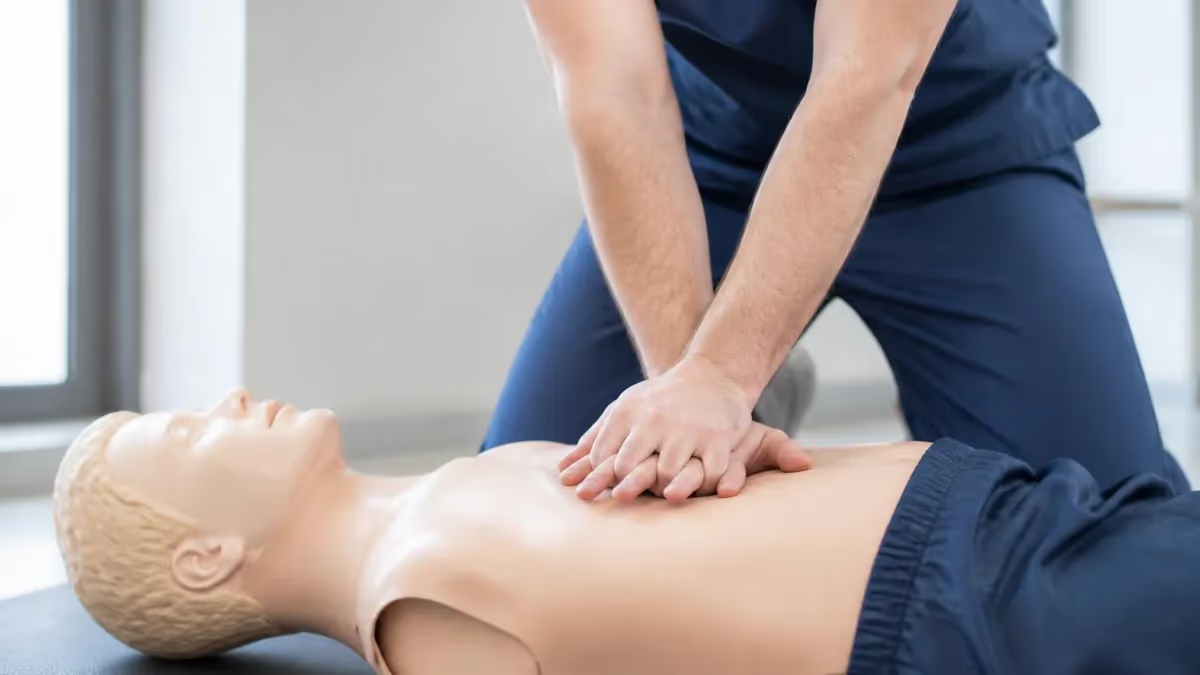
Earning a cpr aed certification online has become the fastest route for nurses, teachers, lifeguards, fitness instructors, and corporate staff to satisfy workplace compliance without sacrificing a Saturday in a classroom. In 2026, more than 4.2 million Americans renew or earn a CPR/AED credential each year, and roughly 38 percent of those credentials are now completed through a blended or fully online pathway. This guide walks through everything you need to choose a reputable course, pass the skills check, and verify your card with your employer.
The phrase "cpr aed certification online" covers a wide range of products, from 20-minute refreshers to full 4-hour heart-saver courses that include adult, child, and infant cpr along with automated external defibrillator operation. Some are accepted by every hospital system in the country; others are rejected outright by OSHA-regulated employers. Understanding which provider matches your job's standard is the single most important decision you will make before paying any registration fee.
We will compare the American Heart Association (AHA), American Red Cross, ASHI, and the national cpr foundation side-by-side, breaking down costs, time investment, skills-test requirements, and which states or licensing boards accept each credential. You will also learn how the acls algorithm fits into a broader life support pathway if you plan to advance into advanced cardiac care, and how pals certification builds on the same foundation for pediatric responders working in hospitals or urgent care clinics.
Beyond the certificate itself, this article covers the clinical content you must master: the 30:2 compression-to-ventilation ratio, a target respiratory rate of 10 to 12 breaths per minute for rescue breathing, the recovery position for unresponsive but breathing victims, and the jaw thrust maneuver when spinal injury is suspected. These are not academic details. Skills evaluators score them on every recertification test, and missing them is the most common reason candidates fail their first attempt.
This guide focuses exclusively on the medical certification used in healthcare, childcare, and workplace safety roles. We will clarify that distinction so you do not waste hours on the wrong website before finding the course that actually counts toward your license.
By the end of this guide, you will know exactly which online CPR AED course matches your role, what the skills check looks like, how much you should expect to pay, and how to handle replacement cards, employer verification, and the awkward window between expiration and renewal. Let's start with the numbers that frame the entire industry.
CPR AED Certification Online by the Numbers

Online vs Blended vs In-Person Course Formats
Self-paced video modules and a multiple-choice exam delivered entirely on a laptop or phone. Best for lay-responder roles, corporate compliance, and educators. Not accepted by most hospitals or state nursing boards because no live skills evaluation is performed.
You complete cognitive coursework online, then attend a 30-to-60-minute skills session with an authorized instructor. This is the AHA HeartCode pathway and is accepted by virtually every healthcare employer in the United States for BLS, ACLS, and PALS renewal.
Skills are evaluated over a live video call using a personal manikin shipped to your home. Approved for some Red Cross and ASHI products. Convenient but requires reliable broadband, a quiet room, and the patience to angle a camera while doing compressions.
A 4-to-6-hour in-person course with lecture, video, and hands-on practice. Still required by some fire departments, EMS agencies, and state-level lifeguard certifications. Costs more and consumes a full day but eliminates any acceptance disputes with picky employers.
A genuine cpr aed certification online curriculum covers far more than chest compressions. The 2020 AHA guidelines, still in force through the 2025-2030 update cycle, require students to demonstrate adult, child, and infant cpr techniques, two-rescuer coordination, bag-valve-mask ventilation, AED pad placement for both pediatric and adult patients, and recognition of cardiac arrest versus agonal breathing. Expect roughly 90 minutes of video content and 30 minutes of testing in a standard BLS-equivalent online course.
The compression standard has not changed: 100 to 120 compressions per minute, at least 2 inches deep for adults, allowing full chest recoil between each push. What has changed is the emphasis on minimizing pauses. Modern courses now teach the 10-second rule for pulse checks, pad placement, and rhythm analysis. Every second over 10 statistically reduces survival probability by 10 to 12 percent according to Resuscitation Academy data published in 2024.
Rescue breathing is taught with a target respiratory rate of 10 to 12 breaths per minute for adults with a pulse but no breathing, and 12 to 20 breaths per minute for children and infants. Online modules drill the timing using metronome overlays and animated chest-rise simulations. You will be tested on identifying inadequate ventilation by visual chest-rise observation, not by counting breaths against a stopwatch, because real-world arrests rarely allow that luxury.
AED operation receives its own dedicated module. The acronym question "what does aed stand for" appears on nearly every certification exam, and the answer is automated external defibrillator. You will learn to power on the device, attach pads in the anterior-lateral or anterior-posterior position depending on patient size, clear the patient before shock delivery, and resume compressions immediately after the shock is given without checking a pulse first.
Recovery position instruction has been expanded in 2026 curricula. The recommended recovery position involves rolling the unresponsive but breathing victim onto their side, with the head supported and the airway clear. This prevents aspiration during the window between resuscitation and EMS arrival. Online courses now include a 4-minute video covering proper technique for adults, children, and pregnant patients, where left-lateral positioning is preferred to maintain venous return.
Special-circumstance content includes drowning, opioid overdose with naloxone administration, choking with the Heimlich maneuver and back blows for infants, and care for victims with implanted devices like pacemakers. These modules became mandatory in 2023 after CDC data showed opioid-related cardiac arrests had tripled since 2015. A passing score generally requires 80 to 84 percent on the cognitive exam plus a satisfactory skills demonstration.
Finally, expect a brief introduction to the chain of survival, the difference between basic and advanced life support, and when to expect handoff to paramedics. Understanding where a lay rescuer's role ends and where ACLS providers take over helps frame your scope of practice and prevents the well-meaning but legally risky mistake of attempting interventions you are not credentialed to perform.
Related reading: cpr aed certification online covers the next step in more detail.

CPR Practice Test Questions
Prepare for the CPR Cardiopulmonary Resuscitation Practice exam with our free practice test modules. Each quiz covers key topics to help you pass on your first try.
CPR Basic CPR
CPR Exam Questions covering Basic CPR. Master CPR Test concepts for certification prep.
CPR and First Aid
Free CPR Practice Test featuring and First Aid. Improve your CPR Exam score with mock test prep.
CPR (Cardiopulmonary Resuscitation) Adult ...
CPR Mock Exam on (Cardiopulmonary Resuscitation) Adult CPR and AED Usage. CPR Study Guide questions to pass on your first try.
CPR (Cardiopulmonary Resuscitation) Airway...
CPR Test Prep for (Cardiopulmonary Resuscitation) Airway Obstruction and Choking. Practice CPR Quiz questions and boost your score.
CPR (Cardiopulmonary Resuscitation) Cardio...
CPR Questions and Answers on (Cardiopulmonary Resuscitation) Cardiopulmonary Emergency Recognition. Free CPR practice for exam readiness.
CPR (Cardiopulmonary Resuscitation) Child ...
CPR Mock Test covering (Cardiopulmonary Resuscitation) Child and Infant CPR. Online CPR Test practice with instant feedback.
CPR (Cardiopulmonary Resuscitation) High-P...
Free CPR Quiz on (Cardiopulmonary Resuscitation) High-Performance Team Dynamics. CPR Exam prep questions with detailed explanations.
CPR (Cardiopulmonary Resuscitation) Legal ...
CPR Practice Questions for (Cardiopulmonary Resuscitation) Legal and Ethical Considerations. Build confidence for your CPR certification exam.
CPR for Specific Populations
CPR Test Online for for Specific Populations. Free practice with instant results and feedback.
CPR Airway & Breathing Management
CPR Exam Questions covering Airway & Breathing Management. Master CPR Test concepts for certification prep.
CPR Assessment & Recognition of Cardiac Ar...
Free CPR Practice Test featuring Assessment & Recognition of Cardiac Arrest. Improve your CPR Exam score with mock test prep.
CPR Chest Compressions & Defibrillation
CPR Mock Exam on Chest Compressions & Defibrillation. CPR Study Guide questions to pass on your first try.
CPR Post-Resuscitation Care & Recovery
CPR Test Prep for Post-Resuscitation Care & Recovery. Practice CPR Quiz questions and boost your score.
Provider Comparison and National CPR Foundation Acceptance
The American Heart Association and American Red Cross dominate the certification market with roughly 78 percent combined share. Both offer fully online lay-responder cards and blended HeartCode or Resuscitation-Suite courses for healthcare providers. Their cards are accepted by every state nursing board, hospital credentialing office, and licensed daycare in the country. Expect to pay $35 to $95 for an online-only course and $65 to $150 for a blended pathway with a live skills session.
Both organizations issue digital cards within minutes of completion through their respective eCard or Digital Certificate portals. Employers verify these in real time using a verification number printed on the card. AHA cards expire exactly 24 months from the issue date, while Red Cross uses the same window but allows a 30-day grace period for online renewal at the original course price before reverting to full pricing.
Is CPR AED Certification Online Right for You?
- +Complete coursework on your own schedule across multiple sessions
- +Replay difficult sections like AED pad placement or infant cpr
- +Lower total cost compared to a full-day classroom course
- +Instant digital card for fast employer verification
- +Mobile-friendly modules work on tablet, laptop, or phone
- +No travel time, parking fees, or childcare hassle
- +Easier rescheduling if work or family conflicts arise
- −Pure online cards rejected by most hospitals and nursing boards
- −No hands-on feedback for compression depth or rate
- −Some employers refuse non-AHA or non-Red Cross credentials
- −Requires self-discipline to complete all modules
- −Skills retention is lower without in-person manikin practice
- −Blended courses still require attending a live skills session
- −Internet outages can interrupt timed exam sections
Pros and Cons at a Glance
| Pros | Cons |
|---|---|
| Complete coursework on your own schedule across multiple sessions | Pure online cards rejected by most hospitals and nursing boards |
| Replay difficult sections like AED pad placement or infant cpr | No hands-on feedback for compression depth or rate |
| Lower total cost compared to a full-day classroom course | Some employers refuse non-AHA or non-Red Cross credentials |
| Instant digital card for fast employer verification | Requires self-discipline to complete all modules |
| Mobile-friendly modules work on tablet, laptop, or phone | Skills retention is lower without in-person manikin practice |
| No travel time, parking fees, or childcare hassle | Blended courses still require attending a live skills session |
Pre-Certification Readiness Checklist
- ✓Confirm in writing your employer accepts the provider you chose
- ✓Block 3 to 4 uninterrupted hours for cognitive modules and exam
- ✓Charge your laptop or tablet and test webcam if virtual skills required
- ✓Download the official student handbook PDF for offline reference
- ✓Watch a 30:2 compression-to-ventilation demo video at least twice
- ✓Memorize the 100-to-120-per-minute compression rate cadence
- ✓Review what does aed stand for and the four AED operation steps
- ✓Practice the recovery position rollover with a partner or pillow
- ✓Have payment method ready for any retake or proctor fees
- ✓Schedule your in-person skills session before starting modules
Always Capture a Screenshot of Your Digital Card
The moment your digital card is issued, screenshot it and email a copy to yourself, your supervisor, and your HR file. Provider websites occasionally lose records during platform migrations, and replacement requests can take 5 to 10 business days. A timestamped screenshot saves you from working uncertified during the gap.
The online skills check is the single component candidates underestimate most. Whether you choose AHA HeartCode, Red Cross blended, or a virtual proctored option, the evaluator will score you against a published checklist with roughly 12 to 18 critical actions. Missing any single critical action results in immediate failure regardless of how well you performed the rest. Knowing the checklist in advance is not cheating, it is preparation that every reputable provider encourages.
For the adult CPR portion, the evaluator watches for scene safety verification, gloves donned, responsiveness check with shout-and-tap, calling 911 or sending someone to call, opening the airway with head-tilt chin-lift, checking breathing and pulse simultaneously for no more than 10 seconds, and beginning compressions within 10 seconds of confirmed arrest. Each step has a specific verbal callout the evaluator expects to hear out loud.
Compression quality is measured on most modern manikins by built-in sensors. The target is 100 to 120 per minute, depth of at least 2 inches but no more than 2.4 inches, full recoil between compressions, and minimized interruptions of under 10 seconds for ventilations or rhythm analysis. Hand placement is checked visually. Skills evaluators will fail candidates who consistently compress at fewer than 90 per minute or who lean on the chest between pushes.
The AED demonstration requires you to power the device on, expose the chest and dry it if wet, attach pads in the correct position, ensure no one is touching the patient, deliver the shock when advised, and resume compressions immediately. The evaluator will deliberately leave a confederate touching the manikin's arm during shock delivery to test whether you clear the patient verbally and visually before pressing the button.
Infant cpr adds two-thumb encircling hands technique for two rescuers, two-finger compression for a single rescuer, depth of approximately 1.5 inches, and a 30:2 ratio for single-rescuer or 15:2 for two-rescuer scenarios. Bag-valve-mask sizing must match the infant's face from the bridge of the nose to the chin. The infant choking sequence requires alternating 5 back blows and 5 chest thrusts, which differs from the adult Heimlich.
Two-rescuer coordination is often where candidates lose points. The compressor calls out cycles, the ventilator counts breaths aloud, and roles switch every 2 minutes or roughly 5 cycles to prevent compressor fatigue. The switch must occur during a planned pause, typically during rhythm analysis or pad placement, and must take less than 5 seconds. Practice this transition with a partner before the skills test.
If you fail the skills check, most providers allow one free retake within 30 days. Use that window. Identify exactly which critical action you missed, drill it deliberately for 20 to 30 minutes, and return when your muscle memory is locked in. Candidates who walk in cold for a second attempt fail again at a rate of 41 percent, while those who target-practice the missed skill pass on the second attempt 93 percent of the time.
Some online-only providers advertise "OSHA-approved" or "nationally accepted" without disclosing that hospitals, state nursing boards, and licensed childcare facilities frequently reject their cards. Always email your employer or licensing board with the exact provider name before paying. A 5-minute confirmation prevents weeks of rework and lost wages.
Recertification is where most professionals stumble, not because the content is hard but because the calendar is unforgiving. AHA and Red Cross cards expire exactly 24 months after the issue date printed on the card, and there is no grace period for healthcare provider roles. If your card expires on a Friday, you legally cannot perform CPR-credentialed duties starting Saturday morning until your new card is issued. Schedule renewal at least 30 days before expiration.
The renewal pathway is shorter than initial certification. AHA HeartCode renewal is typically 90 minutes of online refresher plus a 30-minute skills session, compared to 4 hours plus 60 minutes for initial certification. Red Cross uses a similar abbreviated structure. National CPR Foundation and other online-only providers offer same-pricing renewal with no skills check, often completed in under an hour with unlimited exam retakes.
Card verification has improved dramatically since 2022. Every major provider now offers a public verification portal where employers enter your card ID and instantly see whether your credential is active. AHA's eCard system is the gold standard and is used by most hospital credentialing departments. If your card cannot be verified online by your provider, that is a red flag for any employer doing due diligence. Use the jaw thrust maneuver skill demonstration as a confidence-builder when re-engaging after a lapse.
Lost card replacement is straightforward but slow. AHA and Red Cross both charge between $7 and $15 for a duplicate digital card, typically processed within 3 to 5 business days. If you completed your course through a training center rather than directly with the national organization, contact that training center first. Their records often process faster than the national help desk, which can take up to 10 business days during peak certification season in August and January.
Pathway progression matters if you are advancing your career. CPR AED certification is the foundation for the acls algorithm coursework required by ICU and ER nurses, anesthesia providers, and emergency medicine physicians. Pals certification builds on the same base for pediatric providers. NRP, neonatal resuscitation, requires a current BLS card as a prerequisite. Plan your certification calendar so renewals align rather than scatter across the year.
The connection to broader life support content matters too. Understanding the acls algorithm in advance, even before you take an ACLS course, helps you understand why BLS techniques are taught the way they are. Compression quality during BLS directly influences whether epinephrine and amiodarone can reach their target tissue during ACLS. A sloppy BLS foundation undermines every advanced intervention that follows.
Finally, document everything. Keep digital copies of every card you have ever held, the completion certificate, the training center name, and the instructor's signature line. If you ever face a credentialing audit, a malpractice review, or a state board investigation, this documentation is your protection. A simple cloud folder labeled "CPR Cards" with dated PDFs has saved more careers than any other recordkeeping habit in healthcare.
Practical preparation in the 48 hours before your online exam separates passers from retake candidates. Start by reviewing the AHA or Red Cross student handbook one final time, focusing on the rate-and-depth chart, the AED operation sequence, and the differences between adult, child, and infant cpr techniques. Most candidates who fail report that they over-studied compressions and under-studied special-circumstance scenarios like opioid overdose, drowning, and choking infants.
Set up your testing environment carefully. Close all browser tabs except the exam window, silence phones and notifications, and tell household members you cannot be interrupted for the next 2 hours. Some online platforms use lockdown browsers or remote proctoring that flag tab-switching or unusual movement. A flagged exam can be invalidated even if you scored well, requiring a full retake at additional cost.
Time management during the cognitive exam is forgiving but not unlimited. AHA and Red Cross typically allow 60 to 90 minutes for 25 to 35 multiple-choice questions. Read each question twice, eliminate obviously wrong answers first, and flag uncertain questions to review at the end. Avoid changing answers unless you have a clear reason. Statistical analysis of CPR exam attempts shows first-instinct answers are correct 71 percent of the time, while changed answers are correct only 58 percent of the time.
For the skills portion, practice with whatever you have. A couch cushion is not a manikin, but it is enough to drill compression cadence using a metronome app set to 110 beats per minute. Practice the verbal callouts out loud: "Scene is safe," "Are you okay?", "Call 911 and get an AED," "Starting compressions." Saying these out loud during practice burns them into procedural memory so they emerge automatically under evaluator pressure.
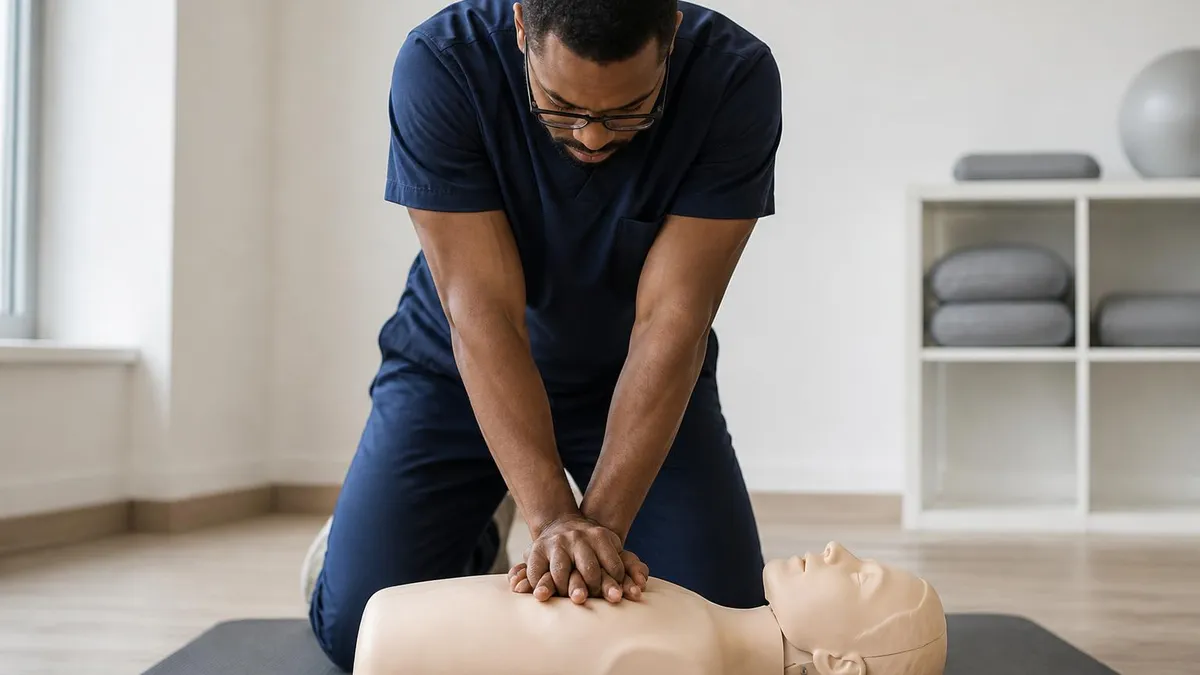
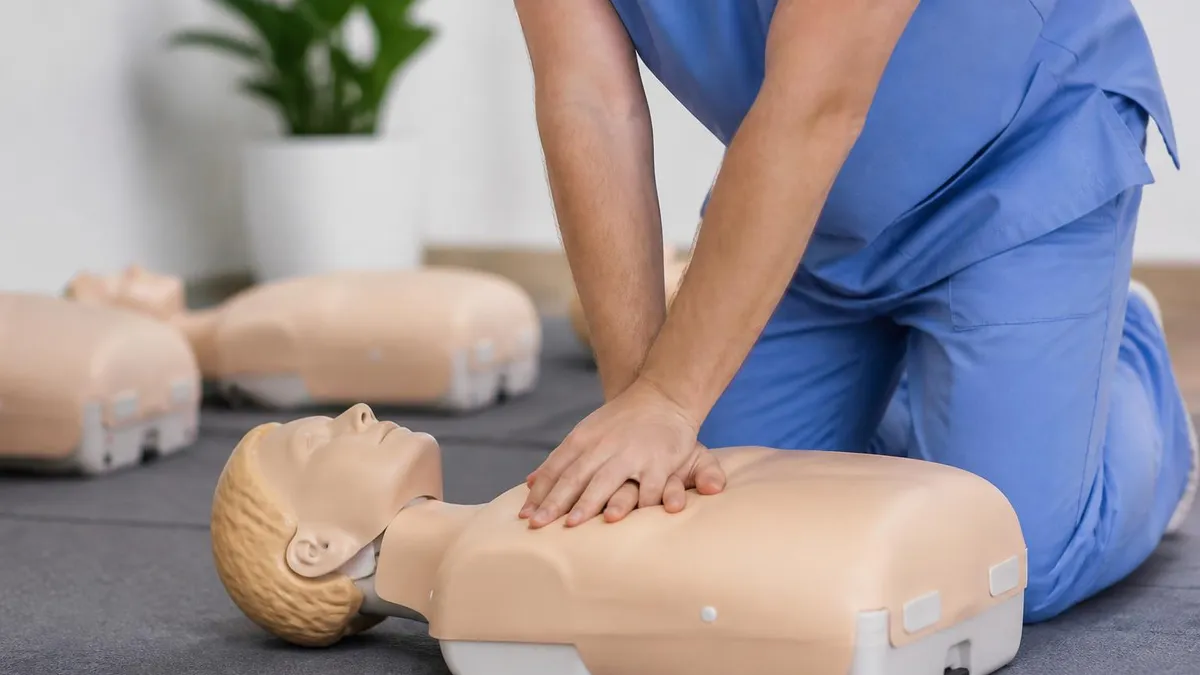
Mind your body mechanics. Position yourself on your knees beside the manikin, shoulders directly over the chest, arms straight, and use your upper body weight rather than arm strength to compress. Candidates who use only their arms fatigue within 90 seconds and lose compression depth, which the manikin sensors detect and report to the evaluator. Proper mechanics also prevent the lower-back soreness many candidates experience after an extended skills session.
If you are renewing rather than initially certifying, do not assume you remember the material. The 2020 guidelines changed several details from the 2015 version, including emphasis on dispatcher-assisted CPR, opioid response protocols, and pediatric AED pad placement. The 2025 guideline refresh added clarifications on cardiac arrest in pregnancy and post-arrest care. Review the change summary your provider publishes; it is usually a 4-page document and worth every minute.
One last tip: do not schedule anything stressful immediately after the exam. Many candidates plan a celebratory dinner, then check the auto-graded result while driving and panic over a borderline score. Give yourself 30 minutes to log in, view the score, download the digital card, screenshot it, and email it to yourself and your employer. Then celebrate. You have just renewed a credential that genuinely saves lives.
CPR Questions and Answers
CPR Card Lookup: How to Verify, Replace, and Access Your CPR Certification in 2026
AHA CPR: What It Is, Which Course You Need, and How to Get Certified
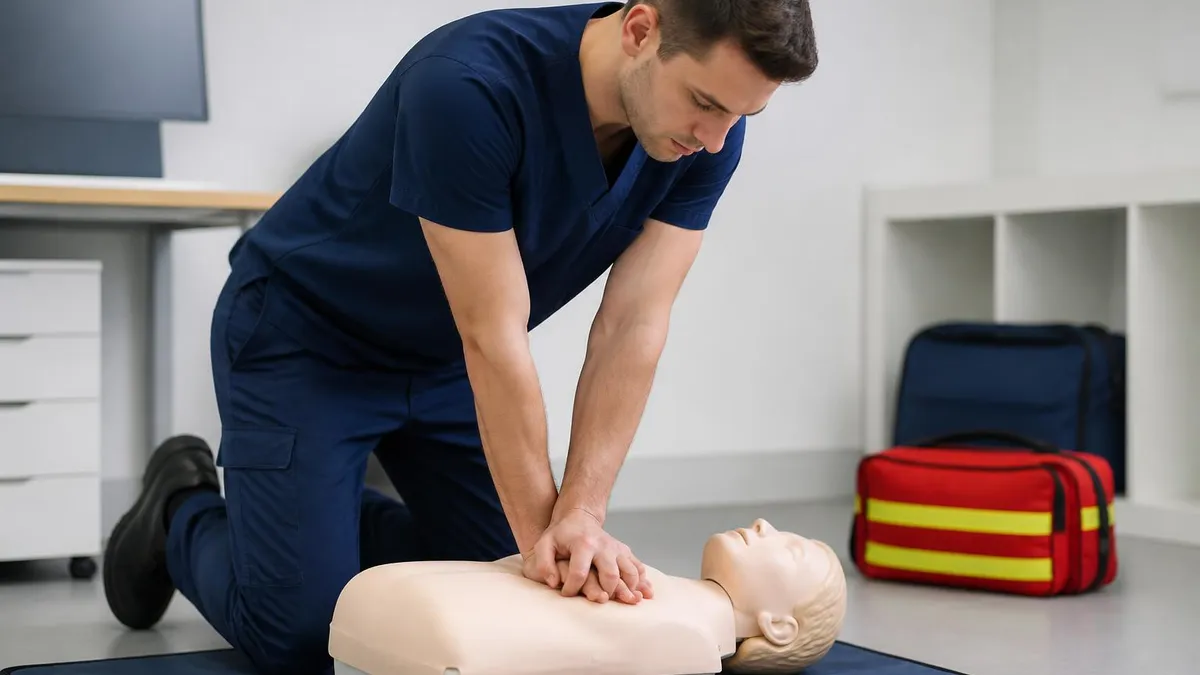
Adult CPR: Complete Step-by-Step Guide to Hands-Only and Standard CPR in 2026
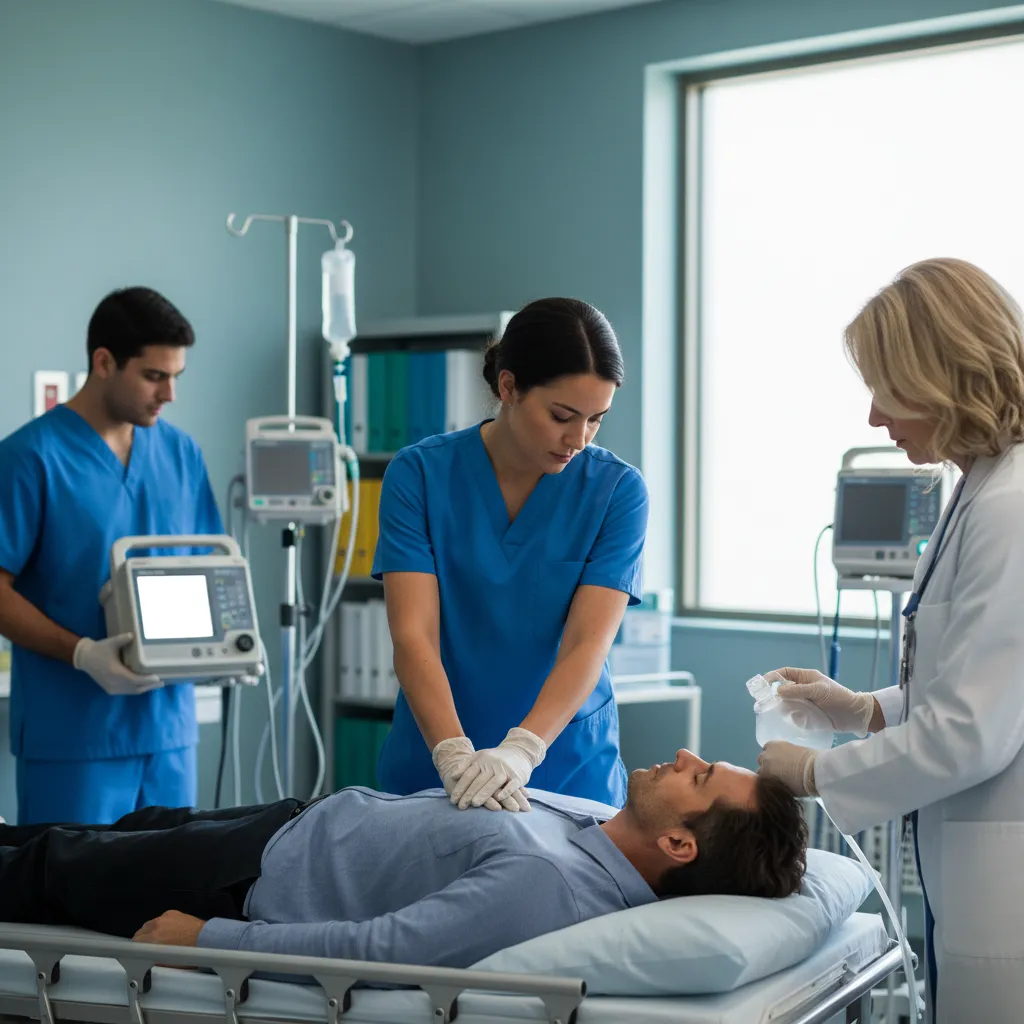
CPR - Cardiopulmonary Resuscitation: Complete Study Guide 2026
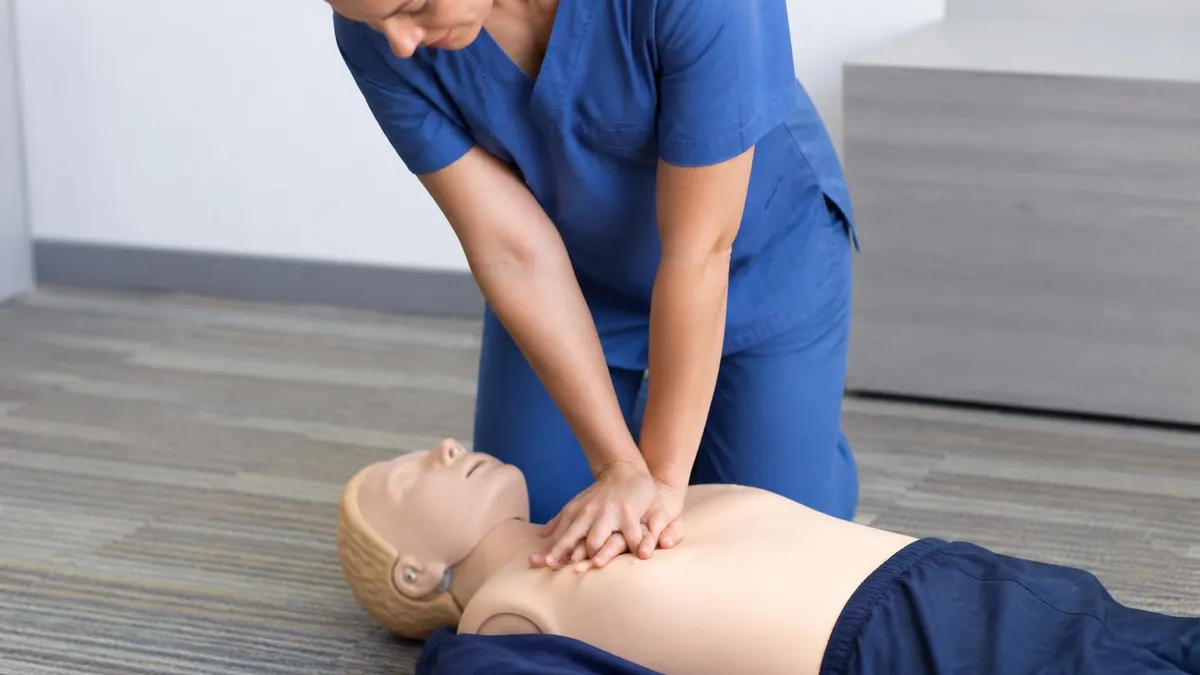
Inappropriate CPR Songs: What Not to Play, Why It Matters, and Better Beat-Per-Minute Alternatives
About the Author

Registered Nurse & Healthcare Educator
Johns Hopkins University School of NursingDr. Sarah Mitchell is a board-certified registered nurse with over 15 years of clinical and academic experience. She completed her PhD in Nursing Science at Johns Hopkins University and has taught NCLEX preparation and clinical skills courses for nursing students across the United States. Her research focuses on evidence-based exam preparation strategies for healthcare certification candidates.
Join the Discussion
Connect with other students preparing for this exam. Share tips, ask questions, and get advice from people who have been there.
View discussion (5 replies)