
Free CPR and First Aid Certification: Complete Guide to Online Courses, Cost, and Validity in 2026 October
Free CPR and first aid certification guide: ⏳ legit online courses, costs, validity, employer acceptance, and how to choose a recognized provider in 2026 October.
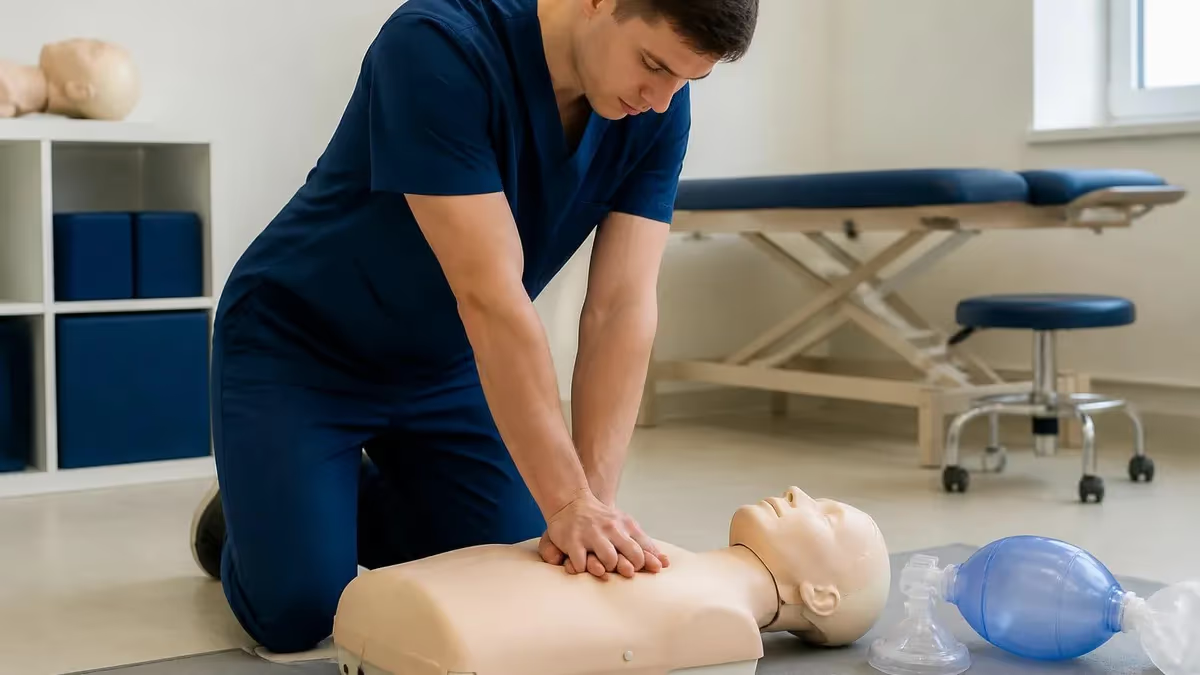
Searching for free cpr and first aid certification is one of the most common starting points for healthcare students, teachers, coaches, babysitters, and new hires who suddenly discover their employer requires a current card. The good news is that you can absolutely study high-quality CPR and first aid content for zero dollars, take detailed practice exams, and walk into a hands-on skills check fully prepared.
The catch is that most truly accepted certifications still require either a small printing fee or an in-person skills evaluation, and understanding that distinction up front saves you from wasting hours on a card your boss will reject.
In this guide we break down which providers offer genuinely free training, how online-only certifications compare to blended courses, what the national cpr foundation actually issues, and how the American Heart Association and Red Cross fit into the picture. We will also walk through the acls algorithm at a high level, infant cpr ratios, the correct recovery position, and what the acronym AED stands for, so the card you earn reflects real, usable knowledge rather than a printed PDF you cannot defend in a real emergency.
Most adults who need certification fall into one of three buckets: occupational requirement, volunteer requirement, or personal preparedness. Occupational learners almost always need a hands-on skills sign-off because OSHA expects a qualified instructor to verify chest compression depth, rate, and ventilation technique. Volunteer roles such as youth coaching or Sunday school often accept a free online certificate, especially when the organization is not federally regulated. Personal learners can pick whatever format fits their schedule, because nobody is auditing your wallet card at home.
The single biggest mistake learners make is confusing free training with free certification. Training, meaning the videos, quizzes, and study material, is widely available at no cost from the Red Cross, AHA, ProCPR previews, Project Heartbeat, and YouTube channels run by emergency medicine physicians. Certification, meaning a verifiable card with a name, date, and issuing authority, is a separate document. Some providers bundle them; most charge a small fee at the end ranging from $0 to $30 for a digital wallet card.
Throughout this article we will reference real cost ranges, real employer acceptance rules, and the specific clinical skills you will be tested on, including respiratory rate ranges for adults and children, choking response sequences, and how to position a recovery patient on their side.
By the end you will know exactly which course to take, how long it lasts, and whether your specific job, school, or volunteer role will honor the card.
We will also clarify the difference between BLS, ACLS, PALS certification, and basic Heartsaver CPR and first aid, because each card unlocks a different scope of practice. A lifeguard does not need acls, a nurse cannot work without bls, and a daycare worker rarely needs more than Heartsaver-level training. Choosing the wrong tier wastes money and time, while choosing the right one usually costs less than a tank of gas. Let us start with what the numbers actually look like in 2026.
Free CPR and First Aid Certification by the Numbers

Five Course Options for Free CPR and First Aid Certification
Free study material and a low-cost wallet card, popular for personal use and many non-clinical employers. Online-only with no hands-on skills check, so suitability depends on your workplace policy.
Free Hands-Only CPR refresher videos and infant CPR demos, with paid blended courses for official certification. Widely accepted by daycares, schools, and most healthcare adjacent jobs.
Online theory is low-cost, but the in-person skills test is required. The card is the gold standard for medical, dental, and OSHA-regulated workplaces nationwide.
First lessons are free to preview, full certification runs $20–$50. Accepted by many employers but always verify with HR before paying for a card you cannot use.
Local fire departments, hospitals, and YMCAs frequently offer free Heartsaver courses funded by grants. These produce fully accepted AHA cards at no out-of-pocket cost.
The phrase free cpr and first aid certification hides a wide spectrum of what free actually means. On one end you have entirely free options: community classes funded by hospital grants, Red Cross Hands-Only refresher videos, and AHA citizen CPR campaigns that hand out cards at health fairs. On the other end you have free training paired with a $15–$30 card fee, which is how the national cpr foundation, Save A Life by NHCPS, and ProCPR operate. Both can be legitimate; the difference comes down to whether the issuing organization is recognized in your industry.
Online-only certifications became standard during the pandemic and never fully went away. They typically include four to six hours of video lessons, an unlimited-attempt quiz bank, and a printable card at the end. For a stay-at-home parent who simply wants to feel ready to help a choking toddler, this is more than enough. For a registered nurse, paramedic student, or hospital volunteer, an online-only card will almost always be rejected because the Joint Commission and CMS require documented hands-on competency.
Blended learning sits in the middle and is what most working professionals end up choosing. You watch the videos at home, then attend a short ninety-minute skills session at a training center where an instructor verifies your compression depth using a manikin with a depth indicator. Adequate adult compressions reach at least two inches and at least 100 to 120 per minute. The skills check usually costs $30–$80, but the digital portion is often free during national CPR awareness week each June.
Make sure the URL you are on ends in a domain associated with health education, such as redcross.org, heart.org, nationalcprfoundation.com, or a recognized state EMS website. Phishing sites that mimic CPR providers are increasingly common.
Cost also depends on whether you need first aid bundled with CPR. The AHA Heartsaver First Aid CPR AED combo course is typically $65–$95 when bundled, while CPR-only runs $40–$70. Standalone first aid is rarely required unless your job involves wilderness work, childcare, or industrial safety. For most office workers the combo card is what HR is asking for. Reading the actual job description, not just the headline, will tell you whether you need first aid at all.
If budget is the deciding factor, ask your employer if they will reimburse you. Most healthcare facilities, school districts, and large retailers like Target and Walmart cover certification costs for staff because it lowers their liability premiums. You may also qualify for free training through your state EMS office, a local American Heart Association volunteer chapter, or your community college. Cards earned through these channels carry the exact same weight as a $95 course, because the issuing authority is identical.

CPR Practice Test Questions
Prepare for the CPR Cardiopulmonary Resuscitation Practice exam with our free practice test modules. Each quiz covers key topics to help you pass on your first try.
CPR Basic CPR
CPR Exam Questions covering Basic CPR. Master CPR Test concepts for certification prep.
CPR and First Aid
Free CPR Practice Test featuring and First Aid. Improve your CPR Exam score with mock test prep.
CPR (Cardiopulmonary Resuscitation) Adult ...
CPR Mock Exam on (Cardiopulmonary Resuscitation) Adult CPR and AED Usage. CPR Study Guide questions to pass on your first try.
CPR (Cardiopulmonary Resuscitation) Airway...
CPR Test Prep for (Cardiopulmonary Resuscitation) Airway Obstruction and Choking. Practice CPR Quiz questions and boost your score.
CPR (Cardiopulmonary Resuscitation) Cardio...
CPR Questions and Answers on (Cardiopulmonary Resuscitation) Cardiopulmonary Emergency Recognition. Free CPR practice for exam readiness.
CPR (Cardiopulmonary Resuscitation) Child ...
CPR Mock Test covering (Cardiopulmonary Resuscitation) Child and Infant CPR. Online CPR Test practice with instant feedback.
CPR (Cardiopulmonary Resuscitation) High-P...
Free CPR Quiz on (Cardiopulmonary Resuscitation) High-Performance Team Dynamics. CPR Exam prep questions with detailed explanations.
CPR (Cardiopulmonary Resuscitation) Legal ...
CPR Practice Questions for (Cardiopulmonary Resuscitation) Legal and Ethical Considerations. Build confidence for your CPR certification exam.
CPR for Specific Populations
CPR Test Online for for Specific Populations. Free practice with instant results and feedback.
CPR Airway & Breathing Management
CPR Exam Questions covering Airway & Breathing Management. Master CPR Test concepts for certification prep.
CPR Assessment & Recognition of Cardiac Ar...
Free CPR Practice Test featuring Assessment & Recognition of Cardiac Arrest. Improve your CPR Exam score with mock test prep.
CPR Chest Compressions & Defibrillation
CPR Mock Exam on Chest Compressions & Defibrillation. CPR Study Guide questions to pass on your first try.
CPR Post-Resuscitation Care & Recovery
CPR Test Prep for Post-Resuscitation Care & Recovery. Practice CPR Quiz questions and boost your score.
ACLS Algorithm, BLS, and PALS Certification Compared
Basic Life Support is the foundational certification for healthcare providers, while Heartsaver is the equivalent course for laypeople and non-clinical staff. Both cover adult, child, and infant cpr, AED operation, choking relief, and basic ventilation with a bag-valve mask. BLS adds two-rescuer scenarios, pulse checks, and integration with an emergency response team in a clinical setting.
Heartsaver cards are accepted by daycares, schools, coaches, security guards, and most non-medical employers nationwide. BLS is required for nurses, medical assistants, dentists, physical therapists, EMTs, and nearly every clinical role. Validity is two years for both, and renewal courses are typically half the length of an initial certification because skills are already in muscle memory from daily use.
Online-Only Free Certification: Worth It or Not?
- +Completely free or under $30 for a digital wallet card
- +Self-paced, can be completed in a single afternoon
- +Unlimited practice attempts on the final exam
- +Accessible from anywhere with internet, no travel required
- +Excellent for personal preparedness, babysitting, or volunteer roles
- +Great refresher for already certified providers between renewal cycles
- +Includes full first aid content covering burns, bleeding, and shock
- −Rejected by hospitals, dental offices, and most clinical employers
- −No hands-on skills verification means compression depth is never tested
- −Not OSHA-compliant for workplaces with occupational exposure
- −Some providers are not recognized by state licensing boards
- −Card may not transfer if you change jobs or move states
- −Quality of video instruction varies wildly between platforms
- −You may need to re-take a paid course if your employer changes policy

Pre-Course Checklist for Free CPR and First Aid Certification
- ✓Confirm with your employer whether an online-only card is accepted
- ✓Verify the provider issues a card with a unique verification number
- ✓Check that the certification is valid for at least two years from issue date
- ✓Block four uninterrupted hours for the video lessons and final exam
- ✓Review adult, child, and infant CPR compression ratios before starting
- ✓Memorize what AED stands for: Automated External Defibrillator
- ✓Practice placing a manikin or pillow in the recovery position on the side
- ✓Review normal respiratory rate ranges: 12–20 adults, 20–30 children, 30–60 infants
- ✓Have a printer or smartphone ready to save your wallet card immediately
- ✓Save a digital copy to cloud storage so you never lose proof of certification
Always confirm card acceptance with your employer or licensing board first
Roughly one in four learners who buy an online-only certification discover later that their employer will not accept it. Spend two minutes emailing your HR department or compliance officer before you start. Ask specifically whether they accept cards from your chosen provider, and whether the hands-on skills check is required. This single email prevents wasted money and a frustrating do-over.
Employer acceptance is the single most important variable when choosing a free CPR and first aid certification. The American Heart Association and American Red Cross are accepted essentially everywhere because they are the two organizations explicitly named in OSHA guidance, the Joint Commission standards, and most state nursing board regulations. The national cpr foundation is widely accepted for non-clinical roles such as personal trainers, daycare assistants, and coaches but is sometimes rejected by hospitals and licensed healthcare facilities, so verification before enrollment matters.
OSHA itself does not certify any specific provider. Instead, federal regulation 29 CFR 1910.151 requires that employers in workplaces without immediate medical assistance have trained first aid responders available. OSHA delegates the definition of trained to the employer, who in turn typically defers to AHA or Red Cross standards because those are the most legally defensible options. This is why your warehouse safety coordinator may have flexibility while a hospital compliance officer does not.
State-level requirements add another layer. California, for example, requires school employees who supervise students to hold certification from a provider on the state-approved list, which excludes many online-only options. Texas allows broader provider choice for daycare workers but mandates in-person skills verification for school nurses. Florida lifeguards must hold a Red Cross Lifeguarding certificate, not just basic CPR. Always check your state department of education, health, or labor website for the controlling rule in your role.
For volunteer roles, acceptance is usually broader because there is no regulatory body enforcing standards. Little League coaches, Girl Scout leaders, church youth workers, and CASA volunteers commonly accept any reputable provider including free online options. The organization simply wants documentation that you understood the basics in case a child needs help. Save your digital card and provide a copy to the volunteer coordinator at enrollment so it is on file before any incident.
Industry-specific scenarios are worth knowing in detail. Truck drivers under DOT regulation do not require CPR but benefit professionally from it. Construction workers under OSHA do require trained first aid responders on every site without nearby medical care. Childcare workers under state licensure almost universally need in-person certification. Hotel staff are increasingly required to hold AED training after several high-profile guest cardiac arrest cases. Each scenario points to a slightly different course choice.
If you work for an employer with multiple locations across states, default to the strictest requirement and choose AHA or Red Cross blended certification. The slightly higher cost, usually $60–$95, becomes negligible compared to the headache of redoing certification after a transfer or promotion. Many large employers also subsidize this fee through their wellness budget or workers compensation insurance carrier, so ask before paying out of pocket. Your HR portal often has a form titled tuition reimbursement or professional development that covers exactly this expense.
Several phishing sites mimic the look of legitimate CPR providers, charge $40–$100, and issue cards that no employer will recognize. Always verify the domain ends in heart.org, redcross.org, nationalcprfoundation.com, or a state EMS official URL. Read recent reviews on Trustpilot, the BBB, and Reddit before paying anything. If a site cannot show you a sample card with a working verification lookup, walk away immediately.
CPR and first aid certifications expire every two years for nearly every provider in the United States. Recertification is shorter than initial training, usually four to six hours instead of six to eight, because the skills are review rather than new learning. Renewal pricing typically matches initial pricing within ten or fifteen dollars, so do not assume the renewal will be dramatically cheaper. Set a calendar reminder for ninety days before your expiration date so you have plenty of time to schedule a skills session.
Letting a card lapse usually means starting over from the initial course rather than the abbreviated renewal. Some providers offer a thirty- or sixty-day grace period during which renewal is still accepted, but the AHA technically requires complete recertification once the date passes. The Red Cross is slightly more flexible, allowing a thirty-day late renewal at standard renewal pricing. Either way, working with an expired card is a liability issue, so do not assume your employer will look the other way for even a few weeks.
If you have moved states, your card remains valid for its full two-year period regardless of geography, because the issuing authority is national rather than state-specific. The only exception is when state law requires a specific provider, in which case you may need to re-credential with that provider even if your existing card has time remaining. Public school employees moving to California are a common example since the state maintains its own approved provider list.
Digital wallet cards have replaced paper certificates almost entirely. The AHA eCard, Red Cross digital certificate, and national cpr foundation digital card all include a unique verification number that an employer can look up on the issuing site. Print a copy for your wallet and also save the PDF in cloud storage. Some employers require both the digital verification and a printed card for their personnel file, so check before your first day.
Skill retention research shows that CPR competency degrades meaningfully within six to twelve months of certification, even though the card itself remains valid for two years. To stay genuinely prepared, watch a refresher video every three to four months, walk through the steps mentally during downtime, and consider attending a free community refresher session annually. Several apps now include CPR rhythm drills using your phone microphone to verify your compression rate, which is a low-effort way to keep the timing automatic.
If you go on to pursue ACLS, PALS, or specialty cards such as NRP for newborn resuscitation, your underlying BLS must remain current. Most ACLS providers will not allow you to recertify ACLS if BLS has lapsed because the algorithms assume BLS skills as a baseline. Plan your renewals in a logical order: BLS first, then ACLS and PALS afterward. Many providers offer combo recertification days that bundle BLS plus ACLS at a discount, often $250–$400 for both, which saves time and money compared to scheduling them separately.
When the day of your skills test arrives, a few practical habits make the experience smoother. Arrive ten minutes early in comfortable clothing because you will be on your knees compressing a manikin for several minutes at a time. Bring a water bottle, because effective adult compressions are physically demanding and most candidates underestimate how winded they become. Skip caffeine immediately before the test if it makes your hands shake, since steady hand placement matters for accurate depth assessment.
Instructors generally evaluate four critical metrics during the adult CPR scenario: compression rate of 100 to 120 per minute, compression depth of at least two inches, full chest recoil between compressions, and minimal interruptions for ventilation or pulse checks. The AHA recommends pausing no longer than ten seconds for any reason during a cardiac arrest. If you can hold a steady rhythm using a song like Stayin Alive or Baby Shark as a mental metronome, you will pass the rate component easily.
For the AED portion, remember that what does aed stand for is one of the most common quiz questions: Automated External Defibrillator. The device analyzes the patient's rhythm and decides whether to deliver a shock, so your job is simply to turn it on, attach the pads, ensure no one is touching the patient during analysis and shock, and resume compressions immediately afterward. Modern AEDs talk you through every step, so practice listening for the prompts rather than memorizing every model individually.
The choking scenario typically uses a conscious adult simulation followed by an unconscious progression. For a conscious adult or child over one year, use abdominal thrusts also called the Heimlich maneuver until the object is dislodged or the person becomes unresponsive. For infants under one year, alternate five back blows with five chest thrusts. Once unresponsive, lower the patient to the floor and begin standard CPR, looking inside the mouth before each set of ventilations to remove any visible object.
The recovery position is a frequently tested first aid skill that confuses many test-takers. Use it for unresponsive patients who are still breathing normally with a pulse, such as someone who has fainted or had a seizure that has ended. Roll the patient onto their side, bend the top knee for stability, tilt the head slightly back to keep the airway open, and place the lower arm extended above the head with the upper hand cushioning the cheek. This positioning lets fluids drain rather than be aspirated into the lungs.
Finally, do not let test anxiety derail otherwise solid preparation. Instructors are looking for safe, competent, and confident responders, not perfect ones. If you fumble a step, simply continue rather than restarting; real emergencies involve adjustments and recoveries. The skills test usually takes fifteen to twenty minutes total, and the vast majority of candidates pass on the first attempt. Take a deep breath, trust the muscle memory you built during the video lessons and practice quizzes, and you will walk out with a valid card the same day.
CPR Questions and Answers
CPR Card Lookup: How to Verify, Replace, and Access Your CPR Certification in 2026
AHA CPR: What It Is, Which Course You Need, and How to Get Certified
BLS CPR Course: Complete Guide to Basic Life Support Certification in 2026
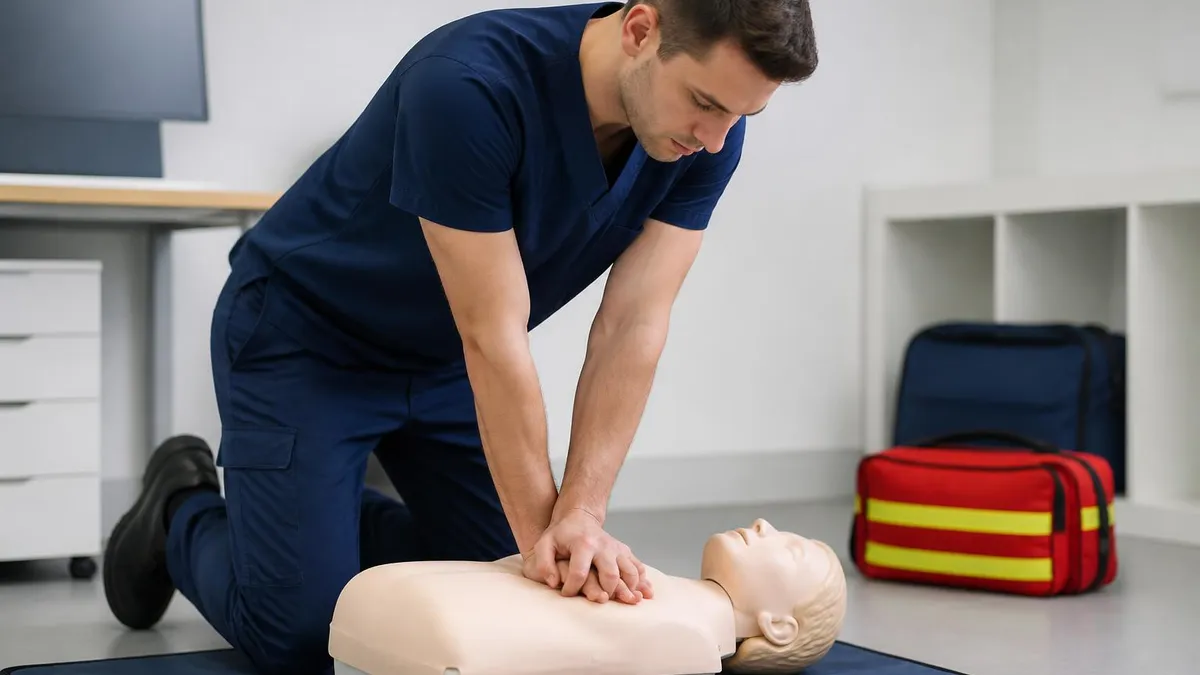
Adult CPR: Complete Step-by-Step Guide to Hands-Only and Standard CPR in 2026
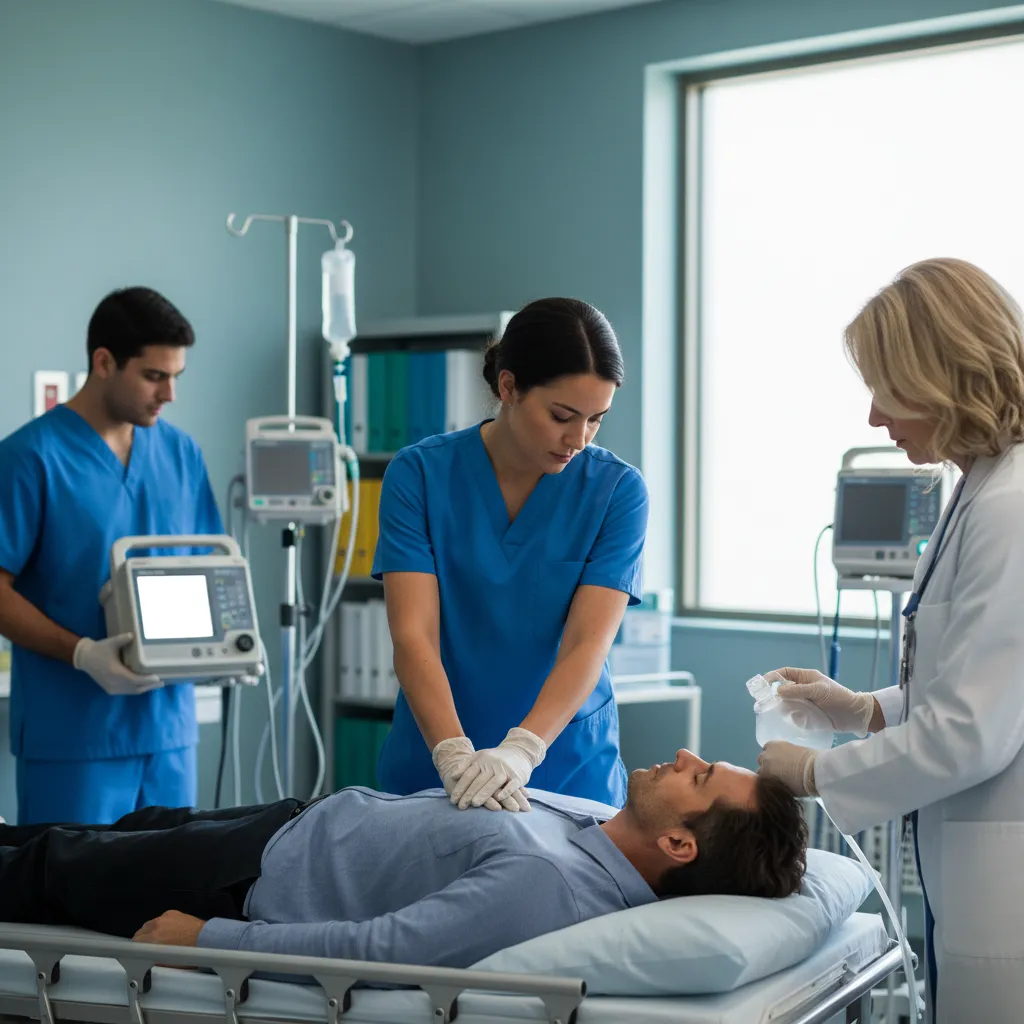
CPR - Cardiopulmonary Resuscitation: Complete Study Guide 2026
About the Author

Registered Nurse & Healthcare Educator
Johns Hopkins University School of NursingDr. Sarah Mitchell is a board-certified registered nurse with over 15 years of clinical and academic experience. She completed her PhD in Nursing Science at Johns Hopkins University and has taught NCLEX preparation and clinical skills courses for nursing students across the United States. Her research focuses on evidence-based exam preparation strategies for healthcare certification candidates.
Join the Discussion
Connect with other students preparing for this exam. Share tips, ask questions, and get advice from people who have been there.
View discussion (5 replies)