
First Aid CPR AED Certification: Complete 2026 October Guide to Courses, Costs, and Requirements
First aid CPR AED certification guide: course options, costs, ACLS algorithm basics, infant CPR, AED steps, and how to pick the right provider in 2026 October. 🆕
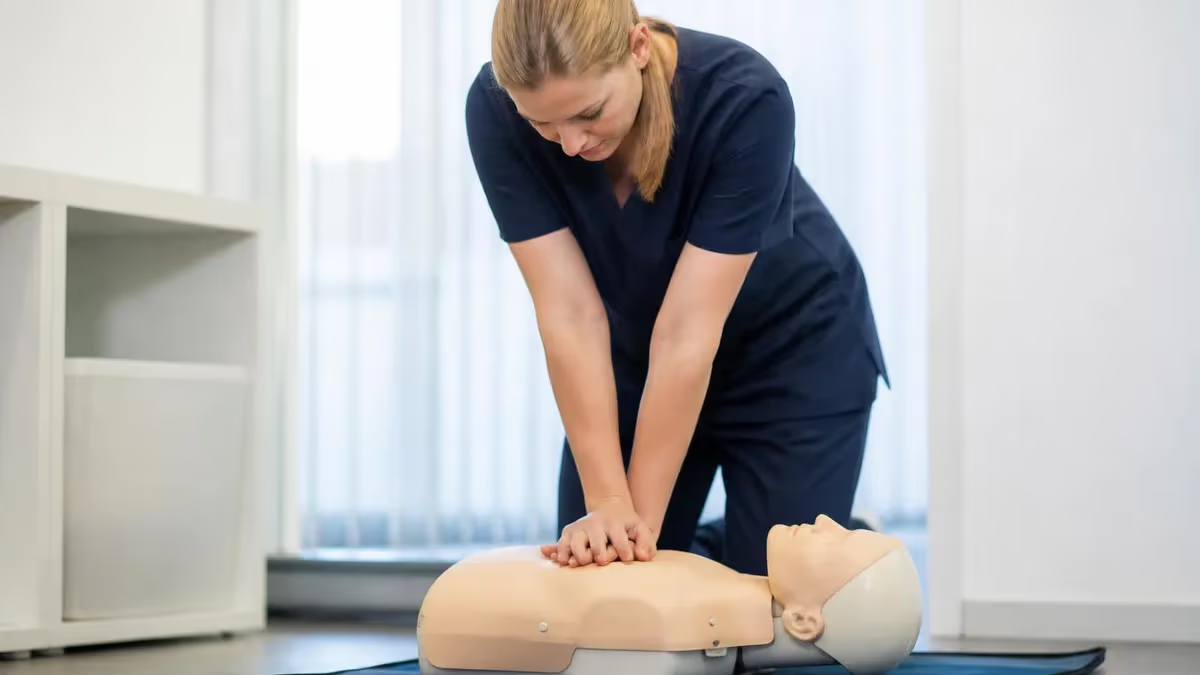
A first aid CPR AED certification is the single most practical credential a non-medical adult can earn, and in 2026 it remains the baseline requirement for teachers, coaches, lifeguards, childcare workers, personal trainers, construction supervisors, and millions of healthcare support staff. The course teaches you to recognize cardiac arrest, deliver high-quality chest compressions, operate an automated external defibrillator, manage choking, control bleeding, and respond to common medical and trauma emergencies. Most blended courses run three to six hours and end with a skills check from an authorized instructor.
Employers ask for this certification because the data behind it is brutal. Roughly 356,000 out-of-hospital cardiac arrests happen in the United States every year, and survival drops about 10 percent for every minute that passes without CPR or defibrillation. When a trained bystander starts compressions and uses an AED within the first three minutes, survival can climb from under 10 percent to nearly 40 percent. That single, learnable skill set is why OSHA, state licensing boards, and the Department of Labor keep tightening workplace requirements.
The certification landscape, however, is messier than it looks. The American Heart Association (AHA), American Red Cross, Health & Safety Institute (HSI), American Safety & Health Institute (ASHI), and the national cpr foundation all issue cards that look almost identical. Some are accepted by hospital HR departments and state boards; others are not. Before you pay, you need to know which body recognizes which credential and whether the course includes a hands-on skills evaluation, because online-only cards are routinely rejected by employers.
This guide walks you through every realistic decision: which course fits your job, how much you should expect to pay, what the ACLS algorithm and BLS pathways look like compared to a basic class, how infant CPR differs from adult care, and how to verify a provider before you hand over a credit card. If you want a baseline refresher on adult chest-compression depth and rate, our adult normal respiration reference page has the numeric thresholds you will be tested on.
You will also find decision tables comparing in-person, blended, and fully online formats. Blended learning — online cognitive modules followed by an in-person skills test — is now the most common path for working adults because it cuts classroom time roughly in half without sacrificing the manikin-based competency check that regulators require. Fully online courses can be useful for awareness training but should never be your only credential if a job is on the line.
Finally, this article is honest about the parts of certification people get wrong. The card in your wallet is not magic; it expires after two years, and your skills decay much faster than that. Studies from Resuscitation and Circulation consistently show compression quality drops measurably within three to six months of training. We will explain how to keep your skills sharp between renewals with short, free practice tools, including printable algorithms and quick-recall quizzes you can use on a phone during a lunch break.
Read straight through if this is your first certification, or jump to the section that matches your situation using the table of contents on the right. By the time you finish, you will know exactly which course to book, what it will cost, what to expect on test day, and how to make the skills stick long after the instructor has signed your card.
For a deeper look at this topic, see our guide to first aid cpr aed certification.
First Aid CPR AED Certification by the Numbers

Course Types and Who Needs Each
The AHA's flagship course for non-healthcare audiences: teachers, coaches, childcare workers, fitness staff, and general workplace responders. Covers adult, child, and infant CPR, AED use, choking, and core first aid like bleeding and burns. Typically 4–6 hours, valid for two years.
Required for nurses, EMTs, medical assistants, dental staff, and most clinical roles. Adds two-rescuer CPR, bag-mask ventilation, and team-based resuscitation. Slightly more technical than Heartsaver and is the prerequisite for ACLS and PALS certification later in a clinical career.
The Red Cross equivalent of Heartsaver, widely accepted by daycare licensing, schools, and OSHA-regulated workplaces. Blended online plus in-person skills option is popular for working professionals who cannot commit a full day to classroom training.
Geared toward childcare providers, build parents, school nurses, and youth coaches. Emphasizes infant cpr, child choking, fever and seizure response, and pediatric AED pad placement. Often required by state childcare licensing boards in addition to a general adult course.
Designed for construction, manufacturing, and remote-site supervisors who must meet OSHA 1910.151 standards. Adds bloodborne pathogen awareness, eye injury response, and chemical exposure basics on top of standard CPR/AED training.
The price tag on a first aid CPR AED certification varies more than most consumers expect. A community Red Cross course in a major city typically runs $90–$120 for the full-day, in-person Adult and Pediatric First Aid/CPR/AED class. An AHA Heartsaver blended course through a hospital training center usually lands between $70 and $110, with the cognitive portion completed online and a 60–90 minute in-person skills session at the end. Fire department and community college offerings can run as low as $40 when subsidized.
Online-only providers such as the national cpr foundation, ProCPR, and ProTrainings advertise certifications for $20 to $40 with instant downloadable cards. These can be legitimate awareness training, but acceptance varies dramatically by employer. Hospitals, EMS agencies, and state nursing boards almost universally require AHA or Red Cross with an in-person skills component. Daycare licensing boards in several states explicitly reject online-only cards. Always check your employer's accepted-provider list before paying.
Course length is another decision point. A pure in-person Heartsaver course runs about six hours; the blended version usually requires two to three hours of online modules plus a 60–90 minute skills evaluation. BLS Provider courses are slightly shorter at four to five hours total because they assume a clinically literate audience. If you need ACLS or pals certification on top of BLS, plan for an additional 10 to 14 hours of instruction spread across one or two days.
Group pricing is the best-kept secret in this industry. Most authorized training centers will discount 20–30 percent per seat if you bring six or more students, and many will travel on-site to your office, gym, or daycare for a small mileage fee. If you are a small-business owner, booking a private group session almost always undercuts the per-seat rate at a public class — and it lets you train your whole staff on equipment that matches what you actually have on the wall.
Watch out for two common scams. The first is a card that claims to be "AHA-aligned" or "based on AHA guidelines" but is not actually issued by the AHA. Only an eCard with a verifiable code from atlas.heart.org is a real AHA credential. The second is the no-skills-test online course that promises a card by email in under an hour. These are not certifications in any meaningful regulatory sense; they are awareness training that happens to come with a PDF.
If you want a clean overview of which national programs hospitals and EMS systems actually accept, our roundup of red cross cpr classes near me compares the AHA and Red Cross pathways side by side, including cost, format, and renewal options. Both organizations meet OSHA workplace requirements and both are accepted by the overwhelming majority of US employers.
Finally, employer reimbursement is more common than people realize. Healthcare systems, school districts, and corporate wellness programs frequently pay for or reimburse first aid CPR AED certification, especially when it is tied to a job requirement. Ask HR before you pay out of pocket, and keep your receipt and certificate together — many employers will only reimburse if both are submitted within 30–60 days of the class.

CPR Practice Test Questions
Prepare for the CPR Cardiopulmonary Resuscitation Practice exam with our free practice test modules. Each quiz covers key topics to help you pass on your first try.
CPR Basic CPR
CPR Exam Questions covering Basic CPR. Master CPR Test concepts for certification prep.
CPR and First Aid
Free CPR Practice Test featuring and First Aid. Improve your CPR Exam score with mock test prep.
CPR (Cardiopulmonary Resuscitation) Adult ...
CPR Mock Exam on (Cardiopulmonary Resuscitation) Adult CPR and AED Usage. CPR Study Guide questions to pass on your first try.
CPR (Cardiopulmonary Resuscitation) Airway...
CPR Test Prep for (Cardiopulmonary Resuscitation) Airway Obstruction and Choking. Practice CPR Quiz questions and boost your score.
CPR (Cardiopulmonary Resuscitation) Cardio...
CPR Questions and Answers on (Cardiopulmonary Resuscitation) Cardiopulmonary Emergency Recognition. Free CPR practice for exam readiness.
CPR (Cardiopulmonary Resuscitation) Child ...
CPR Mock Test covering (Cardiopulmonary Resuscitation) Child and Infant CPR. Online CPR Test practice with instant feedback.
CPR (Cardiopulmonary Resuscitation) High-P...
Free CPR Quiz on (Cardiopulmonary Resuscitation) High-Performance Team Dynamics. CPR Exam prep questions with detailed explanations.
CPR (Cardiopulmonary Resuscitation) Legal ...
CPR Practice Questions for (Cardiopulmonary Resuscitation) Legal and Ethical Considerations. Build confidence for your CPR certification exam.
CPR for Specific Populations
CPR Test Online for for Specific Populations. Free practice with instant results and feedback.
CPR Airway & Breathing Management
CPR Exam Questions covering Airway & Breathing Management. Master CPR Test concepts for certification prep.
CPR Assessment & Recognition of Cardiac Ar...
Free CPR Practice Test featuring Assessment & Recognition of Cardiac Arrest. Improve your CPR Exam score with mock test prep.
CPR Chest Compressions & Defibrillation
CPR Mock Exam on Chest Compressions & Defibrillation. CPR Study Guide questions to pass on your first try.
CPR Post-Resuscitation Care & Recovery
CPR Test Prep for Post-Resuscitation Care & Recovery. Practice CPR Quiz questions and boost your score.
ACLS Algorithm, BLS, and Heartsaver Compared
The acls algorithm is the advanced cardiac life support decision tree used by paramedics, nurses, and physicians during cardiac arrest, symptomatic bradycardia, and unstable tachycardia. It builds on BLS by adding rhythm interpretation, IV/IO drug administration (epinephrine every 3–5 minutes, amiodarone for refractory VF/pVT), and advanced airway management with continuous waveform capnography.
If you are a non-healthcare worker, you do not need ACLS. You need Heartsaver. But understanding that ACLS sits on top of high-quality BLS is useful: even at the advanced level, the highest-impact interventions remain uninterrupted chest compressions and rapid defibrillation. Drugs and airways are layered on, never substituted for, mechanical perfusion. That hierarchy is why every ACLS course still begins with a BLS competency check.
In-Person vs Blended Online First Aid CPR AED Certification
- +Blended courses cut classroom time by 50–60 percent while keeping the required hands-on skills check
- +Online modules can be completed at your own pace, ideal for shift workers and parents
- +Most employers accept blended AHA, Red Cross, and HSI cards with no distinction from full in-person
- +Cost is usually $10–$25 cheaper than fully in-person courses
- +Built-in video demonstrations let you replay tricky skills like infant back blows
- +You can pause to take notes, which is impossible in a six-hour live class
- +Renewal is often available entirely online plus a 30-minute skills check
- −Online-only courses with no skills test are rejected by hospitals, EMS, and many daycare licensors
- −Self-paced cognitive modules require discipline; many learners stall mid-course
- −Manikin feedback is limited unless the in-person portion uses real-time CPR feedback devices
- −Internet outages or expired course links can lock you out near deadline
- −Some employers still require fully in-person formats — always confirm before booking
- −Group questions and peer practice are reduced compared with classroom courses
Pros and Cons at a Glance
| Pros | Cons |
|---|---|
| Online modules can be completed at your own pace, ideal for shift workers and parents | Online-only courses with no skills test are rejected by hospitals, EMS, and many daycare licensors |
| Most employers accept blended AHA, Red Cross, and HSI cards with no distinction from full in-person | Self-paced cognitive modules require discipline; many learners stall mid-course |
| Built-in video demonstrations let you replay tricky skills like infant back blows | Manikin feedback is limited unless the in-person portion uses real-time CPR feedback devices |
| You can pause to take notes, which is impossible in a six-hour live class | Internet outages or expired course links can lock you out near deadline |

Pre-Class Checklist for First Aid CPR AED Certification
- ✓Confirm your employer's accepted providers (AHA, Red Cross, HSI, ASHI) in writing before paying
- ✓Verify the course includes an in-person hands-on skills evaluation, not just an online quiz
- ✓Complete any pre-course online modules at least 48 hours before the skills session
- ✓Print or download your pre-course completion certificate to bring to class
- ✓Wear loose, comfortable clothing — you will be kneeling on the floor for compressions
- ✓Bring a photo ID; some training centers require it to issue the eCard
- ✓Review compression depth (2 inches adult, 1.5 infant) and rate (100–120/min) the night before
- ✓Watch one full AED demonstration video so the voice prompts are familiar
- ✓Eat a real meal beforehand; CPR practice on manikins is more physical than people expect
- ✓Arrive 10–15 minutes early to test your skills station and meet your instructor
Compression quality beats every other variable
Across thousands of cardiac arrest registries, two metrics predict survival more than any other: chest compression depth of at least 2 inches in adults and a rate of 100–120 per minute with full chest recoil. Drugs, airway type, and even rescuer count matter far less than uninterrupted, deep, fast compressions paired with early defibrillation. If you remember nothing else from your certification, remember that.
Infant CPR is the section most students underestimate, and it is also the section instructors flag most often during the skills check. The mechanics differ from adult CPR in important ways: compressions are delivered with two fingers or the two-thumb encircling-hands technique just below the nipple line, depth is about 1.5 inches (roughly one-third the chest depth), and the compression-to-ventilation ratio is 30:2 for a single rescuer or 15:2 for two trained rescuers. Rate remains 100–120 per minute.
Ventilations also change. For infants, you cover both the mouth and nose with your mouth and deliver a gentle puff just enough to make the chest visibly rise — roughly a one-second breath. Over-ventilating is one of the most common mistakes, because it pushes air into the stomach, causes regurgitation, and lifts the diaphragm against the heart, reducing the effectiveness of the next compression. Slow, gentle, just-enough is the rule for infant breaths.
The AED section trips up adults too, especially around pediatric mode. Modern AEDs include either pediatric pads or a key/switch that attenuates the shock dose for children under eight or under 55 pounds. If pediatric pads are unavailable, adult pads are still preferable to no defibrillation at all — place one on the front of the chest and one on the back, between the shoulder blades, so the pads do not overlap. Our adult AED reference covers proper aed pad placement in full detail with diagrams.
First aid skills outside of cardiac arrest get less attention in marketing but make up roughly half of a typical Heartsaver course. You will practice direct pressure for severe bleeding, recognition and care of stroke using the FAST mnemonic (Face drooping, Arm weakness, Speech difficulty, Time to call), epinephrine auto-injector use for anaphylaxis, recognition of opioid overdose, and basic spinal motion restriction for trauma. These skills come up in real life far more often than cardiac arrest does.
Choking response is its own short module but a high-yield one. For conscious adults and children over one year, the technique is five back blows alternated with five abdominal thrusts until the object comes out or the person becomes unresponsive. For infants, alternate five back blows and five chest thrusts — never abdominal thrusts, which can damage the liver. Pregnant women and visibly obese adults receive chest thrusts in place of abdominal thrusts. These distinctions are commonly tested.
Position recovery — placing an unresponsive but breathing person on their side with the lower arm extended and the head tilted to maintain an open airway — is taught for the first aid scenarios where the patient has a pulse and is breathing but cannot protect their own airway. It prevents aspiration if they vomit, which is common after seizures, overdoses, and certain types of stroke. You will be asked to demonstrate the recovery position on the skills test, usually as a follow-up step after primary assessment.
Respiratory rate norms are also part of the curriculum because they help you recognize a deteriorating patient. Adults breathe roughly 12–20 times per minute at rest, children 18–30, and infants 30–60. Numbers consistently outside those bands — especially fewer than 10 breaths per minute in an adult — should escalate your response. For a deeper reference table, see our overview of normal breathing rate values across every age band.
These will fail an employer audit and are routinely rejected by state licensing boards. If your course did not include an in-person manikin evaluation, you do not hold a credential most US employers will accept.
Renewal is where most people get burned. A first aid CPR AED certification expires exactly two years from the issue date printed on the card — not two years from when you finished the course, and not the end of the month. Mark your renewal at least 60 days before expiration, because most authorized training centers book out two to four weeks in advance, and a lapsed card means you have to retake the full initial course rather than the shorter renewal version.
Renewal courses are typically 30–50 percent shorter than initial training. An AHA Heartsaver renewal runs about three hours in person or one to two hours of online modules plus a 30-minute skills check. The cost is usually $50–$85 versus $90–$120 for an initial. If you let your card expire by even a single day, most providers require the full initial course at the full initial price — a $40–$70 penalty for missing the deadline.
Verification has gotten much easier in the last five years. AHA issues eCards that are searchable at atlas.heart.org by name and code. Red Cross digital certificates have a unique URL and QR code that an employer can scan to confirm authenticity in seconds. Make sure your eCard is claimed within 30 days of the course — instructors push the card to your email, but if you never click the activation link, the card never officially exists in the searchable database.
Skill retention is the part of certification almost nobody talks about. Published data from Resuscitation and Circulation shows that compression depth, rate, and recoil quality degrade measurably within three to six months of training, with most rescuers performing well below guideline standards at the one-year mark. Two years between renewals is, frankly, too long if you want real-world readiness. The fix is not necessarily another course — it is short, frequent, deliberate practice.
The best low-cost retention strategy is a 10-minute monthly drill. Pick a flat surface, mentally run the chain of survival, simulate the AED voice prompts on your phone, and tap out 30 compressions to a metronome set at 110 beats per minute. Add infant and child variations every other month. Several free quiz banks — including ones linked throughout this guide — let you drill the cognitive side in five-minute bursts on your phone, which keeps the decision tree fresh between renewals.
Workplace integration matters too. If you work in a setting where cardiac arrest is plausible (school, gym, restaurant, dental office, salon, large office), participate in or push for a quarterly AED check and an annual emergency drill. Knowing where your nearest AED is, who holds the keys, and what your team's call-911 protocol says cuts seconds off response — and seconds are the entire game. A 60-second improvement in time-to-defibrillation can move a cardiac arrest victim from a 10 percent survival probability to roughly 25 percent.
Finally, consider stacking certifications if your career may evolve. A teacher who adds a coaching role, a personal trainer who later opens a gym, or a medical assistant who wants to transition to RN will all benefit from already having BLS Provider on the resume. The cost difference between Heartsaver and BLS is small, and a BLS card is universally accepted everywhere a Heartsaver card is accepted, plus most clinical settings. When in doubt, certify up one level.
The day of your skills evaluation is more manageable than nerves suggest. Arrive 10–15 minutes early, sign in, and identify your instructor. Most centers run two stations simultaneously: an adult/AED station and a child/infant station, with the first aid scenarios woven in between. Instructors are looking for correct sequencing, adequate compression depth and rate, complete chest recoil, minimal pauses, safe AED handling, and confident scene assessment. They are not looking for perfection — they are looking for competence under mild stress.
Scene safety is the first action evaluators score and the one most students skip. Before you touch the patient, you should say out loud: "Scene is safe." Then tap the patient's shoulder and shout "Are you okay?" Send someone specific to call 911 and bring the AED — point at a person, make eye contact, give a clear instruction. Vague "someone call 911" prompts lose points because in real life, diffusion of responsibility means nobody calls. Specific assignments save lives.
For adult CPR, kneel beside the patient's chest, place the heel of your dominant hand on the lower half of the sternum, stack your other hand on top, lock your elbows, and use your upper body weight to drive compressions at least 2 inches deep at 100–120 per minute. Count out loud in sets of 30 and let the chest fully recoil between compressions. Switch with another rescuer every two minutes or sooner if you feel your form degrade — fatigue is invisible to you but obvious on the monitor.
AED operation is genuinely easy once you have practiced it once. Turn the device on, follow the voice prompts, expose the chest (cut clothing if needed), dry the skin, peel and place the pads as shown on the diagram, plug in the connector if required, and make sure nobody is touching the patient when the device says "analyzing" or "shock advised." After a shock — or after "no shock advised" — resume compressions immediately for two minutes before the AED reanalyzes. Do not wait, do not check a pulse mid-cycle.
For first aid scenarios, narrate your thinking. Instructors want to hear, "I'm putting on gloves, I'm applying direct pressure with a clean cloth, I'm calling 911, I'm watching for signs of shock." Silent competence is harder to score than spoken competence. The same goes for stroke recognition ("Face is drooping on the right, arm drift positive, speech is slurred, time of onset 9:47, calling 911 now") and anaphylaxis ("Visible swelling, audible wheeze, asking about an EpiPen, helping them administer to the outer thigh").
Common skills-test mistakes are easy to avoid once you know them. Going too shallow on compressions is the most common; pushing too slow is second; failing to allow full recoil is third. On AED use, the most frequent error is forgetting to ensure nobody is touching the patient before the shock. On choking, students often go straight to abdominal thrusts on a coughing patient — but a forceful cough is more effective than any maneuver, so encourage them to keep coughing first and intervene only when the cough becomes weak or silent.
After you pass, your instructor will issue an eCard or paper card within 24–48 hours. Claim it immediately, save a PDF copy to cloud storage, photograph the front and back, and email a copy to your HR department if your job requires proof. Set a calendar reminder for 22 months from now — two months before expiration — to book your renewal. That single calendar entry is the difference between a smooth $60 renewal and a frustrating $110 full retake.
CPR Questions and Answers
CPR Card Lookup: How to Verify, Replace, and Access Your CPR Certification in 2026
AHA CPR: What It Is, Which Course You Need, and How to Get Certified
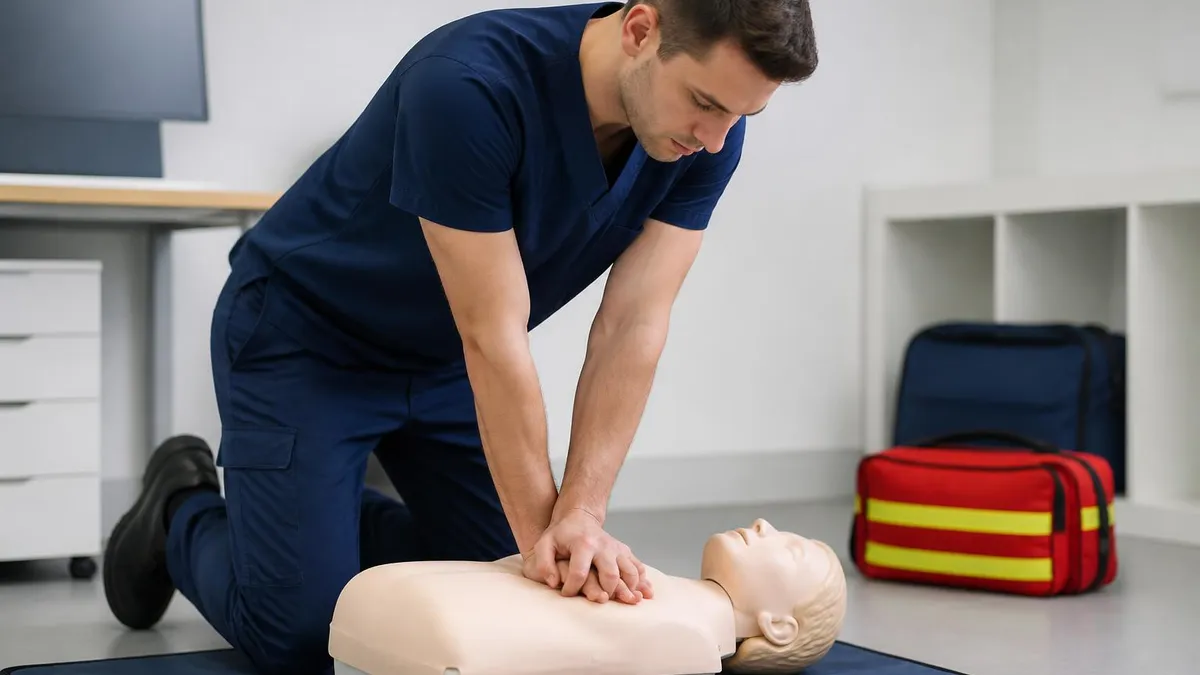
Adult CPR: Complete Step-by-Step Guide to Hands-Only and Standard CPR in 2026
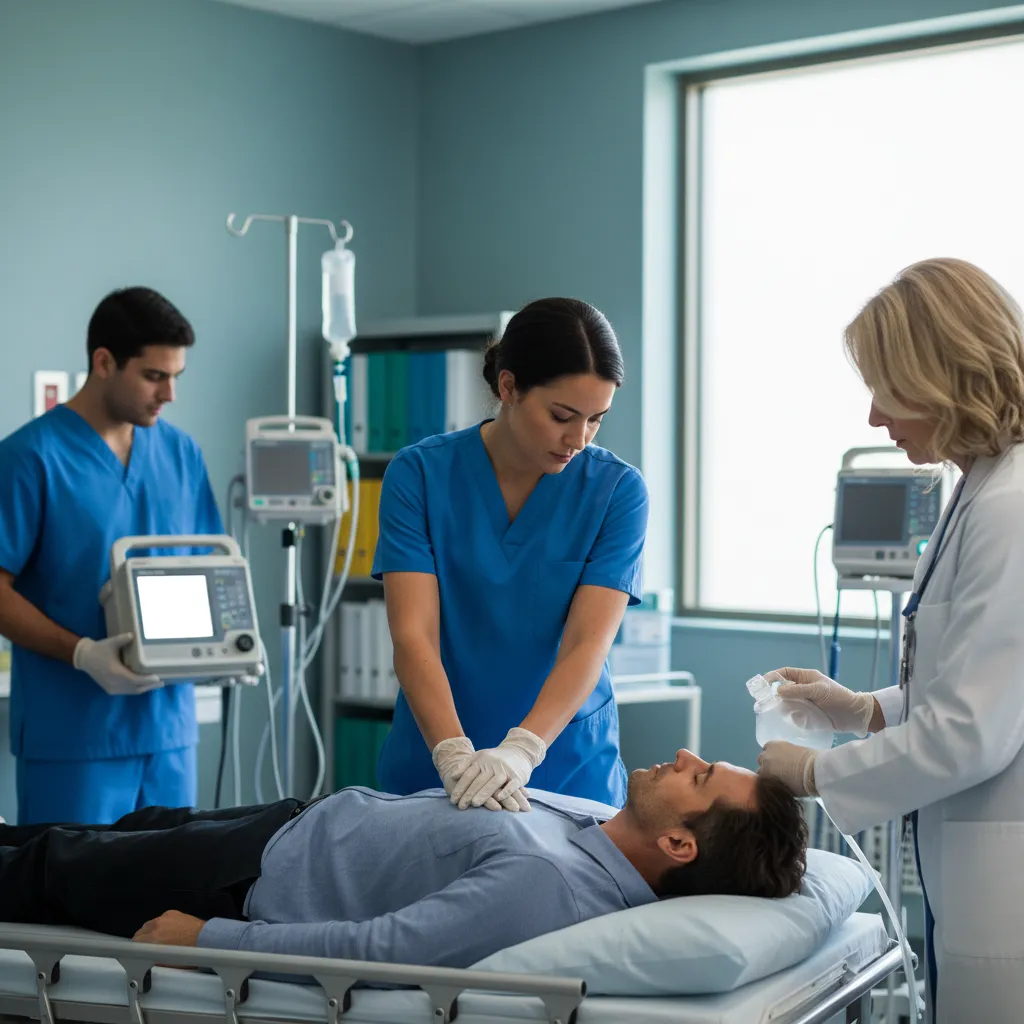
CPR - Cardiopulmonary Resuscitation: Complete Study Guide 2026
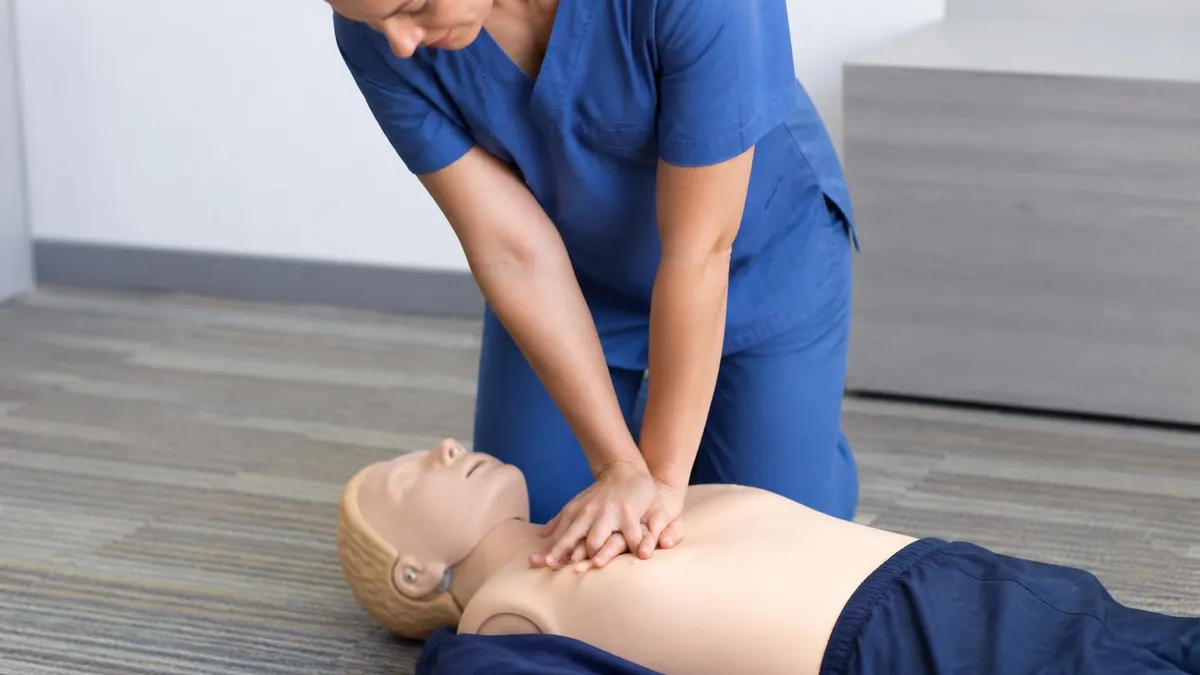
Inappropriate CPR Songs: What Not to Play, Why It Matters, and Better Beat-Per-Minute Alternatives
About the Author

Registered Nurse & Healthcare Educator
Johns Hopkins University School of NursingDr. Sarah Mitchell is a board-certified registered nurse with over 15 years of clinical and academic experience. She completed her PhD in Nursing Science at Johns Hopkins University and has taught NCLEX preparation and clinical skills courses for nursing students across the United States. Her research focuses on evidence-based exam preparation strategies for healthcare certification candidates.
Join the Discussion
Connect with other students preparing for this exam. Share tips, ask questions, and get advice from people who have been there.
View discussion (5 replies)