
Red Cross Atlanta CPR Classes: Complete 2026 October Guide to Finding, Booking, and Passing Your Certification
Find Red Cross Atlanta CPR classes near you. Compare BLS, 🗨️ ACLS algorithm prep, infant CPR, and AED training with costs, schedules, and pass tips.
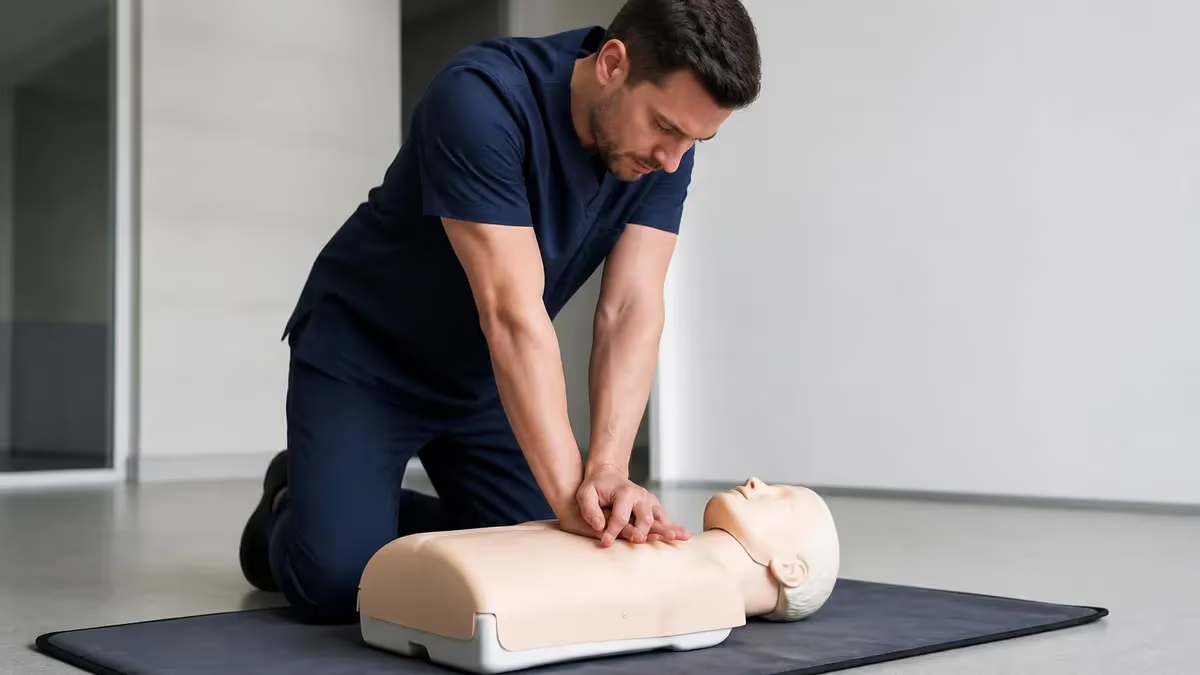
Searching for red cross atlanta cpr classes is the first step thousands of healthcare workers, teachers, parents, and corporate trainees take every month, and the choices can feel overwhelming once you start digging into the catalog. The American Red Cross runs both in-person and blended-learning sessions across the metro Atlanta region, covering everything from Basic Life Support for healthcare providers to lay-responder Adult and Pediatric First Aid/CPR/AED. Choosing the right course depends on whether your employer requires an AHA-equivalent card, an OSHA-compliant workplace certification, or a state-mandated childcare credential.
Atlanta-area Red Cross training centers operate inside chapter offices, partner fire stations, hospitals, community colleges, and private training academies authorized to issue Red Cross digital certificates. Most classes run between two and six hours, with blended-learning options that let you complete the cognitive portion online before attending a shorter skills check-off in person. This flexibility matters because Georgia traffic, shift schedules, and clinical rotations rarely cooperate with a single eight-hour Saturday block.
Before you register, you should understand exactly what skills your certification will cover. A standard adult CPR class teaches chest compressions, rescue breaths, and AED operation at a compression rate matching the normal respiratory rate for adults ventilation pacing of roughly one breath every six seconds during pulseless resuscitation. Healthcare-level BLS adds two-rescuer techniques, bag-valve-mask ventilation, and team dynamics. Pediatric and infant courses introduce smaller compression depths, two-finger or two-thumb techniques, and choking interventions specific to children under one year.
Cost is another major variable. Red Cross Atlanta CPR classes typically range from $70 for a basic adult course to $115 for a full BLS provider certification, with discounts available for groups of six or more. Bulk corporate training scheduled at your workplace can drop the per-student cost significantly. Recertification through challenge courses is usually 20 to 30 percent cheaper than initial certification, but it requires a current, unexpired card and may not be available for every certification level.
Geographically, the most popular Red Cross training locations include the Greater Atlanta Chapter office near downtown, Authorized Provider sites in Marietta, Alpharetta, Decatur, Sandy Springs, and Stockbridge, plus mobile instructors who travel to Buckhead offices, Midtown daycares, and DeKalb County schools. Searching by ZIP code on the official Red Cross class finder returns availability for the next 60 days, including in-person, blended, and online-only review modules for first-aid refreshers.
This guide walks you through every element you need to make a confident decision: certification types, course content, pricing, scheduling, what to bring, how to pass the skills test, and how Atlanta options compare to national alternatives. We will also touch on related credentials like ACLS and PALS that many healthcare workers pursue after completing a Red Cross or American Heart Association BLS card, plus the difference between Red Cross digital certificates and AHA eCards that hospital credentialing offices accept.
By the end, you will know exactly which Red Cross Atlanta CPR class fits your goal, how to budget for it, how to prepare in the week before class, and how to use your card effectively once it arrives in your email inbox. Whether you are renewing a hospital BLS for the fifth time or learning infant CPR for the first time as a new parent, the right preparation cuts your stress and improves your retention long after the certificate expires two years from now.
Red Cross Atlanta CPR Training by the Numbers
Key Facts at a Glance
| Item | Value | Details |
|---|---|---|
| Typical Class Cost | $70-$115 | Adult CPR to full BLS |
| Class Duration | 2-6 hrs | Blended options shorter |
| Certification Validity | 2 years | Renewable via challenge |
Red Cross CPR Course Types Available in Atlanta
Lay-responder course covering adult chest compressions, rescue breaths, AED use, and basic first aid for choking, bleeding, and shock. Runs about 6 hours in person or 2.5 hours skills-only after online module.
Adds child and infant CPR techniques, pediatric AED pad placement, and age-specific choking response. Required for daycare workers, teachers, and camp counselors under Georgia Bright from the Start rules.
Professional-level course teaching two-rescuer CPR, bag-valve-mask ventilation, team dynamics, and high-quality compressions to standards aligned with current resuscitation science guidelines.
Bundled with lifeguard certification, focusing on water rescue, in-water rescue breathing, spinal management, and aquatic emergency response for pools and waterfronts.
Multi-day course preparing experienced providers to teach Red Cross programs as Authorized Instructors. Includes adult learning principles, equipment management, and certification record administration.
Finding the right Red Cross class location in Atlanta starts with the official online class finder, but local knowledge will save you hours of frustration. The Greater Atlanta Chapter headquarters near the I-75/I-85 connector hosts regular classes, but during peak compliance seasons in August and January, those sessions fill up two to three weeks in advance. Authorized Provider locations in suburban hubs like Marietta, Alpharetta, and Stockbridge usually have more open seats and offer evening or weekend sessions that working professionals find easier to attend.
If you live in Cobb or Cherokee County, fire department training divisions and community colleges like Chattahoochee Tech frequently host Red Cross classes at lower prices than private academies. For Gwinnett County residents, Authorized Providers in Duluth, Lawrenceville, and Suwanee post calendars on their own websites and often include certification cards in the registration fee rather than charging a separate processing surcharge. DeKalb and South Fulton residents have strong options through partner hospitals and EMS academies that allow community enrollment when seats remain.
Blended learning has become the dominant format for working adults. You complete a two- to three-hour interactive online module covering theory, then attend a 90-minute to 2-hour in-person skills session where an instructor verifies you can perform compressions, ventilations, and AED operation on a manikin. The instructor also evaluates whether you can recognize a cardiac arrest, call for help correctly, and use a cpr machine or manual feedback device to maintain a compression depth of at least two inches in adults.
Scheduling tips: book at least 10 days ahead during back-to-school season, look for early-morning Saturday classes if you need weekend timing, and double-check whether your specific employer accepts Red Cross certifications or requires an American Heart Association card instead. Some Atlanta hospitals, especially academic medical centers affiliated with Emory and Grady, mandate AHA BLS specifically and will not credit a Red Cross card for clinical privileging, even though both organizations teach the same ILCOR-based science.
Cost varies meaningfully by venue. Expect to pay around $70-85 for adult-only CPR/AED, $90-100 for pediatric-inclusive courses, and $110-130 for full BLS Provider certification. Group rates kick in at six or more learners, and many Atlanta employers contract with mobile instructors who travel to office parks in Buckhead, Perimeter Center, and the Cumberland district. On-site corporate training eliminates commute time and lets HR schedule everyone in a single afternoon, often during quarterly safety days.
One factor people overlook: parking and access. The downtown chapter office has paid lot access but limited free parking, while suburban Authorized Providers usually offer free lots. If you are traveling from outside Atlanta, plan around rush hour because a class that starts at 8 a.m. means leaving Marietta by 6:30 a.m. on a weekday. Evening classes that start at 6 p.m. can extend past 9 p.m., which becomes a problem if you have childcare constraints or a long commute back to outlying counties.
Finally, verify what equipment will be provided. All Red Cross Atlanta CPR classes furnish manikins, AED trainers, and barrier devices for skill practice, but you should bring a pen, photo ID, and a printed copy of any pre-course completion certificate from the online module. Wear comfortable clothing because you will spend significant time on your knees performing compressions on the floor. Closed-toe shoes are required, and avoid heavy fragrances since classmates work in close proximity during partner rescue drills.

CPR Practice Test Questions
Prepare for the CPR Cardiopulmonary Resuscitation Practice exam with our free practice test modules. Each quiz covers key topics to help you pass on your first try.
CPR Basic CPR
CPR Exam Questions covering Basic CPR. Master CPR Test concepts for certification prep.
CPR and First Aid
Free CPR Practice Test featuring and First Aid. Improve your CPR Exam score with mock test prep.
CPR (Cardiopulmonary Resuscitation) Adult ...
CPR Mock Exam on (Cardiopulmonary Resuscitation) Adult CPR and AED Usage. CPR Study Guide questions to pass on your first try.
CPR (Cardiopulmonary Resuscitation) Airway...
CPR Test Prep for (Cardiopulmonary Resuscitation) Airway Obstruction and Choking. Practice CPR Quiz questions and boost your score.
CPR (Cardiopulmonary Resuscitation) Cardio...
CPR Questions and Answers on (Cardiopulmonary Resuscitation) Cardiopulmonary Emergency Recognition. Free CPR practice for exam readiness.
CPR (Cardiopulmonary Resuscitation) Child ...
CPR Mock Test covering (Cardiopulmonary Resuscitation) Child and Infant CPR. Online CPR Test practice with instant feedback.
CPR (Cardiopulmonary Resuscitation) High-P...
Free CPR Quiz on (Cardiopulmonary Resuscitation) High-Performance Team Dynamics. CPR Exam prep questions with detailed explanations.
CPR (Cardiopulmonary Resuscitation) Legal ...
CPR Practice Questions for (Cardiopulmonary Resuscitation) Legal and Ethical Considerations. Build confidence for your CPR certification exam.
CPR for Specific Populations
CPR Test Online for for Specific Populations. Free practice with instant results and feedback.
CPR Airway & Breathing Management
CPR Exam Questions covering Airway & Breathing Management. Master CPR Test concepts for certification prep.
CPR Assessment & Recognition of Cardiac Ar...
Free CPR Practice Test featuring Assessment & Recognition of Cardiac Arrest. Improve your CPR Exam score with mock test prep.
CPR Chest Compressions & Defibrillation
CPR Mock Exam on Chest Compressions & Defibrillation. CPR Study Guide questions to pass on your first try.
CPR Post-Resuscitation Care & Recovery
CPR Test Prep for Post-Resuscitation Care & Recovery. Practice CPR Quiz questions and boost your score.
BLS, ACLS Algorithm, and PALS Certification Pathways
Basic Life Support is the foundation for every clinical resuscitation credential. Atlanta nurses, paramedics, dental staff, and medical assistants must hold a current BLS card to maintain employment, and the Red Cross BLS Provider course meets the ILCOR-based standards taught nationally. The curriculum covers high-quality compressions, bag-valve-mask ventilation, team-based CPR for two rescuers, and AED operation including pediatric pad placement and special rescue situations like hypothermia or drowning.
A typical Red Cross BLS class runs about four hours in classroom format or two hours in blended skills mode. Students must demonstrate proper compression depth of two to 2.4 inches in adults, allow full chest recoil, minimize interruptions, and ventilate at appropriate rates without excessive volume. The exam is a short multiple-choice test plus a hands-on megacode where you lead a simulated arrest scenario from initial assessment through AED shock delivery and team handoff to advanced providers.
Red Cross vs Other Atlanta CPR Training Options
- +Widely recognized digital certificate accessible from any device
- +Lower cost than most private training academies in Atlanta metro
- +Flexible blended-learning option reduces in-person time commitment
- +Strong selection of pediatric and lay-responder courses for parents and teachers
- +Authorized Provider network covers all major Atlanta suburbs and counties
- +Group discounts available for workplace and community organization bookings
- +Includes first aid skills like bleeding control and choking response in most courses
- −Not accepted by some Atlanta academic hospitals that mandate AHA BLS
- −Does not currently offer ACLS or PALS certifications in the Atlanta region
- −Skills sessions can fill quickly during peak compliance months in August and January
- −Downtown chapter office parking is limited and paid
- −Online module must be completed within 30 days before skills check-off
- −Recertification challenge courses not offered for every certification level

Pre-Class Checklist for Red Cross Atlanta CPR Classes
- ✓Register at least 10 days before your target class date during peak compliance season
- ✓Complete the online module within 30 days of your scheduled in-person skills session
- ✓Print or screenshot the online module completion certificate to bring to class
- ✓Bring a government-issued photo ID for instructor verification at check-in
- ✓Wear comfortable, loose-fitting clothing that allows kneeling and floor work
- ✓Choose closed-toe shoes; avoid sandals, heels, or slippery soles during skills practice
- ✓Skip heavy perfume or cologne since partner drills require close proximity
- ✓Eat a balanced meal beforehand; classes are physically demanding and run several hours
- ✓Bring a water bottle, pen, and notepad for instructor demonstrations and tips
- ✓Confirm whether your employer accepts Red Cross or requires American Heart Association certification
Review compression rate before you arrive
The single most-tested skill is maintaining 100-120 compressions per minute at a depth of at least two inches with full recoil. Practice on a couch cushion using a metronome app set to 110 BPM for five minutes the night before your skills check. This muscle memory dramatically improves first-attempt pass rates and reduces instructor remediation time.
The skills test for a Red Cross Atlanta CPR class follows a predictable structure that you can prepare for in advance. After the instructor demonstrates each skill, you practice with a partner, and then you perform the sequence solo while the instructor observes and scores you against the official checklist. Most candidates pass on the first attempt, but small details like failing to scan the scene for safety, forgetting to announce "I am calling 911" out loud, or skipping the breathing check trip up nervous students every session.
For adult CPR, the sequence begins with scene safety and personal protective equipment check, followed by tapping and shouting to assess responsiveness. You then call for help and direct someone specifically to call 911 and bring an AED, scan for breathing for no more than 10 seconds while simultaneously checking the carotid pulse, and immediately begin 30 compressions at 100-120 per minute. After compressions you deliver two rescue breaths over one second each, watching for visible chest rise without overventilating, then resume compressions without delay.
AED operation is tested as a separate skill. You must power on the device, expose the chest, dry the skin if necessary, place pads in the correct anatomical positions for an adult, clear the patient for rhythm analysis, deliver a shock if advised while clearly stating "clear," and immediately resume compressions for two minutes before the device reanalyzes. Most Atlanta instructors use AED trainers that simulate both shockable and non-shockable rhythms so you experience both scenarios during practice.
Choking response is another mandatory skill at every certification level. For conscious adults you perform abdominal thrusts until the obstruction clears or the victim becomes unresponsive, at which point you carefully lower them to the ground and begin CPR while looking in the mouth for visible objects only before each set of breaths. For infants, the sequence alternates five back blows with five chest thrusts using two fingers on the sternum until the airway clears or the infant loses consciousness.
Pediatric and infant CPR add additional skills you must demonstrate. Child CPR uses one or two hands depending on the rescuer’s size and the child’s body habitus, with compression depth of about two inches or one-third of the chest depth. Infant CPR uses two fingers for a single rescuer or the two-thumb encircling hands technique for two rescuers, with compression depth of about 1.5 inches. Ventilation rates and compression-to-ventilation ratios follow specific pediatric guidelines that the instructor will reinforce repeatedly during practice.
Most candidates also complete a recovery position demonstration, especially in lay-responder courses. The proper position recovery technique places the unresponsive but breathing victim on their side with the head supported, the airway open, and the top leg bent to stabilize the body. This prevents aspiration if the victim vomits and maintains an open airway until EMS arrives. Instructors often quiz students on when to use the recovery position versus when to begin compressions.
The written portion is generally a 25- to 35-question multiple-choice exam covering scene safety, recognition of cardiac arrest, compression-to-ventilation ratios, AED indications, choking management, and recovery position criteria. You typically need 80 percent to pass, and instructors will remediate any missed concepts before issuing the certification. Read each question carefully, because Red Cross exam writers commonly include answer choices that sound correct but violate a small but critical detail of current resuscitation guidelines.
Not every Atlanta employer accepts Red Cross certifications interchangeably with American Heart Association cards. Emory Healthcare, Grady Health System, and several other academic medical centers mandate AHA BLS specifically for clinical privileging. Always confirm with your HR or credentialing office before paying for a Red Cross class, especially if you are starting a new clinical role.
Once you have your Red Cross certification card, knowing how to use it effectively is the difference between a credential that sits in your email and one that genuinely protects lives at work and at home. Atlanta employers vary widely in how they verify CPR cards, and understanding their workflows helps you avoid credentialing delays that can interrupt your scheduled shifts or block your start date for a new position with a healthcare system or school district.
Your Red Cross certificate arrives as a digital card with a unique verification ID that employers can validate online by entering your name and ID number on the official Red Cross verification portal. Save a PDF copy to your phone, email it to yourself, and download it to a secure cloud folder so you can produce it during onboarding or annual compliance audits. The digital format eliminates the lost-wallet problem that used to plague paper cards, and most credentialing offices prefer the digital verification because it cannot be forged.
For healthcare workers in Atlanta, your BLS card must be current on every shift. Many hospitals run quarterly audits that pull credentialing data automatically from systems like HealthStream or Symplr, and an expired card flags you off the schedule until renewal is documented. Renew at least 30 days before expiration to avoid scheduling gaps, and remember that recertification challenge courses through Red Cross are available only while your card is still valid. After expiration you must complete a full initial certification.
For teachers, daycare staff, and camp counselors, Georgia Bright from the Start regulations require pediatric-inclusive CPR/AED certification with specific renewal cycles, and the licensing inspectors verify these certificates during facility audits. Your adult normal respiration training also covers child and infant techniques in the pediatric course, which means a single certification typically satisfies multiple compliance requirements at most childcare facilities and youth programs across the Atlanta metro area.
For parents and grandparents who took the class for personal preparedness, the certification still has practical and legal value. Good Samaritan laws in Georgia protect lay responders who act in good faith using their training, and your certification serves as evidence that you applied accepted techniques rather than improvising. Many Atlanta-area community organizations, scouting groups, and faith-based youth programs also require volunteer adults to maintain current CPR certification before working with minors during overnight or aquatic activities.
If you work in fitness, personal training, coaching, or aquatic instruction, your certification is often non-negotiable for liability insurance, facility privileges, and youth program contracts. Atlanta gyms, YMCAs, swim clubs, and athletic leagues commonly verify CPR/AED status before granting access to training floors or pool decks, and your insurance carrier may deny coverage for an incident if your certification was expired at the time. Keep a calendar reminder set 60 and 30 days before expiration to schedule your renewal class.
Finally, retention matters. Skills decay measurably within six months of certification, and research consistently shows that brief monthly refresher practice on a feedback manikin dramatically improves real-world performance. Many Atlanta employers now provide low-dose, high-frequency training stations near nursing units, and several free apps simulate scenarios for self-paced review between formal recertification cycles. Treat your two-year certification as a starting point, not an endpoint, and your skills will be ready when the unimaginable actually happens.
Practical preparation for your Red Cross Atlanta CPR class begins about a week before your scheduled session and continues through the morning of the class itself. The students who consistently pass on the first attempt with minimal remediation share a common pattern: they review the online module twice, practice compressions on a firm surface at home, watch a few high-quality YouTube demonstrations from Red Cross or AHA channels, and arrive rested, hydrated, and on time. Small habits compound into confident, smooth performance in front of the instructor.
Start with the online module if you booked a blended-learning class. Complete it in two sittings rather than rushing through in one block, take notes on compression rates, depths, ratios, and AED steps, and revisit any sections where you scored below 90 percent on the practice checks. The module unlocks the in-person session, so finishing at least three days before your skills check ensures you have buffer time if the platform glitches or your completion certificate fails to sync to the registration system.
Physical preparation matters more than students expect. Two minutes of continuous compressions at 110 per minute is genuinely tiring, especially when you have not done it before. Practice on a stack of couch cushions or a yoga mat using a metronome app for two-minute intervals with 30-second rests. This conditioning prevents the shaky arm fatigue that causes shallow compressions during the skills test and helps you understand why two-rescuer CPR with role swaps every two minutes is the standard for sustained resuscitation.
Review the high-yield concepts the night before. Know that adult compression depth is at least two inches but not greater than 2.4 inches, infant depth is about 1.5 inches, child depth is about two inches or one-third of chest depth, and the universal compression rate across all ages is 100 to 120 per minute. Memorize the 30:2 compression-to-ventilation ratio for single-rescuer adult and pediatric CPR, and the 15:2 ratio used in two-rescuer pediatric resuscitation by healthcare providers.
On the morning of class, eat a real breakfast, hydrate well, and arrive 15 minutes early to handle parking, check-in, and seat selection. Sit near the front if you are nervous because closer seating tends to produce better skills outcomes, probably because of clearer instructor demonstrations and reduced distraction from other learners. Bring a small snack and your water bottle since classes rarely include long breaks, and your blood sugar will dip during the physically demanding skills practice blocks.
During practice, ask questions immediately when something feels uncertain. Instructors prefer addressing confusion during low-stakes practice rather than during the formal skills check, and a clarifying question often helps the entire class. If your partner is struggling, offer encouragement rather than corrections; the instructor is responsible for technique feedback, and peer coaching can introduce bad habits. Focus on your own form, count your compressions out loud during early practice, and use feedback devices if the manikins are equipped with them.
For broader context across multiple CPR techniques and certification levels, the malibu cpr comprehensive resource walks through topics you may want to review before or after your Red Cross class. Combining structured class instruction with self-paced review accelerates retention, builds confidence, and prepares you for the moments when training transitions from classroom exercise to real emergency response on a sidewalk, in a school cafeteria, or at a family gathering where seconds genuinely matter.
CPR Questions and Answers
CPR Card Lookup: How to Verify, Replace, and Access Your CPR Certification in 2026
AHA CPR: What It Is, Which Course You Need, and How to Get Certified
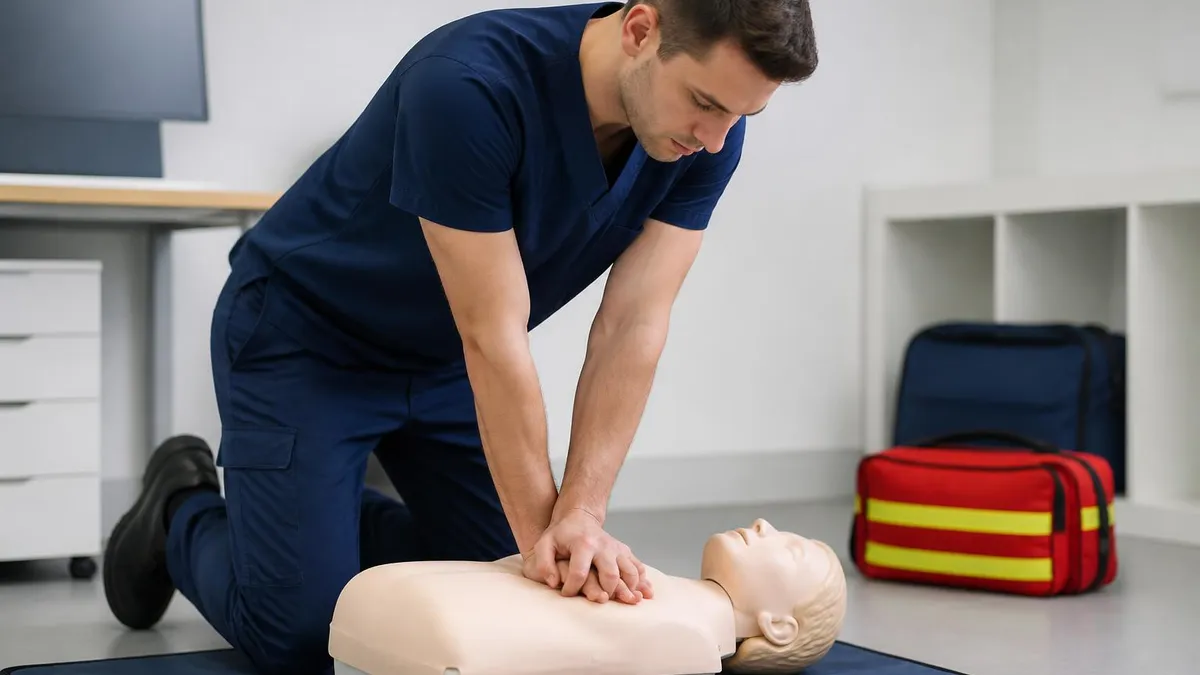
Adult CPR: Complete Step-by-Step Guide to Hands-Only and Standard CPR in 2026
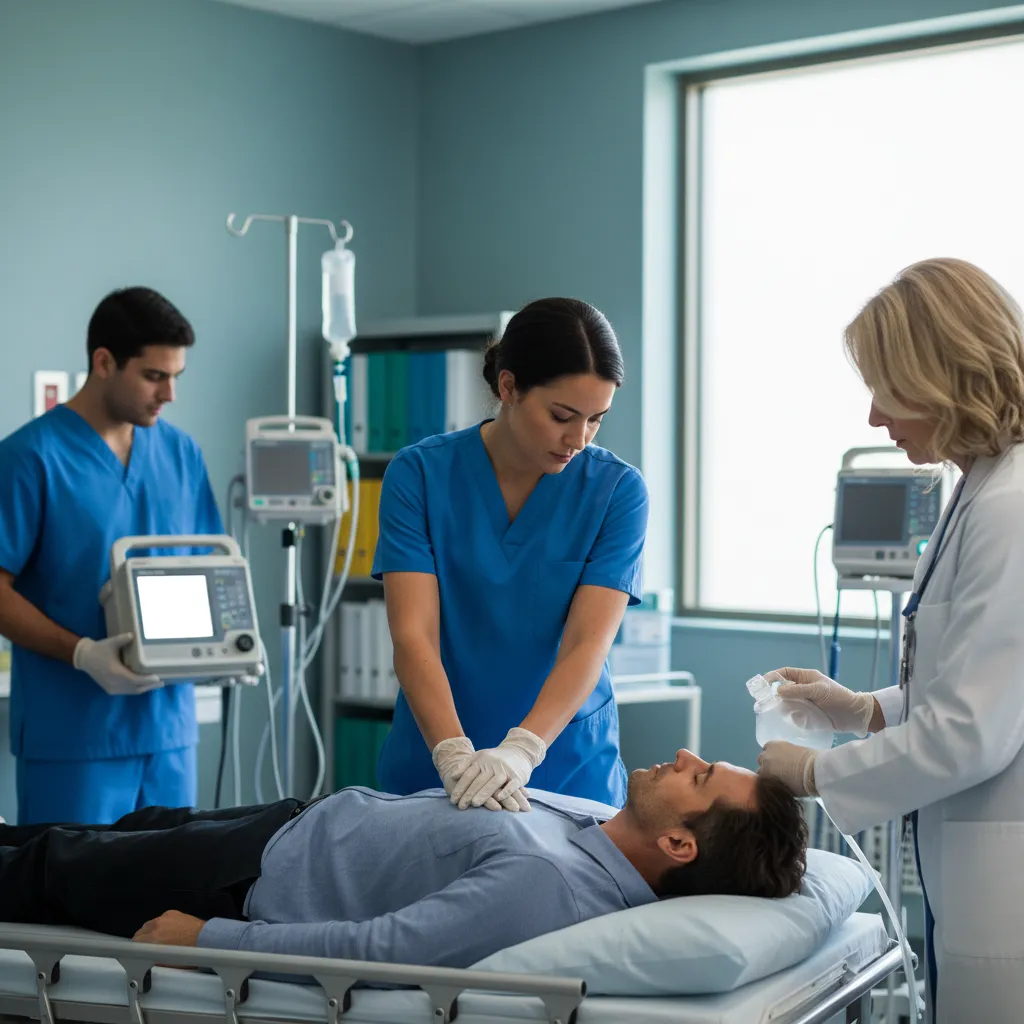
CPR - Cardiopulmonary Resuscitation: Complete Study Guide 2026
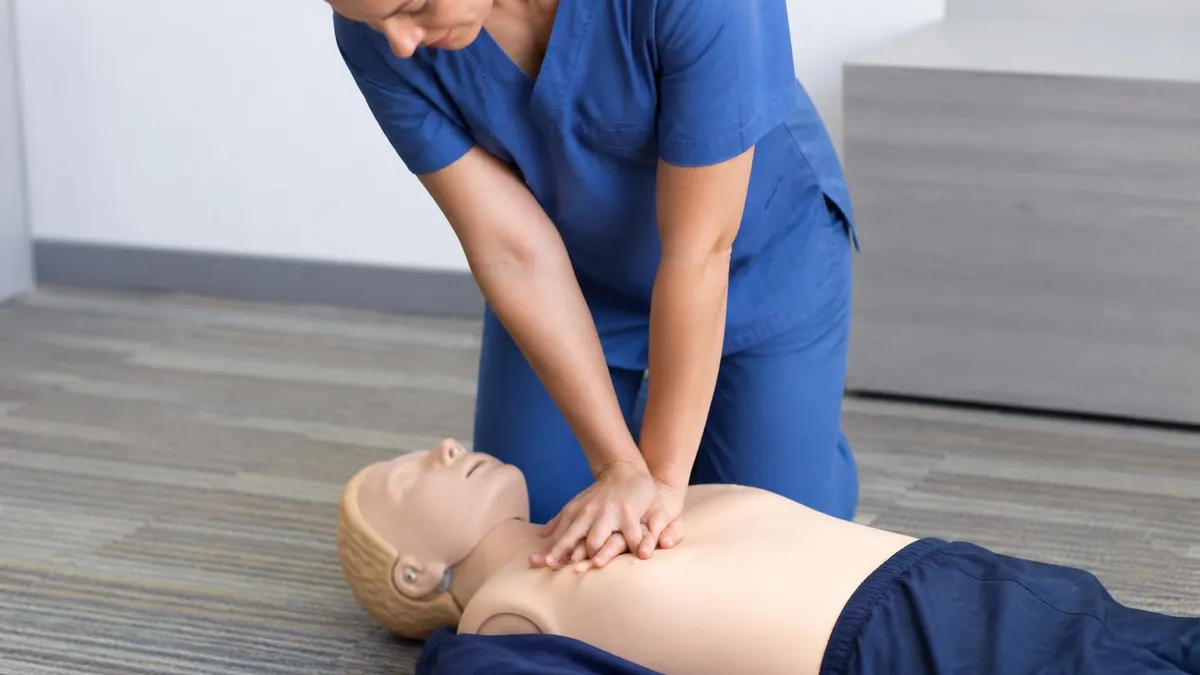
Inappropriate CPR Songs: What Not to Play, Why It Matters, and Better Beat-Per-Minute Alternatives
About the Author

Registered Nurse & Healthcare Educator
Johns Hopkins University School of NursingDr. Sarah Mitchell is a board-certified registered nurse with over 15 years of clinical and academic experience. She completed her PhD in Nursing Science at Johns Hopkins University and has taught NCLEX preparation and clinical skills courses for nursing students across the United States. Her research focuses on evidence-based exam preparation strategies for healthcare certification candidates.
Join the Discussion
Connect with other students preparing for this exam. Share tips, ask questions, and get advice from people who have been there.
View discussion (5 replies)