
Online CPR Class: Complete 2026 October Guide to Choosing, Taking, and Passing Virtual CPR Certification
💡 Take an online CPR class that employers actually accept. Compare providers, costs, blended options, and pass your certification fast.
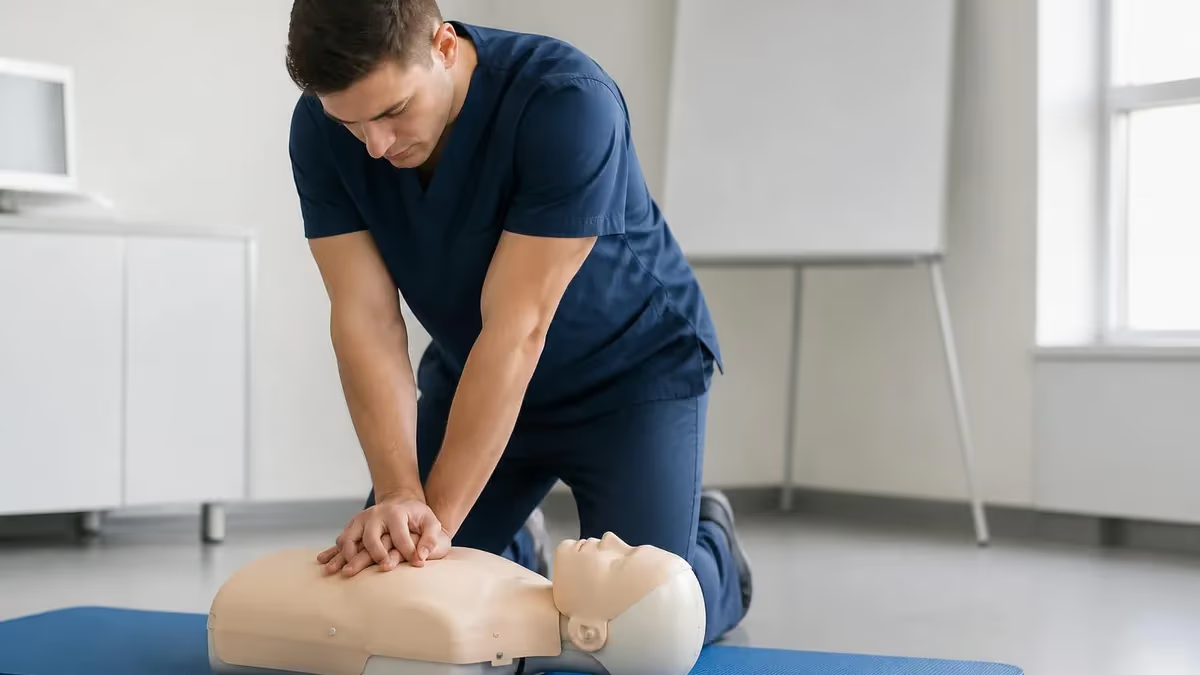
An online CPR class is the fastest, most flexible way to earn or renew your CPR certification in 2026, and millions of healthcare workers, teachers, coaches, babysitters, and concerned citizens choose this format every year. Whether you need a blended course that meets American Heart Association standards, a fully online refresher from a workplace safety vendor, or a low-cost option from the national cpr foundation, the digital classroom has matured into a serious training environment with video demonstrations, interactive scenarios, and instant printable cards.
The appeal is obvious. You skip the commute, you study on your couch, and you finish in two to four hours instead of burning a Saturday at a community center. But not every online CPR class is created equal. Some are accepted by hospitals, schools, and state licensing boards. Others are rejected outright because they lack a hands-on skills check or come from an unrecognized issuing organization. Knowing which provider your employer accepts before you pay is the single most important step you will take.
This guide walks you through every angle of online CPR training, from the curriculum you should expect to see (compressions, rescue breathing, infant cpr, AED operation, choking relief) to the credentials employers verify. We will compare blended versus fully online formats, break down typical pricing, explain how skills sessions work, and show you exactly how to read the fine print before clicking buy.
You will also see how an online CPR class fits into the broader certification ladder. Many healthcare students start here, then move into BLS, then ACLS, then PALS depending on their specialty. Understanding where each rung sits saves money and prevents the painful discovery that the card in your wallet does not satisfy your clinical rotation requirement. For a deeper review of breathing assessment basics, check our reference on adult normal respiration before you start.
We will also tackle the controversies. Critics argue that compression depth and rate cannot be properly evaluated through a webcam, and they have a point. Defenders counter that adult learners retain skills better when they can pause, rewind, and practice at their own pace. The truth, as usual, lives in the middle: a well-designed blended class with a competent in-person skills check delivers measurable, life-saving competency for the vast majority of bystanders.
Finally, we will arm you with practical tips: how to set up your practice space, what manikin to buy or borrow, how to film your skills session if the provider requires it, and what to do if your card is lost, expired, or rejected by an employer. By the end you will know exactly which online CPR class to pick, how much you should pay, and what to expect on test day.
This article is built for adult learners who want a real credential, not a worthless PDF. If your job, school, or state requires a recognized card, read every section. Skipping ahead can cost you a job offer or a clinical placement, so take the extra fifteen minutes.
Online CPR Class by the Numbers
Key Facts at a Glance
| Item | Value | Details |
|---|---|---|
| Typical Price Range | $15-$95 | Varies by issuing body |
| Choose Blended Format | 73% | Online theory + in-person skills |
| Certification Validity | 2 years | Standard for most cards |

Three Common Online CPR Class Formats
100% digital from registration to printable card. Best for laypersons, parents, coaches, and workplace compliance where hands-on verification is not mandated. Typically two hours of video plus a 25-question exam.
Online theory at your own pace, followed by a 30-60 minute in-person skills session with a certified instructor and manikin. Required for AHA BLS, healthcare provider cards, and most clinical settings.
Live Zoom-style class with an instructor watching you perform compressions on a manikin shipped to your home. Combines online convenience with real-time feedback. Growing fast in rural healthcare.
The audience for an online CPR class is broader than most people assume. Yes, healthcare workers dominate enrollment numbers, but the largest growing segments are non-clinical: daycare staff, personal trainers, real estate agents who show empty houses, ride-share drivers, summer camp counselors, hotel managers, and parents of newborns. Each group has a slightly different reason for needing the card, and each has a slightly different threshold for what counts as acceptable proof of training.
If you are a nursing student, respiratory therapist, paramedic, dentist, or hospital employee, you almost certainly need a BLS card issued by the American Heart Association or American Red Cross. Both organizations now offer blended online options that meet hospital credentialing requirements. A purely online card from a generic vendor will be rejected by your HR department, full stop. Always confirm with your employer or program director before paying.
Teachers and school staff sit in a middle zone. State requirements vary wildly: some states accept any nationally recognized online CPR class for renewal, while others demand in-person verification every cycle. School nurses universally need a higher-tier BLS card. Coaches and athletic trainers in states with sudden-cardiac-arrest legislation often need annual AED training documented separately, even if their CPR card is good for two years.
Parents, grandparents, and babysitters benefit enormously from an online CPR class focused on pediatric and infant cpr. The skills differ meaningfully: compression depth is shallower, the ratio of compressions to breaths changes when two rescuers are present, and choking relief uses back blows and chest thrusts rather than abdominal thrusts. A two-hour family-focused course can genuinely save a child's life, and you do not need a wallet card to use the skills.
Workplace compliance is another major driver. OSHA does not specify a particular provider, but it does require that employees designated as first-aid responders be trained by a recognized organization. An online CPR class from a reputable vendor satisfies OSHA in most non-clinical workplaces. Construction, manufacturing, hospitality, and office settings all routinely accept online cards, provided they include AED instruction. If you want a refresher on practical adult techniques, browse aed pad placement before booking.
Finally, there is the truly voluntary learner — the person who watched a stranger collapse, felt helpless, and decided never to feel that way again. For this audience, the online format is ideal because the alternative is no training at all. Even a non-accredited two-hour course dramatically increases bystander willingness to attempt compressions, which is the single biggest variable in out-of-hospital cardiac arrest survival.
Match your audience to your provider. Pay for the level you need, not the level that sounds most impressive. Over-credentialing wastes money; under-credentialing wastes time when HR rejects your card.

CPR Practice Test Questions
Prepare for the CPR Cardiopulmonary Resuscitation Practice exam with our free practice test modules. Each quiz covers key topics to help you pass on your first try.
CPR Basic CPR
CPR Exam Questions covering Basic CPR. Master CPR Test concepts for certification prep.
CPR and First Aid
Free CPR Practice Test featuring and First Aid. Improve your CPR Exam score with mock test prep.
CPR (Cardiopulmonary Resuscitation) Adult ...
CPR Mock Exam on (Cardiopulmonary Resuscitation) Adult CPR and AED Usage. CPR Study Guide questions to pass on your first try.
CPR (Cardiopulmonary Resuscitation) Airway...
CPR Test Prep for (Cardiopulmonary Resuscitation) Airway Obstruction and Choking. Practice CPR Quiz questions and boost your score.
CPR (Cardiopulmonary Resuscitation) Cardio...
CPR Questions and Answers on (Cardiopulmonary Resuscitation) Cardiopulmonary Emergency Recognition. Free CPR practice for exam readiness.
CPR (Cardiopulmonary Resuscitation) Child ...
CPR Mock Test covering (Cardiopulmonary Resuscitation) Child and Infant CPR. Online CPR Test practice with instant feedback.
CPR (Cardiopulmonary Resuscitation) High-P...
Free CPR Quiz on (Cardiopulmonary Resuscitation) High-Performance Team Dynamics. CPR Exam prep questions with detailed explanations.
CPR (Cardiopulmonary Resuscitation) Legal ...
CPR Practice Questions for (Cardiopulmonary Resuscitation) Legal and Ethical Considerations. Build confidence for your CPR certification exam.
CPR for Specific Populations
CPR Test Online for for Specific Populations. Free practice with instant results and feedback.
CPR Airway & Breathing Management
CPR Exam Questions covering Airway & Breathing Management. Master CPR Test concepts for certification prep.
CPR Assessment & Recognition of Cardiac Ar...
Free CPR Practice Test featuring Assessment & Recognition of Cardiac Arrest. Improve your CPR Exam score with mock test prep.
CPR Chest Compressions & Defibrillation
CPR Mock Exam on Chest Compressions & Defibrillation. CPR Study Guide questions to pass on your first try.
CPR Post-Resuscitation Care & Recovery
CPR Test Prep for Post-Resuscitation Care & Recovery. Practice CPR Quiz questions and boost your score.
What an Online CPR Class Teaches About the ACLS Algorithm and More
The foundation of every online CPR class is adult basic life support. You will learn to recognize cardiac arrest, call for help, begin high-quality chest compressions at 100-120 per minute and 2-2.4 inches deep, deliver rescue breaths at the proper rate, and integrate an AED as soon as it arrives. Instructors emphasize minimizing interruptions because every pause in compressions drops coronary perfusion pressure.
Modern curricula also stress monitoring the patient's respiratory rate before arrest, recognizing agonal gasps versus normal breathing, and switching compressors every two minutes to prevent fatigue-related shallow compressions. The acls algorithm appears in healthcare-provider courses to bridge laypersons toward advanced care, even when the online class itself stops at BLS level.
Online CPR Class vs Traditional Classroom: Honest Trade-Offs
- +Complete training in 2-4 hours instead of a full Saturday classroom day
- +Pause, rewind, and repeat any technique demonstration as many times as you need
- +Significantly cheaper, often $15-$50 versus $75-$120 for in-person courses
- +No commute, parking, or coordinating with a partner's schedule
- +Instant printable card the moment you pass the final exam
- +Multiple device support so you can study on phone, tablet, or laptop
- +Available 24/7 for shift workers, parents, and rural learners
- −Pure online courses are not accepted for most healthcare credentialing
- −Skills feedback from a webcam cannot match an instructor's hands on your hands
- −Self-discipline required; easy to skim videos and miss critical details
- −Manikin not provided unless you pay extra or borrow one
- −Some employers reject any card without an in-person verification stamp
- −Technical glitches can lock you out of the final exam at the worst moment
- −Lower retention if you never physically practice compressions on a manikin

Pre-Enrollment Checklist for Your Online CPR Class
- ✓Confirm with your employer, school, or licensing board which issuing organizations they accept
- ✓Decide between fully online, blended, or virtual instructor-led based on credential requirements
- ✓Verify the course includes AED training; many compliance rules require it explicitly
- ✓Check certification validity period; standard is two years for BLS and lay rescuer cards
- ✓Read refund and retake policies before paying, especially for blended skills sessions
- ✓Test your internet speed and browser compatibility on the device you plan to use
- ✓Reserve a quiet two-to-four hour block with no interruptions for the video modules
- ✓Have a pen, paper, and a printable summary sheet ready to capture compression rates
- ✓Confirm the printable card is digitally verifiable by a third party with a QR code or lookup tool
- ✓Schedule the in-person skills session within the provider's deadline if doing a blended class
- ✓Save your account login because your card will live in that portal for two years
- ✓Set a calendar reminder 60 days before expiration to begin the renewal process
Always Ask Your Employer First
Before you pay a single dollar, send your HR contact or program director the exact provider name, course name, and issuing organization you are considering. Many rejected cards trace back to a learner assuming any online CPR class is acceptable. Five minutes of email saves $50 and a missed start date.
The skills verification step is where online CPR training succeeds or fails as a credential. In a fully online class, verification is limited to the multiple-choice final exam, which is why these cards work for OSHA compliance and personal preparedness but not for hospital credentialing. In a blended class, the online portion ends with an electronic completion certificate that you then bring to a local instructor for a hands-on practical exam.
The hands-on portion typically lasts thirty to sixty minutes. You will demonstrate adult one-rescuer CPR with AED use, two-rescuer team dynamics, infant CPR with bag-valve-mask ventilation if you are a healthcare provider, and choking relief on a conscious and an unconscious manikin. The instructor watches your compression depth, rate, recoil, and ventilation volume, then either signs you off or remediates specific weaknesses on the spot.
Virtual instructor-led classes splice the difference. The provider mails you a small inflatable manikin and a debriefing manikin sensor, then walks a small group through skills on Zoom while watching each student's webcam. Compression-rate audio cues from the manikin are scored automatically, and the instructor flags depth or recoil issues by name. This format is growing fastest in rural America where in-person sessions can require a four-hour drive.
What gets evaluated? Compression rate between 100 and 120 per minute, depth of at least two inches for adults without exceeding 2.4 inches, complete chest recoil between compressions, minimal interruptions, proper hand placement, effective bag-mask seal if applicable, correct AED pad placement, and clear team communication including a loud verbal "clear" before any shock. Instructors are trained to fail anyone who cannot sustain quality for at least two consecutive minutes.
If you fail the skills portion, most providers allow one free retake within thirty days. Some require a second short online refresher first; others jump straight to re-test. Track your provider's specific remediation policy because deadlines are strict and missing them voids your online completion certificate, forcing you to start over and pay again.
A frequently overlooked detail is documentation. Your printed or digital card must show the issuing organization, course name, completion date, expiration date, instructor name and ID, and ideally a QR code that links to a verification database. Cards without verification details are the most likely to be rejected by hospital credentialing offices, even when the underlying training was perfectly valid.
Finally, keep your eCard accessible. Hospital orientation, school onboarding, and license renewals typically demand the card within hours of request. Saving the PDF to cloud storage and emailing yourself a copy is the simplest backup strategy. Lost physical cards are usually replaceable through the issuing portal, but the process can take days.
Some low-cost online CPR class vendors sell cards from organizations with no verification database. If a hospital or school cannot independently look up your name and certification number, the card is functionally worthless. Always confirm a third-party verification mechanism exists before paying, regardless of price.
Choosing the right online CPR class provider is half research and half self-awareness. The two market leaders, American Heart Association and American Red Cross, dominate healthcare credentialing because hospitals, nursing schools, and state licensing boards specifically name them. Both now offer fully online and blended options. Their prices run higher — typically $35 to $95 — but the card travels anywhere in the United States without question.
The national cpr foundation occupies the budget tier, offering fully online cards in the $15 to $35 range with instant PDF delivery. These cards work well for OSHA compliance, daycare licensing in many states, fitness industry employers, and personal preparedness. They are generally not accepted for hospital credentialing or state nursing boards, so verify acceptance before paying. The same caveat applies to other budget vendors like ProCPR, CPR Today, and ProTrainings.
If you need anything beyond basic CPR — say, ACLS or pals certification — you will eventually require a blended course because skills verification is mandatory for advanced cardiac and pediatric life support. The acls algorithm, megacode scenarios, and pharmacology stations cannot be taught through video alone. Plan to budget $200 to $350 and reserve a half-day for the in-person portion.
Healthcare students should also factor in renewal cycles. BLS expires every two years, ACLS every two years, and PALS every two years on staggered schedules. Some employers cover the cost; many do not. An online CPR class for the BLS renewal portion can save $40 to $60 every cycle compared to in-person, but you still need the skills session. Visit red cross cpr classes near me to compare vendor proximity.
One often-ignored selection criterion is mobile experience. If you plan to study on a phone during commutes or breaks, test the provider's mobile site before paying. Some legacy platforms still render badly on phones, with quizzes that misalign, videos that buffer, and progress that fails to save between sessions. Read recent reviews on consumer sites, not just the vendor's own testimonials.
Finally, watch for upsells. Many online CPR class vendors include a free PDF card but charge $5 to $15 for a mailed plastic card, additional charges for a wallet pouch, fees for combined first-aid certification, and renewal reminders priced at a premium. None of these add value if you simply screenshot the digital card to your phone. Buy the training, skip the trinkets.
Compare at least three providers side by side on price, acceptance, mobile usability, verification system, and refund policy before committing. The fifteen minutes of homework is the single highest-ROI activity in this entire process.
Final preparation matters even for a self-paced online CPR class. Block two to four hours of uninterrupted time, mute your phone, close every other browser tab, and treat the course like a college exam. Skimming videos at 2x speed feels efficient but produces poor retention, and the final exam questions are often worded to trip up people who watched passively. Pause every chapter and write a one-sentence summary in your own words.
Set up a small practice space if your provider expects a skills component. A firm surface, a pillow or rolled towel to act as a stand-in manikin during video chapters, and a metronome app set to 110 beats per minute help cement compression rhythm. A real adult manikin costs $50 to $120 if you want to over-invest, but most learners do fine with a structured pillow and a willing friend acting as the patient.
Memorize the high-yield numbers. Adult compressions: 100-120 per minute, 2-2.4 inches deep, 30:2 ratio. Child: same rate, one-third chest depth, 30:2 single rescuer or 15:2 two rescuer. Infant: same rate, about 1.5 inches deep, 30:2 single rescuer or 15:2 two rescuer. AED: turn on, attach pads, follow voice prompts, clear before shock. These appear in some form on every exam.
For respiratory rate references, remember normal adult breathing runs 12-20 breaths per minute, child 18-30, and infant 30-60. Anything outside these ranges suggests distress and requires monitoring. The normal breathing rate ranges anchor recognition skills tested in nearly every online CPR class final exam.
On exam day, read every question twice. Online CPR class exams favor scenario-based questions where two answers look reasonable but only one fits the algorithm exactly. The trick is to identify what stage of the chain of survival the question is asking about, then pick the action that matches that specific stage, not an action that would be correct one step earlier or later in the sequence.
If you do not pass on the first attempt, do not panic. Most providers allow two or three retakes, and the failed attempt is itself a powerful study tool because the system flags every topic you missed. Spend an hour reviewing those topics before retaking. First-time pass rates hover around 94% precisely because the system pushes weak students into remediation rather than letting them fail and walk away.
After you pass, screenshot your card, save the PDF to cloud storage, email it to yourself, and set a calendar reminder 90 days before expiration to begin renewal. Lapses cost time, money, and sometimes job offers. Treat your CPR card like a driver's license: known location, known expiration, no surprises.
CPR Questions and Answers
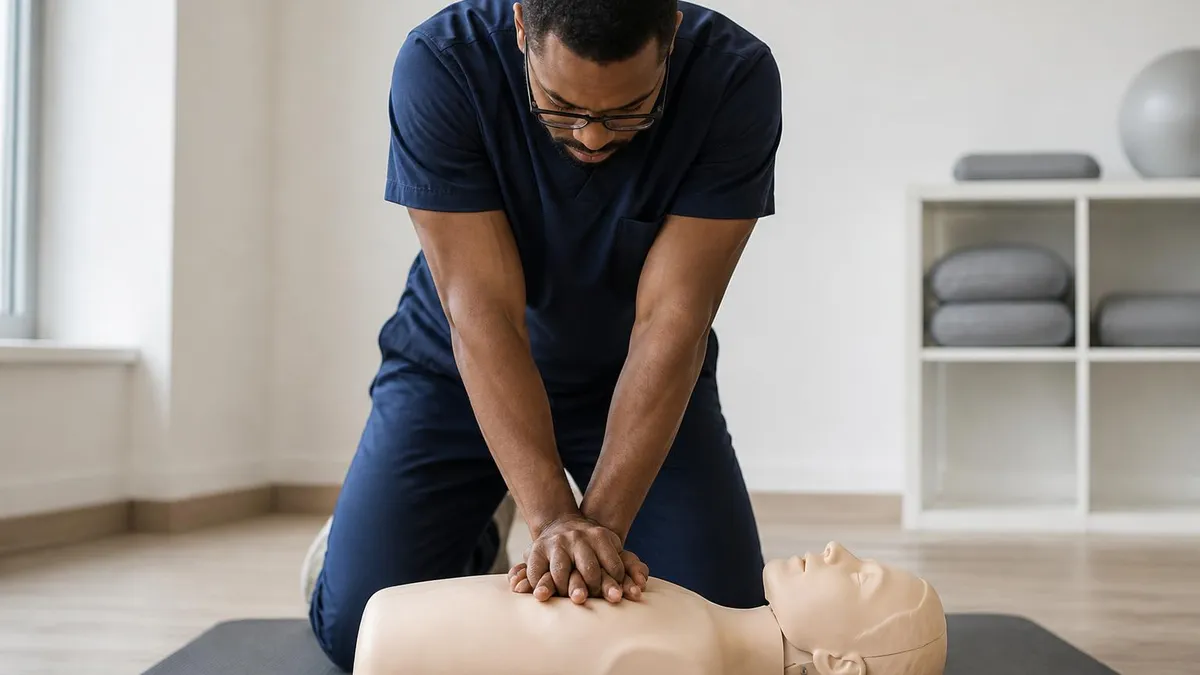
CPR Card Lookup: How to Verify, Replace, and Access Your CPR Certification in 2026
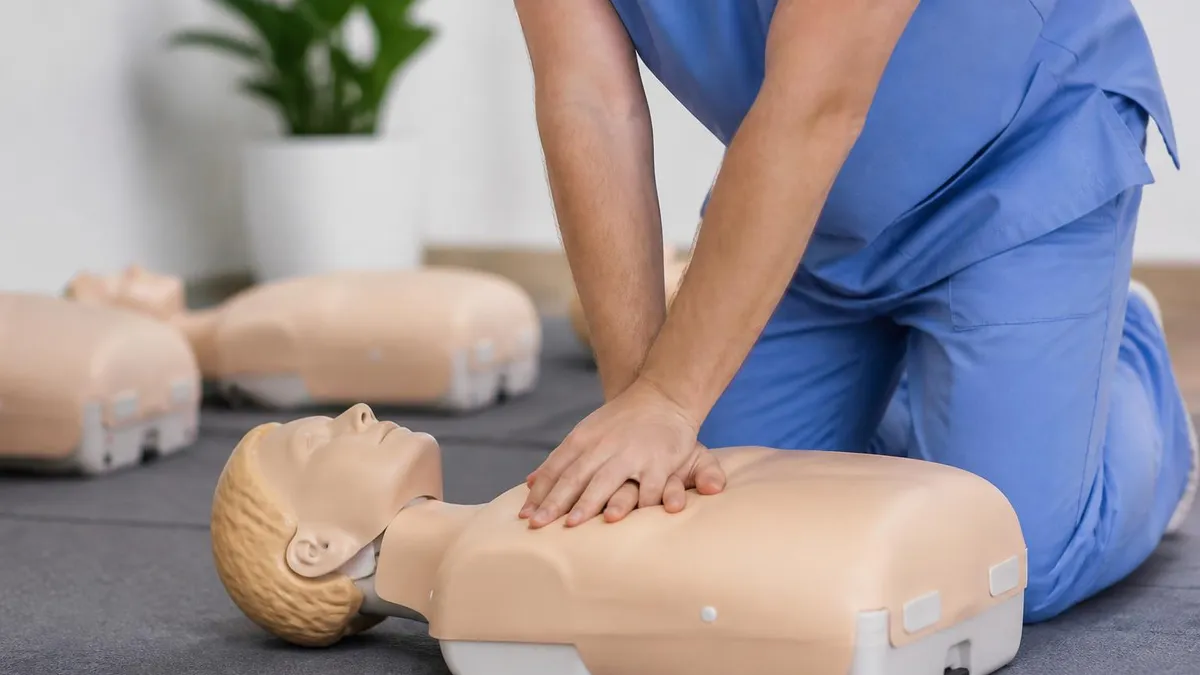
AHA CPR: What It Is, Which Course You Need, and How to Get Certified
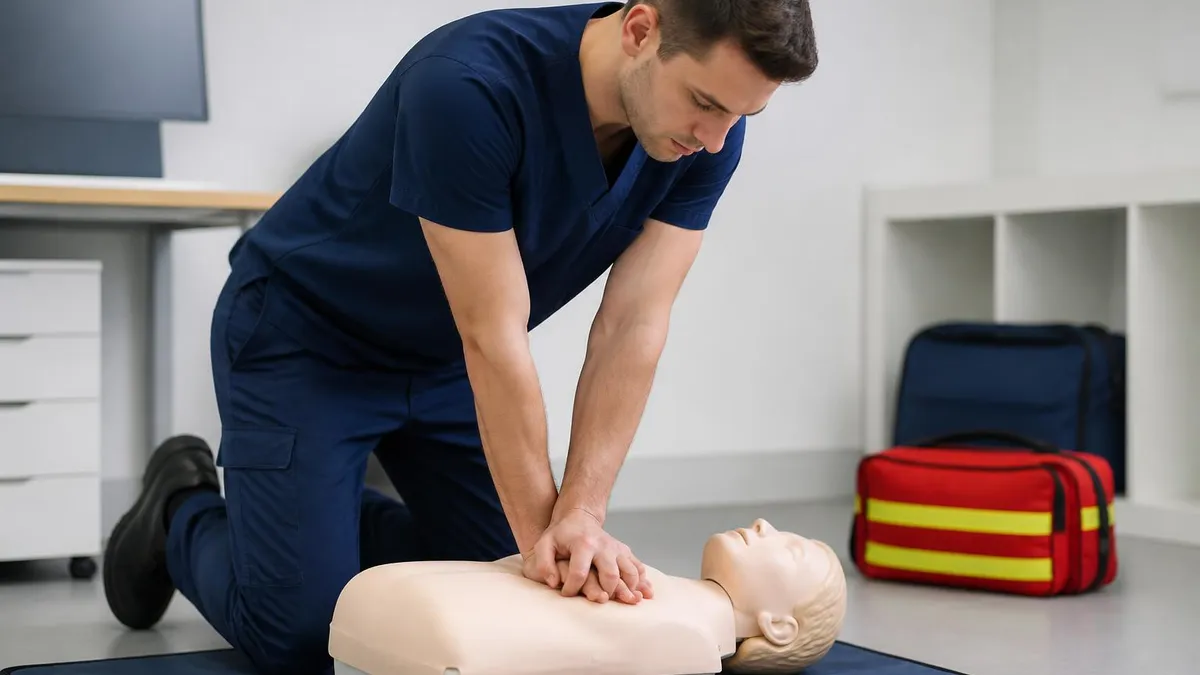
Adult CPR: Complete Step-by-Step Guide to Hands-Only and Standard CPR in 2026
CPR - Cardiopulmonary Resuscitation: Complete Study Guide 2026
Inappropriate CPR Songs: What Not to Play, Why It Matters, and Better Beat-Per-Minute Alternatives
About the Author

Registered Nurse & Healthcare Educator
Johns Hopkins University School of NursingDr. Sarah Mitchell is a board-certified registered nurse with over 15 years of clinical and academic experience. She completed her PhD in Nursing Science at Johns Hopkins University and has taught NCLEX preparation and clinical skills courses for nursing students across the United States. Her research focuses on evidence-based exam preparation strategies for healthcare certification candidates.
Join the Discussion
Connect with other students preparing for this exam. Share tips, ask questions, and get advice from people who have been there.
View discussion (5 replies)