
BLS AHA Renewal: Complete 2026 October Guide to Recertify Your American Heart Association BLS Card
🧠 BLS AHA renewal guide: recertify your American Heart Association BLS card with course options, exam tips, costs, and skills checklist for healthcare
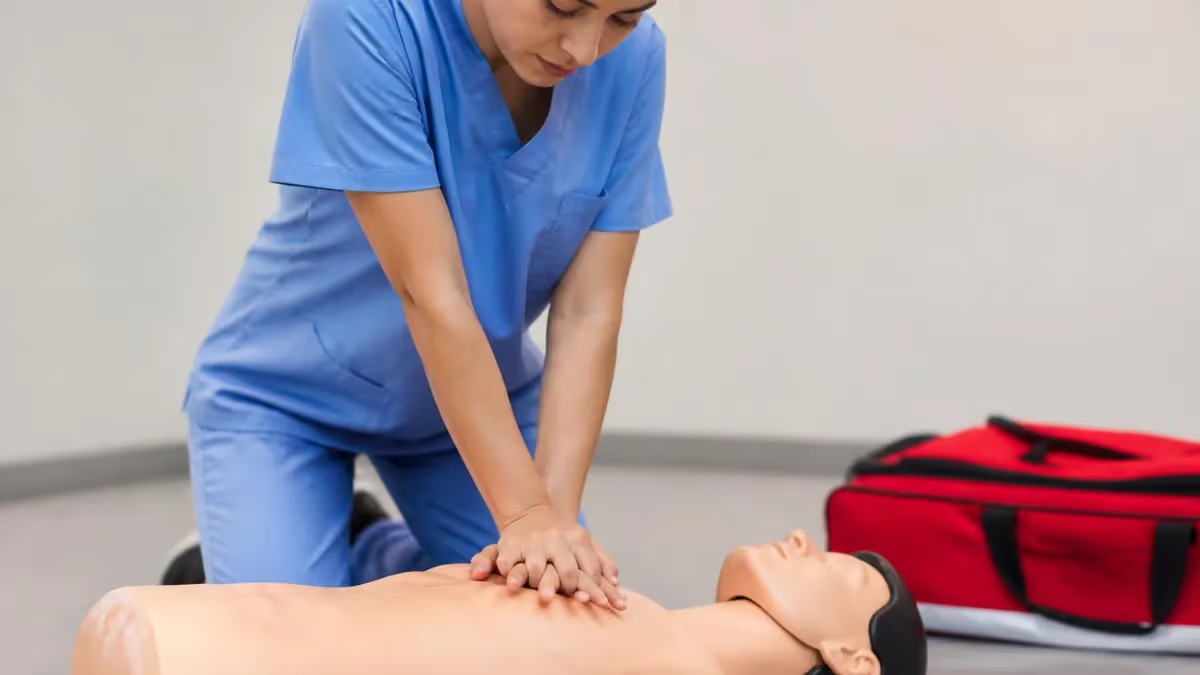
If your American Heart Association card is expiring soon, the bls aha renewal process is your fastest, most affordable path back to compliance. Renewal is shorter than initial certification, the price is lower, and the skills check still confirms you can perform high-quality CPR on adult, child, and infant victims. Most working clinicians complete the full renewal in a single afternoon, but the prep you do before you walk into the classroom or log into the online module is what determines whether you finish early or struggle through a retest.
So what is a bls certification, and why does the AHA version carry so much weight? Basic Life Support certification is a structured credential that proves you can recognize cardiac arrest, deliver chest compressions at the correct depth and rate, use an AED safely, and integrate as a team member during a code. The AHA's version is the credential most US hospitals, nursing schools, EMS agencies, and dental offices require by name in their employment policies, which is why renewal through AHA is the safest choice for healthcare professionals.
The renewal pathway condenses the eight-hour initial course into a roughly four-hour experience because you're already familiar with the algorithm. You'll review the 2020 guidelines with the 2025 focused updates, practice compressions and bag-mask ventilation on a manikin, demonstrate AED pad placement, and take the same 25-question written exam as new providers. The card you receive is valid for two years and looks identical to a first-time card.
The reason renewal matters beyond compliance is performance. Skills decay measurably within three to six months of training, and untrained rescuers tend to compress too shallow and too slow. Renewal forces you to recalibrate against a feedback manikin, refresh your understanding of the chain of survival, and reconnect with team-based resuscitation language so you can step into a real code with confidence rather than hesitation.
Confusion between BLS and CPR is common at the renewal stage. People wonder is bls the same as cpr when they're shopping for a course or comparing prices online. The short answer: BLS includes CPR but adds two-rescuer techniques, advanced airway considerations, infant resuscitation specifics, and the team dynamics expected in clinical settings. Generic Heartsaver CPR will not satisfy a hospital credentialing committee.
This guide walks you through every renewal option the AHA offers, including blended HeartCode, instructor-led classroom sessions, and the skills-only checkoff that pairs with online learning. We'll cover what to expect on the exam, how to study efficiently if your card lapsed, the eligibility window for renewal versus full retake, and the practical tips that experienced instructors wish every renewing provider knew before the skills station begins.
By the end of this article, you'll know exactly which renewal format fits your schedule, what the AHA accepts as valid proof of prior certification, how to avoid the most common skills-test failures, and where to find free practice questions that mirror the actual exam. Whether your card expires tomorrow or in six months, you'll leave with a clear plan.
BLS AHA Renewal by the Numbers
Renewal Pathways and Eligibility
Complete online cognitive modules at your own pace, then attend a 60-90 minute in-person skills session with an AHA instructor. Best for self-directed learners with unpredictable schedules.
Traditional four-hour renewal taught entirely in person. Includes video lectures, manikin practice, and the written exam in one session. Best for hands-on learners who prefer structured pacing.
Pair with a non-AHA online course or AHA HeartCode key. Demonstrates skills competency without retaking the cognitive content. Confirm your employer accepts the original online provider first.
If your card expired more than 30 days ago, most training centers require the full initial course rather than renewal. AHA policy varies by training center, so call ahead to confirm.
AHA RQI program uses a self-directed kiosk with quarterly skills checks. Common in large hospital systems and replaces the traditional two-year renewal cycle entirely.
The 2026 BLS curriculum still centers on the same five links in the adult chain of survival: recognition and activation of emergency response, early CPR, rapid defibrillation, advanced resuscitation, and post-arrest care. What changes during your renewal is the emphasis. Instructors increasingly highlight high-quality CPR metrics, minimizing pauses, and team-based communication because data from in-hospital arrests consistently shows these are where rescuers underperform compared with classroom standards.
For renewing healthcare providers, the cognitive portion reviews adult, child, and infant CPR sequences, two-rescuer techniques, compression-to-ventilation ratios, and bag-mask ventilation. You'll also revisit relief of choking in responsive and unresponsive victims, opioid-associated emergencies and the role of naloxone, and the special considerations for pregnant patients in cardiac arrest. The AHA frames each of these as discrete skill clusters rather than memorization tasks.
The AED portion is short but stricter than many providers remember. You must demonstrate that you can power on the device, attach pads in the correct anterior-lateral position, clear the patient verbally and visually before analysis, and resume compressions immediately after shock delivery. Instructors look specifically for the verbal clearance phrase and a hands-off pause shorter than ten seconds.
Pediatric content takes up roughly a third of the renewal session because infant and child resuscitation differs meaningfully from adult care. You'll practice the two-thumb encircling-hands technique on infants, the one-hand or two-hand technique on children depending on size, and the modified compression-to-ventilation ratio of 30:2 for single rescuer or 15:2 for two-rescuer pediatric resuscitation. For deeper algorithm review, the basic life support exam american heart association resources walk through pediatric scenarios step by step.
Special situations make up a smaller but high-yield portion. Opioid overdose, drowning resuscitation, foreign body airway obstruction, and cardiac arrest associated with pregnancy each appear on the exam in roughly one or two questions. Instructors typically dedicate a brief lecture segment to these because the actions diverge from the standard algorithm, particularly when ventilation should precede compressions in drowning and asphyxial arrests.
Team dynamics is the newest emphasis area and the one most likely to surprise providers who haven't renewed in four or more years. AHA materials now describe closed-loop communication, clear role assignment, knowing your limitations, mutual respect, and constructive intervention. These appear on the exam as scenario questions, and instructors evaluate them during the skills station by watching whether you announce actions clearly to your simulated partner.
Finally, post-cardiac-arrest care receives a brief but important mention. Although BLS providers don't manage advanced post-arrest interventions, you're expected to recognize return of spontaneous circulation, monitor the patient until ALS arrives, place them in the recovery position if breathing adequately, and continue assessing for re-arrest. Targeted temperature management and 12-lead ECG interpretation belong to ACLS, but you should know they come next.
BLS Practice Test Questions
Prepare for the BLS - Basic Life Support exam with our free practice test modules. Each quiz covers key topics to help you pass on your first try.
BLS High-Quality CPR & Provider Skills
BLS Exam Questions covering BLS High-Quality CPR & Provider Skills. Master BLS Test concepts for certification prep.
BLS Special Situations & Scenarios
Free BLS Practice Test featuring BLS Special Situations & Scenarios. Improve your BLS Exam score with mock test prep.
BLS Adult, Child & Infant Resuscitation
BLS Mock Exam on Adult, Child & Infant Resuscitation. BLS Study Guide questions to pass on your first try.
BLS Airway Management & Ventilation
BLS Test Prep for Airway Management & Ventilation. Practice BLS Quiz questions and boost your score.
BLS Automated External Defibrillator (AED)...
BLS Questions and Answers on Automated External Defibrillator (AED) Use. Free BLS practice for exam readiness.
BLS Certification: Cardiac Arrest
BLS Mock Test covering Certification: Cardiac Arrest. Online BLS Test practice with instant feedback.
BLS Certification: Choking
Free BLS Quiz on Certification: Choking. BLS Exam prep questions with detailed explanations.
BLS Certification: Respiratory Arrest
BLS Practice Questions for Certification: Respiratory Arrest. Build confidence for your BLS certification exam.
BLS Chain of Survival
BLS Test Online for Chain of Survival. Free practice with instant results and feedback.
BLS CPR Techniques & Procedures
BLS Study Material on CPR Techniques & Procedures. Prepare effectively with real exam-style questions.
BLS Legal & Ethical Considerations
Free BLS Test covering Legal & Ethical Considerations. Practice and track your BLS exam readiness.
BLS Post-Resuscitation Care
BLS Exam Questions covering Post-Resuscitation Care. Master BLS Test concepts for certification prep.
Choosing Your AHA Basic Life Support Exam Format
HeartCode BLS is the AHA's flagship blended option. You complete approximately one to two hours of interactive online modules covering the cognitive content, then schedule a 60-90 minute in-person skills session at an AHA training site. The online portion includes video, embedded knowledge checks, and simulated patient cases that adapt to your responses, which most providers find more engaging than passive lecture.
The big advantage is scheduling flexibility. You can do the online portion at midnight in your pajamas, then drive to a skills checkoff during a lunch break. The disadvantage is that you must complete the online module before the skills session, and your online completion key typically expires within 30 to 60 days. Cost runs about $35-45 for the online portion plus $35-60 for the skills checkoff.

AHA Renewal vs. Full Initial Course: Which Should You Choose?
- +Shorter total time commitment — typically 3-4 hours versus 7-8 hours
- +Lower cost, usually $20-40 less than the initial course
- +Skills decay review reinforces what you already learned
- +Same eCard validity period of 24 months as initial certification
- +Blended HeartCode option allows mostly self-paced learning
- +Skills station focuses on demonstration rather than instruction
- +Most US healthcare employers accept renewal cards without restriction
- −Card must not be expired more than 30 days at most training centers
- −Less classroom time means weaker foundation if your skills decayed significantly
- −No discount available if you fail and need a retake
- −Skills-only pathway requires verifying employer acceptance in advance
- −Some specialty employers require initial course every cycle regardless of policy
- −HeartCode online key expires before the skills session must be completed
Pre-Renewal Skills Checklist for the AHA Basic Life Support Exam
- ✓Confirm your current AHA eCard expiration date and renewal eligibility window
- ✓Review the 2020 AHA guidelines with the 2025 focused updates before class
- ✓Practice 30 seconds of continuous chest compressions at 100-120 per minute
- ✓Memorize compression depths: at least 2 inches adult, 2 inches child, 1.5 inches infant
- ✓Rehearse the verbal AED clearance sequence: I am clear, you are clear, oxygen clear
- ✓Recall the two-rescuer pediatric compression-to-ventilation ratio of 15:2
- ✓Practice the two-thumb encircling-hands technique for infant CPR
- ✓Review the choking algorithm for responsive and unresponsive adult, child, and infant victims
- ✓Refresh opioid-associated emergency response and naloxone administration knowledge
- ✓Bring photo ID, prior card, and payment confirmation to the skills session
Don't let your card expire by more than 30 days
Most AHA training centers will only accept you into a renewal course if your card has been expired for 30 days or less. If you wait longer, you'll almost certainly be required to retake the full initial course at the higher price and longer duration. Set a calendar reminder 90 days before your expiration date and book your renewal session immediately to lock in the shorter pathway.
Exam day for a BLS AHA renewal moves quickly, so understanding the flow ahead of time helps you stay relaxed and finish on the first attempt. You'll typically arrive 10-15 minutes early, sign in with your prior card and photo ID, and receive a manikin assignment. The instructor will outline the day, confirm that everyone has completed any required online prerequisite, and start the video-led review.
The cognitive portion runs first, usually for 90-120 minutes. AHA materials include short video segments followed by discussion and practice. Instructors pause between segments to demonstrate skills on a manikin, then watch you replicate the demonstration. Compressions, ventilations, and AED operation are practiced individually before they're combined into the full one-rescuer and two-rescuer sequences.
The skills test follows the review. The AHA uses a structured scenario in which you respond to a simulated cardiac arrest victim while the instructor scores specific criteria: scene safety check, breathing and pulse assessment within 10 seconds, calling for help and the AED, compression depth, rate, recoil, ventilation volume, and minimal interruptions. You must hit the critical performance criteria, but small recoverable mistakes don't fail you if you self-correct.
The 25-question written exam comes either at the end of the session or as part of the HeartCode online module. Questions are mostly scenario-based with four answer choices. You need 84% (21 correct) to pass. If you fail, you can usually retake the exam once on the same day; failing twice typically means rescheduling, and some training centers charge a small retest fee.
If you'd like to walk through full-length, exam-style questions before your session, the aha basic life support exam video answer resource is one of the most efficient ways to identify weak spots. Many renewing providers also benefit from working through pediatric scenarios specifically, since adult-care nurses and physicians often haven't reviewed infant resuscitation since their last renewal cycle.
Common reasons for skills-station failure are surprisingly consistent year over year. The top three are compression depth under two inches, compression rate over 120 per minute due to anxiety, and incomplete chest recoil between compressions. The next tier includes pausing compressions longer than 10 seconds during AED analysis, forgetting to verbally clear the patient before shock, and delivering ventilations with excessive volume that causes visible chest over-distention.
Pacing during the written exam matters less than people expect because there is no time pressure. Most providers finish in 15-25 minutes. The bigger risk is misreading questions. AHA writers often include partially correct options, so the correct answer is usually the most complete or most aligned with the algorithm, not the first reasonable-sounding choice you see.

Several third-party websites sell BLS cards that look authentic but are not issued through the AHA's official training center network. Hospitals routinely reject these. Before you pay, confirm your training center is listed in the AHA's Atlas search tool and that you'll receive an eCard with a verifiable QR code or AHA reference number that your employer's credentialing office can authenticate online.
Once you pass, your AHA eCard is typically issued within 24 hours and emailed directly from the training center. The eCard is a digital credential with a unique reference number and QR code that any employer can verify on the AHA's website. Print a copy for your records, but most hospital credentialing systems now accept the digital version uploaded directly to their HR portal.
The card is valid for exactly 24 months from the date of completion, not from the date your previous card expired. This matters when planning your next renewal because back-to-back renewals don't extend each other. Set a new reminder for 90 days before this card expires so you have a comfortable window to schedule without scrambling.
Different employers handle credentialing on different timelines. Hospitals typically want proof of BLS within 30 days of expiration, and many lock employees out of clinical scheduling systems automatically if the card lapses. Travel nurses and contract clinicians often need to upload renewals to multiple agency portals, so save the eCard PDF and the verification URL in a single place you can access quickly.
For providers whose roles require additional certifications such as ACLS or PALS, completing BLS renewal first is the standard sequencing because ACLS and PALS courses both require current BLS as a prerequisite. If you're due for both BLS and ACLS within the same month, schedule BLS first and ACLS within the same week to keep your knowledge base fresh between sessions.
Some employers participate in the AHA's Resuscitation Quality Improvement (RQI) program, which replaces traditional two-year renewal with quarterly skills checks on a kiosk-style manikin. If your employer uses RQI, you don't book a standalone renewal — the program handles continuous credentialing. However, if you change jobs to a non-RQI employer, you'll need to complete a traditional renewal course because RQI credentials don't always transfer one-to-one.
For providers comparing AHA with other organizations, the basic life support renewal class options from the American Red Cross use slightly different course structures but cover similar content. AHA cards remain the most widely accepted credential in US hospitals, but Red Cross cards meet the same OSHA workplace requirements and many ambulatory and dental employers accept either. Confirm with your specific employer before committing to a non-AHA pathway.
Finally, document everything. Save a PDF copy of your eCard, a screenshot of the verification page, the receipt from the training center, and a copy of any continuing education credit certificate if your state board requires it. Renewal disputes are rare but stressful when they happen, and a small folder of documentation resolves them quickly.
The most effective preparation strategy for renewal is short, repeated practice sessions across the week before your course rather than one long cram session the night before. Research on skills decay and motor learning consistently shows that distributed practice produces better retention than massed practice. Spend 20-30 minutes on three or four evenings reviewing the algorithm, working through practice questions, and mentally rehearsing the skills station sequence from scene safety to handoff.
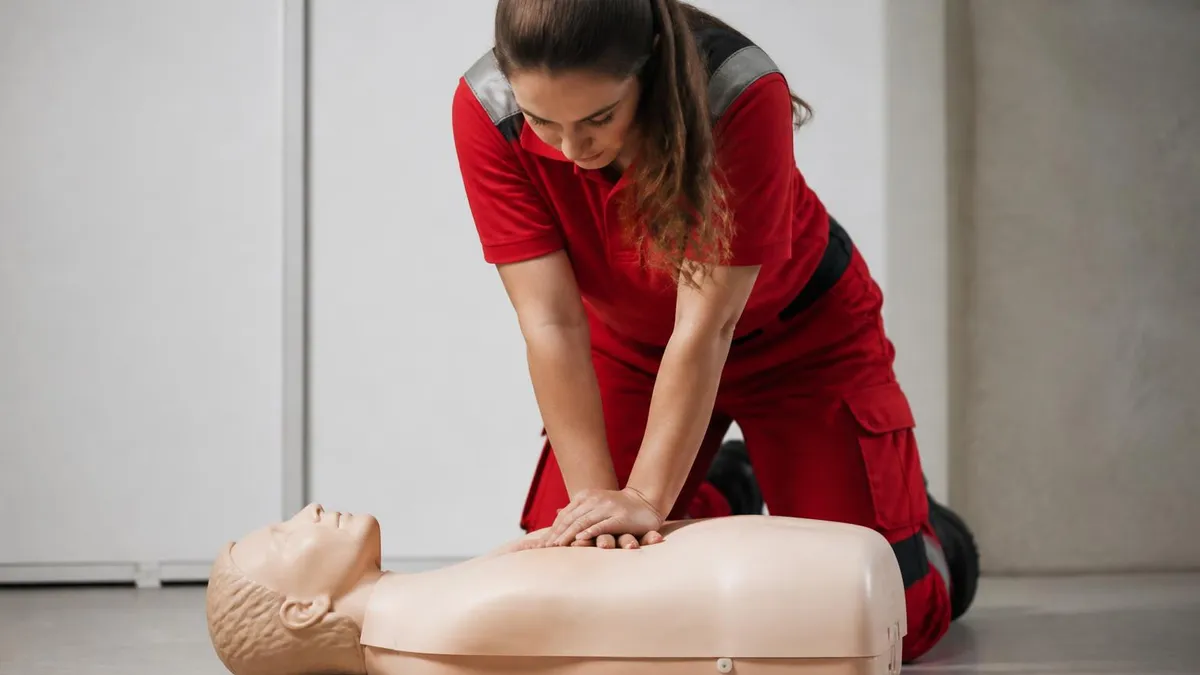
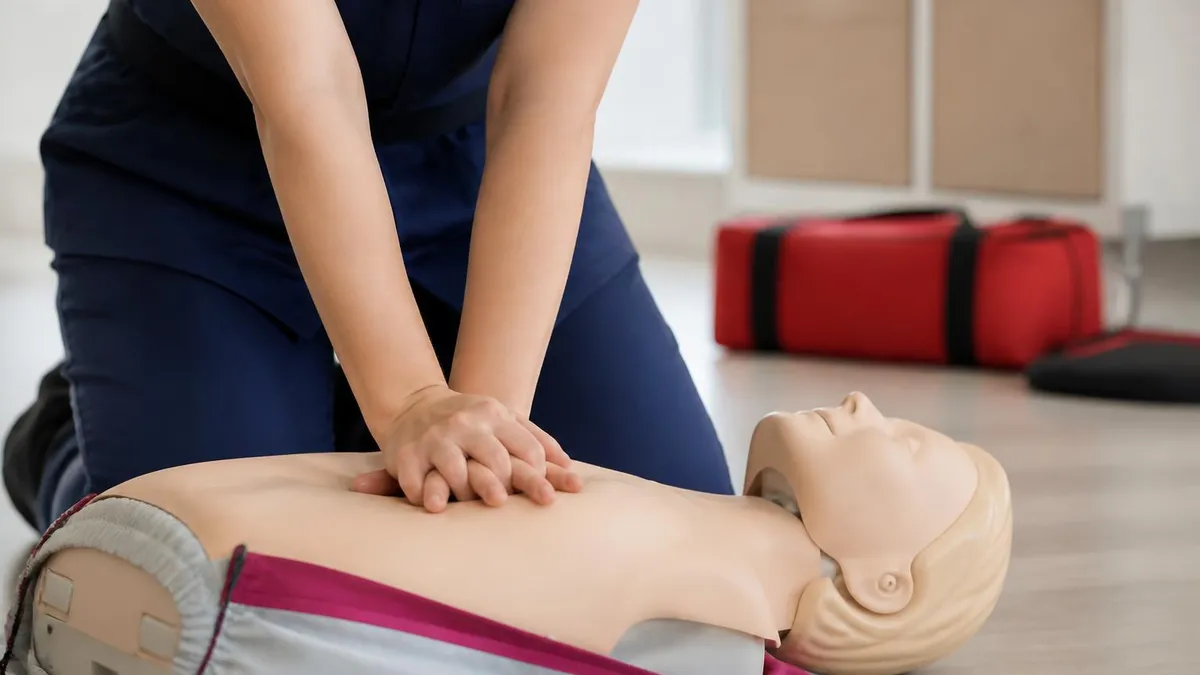
If you can, practice chest compressions on something firm — a pillow on the floor is sometimes used but it's softer than ideal. A folded blanket on a hard surface gives better feedback. Practice for two-minute intervals because that's the cycle length you'll perform in class, and fatigue at minute two is the most common reason rescuers slow below 100 compressions per minute. Counting out loud at the rhythm of 100-120 helps lock in the pace.
For the ventilation portion, the biggest improvement most renewing providers can make is reducing tidal volume. Aim for visible chest rise — nothing more. Over-ventilation causes gastric inflation, vomiting, and impaired venous return, all of which worsen outcomes. Practice squeezing the bag slowly and gently. If your training site uses a bag-mask with a tidal volume indicator, watch it during your warm-up rounds.
Mental rehearsal is underrated. Before your session, walk through the full one-rescuer adult sequence in your head: check scene, tap and shout, call for help and AED, check breathing and pulse for no more than 10 seconds, start compressions, give two breaths after 30 compressions, attach AED when it arrives, follow prompts. Then repeat the sequence for child and infant. This kind of cognitive walkthrough takes five minutes and saves you from freezing under instructor observation.
Sleep matters more than caffeine on exam day. A well-rested brain remembers algorithm sequences and reacts to the manikin's feedback. Show up with water, a light snack, and your prior card and ID. Wear clothes you can kneel and bend in. Avoid heavy meals immediately before the skills station because compressions on a manikin for two minutes can leave you slightly nauseated if you're stuffed.
If English is not your first language, ask your training center in advance about translated materials. The AHA produces BLS provider manuals in Spanish, Portuguese, and several other languages, and many instructors will accommodate slower pacing during the cognitive portion. The exam is also available in multiple languages at AHA-authorized centers.
Finally, treat your renewal as a real reset rather than a checkbox. Hospitals see meaningful differences in survival rates depending on how well front-line clinicians perform during the first five minutes of an arrest. The reason the AHA invests in standardized renewal is that small differences in compression depth, recoil, and pause minimization translate into measurable patient outcomes. Approach renewal with that mindset and the four hours feel useful rather than tedious.
BLS Questions and Answers
About the Author

Registered Nurse & Healthcare Educator
Johns Hopkins University School of NursingDr. Sarah Mitchell is a board-certified registered nurse with over 15 years of clinical and academic experience. She completed her PhD in Nursing Science at Johns Hopkins University and has taught NCLEX preparation and clinical skills courses for nursing students across the United States. Her research focuses on evidence-based exam preparation strategies for healthcare certification candidates.
Join the Discussion
Connect with other students preparing for this exam. Share tips, ask questions, and get advice from people who have been there.
View discussion (8 replies)