
Pediatric BLS Algorithm: Complete 2026 October Guide for Healthcare Providers
Master the pediatric BLS algorithm with step-by-step AHA guidance, compression ratios, ventilation rates, and renewal tips for healthcare providers. 💡
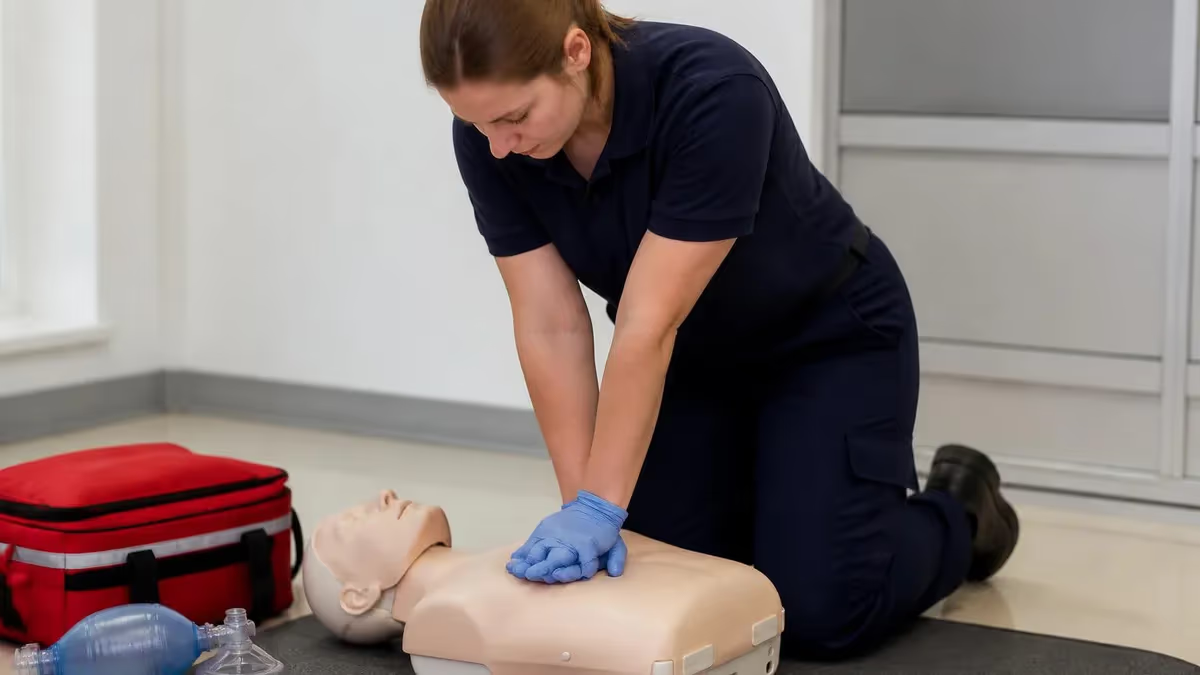
Understanding what is a bls certification matters more than ever when you face a pediatric cardiac arrest, and the pediatric bls algorithm is the single most important framework you will rely on during those first six minutes. Unlike adult cardiac arrest, which is overwhelmingly cardiac in origin, pediatric arrest most often results from respiratory failure or progressive shock, so the sequence of assessment, compressions, and ventilation differs in meaningful ways that every healthcare provider must internalize before stepping onto a clinical floor or into an ambulance.
The American Heart Association updates this algorithm every five years, and the 2020 guidelines—still authoritative through the 2026 cycle—introduced refined ventilation rates for children with advanced airways, clearer guidance on chest compression depth, and updated thresholds for bradycardia with poor perfusion. Providers who passed an basic life support exam american heart association course years ago should review the latest changes carefully, because subtle differences in compression-to-ventilation ratios can change outcomes dramatically.
This guide walks you through every branch of the algorithm: scene safety, responsiveness check, pulse and breathing assessment, single-rescuer versus two-rescuer compression ratios, AED use in infants and children, and the transition to advanced life support. We focus on practical decision-making, not memorization, because the algorithm only works when you can execute it under stress with a frightened parent watching and a child rapidly deteriorating in front of you.
Pediatric BLS is technically defined as care for infants under one year of age and children from one year through puberty, while adult BLS begins at puberty. Recognizing puberty signs—breast development in females, axillary hair in males—matters because it determines which algorithm you follow, how deep you compress, and whether you use adult or pediatric AED pads. Getting this wrong by even one developmental stage can mean inadequate perfusion or, conversely, rib fractures and lung contusions.
Healthcare providers ranging from registered nurses and respiratory therapists to paramedics, dental hygienists, and medical students must hold current BLS certification to maintain hospital privileges and licensure. Most employers require renewal every two years, and the pediatric component is no longer optional in the AHA Healthcare Provider course. You will be tested on infant and child scenarios during your skills evaluation, and failure to demonstrate proper technique results in remediation.
Throughout this article we will reference real-world emergency department and pre-hospital case data, explain why each step exists physiologically, and give you concrete drilling strategies so the algorithm becomes muscle memory. We will also clarify common confusion points—like whether bls and cpr are the same thing, what does bls stand for, and how the American Red Cross course compares to the AHA version—so you finish reading with complete confidence about your training pathway.
By the end of this guide you will know exactly how to recognize pediatric arrest, when to activate emergency response, how to deliver high-quality compressions at the correct rate and depth for each age group, how to integrate the AED, and how to hand off to advanced providers without losing the chain of survival. Bookmark this page and revisit it before every renewal cycle.
Pediatric BLS by the Numbers

Pediatric BLS Algorithm: Step-by-Step Sequence
Scene Safety & Responsiveness
Check Pulse & Breathing Simultaneously
Begin High-Quality Compressions
Open Airway & Deliver Ventilations
Attach AED When Available
Reassess & Hand Off to ALS
Infants and children have anatomical and physiological differences that drive every divergence in the pediatric bls algorithm from the adult version. An infant's head is proportionally larger, making airway positioning trickier; their tongue occupies more of the oropharynx; their ribs are more compliant, allowing deeper compression with less resistance but also greater risk of overcompression injury. Understanding these differences is foundational to delivering effective resuscitation and is heavily emphasized on the aha basic life support exam.
For infants under one year, you compress the lower half of the sternum using two fingers if you are alone, or the two-thumb encircling-hands technique if a second rescuer is present. The two-thumb method generates better coronary perfusion pressure and is preferred whenever possible. Depth should reach approximately one-and-a-half inches, or one-third the anterior-posterior chest diameter. Allow complete recoil between compressions—incomplete recoil is the single most common technique error documented in resuscitation review studies.
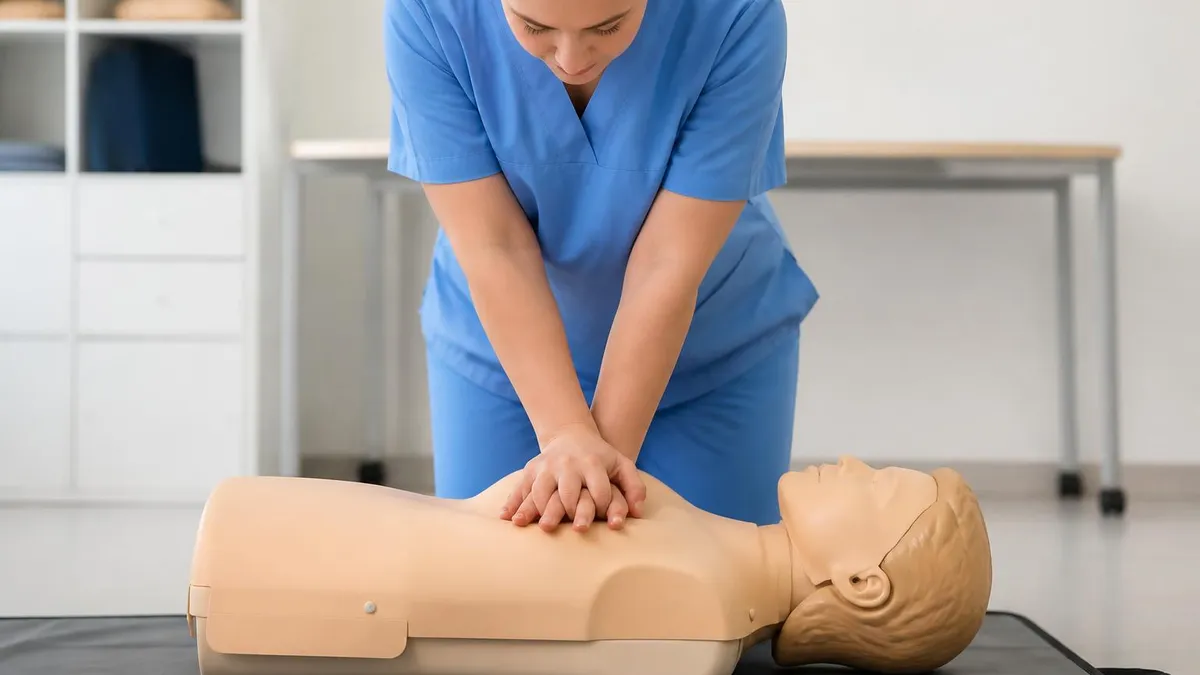
For children from one year through puberty, use the heel of one hand or both hands stacked, depending on the child's size. Depth increases to about two inches, again roughly one-third of the chest depth. Rate remains 100-120 per minute. The single-rescuer ratio of 30 compressions to two breaths matches adult CPR, but the two-rescuer ratio drops to 15:2—a critical difference that exam writers love to test and that providers consistently miss under stress.
Ventilation strategy also shifts. Because pediatric arrest is usually hypoxic in origin, ventilations carry more weight than in adult cardiac arrest. Each rescue breath should last one second and produce just enough chest rise to be visible. Over-ventilation causes gastric distention, raises intrathoracic pressure, reduces venous return, and ultimately decreases cardiac output during CPR. The 2020 guidelines specify 20-30 breaths per minute when an advanced airway is in place, a notable increase from prior recommendations.
Pulse check sites differ by age. For infants, palpate the brachial artery on the inside of the upper arm or the femoral artery in the groin—the carotid is impractical because of the short neck. For children, the carotid or femoral pulse is appropriate. Spend no more than ten seconds on this assessment. If you are uncertain whether a pulse is present, treat the patient as if there is no pulse and begin compressions. Hesitation costs perfusion.
Bradycardia with poor perfusion is a unique pediatric indication for CPR. If a child's heart rate is below 60 beats per minute despite adequate oxygenation and ventilation, and the child shows signs of poor perfusion—pale or mottled skin, weak pulses, altered mental status—start compressions immediately. This rule reflects the reality that pediatric bradycardia is usually a pre-arrest state caused by hypoxia, and intervention at this stage prevents progression to pulseless arrest.
AED use in children deserves special attention. Pediatric pads with a dose attenuator deliver a reduced energy dose appropriate for smaller bodies and should be used when available for children under eight years of age. If only adult pads are present, use them—reduced energy is preferable to no defibrillation, but adult energy delivered to a child is far better than waiting. On infants, position pads anterior-posterior so they do not touch each other on the small chest.

BLS Practice Test Questions
Prepare for the BLS - Basic Life Support exam with our free practice test modules. Each quiz covers key topics to help you pass on your first try.
BLS High-Quality CPR & Provider Skills
BLS Exam Questions covering BLS High-Quality CPR & Provider Skills. Master BLS Test concepts for certification prep.
BLS Special Situations & Scenarios
Free BLS Practice Test featuring BLS Special Situations & Scenarios. Improve your BLS Exam score with mock test prep.
BLS Adult, Child & Infant Resuscitation
BLS Mock Exam on Adult, Child & Infant Resuscitation. BLS Study Guide questions to pass on your first try.
BLS Airway Management & Ventilation
BLS Test Prep for Airway Management & Ventilation. Practice BLS Quiz questions and boost your score.
BLS Automated External Defibrillator (AED)...
BLS Questions and Answers on Automated External Defibrillator (AED) Use. Free BLS practice for exam readiness.
BLS Certification: Cardiac Arrest
BLS Mock Test covering Certification: Cardiac Arrest. Online BLS Test practice with instant feedback.
BLS Certification: Choking
Free BLS Quiz on Certification: Choking. BLS Exam prep questions with detailed explanations.
BLS Certification: Respiratory Arrest
BLS Practice Questions for Certification: Respiratory Arrest. Build confidence for your BLS certification exam.
BLS Chain of Survival
BLS Test Online for Chain of Survival. Free practice with instant results and feedback.
BLS CPR Techniques & Procedures
BLS Study Material on CPR Techniques & Procedures. Prepare effectively with real exam-style questions.
BLS Legal & Ethical Considerations
Free BLS Test covering Legal & Ethical Considerations. Practice and track your BLS exam readiness.
BLS Post-Resuscitation Care
BLS Exam Questions covering Post-Resuscitation Care. Master BLS Test concepts for certification prep.
Compressions, Ventilation, and AED for Basic Life Support for Healthcare Providers
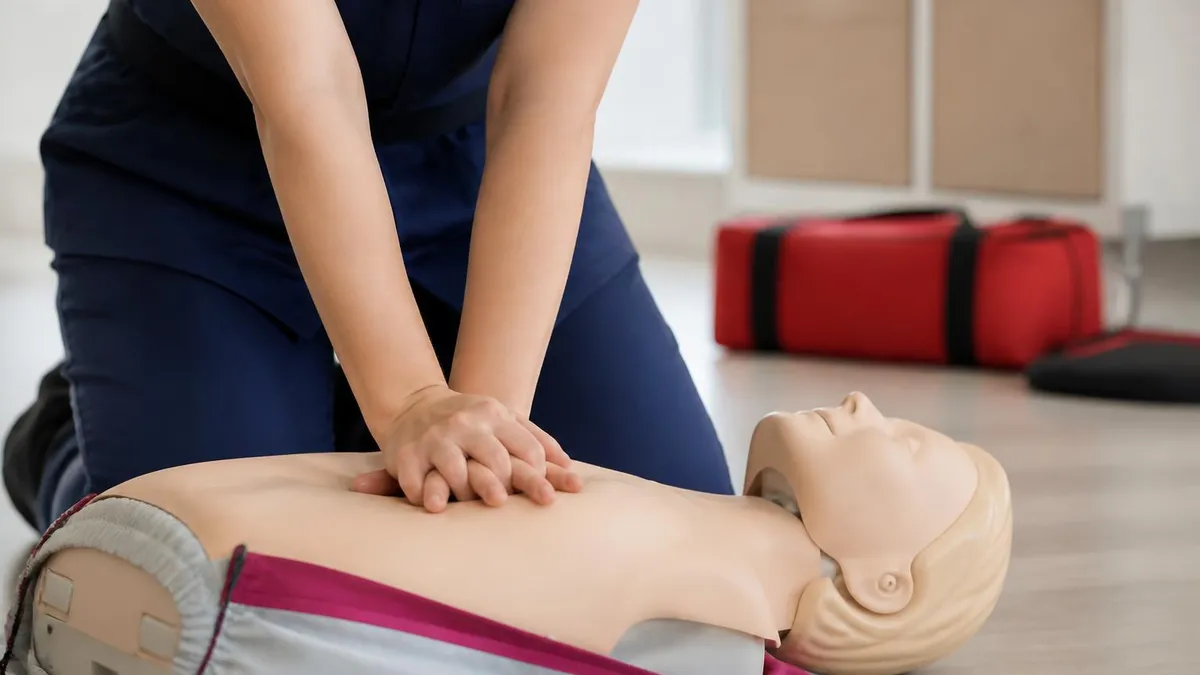
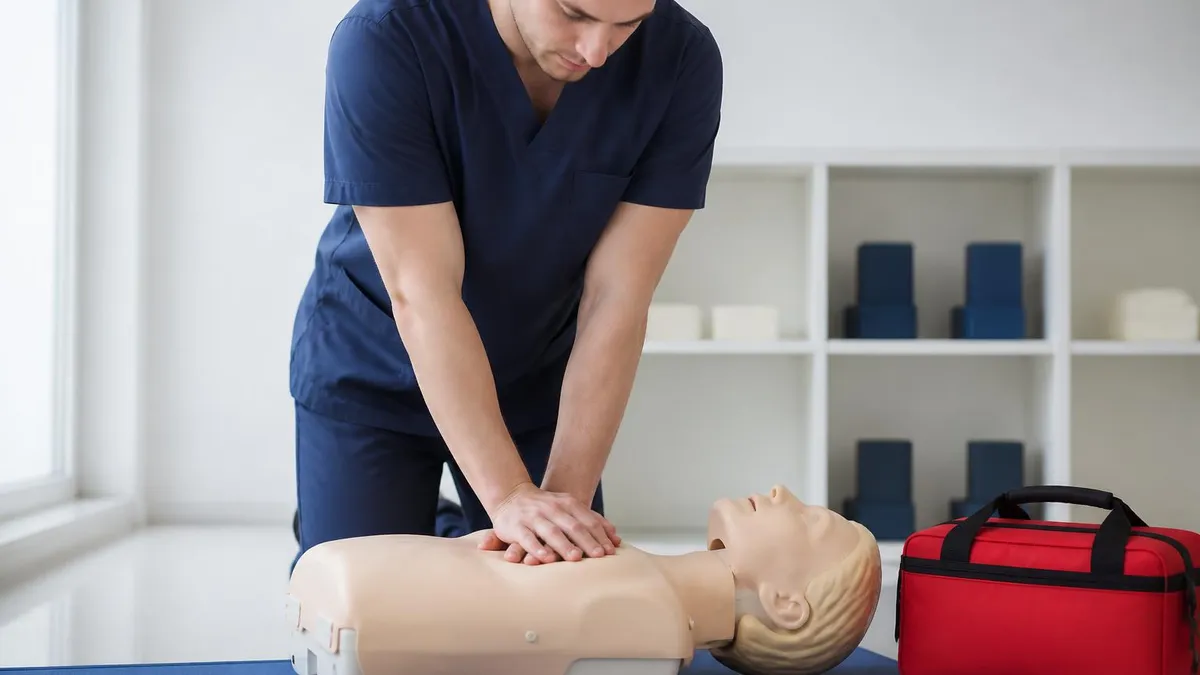
High-quality compressions are the cornerstone of pediatric resuscitation. Maintain a rate of 100 to 120 per minute, compress to one-third the anterior-posterior chest depth, and allow full recoil between every compression. Minimize interruptions—aim for a chest compression fraction above 80 percent during any resuscitation event. Switch compressors every two minutes to combat fatigue, which begins degrading depth within ninety seconds of continuous effort.
Hand placement varies by age. For infants alone, use two fingers on the lower sternum just below the nipple line. With two rescuers, encircle the chest with both hands and compress with both thumbs. For children, use one or two hands on the lower half of the sternum. Avoid compressing over the xiphoid process, which increases the risk of liver laceration and gastric perforation in pediatric patients.
Is BLS the Same as CPR? Comparing Scope and Training
- +BLS includes CPR plus AED operation, airway management, and team dynamics
- +Healthcare provider BLS covers infant, child, and adult algorithms in one course
- +BLS certification is recognized nationally and required for clinical licensure
- +Course teaches choking relief for all age groups, not just compressions
- +Includes pulse check, breathing assessment, and recognition skills
- +Renewable every two years with refresher options for busy providers
- −BLS does not authorize medication administration or advanced airway insertion
- −Initial certification requires 4-6 hours of in-person skills time
- −Course fees range from $60 to $150 depending on provider and region
- −Skills decay within months without regular practice or drills
- −Online-only courses are not accepted by most US hospitals
- −Lapsed certification requires a full course, not a shorter renewal
Pediatric BLS Provider Skills Checklist for Basic Life Support Renewal Class
- ✓Verify scene safety before approaching any pediatric patient
- ✓Check responsiveness using age-appropriate stimulation
- ✓Activate emergency response and request an AED within 10 seconds
- ✓Assess pulse at brachial site for infants, carotid for children
- ✓Identify gasping or agonal breathing as a sign of arrest
- ✓Begin compressions within 10 seconds of recognizing arrest
- ✓Compress at 100-120 per minute with full recoil every time
- ✓Switch from 30:2 to 15:2 when a second rescuer arrives
- ✓Use pediatric AED pads when available for children under 8
- ✓Rotate compressors every two minutes to maintain quality
- ✓Deliver clear SBAR handoff to advanced life support team
- ✓Document time of arrest, downtime, and interventions performed
Hypoxia, not arrhythmia, is the leading cause
Roughly 80 percent of pediatric cardiac arrests originate from respiratory failure or shock, not primary cardiac dysrhythmia. This is why ventilation quality and early recognition of pre-arrest states matter enormously. Catching a deteriorating child before pulselessness offers far better outcomes than even perfect post-arrest CPR.
Becoming certified in pediatric BLS is straightforward but requires choosing the right course provider. The two dominant options in the United States are the American Heart Association and the American Red Cross. Both organizations align their curricula with the 2020 International Liaison Committee on Resuscitation consensus, and both are accepted by virtually every hospital, EMS agency, and nursing program. The American Red Cross basic life support course is increasingly popular for its flexible blended learning, while AHA remains the dominant standard for hospital-based providers.
The course itself runs four to six hours for initial certification and two to three hours for a basic life support renewal class. You can choose a fully in-person format or a blended option that combines online didactic modules with an in-person skills check. The skills check is non-negotiable—every state board of nursing, every accredited residency, and every emergency response service requires hands-on demonstration of compressions, ventilation, AED use, and choking relief on infant, child, and adult manikins.
Cost varies meaningfully by region and provider. Expect to pay $60 to $90 for a basic course through a community AHA training center, $90 to $150 through a hospital education department, and similar pricing through Red Cross. Some employers cover the cost entirely as part of professional development; others reimburse upon completion. Pediatric content is included in every standard healthcare provider BLS course—you do not need a separate pediatric certification unless your role specifically requires Pediatric Advanced Life Support, which is a separate, more advanced credential.
The written exam consists of 25 multiple-choice questions delivered online or on paper. You need 84 percent to pass, which translates to 21 correct answers. Questions cover the algorithm sequence, compression rates and depths, ventilation rates, AED use, team dynamics, and special situations like opioid overdose, drowning, and pregnancy. Pediatric-specific items typically make up 25-35 percent of the exam, so neglecting infant and child algorithms is a fast path to failure.
The skills check tests your ability to perform single-rescuer infant CPR, single-rescuer child or adult CPR, two-rescuer infant CPR with bag-mask, two-rescuer adult CPR with AED, and infant and adult choking relief. Examiners use standardized checklists; missing any critical step—failing to check for a pulse, compressing at the wrong rate, or skipping AED pad placement—results in remediation. Practice with a partner or in a simulation lab before testing day; reading alone will not prepare you for the muscle memory required.
Certification is valid for two years from the date of issuance. AHA and Red Cross both issue eCards, which are digital and can be verified online by employers. Paper cards are no longer the standard. Renewal can be completed any time before expiration; many providers schedule renewal three to six months early to avoid lapses that complicate hospital privileging. Lapsed certification typically requires a full initial course, not a shorter renewal session, so timing matters.
If you work in a pediatric-specific environment—pediatric ICU, pediatric emergency department, neonatal transport, school nursing—you may need additional credentials beyond BLS. Pediatric Advanced Life Support and Neonatal Resuscitation Program are common add-ons. BLS remains the foundation, however, and most employers require an active card before granting access to PALS or NRP courses. Master the pediatric BLS algorithm first; the advanced courses build directly on it.
If your BLS card expires, most hospitals require you to retake the full initial course rather than a renewal. This means more hours, more cost, and potentially loss of clinical privileges during the gap. Set a calendar reminder 90 days before expiration and book your renewal early. Some agencies place lapsed providers on administrative leave until recertified.
Passing the pediatric BLS skills evaluation and written exam on the first attempt is highly achievable if you prepare deliberately. The most effective preparation combines watching the official course videos, reading the provider manual, practicing on a manikin, and drilling with realistic scenario questions. The is bls the same as cpr debate often confuses new learners, but understanding that BLS is the broader scope—including CPR, AED, airway, and team dynamics—helps frame your study.
Start by reading the AHA BLS Provider Manual or the Red Cross equivalent cover to cover. Both texts are organized around the algorithms, with chapters on adult, child, and infant BLS, choking relief, and special situations. Focus extra time on the pediatric chapters, since most providers come from adult-heavy clinical backgrounds and underestimate the differences. Pay particular attention to the tables comparing compression depth, rate, and ratios across age groups—these are tested heavily.
Next, work through the course videos and pause frequently to mimic the techniques on a pillow or a dedicated CPR manikin. Mental rehearsal alone is not enough; your hands need to learn the rhythm. If you do not own a manikin, many libraries, fire stations, and community centers offer practice sessions free of charge. Some hospitals run open skills labs for staff and students.
Take practice tests early and often. Aim for at least 100 practice questions before sitting the real exam. Track which topics you miss—if you consistently struggle with two-rescuer infant ratios or AED pad placement for children, those become your priority study areas. Practice tests also acclimate you to the question format, which uses scenario-based stems rather than simple recall.
On exam day, sleep well the night before and arrive 15 minutes early. Bring a photo ID, your eCard email confirmation if applicable, and any required course materials. Read each question carefully; the AHA frequently uses distractor answers that are correct for adults but wrong for pediatrics, or vice versa. When in doubt, default to the algorithm you have memorized rather than improvising.
During the skills check, narrate your actions out loud. Examiners cannot give credit for steps they did not see or hear. Say things like "scene is safe," "checking responsiveness," "no pulse, beginning compressions," and "switching at two minutes." This narration also slows you down enough to prevent the rushed mistakes that fail otherwise competent providers. Treat the skills station like a real resuscitation.
After certification, maintain your skills with monthly or quarterly micro-drills. Three minutes of compressions on a manikin every few weeks dramatically slows skill decay, which research shows begins within three to six months. Many hospitals now require quarterly competency checks for high-risk units. Personal accountability between formal renewals is what separates providers who perform well in real arrests from those who freeze.
Final preparation tips can turn an anxious test-taker into a confident provider. Build a study schedule that begins at least two weeks before your scheduled exam. Allocate ten to fifteen hours total—roughly one hour per day—rather than cramming the night before. Spaced repetition strengthens algorithmic recall and prevents the panic-induced blanks that derail many first-time examinees.
Use the AHA mobile app or printed pocket cards to quiz yourself on compression rates, ventilation rates, and ratios during downtime—on your commute, between patients, or before clinical shifts. Repetition cements the numbers you must recall under pressure: 100-120 per minute, 1.5 inches for infants, 2 inches for children, 30:2 single rescuer, 15:2 two rescuers, 20-30 breaths per minute with an advanced airway.
Form a study group with classmates or coworkers preparing for the same exam. Teaching the algorithm to someone else is the single best test of mastery. Take turns playing the lone rescuer, the second rescuer, the AED operator, and the team leader. Practice with realistic time pressure and audible cues so the rhythm becomes automatic. Studies show team-based simulation outperforms solo manikin practice for skill retention.
Pay attention to special situations that appear on exams but are easy to overlook: opioid overdose with naloxone administration, drowning with prolonged hypothermia, foreign body airway obstruction in infants using five back blows and five chest thrusts, pregnant patient considerations, and bradycardia with poor perfusion in children. Each of these typically generates one or two exam questions and provides high-yield study targets.
Do not neglect team dynamics content. Modern BLS emphasizes closed-loop communication, clear role assignment, and constructive intervention when a team member makes an error. Exam writers include team dynamics scenarios because real resuscitations succeed or fail based on coordination as much as technique. Practice giving and receiving clear, respectful corrections during simulation drills.
On the day before the exam, do a light review and then rest. Avoid trying to learn new material in the final 24 hours—your brain consolidates better with sleep than with cramming. Lay out clothing you can move in comfortably for the skills station, since you will be kneeling on the floor and demonstrating physical technique. Eat a balanced meal and stay hydrated.
After passing, store your eCard credentials in a secure password manager and add the expiration date to your calendar with reminders at six months, three months, and one month before the deadline. Renewal scheduling becomes effortless when you build it into your annual routine, and you will never face the costly inconvenience of a lapsed certification disrupting your clinical work.
BLS Questions and Answers
About the Author

Registered Nurse & Healthcare Educator
Johns Hopkins University School of NursingDr. Sarah Mitchell is a board-certified registered nurse with over 15 years of clinical and academic experience. She completed her PhD in Nursing Science at Johns Hopkins University and has taught NCLEX preparation and clinical skills courses for nursing students across the United States. Her research focuses on evidence-based exam preparation strategies for healthcare certification candidates.
Join the Discussion
Connect with other students preparing for this exam. Share tips, ask questions, and get advice from people who have been there.
View discussion (8 replies)