
BLS CPR: Skills, Steps, and 2026 September Certification Guide
BLS CPR explained: 🎯 compression depth, rate, AED steps, and how to get your 2026 September certification. Hands-on tips from real classes.
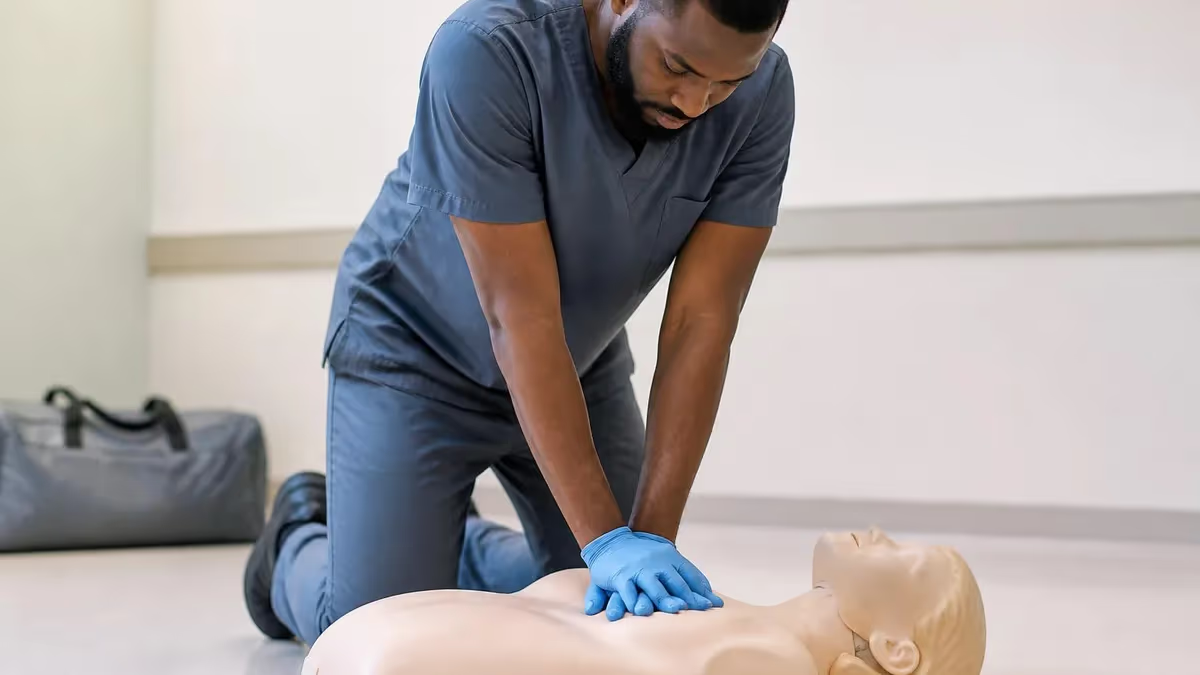
If you've signed up for a BLS class — or you're staring at a hospital onboarding email that says "BLS CPR required by start date" — the first question is usually the same. What actually counts as BLS CPR, and what's different from the CPR class you took back in college?
Short answer: BLS CPR is the clinical version. It's faster-paced, team-based, and built for healthcare workers who'll run codes, push the AED, and switch off compressors every two minutes. You won't just see a CPR mannequin — you'll see a megacode scenario where someone calls out rhythms while you keep the chest pumping.
This guide walks through the skills you'll perform, the numbers you have to memorize, and how the test plays out on exam day. By the end you'll know exactly what's expected at the skills station, on the written exam, and during your first real code. We'll also show you where to drill the questions, because muscle memory beats a printed cheat sheet every time.
Quick note before we dive in — the depth, rate, and ratio numbers in this article come straight from the 2025 AHA guidelines update, which is what every BLS course in 2026 still uses. If you took a class before then, the compression-to-breath ratio is the same, but the team dynamics piece got a bigger spotlight.
What BLS CPR Actually Tests
BLS CPR — Basic Life Support cardiopulmonary resuscitation — is the certification healthcare providers need before they can touch a patient in cardiac arrest. Nurses, EMTs, dental staff, lifeguards, and most clinical students take the same course. It's two parts: a written exam (usually 25 questions) and a hands-on skills test where an instructor watches you compress, ventilate, and operate an AED.
The skills station is where most people slip. You'll get scored on six things, and they're non-negotiable:
- Compression depth. At least 2 inches (5 cm) on an adult, no more than 2.4 inches. Less than that and the test stops.
- Compression rate. 100 to 120 per minute. Yes, the metronome counts — and yes, "Stayin' Alive" is still the trick.
- Full chest recoil. Hands stay on the chest, but you let it spring back fully between pushes. Leaning fails you faster than slow compressions.
- Minimal interruptions. Pauses under 10 seconds for ventilations, switching, or AED analysis.
- Effective ventilation. Two breaths after every 30 compressions on a one-rescuer adult, or 30:2 on infants/children when alone.
- AED operation. Power on, pads placed, "clear" called, shock delivered if advised — all inside 60 seconds from the moment the AED arrives.
If you're prepping for the written piece too, our BLS certification guide breaks down what shows up question-by-question. The skills checklist is what gets people, though, so let's stay there a minute.
The Numbers You Have to Know Cold
Walk into the skills station already knowing these. The instructor isn't allowed to remind you mid-test:
- Adult compression-to-breath ratio: 30:2, single or two-rescuer until an advanced airway goes in
- Child/infant ratio: 30:2 with one rescuer, 15:2 with two rescuers
- Compression depth: Adults 2 inches, children about 2 inches, infants 1.5 inches
- Hand placement: Center of the chest, lower half of the sternum, two-handed for adults, two fingers for infants (or two-thumb encircling for two rescuers)
- Pulse check: No more than 10 seconds — carotid for adults and kids, brachial for infants
- Ventilation rate with advanced airway: 1 breath every 6 seconds (10/min)
That last one trips people. Without an airway you stop compressions to ventilate. Once the tube's in, compressions don't pause anymore — somebody just bags every six seconds while the compressor keeps going.
Running an AED Without Freezing Up
Every BLS CPR scenario throws an AED at you. The order's the same every single time, so drill it until you don't have to think:
- Power on. Some open the lid, some have a button. Either way it talks to you from there.
- Bare and dry the chest. Cut shirts off if needed. Wipe sweat. Shave only if pads won't stick — most kits don't include razors anyway.
- Place pads. Upper-right chest below the clavicle, lower-left side under the armpit. On kids under 8, use pediatric pads or the pediatric key — front and back if pads will overlap.
- Clear and analyze. "I'm clear, you're clear, everybody clear." Hands off the patient and the bed.
- Shock if advised. Press the button, then immediately resume compressions. Don't pause to look for a pulse — the AED reanalyzes in two minutes.
If you want a deeper walkthrough of how AED use fits into the bigger course, the basic life support overview maps every skill against the AHA algorithm.
Team Dynamics — The Part Most Classes Rush
Solo CPR is rare in real life. You'll be in a code with three to six people, and BLS now grades you on how you communicate. The five team-dynamics rules are:
- Closed-loop communication. Hear the order, repeat it back, confirm when done. "Push 1mg epi" — "Pushing 1mg epi" — "Epi in."
- Clear roles. Compressor, ventilator, AED, recorder, team leader. Nobody floats.
- Knowing your limits. If you've never run a defibrillator, say so before you grab one.
- Constructive intervention. If the compressor's leaning, say "let me take over" — don't just stew.
- Sharing knowledge. Call out what you're seeing. "Pulse check, no pulse, resuming compressions."
Switching compressors every two minutes is the part that saves lives. Fatigue kills depth fast — by minute three most people are pushing 1.6 inches and don't realize it. The two-minute rotation is built in for a reason.
BLS: Pros and Cons
- +BLS certification validates expertise recognized by employers nationwide
- +Certified professionals typically earn 15-20% higher salaries
- +Opens doors to advanced positions and leadership roles
- +Demonstrates commitment to professional standards and ethics
- +Builds a strong professional network through certification communities
- −Exam preparation typically requires 2-4 months of dedicated study
- −Certification and exam fees can range from $150-$500+
- −Must complete continuing education to maintain active certification
- −Pass rates vary — thorough preparation is essential for success
- −Some certifications require prerequisite experience or education

Getting Certified — In-Person, Online, or Hybrid?
You've got three paths and they're not equal:
- In-person, single-day. About four hours, costs $60–$110 in most US cities, card in hand at the end. Best if you've never done CPR before.
- HeartCode BLS (hybrid). Online module first, then a 30-minute in-person skills check. Around $90–$140 total. Good if you're renewing or your hospital pays.
- "100% online" certifications. Cheap, fast, and not accepted by most US hospitals. Read your employer's policy before you click pay. Plenty of new hires found out the hard way.
The American Heart Association and American Red Cross are the two cards that nearly every hospital recognizes. If you're choosing between them, our AHA BLS certification page lays out the exact differences in renewal cycle, study materials, and instructor access.
How Long Does It Last and What's Renewal Like?
BLS cards are good for two years from the issue date — not from when you start your job, not from your renewal anniversary. Mark the calendar.
Renewal is shorter than initial certification. Most hybrid renewals run 90 minutes total: a 45-minute online refresher and a 30-minute hands-on skills check. You'll repeat the same skills station — adult and infant CPR, AED, choking, two-rescuer technique. If you let it lapse by more than 30 days, you usually have to retake the full initial course.
For the renewal-specific path, the BLS renewal guide covers what counts as continuing education hours and how to document them.
Common Questions People Get Wrong on the Written
The written test pulls from the same question bank year after year. Three areas trip everyone:
- Pulse-check timing. No more than 10 seconds. The temptation is to keep checking — don't.
- Switching compressors. Every 5 cycles or about 2 minutes, whichever comes first. The number is two.
- Recovery position. Only if the patient is breathing and has a pulse. Trauma patients stay where they are unless you have to move them.
For practice questions that mirror what you'll actually see at the testing station, run through the timed quizzes below. They're built from the same domains the AHA tests on.
Final Prep — What to Do the Night Before
Don't cram. Two things make a real difference:
- Run through the algorithm out loud. Say each step — check responsiveness, call for help, check pulse and breathing for 10 seconds, start compressions. Verbalizing it locks in the order under stress.
- Practice the rate. Use a metronome app at 110 bpm or hum "Stayin' Alive." Push a couch cushion or a pillow for two minutes straight. You'll feel the fatigue — and that's the point.
One last tip from real instructors: the test isn't a memory test, it's a muscle-memory test. People who pass don't remember more facts — they've just done the motions enough times that the body takes over. Twenty minutes of physical practice beats two hours of reading every time.
If you want to keep building that recall, work through the BLS course overview and time yourself on the practice tests. By exam day you'll feel like you've already taken it.
About the Author

Registered Nurse & Healthcare Educator
Johns Hopkins University School of NursingDr. Sarah Mitchell is a board-certified registered nurse with over 15 years of clinical and academic experience. She completed her PhD in Nursing Science at Johns Hopkins University and has taught NCLEX preparation and clinical skills courses for nursing students across the United States. Her research focuses on evidence-based exam preparation strategies for healthcare certification candidates.
Join the Discussion
Connect with other students preparing for this exam. Share tips, ask questions, and get advice from people who have been there.
View discussion (8 replies)