
How Much Does an MRI Cost? What You'll Actually Pay in 2026 October
How much does an MRI cost? Without insurance: 📗 $400–$3,500+. With insurance: $100–$500+. See costs by body part, facility type, and how to save.
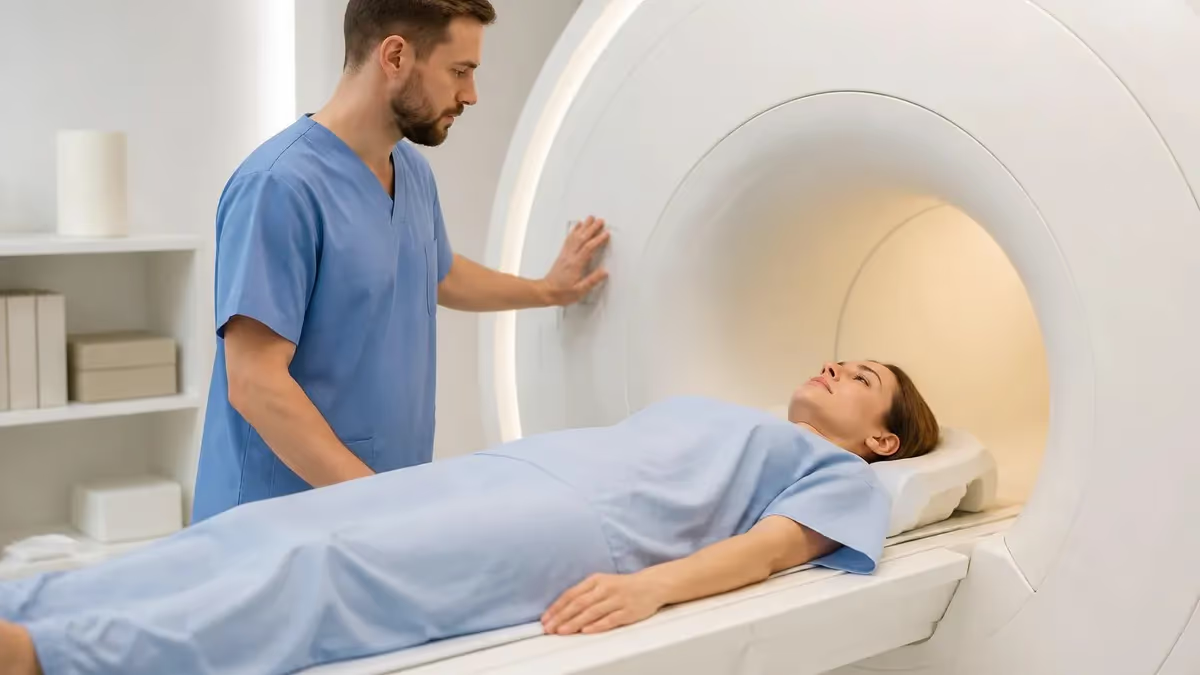
The Real Answer: What an MRI Actually Costs
$400 to $12,000. That's the real range — and yes, it's that wide. Without insurance, most people pay somewhere between $700 and $3,500 for a standard MRI depending on what body part is being scanned, what type of facility does the scan, and where in the country you live. With insurance that covers the procedure, your out-of-pocket usually lands between $100 and $500+, depending on whether you've met your deductible and what your coinsurance percentage is.
Here's the thing: the actual machine doing the scan — the magnet, the coils, the software — is essentially the same whether you're at a freestanding imaging center or a major hospital. The price difference isn't about quality. It's about facility fees, negotiated rates, and billing codes.
Before you schedule, it's worth understanding what an MRI is and why the scan itself can range so dramatically in price based on where you go. That context makes the cost breakdown below much easier to make sense of.
The good news: there are real, actionable ways to reduce what you pay — without compromising the quality of the imaging you receive. This guide walks through all of it: cost by body part, facility type comparisons, how insurance cost-sharing actually works, and the questions you should ask before you book.
Without insurance: $400–$3,500+ for most scans (full-body up to $15,000+).
With insurance: $100–$500+ out-of-pocket after deductible.
Freestanding imaging centers: $400–$900.
Hospital outpatient: $1,500–$3,500+.
Cash pay tip: Always ask for the cash price — many facilities offer 20–50% discounts for upfront payment.
Why MRI Prices Vary So Dramatically
Three factors drive most of the variation: where you get the scan, what body part is being scanned, and whether contrast dye is used.
The facility type is the biggest lever. A hospital outpatient MRI often costs 2 to 5 times more than the exact same scan at a freestanding imaging center. Why? Hospitals add a facility fee on top of the professional fee — it's a billing layer that covers hospital overhead, and it can add $1,000 or more to your bill. Freestanding imaging centers don't have this fee structure.
Geography matters too. New York City, San Francisco, and Boston consistently show higher MRI prices than rural Midwest or Southern markets. A brain MRI that costs $1,200 in Iowa might run $2,800 in Manhattan — same machine, same scan, very different billing environment. The cost of running a medical facility in high-rent markets gets passed on.
Body part complexity adds another layer. A knee MRI has limited soft tissue territory to image. An abdominal or pelvic MRI covers far more anatomy, takes longer, and requires more radiologist reading time — so it costs more. Understanding how long an MRI takes helps here — longer scans cost more because they tie up expensive equipment longer.
Contrast vs. no contrast is the third major factor. If your doctor orders a scan with gadolinium contrast dye — which helps highlight inflammation, tumors, or blood vessels — expect to add $100 to $300+ to the base scan price. The dye itself plus the additional imaging sequences required to use it both add cost.
MRI Cost Ranges Without Insurance
MRI Cost by Body Part — National Averages
These are uninsured list prices based on national survey data. Your actual cost depends on facility type, location, and any applicable negotiated or cash-pay discounts.
Brain MRI: $1,000–$3,000. One of the most commonly ordered scans. Without contrast, you're on the lower end. With contrast — which many neurological indications require — expect the higher end. At a freestanding imaging center in a mid-cost market, you might find cash prices as low as $500–$800.
Spine MRI: $700–$2,500 per region. Lumbar (lower back), cervical (neck), and thoracic (mid-spine) are billed separately. If your doctor orders all three, that's three separate charges. A full spine workup at a hospital can easily run $5,000–$7,500 uninsured. Same scans at an imaging center might total $1,500–$2,500.
Knee, shoulder, or hip MRI: $700–$2,000. Orthopedic MRIs — torn ligaments, rotator cuff tears, labral pathology — are among the most ordered. They're also among the easiest to shop. Freestanding imaging centers handle huge volumes of these and often post competitive cash prices.
Abdominal and pelvic MRI: $1,500–$3,500. These are longer scans — often 45 to 75 minutes — and almost always ordered with contrast. The abdominal cavity is complex, and image interpretation takes more time. Expect higher prices here regardless of facility.
Cardiac MRI: $1,500–$3,500. A cardiac MRI requires specialized coils, cardiac-gated imaging sequences, and a radiologist with cardiology subspecialty training. It's not a scan you can easily shop — fewer facilities offer it, which limits price competition. Most cardiac MRIs are ordered in hospital-adjacent settings.
Full-body MRI: $5,000–$15,000+. These are almost exclusively marketed as wellness/screening scans for people who want a head-to-toe look with no specific symptoms. Insurance doesn't cover them — no medical necessity. Cash-pay prices vary enormously. Concierge wellness chains charge $10,000+. Newer providers market abbreviated protocols at $2,500–$4,000.
Freestanding Imaging Center vs. Hospital — the Single Biggest Cost Decision
This is the most important cost-reduction lever most patients don't know they have. If your doctor writes a referral to "get an MRI" without specifying a facility, you can choose where you go — and the price difference is enormous.
At a hospital outpatient department, an MRI might be billed at $2,500–$3,500. At a freestanding imaging center two miles away — with the same 1.5T or 3T machine, the same type of radiologist reading the images, and the same DICOM images sent to your doctor — the same scan might cost $600–$900 cash or $400–$600 after negotiated insurance rates.
Same quality. Different billing structure. Period.
The practical question is whether the freestanding center is in-network with your insurance plan. An in-network freestanding center will almost always result in a lower bill than an in-network hospital outpatient department, even though both are covered.
How to find one: call your insurance company's member services line and ask for "in-network freestanding MRI facilities" near your zip code. RadNet, SimonMed, and Shields MRI are large freestanding imaging chains with locations across the U.S.
If you're considering an open MRI for claustrophobia or size reasons, note that open MRI machines are almost exclusively found at freestanding imaging centers — another reason to go that route if it applies to your situation.
Hospital vs. Freestanding Imaging Center
- +Freestanding: 2–5x cheaper for the same scan — often $400–$900 vs. $2,000–$3,500
- +Freestanding: Faster scheduling — typically 1–3 days vs. 1–2 weeks at hospitals
- +Freestanding: Same imaging quality for routine musculoskeletal and neurological scans
- +Hospital: Better for complex cases needing immediate physician access on-site
- +Hospital: On-site emergency support if contrast reaction occurs
- +Hospital: Broader range of MRI protocols and subspecialty radiologists available
- −Hospital: Facility fee adds $500–$2,000+ to the bill automatically
- −Hospital: Longer wait times for scheduling non-urgent scans
- −Hospital: Billing departments can be harder to negotiate with
- −Freestanding: May not have subspecialty radiologists for complex or rare cases
- −Freestanding: Fewer locations in rural or remote areas
- −Freestanding: Not all plans accept — always verify in-network status before booking
Pros and Cons at a Glance
| Pros | Cons |
|---|---|
| Freestanding: Same imaging quality for routine musculoskeletal and neurological scans | Hospital: Longer wait times for scheduling non-urgent scans |
| Hospital: Better for complex cases needing immediate physician access on-site | Hospital: Billing departments can be harder to negotiate with |
| Hospital: On-site emergency support if contrast reaction occurs | Freestanding: May not have subspecialty radiologists for complex or rare cases |
| Hospital: Broader range of MRI protocols and subspecialty radiologists available | Freestanding: Fewer locations in rural or remote areas |
What You'll Pay With Insurance
Insurance changes the math significantly — but "covered by insurance" doesn't mean free. Here's how the cost-sharing actually works.
If you haven't met your deductible: You'll pay the full negotiated rate — which is typically 30–60% lower than the uninsured list price, because insurers negotiate bulk discounts with facilities. So even before your deductible is met, being insured saves money. An MRI with a $2,000 list price might be billed at $1,100 after the negotiated rate. That $1,100 goes toward your deductible.
If you've met your deductible: You pay coinsurance — usually 10–30% of the negotiated rate. At 20% coinsurance on a $1,100 negotiated rate, you'd owe $220.
Copay plans: Some plans use flat copays for imaging instead of coinsurance — you might pay a fixed $75–$250 per imaging study regardless of the actual cost. These are increasingly rare for high-cost procedures.
Out-of-pocket maximum: Once you hit your annual out-of-pocket max (typically $4,000–$9,000 for individual plans under the ACA), your plan covers 100% for the rest of the year. If you have a lot of medical costs early in the year and hit your max, subsequent MRIs cost you nothing.
The MRI scan itself must be ordered for a medically necessary reason and appropriately coded — if your insurer doesn't consider the indication covered, they can deny the claim regardless of whether you have insurance.
Insurance Scenarios: What You'll Actually Pay
You pay the full negotiated rate — not the list price. If the list price is $2,000 and your insurer's negotiated rate is $1,100, you pay $1,100. This counts toward your annual deductible. Being insured still saves you 30–60% over uninsured list prices even before your deductible is satisfied.
Example: Lumbar spine MRI billed at $1,800 list → negotiated rate $950 → you pay $950 (this amount applies to your deductible).
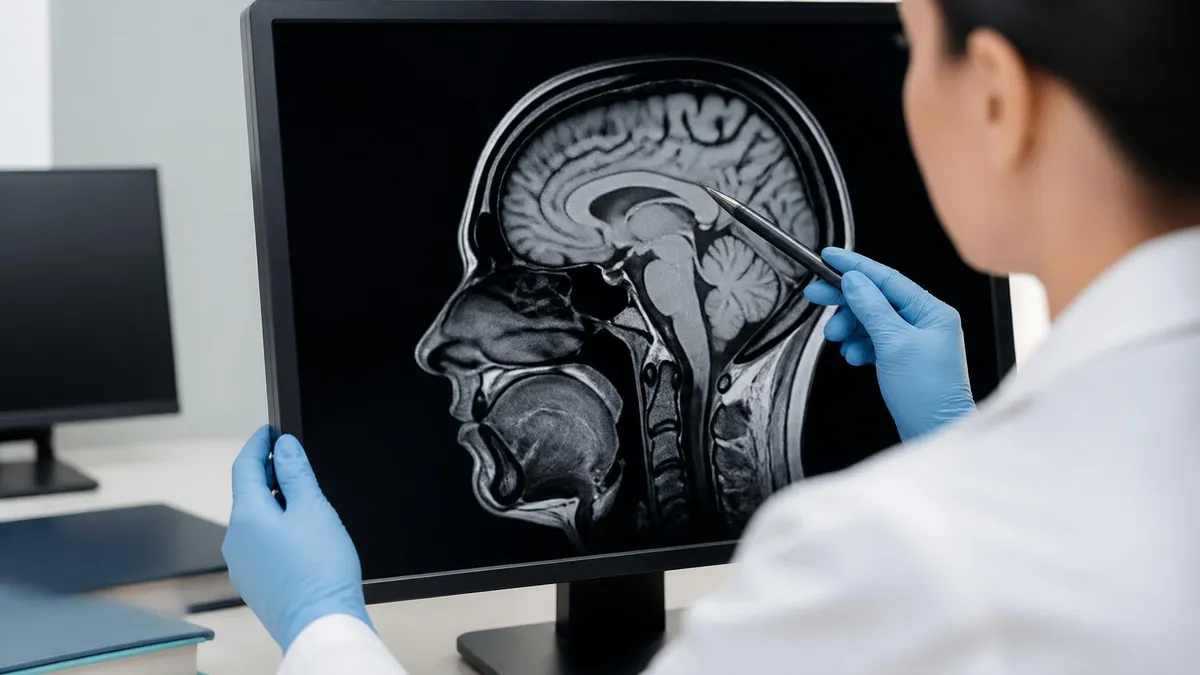
Prior Authorization — What It Is and Why It Matters
Many insurance plans require prior authorization (PA) before they'll cover an MRI. This means your doctor's office has to submit documentation to the insurer proving the scan is medically necessary before you schedule it.
If your plan requires PA and you skip it — either because your doctor forgot to get it or you scheduled before it was approved — your insurer may deny the claim entirely. That leaves you with the full uninsured bill.
Prior auth can take 1–5 business days in routine cases. For urgent situations, most insurers have an expedited PA process. Your doctor's office handles the paperwork; you don't need to do anything except make sure they initiate it before you schedule.
If PA is denied, you have the right to appeal. Your doctor submits additional clinical documentation explaining why the scan is necessary. About 40–60% of denied PA requests are overturned on first appeal when clinical records support the necessity.
One more thing: always check whether the facility AND the reading radiologist are both in-network. Even if the imaging center is in-network, if the radiologist group that reads your images is out-of-network, you can get a surprise bill for the reading fee — which can be $300–$800 on its own.
Medicare and Medicaid have their own rules. Medicare Part B covers outpatient MRIs when medically necessary. After the Part B deductible ($240 in 2025), Medicare pays 80% of the approved amount — you pay the remaining 20%. If you have a Medicare Supplement (Medigap) policy, it may cover that 20% depending on the plan type.
Medicare Advantage plans run by private insurers under Medicare contract can have different cost-sharing structures. Some have lower copays for imaging; others have higher deductibles. Always check your plan's summary of benefits before scheduling — don't assume your MA plan mirrors traditional Medicare's cost-sharing.
Medicaid coverage and cost-sharing vary significantly by state. Most state Medicaid programs cover medically necessary MRIs with minimal or zero cost-sharing for enrollees. In expansion states under the ACA, low-income adults who qualify for Medicaid may have effectively zero out-of-pocket MRI costs — one of the strongest arguments for enrolling if you're eligible. If you're not sure whether you qualify, your state's Medicaid office can tell you in a single phone call, and coverage often begins faster than people expect.
For a fuller set of questions on this topic, see our open mri machine near me resource.
5 Ways to Lower Your MRI Cost
Ask your doctor for a referral to a freestanding imaging center instead of the hospital. Same scan quality, often 2–5x cheaper. Verify it's in-network with your plan first.
Call before scheduling and ask: "What's your cash or self-pay price?" Many facilities offer 20–50% off list price for upfront payment. Sometimes the cash price beats your insurance cost-sharing.
Use Healthcare Bluebook or NewChoiceHealth to see estimated fair prices for MRI by zip code. These tools identify which facilities charge above-market rates before you book.
MRIs are qualified medical expenses for Health Savings Accounts and Flexible Spending Accounts. Using pre-tax HSA/FSA dollars gives you an effective 22–37% discount depending on your tax bracket.
Got a large hospital bill? Call billing and ask about prompt-pay discounts for immediate payment. Many hospital systems reduce bills 10–30% for same-day payment — and you can ask about charity care if you qualify.
MRI With Contrast — Does It Cost More?
Yes. Gadolinium contrast adds cost. Expect an additional $100 to $300 on top of the base scan price, sometimes more at hospital facilities.
The extra cost comes from two things: the contrast agent itself (gadolinium is a prescription medication administered by IV) and the additional imaging sequences required to capture the contrast effect. A contrast-enhanced brain MRI takes longer than a non-contrast scan — typically 45–60 minutes versus 30–45 minutes — and requires more image sets for the radiologist to review.
Your doctor orders contrast when they need to see blood-brain barrier breakdown, vascular lesions, active inflammation, or certain tumor characteristics. You don't choose it — it's a clinical decision. But if you're quoted a price for an MRI and want to know if it includes contrast, ask specifically: "Is this quote for a scan with or without contrast?"
There's also a comparison worth knowing about: MRI vs CT scan — in some cases a CT with contrast might answer the same diagnostic question at significantly lower cost. Your doctor decides which modality is clinically appropriate, but it's not unreasonable to ask.
One final note on contrast: gadolinium is generally considered safe, but patients with severe kidney impairment may not be able to receive it due to risk of nephrogenic systemic fibrosis. MRI safety screening covers this — any facility that does contrast MRIs will check your kidney function before administering the dye.
Questions to Ask Before You Schedule
Five questions. Ask all five before you confirm an appointment.
"Is this facility in-network with my insurance plan?" In-network status determines whether your insurer's negotiated rates apply. Out-of-network can mean being billed at list price and having your insurer pay little or nothing. Don't assume — call and confirm with both the facility and your insurer.
"Do I need prior authorization for this scan?" Your doctor's office usually handles this — but verify. If your plan requires PA and nobody got it, your claim may be denied. A quick call to your insurer's member services line before scheduling takes five minutes and can save you thousands.
"What's my out-of-pocket after insurance?" Most insurance plans have an online cost estimator, or you can call member services. They can estimate your expected cost based on your deductible status, coinsurance rate, and the facility's negotiated rates. If you've already met most of your deductible for the year, timing the scan before the calendar resets could save you significantly.
"Is there a freestanding imaging center in-network near me?" If your doctor referred you to a hospital, this is worth asking. A 10-minute drive to an imaging center could save you $1,500+. Don't feel awkward about asking — doctors refer to freestanding centers regularly, and most will accommodate the request for routine scans.
"What's your cash price if I pay today?" Ask this even if you have insurance — sometimes the cash price is lower than your insurance cost-sharing, especially if you haven't met your deductible. If the cash price is lower, you can always pay out of pocket and have the claim applied toward your deductible by submitting it to insurance yourself.
One last thing worth thinking about before your appointment: the specifics of the scan itself can affect how it goes beyond just cost. Reviewing MRI scan basics beforehand — what to expect, how to prepare, what happens during imaging — makes the experience less stressful and ensures you're ready on the day.
Sample MRI - Magnetic Resonance Imaging Practice Questions
Try these questions from our free MRI - Magnetic Resonance Imaging practice tests. The correct answer and an explanation follow each question.
Provide more coverage area without sacrificing signal-to-noise ratio by using numerous coils and receivers.
- A. Vertical
- B. Quadrature
- C. Phased array
- D. Helmholtz pair
Answer: C. Phased array
Phased array coils consist of multiple small, independent receiver coils, each with its own receiver channel. This innovative design allows for a larger field of view (coverage area) without sacrificing the high signal-to-noise ratio (SNR) typically associated with smaller coils. The signals from individual coils are then combined to form a comprehensive and high-quality image.
What is the primary reason gradient coils produce loud acoustic noise during MRI scanning?
- A. RF pulses vibrate the RF coil housing
- B. Lorentz forces cause the gradient coil windings to physically vibrate as current rapidly switches
- C. Cryogen boiling creates mechanical vibration in the magnet bore
- D. The patient table motor produces noise as it moves into position
Answer: B. Lorentz forces cause the gradient coil windings to physically vibrate as current rapidly switches
Rapidly switching electrical current in gradient coils within the strong static field produces Lorentz forces that physically deflect the coils, generating loud knocking sounds.
The landmark for centering an MRI brain exam using a head coil is located at:
- A. Top of the skull
- B. Nasion or bridge of the nose
- C. External auditory meatus
- D. Occiput
Answer: B. Nasion or bridge of the nose
The nasion (bridge of the nose) is the standard external landmark used to center the isocenter of the MRI system for brain imaging.
What is the primary source of acoustic noise in an MRI scanner?
- A. Rapid switching of gradient coils within the static magnetic field
- B. The radiofrequency transmitter coil vibrating
- C. Cryogenic helium boil-off
- D. The rotating fan of the RF amplifier
Answer: A. Rapid switching of gradient coils within the static magnetic field
Lorentz forces act on gradient coil conductors carrying rapidly switched currents within B0, causing coil vibration and the characteristic loud knocking noise.
Take the full MRI - Magnetic Resonance Imaging practice test
MRI Questions and Answers
About the Author

Medical Laboratory Scientist & Clinical Certification Expert
Johns Hopkins UniversityDr. Sandra Kim holds a PhD in Clinical Laboratory Science from Johns Hopkins University and is certified as a Medical Technologist (MT) and Medical Laboratory Scientist (MLS) through ASCP. With 16 years of clinical laboratory experience spanning hematology, microbiology, and molecular diagnostics, she prepares candidates for ASCP board exams, MLT, MLS, and specialist certification tests.
Join the Discussion
Connect with other students preparing for this exam. Share tips, ask questions, and get advice from people who have been there.
View discussion (8 replies)