
MRI Safety 2026 September: Complete Guide to MRI Protocols and Hazards
🎓 Prepare for the MRI Safety 2026 September: Complete Guide to MRI certification. Practice questions with answer explanations covering all exam domains.
MRI Physics and Safety Basics
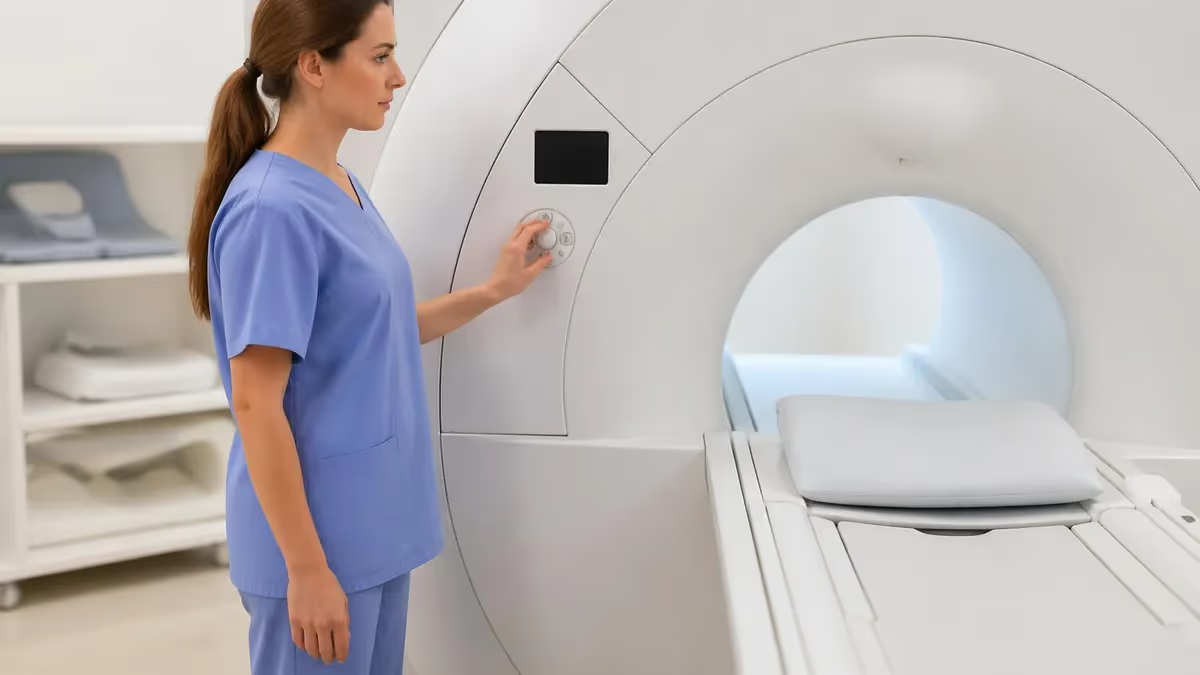
Magnetic Resonance Imaging (MRI) uses strong magnetic fields, radiofrequency (RF) pulses, and gradient magnetic fields to produce detailed images of soft tissue, organs, and structures within the body. Unlike X-rays and CT scans, MRI does not use ionizing radiation — this makes MRI generally safer for patients, particularly for repeated imaging or imaging of children and pregnant patients. However, MRI creates unique safety hazards related to its extremely strong magnetic fields.
The Three MRI Fields
Static magnetic field (B0) — the permanent, always-on magnetic field of the MRI scanner, measured in Tesla (T). Clinical MRI scanners typically operate at 1.5T or 3.0T. Research scanners may operate at 7T or higher. The earth's magnetic field is approximately 0.000025T — a 1.5T MRI is 60,000 times stronger than earth's magnetic field. The static field extends beyond the scanner bore and creates a fringe field — the area outside the magnet that still has significant magnetic field strength. The 5 Gauss line (0.0005T) is the standard boundary for restricting access to cardiac pacemaker patients.
Gradient magnetic fields — rapidly switching magnetic fields used for spatial localization during imaging. Gradients are responsible for the loud knocking sounds during an MRI scan. Rapidly changing gradients can induce peripheral nerve stimulation in patients. Radiofrequency (RF) fields — RF pulses delivered at specific frequencies excite hydrogen protons in the body's water molecules, producing the MRI signal. RF energy is deposited as heat in tissue — measured by Specific Absorption Rate (SAR). Excessive SAR causes tissue heating, which is a critical safety parameter monitored and limited by MRI scanners.
MRI Zone System (ACR Zone Classification)
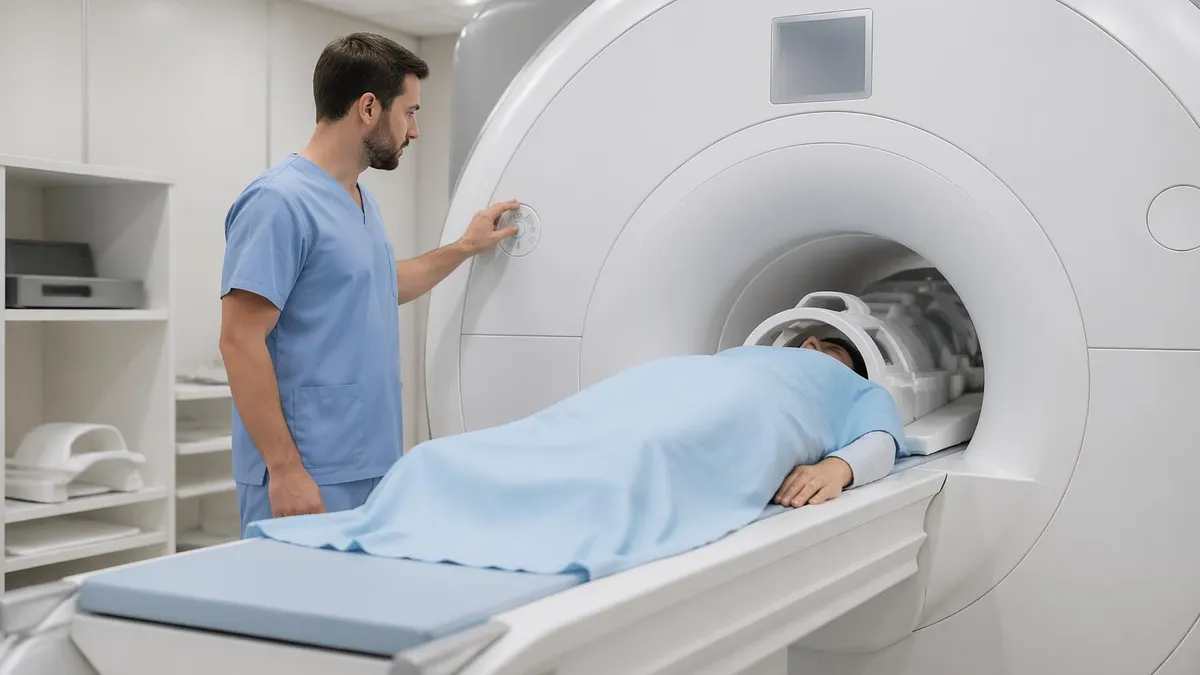
The American College of Radiology (ACR) MRI Safety Committee has defined a four-zone system for MRI facilities to organize access control, reduce projectile hazards, and protect patients, staff, and visitors. Understanding the zone system is essential knowledge for MRI technologists, radiologists, and anyone working in or visiting MRI facilities.
Zone I: General Public Area
Zone I is freely accessible to the general public — hallways, waiting rooms, and registration areas that are outside the MRI suite. No MRI-related restrictions apply in Zone I. Standard hospital policies (HIPAA, visitor policies) apply.
Zone II: Unscreened Patient and Visitor Area
Zone II is the interface between the freely accessible Zone I and the controlled Zones III and IV. Zone II includes patient interview areas, changing rooms, and pre-screening areas where MRI technologists perform initial patient screening (medical history, MRI questionnaires). Zone II is supervised and controlled but not yet restricted to screened individuals only.
Zone III: Controlled Access — Strong Fringe Field
Zone III is the area immediately outside the MRI scan room where the fringe field is present. Only MRI safety-trained personnel and patients who have completed full MRI screening may enter Zone III. Ferromagnetic objects entering Zone III are at risk of projectile acceleration as they get closer to the magnet. Zone III must be physically secured — locked door or controlled access. All individuals entering Zone III must have completed Level 1 (basic MRI safety awareness) training at minimum.
Zone IV: The Magnet Room
Zone IV is the MRI scan room itself — the area containing the MRI magnet. Zone IV is the most hazardous area. The magnet is always on (even when not actively scanning) and must be treated as a live, powerful magnet at all times. Only fully screened individuals may enter Zone IV. All staff working in Zone IV must have Level 2 (MRI-specific) safety training. Ferromagnetic items brought into Zone IV may become dangerous projectiles.
MRI Hazards
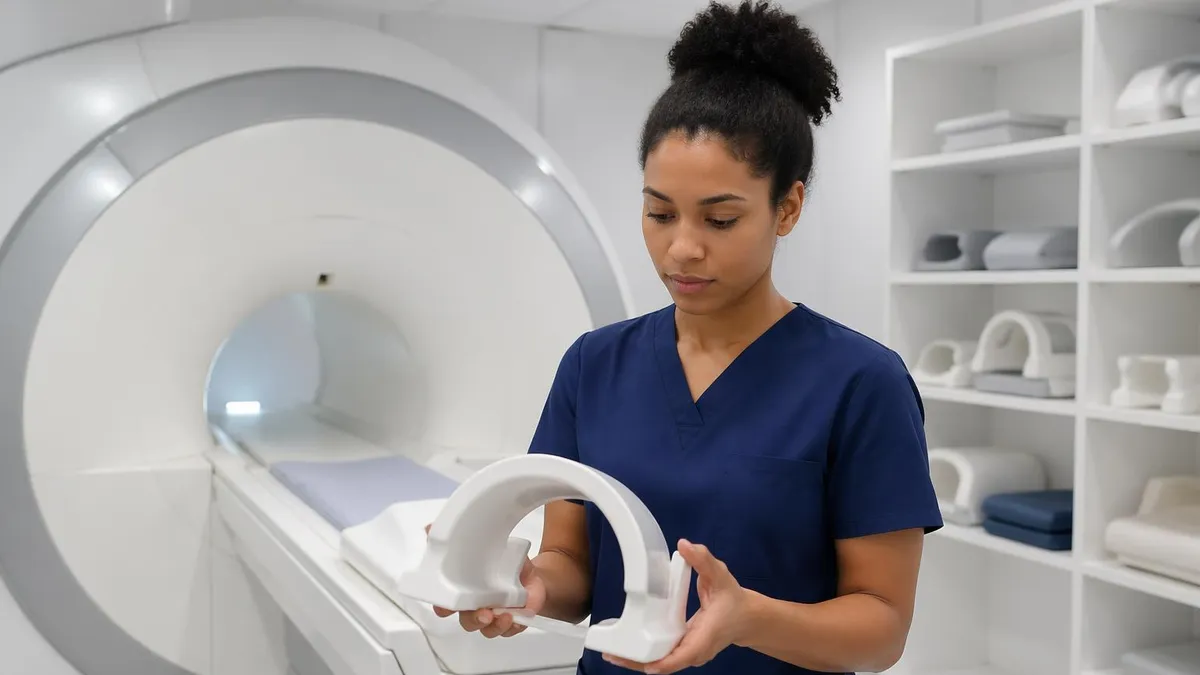
MRI creates several categories of safety hazards that must be actively managed through screening, access control, and safe practice protocols.
Projectile Hazard (Missile Effect)
The projectile hazard is the most immediately dangerous MRI hazard. Ferromagnetic objects — objects attracted to magnets — that are brought into the MRI scan room experience a powerful attractive force toward the magnet. Larger, heavier ferromagnetic objects can be accelerated to dangerous velocities by the magnetic field, turning them into missiles capable of causing serious injury or death to patients and staff in the scan room. Common projectile hazards that have caused MRI incidents: IV poles, oxygen tanks, wheelchairs, gurneys, keys, scissors, tools, floor buffers, and equipment not labeled 'MRI Safe.' Preventing projectile hazards: strict ferromagnetic screening of all individuals and equipment entering Zone III and IV; dedicated MRI-safe versions of all necessary equipment (oxygen tanks, IV poles, wheelchairs); ferromagnetic detection systems at Zone III entry points.
Implant and Device Hazards
Metallic implants in or on patients can create serious MRI hazards: Torque — the magnetic field exerts a rotational force on ferromagnetic implants; Displacement — ferromagnetic implants may be pulled or pushed by the magnetic field; Heating — RF energy can heat metallic implants, particularly elongated metallic objects (leads, wires, guidewires), causing tissue burns; Device malfunction — electronic implanted devices (pacemakers, neurostimulators, cochlear implants) may malfunction or be damaged in the MRI environment. Not all metallic implants are equally dangerous — many modern implants are manufactured from non-ferromagnetic materials (titanium, stainless steel grades) and are considered MR Conditional or MR Safe.
Acoustic Noise Hazard
MRI gradient coils produce loud knocking and clicking sounds during imaging — typically 80 to 120 dB at the patient's ear level during a scan. This exceeds OSHA occupational noise exposure limits for extended periods. All patients should receive hearing protection (earplugs or MRI-compatible headphones) during scanning. Staff entering the scan room during active scanning must also use hearing protection.
RF Heating and SAR
Radiofrequency energy is deposited as heat in tissue — measured by Specific Absorption Rate (SAR) in Watts per kilogram. MRI scanners monitor and limit SAR automatically based on patient weight and sequence parameters. SAR is of particular concern for: implanted metallic devices that can concentrate RF energy; pregnant patients (concern for fetal heating); patients with impaired thermoregulation.
MRI Patient Screening
Patient screening is the most critical MRI safety practice — every patient must be screened before entering Zone III or IV. Inadequate screening is the primary cause of preventable MRI safety incidents.
MRI Screening Process
The standard MRI screening process: All patients complete a written MRI screening questionnaire prior to the exam — the questionnaire covers medical history, implants, devices, and prior MRI experiences. A trained MRI personnel member reviews the completed questionnaire with the patient verbally — patients may not fully understand which items on the form are relevant, may not recall surgical history accurately, or may have difficulty reading.
For any positive responses on the questionnaire (implants, devices, possible metal fragments, prior surgery), the MRI team must determine whether the item represents a contraindication, requires further investigation, or is safe to proceed. If there is any uncertainty about a metallic implant or device, MRI must not proceed until the item is identified and cleared. The Medical Director or referring physician may need to authorize proceeding in complex cases. Verbal consent — patients must understand why they cannot have certain items in the scanner and should actively participate in the screening process.
MRI Contraindications
Absolute contraindications to MRI (items that prevent MRI in any circumstance without extraordinary measures): Ferromagnetic intracranial aneurysm clips (older clips — modern clips are often MR Conditional); Pacemakers and implantable cardioverter-defibrillators (ICDs) — most older devices are not MRI-compatible; however, many modern devices are specifically labeled MR Conditional and can be safely scanned under specific conditions by a trained team; Cochlear implants — most are contraindicated, though some newer devices are MR Conditional; Ferromagnetic intraocular foreign bodies (metal fragments in the eye) — absolute contraindication; the magnetic force can cause serious eye injury or blindness.
Relative contraindications (require careful evaluation): Non-ferromagnetic metallic implants (orthopedic hardware, surgical clips) — usually safe but require identification and confirmation; Programmable or implanted electronic devices (insulin pumps, neurostimulators) — require device-specific evaluation; Intrauterine devices (IUDs) — most are MR Safe or MR Conditional; Pregnancy — first trimester MRI requires clinical justification, but MRI is generally considered safer than ionizing radiation alternatives when imaging is necessary.
MRI Implant Safety Classifications
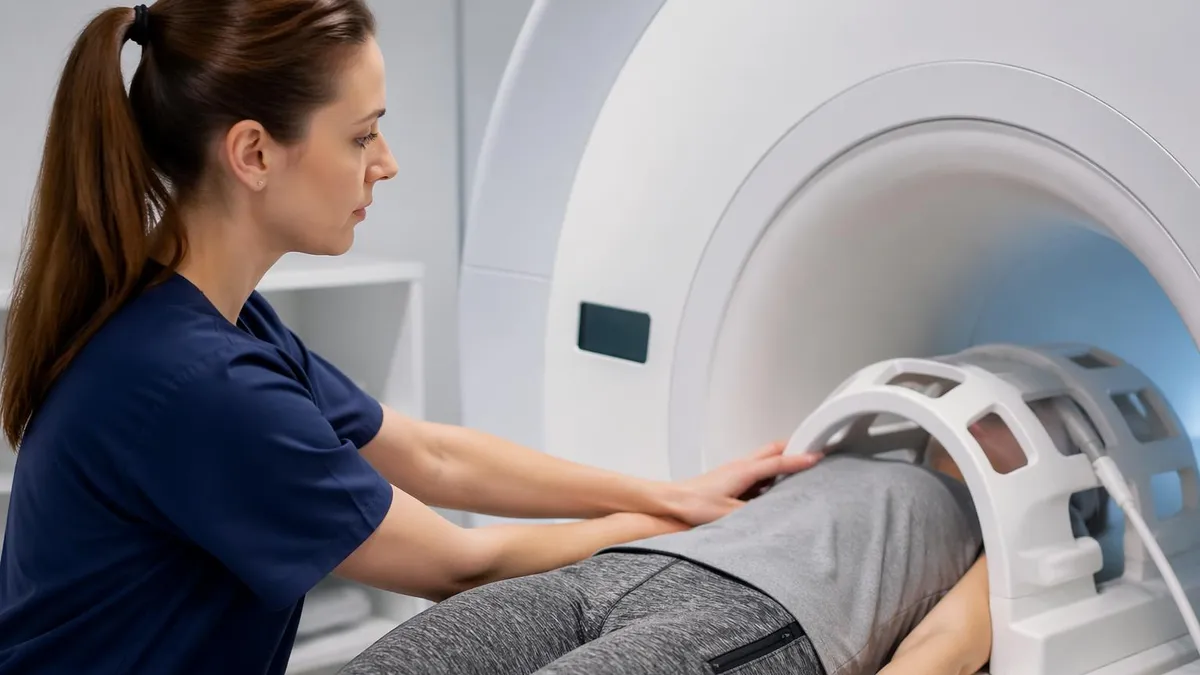
The International Electrotechnical Commission (IEC) and the American Society for Testing and Materials (ASTM) have established standardized MRI safety classification terms for implants and devices. These terms must be understood by all MRI personnel.
MRI Safety Labeling
MR Safe — the item contains no metallic, magnetic, or electrically conductive material and poses no known MRI hazard in any MRI environment. Items labeled MR Safe can be brought into any Zone IV without restriction. Examples: most plastic items, ceramic materials, glass, some silicone devices. MR Conditional — the item has been demonstrated to pose no known hazard in a specified MRI environment with specified conditions of use. These conditions typically include: a maximum static field strength (e.g., 1.5T only, or up to 3.0T); a maximum gradient field (dB/dt); a maximum RF field (SAR). MR Conditional items may be used in MRI if and only if the specific conditions are met.
Always obtain the specific device's MR Conditional documentation before proceeding. MR Unsafe — the item is known to pose hazards in all MRI environments and must not be brought into Zone III or IV. Ferromagnetic surgical tools, aneurysm clips made of ferromagnetic alloys, and most consumer electronics are MR Unsafe. When labeling is unknown — if a device or implant cannot be identified and its MRI safety status confirmed, it should be treated as MR Unsafe until confirmed otherwise.
Key Implant Considerations
Orthopedic hardware — most modern orthopedic hardware (hip replacements, knee implants, spinal fusion hardware, plates, screws) is manufactured from non-ferromagnetic materials (titanium, 316L stainless steel, cobalt-chromium alloys) and is generally MR Conditional or MR Safe. The specific implant manufacturer and model must be confirmed. Cardiac stents and vascular clips — most are manufactured from non-ferromagnetic metals and are safe after a waiting period for tissue integration (typically 6 to 8 weeks). Ferromagnetic aneurysm clips — older aneurysm clips (placed before approximately 1990) are the highest-risk intracranial implant.
The clip manufacturer, model, and material must be confirmed before MRI — if unknown, neurosurgical consultation is required. Tattoos and permanent makeup — tattoo inks containing iron oxide pigments can heat during MRI and cause skin irritation or burns. Tattoos over the imaging area should be reported. Pregnancy — MRI during pregnancy is generally considered acceptable when the benefit outweighs risk; gadolinium contrast is avoided during pregnancy.
MRI Checklist
- ✓Know the ACR Zone system: Zones I-IV and the access restrictions for each zone
- ✓Never bring ferromagnetic objects into Zone III or IV without explicit clearance
- ✓Complete MRI safety training: Level 1 (general awareness) and Level 2 (MRI-specific) as required for your role
- ✓Screen all patients with the written MRI questionnaire AND verbal review before Zone III entry
- ✓Confirm MRI safety classification (MR Safe, MR Conditional, MR Unsafe) for any unknown implant or device
- ✓Never proceed if implant safety status is unknown — treat as MR Unsafe until confirmed
- ✓Ensure all patients receive hearing protection before entering Zone IV during active scanning
- ✓Know your facility's emergency response protocols: patient emergency, projectile event, quench procedure
- ✓Monitor SAR continuously during scanning — limit scan parameters if SAR approaches limits
- ✓Verify MR Conditional device parameters (field strength, SAR, gradient limits) are met before scanning
MRI Practice Test Questions
Prepare for the MRI - Magnetic Resonance Imaging exam with our free practice test modules. Each quiz covers key topics to help you pass on your first try.
MRI Knowledge
MRI Exam Questions covering Knowledge. Master MRI Test concepts for certification prep.
MRI Physics
Free MRI Practice Test featuring Physics. Improve your MRI Exam score with mock test prep.
MRI Anatomy and Pathology
MRI Test Prep for MRI Anatomy and Pathology. Practice MRI Quiz questions and boost your score.
MRI Anatomy and Positioning
MRI Questions and Answers on MRI Anatomy and Positioning. Free MRI practice for exam readiness.
MRI Contrast Agents
Free MRI Quiz on MRI Contrast Agents. MRI Exam prep questions with detailed explanations.
MRI Patient Care and Positioning
MRI Practice Questions for MRI Patient Care and Positioning. Build confidence for your MRI certification exam.
MRI Pros and Cons
- +MRI has a defined, publicly available content blueprint — candidates know exactly what to prepare for
- +Multiple preparation pathways (self-study, courses, coaching) accommodate different learning styles and schedules
- +A growing ecosystem of study resources means candidates at any budget level can access quality preparation materials
- +Clear score reporting allows candidates to identify specific strengths and weaknesses for targeted remediation
- +Professional recognition associated with strong performance provides tangible career and academic benefits
- −The scope of tested content requires substantial preparation time that competes with existing professional or academic commitments
- −No single resource covers the full content scope — candidates typically need multiple study tools for comprehensive preparation
- −Test anxiety and exam-day performance variability mean preparation effort does not always translate linearly to scores
- −Registration, preparation, and potential retake costs accumulate into a significant financial investment
- −Content and format can change between exam versions, making older preparation materials less reliable
MRI Questions and Answers

Electrocardiogram (EKG) Guide 2026: Interpretation and Certification

NBME Practice Tests: Step 1, Step 2 CK, Step 3, and Shelf Exams Guide
MRI Meaning: What Is an MRI Scan? Complete Guide 2026
How Does an MRI Machine Work? — Complete Guide (2026)
Knee MRI Images: A Complete Guide to Reading, Understanding, and Interpreting Knee Scans
About the Author

Medical Laboratory Scientist & Clinical Certification Expert
Johns Hopkins UniversityDr. Sandra Kim holds a PhD in Clinical Laboratory Science from Johns Hopkins University and is certified as a Medical Technologist (MT) and Medical Laboratory Scientist (MLS) through ASCP. With 16 years of clinical laboratory experience spanning hematology, microbiology, and molecular diagnostics, she prepares candidates for ASCP board exams, MLT, MLS, and specialist certification tests.
Join the Discussion
Connect with other students preparing for this exam. Share tips, ask questions, and get advice from people who have been there.
View discussion (8 replies)