
BLS Pediatric Cardiac Arrest Algorithm: Complete Study Guide for Certification
Master the BLS pediatric cardiac arrest algorithm for your AHA exam. Study guide covers CPR ratios, AED use & certification prep. ✅

If you are preparing for your BLS certification, understanding the bls pediatric cardiac arrest algorithm is one of the most critical skills you will need to demonstrate. The American Heart Association (AHA) designed this algorithm specifically to address the physiological differences between children and adults, because pediatric cardiac arrests most commonly stem from respiratory failure rather than primary cardiac events. Knowing the algorithm inside and out — including compression ratios, depth, rate, and ventilation timing — is essential for passing the basic life support exam American Heart Association candidates must complete before receiving their card.
What is a BLS certification, exactly? A BLS certification is an official credential issued by organizations like the AHA or the American Red Cross that verifies you can perform high-quality cardiopulmonary resuscitation, use an AED, and recognize life-threatening emergencies in adults, children, and infants. The course covers single-rescuer and two-rescuer scenarios, team dynamics, and algorithm-based decision making. Healthcare professionals — including nurses, physicians, paramedics, and medical assistants — are required to hold a current BLS card as a condition of employment at most hospitals, clinics, and emergency departments across the United States.
A common question among students is: is BLS the same as CPR? The short answer is no — CPR is one component of BLS. Basic life support for healthcare providers encompasses a broader skill set that includes recognition of cardiac arrest, early activation of the emergency response system, high-quality chest compressions, rescue breathing with a bag-mask device, effective team communication, and coordinated AED use. CPR is the mechanical act of compressing the chest and delivering breaths, while BLS is the complete framework that governs how, when, and why those actions are taken in a clinical or emergency setting.
The AHA BLS exam tests knowledge across adult, child, and infant scenarios, making the pediatric cardiac arrest algorithm a guaranteed exam topic. Many students underestimate this section because they assume adult CPR techniques simply scale down to children. That assumption leads to errors on the exam and, more critically, errors in real emergencies. The pediatric algorithm has distinct compression-to-ventilation ratios for one-rescuer versus two-rescuer scenarios, different AED pad placement instructions for children under eight, and specific guidance on when to prioritize airway management over rhythm analysis.
Whether you are taking an AHA basic life support exam for the first time or completing a basic life support renewal class, this guide will walk you through every decision point in the pediatric cardiac arrest algorithm. We will cover the sequence of steps, the rationale behind each action, common exam question traps, and practical memorization strategies. By the time you finish reading, you will be able to walk through a pediatric arrest scenario from recognition through defibrillation with confidence. Use this page alongside the bls pediatric cardiac arrest algorithm practice questions to reinforce your knowledge before exam day.
It is also worth noting that the AHA updates its guidelines periodically based on the latest resuscitation science. The current BLS standards reflect the 2020 AHA Guidelines for CPR and Emergency Cardiovascular Care, which introduced refinements to compression fraction targets, emphasized the importance of minimizing interruptions, and updated guidance on opioid-associated emergencies. Students preparing for the basic life support exam American Heart Association should always verify they are studying from materials that align with the most recent guidelines, as older versions of the algorithm may contain ratios or steps that have since been revised.
This article is structured as a complete certification prep hub. You will find the algorithm broken down step by step, a comparison of pediatric versus adult BLS, study tips for the AHA written test, a checklist for skills station success, and a full FAQ section addressing the questions test-takers ask most often. Whether you are brand new to resuscitation science or refreshing your skills for renewal, every section here is designed to get you to a passing score — and to make you a more confident, competent provider when it matters most.
BLS Pediatric Cardiac Arrest by the Numbers
Key Facts at a Glance
| Item | Value | Details |
|---|---|---|
| Compressions Per Minute | 100–120 | Required rate for all age groups |
| Max Pulse Check Duration | <10 sec | Check carotid (child) or brachial (infant) |
| BLS Card Validity | 2 years | Renewal required every 2 years |

BLS Pediatric Cardiac Arrest Algorithm: Step-by-Step Sequence
Verify Scene Safety and Check Responsiveness
Activate EMS and Get an AED
Open Airway and Deliver 2 Rescue Breaths
Begin High-Quality Chest Compressions
Analyze Rhythm with AED and Defibrillate if Indicated
Continue CPR Cycles Until ROSC or Advanced Care Arrives
Understanding how the pediatric BLS algorithm differs from the adult version is essential for anyone pursuing the basic life support exam American Heart Association requires. The most important distinction is the underlying cause of cardiac arrest. In adults, sudden cardiac arrest is usually caused by a primary ventricular fibrillation event triggered by coronary artery disease.
In children, cardiac arrest is almost always the endpoint of progressive respiratory failure or shock — which means that restoring oxygenation is the top priority. This is why the pediatric algorithm leads with 2 rescue breaths after confirming unresponsiveness, particularly when a lone rescuer is present.
The compression-to-ventilation ratio is another critical difference that appears repeatedly on the AHA BLS written exam. When a single rescuer performs BLS on a child or infant, the ratio is 30 compressions to 2 ventilations — identical to the adult ratio. However, when two trained rescuers are working together on a child or infant, the ratio changes to 15:2. This two-rescuer pediatric ratio does not apply to adults. The logic is that children benefit from more frequent ventilations relative to their smaller oxygen reserves, and having two rescuers makes it feasible to increase ventilation frequency without excessively interrupting compressions.
Compression depth and technique also vary by age group. For adults, compressions should be at least 2 inches deep but not more than 2.4 inches. For children (defined as age 1 through puberty), compressions should be at least one-third the anterior-posterior diameter of the chest, approximately 2 inches.
For infants (under 1 year), the target depth is also one-third the AP diameter, approximately 1.5 inches. Technique matters as well: for infants, a single rescuer uses 2 fingers placed just below the nipple line, while two rescuers use the 2-thumb encircling technique, which generates higher coronary perfusion pressure and is strongly preferred when a second provider is available.
AED use in pediatric patients is another area where the exam frequently tests candidates. For children over 8 years old or weighing more than 25 kilograms, standard adult AED pads and energy doses are acceptable. For children under 8 years old or under 25 kg, a pediatric dose attenuator system should be used if available.
If a pediatric-attenuated AED is not accessible, an adult AED may be used — this is explicitly permitted in AHA guidelines because defibrillating a shockable rhythm with adult energy is safer than not defibrillating at all. Pad placement for smaller children may need to be anterior-posterior (one pad on the chest, one on the back) to avoid pad-to-pad contact.
Pulse check location also differs between age groups, a fact that appears in multiple BLS exam questions. For adults and children, the preferred pulse check site is the carotid artery in the neck. For infants, the brachial artery on the upper inner arm is used instead, because infants' necks are too short and fat-padded to make carotid palpation reliable.
In all age groups, the pulse check should not exceed 10 seconds. If you are not certain a pulse is present within 10 seconds, you must begin compressions immediately — the cost of performing unnecessary CPR on a child with a pulse is far lower than the cost of withholding CPR from one in arrest.
Rescuers frequently ask whether performing BLS on an infant is the same as on a child. The AHA classifies infants as patients under 1 year of age, and children as patients from 1 year through puberty. Neonates (newborns in the first hours of life) follow a separate neonatal resuscitation algorithm and are not covered by BLS guidelines.
The transition from infant to child technique happens at age 1 — on that birthday, you switch from the brachial pulse check to the carotid, and from the 2-finger or 2-thumb compression technique to the 1 or 2-hand technique over the lower half of the sternum. These specific transition points are common exam question anchors.
Finally, understanding when to prioritize airway versus compressions matters for both the written exam and real-world scenarios. The AHA's guidance is clear: for witnessed sudden collapse in a child (which is more likely to be a shockable rhythm), prioritize rapid defibrillation after confirming arrest.
For an unwitnessed collapse or a child found unresponsive (more likely asphyxial arrest), provide 2 minutes of CPR before leaving to call for help or retrieve an AED. Recognizing this distinction helps candidates answer situational exam questions correctly. You can reinforce these concepts using the basic life support algorithm reference on this site alongside structured practice questions.
AHA Basic Life Support Exam: What to Expect and How to Prepare
The AHA BLS written exam typically consists of 25 multiple-choice questions that must be completed within a set time frame at the end of the skills course. Questions cover adult, child, and infant cardiac arrest scenarios, AED use, team dynamics, and recognition of life-threatening emergencies. A passing score is generally 84% or higher, meaning you can miss no more than 4 questions. The exam is closed book and tests recall of specific numbers: compression rates, depth measurements, ratio values, and time limits like the 10-second pulse check window.
Most students find the pediatric and infant sections the most challenging because the numbers differ from adult BLS and because multiple variables (age, number of rescuers, witnessed vs. unwitnessed collapse) shift the correct answer. Focus memorization on the 15:2 two-rescuer pediatric ratio, the brachial pulse check for infants, and the 2-minute CPR-first rule for lone rescuers with unwitnessed pediatric arrest. These three topics appear in a disproportionate share of written exam questions across AHA BLS courses nationwide.

BLS Certification: Advantages and Limitations to Consider
- +Covers pediatric, infant, and adult cardiac arrest algorithms in a single course
- +Recognized nationally by hospitals, clinics, and emergency services as a hiring requirement
- +Teaches evidence-based techniques updated with each AHA guideline cycle
- +Includes hands-on manikin practice with real-time feedback on compression quality
- +Available in-person, blended (HeartCode), and renewal formats to fit busy schedules
- +Builds team communication skills used in real resuscitation events
- −Certification expires every 2 years, requiring ongoing renewal commitment
- −Written exam pass threshold (84%) can be stressful for first-time test takers
- −Pediatric ratios and infant techniques require separate memorization from adult BLS
- −Online-only certifications are not accepted — skills must be demonstrated in person
- −Course availability varies by location, making scheduling difficult in rural areas
- −Does not cover advanced airway management, medication administration, or ACLS content
BLS Pediatric Cardiac Arrest Algorithm: Skills Station Checklist
- ✓Verify scene safety before approaching the child or infant
- ✓Tap shoulders and shout to check responsiveness (flick foot for infants)
- ✓Send a bystander to call 911 and retrieve the AED while you begin CPR
- ✓Open the airway using head-tilt chin-lift (jaw thrust if spinal injury suspected)
- ✓Deliver 2 rescue breaths over 1 second each, watching for chest rise
- ✓Begin compressions at 100–120 per minute on the lower half of the sternum
- ✓Compress at least one-third the chest depth (≈2 in child, ≈1.5 in infant)
- ✓Switch to 15:2 compression-to-ventilation ratio when a second trained rescuer arrives
- ✓Use 2-thumb encircling technique for infant compressions with two rescuers
- ✓Attach pediatric AED pads for children under 8 years or under 25 kg
- ✓Resume CPR immediately after AED shock delivery without pausing to check pulse
- ✓Reassess for return of spontaneous circulation every 2 minutes during CPR cycles
The 15:2 Ratio Only Applies to Pediatric Two-Rescuer BLS
The 15:2 compression-to-ventilation ratio is one of the most commonly missed facts on the AHA BLS written exam. It applies exclusively to child and infant resuscitation when two trained rescuers are present — never to adult BLS and never to single-rescuer pediatric CPR. If you see a question describing two healthcare providers performing CPR on a 6-year-old, the correct ratio is always 15:2, not 30:2.
Understanding what does BLS stand for helps frame why the certification covers so much more than basic chest compressions. BLS stands for Basic Life Support — a term that encompasses the foundational emergency interventions required to sustain life during a cardiac or respiratory arrest until advanced medical care can take over. For healthcare providers, BLS is the baseline competency required before progressing to ACLS (Advanced Cardiovascular Life Support) or PALS (Pediatric Advanced Life Support). Many institutions require ACLS-certified providers to also hold a current BLS card, since BLS skills form the foundation of every advanced algorithm.
The question of what is a BLS certification often comes up in the context of employment and licensing. Most US states do not legally require BLS certification for all healthcare workers, but professional licensing boards, hospital credentialing committees, and individual employers typically mandate it as a condition of employment or clinical practice.
Nursing boards in many states incorporate BLS competency into their continuing education requirements. Similarly, medical schools and residency programs require students and residents to maintain current BLS certification throughout their training. The card itself is issued directly by the training organization — either the AHA or the American Red Cross — and must be renewed every two years without exception.
For those wondering whether is BLS and CPR the same, the practical answer is that CPR is the physical technique — compressions and breaths — while BLS is the structured decision-making framework that tells you when and how to apply CPR, how to use an AED, how to coordinate with other rescuers, and how to transition care when advanced providers arrive. A bystander with CPR training can perform compressions and call 911. A BLS-certified healthcare provider knows the algorithm, recognizes rhythm abnormalities that require defibrillation, delivers appropriate ventilation with a bag-mask, and functions within a coordinated team resuscitation effort.
The American Red Cross basic life support program and the AHA BLS program cover the same core competencies because both are based on the same evidence — the International Liaison Committee on Resuscitation (ILCOR) systematic reviews and the AHA Guidelines for CPR and ECC. The primary difference between programs is branding, course structure, and instructor certification pathways. Some employers accept cards from both organizations; others specify AHA only. When in doubt, choose an AHA-affiliated course, as AHA cards are universally accepted at virtually every US healthcare institution.
The basic life support for healthcare providers course is more rigorous than a layperson CPR course. It includes bag-mask ventilation technique, two-rescuer CPR with role switching, recognition of special resuscitation situations (opioid overdose, drowning, pregnancy), and written knowledge assessment. Layperson CPR courses focus on hands-only CPR and basic AED use for community members who are unlikely to have access to bag-masks or work in team resuscitation environments. Healthcare providers need the full BLS curriculum because their scope of practice and clinical environment demand it.
BLS certification costs vary by training organization and location. AHA BLS courses typically range from $50 to $120 for initial certification, depending on whether you choose an in-person course or the blended HeartCode format. Renewal courses are generally less expensive than initial courses. Many hospitals offer BLS courses at discounted rates for their employees or reimburse the cost as part of professional development benefits. Some nursing schools and medical programs include BLS training as part of tuition, so students are certified before they begin clinical rotations.
For anyone who has let their card lapse or is approaching the two-year renewal window, the process is straightforward. Register for a BLS renewal class through an AHA Training Center or American Red Cross chapter near you. Complete the online cognitive portion if your provider offers HeartCode, then attend the in-person skills check.
Pass the written test and skills assessment, and your new 2-year card is issued immediately. There is no grace period for expired cards at most hospitals — your clinical access may be suspended the day after your card expires, so scheduling renewal well in advance of the expiration date is strongly advisable.

Most hospitals and healthcare employers suspend clinical access immediately when a BLS certification expires — there is no grace period. If your card expires while you are employed, you may be removed from the schedule until you complete renewal. Schedule your basic life support renewal class at least 60 days before your expiration date to account for course availability and processing time. Your new card's validity period begins from the expiration date of your previous card, not from the renewal date.
Preparing strategically for the AHA BLS exam means focusing your study time on the content areas where points are most often lost. Based on common exam feedback and the structure of AHA written tests, the pediatric section — including infant-specific techniques — accounts for a significant portion of questions. Many test-takers who work primarily with adult patients find that pediatric and infant content feels less intuitive because they practice it less frequently in clinical settings. Dedicating at least one-third of your study time to pediatric and infant algorithm steps, ratios, and age-based distinctions will pay dividends on exam day.
Memorization frameworks help when studying multiple overlapping algorithms. One effective approach is to organize BLS knowledge into a comparison table: rows for age group (adult, child, infant) and columns for compression depth, compression rate, one-rescuer ratio, two-rescuer ratio, pulse check site, AED pad type, and alone-rescuer sequence. Filling in this table from memory and then checking it against your course materials forces active recall — the most effective memorization strategy supported by learning science. Passive re-reading of course materials produces much weaker retention than active testing and retrieval practice.
Practice questions are an indispensable part of BLS exam preparation. The AHA written test uses scenario-based questions that require you to apply the algorithm rather than simply recall isolated facts.
A question might describe two nurses finding an unresponsive 3-year-old and ask which compression-to-ventilation ratio they should use — the correct answer (15:2) requires knowing both that two rescuers change the ratio AND that the child age triggers pediatric rather than adult protocol. Working through as many practice scenarios as possible before your exam trains your brain to apply the right rules in context, which is exactly what the test demands.
Time management during the written exam is rarely a problem for most candidates because 25 questions in a typical time window is generous. However, test anxiety can cause candidates to second-guess correct answers. A useful strategy is to answer each question based on your first instinct, mark any questions you are uncertain about, and then review marked questions after completing the full exam.
Research on test-taking consistently shows that changing answers improves scores only when you have a concrete reason to change — not when you are simply anxious about your first choice. Trust your preparation and move deliberately through the exam.
The skills station is where many candidates feel the most anxiety, but it is also the most forgiving part of the evaluation when you have practiced. Most AHA instructors will prompt you if you miss a step rather than immediately failing you — the goal is certification, not gatekeeping.
That said, certain errors are automatic failures: beginning compressions before checking responsiveness, failing to call for help, delivering compressions at fewer than 60 per minute, or refusing to use the AED. These critical errors reflect a fundamental misunderstanding of the algorithm and cannot be remediated with a single verbal cue, so they result in requiring the station to be repeated.
One of the most underutilized study resources for BLS preparation is the AHA BLS Provider Manual, which contains the complete algorithm flowcharts, skill performance sheets, and rationale explanations. Reading the performance sheets for the pediatric CPR station tells you exactly what the instructor is grading — it is essentially the answer key for the skills assessment.
Download or purchase the current provider manual and use the performance sheets as a self-evaluation checklist during your practice sessions. This targeted approach is far more efficient than generic YouTube CPR videos, which may not align with current AHA standards or may cover layperson rather than healthcare provider content.
Linking your study of the written algorithm to physical practice is the single most effective way to retain BLS knowledge long-term. When you practice compressions on a manikin, narrate the algorithm aloud — this dual-channel encoding (motor and verbal) creates multiple memory traces that make recall more reliable under exam-day pressure.
This same principle helps during the skills station itself: speaking your actions aloud ("checking for responsiveness, no response, activating EMS") signals to the instructor that you know the algorithm and helps you avoid skipping steps due to nerves. Use the basic life support algorithm reference materials on this site to cross-check your understanding of each decision point before your course date.
On the day of your BLS course, arriving prepared with a few practical habits will make the experience smoother and more successful. First, read your BLS provider manual before attending — even a quick pass through the algorithm flowcharts and skill performance sheets will orient you to the vocabulary the instructor uses and help you follow along rather than processing everything for the first time during the course. Arrive at least 10 minutes early to get set up, meet your instructor, and locate your manikin station before the course begins.
Dress comfortably and in clothing you can move in freely. BLS skills stations require you to kneel on the floor, extend your arms over a manikin, and potentially switch positions quickly during two-rescuer drills. Restrictive professional attire makes performing correct CPR technique significantly harder and can lead to shallow compressions. If you are attending the course directly from a clinical shift, consider changing into comfortable clothes beforehand. Many training centers provide manikin shields and gloves — verify this in advance so you know what to bring.
During the skills station, communicate clearly and continuously. If you are working with an unfamiliar partner during a two-rescuer scenario, briefly establish roles before you begin: one person leads compressions, the other manages the airway and ventilations. Designate who will operate the AED and who will resume compressions after shock delivery. Clear role assignment prevents the most common two-rescuer failure — both providers attempting to do the same task simultaneously while another task goes unperformed. The AHA explicitly tests team communication as a component of high-quality BLS.
After the course, your BLS card is typically issued on the same day. AHA cards are now available in physical card format or as an electronic certification card accessible through the AHA's Training Network portal. Keep a copy of your certification accessible — most hospitals require you to upload it to an employee credentialing system, and you may be asked to produce it during onboarding, annual compliance reviews, or if your department manager audits staff certifications. Setting a calendar reminder 90 days before your expiration date gives you ample time to schedule renewal without risking a lapse.
For providers who want to go beyond BLS, the natural progression is PALS (Pediatric Advanced Life Support) for those working in pediatric settings, or ACLS (Advanced Cardiovascular Life Support) for adult emergency and critical care environments. Both courses require a current BLS card as a prerequisite. PALS builds directly on the pediatric cardiac arrest algorithm you learned in BLS, adding rhythm recognition, medication algorithms, and systematic approaches to respiratory distress and circulatory failure in children. If your clinical role involves pediatric patients in any capacity, completing PALS after your BLS certification is a valuable professional investment.
Many providers find that their BLS knowledge fades between renewal cycles — a phenomenon documented in resuscitation research, which shows measurable skill decay within 6 to 12 months of training. To counteract this, consider scheduling brief annual refreshers even if your card is still valid, or use simulation practice in your workplace to maintain proficiency.
Some hospitals conduct quarterly code drills that give providers a structured opportunity to practice resuscitation skills in a team environment. Participating in these drills actively — rather than simply observing — is the most effective way to keep your BLS skills sharp and your response time fast when a real arrest occurs.
Finally, remember that BLS certification is not just a compliance checkbox — it is a commitment to being capable of saving a life. The American Heart Association estimates that high-quality CPR delivered within the first few minutes of cardiac arrest can double or triple survival rates. Every BLS-certified provider represents a potential first responder in a hospital hallway, a clinic waiting room, or a community setting.
The time you invest in understanding the pediatric cardiac arrest algorithm, practicing your compression technique, and passing your written exam is time invested in your readiness to act effectively in someone's worst moment. That readiness has real, measurable value — and it starts with the preparation you are doing right now.
BLS Questions and Answers

BLS Certificate Lookup: What Is a BLS Certification and How to Get Yours
Free Basic Life Support MCQ Questions and Answers Guide
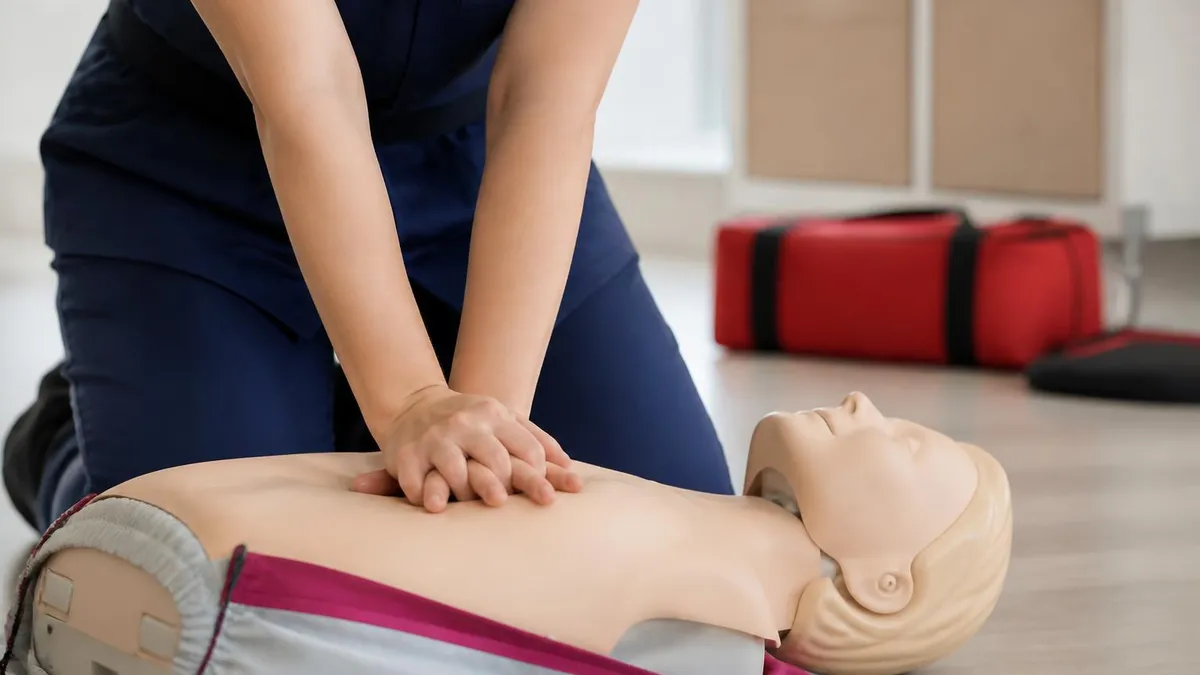
AHA BLS Certification: Course, Renewal, and Exam Guide
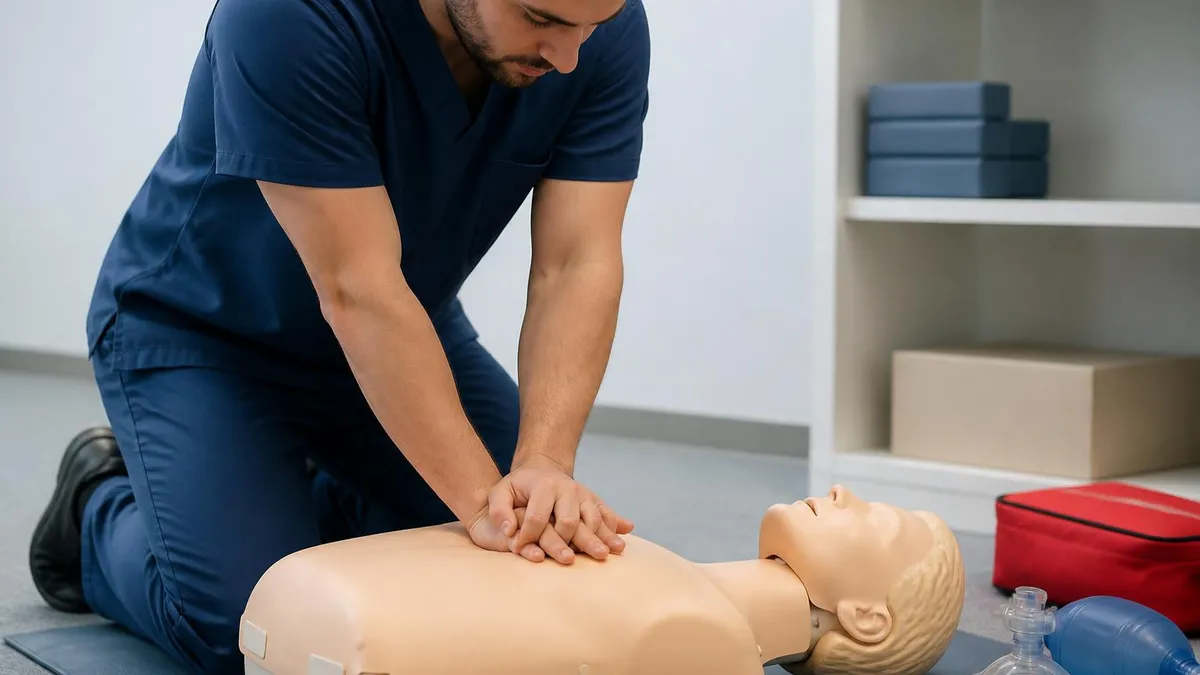
BLS Training: Course Content, Format & How to Get Certified

Online BLS: Complete Guide to Getting Your Basic Life Support Certification
About the Author

Registered Nurse & Healthcare Educator
Johns Hopkins University School of NursingDr. Sarah Mitchell is a board-certified registered nurse with over 15 years of clinical and academic experience. She completed her PhD in Nursing Science at Johns Hopkins University and has taught NCLEX preparation and clinical skills courses for nursing students across the United States. Her research focuses on evidence-based exam preparation strategies for healthcare certification candidates.
Join the Discussion
Connect with other students preparing for this exam. Share tips, ask questions, and get advice from people who have been there.
View discussion (8 replies)